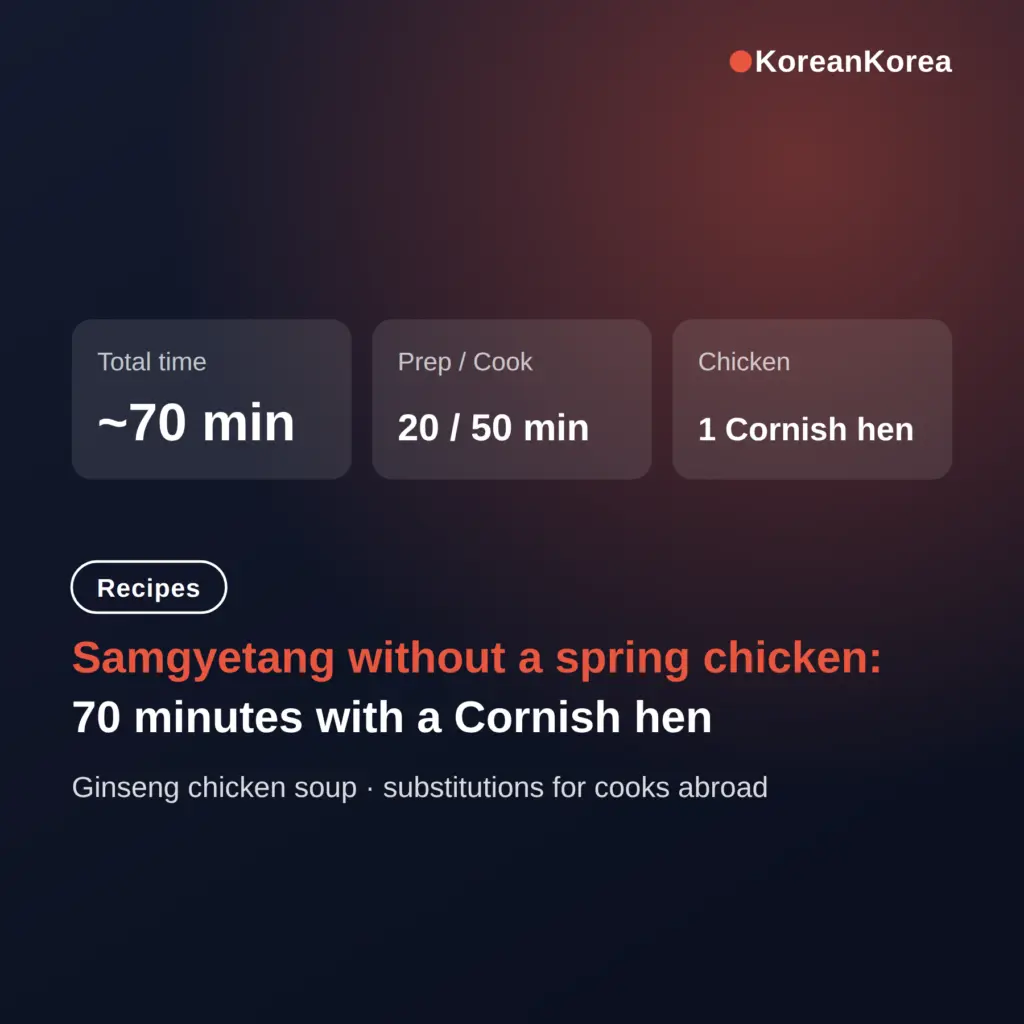
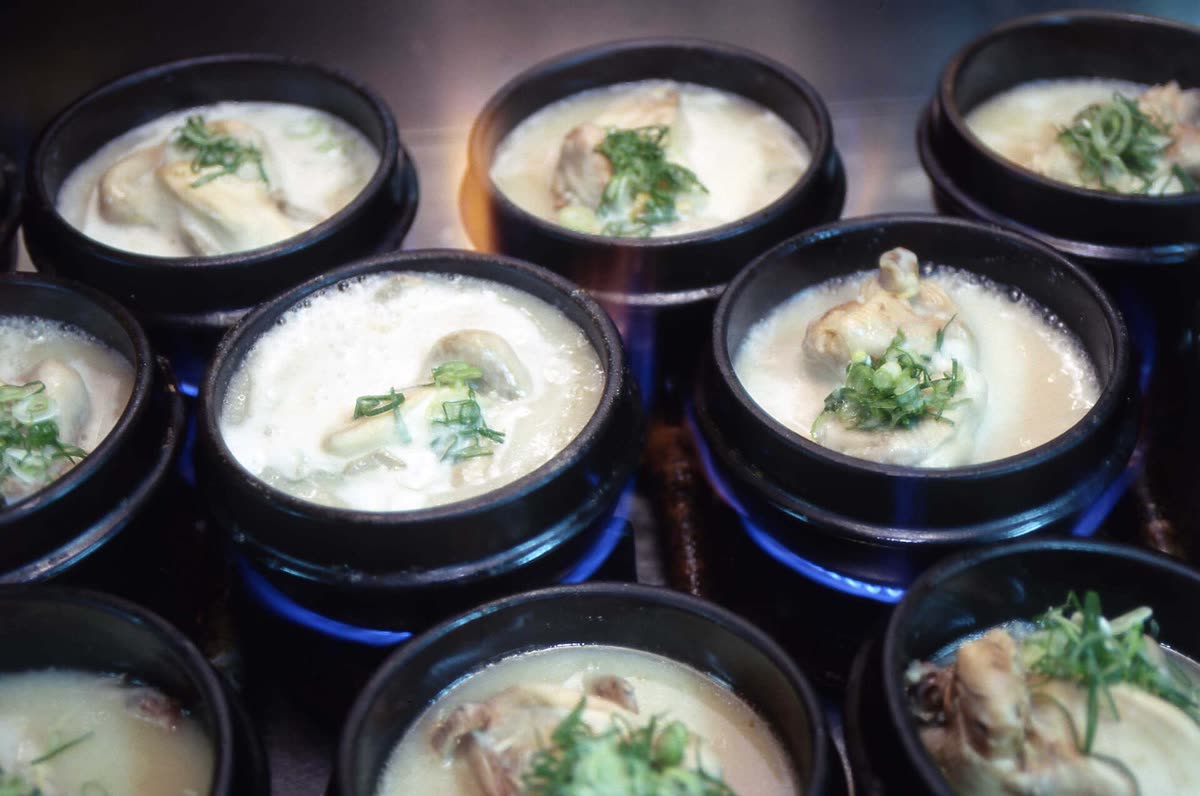
Samgyetang is a Korean soup built around a small young chicken stuffed with sweet rice, ginseng, garlic and jujubes, then simmered for about an hour.
The traditional bird is a spring chicken of roughly 1 lb, and most supermarkets abroad do not stock one.
This guide covers what to buy instead, how to handle ginseng when it is unavailable, and the stuffing and simmering steps that decide the final texture.
Contents
- Samgyetang recipe: why hot soup in hot weather (iyeolchiyeol)
- Which chicken to buy when there is no spring chicken
- Ginseng: fresh, dried, or a market kit
- Stuffing the bird: sweet rice and the expansion warning
- How much water for one Cornish hen — 5 to 6 cups and a 50-minute simmer
- Seasoning happens at the table, not in the pot
Samgyetang recipe: why hot soup in hot weather (iyeolchiyeol)
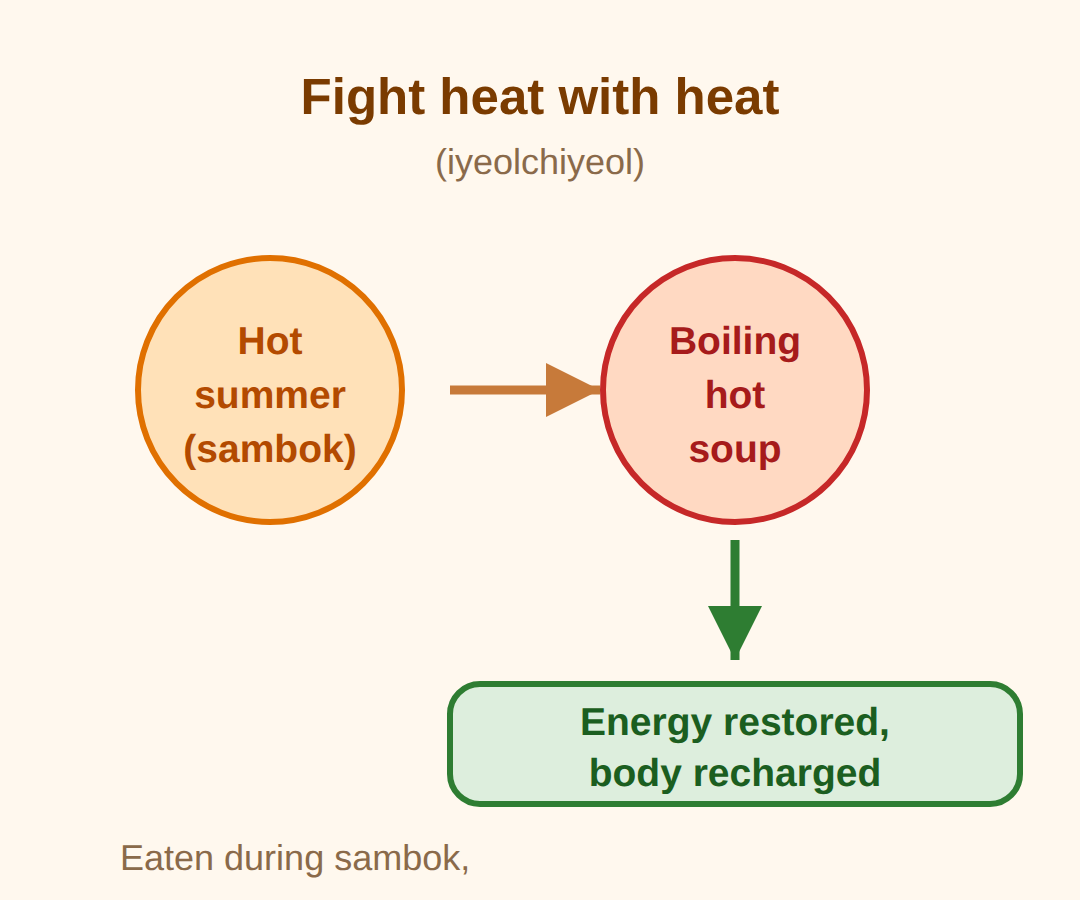
Koreans traditionally eat samgyetang during sambok, the hottest stretch of summer, which ended in August 2026.
The custom rests on iyeolchiyeol, usually translated as fighting heat with heat: a boiling soup is believed to restore energy drained by the heat.
The 2026 sambok period ended about three weeks before this writing, and the dish is also cooked year-round by anyone who wants a one-pot chicken dinner.
Either way, the cooking problem is the same: the ingredients are easy to name and hard to find outside Korea.
| Prep 20 min, cook 50 min (~70 min total) | Moderate — stuffing and sealing the bird takes practice |
|---|---|
| Servings | Key substitutions |
| 1 Cornish hen serves 1-2 | Cornish hen or 2-3 lb whole chicken; dried American ginseng or a market herb kit |
Which chicken to buy when there is no spring chicken
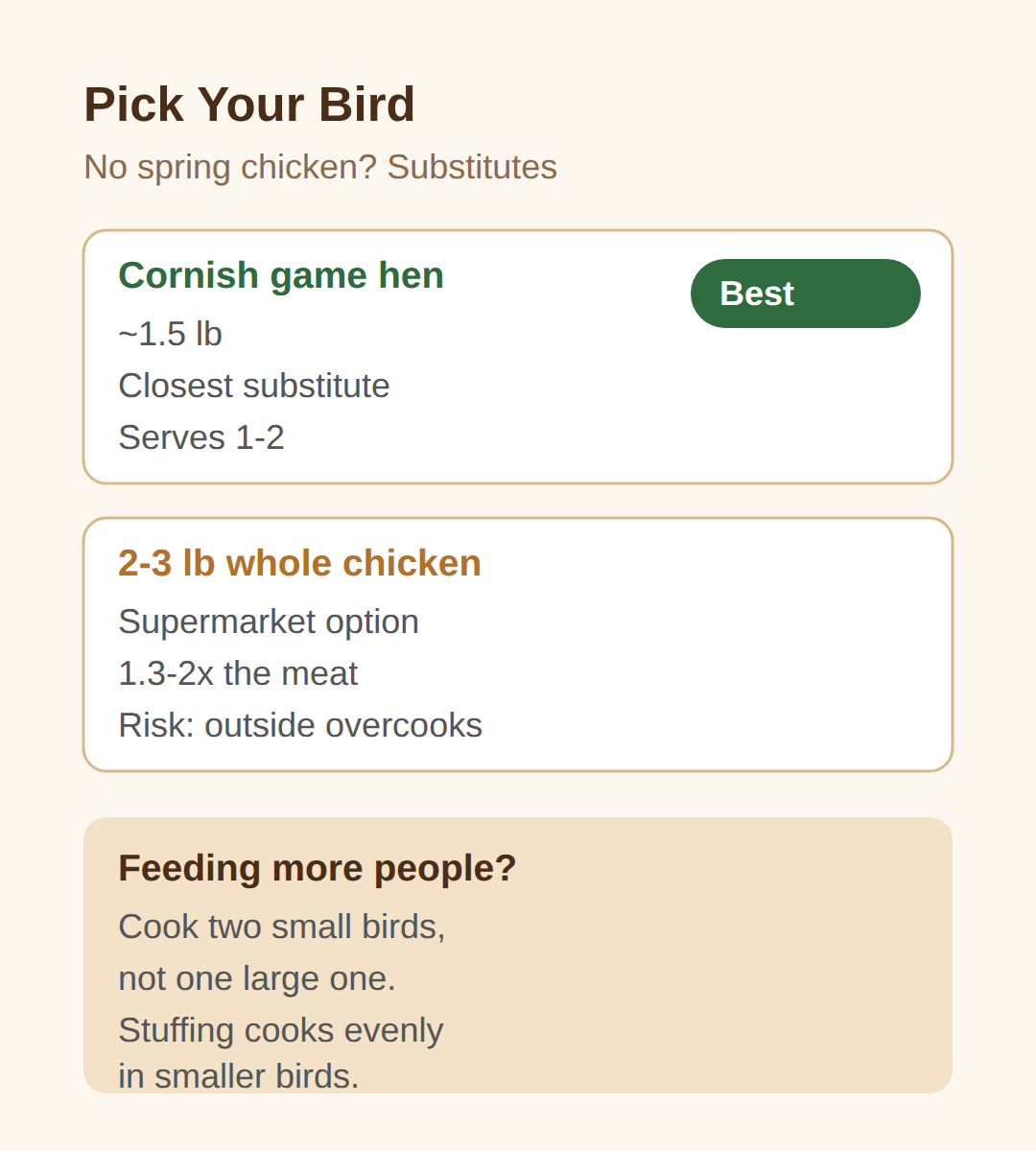
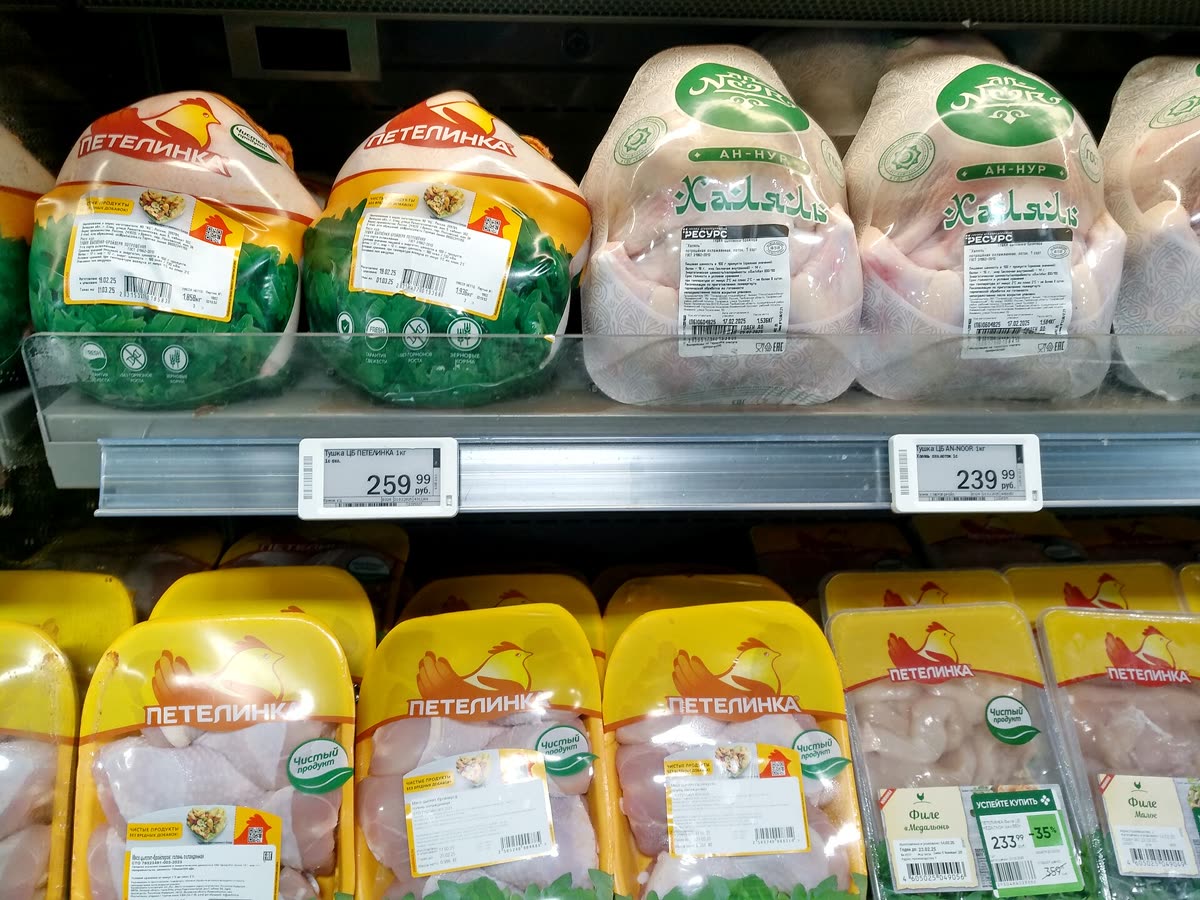
A traditional samgyetang uses a young chicken around 1 lb, and that size rarely appears on supermarket shelves abroad.
A 2-3 lb whole chicken works, though it holds roughly 1.3 to 2 times the meat of the standard 1.5 lb Cornish hen.
Cornish game hens are the closest substitute, and one hen of about 1.5 lb serves one to two people.
If more people are eating, cook two small birds rather than one large one.
A big chicken overcooks on the outside before the stuffing in the middle is done.
Ginseng: fresh, dried, or a market kit
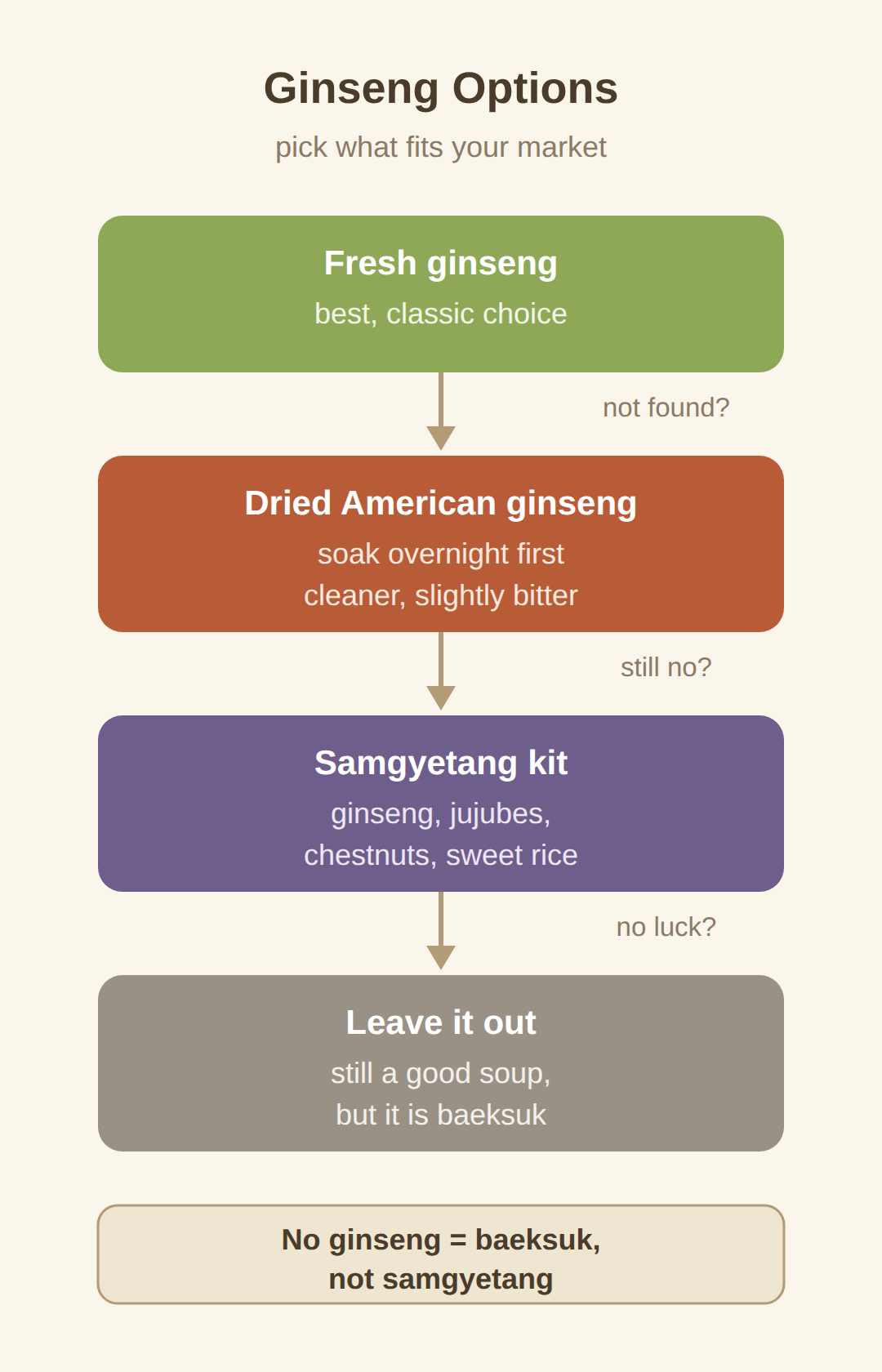
Ginseng is the defining ingredient — the same soup without it is called baeksuk, not samgyetang.
If fresh ginseng is unavailable, dried American ginseng works as a substitute after an overnight soak, and it gives the broth a cleaner, slightly bitter note.
Korean markets often sell samgyetang kits with dried ginseng, jujubes, dried chestnuts and sweet rice in one packet; follow the soaking instructions on the package.
If ginseng simply cannot be found, it can be left out entirely, and the result is still a good chicken soup under a different name.
Stuffing the bird: sweet rice and the expansion warning
The stuffing is about 3 tablespoons of dried sweet rice, soaked for 1 hour, plus a couple of garlic cloves and pieces of ginseng inside the cavity.
Do not fill the cavity completely — leave about a quarter of it empty so the rice can expand while cooking.
An overstuffed bird is the most common first-timer failure, because swollen rice can split the skin and spill into the broth.
Keep the neck and tail attached if they are there; the neck folded into the opening helps hold the rice in.
Seal the cavity either by cutting a small slit in the skin between one thigh and threading the other leg through, or by crossing the legs and tying them with kitchen twine.
How much water for one Cornish hen — 5 to 6 cups and a 50-minute simmer
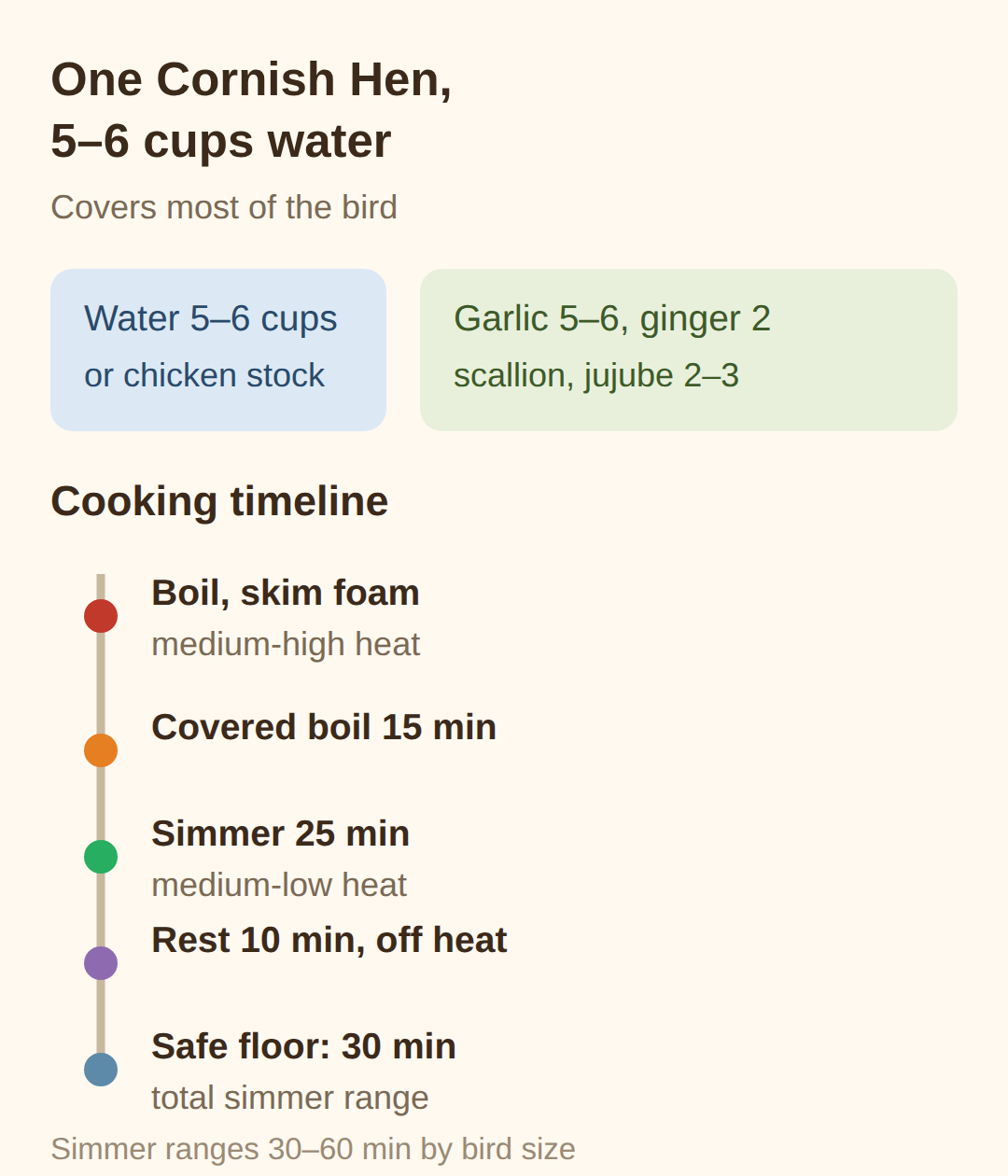
One Cornish hen needs 5 to 6 cups of water, enough to cover most of the bird, topped up during cooking if needed.
Into the pot go 5-6 garlic cloves, about two thin slices of ginger, the white part of a scallion, and only 2-3 jujubes, since jujubes are very sweet.
Bring the pot to a boil over medium-high heat and skim off the foam, then boil covered for 15 minutes, drop to medium-low for about 25 minutes, and let the chicken rest in the pot 10 minutes off the heat.
Across published recipes the gentle simmer runs 30 to 60 minutes depending on bird size, so at least 30 minutes is the safe floor.
Starting with good chicken stock instead of water deepens the flavor, and boiling a little extra soaked sweet rice in the broth slightly thickens it and adds sweetness.
Seasoning happens at the table, not in the pot
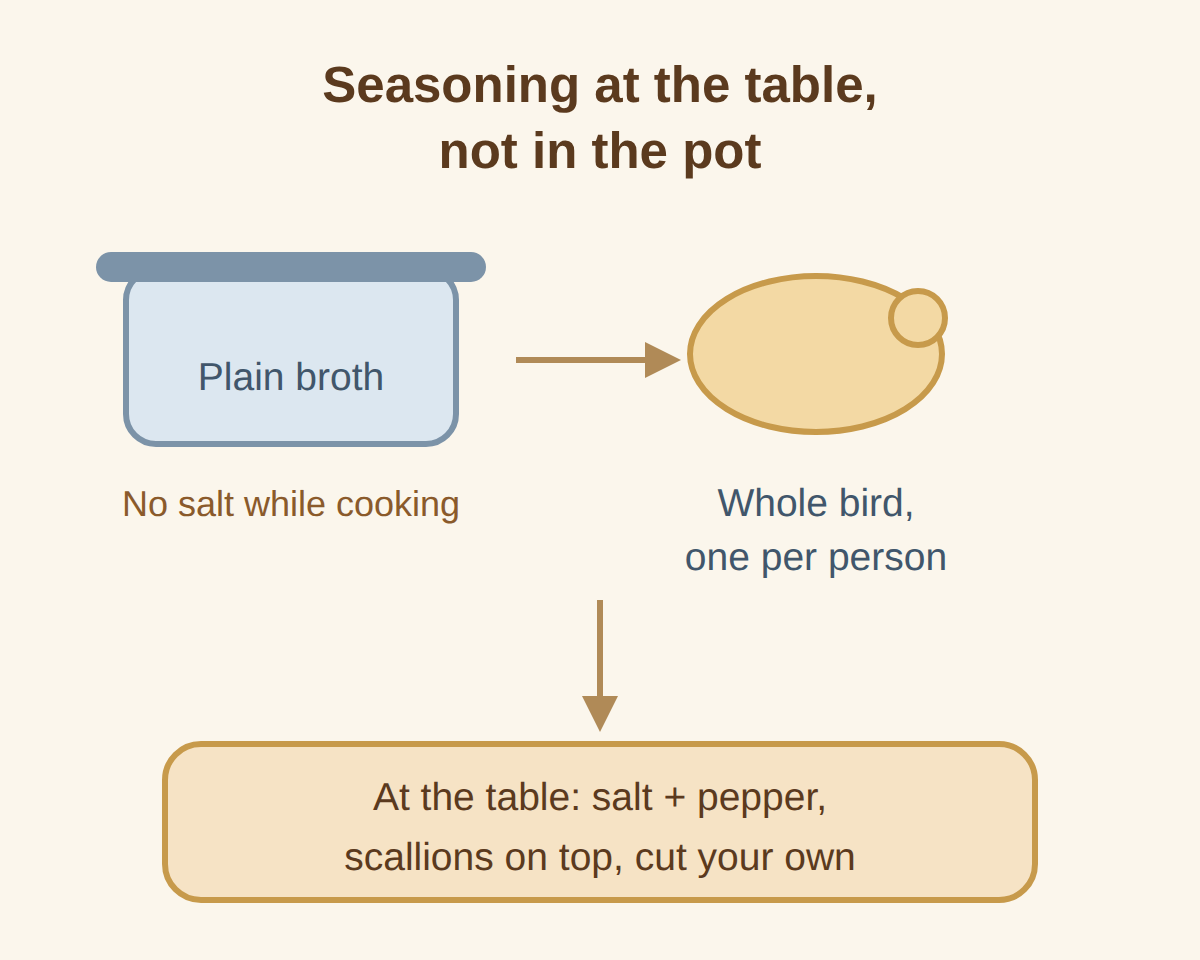
The broth is not seasoned during cooking.
Salt and pepper arrive on the side, and each person seasons their own bowl and dips the meat in the seasoned broth.
Restaurants serve the whole bird uncut, one per serving, and each diner cuts it at the table.
Chopped scallions go on top just before eating.
👉 iyeolchiyeol and Korea’s hot-summer soup tradition
👉 full Cornish hen samgyetang method
👉 ginseng substitution and chicken-size guide
Related posts
📎 Kimbap Recipe: 45 Minutes, One Mat, No Special Ingredients
Sources
- No fresh price data within 6 months — excluded (koreanbapsang.com)
- Umamicart documents iyeolchiyeol ‘fight heat with heat’ phil (umamicart.com)
- Beyond Kimchee: 2-3 lb chicken, dried American ginseng soake (beyondkimchee.com)
Common samgyetang mistakes to avoid
- Overstuffed rice — leave a quarter of the cavity empty.
- One big bird for many people — cook two small birds instead.
- Skipping the foam-skim — the broth turns cloudy.
- Seasoning the pot — salt belongs at the table, not in the broth.
FAQ
Q. Why does the rice burst when I put in too much?
Sweet rice expands as it cooks. A fully packed cavity has no room left, so the swelling rice pushes the skin open and spills into the broth. Filling about three-quarters of the cavity prevents it.
Q. Can I skip ginseng?
Yes. Without ginseng the same chicken-and-rice soup is called baeksuk, and it is still a complete dish on its own.
Q. How long should it simmer?
Recipes range from 30 to 60 minutes depending on the size of the bird. A gentle simmer of at least 30 minutes, then a 10-minute rest off the heat, covers a standard Cornish hen.
Baeksuk and dak gomtang, two simpler whole-chicken soups, make natural next steps once this version works.
#samgyetangrecipe #ginsengchickensoup #Cornishhen #sweetrice #Koreansoup #baeksuk #Koreansummerfood #driedginseng
📅Upcoming Dates — 이번 주 4 · D-day Changdeokgung Moonlight Tour start (Sept 10–Oct 17, 30,000 K전체 보기 →