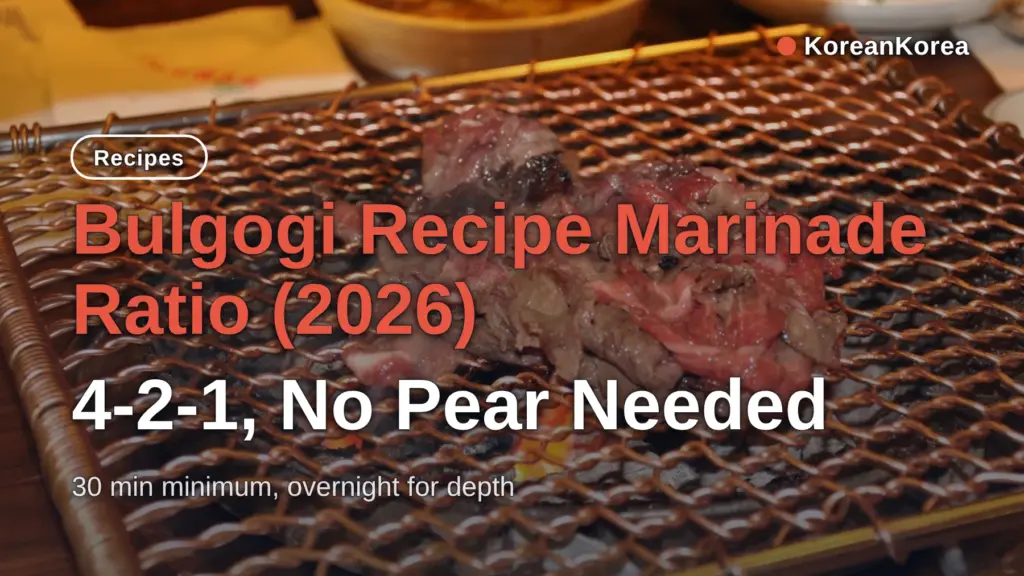
For 500g of thin-sliced beef, the marinade is 4 Tbsp soy sauce, 2 Tbsp sugar and 1 Tbsp honey — no pear needed — and 30 minutes of marinating is enough for 2-3mm slices.
That means a first-timer abroad can make bulgogi in about 40 minutes total, with one pan and ingredients from any supermarket.
This post gives the exact ratio table, how long to marinate, pan vs grill vs broiler, which beef cut to buy abroad, and how to store leftovers.
Bulgogi Recipe Marinade Ratio: Soy Sauce and Sugar, No Pear Needed
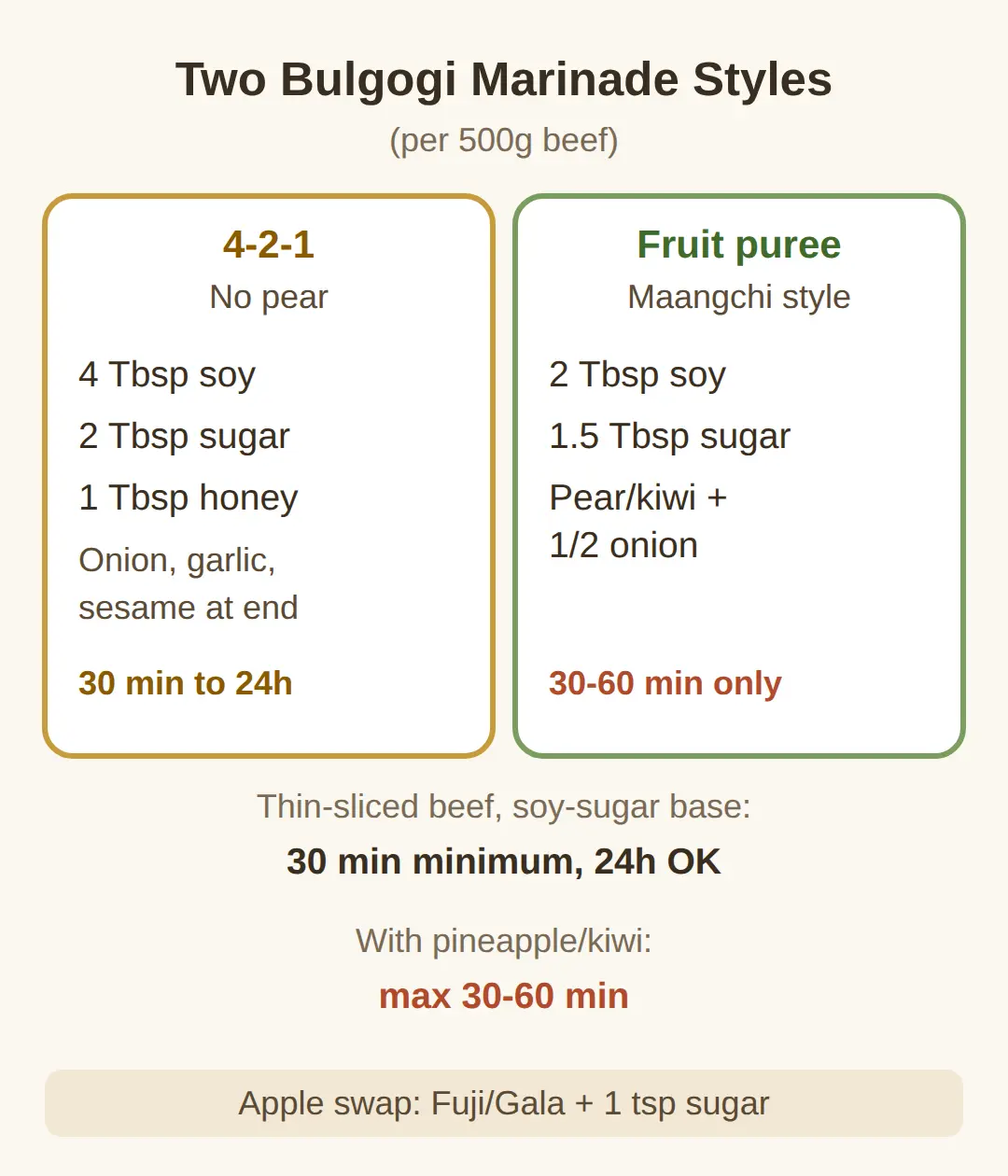
| Soy sauce (regular) | 4 Tbsp |
|---|---|
| Sugar | 2 Tbsp |
| Honey | 1 Tbsp |
| Minced garlic | 1 Tbsp |
| Grated onion | about 1/2 onion |
| Mirin (cooking wine) | 1 Tbsp, optional |
| Toasted sesame oil + seeds | 1 Tbsp oil, seeds at the end |
Per 500g of thin-sliced beef, the home ratio is 4 Tbsp soy sauce, 2 Tbsp sugar and 1 Tbsp honey, giving about 42g of added sugar — roughly 8% of the meat’s weight.
The 4-2-1 ratio comes from two widely used home recipes, and it works without Asian pear because grated onion supplies the missing moisture and sweetness.
Mix the sugar in first and taste after it dissolves — sugar balances the saltiness of the soy sauce, so adjust before the meat goes in.
| Ingredient | Amount per 500g beef |
|---|---|
| Soy sauce | 4 Tbsp |
| Sugar | 2 Tbsp |
| Honey | 1 Tbsp |
| Minced garlic | 1 Tbsp |
| Grated onion | Half an onion |
| Sesame oil and seeds | Added at the end of mixing |
Half a grated onion goes in with the garlic, and sesame oil and seeds go in last, after the rest is mixed.
One Tbsp of mirin (cooking wine) alongside the soy-sugar base is a common addition in standard Korean recipes.
If a recipe for a bigger batch calls for pureed pear and onion with less soy per kilo — roughly 2 Tbsp soy and 1.5 Tbsp sugar per 500g — that is the fruit-puree style; both work, and this post uses the 4-2-1 no-pear version.
If Asian pear is the one thing missing, replace it with an equal amount of grated sweet apple (Fuji or Gala) plus about 1 tsp extra sugar, since apple is slightly less sweet.
Apple is also gentler on texture: it has less tenderizing enzyme than pear, so the meat stays firmer if it sits longer.
If the marinade still tastes flat, the fix is usually a touch more sugar, not more soy sauce.
How Long to Marinate Bulgogi — 30 Minutes Is Enough
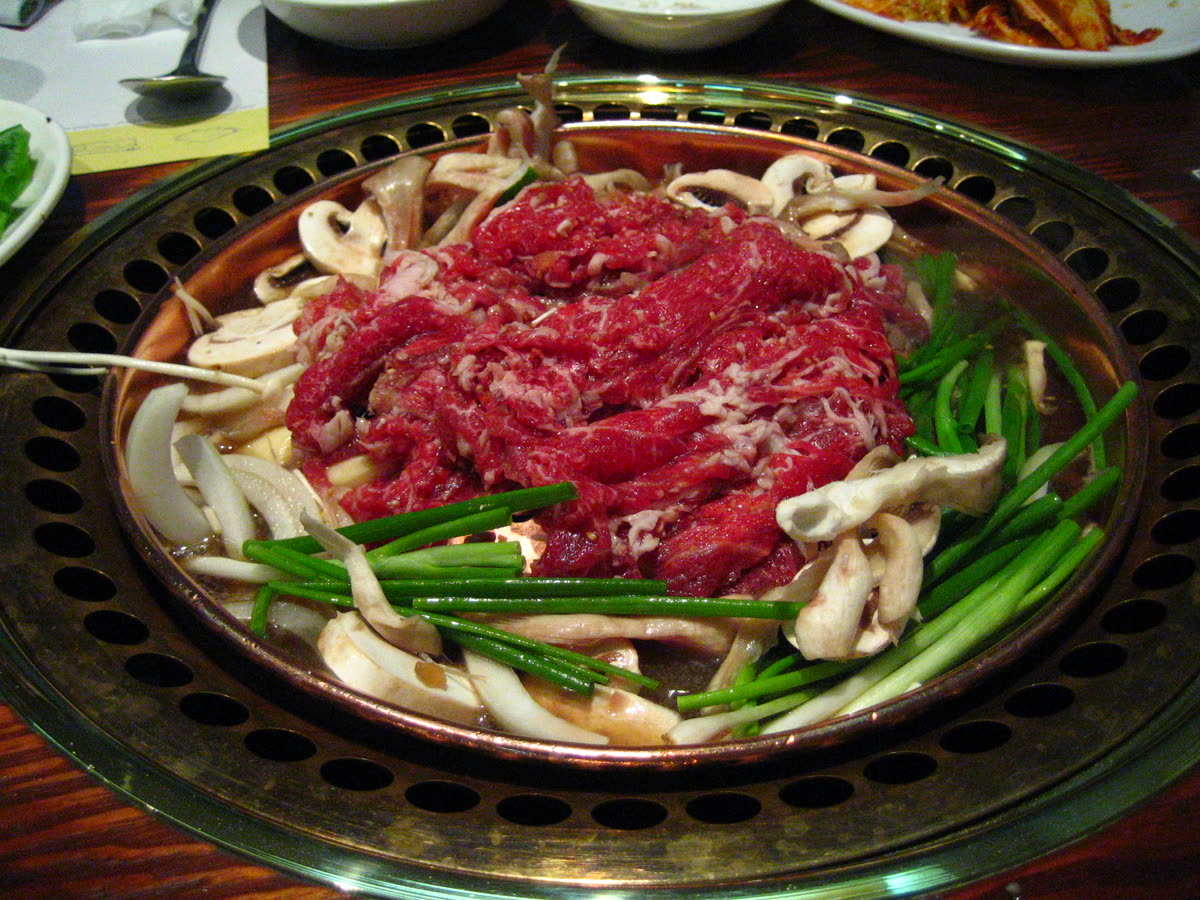
Thin 2-3mm slices need only 30 minutes of marinating to taste seasoned; overnight in the fridge gives deeper flavor.
A plain soy-sugar marinade like the 4-2-1 ratio tolerates up to 24 hours in the fridge without hurting the texture.
Put the beef and marinade in a zip bag, massage the bag so every slice is coated, and flip it once halfway through.
The bag method coats better than a bowl and takes one dish to wash.
If fresh pineapple or kiwi goes into the marinade, that changes the rule: fruit tenderizing enzymes work fast, so marinate only 30-60 minutes and never past overnight, because the texture turns mushy.
Marinating beyond 24 hours is a problem only when fruit is in the mix — with the plain soy-sugar base, a full day in the fridge is fine.
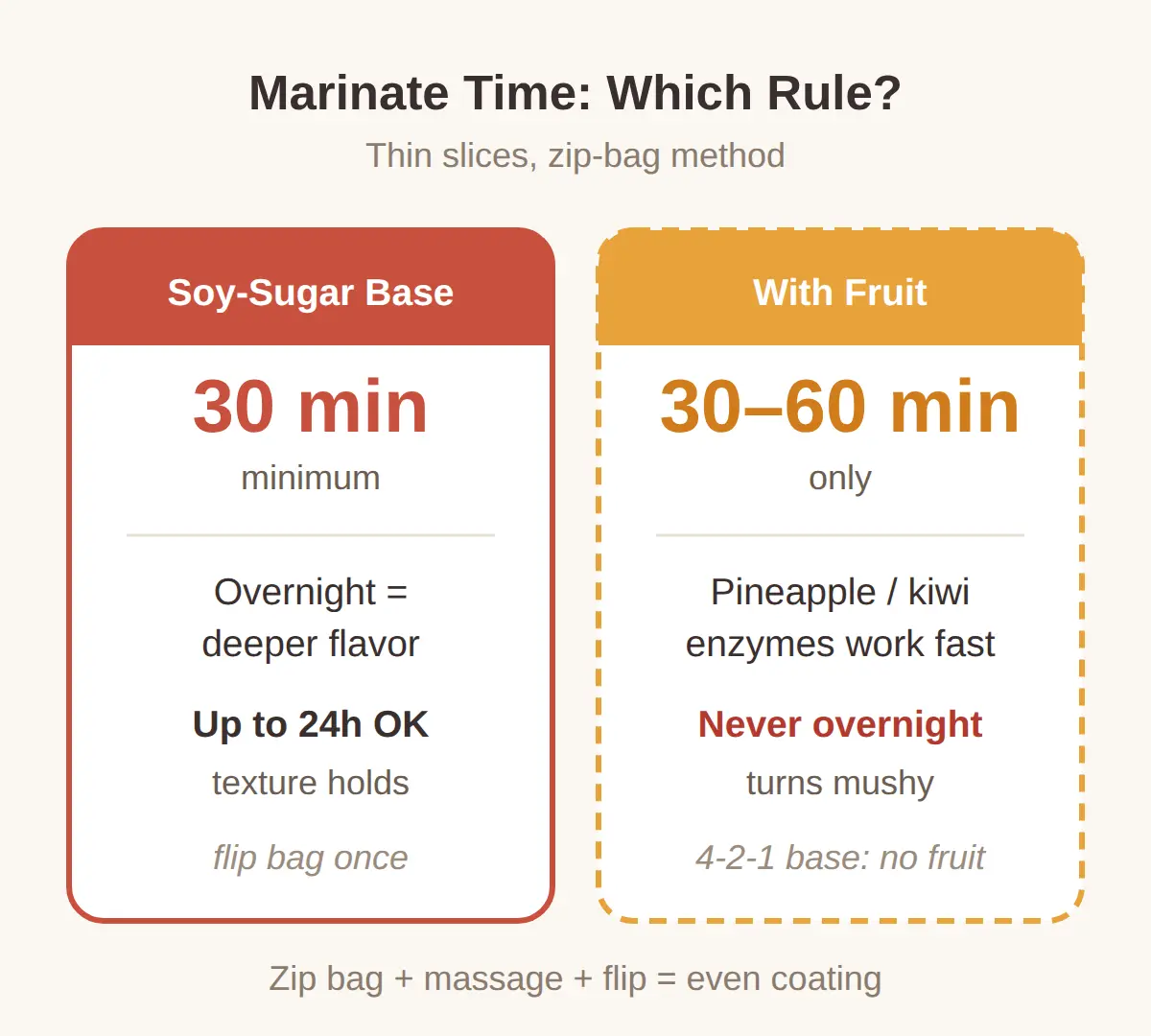
Pan vs Grill vs Broiler for Bulgogi at Home
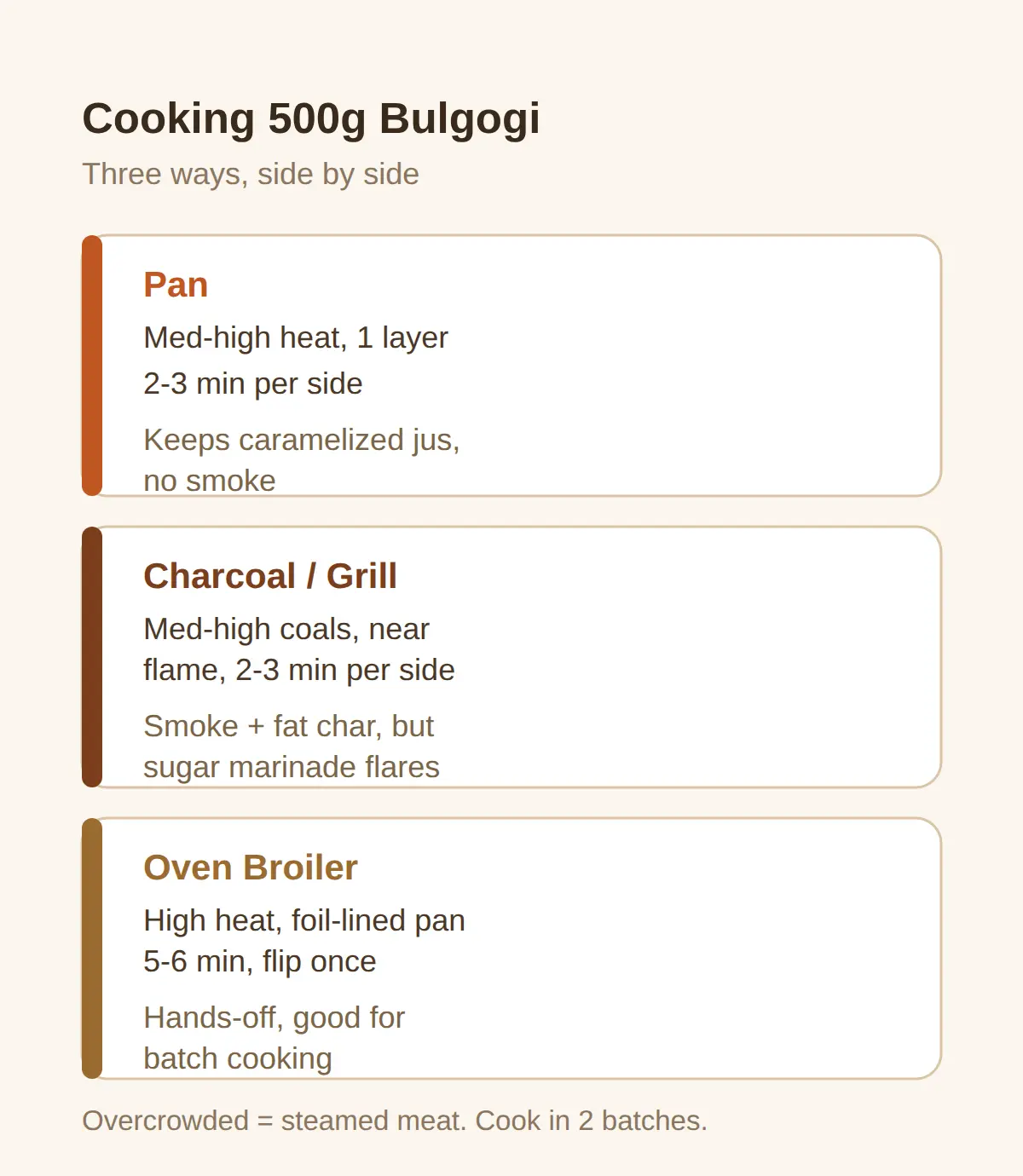
A regular pan cooks bulgogi on medium-high heat, 2-3 minutes per side, in a single layer — and it keeps all the caramelized jus in the pan.
Thin slices cook fast: 500g done in two batches takes under 10 minutes total.
The three ways to cook it, side by side:
| Method | Heat | Time | Trade-off |
|---|---|---|---|
| Pan | medium-high, single layer | 2-3 min per side | keeps the caramelized jus, no smoke |
| Charcoal / grill | medium-high coals, meat close to but not over the flame | 2-3 min per side | smoke and dripping-fat char, but the sugar marinade flares up |
| Oven broiler | high, foil-lined sheet pan | 5-6 min, flip once | hands-off, good for batch cooking |
If the marinade burns before the meat cooks through, the pan was overcrowded or the heat was too low — cook in two batches for 500g, because crowding drops the pan temperature and the meat steams instead of caramelizing.
Leaner cuts like top sirloin benefit from a light coating of oil in the pan and slightly shorter cooking so they do not dry out.
If you want the smoke and char, take the grill; if you want the jus over rice, the pan wins — the broiler is the middle answer when cooking for several people.
Which Beef Cut for Bulgogi, and How to Slice It Abroad
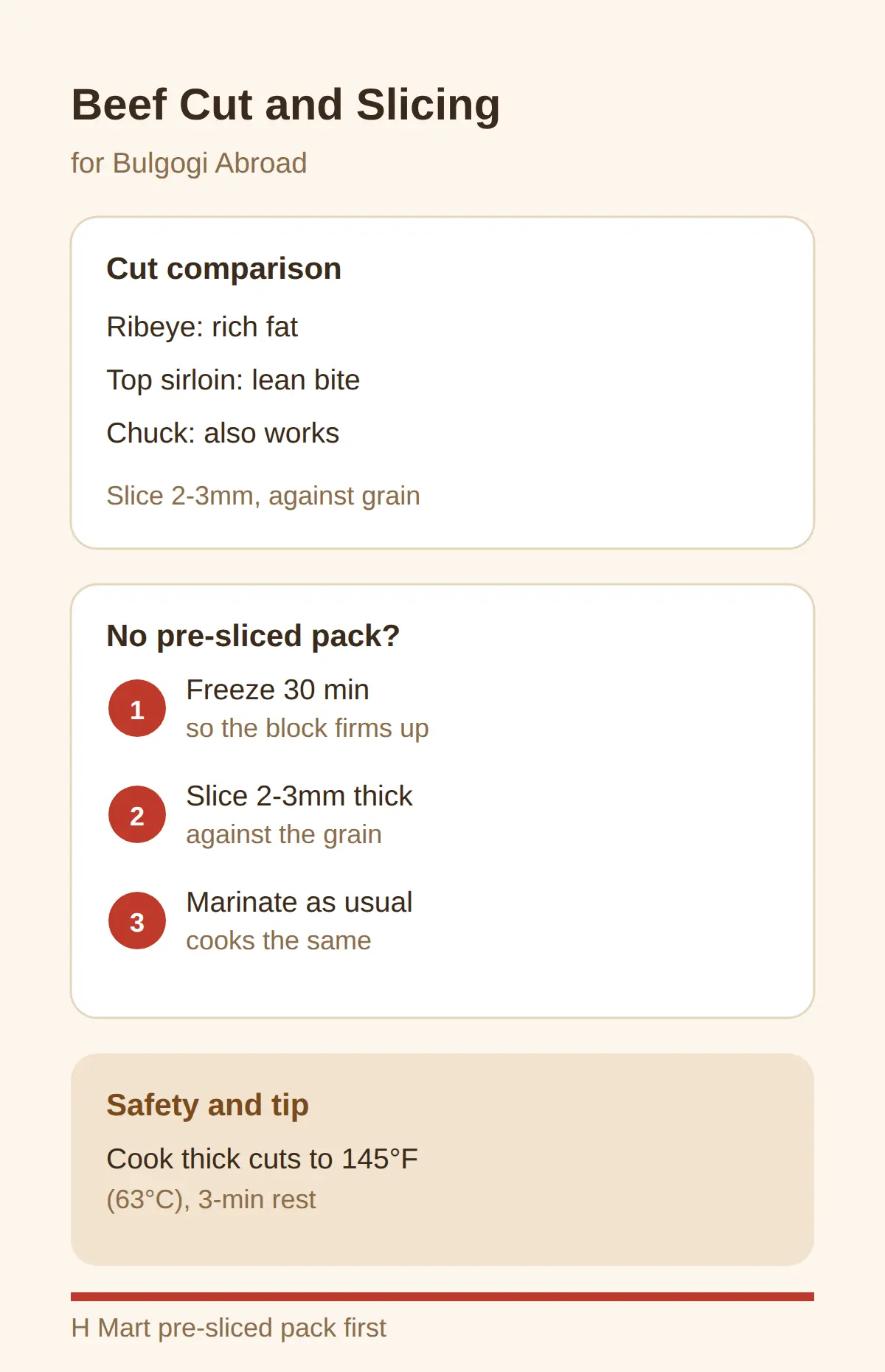
Ribeye, top sirloin or chuck sliced 2-3mm thin against the grain all work for bulgogi; ribeye brings the fat, sirloin brings the lean bite.
The simplest option abroad is pre-sliced ‘bulgogi cut’ beef, about 2-3mm thick, sold at overseas Korean grocers such as H Mart.
When pre-sliced beef is not available:
- Freeze the block of beef for 30 minutes so it firms up.
- Slice it 2-3mm thick, cutting against the grain.
- Marinate as usual — home-sliced pieces cook the same as pre-sliced ones.
For thick home-cut slices, food safety guidance is to cook beef to 145°F (63°C) internal with a 3-minute rest; 2-3mm slices cook through in their 2-3 minutes per side.
If a Korean grocer is within reach, buy the pre-sliced pack first, because the 30-minute freezer trick is the fallback, not the starting point.
Steps at a glance
-
1Freeze the block of beef for 30 minutes so it firms up.⏱ 30 minutes
-
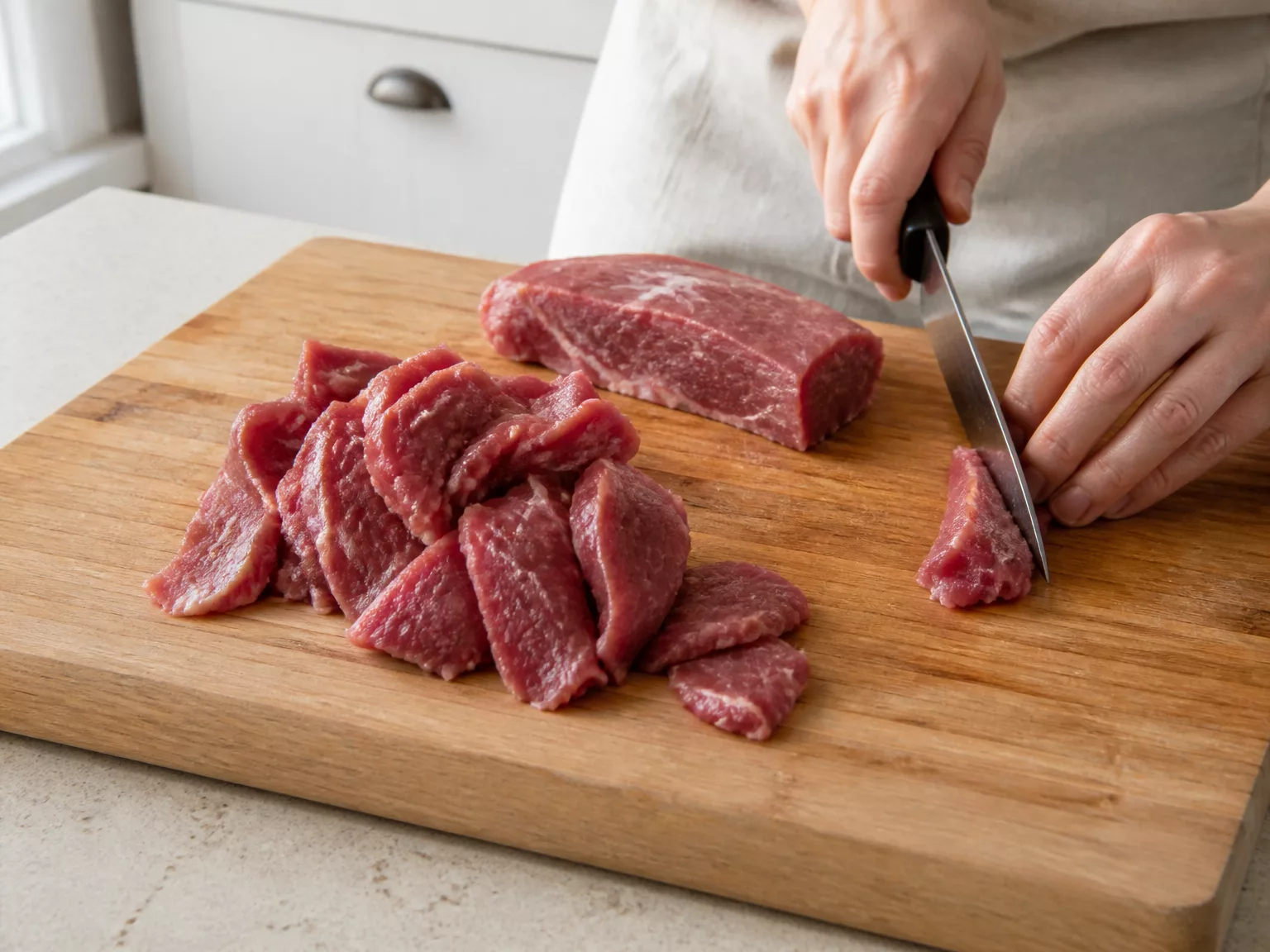 AI-generated photo
What it should look like — AI-generated image of this step, made from the recipe text — not a photo of our kitchen. 2Slice it 2-3mm thick, cutting against the grain. -
3Marinate as usual
What to Serve With Bulgogi, and How to Store It
The standard home set is rice, lettuce or perilla leaves for wraps (ssam), ssamjang (a thick soybean-chili paste) and kimchi on the side.
Kimchi’s acidity balances the sweet marinade, and a lettuce wrap with ssamjang is how most Korean households eat it.
500g of raw thin-sliced beef serves 2-3 adults as a main, based on the Korean standard of 150-200g raw per person for barbecue cuts.
Cooked leftovers keep 3-4 days refrigerated and reheat well in a pan.
Raw beef keeps better frozen: it can sit in the marinade in the freezer for up to 3 months, then thaw overnight in the fridge before cooking.
The batch routine that saves the most time: marinate raw beef in a zip bag and freeze it in meal-size portions, thaw one bag overnight, and cook it fresh in the pan — cooked leftovers from a double batch cover lunch the next 3-4 days.
Bottled bulgogi sauce (such as CJ Beksul) exists as a shortcut, but the homemade soy-sugar base gives the same flavor without the corn-syrup-heavy formulas — and no pear hunt.
If I were meal-prepping, I would batch-marinate raw beef in zip bags and freeze it for up to 3 months, thawing one bag overnight before each cook — that is the routine I would pick over storing cooked leftovers, because the meat tastes freshly cooked every time.
Related posts
📎 📅 Upcoming Dates — Release & Event Calendar
Sources
- Ministry of Culture Korean cooking series with gram-unit mar (korean-culture.org)
- Chef-verified technique (cookpick.kr)
- confirmed in brief.md as anchor intent for this keyword (google.com)
Summary — Bulgogi in 40 Minutes, No Pear Required
- Mix the 4-2-1 marinade per 500g: 4 Tbsp soy sauce, 2 Tbsp sugar, 1 Tbsp honey, 1 Tbsp garlic, half a grated onion, sesame oil last.
- No pear: grated apple (equal amount, plus 1 tsp sugar) or just the onion in the base ratio.
- Cook beef to 145°F (63°C) internal with a 3-minute rest — worth a check if you slice your own thicker cuts.
- Pan: medium-high, single layer, 2-3 minutes per side, two batches for 500g.
- 500g serves 2-3 adults; cooked leftovers keep 3-4 days, raw marinated beef freezes 3 months.
FAQ
Q. What can I use instead of pear in bulgogi marinade?
An equal amount of grated sweet apple (Fuji or Gala) plus about 1 tsp extra sugar. Apple is slightly less sweet, and the plain soy-sugar 4-2-1 ratio with grated onion also works with no fruit at all.
Q. What is the soy sauce to sugar ratio for bulgogi?
Per 500g of thin-sliced beef: 4 Tbsp soy sauce to 2 Tbsp sugar, plus 1 Tbsp honey. That is about 42g of added sugar, roughly 8% of the meat’s weight.
Q. Can I cook bulgogi in a regular pan instead of a grill?
Yes. Preheat on medium-high, cook in a single layer 2-3 minutes per side, and use two batches for 500g. The pan keeps the caramelized jus that a grill lets drip away.
Q. How long should I marinate bulgogi if I only have 30 minutes?
30 minutes is enough for thin 2-3mm slices to taste seasoned. Use a zip bag and massage it so the marinade coats every slice quickly.
Q. How many people does 500g of sliced beef serve?
2-3 adults as a main, based on the Korean standard of 150-200g raw beef per person for barbecue cuts.
Next Korean dish to check off: tteokguk, the rice-cake soup eaten on Lunar New Year — it needs one pot and fewer ingredients than this marinade.
Cover photo: Bulgogi 9 by Graham Hills — CC BY 2.0
#bulgogirecipe #koreanbarbecueathome #bulgogimarinade #koreanfoodathomerecipes #nopearbulgogi
📅Upcoming Schedule — this week 23 · D-1 Autumn season = post-summer brightening demand window (UV drSee all →