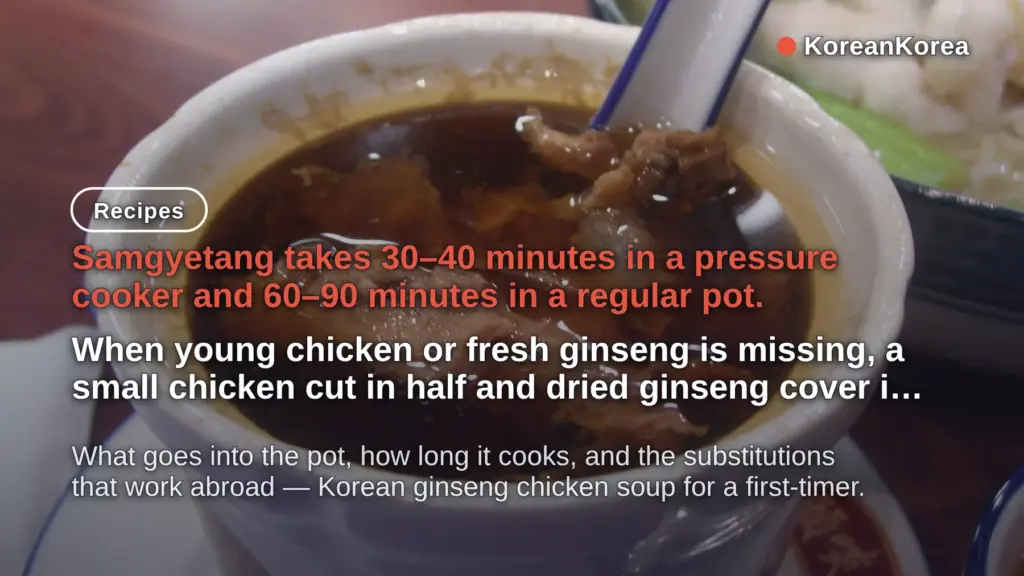
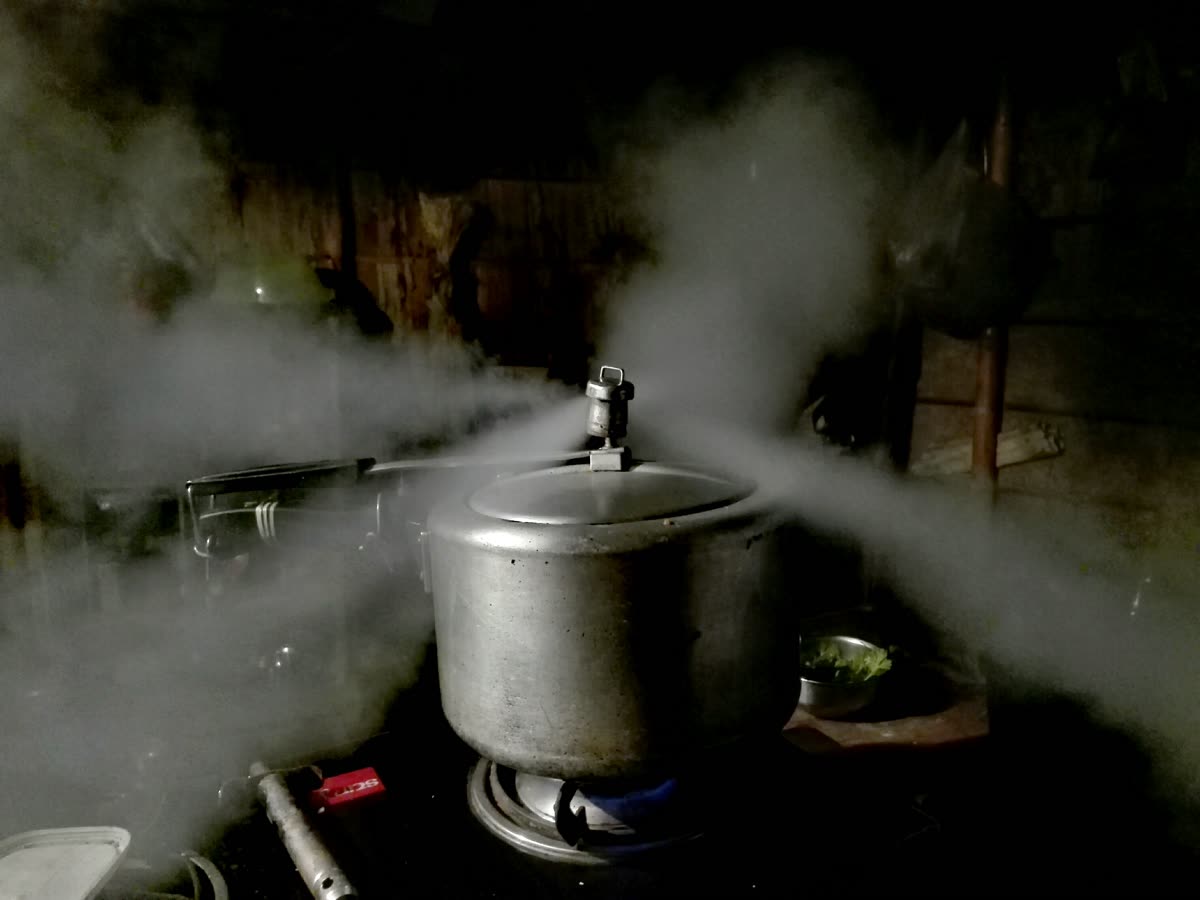
This samgyetang recipe takes 30–40 minutes in a pressure cooker and 60–90 minutes in a regular pot, per Cookpick as of September 29, 2026. One whole young chicken is stuffed with glutinous rice, ginseng, jujubes and garlic, then boiled into a broth. Missing an ingredient abroad? Swap in a small chicken cut in half, dried ginseng or dang-gwi, or soaked short-grain rice.
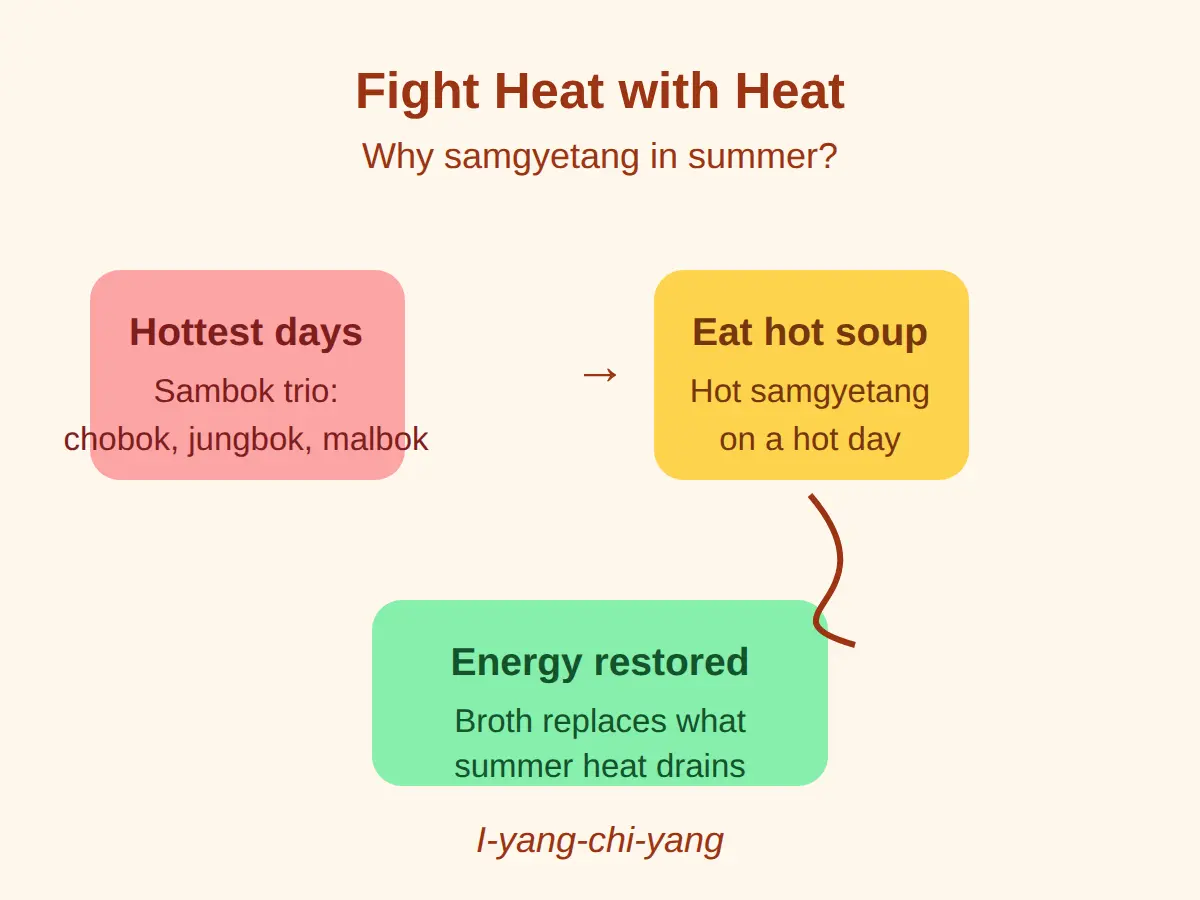
Why the Samgyetang Recipe Uses Hot Soup on the Hottest Days
| Regular pot | 60–90 minutes (bring to a boil, then simmer medium-low ~1 hour) |
|---|---|
| Pressure cooker | 30–40 minutes |
| Electric pressure rice cooker | 40–50 minutes |
| When Koreans eat it | Why | How it works |
|---|---|---|
| Sambok days — chobok, jungbok, malbok, the three hottest days by the lunar calendar | I-yang-chi-yang: fighting heat with heat | A hot broth replenishes energy the summer heat takes out |
How Long Does Samgyetang Take? (By Pot Type)
| Pot type | Time | Note |
|---|---|---|
| Regular pot | 60–90 minutes | Boil on high, then simmer on medium-low, skimming foam |
| Pressure cooker | 30–40 minutes | Saves roughly 30–50 minutes vs the regular pot |
| Electric pressure rice cooker | 40–50 minutes | Sits in between the two |
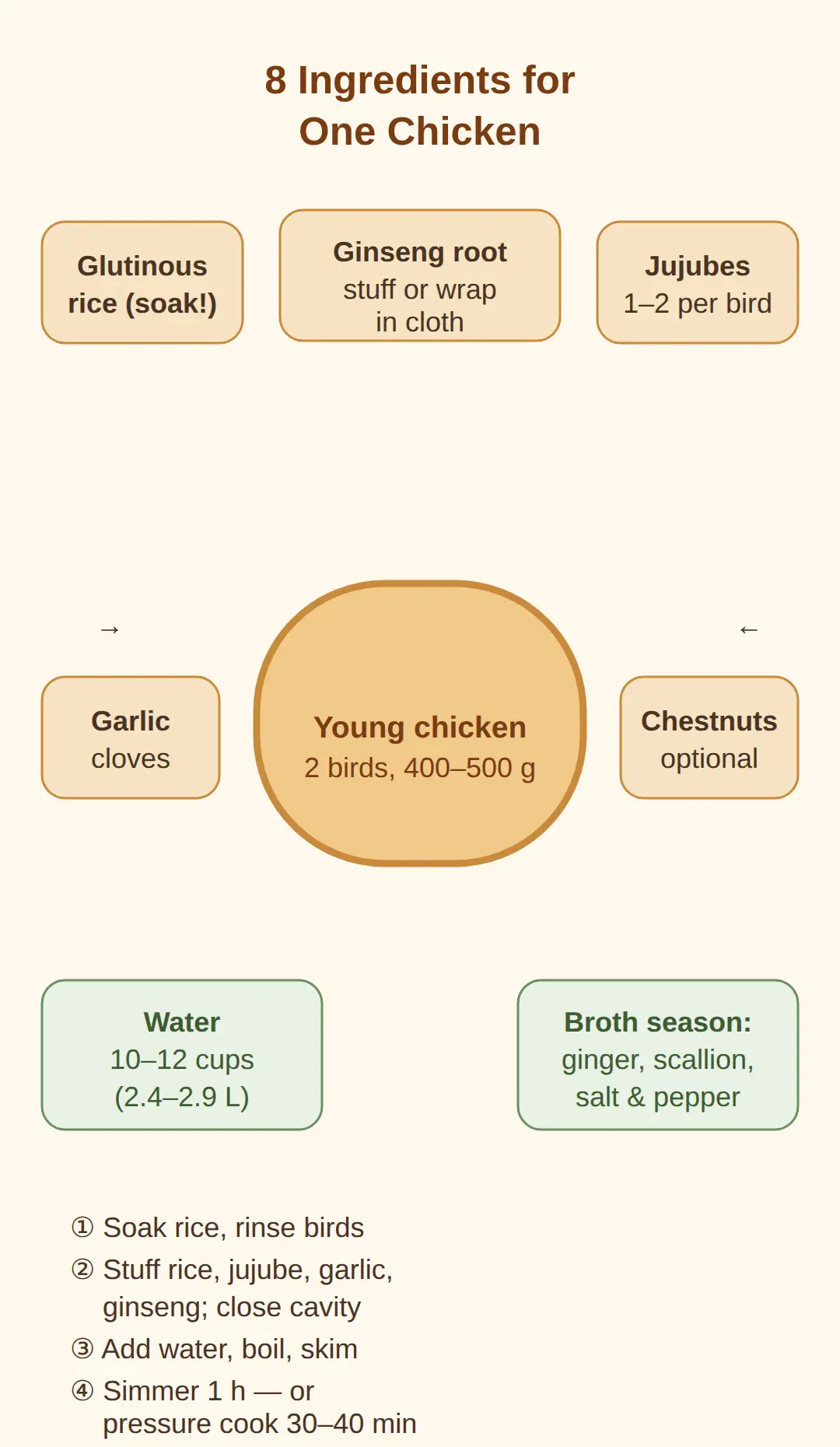
The 8 Ingredients That Go Into One Chicken
The stuffing base is glutinous rice, ginseng, jujube (Chinese date), garlic, plus chestnut — boiled with ginger, scallion, salt and pepper into one broth.
Stuff the bird with rice, ginseng, jujube and garlic; do not overfill, because the rice swells.
A published recipe calls for 10–12 cups (2.4–2.9 L) of water for two 400–500 g young chickens.
Traditional practice wraps the ginseng in cloth and simmers it in the broth, on the reasoning that stuffing it inside the chicken loses nutrition into the bones.
Either method cooks; pick the one matching the ginseng form you have.
- Soak the glutinous rice in cold water ahead of cooking.
- Rinse two 400–500 g young chickens inside and out; trim fat if visible.
- Stuff each bird with soaked glutinous rice, 1–2 jujubes, garlic cloves and ginseng root.
- Close the cavity with a skewer or kitchen twine so the filling stays inside.
- Place both birds in the pot with 10–12 cups (2.4–2.9 L) of water.
- Bring to a boil on high heat; skim off the gray foam.
- Drop to medium-low and simmer about 1 hour — or 30–40 minutes in a pressure cooker.
- Check doneness: the meat should pull off the bone and the stuffed rice should look fully bloated.
- Season at the table with salt and pepper.
Steps at a glance
-
1Soak the glutinous rice in cold water ahead of cooking.
-
2Rinse two 400–500 g young chickens inside and out
-
3Stuff each bird with soaked glutinous rice, 1–2 jujubes, garlic…
-
4Close the cavity with a skewer or kitchen twine so the filling stays…
-
5Place both birds in the pot with 10–12 cups (2.4–2.9 L) of water.
-
6Bring to a boil on high heat🔥 bring to a boil
-
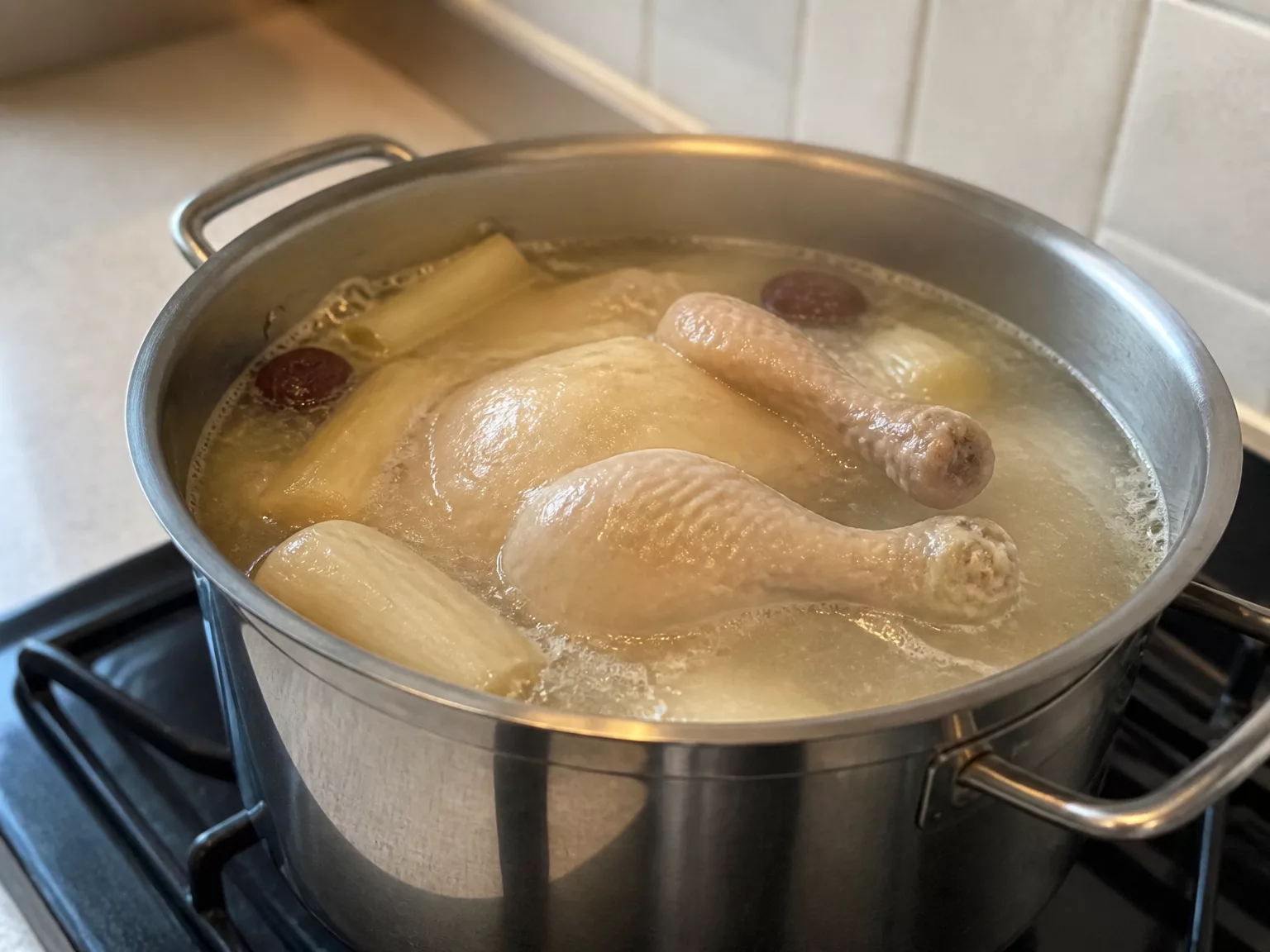 AI-generated photo
What it should look like — AI-generated image of this step, made from the recipe text — not a photo of our kitchen. 7Drop to medium-low and simmer about 1 hour⏱ ~1 hour🔥 simmer -
8Check doneness: the meat should pull off the bone and the stuffed…
-
9Season at the table with salt and pepper.
Substitutes When Young Chicken, Fresh Ginseng or Glutinous Rice Is Unavailable
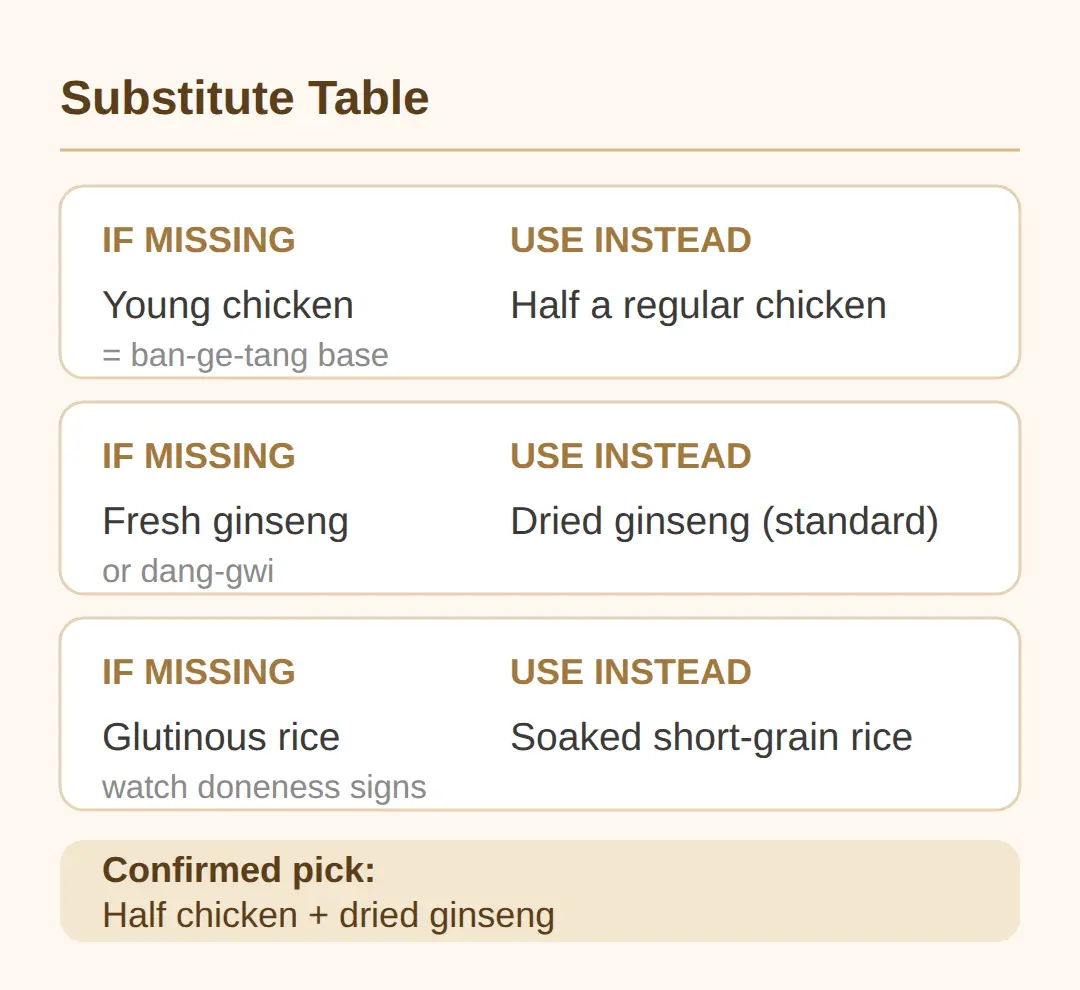
Substitute a small regular chicken cut in half when young spring chicken (yeonggye) is not stocked — this half-cut version is the basis of ban-ge-tang.
Replace fresh ginseng (su-sam) with dried ginseng or dang-gwi (angelica root); dried ginseng is the standard swap outside Korea.
If glutinous rice is not on the shelf, soaked ordinary short-grain rice is the common replacement for the stuffing.
A 6-year-root ginseng is the classic pairing with a young chicken, but 4-year-root is widely used since the saponin content differs little; some shops use 1–2-year roots or hwanggi (astragalus) instead.
The exact ginseng-to-hwanggi substitution ratio was not confirmed in the sources checked here — start low and taste the broth rather than copying a number.
If young chicken and fresh ginseng are both hard to find, I would go half a regular chicken plus dried ginseng and call it ban-ge-tang style — those are the confirmed substitutes, and the flavor profile stays closer to the original than inventing a swap.
Whether the ordinary-rice substitute changes the cook time was not found in any source, so watch the doneness signs instead of adjusting the clock.
How Do I Know It Is Done — And How Is It Seasoned?
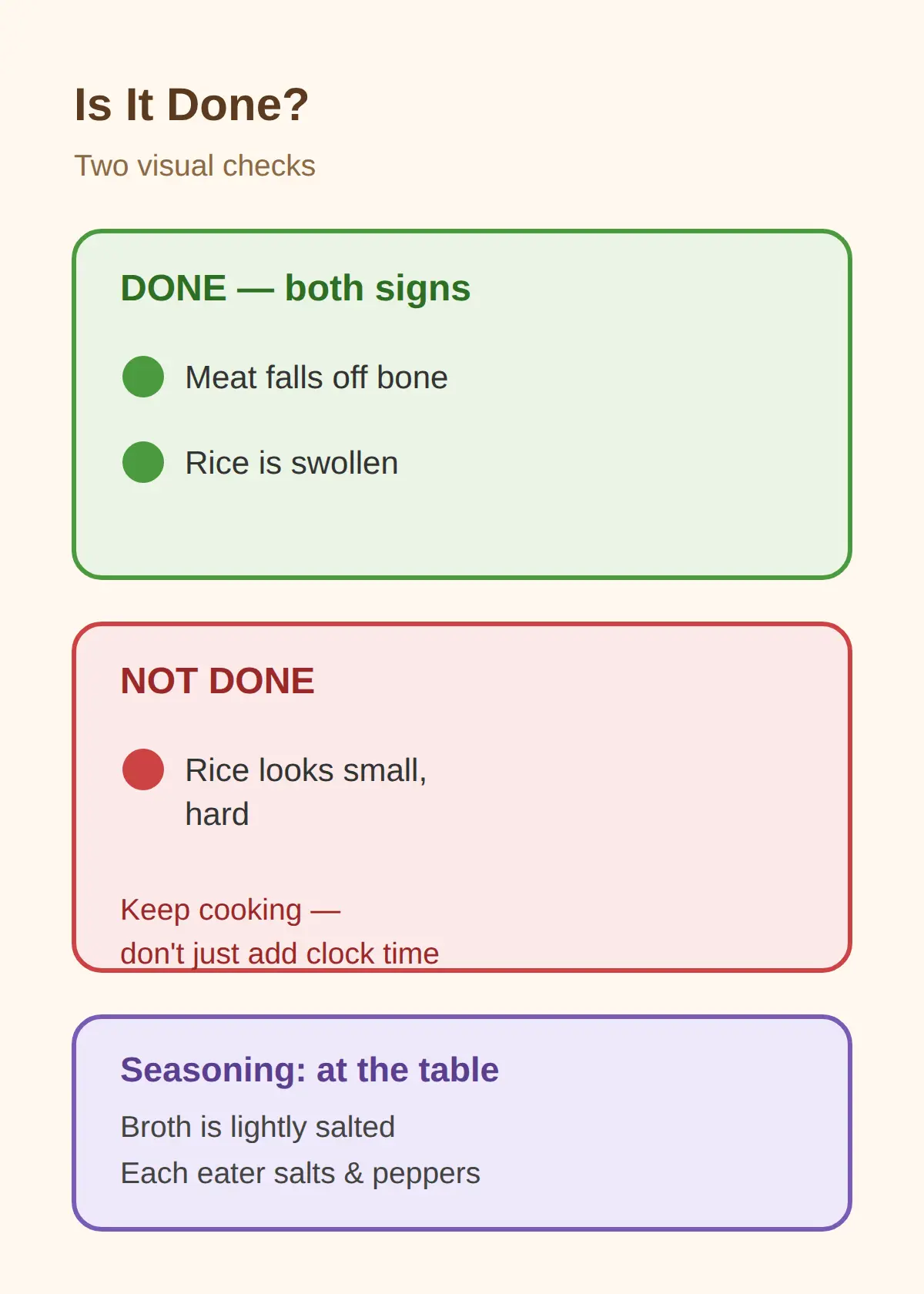
Cook until the meat falls off the bone and the stuffed rice has swollen — those two visual signs are the practical doneness check for a first-timer.
Seasoning happens at the table: each eater salts and peppers their own bowl, and per-bowl salting of the whole broth is discouraged by common serving convention.
This matters because the broth itself comes out lightly salted, almost plain, by design.
The dip-the-meat-in-salt-and-pepper style pairs with this; some versions also serve seasoned dipping sauce for the meat.
A jujube myth says the dates absorb bad compounds and must not be eaten — this is false; jujubes in the pot are safe to eat.
Do not pre-salt the broth heavily, then; season at the table and let each person adjust.
If the rice inside looks small and hard, it is not done — keep cooking rather than adding time to the clock.
Samgyetang vs Baeksuk, Ban-ge-tang, Yongbongtang — What Can You Make Instead?
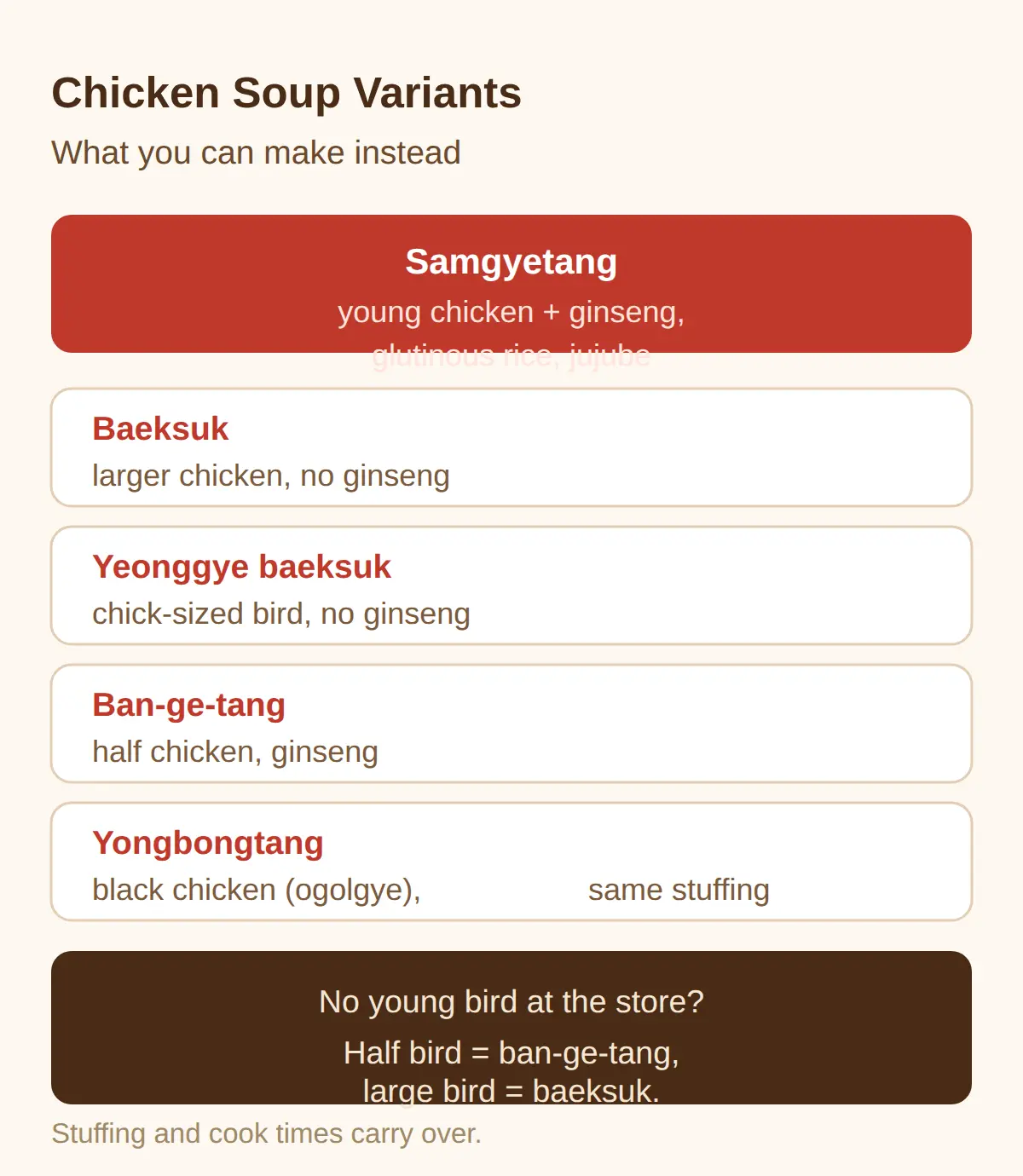
Samgyetang is very close to baeksuk (boiled chicken soup); the difference is ginseng and a young bird.
A version made with a chick-sized very young bird is yeonggye baeksuk; the half-cut version is ban-ge-tang; a black-meat chicken (ogolgye) version is yongbongtang.
So if yeonggye is missing at your store, half a chicken makes ban-ge-tang, a larger bird makes baeksuk, and the stuffing and cook times carry over.
| Variant | Bird | Key addition |
|---|---|---|
| Samgyetang | young chicken | ginseng, glutinous rice, jujube |
| Baeksuk | larger chicken | no ginseng |
| Yeonggye baeksuk | chick-sized young bird | no ginseng |
| Ban-ge-tang | half of a regular chicken | ginseng |
| Yongbongtang | black-meat chicken (ogolgye) | ginseng, same stuffing |
👉 Cookpick — Samgyetang recipe (cook-time table)
👉 Korean Wikipedia — Samgyetang (variants, history, boknal)
👉 Korea Times — Red ginseng gains attention for immune health amid flu surge
Related posts
📎 📅 Upcoming Dates — Release & Event Calendar
Sources
- Korean Wikipedia article — ingredients, boknal culture, baek (ko.wikipedia.org)
- cookpick.kr time table: regular pot 60–90 min, pressure cook (cookpick.kr)
- Why now (koreatimes.co.kr)
Quick Summary
- 30–40 min in a pressure cooker, 60–90 min in a regular pot, 40–50 min in an electric pressure rice cooker.
- Core stuffing: glutinous rice, ginseng, jujube, and garlic (plus chestnut), with ginger and scallion going into the broth and salt and pepper added at the table.
- Water: 10–12 cups (2.4–2.9 L) for two 400–500 g birds — about 1.2–1.45 L per 500 g.
- Substitutes: half a small chicken for yeonggye, dried ginseng or dang-gwi for fresh, soaked short-grain rice for glutinous.
- Doneness: meat falls off the bone and the stuffed rice is bloated; season at the table, not in the pot.
FAQ
Q. How long does samgyetang take in a pressure cooker?
30–40 minutes at pressure, versus 60–90 minutes in a regular pot, per a Cookpick recipe checked September 29, 2026. Watch the visual doneness signs — meat off the bone and bloated rice — rather than a single number.
Q. What can I use instead of fresh ginseng for samgyetang?
Dried ginseng is the standard substitute outside Korea; dang-gwi (angelica root) is a second option, and hwanggi (astragalus) is used in some shops. The exact ginseng-to-hwanggi ratio was not confirmed here, so start with less and taste.
Q. Why do Koreans eat hot samgyetang on the hottest summer days?
It is the i-yang-chi-yang custom of ‘fighting heat with heat’ — a hot broth restores energy lost to heat — eaten on the three sambok days of summer by the lunar calendar.
Q. What is the difference between samgyetang, baeksuk, bankeitang and yongbongtang?
Samgyetang is a young chicken stuffed with rice and ginseng; baeksuk is the same boiled-chicken soup without ginseng or with a larger bird; the half-cut ginseng version is ban-ge-tang; yongbongtang uses black-meat chicken.
Q. Can I make samgyetang without glutinous rice?
Soaked ordinary short-grain rice is the common replacement for the stuffing. Whether it changes the cook time was not confirmed in the sources here, so go by the doneness signs: meat off the bone and rice fully bloated.
After This: What to Check Next
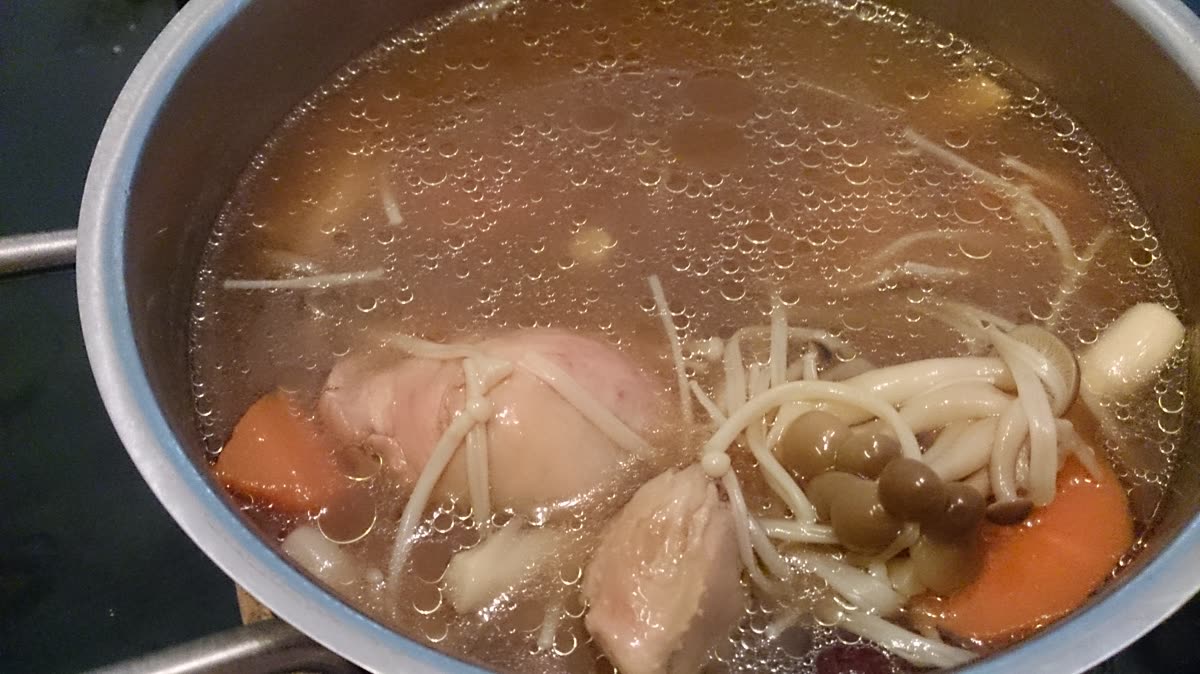
Cover photo: 田七洋参炖老鸡 Tianqi and Ginseng Chicken Double-boiled Soup – First Taste by Alpha — CC BY-SA 2.0
#samgyetangrecipe #ginsengchickensoup #pressurecooker #Koreanrecipe #substitutes #baeksuk
📅Upcoming Schedule — this week 23 · D-day Autumn season = post-summer brightening demand window (UV drSee all →