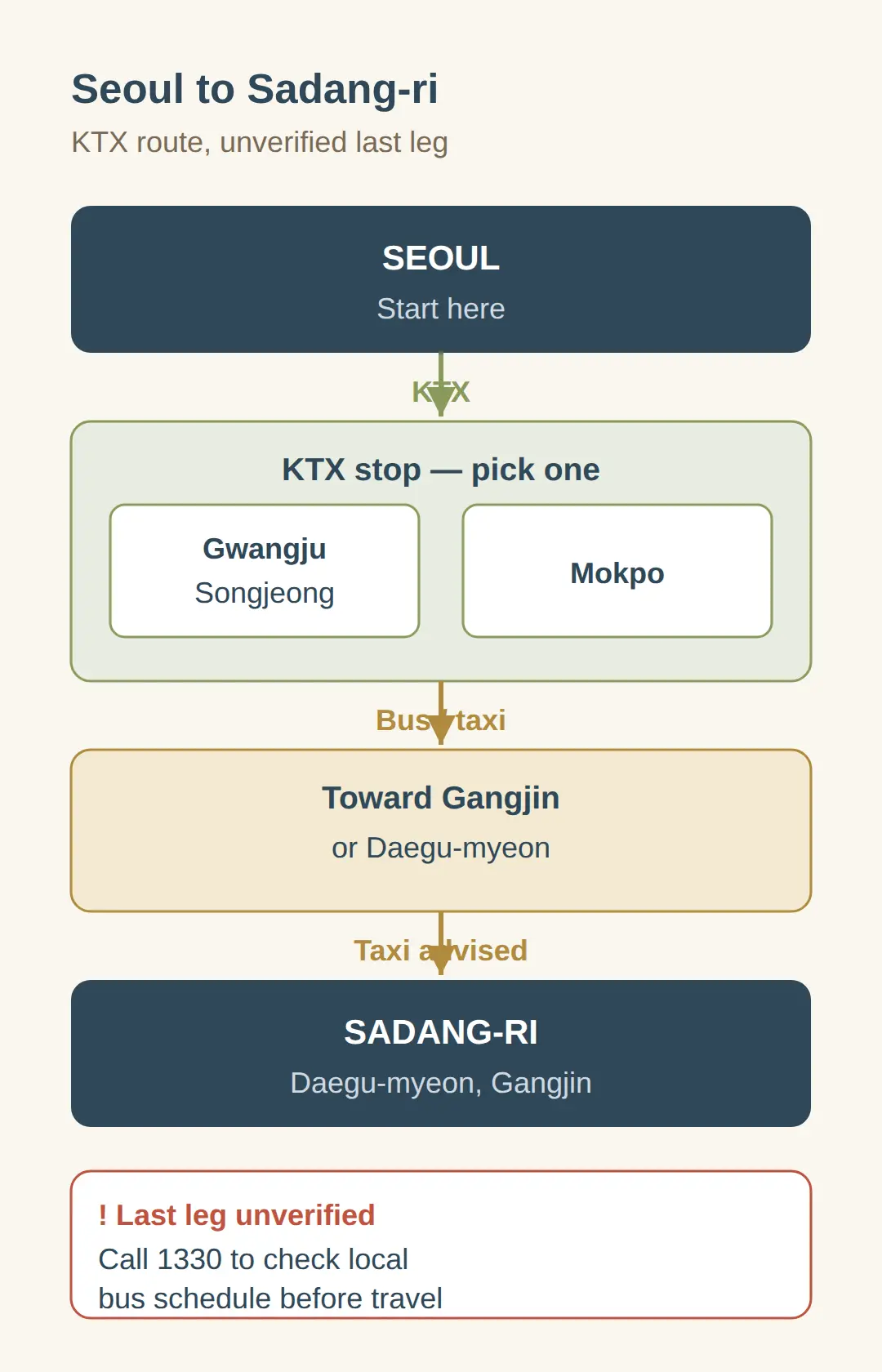
From Seoul, the confirmed route is a KTX to Gwangju Songjeong or Mokpo, then an intercity bus or taxi toward Sadang-ri, Daegu-myeon, Gangjin-gun.
Opening hours and admission fees have not been confirmed in a source dated within the last six months, so call the 1330 Travel Hotline (+82-2-1330, English available) or +82-61-430-3755 before you commit a day to it.
This post covers the route step by step, what is actually on site, why the kilns matter, and what pairs well with them.
Key facts — As of 2026-09-30
- Of Korea’s 24 celadons designated National Treasure, 18 — 75% — are believed to have been made in Gangjin, and 34 of 54 Treasures (63%) likewise; some pieces are preserved in the Louvre Museum in France (KTO).
- Gangjin holds roughly 200 of Korea’s estimated ~667 celadon kiln sites — about 30% — and the Sadang-ri No. 10 kiln’s firing chamber ceiling survives intact, with a celadon inscribed 1332 (Imsin year) found in the building strata (2023-05-25 excavation announcement).
How To Get To Gangjin Goryeo Celadon Kiln Site From Seoul
| Traveling from Seoul without a car | KTX from Seoul to Gwangju Songjeong or Mokpo, then intercity bus or taxi toward Gangjin / Daegu-myeon. The exact bus legs are not verified. |
|---|---|
| You need hours or fees before booking | None confirmed in a source dated within 6 months. Call 1330 (+82-2-1330) or +82-61-430-3755. |
| You like ceramics, archaeology, rural heritage | Roughly 180 fire kilns across about 150 acres in nine villages, with the Gangjin Celadon Museum as the anchor point. |
| You want a second celadon stop | Buan Yucheon-ri (Jeonbuk) is the other major complex; Haenam Shinduk-ri made the everyday ware. |
| You plan around festivals | The Gangjin Celadon Festival is held annually at Sadang-ri, but 2026 dates are not confirmed. |
Take the KTX from Seoul to Gwangju Songjeong or Mokpo — koreankorea.com lists today’s trains from Seoul to every city including both.
From either station, continue by intercity bus or taxi toward Gangjin or Daegu-myeon; the kiln site’s address is Sadang-ri, Daegu-myeon, Gangjin-gun, South Jeolla Province.
The exact bus route and frequency from the Gwangju or Gangjin terminal to Sadang-ri have not been confirmed in a source dated within six months.
If you do not want to gamble on an unverified bus leg, plan a taxi for the last stretch, or call 1330 before travel day to check the local schedule.
A ferry option from the Mokpo side has been mentioned but is not verified, so the land route via Gwangju or Gangjin is the safe advice.
- Check KTX times from Seoul to Gwangju Songjeong or Mokpo on koreankorea.com.
- Call 1330 or +82-61-430-3755 to confirm the local bus or taxi situation to Sadang-ri.
- Build in buffer time for the last stretch — it is the one leg nobody has recently verified.
If you travel without a car, anchor the trip on the Gangjin Celadon Museum at Sadang-ri, where transport and facilities are most likely to converge.
Getting there — Gangjin Goryeo Celadon Kiln Site
- Seoul → Mokpo by train: fastest 2h 20m, from ₩43,500, 35 trains a day, first 05:08 · last 21:18 · timetable
- Seoul → Mokpo by express bus: fastest 3h 50m, from ₩36,700, 14 buses a day, first 06:00 · last 23:55 · timetable
- Last leg: about 65.2 km from Mokpo Station — roughly 59 min by taxi or car without traffic; local buses also run (check the stop sign or a map app)
- Map: Naver Map · Kakao Map · Google Maps
Calculated by koreankorea.com from the national train and express-bus timetables, OpenStreetMap road distance. Plan your own route
Hours And Admission: What Is Confirmed And What Is Not
No opening hours and no fee schedule for the kiln site have been confirmed in a source dated within the last six months.
The site is an open historical area rather than a gated attraction, but the museum’s hours and admission, if any, must be checked separately.
Call the 1330 Travel Hotline (+82-2-1330 — Korean, English, Japanese, Chinese) or the Gangjin County information line (+82-61-430-3755) before you go.
Do not trust a fixed number written on an older web page, because nothing recent backs it.
If your itinerary depends on exact opening times — for example a same-day KTX return — make the call first, then book the train.
What Is Actually On Site: Kilns, Museum And A Fresh Excavation
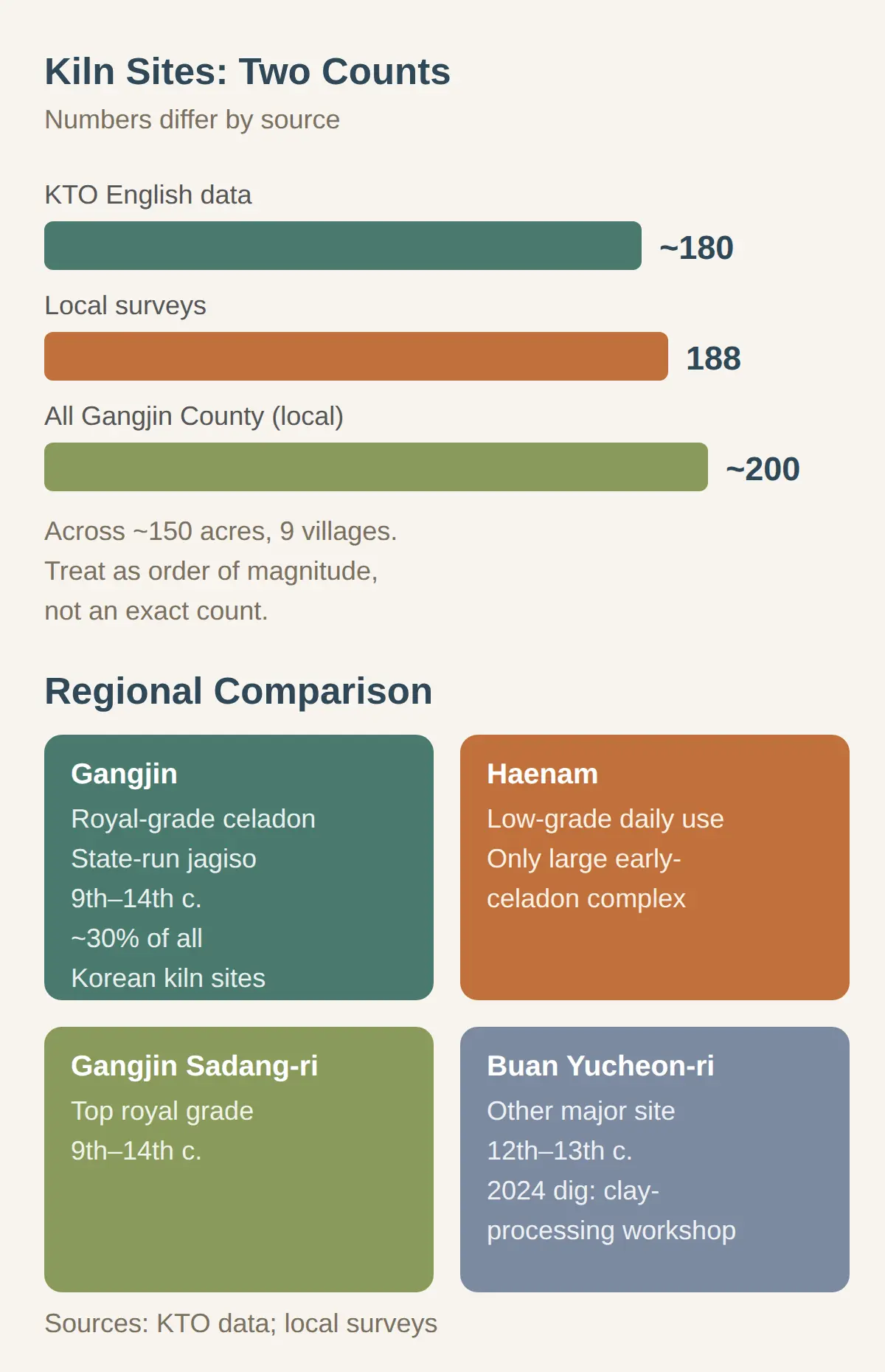
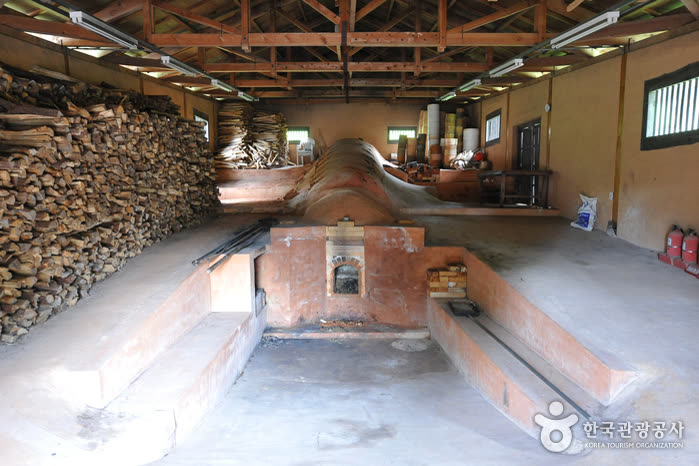
The site protects roughly 180 fire kilns across about 150 acres in nine villages, and local surveys count around 200 kiln sites across Gangjin County.
The Korea Tourism Organization’s English data gives the 180-kiln figure, while local surveys give 188 in Daegu-myeon alone — the two sources do not agree, so treat either as an order of magnitude rather than an exact count.
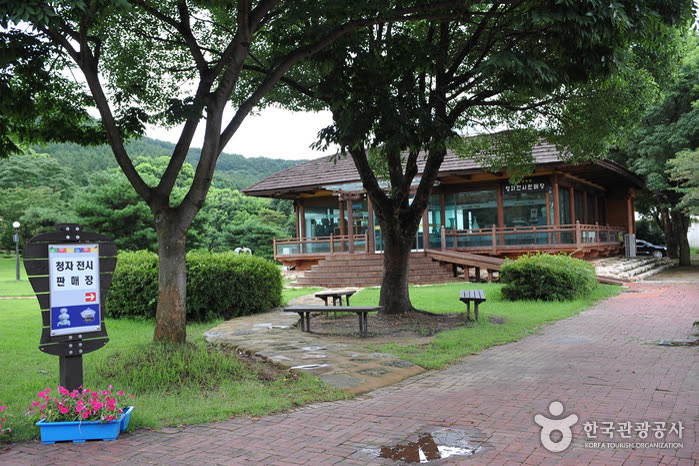
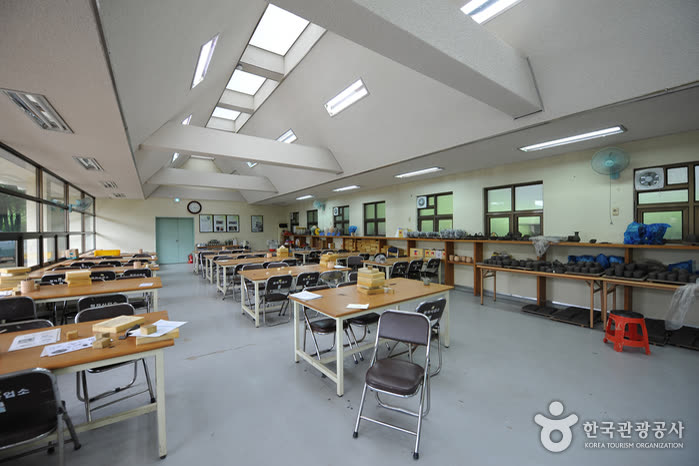
The Gangjin Celadon Museum sits at the Sadang-ri area and is the main on-site facility.
The Sadang-ri No.
10 kiln is the headline find: its firing-chamber ceiling survives intact, and a 2023 excavation there uncovered four tiled government buildings that oversaw production, along with a celadon piece inscribed with the year 1332.
Whether the No.
10 excavation area is publicly viewable during consolidation works is not confirmed, so ask when you call.
If you want to see intact kiln structures rather than museum displays, time your visit around the museum first and explore the open fields after.
Why It Matters: The Numbers Behind Royal Celadon
Daegu-myeon produced Goryeo celadon from the 9th to the 14th century — roughly 500 years — and 18 of Korea’s 24 celadons designated National Treasure are believed to have been made here.
That is 75% of the country’s top-designated celadon from one rural township, and 34 of 54 Treasures (63%) are attributed to Gangjin as well.
The kilns ran under the jagiso, a state-run production district that supplied the royal court, and their jade-green ‘bisak’ color and inlaid (sanggam) decoration made Goryeo celadon world-leading in the 12th–13th centuries.
Some pieces are preserved in the Louvre Museum in France, and the site has been on Korea’s UNESCO World Heritage Tentative List since 1994.
Gangjin holds roughly 200 of Korea’s estimated 667 celadon kiln sites — about 30% — so if you care about celadon at all, this is the densest single place to see it.
If you only have an hour, the museum plus the No.
10 kiln area covers the story.
Who It Suits And What To Combine Nearby
This site suits travelers interested in ceramics, archaeology and rural heritage rather than developed attractions — the kilns sit across open fields in nine villages, so it rewards slow looking.
If you need signage, cafes and paved circuits, a city museum visit will serve you better.
For a comparison side trip, Buan Yucheon-ri in Jeonbuk is the other major Goryeo celadon complex, used mainly in the 12th–13th centuries; a 2024 dig there found Korea’s first clay-processing workshop.
Haenam Shinduk-ri, further south, made the everyday low-grade ware before production shifted to Gangjin, so pairing them shows the contrast between court-grade and everyday output.
The Gangjin Celadon Festival is held annually at the Sadang-ri area and is the region’s representative event, but 2026 dates are not confirmed — check with 1330 or the county line before fixing your dates.
If you are building a Jeonnam trip around one theme, celadon gives you Gangjin plus Buan in a two-stop arc; if you want coastal or island scenery instead, other Jeonnam destinations will fit you better.
👉 KTX trains from Seoul to every city, including Gwangju and Mokpo
👉 Korea travel guides by region
👉 Gangjin Celadon Museum (Korean)
Related posts
📎 Seoul — everything we know
📎 📅 Upcoming Dates — Release & Event Calendar
Sources
- KTO English listing: Sadang-ri address, 1330 hotline, 9th-14 (api.visitkorea.or.kr)
- Late-Goryeo kiln, tiled jagiso buildings, waste dump; chambe (ttcnews.kr)
- opening_hours (celadon.go.kr)
Planning Your Visit: The Short Version
- Anchor the trip on the Gangjin Celadon Museum at Sadang-ri — it is the one on-site facility the data confirms.
- Call 1330 (+82-2-1330, English available) or +82-61-430-3755 before booking trains; hours and fees are unconfirmed in any recent source.
- Leave buffer time for the bus-to-Sadang-ri leg, or plan a taxi — the exact route has not been verified recently.
- Pair Gangjin with Buan Yucheon-ri if celadon is your theme; the two sites show different ends of Goryeo production.
- If you need a developed attraction with full facilities, budget your day elsewhere — this is an open-field heritage site.
FAQ
Q. How do I get to Gangjin Goryeo Celadon Kiln Site from Seoul?
Take the KTX from Seoul to Gwangju Songjeong or Mokpo, then continue by intercity bus or taxi toward Sadang-ri, Daegu-myeon, Gangjin-gun. The exact local bus legs are not verified, so confirm with 1330 before travel.
Q. When is the Gangjin Goryeo Celadon Kiln Site open?
No opening hours have been confirmed in a source dated within the last six months. Call the 1330 Travel Hotline (+82-2-1330) or +82-61-430-3755 before visiting.
Q. Is there an admission fee?
No fee schedule for the kiln site has been confirmed within the last six months. The kiln area is an open historical site; any museum admission must be checked separately by phone.
Q. What can I see at the site besides the kilns?
The Gangjin Celadon Museum at Sadang-ri is the main facility, and the Sadang-ri No. 10 kiln has an intact firing-chamber ceiling found with four tiled government buildings in the 2023 excavation.
Q. What else is nearby worth combining?
Buan Yucheon-ri in Jeonbuk is the other major Goryeo celadon site, and Haenam Shinduk-ri shows where early everyday celadon was made before production moved to Gangjin. The annual Gangjin Celadon Festival is held at Sadang-ri, though 2026 dates are unconfirmed.
In short: an open-air complex of roughly 180 kilns across nine villages in Daegu-myeon, best paired with the Gangjin Celadon Museum, and still on Korea’s UNESCO Tentative List.
Cover photo: AI-generated illustration (celadon kiln pottery) — AI-generated image, illustrative only
#Gangjin #Goryeoceladon #Jeonnam #SouthJeolla #KTXfromSeoul #celadonkilnsite #Koreaheritage
📅Upcoming Schedule — this week 2 · D-2 Hangul DaySee all →