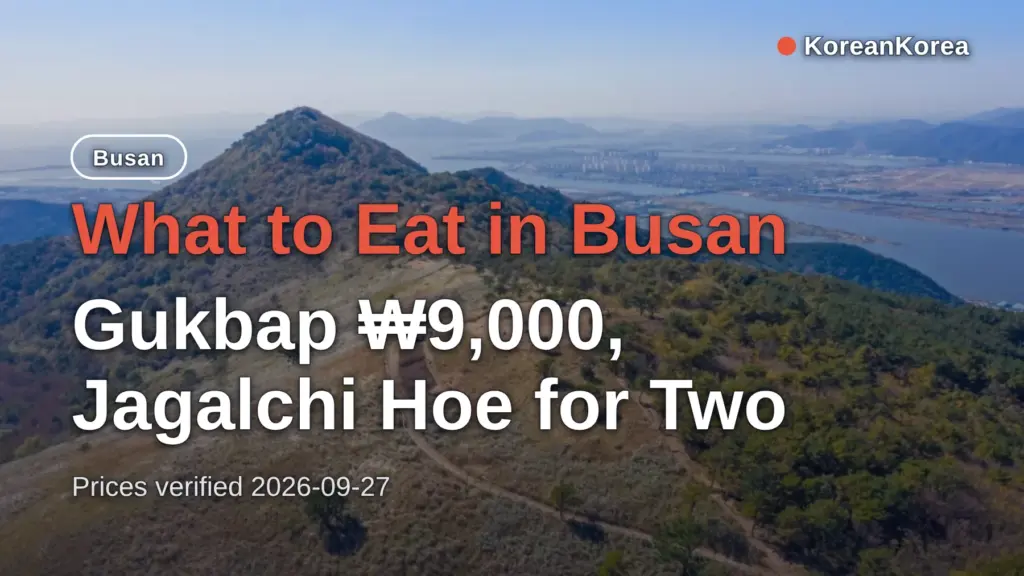
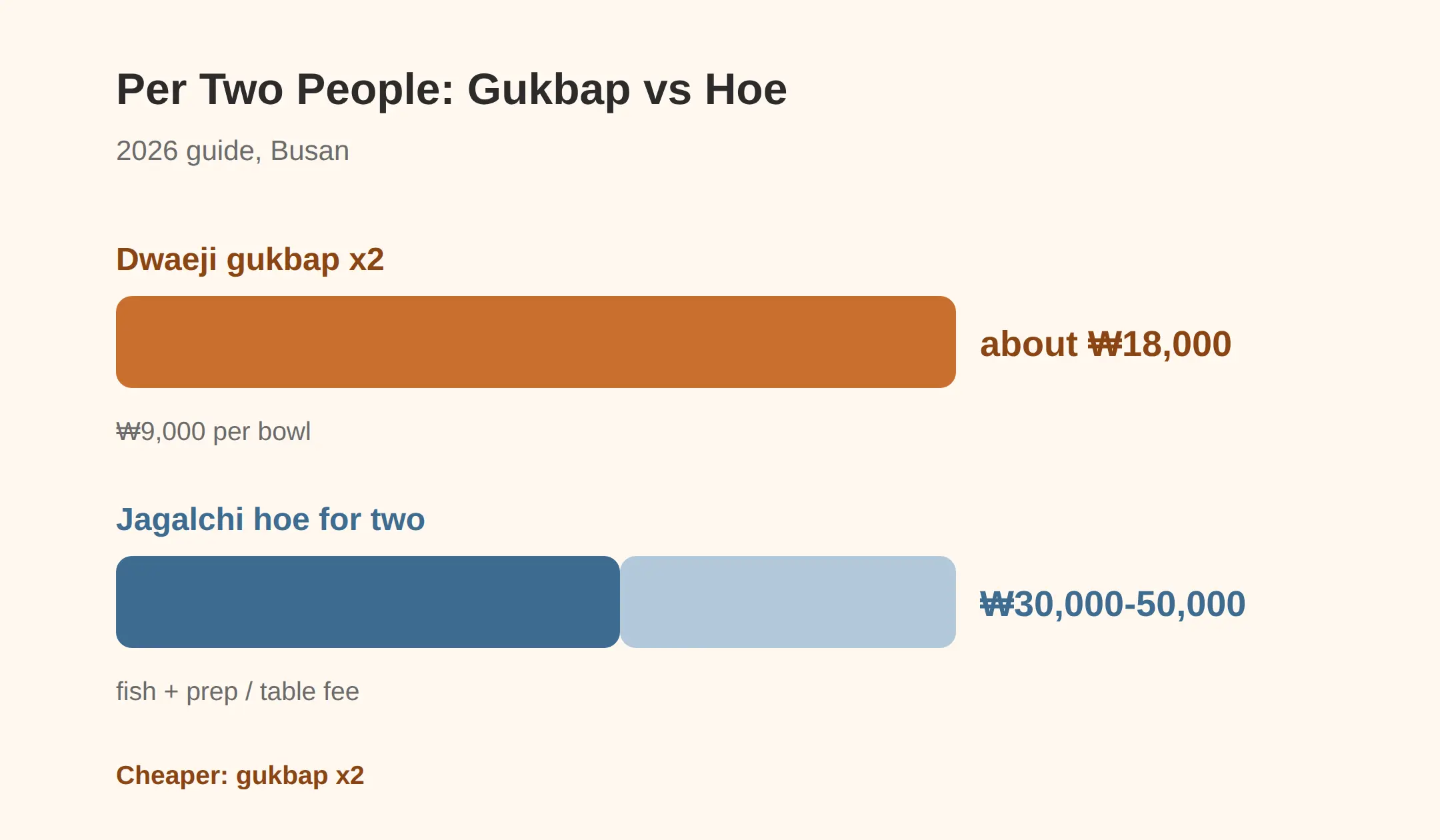
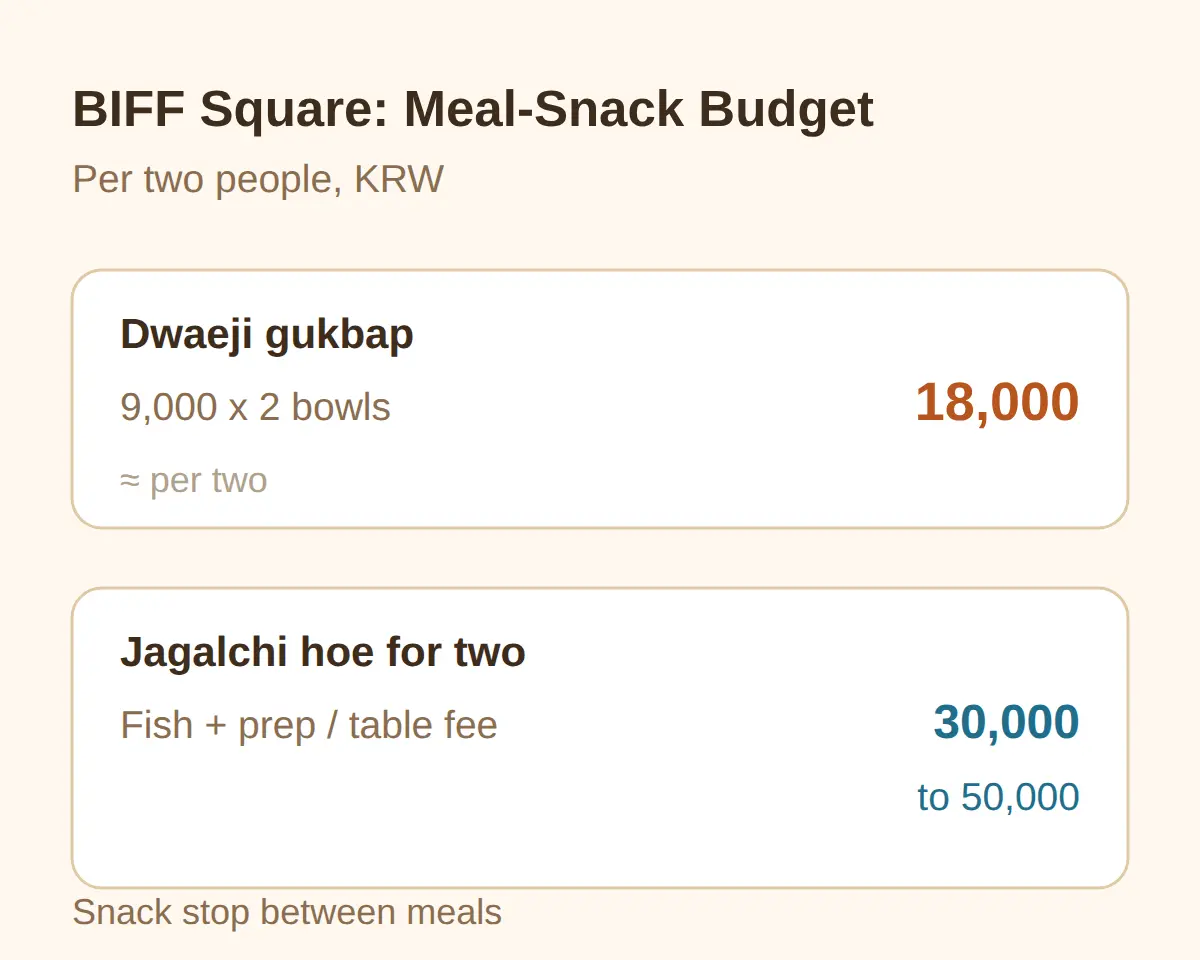
In Busan, eat dwaeji gukbap for about ₩9,000 a bowl and get hoe for two at Jagalchi Market for roughly ₩30,000–50,000 — you buy the fish downstairs and the upstairs restaurant serves it.
What To Eat In Busan — The Short Answer
| Dwaeji gukbap × 2 bowls | Any gukbap shop, table-side seasoning done yourself — the venue handles the broth, so you just sit and season what is served when it arrives, and the table exists at Jagalchi Market instead if you want seafood instead — the cost is ₩9,000 × 2 ≈ ₩18,000 |
|---|---|
| Jagalchi hoe for two | Buy the fish on the ground floor of Jagalchi Market, then an upstairs hoejip prepares and serves it — ₩30,000–50,000 including fish and prep/table fee |
| KTX Seoul–Busan, per person | Seoul Station to Busan Station — ₩59,800 one way, ₩119,600 round trip, about 2 hours 20 minutes each way |
Two foods carry a one-day Busan eating plan: dwaeji gukbap, pork rice soup, at about ₩9,000 a bowl, and hoe, raw fish, for two at Jagalchi Market for roughly ₩30,000–50,000.
Both prices come from a 2026 English-language Busan food guide checked on September 27, 2026, and the blog had no Busan roundup before this one — that guide is the reason this list is written now.
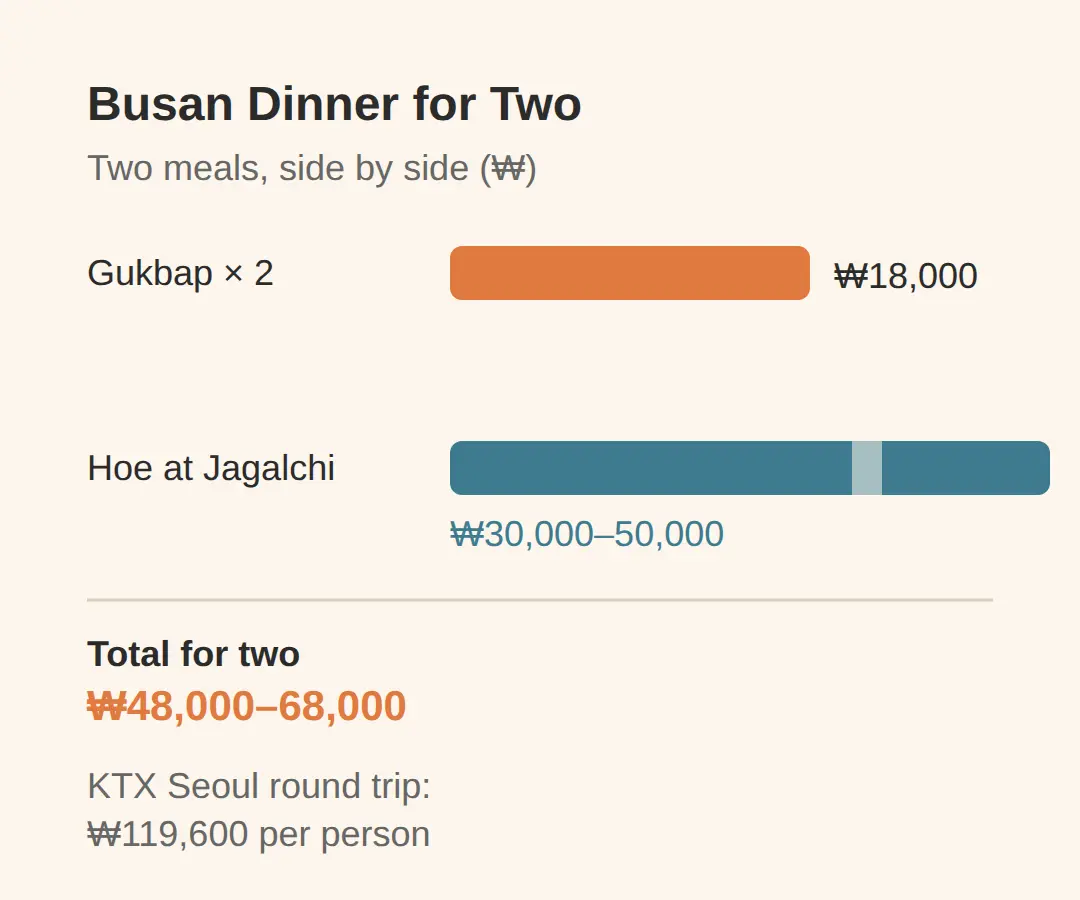
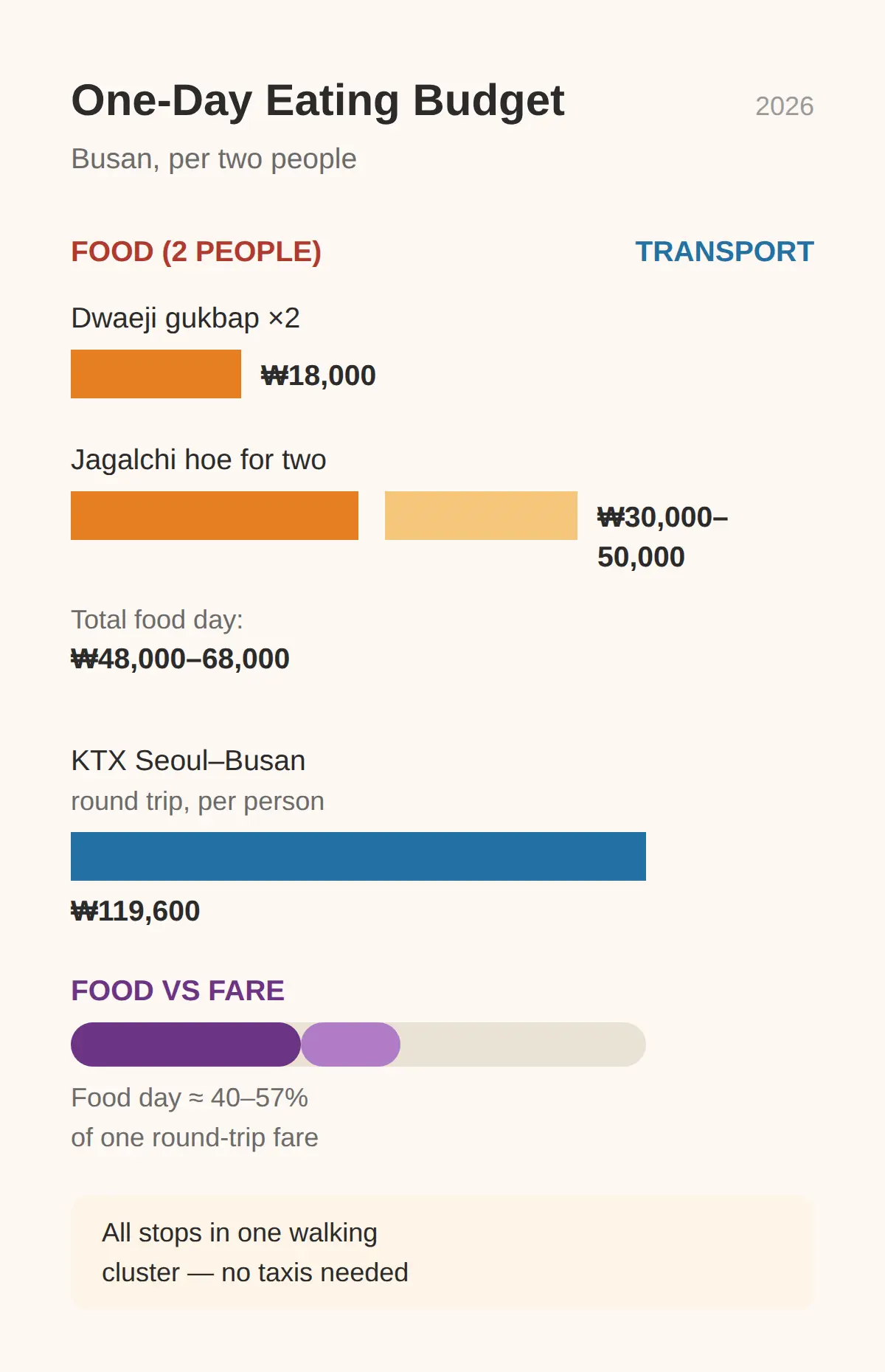
For two people, both meals together run about ₩48,000–68,000, so the food is cheap next to transport: the KTX round trip from Seoul is ₩119,600 per person.
Dwaeji Gukbap — How Much, And How You Season It Yourself
Dwaeji gukbap costs about ₩9,000 per bowl in Busan as of the 2026 guide, and you season it yourself at the table with salt, shrimp paste and pepper.
| Item | Detail |
|---|---|
| Price | About ₩9,000 per bowl (2026 guide) |
| Serving style | Rice arrives already in the broth; side dishes include kimchi and nabak kimchi |
| Seasoning | Done at the table — salt, saeujeot (shrimp paste), pepper, chopped green onion; the kitchen does not pre-season |
The bowl arrives with the rice already in the broth, and the kitchen does not pre-season it — salt, saeujeot (shrimp paste), pepper and chopped green onion sit on the table so you adjust each bowl to your own taste.
Side dishes come out too, typically kimchi and a light onion-and-radish kimchi called nabak kimchi.
This self-seasoning is what makes Busan gukbap its own thing: the same bowl can be mild for one person and salty for the person next to them, so it works for most tastes, including travelers who avoid strong flavors.
When I look at a Busan food spot, the first thing I check is the price on the plate and how the ordering actually works — and gukbap is the easiest of the two: you sit, you order, and the seasoning is yours.
How Does The Jagalchi Market Hoe Work — Step By Step
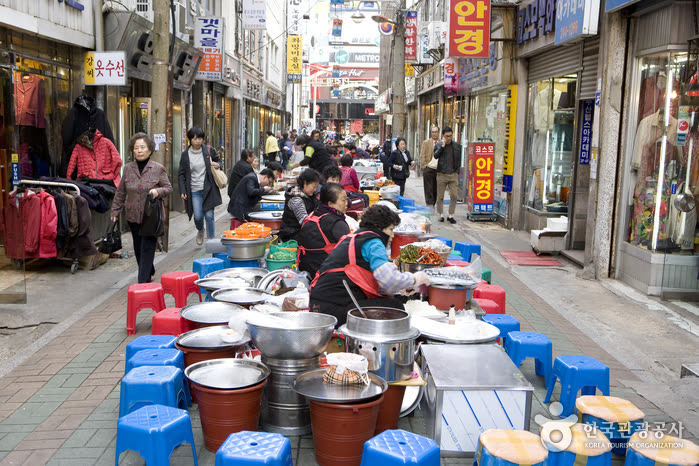
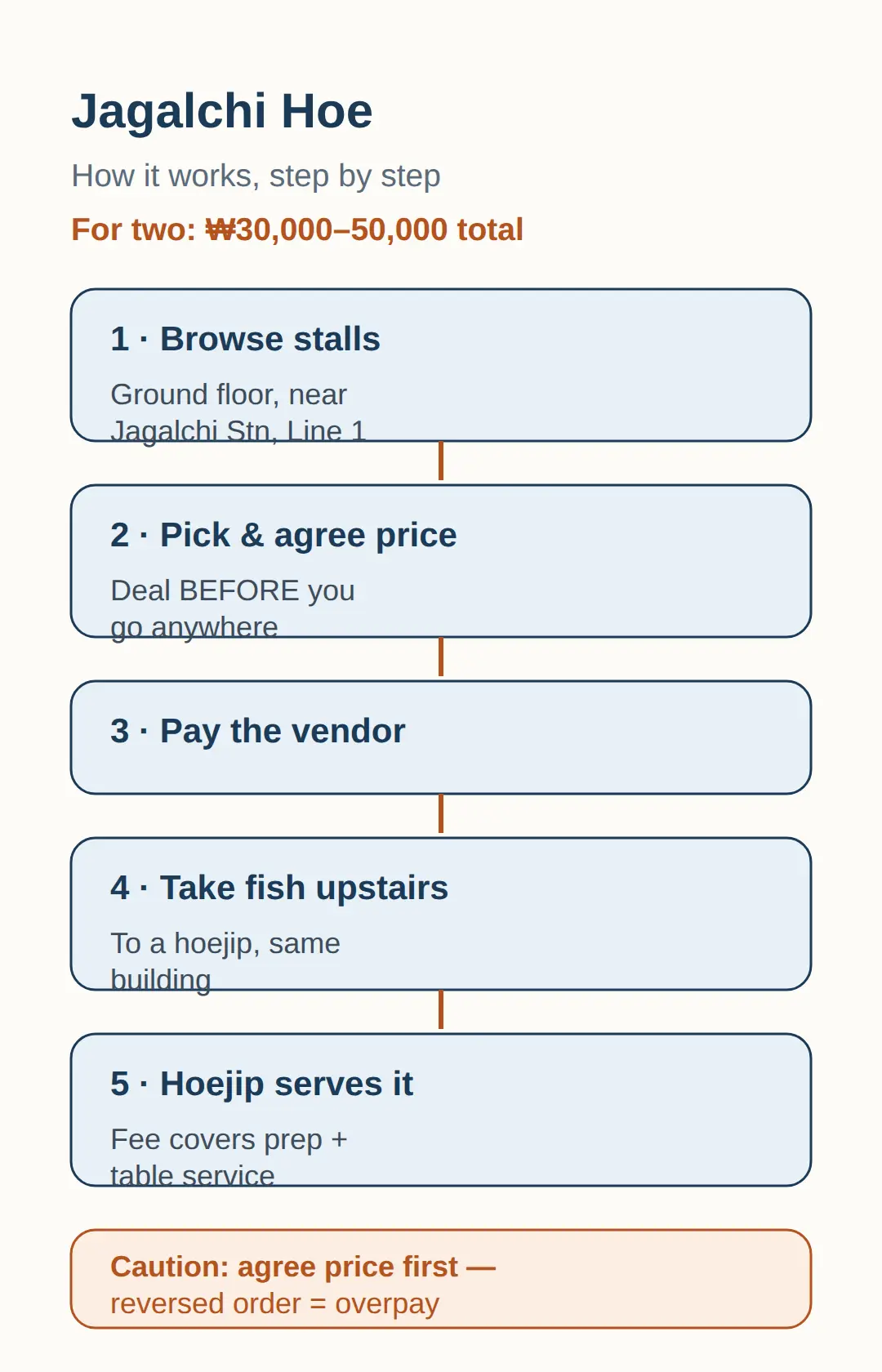
At Jagalchi Market you buy the fish on the ground floor and an upstairs restaurant (hoejip) prepares it, and a meal for two runs roughly ₩30,000–50,000 including the fish and the prep/table fee, per the 2026 guide.
| Step | What happens |
|---|---|
| 1 | Walk the ground-floor fish stalls of the market building in Jung-gu, near Jagalchi Station on Line 1 |
| 2 | Pick your fish and agree the price with the ground-floor vendor before you go anywhere |
| 3 | Pay the vendor for the fish itself |
| 4 | Take the fish up to one of the hoejip on the upper floors of the same building |
| 5 | The hoejip slices and serves it; their fee covers preparation and table service |
Two cautions apply.
The ₩30,000–50,000 range rests on a single 2026 guide and varies by season and fish type, so treat it as a rough band, and the prep fee is not itemized separately in the sources.
Agree the fish price with the ground-floor vendor before paying the upstairs restaurant — that order of payment is what travelers report doing, and getting it backwards is where an overpay happens.
If you want the seafood and there are two of you, this is the route; if you are alone, a bowl of gukbap at ₩9,000 is the simpler spend.
Where Locals Go For Gukbap — Yeongju-Dong Alley Vs Songjeong
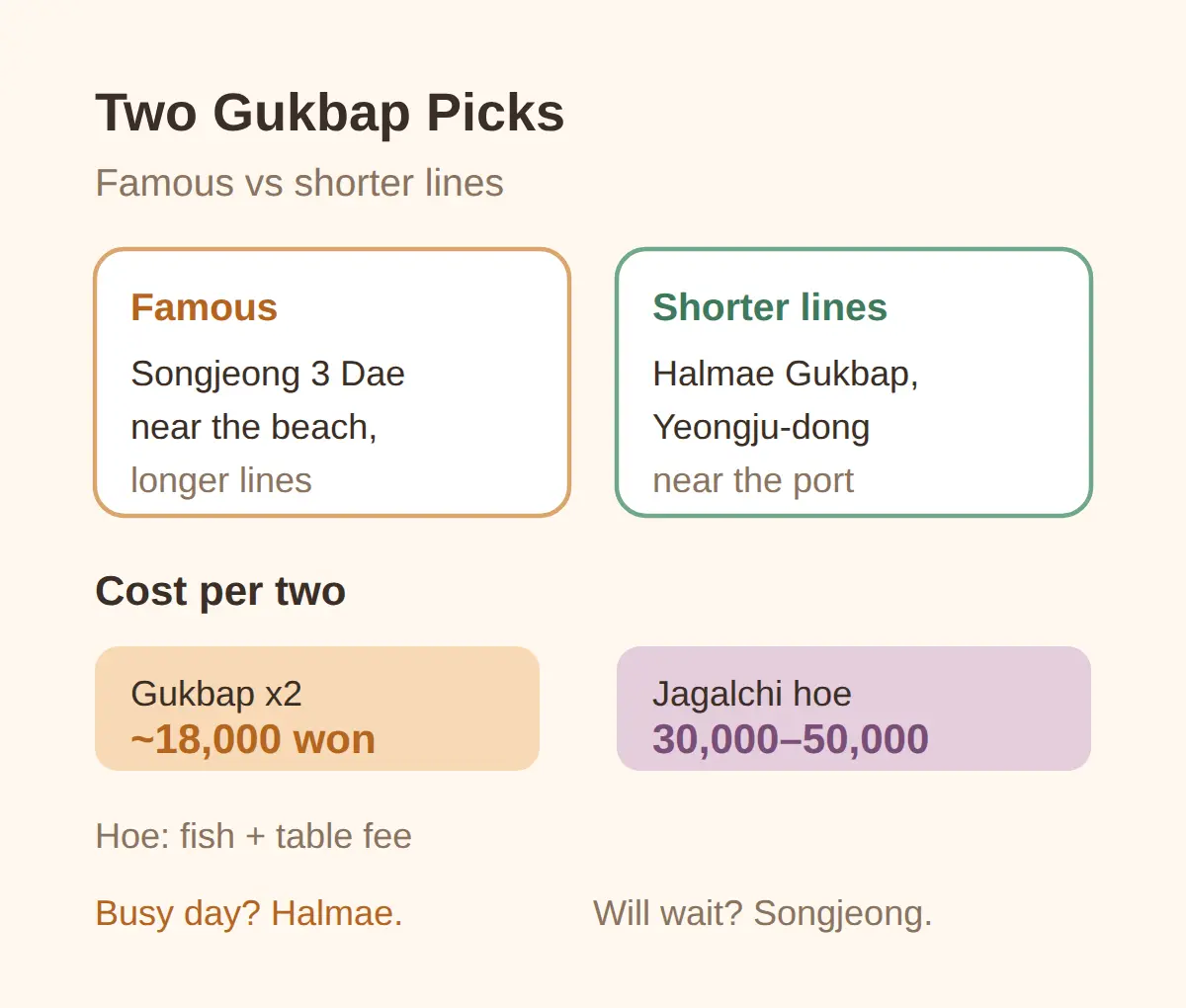
For gukbap you have two named picks: Songjeong 3 Dae Gukbap, the well-known spot near Songjeong beach, and Halmae Gukbap in the Yeongju-dong gukbap alley, cited as the shorter-line alternative.
Songjeong 3 Dae Gukbap is the famous name — it sits in the Songjeong area of the city, away from the central port cluster, and it draws the queues that go with fame.
Halmae Gukbap sits in Yeongju-dong’s gukbap alley near the port, and the 2026 guide describes it as a lower-profile spot with shorter lines than the famous Songjeong names — the alleys around it are dedicated gukbap streets, which is how strong Busan’s pork-soup-rice culture is.
If you want the well-known bowl and do not mind a wait, go Songjeong; if your day is packed and you want the same food without the queue, Halmae in Yeongju-dong is the pick.
Opening hours and closing days for both were not confirmed from sources within the past six months, so check the shop’s posted hours on a map app the day you go rather than planning a tight schedule around them.
Getting There And The One-Day Eating Budget
KTX Seoul–Busan takes about 2 hours 20 minutes and costs around ₩59,800 one way as of the 2026 guide — a round trip is ₩119,600 per person, so a same-day eating trip from Seoul is feasible.
The numbers stack like this: two gukbap bowls (₩9,000 × 2 = ₩18,000) plus a Jagalchi hoe for two (₩30,000–50,000) puts the two-person food day at about ₩48,000–68,000 — roughly 40–57% of one person’s round-trip fare.
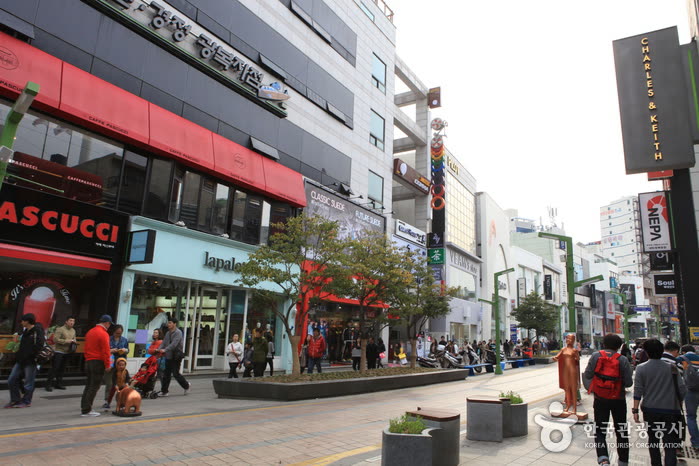
The geography helps too: Jagalchi Market, BIFF Square in Nampo-dong and the Yeongju-dong gukbap alley all sit in one central walking cluster near the port, so the day needs no taxis between meals.
One pacing note applies: first-time-visitor guidance for Korean food advises pacing rich regional dishes rather than one dish per stop, so leave room between the gukbap and the hoe instead of booking them back to back.
If I had one day, I’d build it around that walking cluster — hoe at Jagalchi at lunch, gukbap at Halmae in Yeongju-dong when the lines elsewhere are long, street food at BIFF Square in between — because everything is within walking distance.
BIFF Square Street Food — What To Grab Between Meals
BIFF Square in Nampo-dong is the main street-food cluster within walking distance of Jagalchi Market, and it is the natural stop between the hoe and the gukbap.
The square sits next to the International Market in Nampo-dong, so the walk from Jagalchi’s ground floor to the Yeongju-dong gukbap alley passes through it.
Stall-level details — which stalls are currently operating, and the price of ssiat hotteok, the seed-stuffed sweet pancake the square is known for — were not verified in a source from the past six months, so buy by sight and menu board there rather than from any number quoted online.
Related posts
📎 📅 Upcoming Dates — Release & Event Calendar
Sources
- About 2h20, around ₩59,800 each way (asiaundiscovered.com)
- Ground-floor vendors, upper-floor restaurants; Jung-gu near (en.wikipedia.org)
- General pacing guidance; Busan-specific detail left to asiau (coreadesk.com)
Know This Before You Plan The Day
- If your budget fits only one of gukbap or hoe, know the gap first: hoe for two costs about 1.7–2.8× what gukbap for two costs (₩18,000 vs ₩30,000–50,000).
- Want the cheapest proper Busan meal? Get dwaeji gukbap — two people eat for about ₩18,000 and season each bowl themselves.
- At Jagalchi, agree the fish price with the ground-floor vendor before you pay anything upstairs.
- Before you go, check a map app for same-day wait times at Yeongju-dong’s Halmae Gukbap and at the Songjeong spots — hours and queue lengths were not confirmed in the 2026 sources.
- Pace the day: Busan’s central food spots are walkable, but gukbap and hoe back to back is more than one sitting needs.
FAQ
Q. What should I eat in Busan?
Start with dwaeji gukbap, pork rice soup, at about ₩9,000 a bowl, and hoe, raw fish, at Jagalchi Market for roughly ₩30,000–50,000 for two — the two meals that define the city’s food.
Q. How much is a bowl of dwaeji gukbap in Busan?
About ₩9,000 per bowl as of the 2026 guide, with rice already in the broth and seasoning done at the table with salt, shrimp paste and pepper.
Q. How does the Jagalchi Market hoe work?
Buy your fish from a ground-floor stall and agree the price first, then an upstairs hoejip prepares and serves it for a prep/table fee — roughly ₩30,000–50,000 for two including the fish.
Q. Where do locals eat gukbap in Busan?
Songjeong 3 Dae Gukbap near Songjeong beach is the famous name, and Halmae Gukbap in the Yeongju-dong gukbap alley is cited as the shorter-line alternative.
Q. What is the KTX Seoul–Busan fare in 2026?
About ₩59,800 one way and ₩119,600 round trip per person, with the ride taking about 2 hours 20 minutes, as of the 2026 guide.
If a Busan day trip is on your calendar, put the Jagalchi hoe at lunch and the gukbap bowl in the late afternoon — the whole cluster is walkable.
Cover photo: Seunghaksan Mountain (승학산) by Korea Tourism Organization — KOGL Type 1 (attribution)
#Busanfood #dwaejigukbap #JagalchiMarket #hoe #KTX #whattoeatinBusan
📅Upcoming Schedule — this week 2 · D-2 Hangul DaySee all →