
Kongnamul muchim — seasoned soybean sprouts — is made by blanching 200 g of soybean sprouts for 2–3 minutes in salted, uncovered boiling water with a spoon of vinegar, then tossing with sesame oil, garlic, scallion and salt.
It is one of the most common Korean side dishes, it appears in bibimbap, and one bag serves 2 adults.
This post covers the amounts, the numbered steps, the plain and spicy versions, what to swap when dashida or gochugaru are hard to find, why sprouts turn soggy or fishy, and how to store leftovers.
Korean Bean Sprout Side Dish in 7 Steps
| Minced scallion | 1/2 tbsp |
|---|---|
| Sesame oil | 1 tsp |
| Minced garlic | 1/2 tsp |
| Sesame seed | 1/2 tsp |
| Salt | 2 small pinches |
| Beef dashida (optional) | 1/4 tsp — omit for vegan |
| For the spicy track | 1.5 tbsp of the pre-mixed sauce (below) |
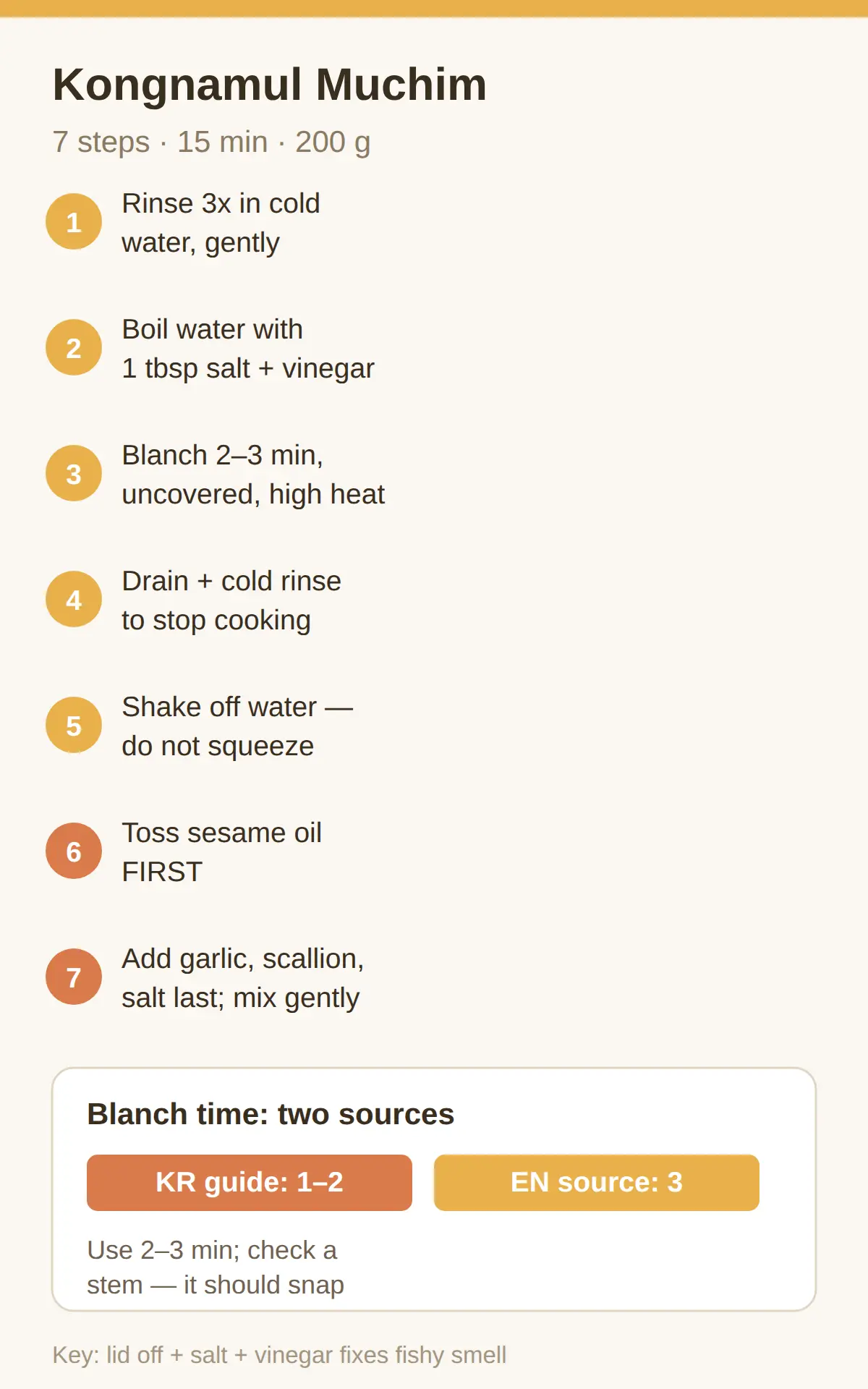
The method is: rinse 3 times, blanch uncovered in salted boiling water with vinegar, cold-rinse, then season oil-first and gently.
Total time for one 200 g batch is about 15 minutes end to end — rinsing, a 3-minute blanch, and the toss.
- Rinse the 200 g of soybean sprouts in cold water 3 times, gently — damaged heads and stems lose texture when boiled.
- Fill a pot halfway with water, add 1 tbsp salt and 1 spoon of vinegar, and bring it to a full boil.
- Drop the sprouts in uncovered on high heat and blanch 2–3 minutes — start counting from the boil, not from when the sprouts go in.
- Drain immediately and rinse under cold running water — leftover heat keeps cooking the sprouts and makes them soggy.
- Shake off the water in a strainer and do not squeeze, unless you use the ice-bath method described later.
- Toss with sesame oil FIRST — the oil coats the sprouts so they stay watery-free after the salt goes in.
- Add minced garlic, scallion and salt last, mixing gently with your hand so the stems do not break.
The salt and vinegar in boiling water, lid off, is the cited fix for the beorinnae fishy smell in bean sprouts.
One Korean guide calls 1–2 minutes the golden blanch time, while the English source uses 3 minutes, so treat 2–3 minutes as the working range and pull a stem out to check crispness rather than trusting one number.
If the sprouts taste clean and the stems still snap, they are done; a limp stem means the batch went too long.
Ingredients
Main
- 200 g soybean sprouts (kongnamul, 콩나물) — yellow bean heads, not mung bean sprouts
- 1 spoon vinegar — for the boiling water
- 1 tbsp salt — for the blanching water
- 1 tsp sesame oil — tossed in first
- 1/2 tsp minced garlic
- 1/2 tbsp minced scallion
- 2 small pinches salt — added last, adjust to taste
To finish
- 1/2 tsp sesame seed
Amounts are the ones used in this recipe; where the recipe gives no amount, adjust to taste.
Steps at a glance
-
1Rinse the 200 g of soybean sprouts in cold water 3 times, gently
-
2Fill a pot halfway with water, add 1 tbsp salt and 1 spoon of…🔥 boil
-
3Drop the sprouts in uncovered on high heat and blanch 2–3 minutes⏱ 2–3 minutes🔥 high heat
-
4Drain immediately and rinse under cold running water
-
5Shake off the water in a strainer and do not squeeze, unless you use…
-
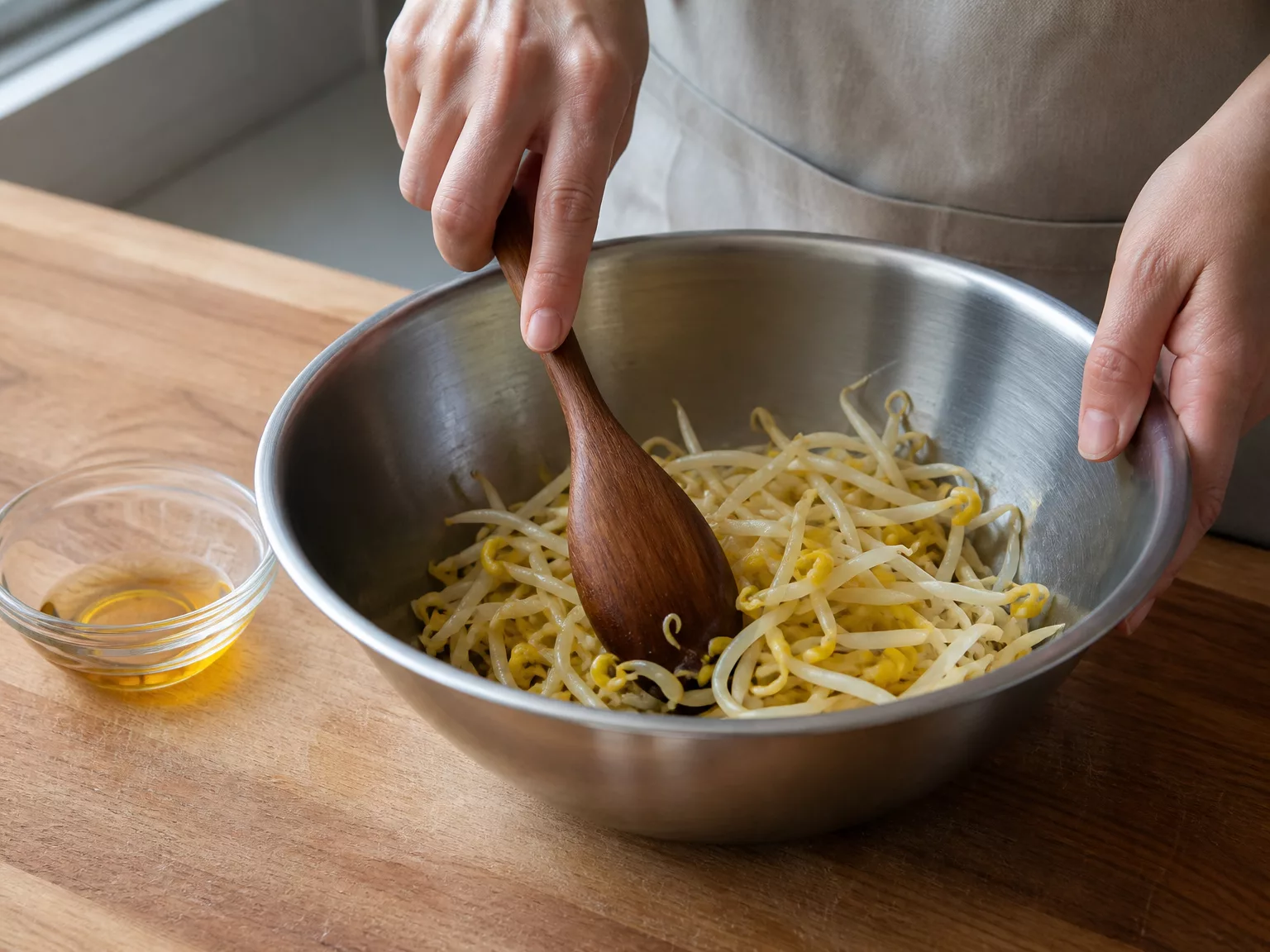 AI-generated photo
What it should look like — AI-generated image of this step, made from the recipe text — not a photo of our kitchen. 6Toss with sesame oil FIRST -
7Add minced garlic, scallion and salt last, mixing gently with your…
Amounts: Plain Version and Spicy Sauce
One 200 g bag of soybean sprouts makes one batch of kongnamul muchim serving 2 adults.
The plain version uses the six ingredients in the table above; the spicy version replaces them with 1.5 tbsp of a pre-mixed sauce per batch.
| Version | Seasoning per 200 g batch |
|---|---|
| Plain | 1/2 tbsp minced scallion · 1 tsp sesame oil · 1/2 tsp minced garlic · 1/2 tsp sesame seed · 2 small pinches salt · 1/4 tsp beef dashida (optional) |
| Spicy | 1.5 tbsp pre-mixed spicy sauce per batch |
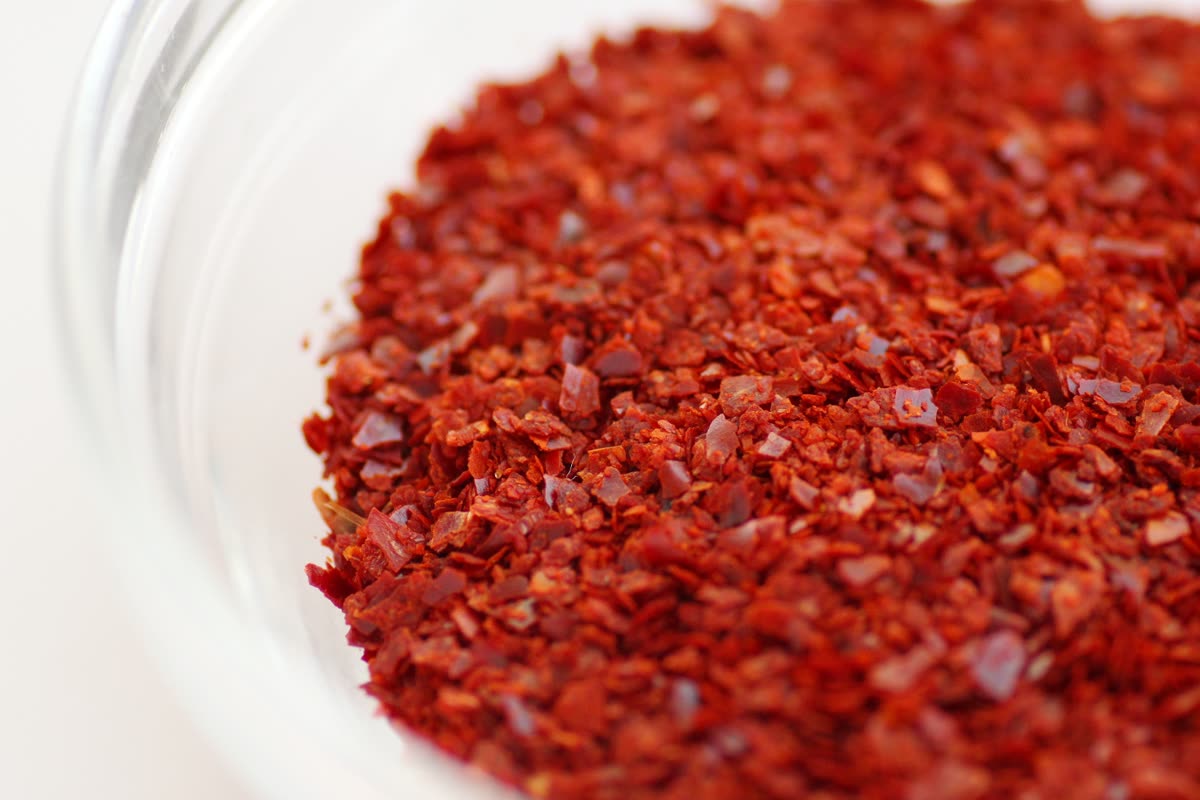
| Spicy sauce (makes ~3 tbsp, 2 batches) | 1 tbsp soy sauce · 1/2 tbsp gochugaru · 1/2 tsp brown sugar · 1/4 tsp minced garlic · 1/4 tsp gochujang · 1 pinch beef dashida (optional) |
The spicy sauce (maeun yangnyeom-ganjang) is mixed once and reused.
One recipe of this sauce makes about 3 tbsp, which covers 2 batches of sprouts at 1.5 tbsp each, because 3 tbsp ÷ 1.5 tbsp per batch = 2 batches.
It keeps several weeks in the fridge and doubles as an all-purpose sauce for other Korean dishes.
Season to the standard of pairing with plain rice — taste and adjust the salt until the side dish balances a bowl of rice, not just on its own.
If a batch is going into bibimbap, use the spicy track; if it sits next to grilled meat or other banchan, the plain version fits better.
Soybean Sprouts vs Mung Bean Sprouts: Which Bag to Buy
Kongnamul are sprouted yellow soybeans — the bean head stays yellow and the stem is thicker — while sukjunamul are mung bean sprouts, which are thin and watery.
The two are not interchangeable in this dish, and no tested mung-sprout timing is confirmed for this recipe.
This matters most at a supermarket abroad, where the plastic bag in the produce aisle is usually mung bean sprouts labeled simply ‘bean sprouts’.
Check the bean head: a yellow bean means kongnamul, a green or pale mung bean means the wrong bag.
The same kongnamul bag is also the base of kongnamul-guk, the classic sprout hangover soup, so one purchase covers both dishes.
If only mung bean sprouts are available, note that this recipe is built around soybean sprouts, so the blanch time and texture will not transfer as-is.
Wait for a soybean-sprout bag at an Asian grocer rather than re-engineering the timing.
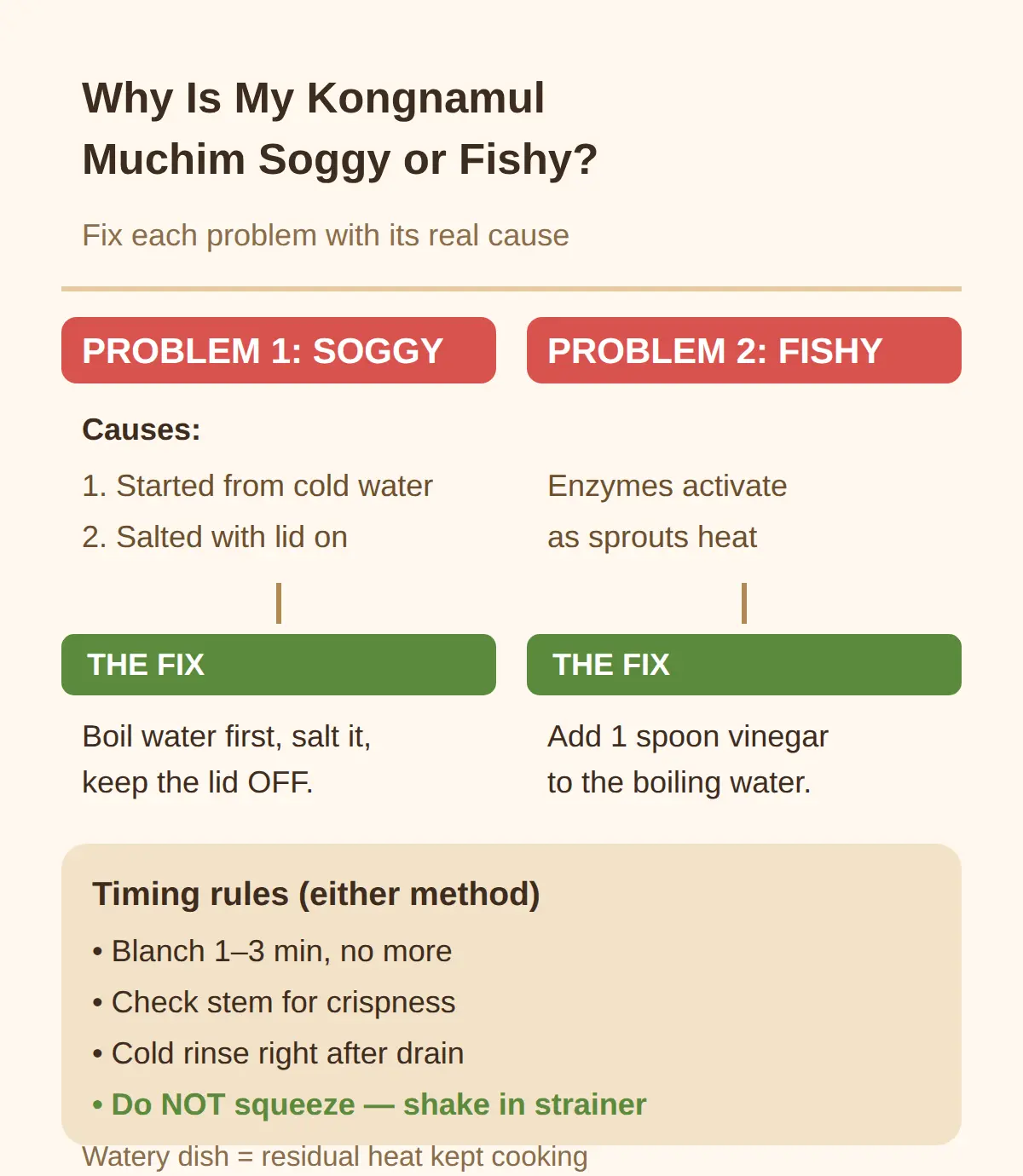
Why Is My Kongnamul Muchim Soggy or Fishy?
Soggy sprouts usually trace to starting from cold water or salting and covering the pot wrong, and the fishy beorinnae smell comes from enzymes in the bean activating as they heat.
Boiling water with salt, lid off, blocks the smell; a cold-water start and a lid are the two cited causes readers complain about most.
On timing, the sources genuinely conflict: one Korean guide calls 1–2 minutes the golden blanch time — longer turns the sprouts mushy, shorter leaves the fishy smell — while the English-source method says 3 minutes on high.
Presented as a range, blanch no more than 3 minutes total and check a stem for crispness instead of averaging the two numbers.
Either way, the cold rinse right after draining is mandatory, because residual heat keeps cooking the sprouts.
If the dish came out watery at the table, the last check is the squeezing rule: do not squeeze the sprouts, because pressing removes the crunch and the juiciness — toss them in a strainer to shake water off instead.
And if it smells fishy after cooking, the vinegar step was likely skipped next time; one spoon in the boiling water firms the plant fiber and suppresses the enzyme.
Substitutions When You Cannot Find Korean Ingredients
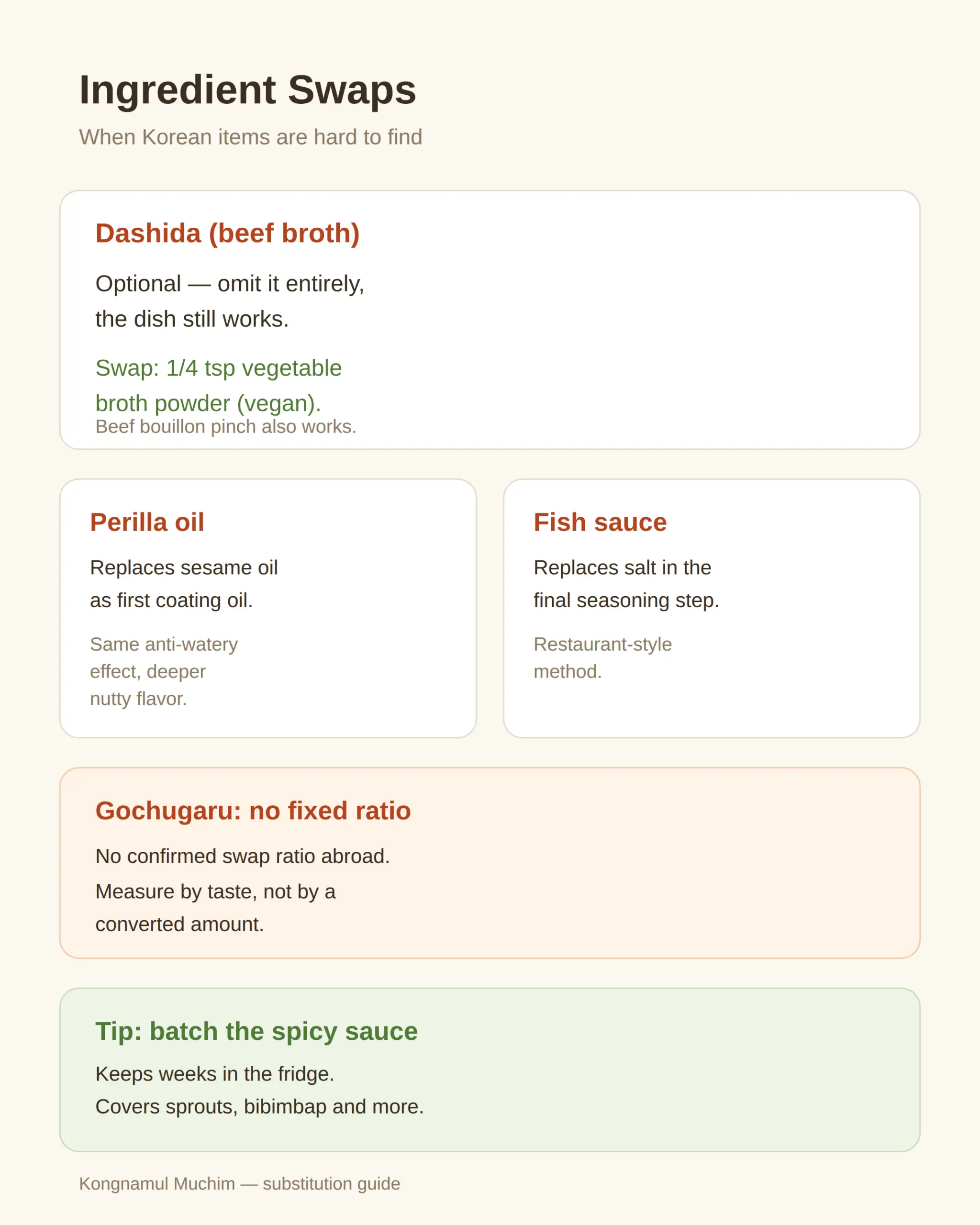
Beef dashida is optional in both versions — omit it, or replace it with 1/4 tsp concentrated vegetable broth powder (yeondu) for a vegan version.
A pinch of beef bouillon powder also works in place of dashida.
Perilla oil (deulgireum) can replace sesame oil as the first coating oil — the anti-watery effect is the same, with a deeper Korean nutty flavor.
Fish sauce (aekjeot) can replace salt in the final seasoning step, which is how restaurant guides handle it.
When the recipe calls for dashida, the first thing to check is that it is optional — the dish works without it, and 1/4 tsp vegetable broth powder is the cleanest swap.
No confirmed substitution ratio for gochugaru abroad was found, so measure gochugaru by taste rather than trusting a converted amount.
Making the spicy sauce ahead in one batch helps here too: it keeps weeks in the fridge and covers the sprouts, bibimbap, and other dishes.
Storage, the Seasoned Juice, and Sprout Bibimbap
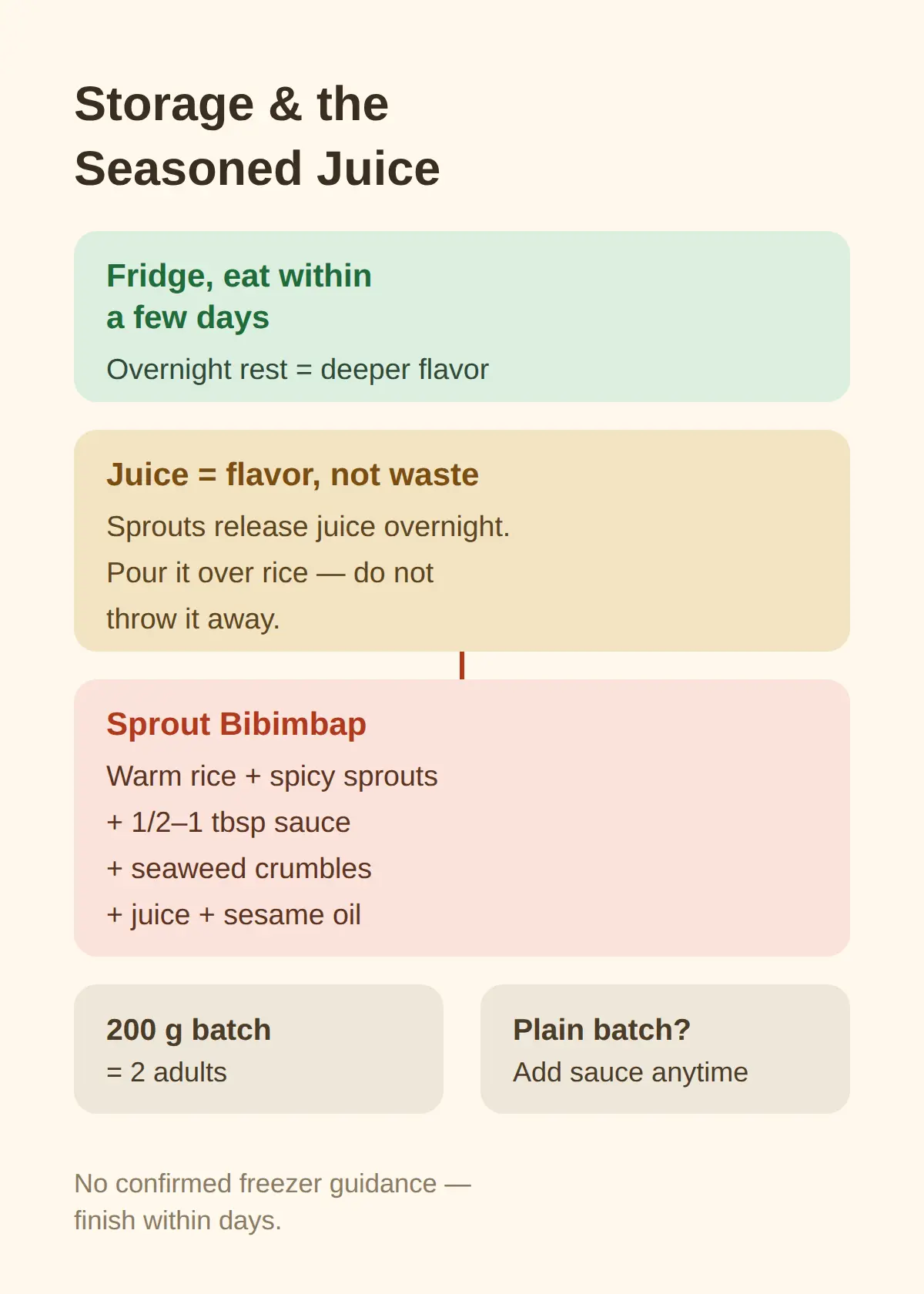
Keep kongnamul muchim refrigerated and eat it within a few days; it is edible right away, but an overnight rest deepens the flavor.
After a few hours or overnight, the sprouts release a seasoned juice — this is deliberately poured over rice as a flavor addition, not thrown away.
The juice is what makes the simplest sprout bibimbap work: warm rice topped with the spicy version of the sprouts, 1/2–1 tbsp more of the spicy sauce, toasted seaweed crumbles, some of the seasoned juice, and a drizzle of sesame oil.
The 200 g batch is sized for 2 adults as a side dish, so one dinner usually finishes the bag.
How long it keeps past ‘a few days’ is not confirmed by a primary source, and no reliable guidance on freezing the cooked dish was found — portion the batch to finish within days instead.
If the batch was plain, it converts to the spicy bibimbap track anytime by adding the sauce, since the sauce keeps for weeks.
If I couldn’t find beef dashida, I’d use 1/4 tsp concentrated vegetable broth powder instead — it keeps the whole batch vegan and adds the same mild depth without changing the flavor direction.
That substitution is the one I would make first, because it costs nothing extra and the plain version barely reads as different.
Related posts
📎 📅 Upcoming Dates — Release & Event Calendar
Sources
- 200 g sprouts serves 2 adults; vegan swap for dashida; bibim (modernpepper.com)
- restaurant base: gochugaru 2 tbsp, guk-ganjang, sugar balanc (ittechking.kr)
- Golden blanch time 1-2 minutes; cold rinse is the crispness (cookpick.kr)
Quick Summary
- Blanch in salted boiling water with a spoon of vinegar for 2–3 minutes max — a longer bath turns the sprouts mushy.
- Never squeeze the blanched sprouts; toss in a strainer to shake off water only, so the crunch and juiciness survive.
- Sesame oil goes in first so it seals the surface, then garlic and scallion, and salt last — mix gently so the stems do not break.
- The spicy sauce keeps for weeks in the fridge and covers 2 batches at 1.5 tbsp each.
- Yellow bean heads mean soybean sprouts (kongnamul); thin, watery mung sprouts are a different dish.
FAQ
Q. How do I make seasoned soybean sprouts at home?
Rinse 200 g soybean sprouts 3 times, blanch uncovered 2–3 minutes in boiling salted water with a spoon of vinegar, cold-rinse, then toss with sesame oil first and garlic, scallion and salt last. One batch serves 2 adults and takes about 15 minutes.
Q. What can I use if I can’t find dashida or gochugaru?
Beef dashida is optional — omit it, or use 1/4 tsp vegetable broth powder for a vegan version, or a pinch of beef bouillon powder. No confirmed gochugaru substitution ratio was found, so adjust it by taste.
Q. Why is my kongnamul muchim soggy or fishy?
The cited causes are starting from cold water, covering the pot, and skipping the salt or vinegar — boiling water with salt and the lid off blocks the fishy beorinnae smell. Over-blanching past 3 minutes makes the stems mushy.
Q. Spicy or non-spicy — which one for bibimbap?
The spicy track: toss the sprouts with 1.5 tbsp of the pre-mixed spicy sauce per 200 g batch. For bibimbap, add 1/2–1 tbsp more sauce, toasted seaweed crumbles, the seasoned sprout juice, and a drizzle of sesame oil over warm rice.
Q. How long does it keep, and what is the seasoned juice?
It is best within a few days refrigerated. The seasoned juice is the liquid the sprouts release overnight in the fridge — it is poured over rice in sprout bibimbap instead of being discarded.
Try the 7-step kongnamul muchim recipe tonight — one 200 g bag of soybean sprouts is all it takes, and the spicy sauce leftovers become your next bowl of bibimbap.
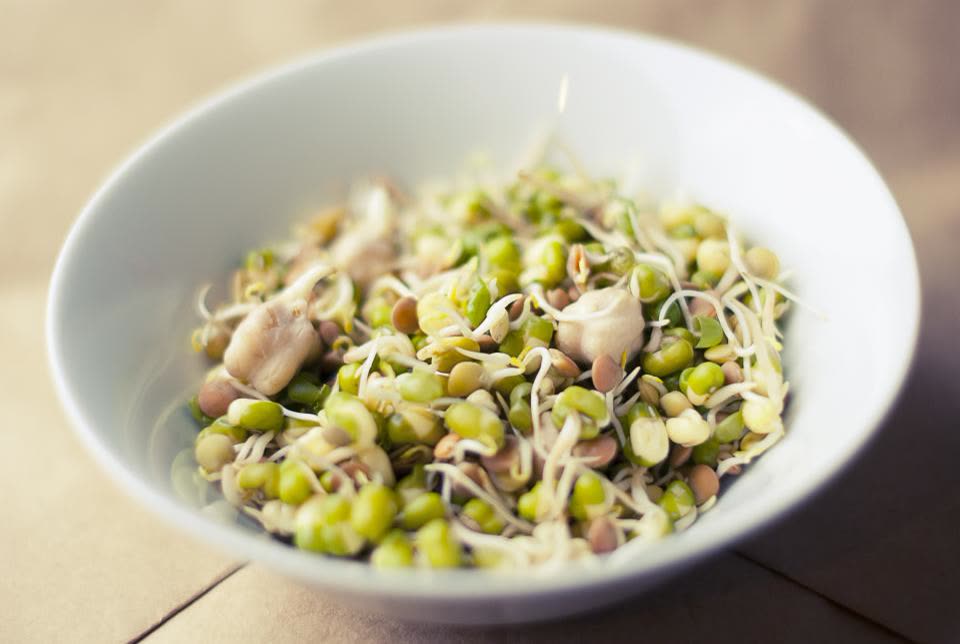
Cover photo: Mung bean sprouts, close-up by pics_pd — CC0 1.0
#kongnamulmuchim #soybeansproutsidedish #koreanbanchan #koreanrecipes #bibimbap
📅Upcoming Schedule — this week 2 · D-2 Hangul DaySee all →