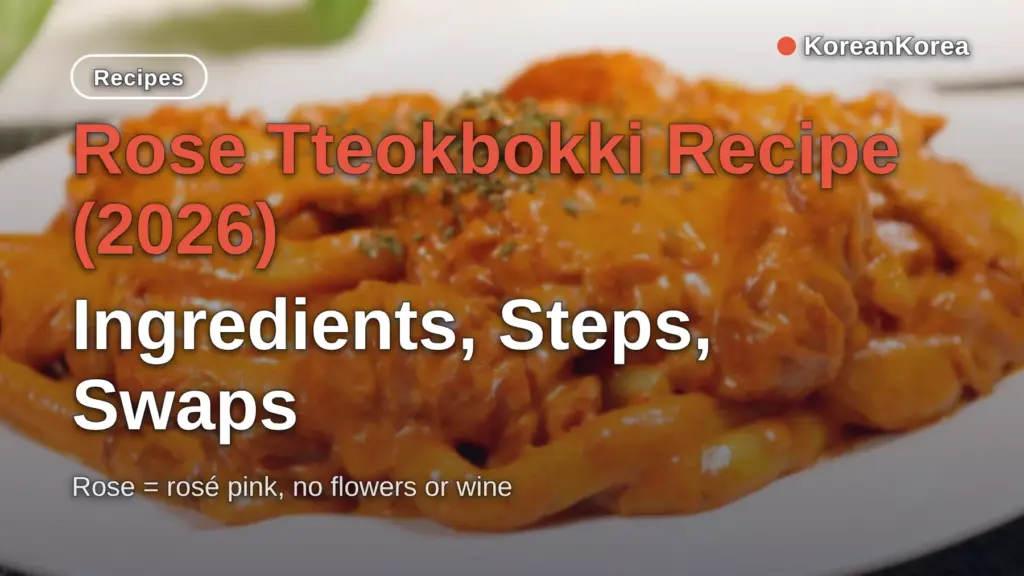
Simmer 500g rice cakes in a gochujang sauce for 8-10 minutes, then stir in 200ml heavy cream in the final 2-3 minutes — that is the whole dish.
Rose tteokbokki is Korea’s classic street food with cream folded into the red sauce, so it comes out pink, richer and noticeably milder.
This post gives the ingredient amounts in metric, a step-by-step pan method, two published recipes compared, and what changes when you cannot find the Korean ingredients.
Key facts — As of 2026-10-02
- Most published recipes simmer the sauce and rice cakes 8-10 minutes, until the sauce coats the tteok and a spoon leaves a trail.
Rose Tteokbokki Recipe: The Short Answer
| Garae-tteok (cylindrical rice cakes) | 500g, cut into 5-6cm pieces |
|---|---|
| Gochujang (chili paste) | 2 tbsp |
| Gochugaru (chili flakes) | 1 tbsp (skip for a milder sauce) |
| Water | 250-300ml |
| Heavy cream | 200ml |
| Soy sauce | 1 tbsp |
| Sugar | 1 tbsp (grated onion can replace some) |
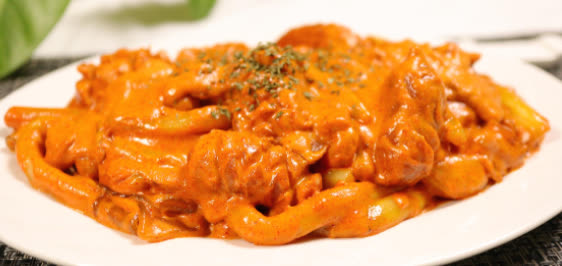
Rose tteokbokki is tteokbokki with cream or milk stirred into the gochujang sauce, which turns it pink and takes the edge off the heat.
In Korea this is a snack-bar and late-night delivery dish, usually shared with fries or skewers rather than eaten as a formal meal.
If you have a pan, a stove and access to gochujang, you can make it tonight; the only ingredient worth checking first is the rice cakes themselves.
| Point | Short answer |
|---|---|
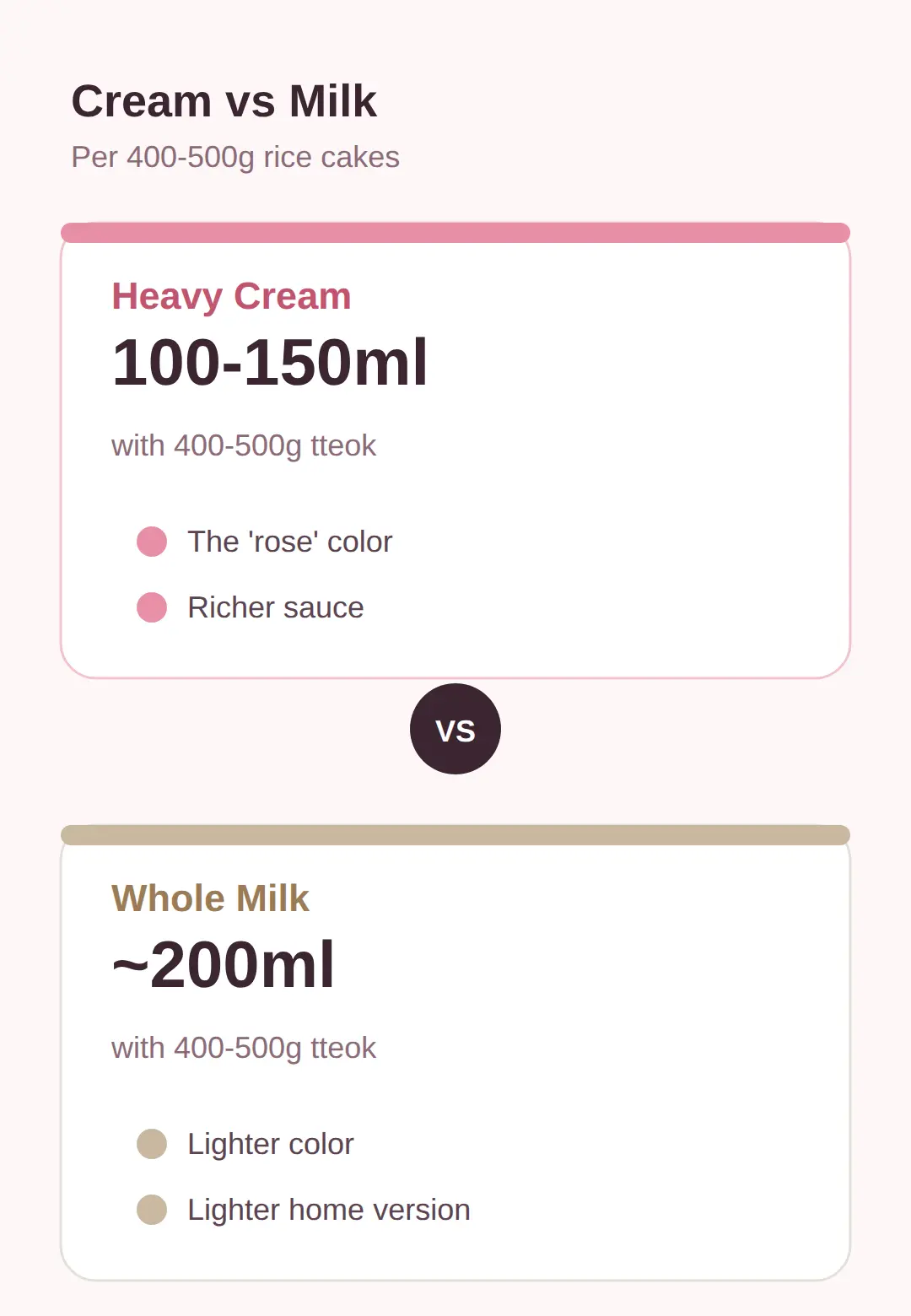
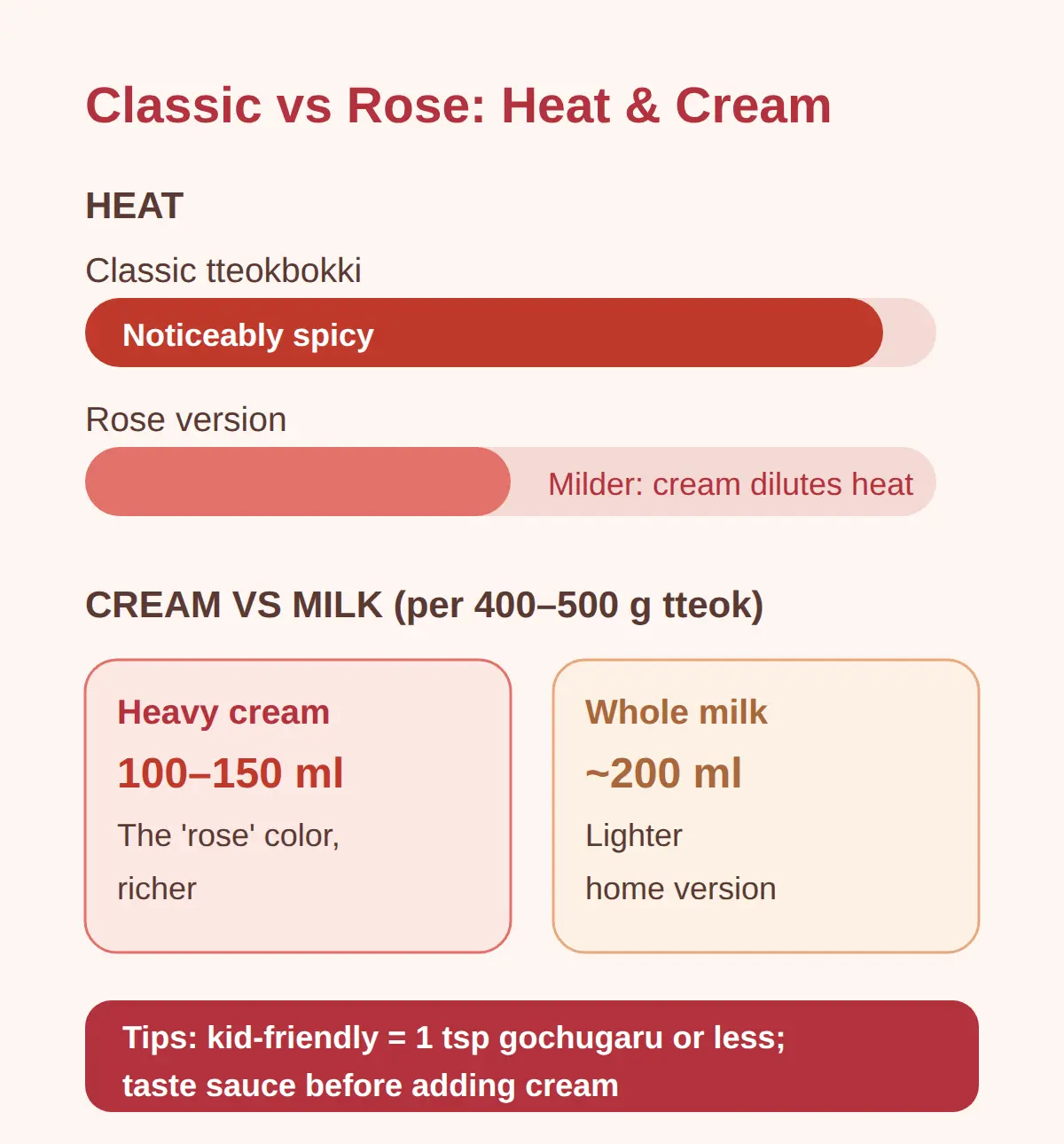
| What it is | Creamy variant of tteokbokki: gochujang-based sauce loosened with 100-150ml heavy cream or milk per 400-500g rice cakes |
| Heat | Milder than classic tteokbokki; reduce gochujang to 1 tbsp and add more cream for a kids-friendly version |
| Time | Roughly 20-25 minutes total: 5-10 min prep, 10-15 min cook |
| Serves | 400-500g rice cakes = 2 as a main, 3-4 as a snack |
The order matters more than anything else: sauce first, rice cakes last, cream at the very end.
| Step | Order of adding |
|---|---|
| 1 | Sauce first (gochujang + gochugaru + soy sauce + sugar + garlic, loosened with water or broth) |
| 2 | Vegetables (onion, scallion, cabbage or carrot) with the sauce |
| 3 | Rice cakes last; most published recipes simmer the sauce and rice cakes 8-10 minutes, until the sauce coats the tteok and a spoon leaves a trail |
| 4 | Cream in the final 2-3 minutes to avoid curdling |
Ingredients
Main
- 500g garae-tteok (cylindrical rice cakes) — cut into 5-6cm pieces
- 250-300ml water
- 200ml heavy cream — stirred in the final 2-3 minutes
Sauce & seasoning
- 2 tbsp gochujang (Korean chili paste) — fried 30-60 seconds to bloom
- 1 tbsp gochugaru (Korean chili flakes)
- 1 tbsp soy sauce
- 1 tbsp sugar
- 2-3 cloves garlic — minced
- butter or oil — a little, for sautéing
To finish
- 50-100g mozzarella — shredded, added off the heat
- scallion — chopped
- sesame seeds
Amounts are the ones used in this recipe; where the recipe gives no amount, adjust to taste.
Ingredients And Amounts (Metric, Serves 2-3)
For 2-3 servings you need 500g garae-tteok, 2 tbsp gochujang, 1 tbsp gochugaru, 250-300ml water, 200ml heavy cream, plus soy sauce, sugar, garlic and onion.
The table shows the full amounts in one place, based on published recipes from Korean cooking sites.
| Ingredient | Amount |
|---|---|
| Fresh garae-tteok | 400-500g |
| Gochujang | 1.5-2.5 tbsp |
| Gochugaru | 1 tbsp (some recipes skip it entirely and let gochujang alone carry the color and heat) |
| Heavy cream or milk | 200ml heavy cream for this recipe (or about 200ml whole milk for the lighter home version) |
| Liquid | 250-300ml water, anchovy-kelp broth, or the water used to soak the rice cakes |
| Aromatics | 2-3 minced garlic cloves, half an onion (grated or blended in) |
| Seasoning | Soy sauce, sugar or corn syrup, a little butter or oil |
| Finish | Mozzarella or 1-2 tbsp cream cheese, chopped scallion, sesame seeds, gim flakes |
A few recipes skip gochugaru entirely and let gochujang alone carry the color and heat, since the cream already tempers the spice.
If you live near H Mart, Assi or Zion Market, all of this is stocked; frozen garae-tteok in 500g-1kg packs is the usual form in US stores and keeps 1-2 months in the freezer.
Frozen tteok should be thawed and soaked in warm water before it goes in the pan.
How To Make It, Step By Step
The method below follows the published versions: bloom the paste, simmer, then finish with cream so it does not curdle.
A wide, shallow pan works best, because the rice cakes sit in one layer and the sauce reduces evenly without breaking them.
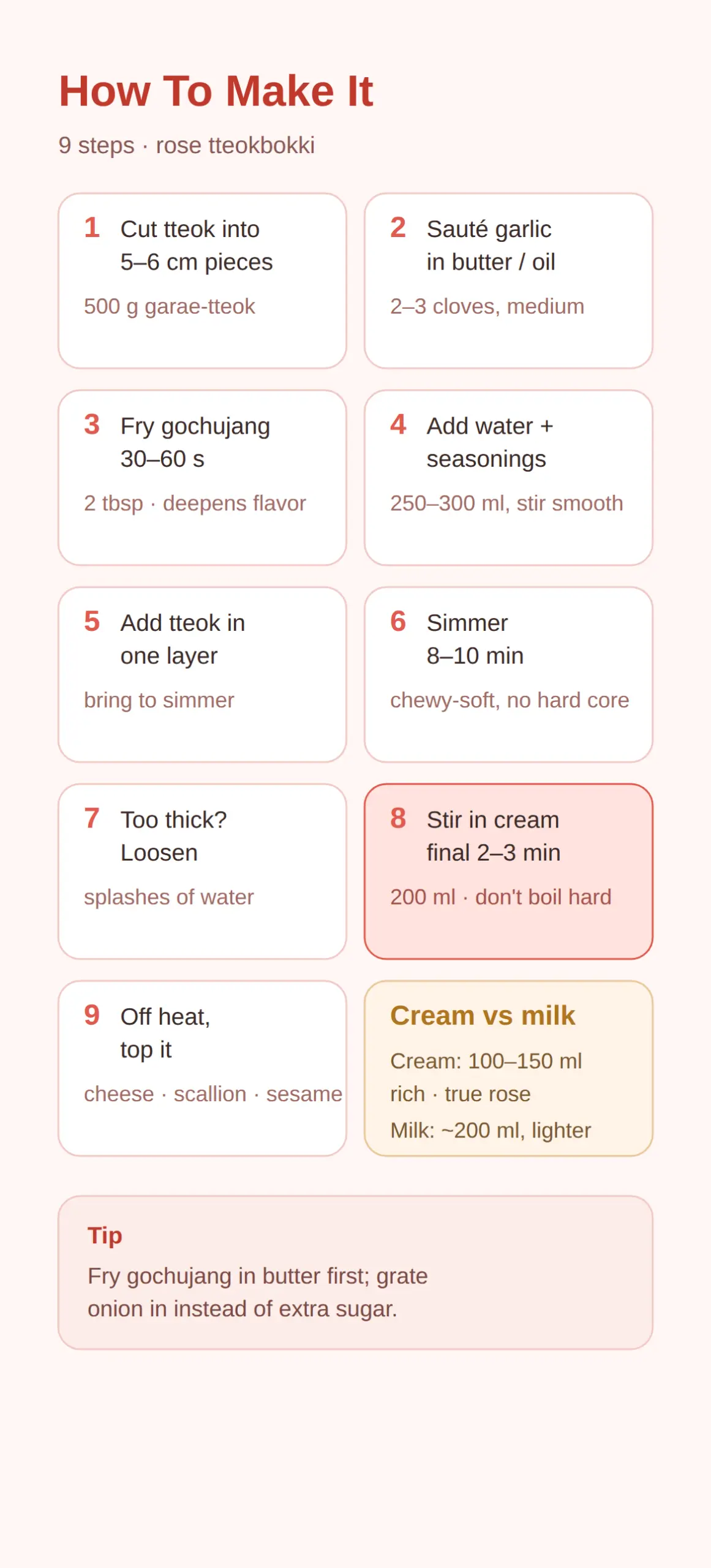
- Cut 500g garae-tteok into 5-6cm pieces so they cook evenly.
- Heat a little butter or oil in a wide pan over medium heat and sauté 2-3 minced garlic cloves until fragrant.
- Add 2 tbsp gochujang and fry it for 30-60 seconds to deepen the flavor.
- Pour in 250-300ml water, then add 1 tbsp soy sauce, 1 tbsp sugar and 1 tbsp gochugaru; stir until smooth.
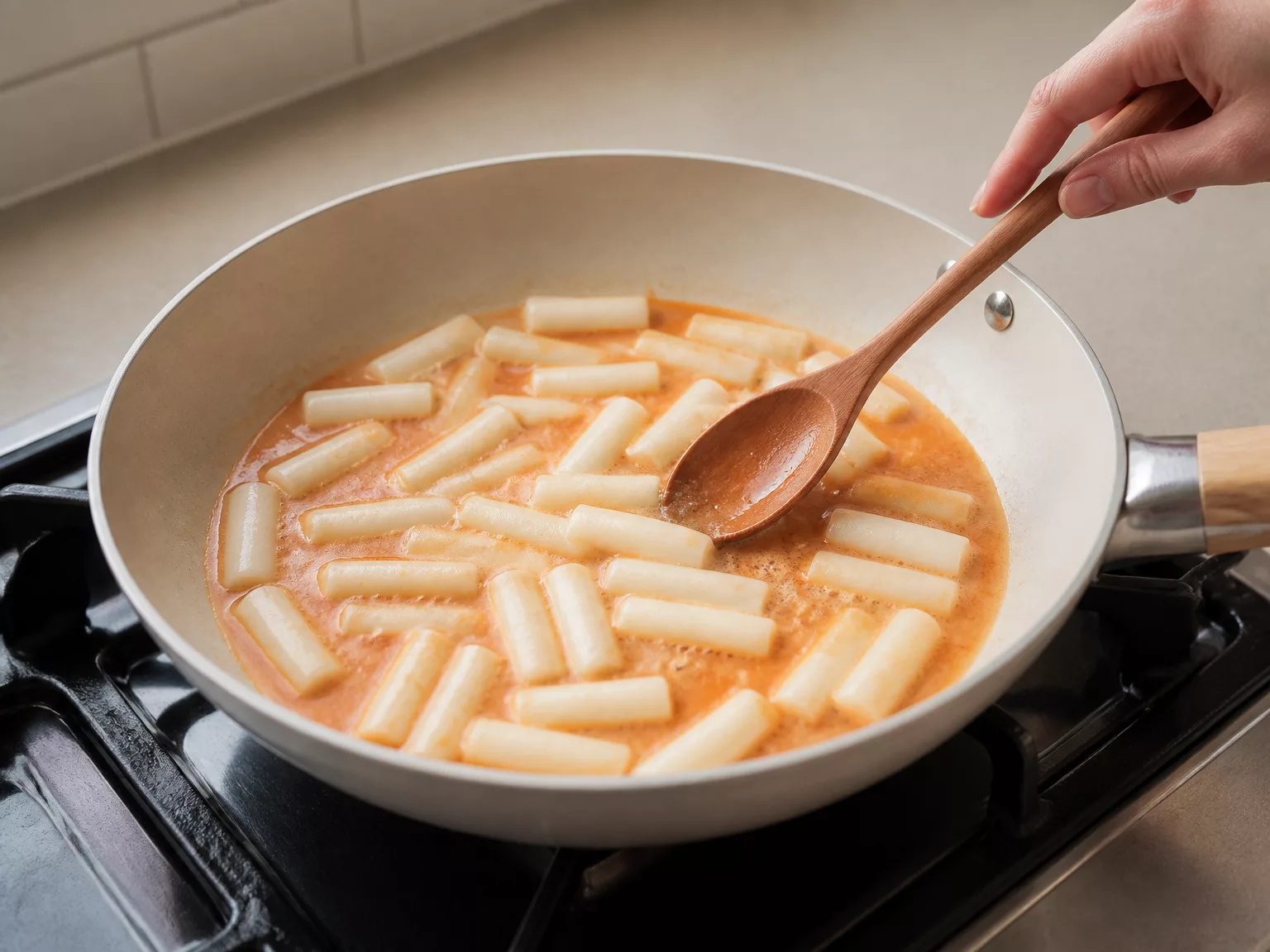
- Add the rice cakes in one layer and bring to a simmer on medium.
- Simmer 8-10 minutes; test one piece around minute 6 — it should be chewy-soft with no hard center.
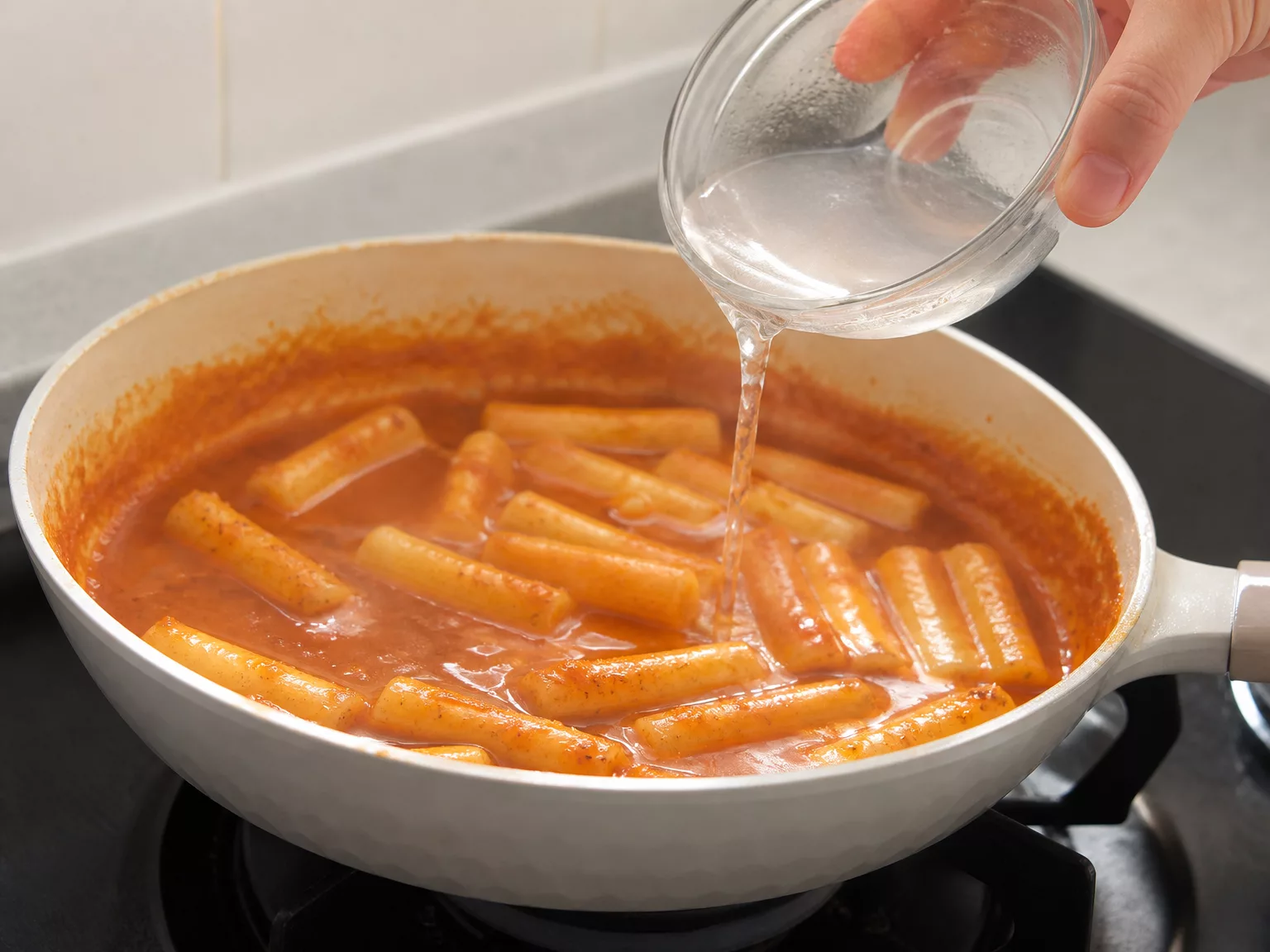
- If the sauce thickens before the tteok are tender, loosen it with splashes of water.
- Stir in 200ml heavy cream in the final 2-3 minutes and do not let it boil hard after that.
- Take it off the heat, then top with 50-100g shredded mozzarella, chopped scallion and sesame seeds.
Most top Korean recipes fry the gochujang in butter for the first 30-60 seconds and blend or grate the onion into the sauce instead of adding extra sugar, for natural sweetness and body.
Steps at a glance
-
1Cut 500g garae-tteok into 5-6cm pieces so they cook evenly.
-
2Heat a little butter or oil in a wide pan over medium heat and sauté…🔥 medium heat
-
3Add 2 tbsp gochujang and fry it for 30-60 seconds to deepen the…⏱ 30-60 seconds
-
4Pour in 250-300ml water, then add 1 tbsp soy sauce, 1 tbsp sugar and…
-
 AI-generated photo
What it should look like — AI-generated image of this step, made from the recipe text — not a photo of our kitchen. 5Add the rice cakes in one layer and bring to a simmer on medium.🔥 simmer -
6Simmer 8-10 minutes⏱ 8-10 minutes🔥 simmer
-
 AI-generated photo
What it should look like — AI-generated image of this step, made from the recipe text — not a photo of our kitchen. 7If the sauce thickens before the tteok are tender, loosen it with… -
8Stir in 200ml heavy cream in the final 2-3 minutes and do not let it…⏱ 2-3 minutes🔥 boil
-
9Take it off the heat, then top with 50-100g shredded mozzarella,…
Cream Or Milk? Two Published Recipes Compared
Heavy cream gives the rose color and a restaurant-style richness, while an all-milk version is the lighter home style.
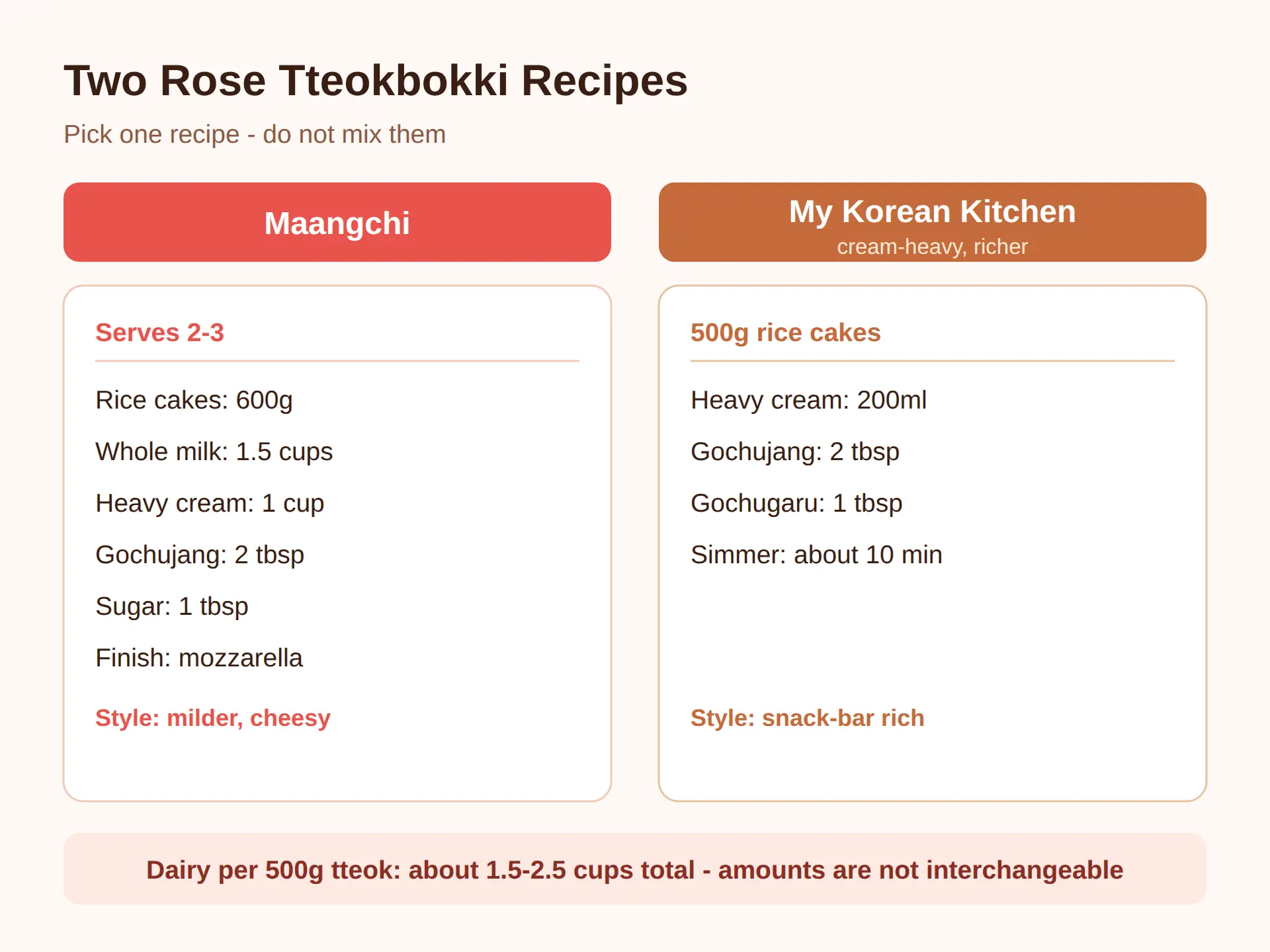
Published English recipes commonly use both milk and cream together, totaling roughly 1.5-2.5 cups of dairy per 500g of rice cakes.
Maangchi’s version (serves 2-3) uses about 600g rice cakes, 1.5 cups whole milk plus 1 cup heavy cream, 2 tbsp gochujang, 1 tbsp sugar and a mozzarella finish.
My Korean Kitchen’s version uses 500g rice cakes, 200ml heavy cream, 2 tbsp gochujang, 1 tbsp gochugaru and a 10-minute simmer.
Do not average the two recipes — pick one and follow it, because the dairy amounts are not interchangeable.
If you want the richer snack-bar taste, follow the cream-heavy version; if you want an everyday lighter pot, the milk-based one is closer to what Korean home cooks make.
Is Rose Tteokbokki Spicy? Heat, Mistakes And Variations
Rose tteokbokki is rated noticeably milder than classic tteokbokki because the cream dilutes the chili heat.
For a kid-friendly pot, keep the gochugaru to 1 tsp or less, as several recipes recommend.
Spiciness also varies a lot between gochujang brands, so taste the sauce before the cream goes in and adjust with sugar rather than more paste.
The most common failure is overcooking: tteok that boil past soft turn hard or gummy, which is why they go in last and get tested around minute 6.
Two easy variations: add a pack of instant ramyeon noodles in the last 3-4 minutes for rabokki-style rose tteokbokki, or skip dairy and use oat or soy milk with a little cashew butter, as published vegan versions do.
If you have no gochujang at all, community mixtures of gochugaru, miso and sugar circulate online, but no tested replacement ratio has been confirmed — compare a couple of published versions before committing.
What "Rose" Means And Where It Came From
The name refers to the rosé-pink color made when red gochujang sauce mixes with cream or milk — no rose flower or wine is involved.
Rose tteokbokki appeared in South Korea in the late 2010s and spread through delivery apps, mukbang and YouTube before home recipes followed.
It is still eaten the way it started: a snack or late-night delivery dish, shared with fries or skewers rather than served as a formal meal.
That context explains the cheese finishes and the extra-rich sauces — the versions that traveled from snack bars to home kitchens kept the indulgence.
I would fry the gochujang in butter for 30-60 seconds before adding liquid, because blooming the paste first deepens the flavor and takes away the raw edge that cream alone can’t cover.
If I were feeding kids, what I’d check first is not the cream but the gochujang brand, since spiciness varies a lot and sugar adjusts the sauce better than more gochujang does.
Where to eat tteokbokki in Korea (떡볶이)
- Sooble Busan — Busan
Restaurants from official tourism listings (city and national tourism organizations) that list tteokbokki as a signature dish — our guides to each, not a ranking.
👉 Maangchi’s tteokbokki guides, the source for the broth option, pan choice and order of adding
👉 Korean home-cooking videos, the source for the milk version, onion puree and cream cheese finish
Related posts
📎 📅 Upcoming Dates — Release & Event Calendar
Sources
- origin_name (mykoreankitchen.com)
- milk_version (youtube.com)
- 100-200ml cream plus milk, 1.5-2.5 cups total dairy (mykoreankitchen.com)
Quick Recap
- Sauce first, rice cakes last, cream in the final 2-3 minutes.
- Simmer 8-10 minutes and test one tteok around minute 6.
- Keep gochugaru at 1 tsp or less for a kid-friendly pot.
- Pick one published recipe and follow its dairy amounts exactly.
- Buy frozen garae-tteok at H Mart, Assi or Zion Market; it keeps 1-2 months frozen.
FAQ
Q. How much cream goes in rose tteokbokki per 500g of rice cakes?
My Korean Kitchen’s published recipe uses 200ml heavy cream per 500g; recipes that mix milk and cream total roughly 1.5-2.5 cups of dairy per 500g.
Q. Can I make rose tteokbokki without gochujang and heavy cream?
The cream is easy to replace: published vegan versions use oat or soy milk with a little cashew butter. A no-gochujang version has no confirmed tested ratio — community gochugaru-and-miso mixtures exist, so check a couple of published recipes first.
Q. Is rose tteokbokki spicy for kids?
It is milder than classic tteokbokki because cream dilutes the chili heat, and several recipes recommend keeping gochugaru to 1 tsp or less for a kid-friendly sauce.
Q. Where can I buy rice cakes and gochujang in the US?
Major Korean grocers — H Mart, Assi, Zion Market — and hmart.com stock fresh and frozen garae-tteok, gochujang and Korean fish cakes.
If you plan to cook Korean dishes regularly, put frozen garae-tteok and a tub of gochujang on your next H Mart list — they are the two items this recipe depends on.
Cover photo: Rosé tteokbokki 1 by 호기로운생활 — CC BY-SA 2.5
#rosetteokbokki #rosétteokbokki #tteokbokkirecipe #gochujang #koreanstreetfood #koreanrecipes
📅Upcoming Schedule — this week 2 · D-2 Hangul DaySee all →