
Yes — you can make Korean corn dogs at home with everyday ingredients: 6 corn dogs in about 40 minutes using a quick baking-powder batter (no yeast needed), fried at 170–180 °C, finished with a sprinkle of sugar plus ketchup and mustard.
That means no trip to a Korean grocery is required — hot dogs, mozzarella, flour, milk, sugar, egg, baking powder and panko cover the whole recipe.
This post gives you the ingredients table, both batter options, the numbered steps, the sugar finish, substitutions for anything hard to find, common mistakes and how to store leftovers.
Key facts — As of 2026-09-29
- Fry at 170-180 °C (340-350 °F) for about 2-4 minutes, 2-3 dogs at a time, so the oil temperature does not drop and the cheese stays inside.
- The no-yeast batter uses baking powder (about 1.5-2 tsp per 200 g flour) with milk and skips the 20-30 minute rise, saving about 20-30 minutes over the yeast dough.
Korean Corn Dog Recipe at Home: The Short Answer
| Hot dogs or fully cooked sausages | 6, kept cold |
|---|---|
| Low-moisture mozzarella | 6 string-cheese sticks (or 50–70 g per skewer) |
| All-purpose or bread flour | About 200 g for the batter, plus extra for dusting |
| Milk | Roughly the same volume as the flour (1:1 by volume) |
| Sugar | For the batter, plus 1/2–1 tsp per dog to finish |
| Egg | 1 |
| Baking powder (no-yeast path) | About 1.5–2 tsp per 200 g flour, or active dry yeast instead (4–7 g per ~2 cups flour — amounts vary by recipe) |
Yes, it is makeable: 6 corn dogs in about 40 minutes on the no-yeast path, fried at 170–180 °C (340–350 °F) and finished with sugar, ketchup and mustard.
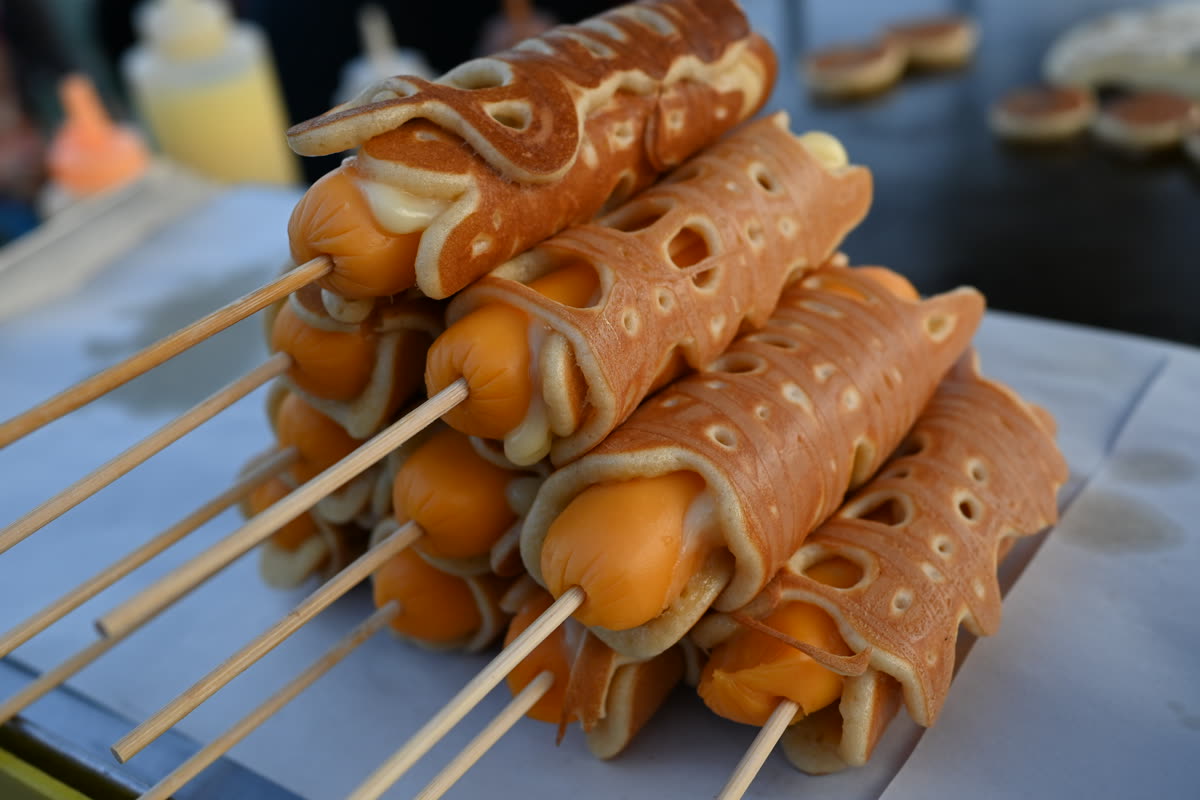
A Korean corn dog is a hot dog or a cheese-only core on a stick, coated in a slightly sweet batter or yeasted dough, rolled in panko (and sometimes diced potato), deep-fried, then dusted with sugar.
Koreans eat it as a street snack or quick meal, most often in the evening or on weekends — it is comfort food, not a holiday dish.
The two versions that spread worldwide through street-food videos are the mozzarella-filled dog and the potato-wrapped dog.
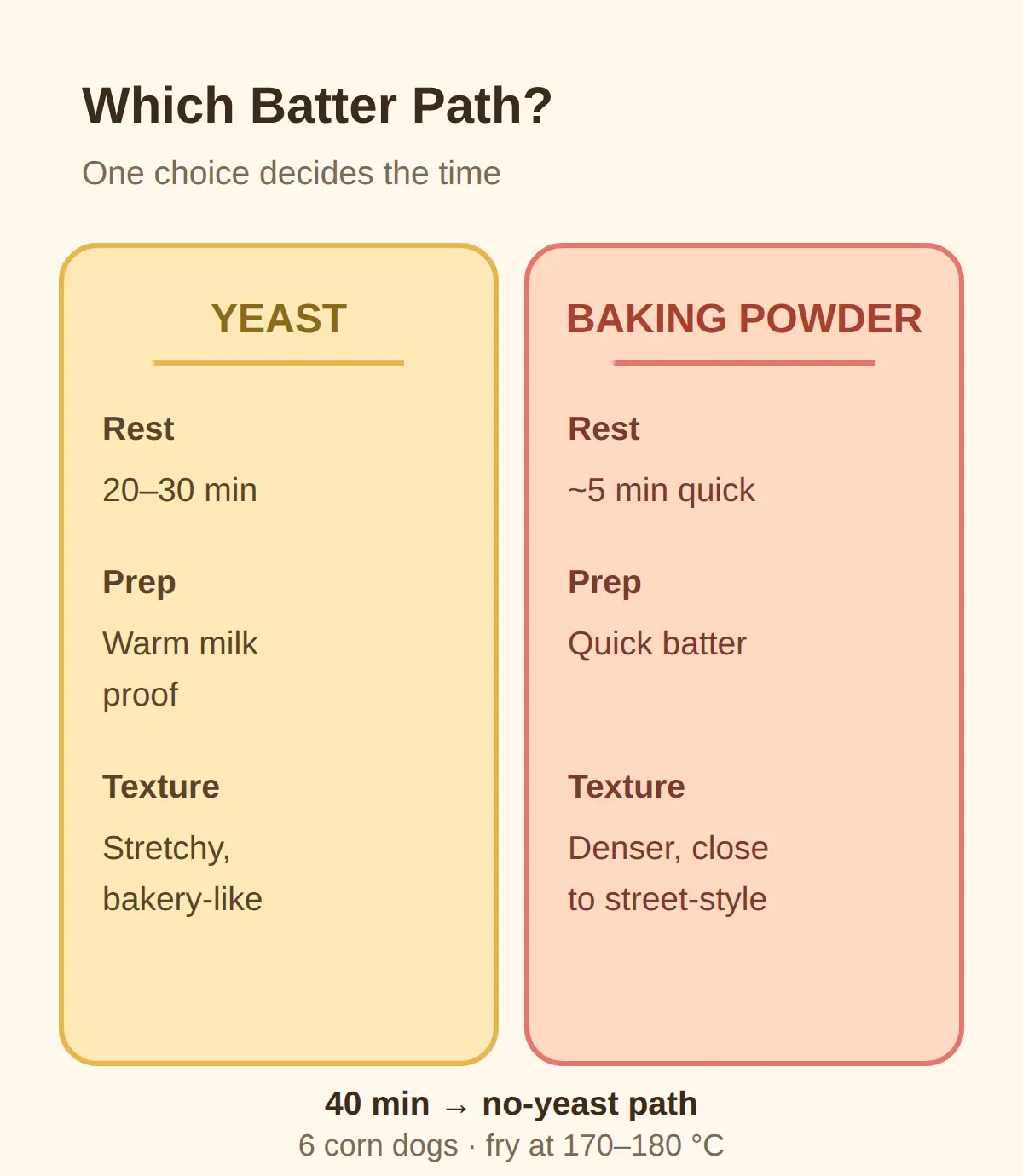
When a recipe lands on my screen, the first thing I check is which batter path it uses — yeast or baking powder — because that one choice decides whether the cook takes 40 minutes or an hour, and what the crust tastes like.
Ingredients
Main
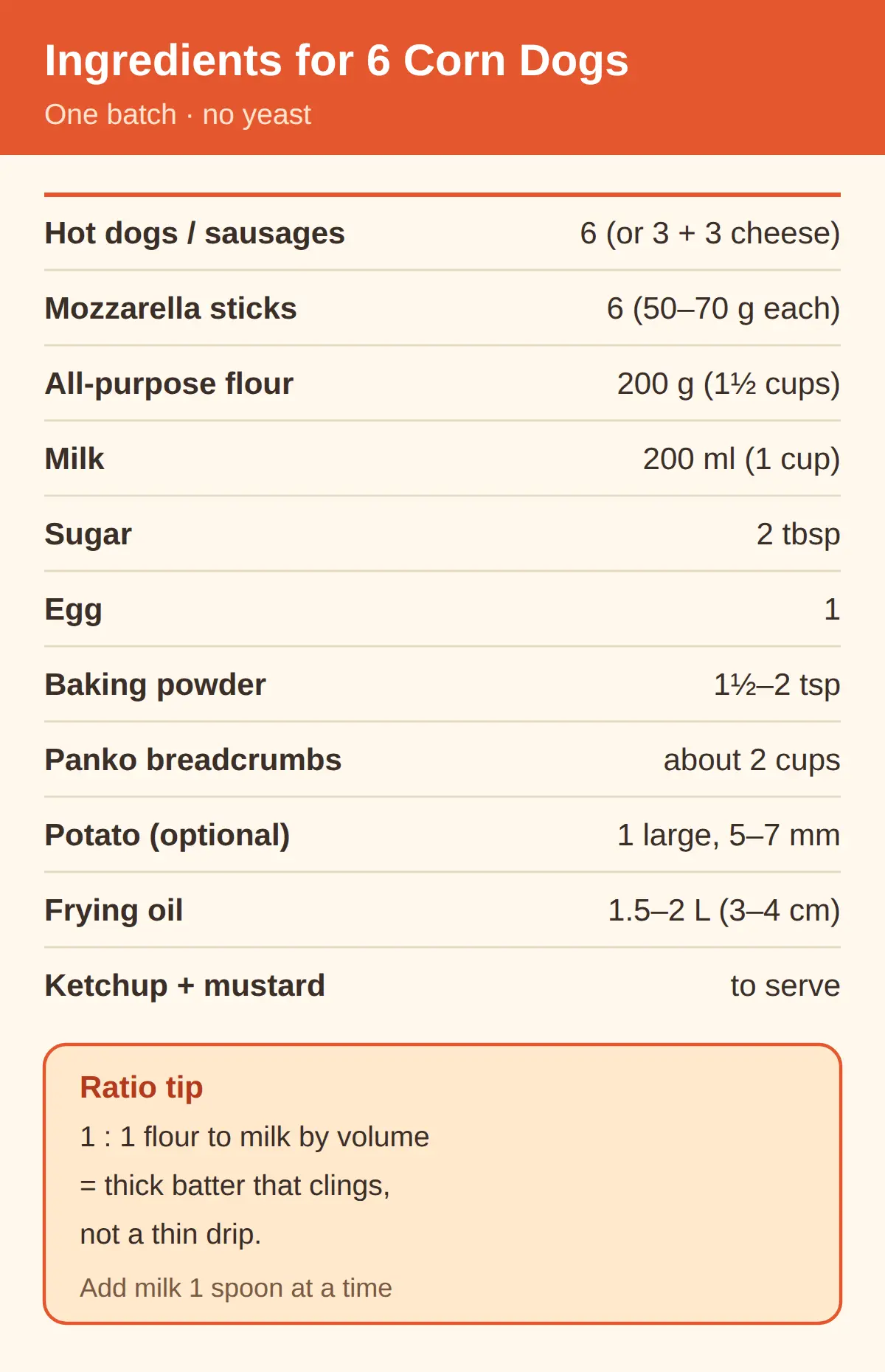
- 6 Hot dogs/sausages — fully cooked, kept cold
- 6 sticks (50–70 g each) Mozzarella string cheese — freeze 30–60 minutes before assembly for cheese-only dogs
- 200 g (about 1½ cups) All-purpose flour — plus extra for dusting
- 200 ml (about 1 cup) Milk — plus extra to adjust
- 1 Egg
- 1½–2 tsp Baking powder — no-yeast batter
- Sugar — for the batter
- About 2 cups Panko breadcrumbs
- 1 large potato Diced potato — 5–7 mm cubes, patted dry — potato version
- 1.5–2 L Frying oil — neutral oil, 3–4 cm depth in a heavy pan
To finish
- 1/2 to 1 teaspoon per corn dog Granulated sugar — sprinkle on while hot
- Ketchup and yellow mustard — to serve
Amounts are the ones used in this recipe; where the recipe gives no amount, adjust to taste.
Ingredients and Amounts (Metric, 6 Corn Dogs)
One batch makes 6 corn dogs — 6 skewers.
The amounts follow a 1:1 flour-to-liquid ratio by volume, so the batter is noticeably thicker than pancake batter and sets in one thick layer instead of dripping thin.
Cheese-only dogs typically use one mozzarella string-cheese stick or 50–70 g of mozzarella per skewer, and half-sausage-half-cheese is the most common home version.
Use fully cooked sausages or hot dogs — the frying only heats them through and cooks the coating.
Published recipes split on exact gram amounts, so treat the amounts below as a working baseline and adjust the milk a spoonful at a time until the batter clings to a skewer.
| Ingredient | Metric amount (6 corn dogs) |
|---|---|
| Hot dogs/sausages | 6 (or 3 sausages + 3 mozzarella sticks for half-and-half) |
| Mozzarella string cheese | 6 sticks (50–70 g each) for cheese-only dogs |
| All-purpose flour | 200 g (about 1½ cups) |
| Milk | 200 ml (about 1 cup), plus extra to adjust |
| Egg | 1 |
| Baking powder | 1½–2 tsp (no-yeast batter) |
| Panko breadcrumbs | About 2 cups |
| Diced potato (potato version) | 1 large potato, 5–7 mm cubes |
| Frying oil | 1.5–2 L, or 3–4 cm depth in a heavy pan |
| Ketchup and yellow mustard | To serve |
Two Batter Options: Yeast or Baking Powder
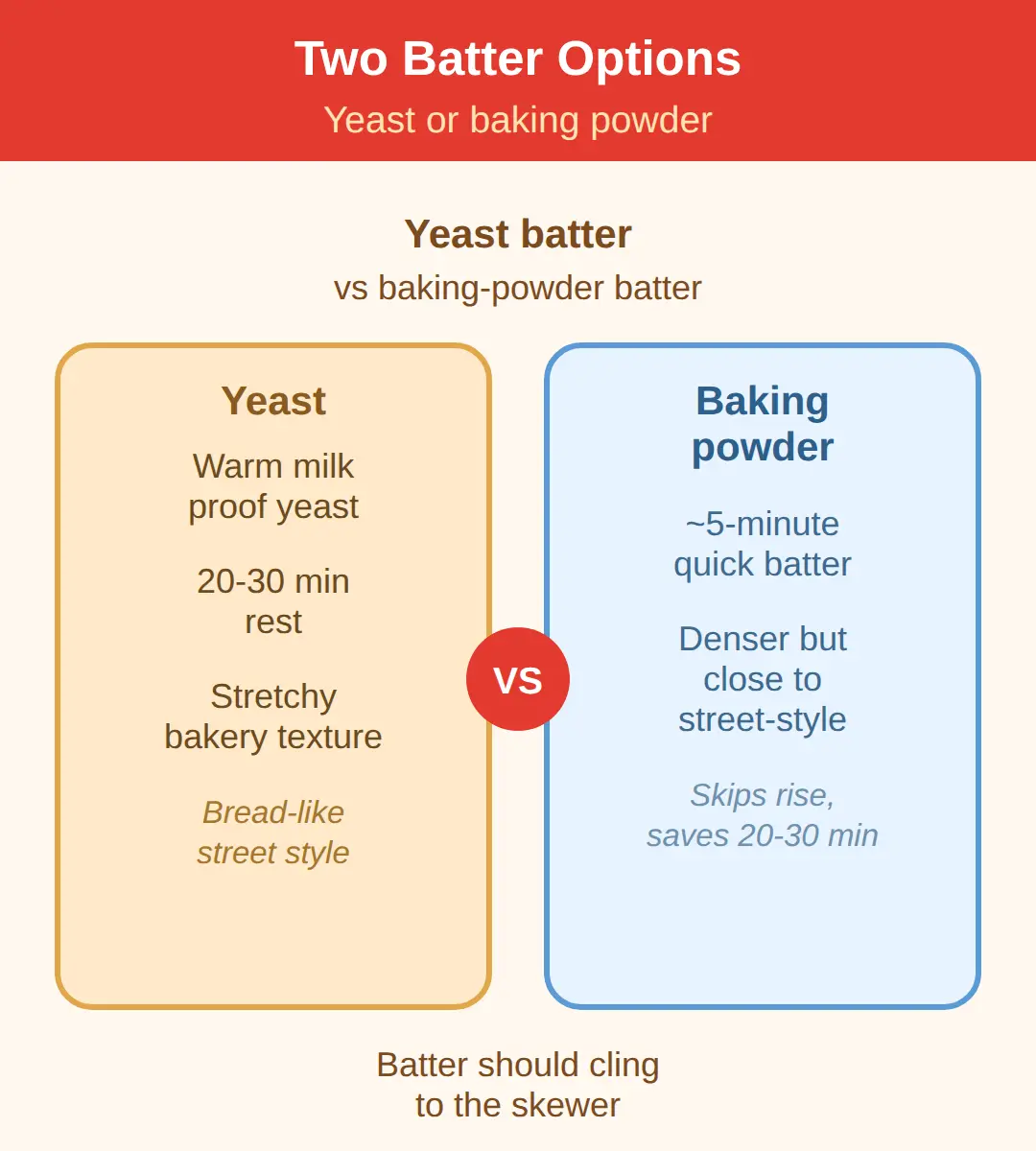
The yeast path gives the stretchy bakery-style dough: warm the milk to about 40 °C (104 °F), proof active dry yeast in it, and rest the thick batter 20–30 minutes until slightly bubbly.
Either way the batter should cling to the skewer and not drip off quickly.
If you want corn dogs today and have no yeast, take the baking-powder path; if you want the bread-like street texture and can wait, take the yeast path.
Steps to Make Korean Corn Dogs
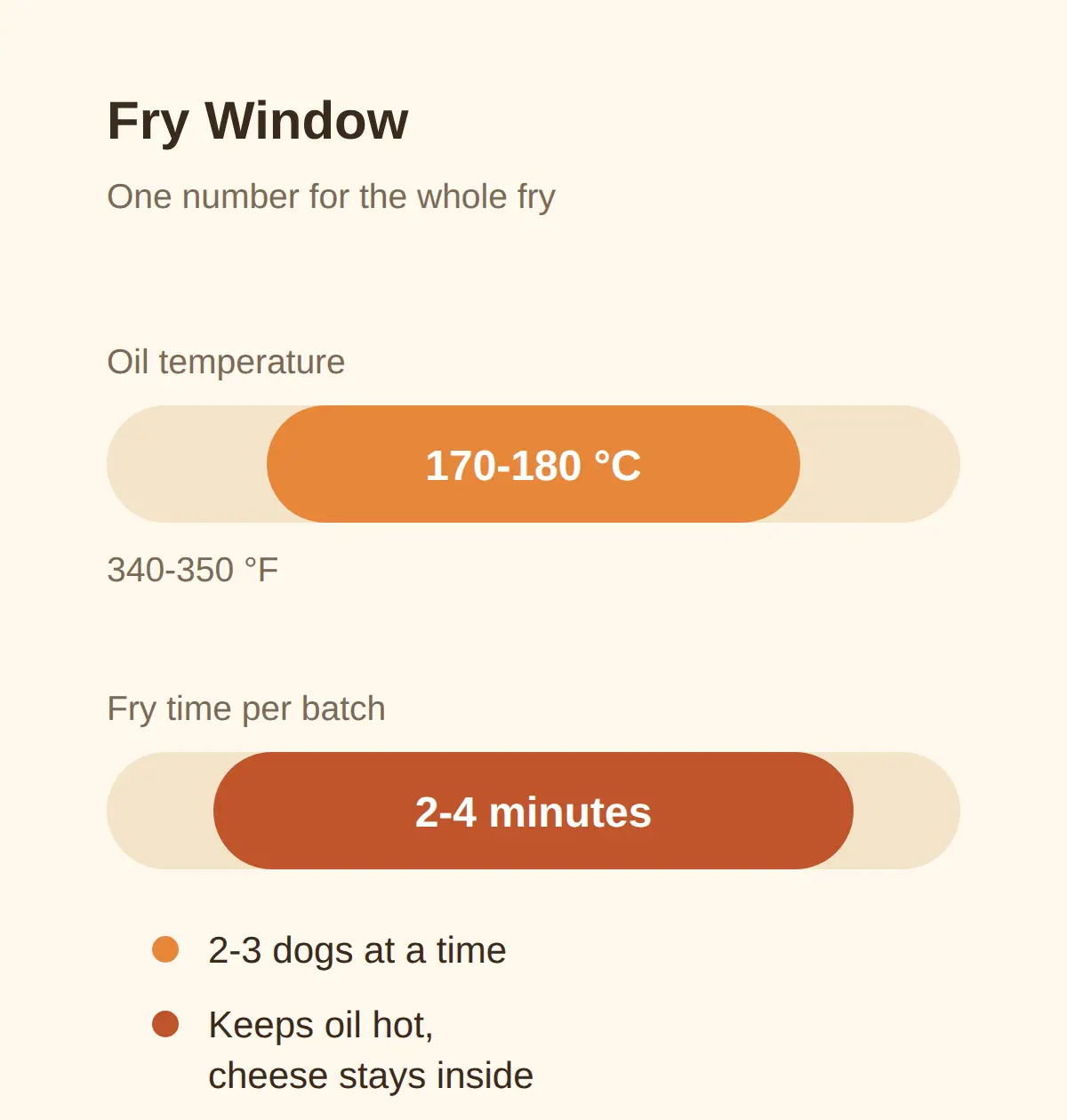
The whole fry window is one number: fry at 170–180 °C (340–350 °F) for about 2–4 minutes, 2–3 dogs at a time, so the oil temperature does not drop and the cheese stays inside.
You need enough oil to fully submerge the dogs — about 1.5–2 L in a deep pot, or 3–4 cm depth in a heavy pan — and a neutral oil such as canola or sunflower.
Steps:
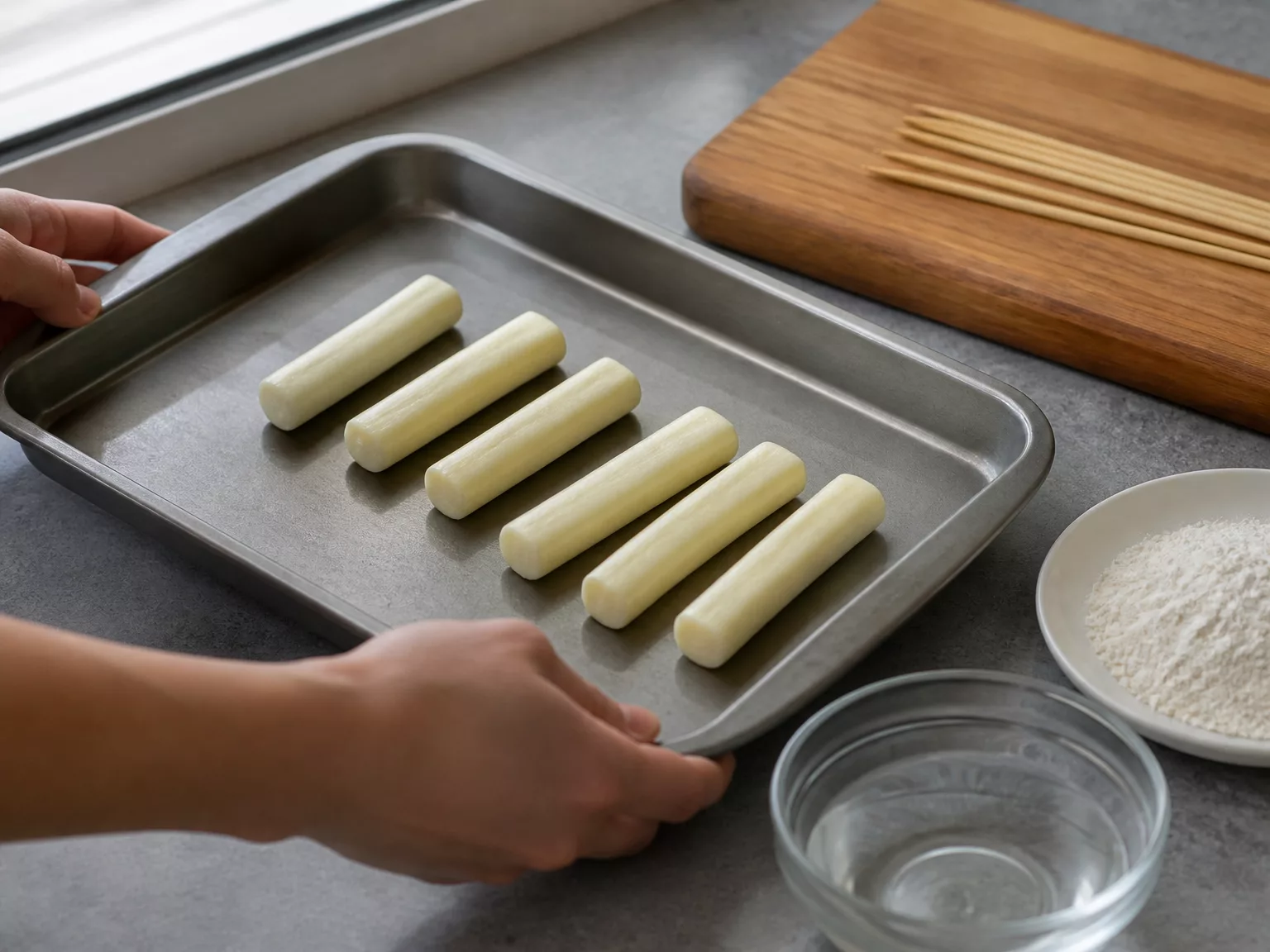
- Freeze the mozzarella sticks 30–60 minutes before assembly so they hold shape during frying.
- Skewer the cold sausage and cheese (or mozzarella stick) and keep them chilled until frying so the cheese stays solid before it hits the oil.
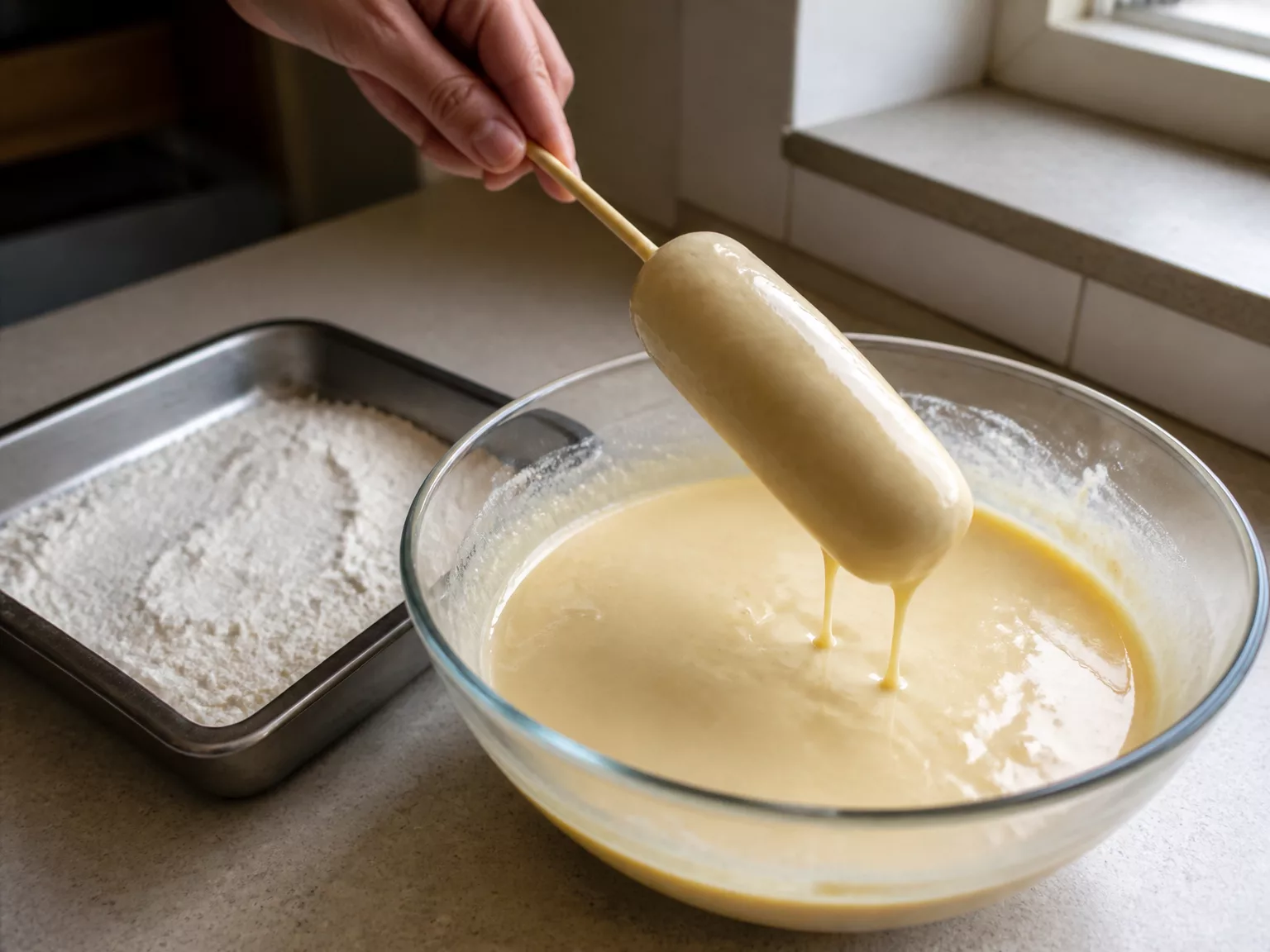
- Dust each skewer in flour, then dip in the thick batter, letting the excess drip for a second.
- Roll in panko until fully covered — press diced potato (5–7 mm cubes, patted dry) onto the batter at this point for the potato version.
- Fry 2–3 dogs at a time at 170–180 °C for 2–4 minutes until golden — about 30–60 seconds longer for potato-coated dogs.
- Drain briefly and finish while hot (next section).
The coating order — flour dust, batter, panko — is what keeps the shell attached; some recipes also chill the coated dog 10 minutes so it sets before frying.
Steps at a glance
-
 AI-generated photo
What it should look like — AI-generated image of this step, made from the recipe text — not a photo of our kitchen. 1Freeze the mozzarella sticks 30–60 minutes before assembly so they…⏱ 30–60 minutes -
2Skewer the cold sausage and cheese (or mozzarella stick) and keep…
-
 AI-generated photo
What it should look like — AI-generated image of this step, made from the recipe text — not a photo of our kitchen. 3Dust each skewer in flour, then dip in the thick batter, letting the…
The Korean Finish: Sugar, Ketchup and Mustard
The signature finish is a light sprinkle of granulated sugar — roughly 1/2 to 1 teaspoon per corn dog — plus a squeeze of ketchup and yellow mustard.
Sprinkle the sugar immediately after frying, while the coating is still hot and slightly oily, or it will not stick.
Some street versions drizzle sweetened condensed milk over the hot coating instead of the sugar, but that is a variation rather than the standard written-recipe finish.
If you skip the sugar, the dog reads as a regular fried hot dog — the sweet-on-savory contrast is the Korean part.
Substitutions When You Can’t Find the Korean Ingredients
Nothing in this recipe requires a Korean grocery — the table below covers every swap.
Low-moisture mozzarella is preferred for the pull, while other low-melting cheeses such as provolone or part-skim mozzarella also work; soft fresh mozzarella melts out and leaks into the oil.
Any neutral milk works in the batter, including unsweetened soy; keep the sweetness in the sugar, not in flavored milk.
Batter recipes that call for corn syrup can use equal sugar or honey instead.
Wooden skewers and thin chopsticks are interchangeable, and panko is stocked in most supermarkets outside Korea, so neither needs a substitute.
👉 corn dog history and the Korean ‘gamja hot dog’ background on Wikipedia’s corn dog page
👉 thick 1:1 flour-to-liquid batter and the sugar finish notes from FutureDish
👉 air-fryer and oven reheat times for leftovers from Serious Eats
Related posts
📎 📅 Upcoming Dates — Release & Event Calendar
Sources
Common Mistakes, Storage and Variations
- Keep the cheese cold or briefly frozen before frying, and pull the dogs out after 2–4 minutes at 170–180 °C — that is the window where the coating browns before the cheese escapes.
- Pat the potato cubes dry and dust the dog with flour before the batter dip; a wet surface is what makes the coating slide off.
- When proofing yeast, keep the milk at about 40 °C — hotter milk kills the yeast and leaves the dough dense.
- Air fryer at 180 °C for 6–8 minutes restores crispness on day-old dogs; the oven takes about 10 minutes, and the microwave just turns the coating soggy.
- Start with half-sausage-half-cheese and all-mozzarella, then try the potato-wrapped version once the base method works.
FAQ
Q. How do I make a Korean corn dog at home?
Skewer a cold sausage or mozzarella stick, dust in flour, dip in a thick batter, roll in panko, and fry at 170–180 °C for 2–4 minutes — 6 dogs per batch, about 40 minutes total on the no-yeast path.
Q. Can I skip the yeast in Korean corn dog batter?
Yes — use baking powder (about 1.5–2 tsp per 200 g flour) with milk; the batter takes about 5 minutes instead of a 20–30 minute rise, and the crust is denser but close to street-style.
Q. What oil temperature for a Korean corn dog?
170–180 °C (340–350 °F) — hotter than that burns the coating before the cheese melts, and cooler oil makes a soggy shell.
Q. Why does the cheese leak out of my Korean corn dog?
The oil was too hot, the fry ran too long, or the cheese was not cold; freeze the mozzarella 30–60 minutes before assembly and keep the skewers chilled until they hit the oil.
Q. How do I reheat a Korean corn dog?
Air fryer at 180 °C for about 6–8 minutes restores the crispness, or roughly 10 minutes in an oven at the same temperature — do not use the microwave.
If you want the most common home version first, take the no-yeast baking-powder batter and the half-sausage-half-cheese skewer — it saves 20–30 minutes over the yeast dough and teaches you the coating order without risking a leaky cheese-only dog.
Cover photo: FiveCornDogProntoPups — CC BY-SA 3.0
#koreancorndog #koreanstreetfood #koreanrecipes #corndogrecipe #friedsnacks
📅Upcoming Schedule — this week 2 · D-2 Hangul DaySee all →