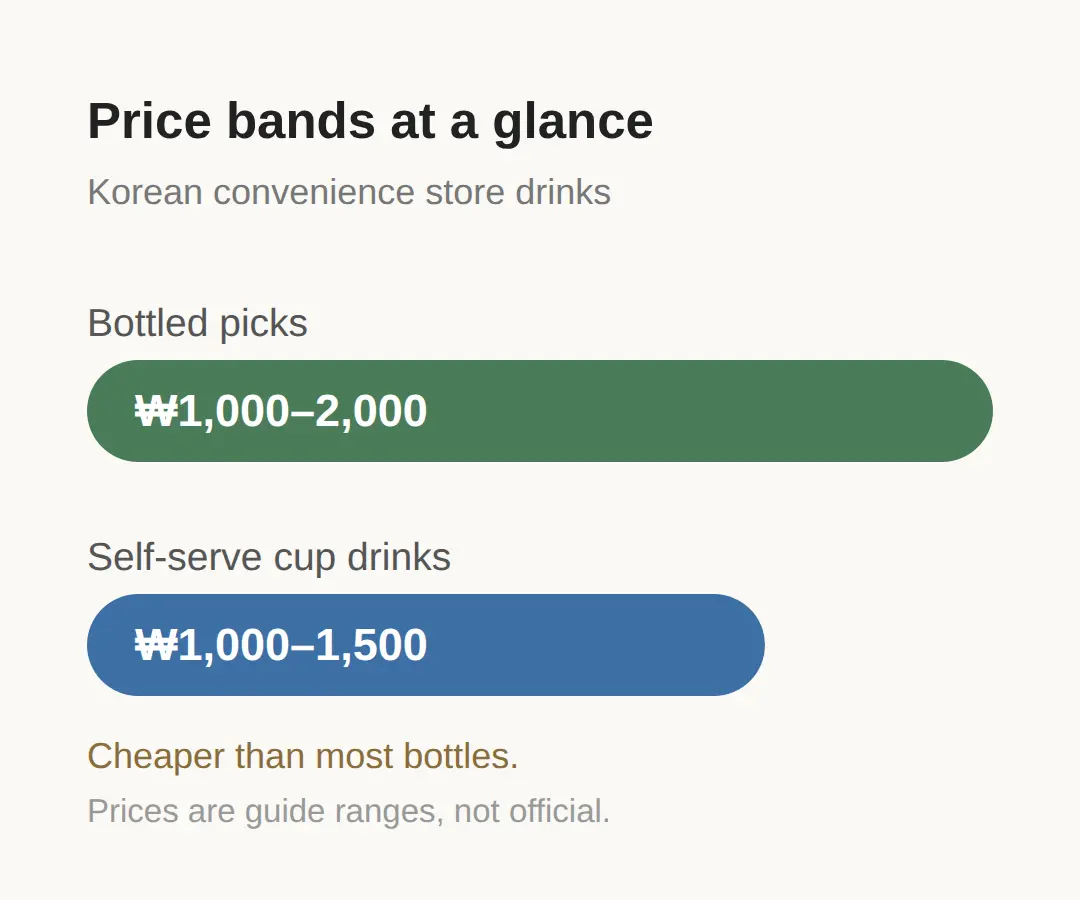
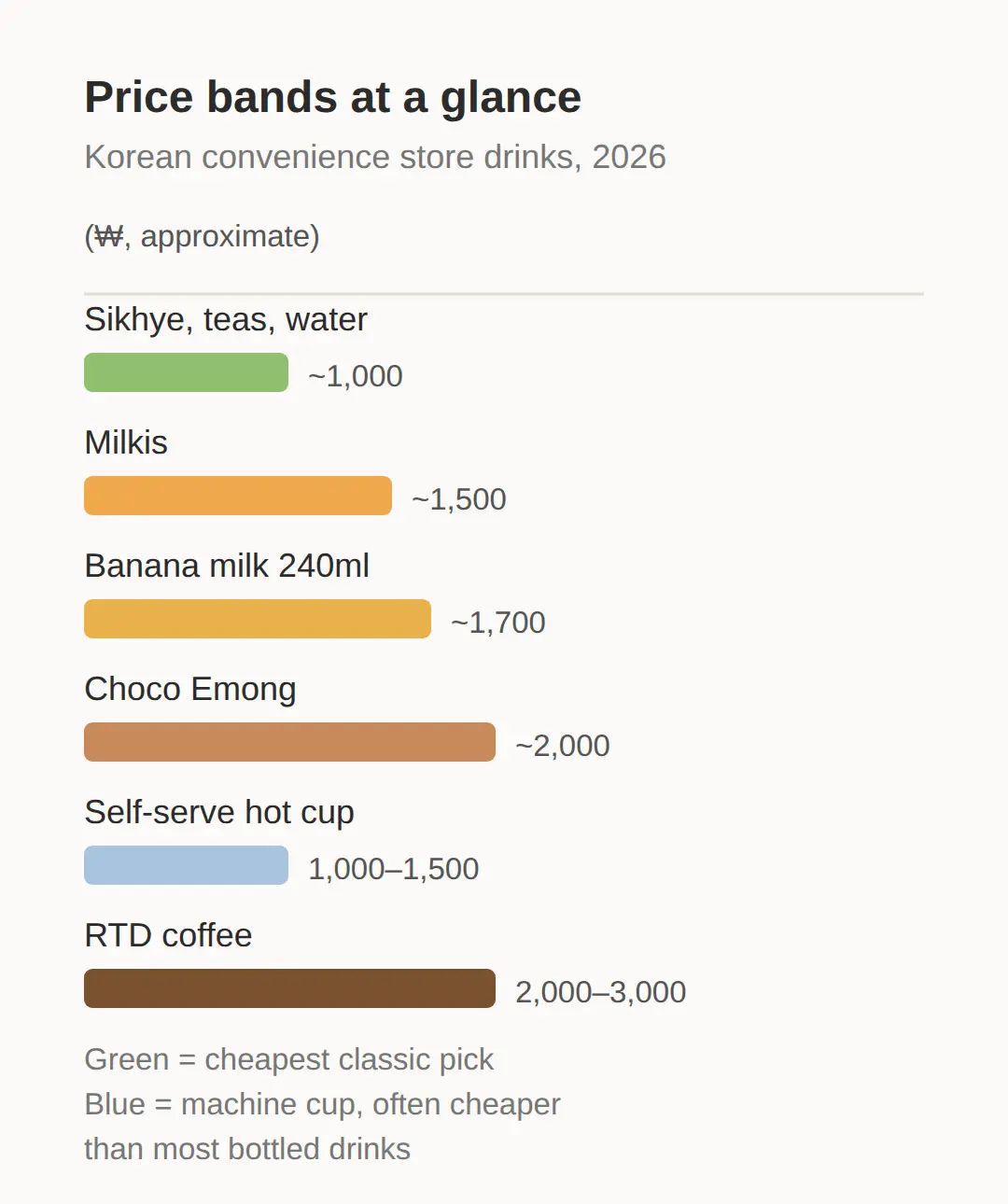
Most drinks at a Korean convenience store cost ₩1,000–2,000, and ready-to-drink coffee runs ₩2,000–3,000 — that is the short answer.
For a visitor with 30 minutes and no Korean, that means you can build a drink pick around price and the English on the label, not guesswork.
This post gives the picks, the price bands, where each drink sits in the store, what the labels tell you, and how to pay.
Key facts — As of 2026-10-08
- Most convenience store drinks at GS25, CU and 7-Eleven fall in the ₩1,000–2,000 band, with ready-to-drink coffee running ₩2,000–3,000 (2026 food-guide blog figures, branch prices vary).
- Binggrae Banana Milk is about ₩1,700 in 240ml bottles as of the 2026 guides — the small bottle size is why it stays under ₩2,000.
- Self-serve instant cup drinks from the in-store machine run roughly ₩1,000–1,500 per cup in 2026, cheaper than most bottled picks.
What Drinks Should You Buy at a Korean Convenience Store?
| Bottled sikhye (rice punch), canned barley tea, corn silk tea | About ₩1,000 — cheapest tier |
|---|---|
| Banana milk, Milkis, most soft drinks, water | ₩1,000–2,000 band |
| Choco Emong and other premium bottled picks | Around ₩2,000 |
| Ready-to-drink canned coffee (Cantata, OUTSTAND, Seomsotdabang) | ₩2,000–3,000 |
The picks travellers repeat most are bottled sikhye (rice punch), Binggrae Banana Milk, Milkis, canned barley tea and corn silk tea, Choco Emong, self-serve cup tea, ready-to-drink coffee, and zero-sugar versions of the same.
2026 first-timer guides to Korean food treat convenience stores as a proper meal option, and the drink is the last half of a lunchbox-plus-ramyeon run that lands in the ₩5,000–8,000 range.
The three chains — GS25, CU and 7-Eleven — carry near-identical drink line-ups, so the picks work whichever branch you walk into.
When picking a drink I look first at the price tag under ₩2,000 and whether the flavour name is printed in English on the front label.
Shelf prices are guide approximations rather than official chain price pages, so treat every figure here as a range.
Where Each Drink Sits in the Store
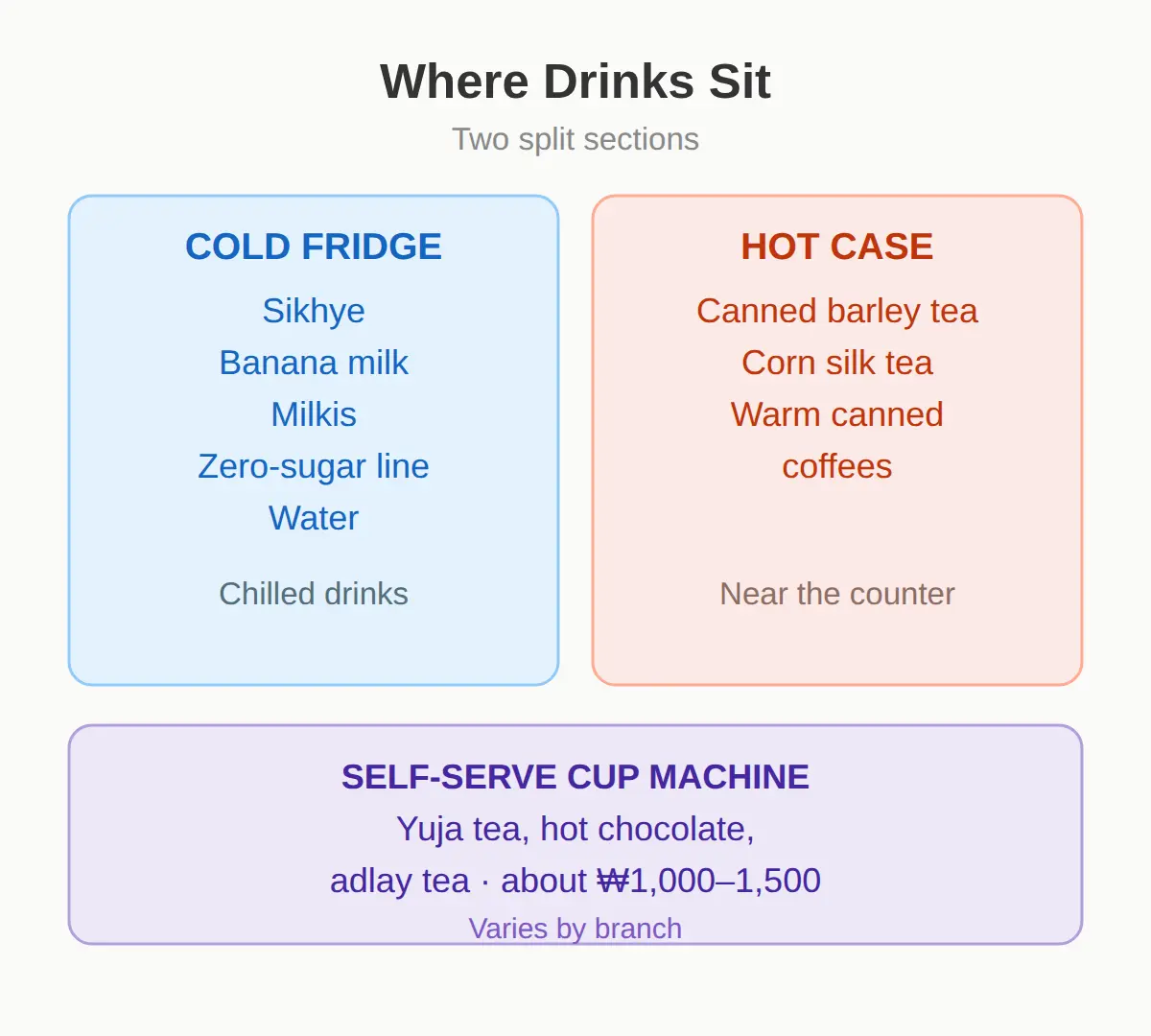
Cold drinks live in the fridge and hot drinks sit in a heated case near the counter — the two sections are physically split.
The cold case holds sikhye, banana milk, Milkis, the zero-sugar line and water.
The hot case holds canned barley tea, corn silk tea and warm canned coffees.
Many branches also have a self-serve instant cup machine — yuja tea, hot chocolate, adlay tea — that runs roughly ₩1,000–1,500 per cup, cheaper than most bottled picks.
Machine availability and pricing vary by branch, so check the counter before counting on it.
Which Drink for Which Situation
| Situation | Pick and why |
|---|---|
| Cold, classic Korean drink at the cheapest price | Bottled sikhye, around ₩1,000, sweet and low in caffeine |
| The drink everyone posts about | Binggrae Banana Milk in its small 240ml bottle, which is why it stays near ₩1,700 rather than a large-bottle price |
| You avoid sugar or caffeine | Hot-case barley tea or corn silk tea, both zero-sugar and zero-caffeine, or a zero-sugar version in the same fridge |
| Cold out, want something hot on the walk | A self-serve cup from the machine, about ₩1,000–1,500 |
| Just finished BBQ, want the full Korean ending | Soju and beer sit in the same store’s alcohol aisle, with sikhye or a soft drink as the chaser |
| What drives the pick | Price is the number-one buying factor and sweetness or flavour recognisability is number two, which is why banana milk, Milkis and sikhye top the familiarity list |
What the Labels Say When You Cannot Read Korean
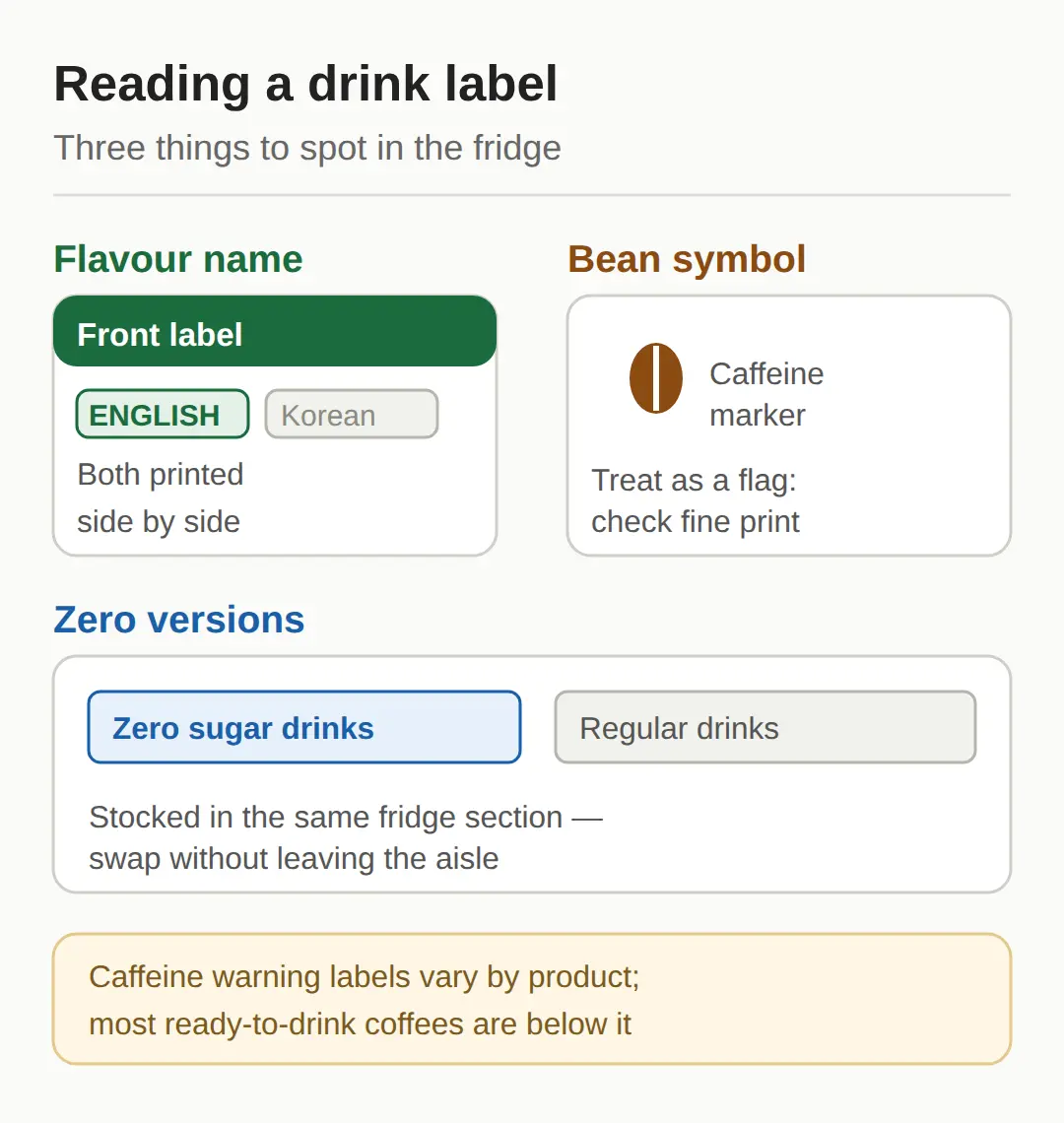
Front labels of the major drink brands print the flavour name in English alongside the Korean, so you can match the flavour before buying.
Energy drinks and ready-to-drink coffees carry a small coffee-bean symbol marking their caffeine content.
Korean law requires warning labels on high-caffeine drinks, but most ready-to-drink coffees fall under that threshold, so labelling varies by product.
If caffeine matters to you, treat the bean symbol as a flag to check the fine print rather than a guarantee.
Zero-sugar versions — zero cola, zero sacida, zero-sugar sikhye and tea lines — are stocked in the same fridge section, so you can substitute without leaving the aisle.
Can You Drink It There, and How Do You Pay?
Yes — most branches provide seating, microwaves and hot water, so you can open your drink on site without buying anything else.
Card payment works at all three chains, including foreign-issued cards, and T-money is standard.
Many GS25, CU and 7-Eleven branches run 24 hours, especially in Seoul tourist areas.
If I were standing in a GS25 with 30 minutes and no Korean, I would grab sikhye from the cold case and a canned barley tea from the hot case — one cold, one hot, both with English labels.
To check a branch’s stock before walking in, GS25 and CU drink lists appear on Korean delivery apps such as Baemin and Coupang Eats.
Related posts
📎 📅 Upcoming Dates — Release & Event Calendar
Sources
- stores offer drinks, hot water, microwaves, seating; 2026 gu (coreadesk.com)
- lunchbox + ramyeon + drink workflow; price ranges in the ₩1, (wokfeed.com)
- only Higgsfield MCP × Claude pages in results — nothing usab (contents.premium.naver.com)
Three things to do before you pay
- Treat every price here as a range — figures come from 2026 traveller guides, not official chain price pages, and shelf prices vary slightly by branch.
- Check the counter for the self-serve cup machine before counting on a ₩1,000–1,500 hot drink — machines vary by branch.
- Use the English flavour names on the front label first; if caffeine matters, look for the coffee-bean symbol on coffee and energy drinks.
FAQ
Q. What drinks should I buy at a Korean convenience store, and how much do they cost?
Sikhye, banana milk, Milkis, canned barley tea, self-serve cup tea and ready-to-drink coffee are the usual picks — most cost ₩1,000–2,000 and ready-to-drink coffee ₩2,000–3,000, as guide approximations rather than official chain prices.
Q. Is Binggrae banana milk worth trying?
It is the most recognisable Korean convenience store drink for travellers, and the small 240ml bottle keeps it under ₩2,000 — a low-cost way to try the drink that tops the familiarity lists.
Q. Which Korean convenience store drinks are good and not too sweet?
Canned barley tea and corn silk tea from the hot case are zero-sugar and zero-caffeine, and zero-sugar versions of the sweet picks sit in the same fridge section.
Q. Can I drink my drink inside the store and pay with a foreign card?
Yes — most branches have seating, microwaves and hot water, and foreign-issued cards plus T-money are standard at GS25, CU and 7-Eleven.
Related: Korean convenience store food — lunchbox, ramyeon and the rest of a ₩5,000–8,000 store meal.
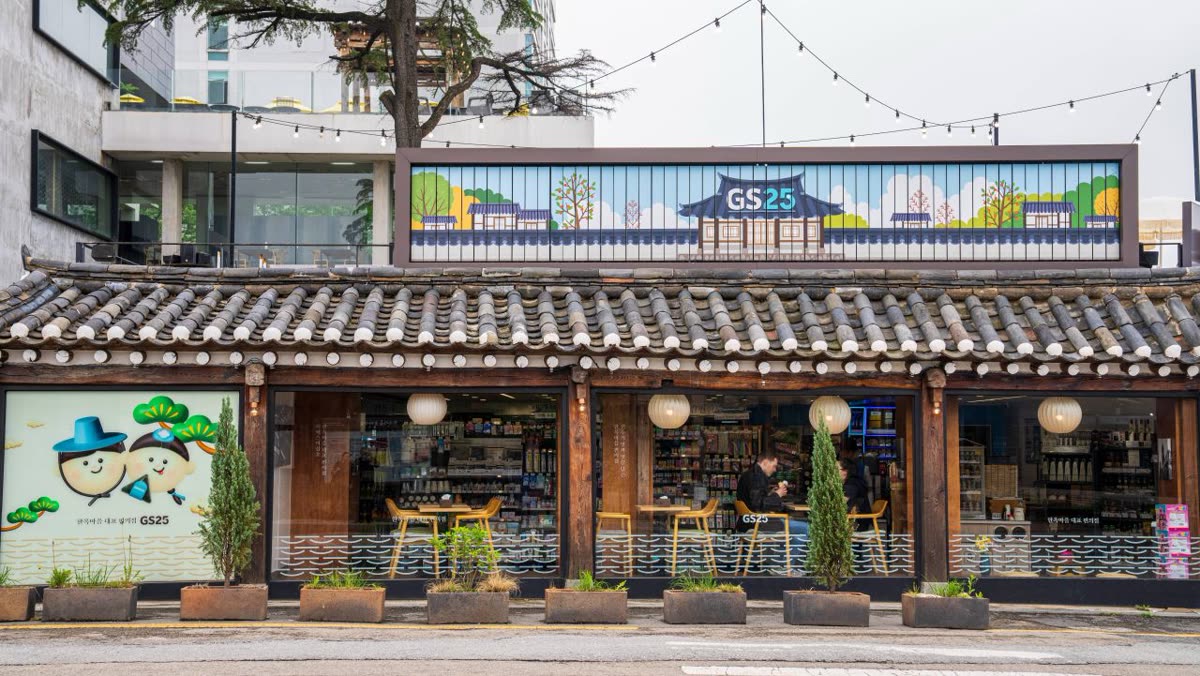
Cover photo: 2024 공연관광 DB 불편한 편의점_4 by Korea Tourism Organization — KOGL Type 1 (attribution)
#koreanconveniencestoredrinks #GS25drinks #CUdrinks #bananamilk #sikhye #koreatravelfood
📅Upcoming Schedule — this week 4 · D-day Hangul DaySee all →How this article was made: written with AI assistance from the official and public sources cited here, checked automatically against those sources, and reviewed by the site operator after publishing. Last updated 2026-10-09. Editorial policy