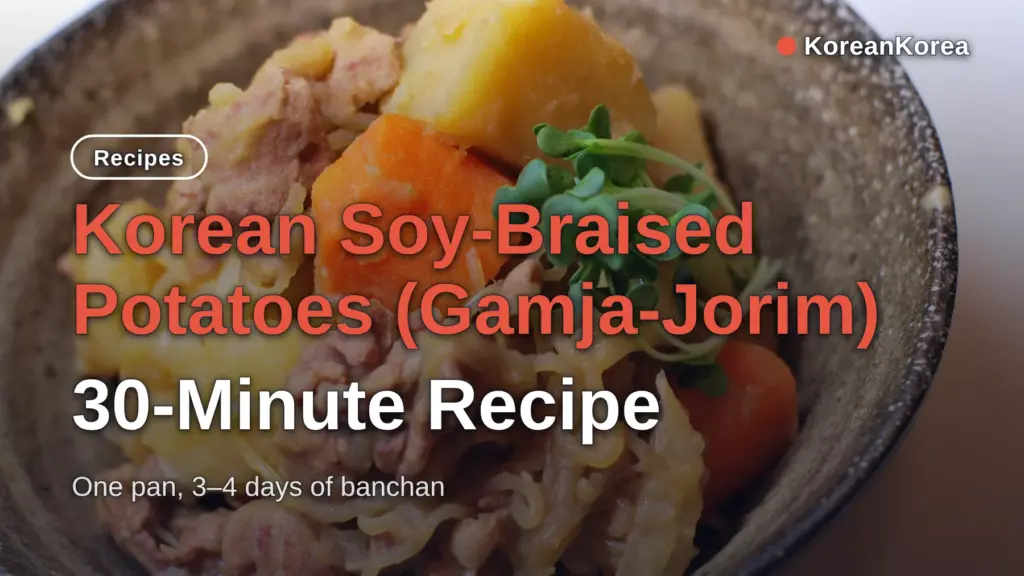
Simmer 600 g of potato chunks in a sweet-soy glaze of 3 tbsp soy sauce, 1.5–2 tbsp corn syrup (or sugar), 1–2 garlic cloves and 1 cup (240 ml) water for about 30 minutes in one pan.
How To Make Korean Soy-Braised Potatoes (Gamja-Jorim) At Home
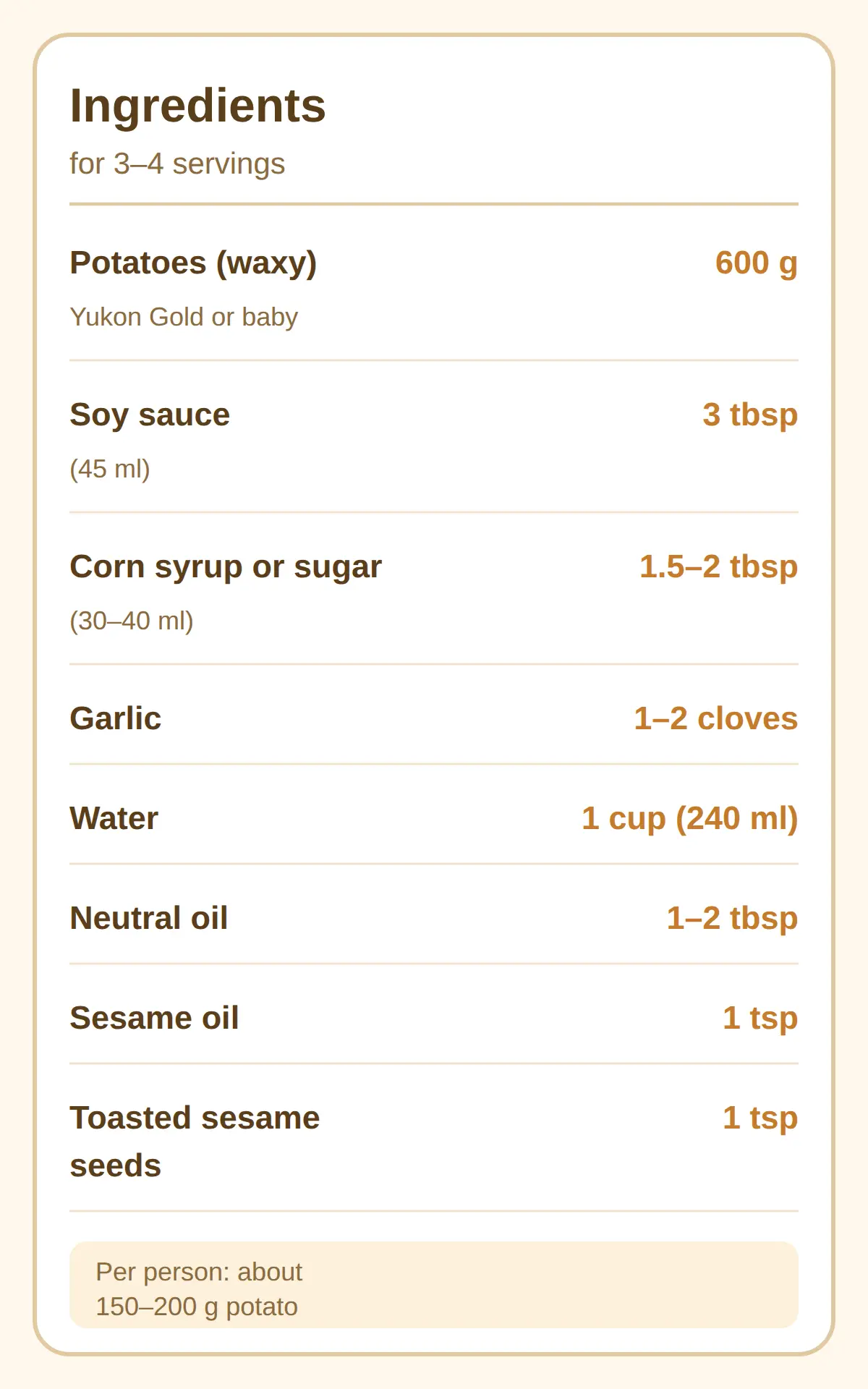
| Waxy potatoes (Yukon Gold, baby potatoes) | 600 g |
|---|---|
| Soy sauce | 3 tbsp (45 ml) |
| Corn syrup (mulyeot) or sugar/honey | 1.5–2 tbsp (30–40 ml) |
| Garlic | 1–2 cloves |
| Water | 1 cup (240 ml) |
| Neutral oil | 1–2 tbsp (15–30 ml) |
| Sesame oil | 1 tsp, to finish off the heat |
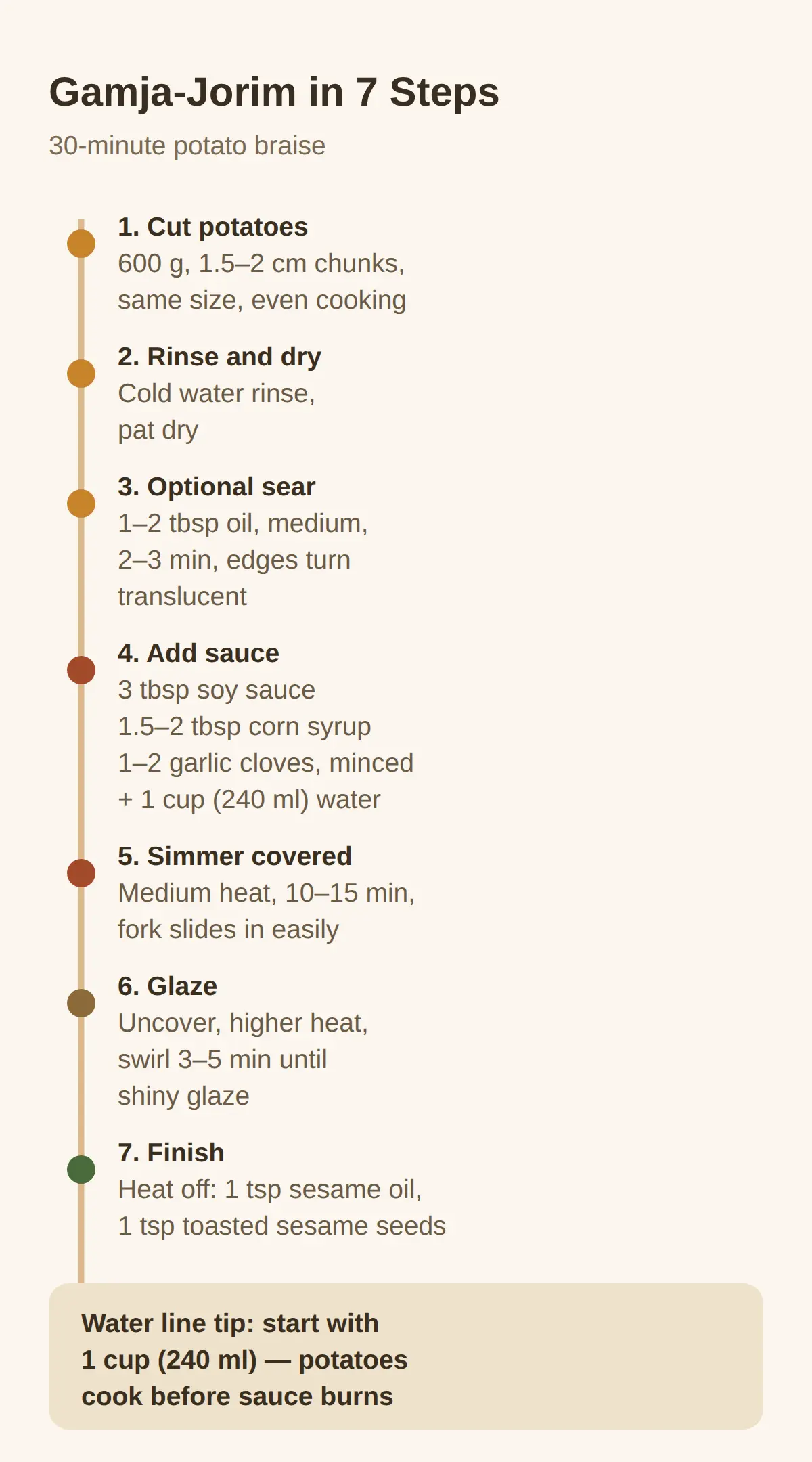
- Cut 600 g of potatoes into uniform 1.5–2 cm (about 3/4-inch) chunks — same size in every piece, so they cook evenly.
- Rinse the chunks in cold water to wash off surface starch, then pat them dry.
- Optionally, sear them in 1–2 tbsp neutral oil over medium heat for 2–3 minutes until the edges turn translucent.
- Add the sauce — 3 tbsp soy sauce, 1.5–2 tbsp corn syrup, 1–2 minced garlic cloves — plus 1 cup (240 ml) water.
- Cover and simmer over medium heat for 10–15 minutes until a fork slides in easily.
- Uncover, raise the heat, and swirl the pan for 3–5 minutes until the liquid reduces to a shiny glaze with nothing runny left.
- Turn the heat off, then finish with 1 tsp sesame oil and 1 tsp toasted sesame seeds.
The first thing to check in any version of this recipe is the water line — a batch that starts with about 1 cup (240 ml) of water cooks through before the sauce ever gets a chance to burn.
Prep takes about 10 minutes and cooking about 20 minutes, so the whole dish fits inside a 35-minute weeknight window in a single wide skillet with a lid.
No special equipment is needed, and the recipe is beginner level — the timing steps above are the only numbers to follow.
Ingredients
Main
- 600 g Waxy potatoes (Yukon Gold or baby potatoes) — cut into 1.5–2 cm chunks
- 1–2 tbsp (15–30 ml) Neutral oil
Sauce & seasoning
- 3 tbsp (45 ml) Soy sauce
- 1.5–2 tbsp (30–40 ml) Corn syrup (mulyeot)
- 1–2 cloves Garlic — minced
- 1 cup (240 ml) Water
To finish
- 1 tsp Sesame oil — added off the heat
- 1 tsp Toasted sesame seeds — added off the heat
Amounts are the ones used in this recipe; where the recipe gives no amount, adjust to taste.
Steps at a glance
-
1Cut 600 g of potatoes into uniform 1.5–2 cm (about 3/4-inch) chunks
-
2Rinse the chunks in cold water to wash off surface starch, then pat…
-
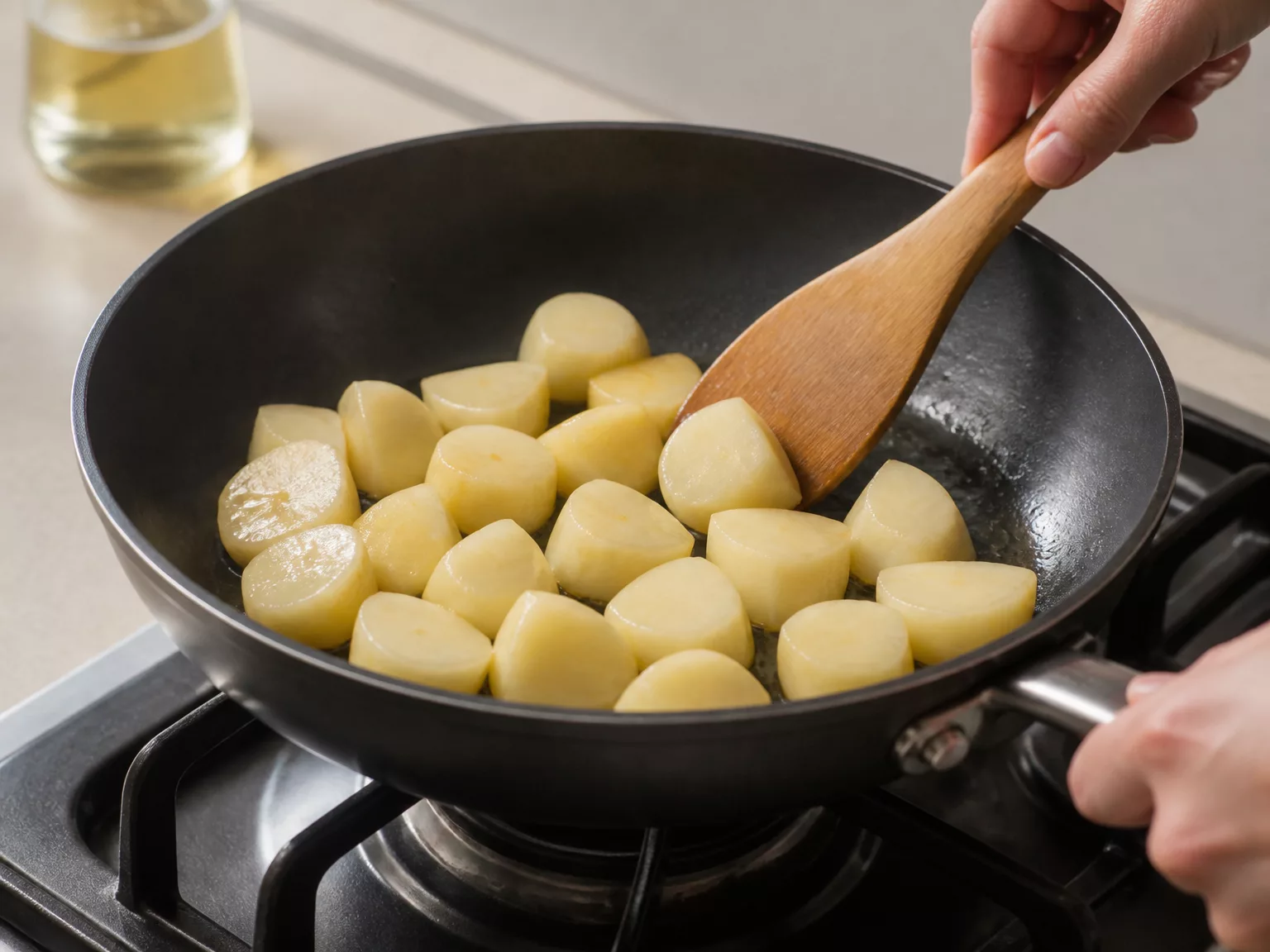 AI-generated photo
What it should look like — AI-generated image of this step, made from the recipe text — not a photo of our kitchen. 3Optionally, sear them in 1–2 tbsp neutral oil over medium heat for…⏱ 2–3 minutes🔥 medium heat -
4Add the sauce
-
5Cover and simmer over medium heat for 10–15 minutes⏱ 10–15 minutes🔥 simmer
-
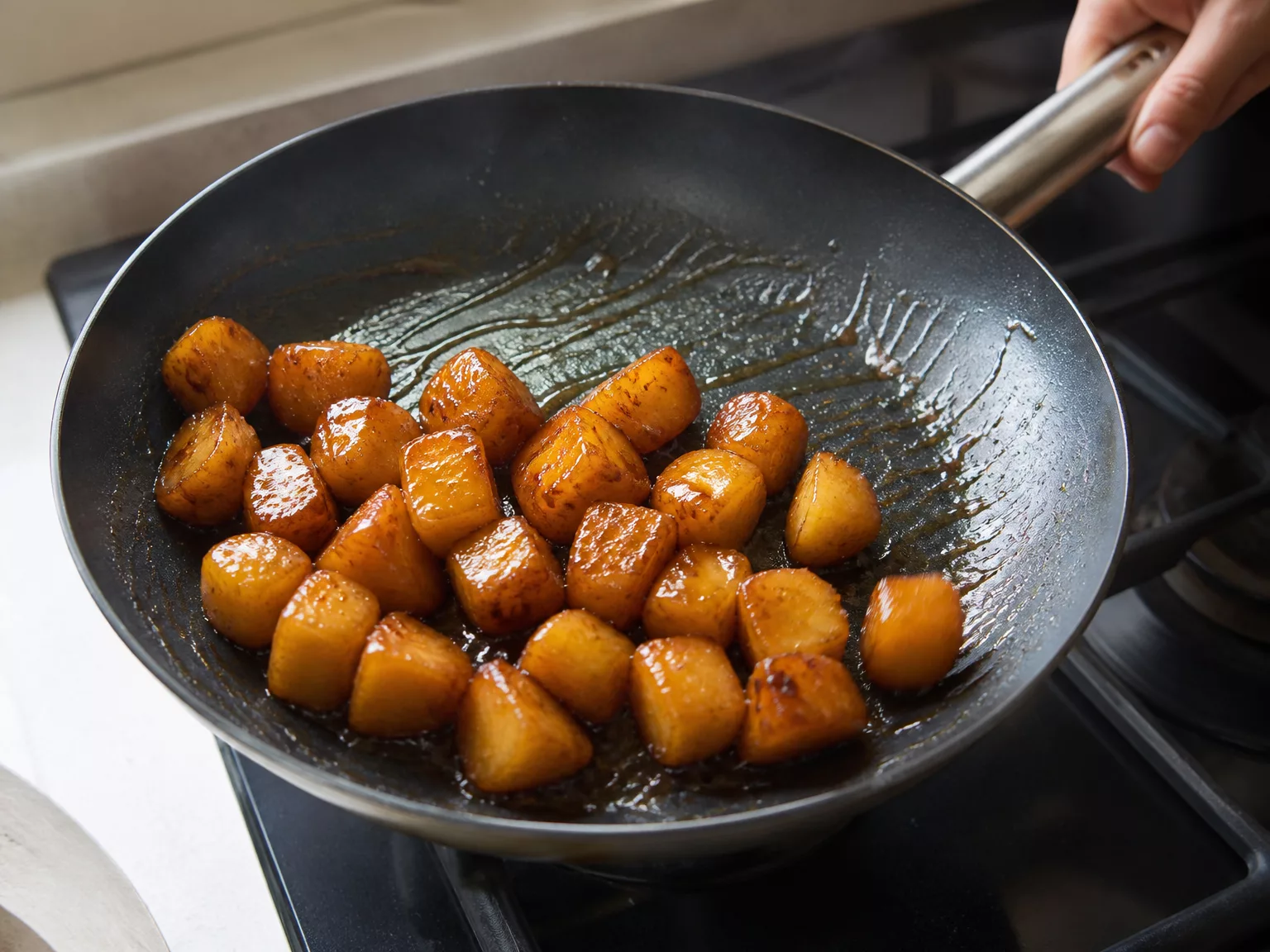 AI-generated photo
What it should look like — AI-generated image of this step, made from the recipe text — not a photo of our kitchen. 6Uncover, raise the heat, and swirl the pan for 3–5 minutes⏱ 3–5 minutes -
7Turn the heat off, then finish with 1 tsp sesame oil and 1 tsp…
Ingredients And Amounts For 3–4 Servings
| Ingredient | Amount |
|---|---|
| Waxy potatoes (Yukon Gold or baby potatoes) | 600 g |
| Soy sauce | 3 tbsp (45 ml) |
| Corn syrup (mulyeot) or sugar | 1.5–2 tbsp (30–40 ml) |
| Garlic | 1–2 cloves |
| Water | 1 cup (240 ml) |
| Neutral oil | 1–2 tbsp (15–30 ml) |
| Sesame oil | 1 tsp |
| Toasted sesame seeds | 1 tsp |
Divided across the usual 3–4 side-dish servings, 600 g works out to about 150–200 g of potato per person, since banchan is eaten in small portions alongside rice.
If only starchy russets are at home, look for waxy or all-purpose potatoes instead — waxy chunks hold their shape during the long simmer, while russets tend to fall apart.
Substitutes When You Can’t Find Korean Ingredients
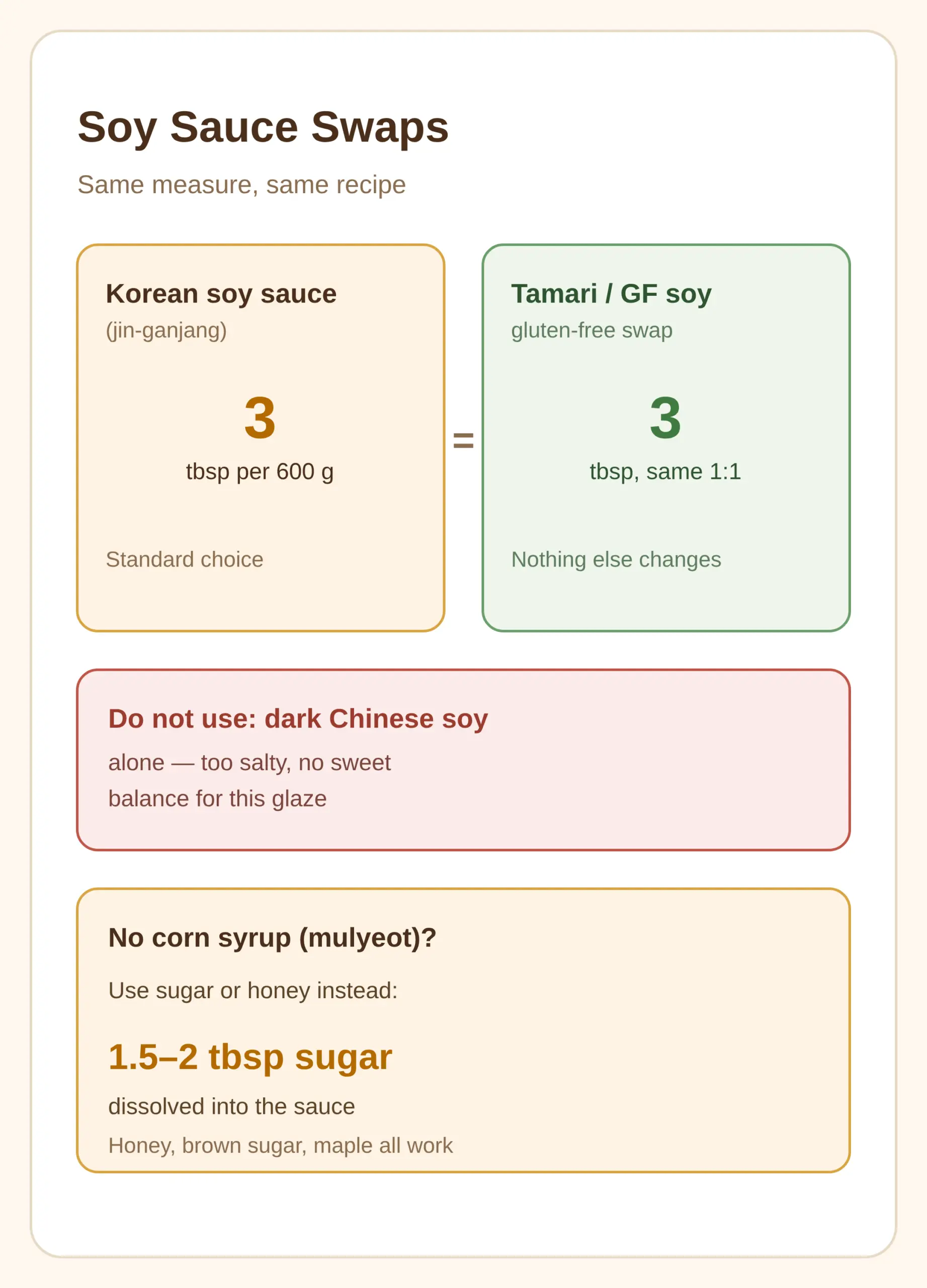
No Korean corn syrup (mulyeot): dissolve 1.5–2 tbsp of sugar or honey into the sauce instead, 1:1.
The glossy shine comes from reduced sugar plus the oil in the pan, not from the syrup itself, so the finish stays the same — honey, brown sugar, or maple syrup all work at the same volume.
Gluten-free: swap in tamari or a certified gluten-free soy sauce at the same 3-tbsp ratio, and nothing else in the recipe changes.
Coconut aminos are less salty, so they need about 1 tbsp of extra sweetener to bring the glaze back into balance — plain dark Chinese soy sauce alone is too salty for this dish.
For a deeper flavor, some home versions simmer the potatoes in anchovy-kelp broth instead of plain water, with the same steps and the same 1-cup measurement.
Why Are My Braised Potatoes Mushy?
Three failure modes cover most mushy or burnt batches, and they are worth checking in order.
First, no water: without the 1-cup start, the sauce burns before the potatoes cook through, so the heat gets turned up to compensate and the chunks break down.
Second, uneven cuts: at mixed sizes, the small 1 cm pieces turn to mush by the time the 3 cm pieces are raw in the middle.
Third, over-stirring: heavy stirring breaks the chunks during the simmer, so swirl the pan instead and stir mainly during the final 3–5 minute glazing stage.
If the last batch came out mushy, run that three-point check before changing any ingredient amounts — the ratios above are usually not the problem.
Make It Spicy, With Onion, Or With Lotus Root
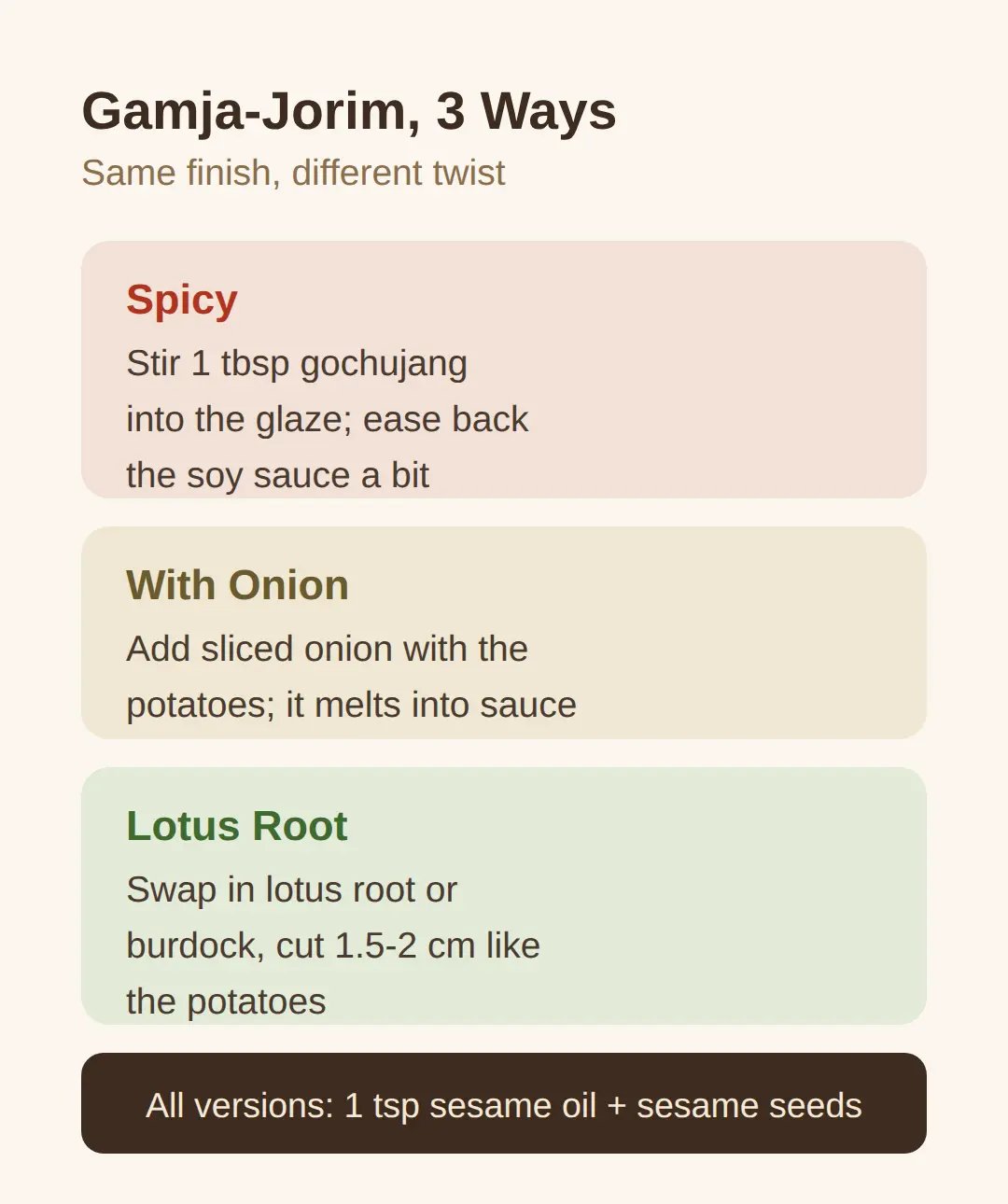
Spicy version: stir about 1 tbsp of gochujang (or gochugaru) into the standard glaze and pull the soy sauce back slightly to keep the 600 g balance.
Only the heat element changes — the sweetener stays the same, so the glossy finish survives.
Onion version: add sliced onion together with the potatoes; it cooks down in the same glaze and softens into the sauce.
Root-vegetable version: replace some of the potatoes with lotus root or burdock, cut to the same 1.5–2 cm size so everything finishes together.
Every version ends the same way — 1 tsp sesame oil and toasted sesame seeds off the heat, with scallion greens as an optional finish.
Storage, Reheating, And When Koreans Eat It
Leftovers keep 3–4 days refrigerated in an airtight container — reheat in a pan with a splash of water to bring the glaze back.
Freezing does not work for this dish, because the potatoes turn mealy when thawed.
It is eaten warm or at room temperature, which is exactly why it travels well in dosirak lunch boxes and works as a make-ahead banchan — the flavor deepens overnight.
On the table it sits next to steamed rice, kimchi, and namul, in the small-portion style Korean meals are built on.
If the week needs side dishes ready in advance, one 30-minute batch covers 3–4 days — so two batches a week cover the daily banchan rotation, and the broth version is the one worth doubling for that purpose.
If I were cooking this for the week, I’d make a double batch on Sunday, because the flavor deepens overnight and it keeps 3–4 days refrigerated — one session covers the whole rotation.
Related posts
📎 📅 Upcoming Dates — Release & Event Calendar
Quick Answers
- Start with 1 cup (240 ml) of water and reduce at the end — that one measurement decides whether the glaze burns or shines.
- Cut every chunk to 1.5–2 cm; mixed sizes cook at different speeds.
- Swirl the pan instead of stirring until the final glazing stage.
- Skip the freezer — 3–4 days in the fridge is the dish’s range.
FAQ
Q. What is Korean potato side dish (gamja-jorim)?
Gamja-jorim is soy-braised potatoes: small chunks simmered in a sweet-soy glaze until glossy outside and chewy-centered, served as a banchan side dish. The name breaks down as gamja (potato) plus jorim, the Korean technique of simmering ingredients in a seasoned soy liquid until it reduces.
Q. Can I make gamja-jorim without corn syrup (mulyeot)?
Yes — dissolve 1.5–2 tbsp of sugar or honey into the sauce instead. The glossy finish comes from reduced sugar plus oil, not from the syrup itself, so honey, brown sugar, or maple syrup all work at the same volume.
Q. Is gamja-jorim gluten-free?
Not as written, because soy sauce contains wheat — but a 1:1 swap to tamari or a certified gluten-free soy sauce at the same 3-tbsp ratio makes it gluten-free with no other changes. Coconut aminos need about 1 tbsp of extra sweetener because they are less salty.
Q. How long does Korean braised potato banchan keep?
3–4 days refrigerated in an airtight container, reheated in a pan with a splash of water. It is fine warm or at room temperature, which is why it is a standard dosirak item — freezing is not recommended because the potatoes turn mealy.
Q. What potatoes are best for Korean soy-braised potatoes?
Waxy or all-purpose potatoes such as Yukon Gold or baby potatoes hold their shape through the braising, while starchy russets tend to fall apart.
sources
Cover photo: Braised pork and potatoes (3089327692) by Yumi Kimura from Yokohama, JAPAN — CC BY-SA 2.0
#Koreanrecipes #banchan #gamja-jorim #soy-braisedpotatoes #Koreansidedishes #one-pan
📅Upcoming Schedule — this week 4 · D-day Hangul DaySee all →How this article was made: written with AI assistance from the official and public sources cited here, checked automatically against those sources, and reviewed by the site operator after publishing. Last updated 2026-10-09. Editorial policy