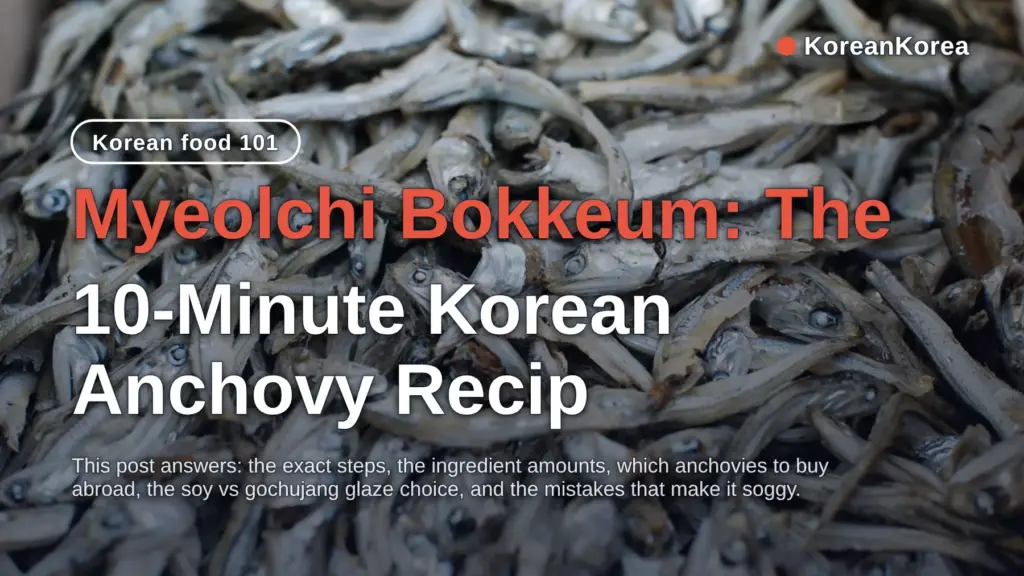
Myeolchi bokkeum is Korean stir-fried dried anchovies glazed in a sweet-savory soy sauce, and one batch takes about 10 minutes.
How To Make Myeolchi Bokkeum (The 10-Minute Method)
| Small dried anchovies (bokkeum-yong) | 1 cup / 40 g |
|---|---|
| Soy sauce | about 2 Tbsp |
| Sugar | about 1 Tbsp |
| Corn or rice syrup | about 1 Tbsp |
| Minced garlic | about 1 tsp |
| Water | 2-3 Tbsp |
| Neutral oil | a small drizzle for the pan |
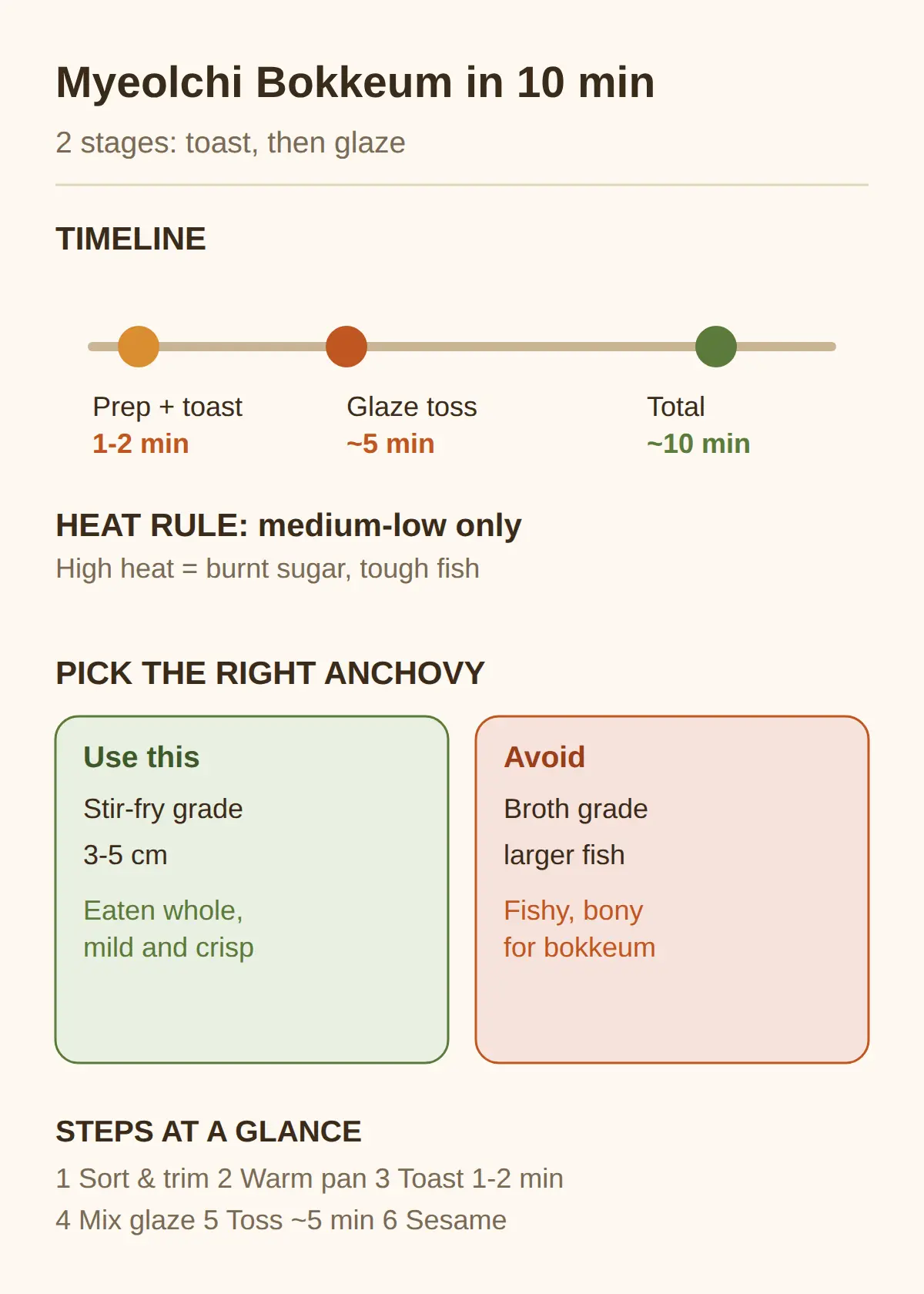
The method is two stages: dry-toast the anchovies first, then toss them with a pre-mixed glaze for about 5 minutes.
Start to finish, expect under 10 minutes — a quick 1-2 minute toast, then about 5 minutes in the pan once the sauce goes in, with the glaze finishing off heat.
You only need a nonstick or well-seasoned pan, a spatula, and a small bowl for the glaze.
- Pour the anchovies into a colander and pick out any debris; pinch off the heads and dark entrails of the larger fish to cut bitterness, and keep the tiny ones whole.
- Heat a pan over medium-low heat with a light drizzle of neutral oil.
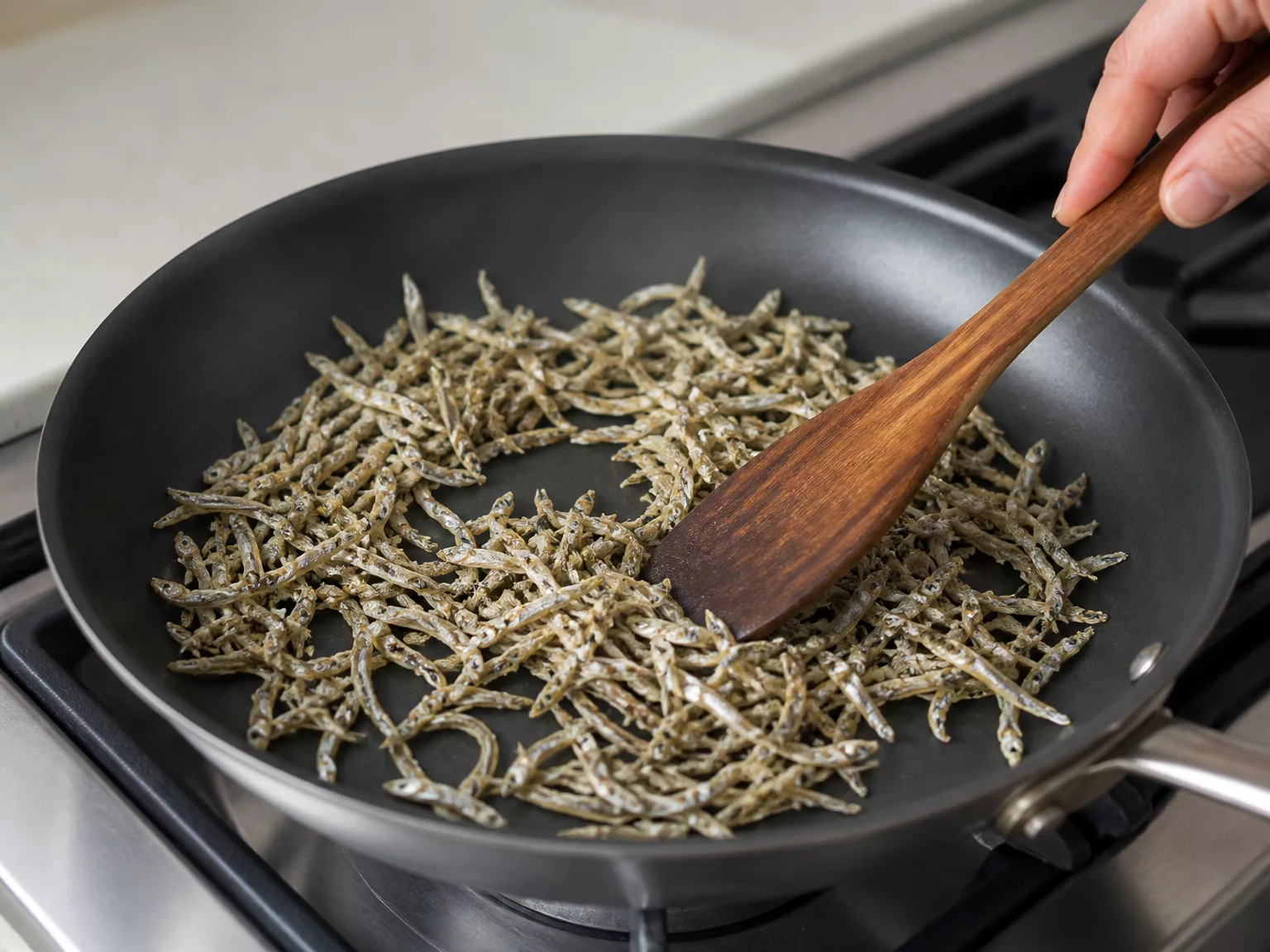
- Dry-toast the anchovies about 1-2 minutes, stirring, until they smell toasty and feel crisp.
- While they toast, mix the glaze in a small bowl: soy sauce, sugar, syrup, garlic, and water.
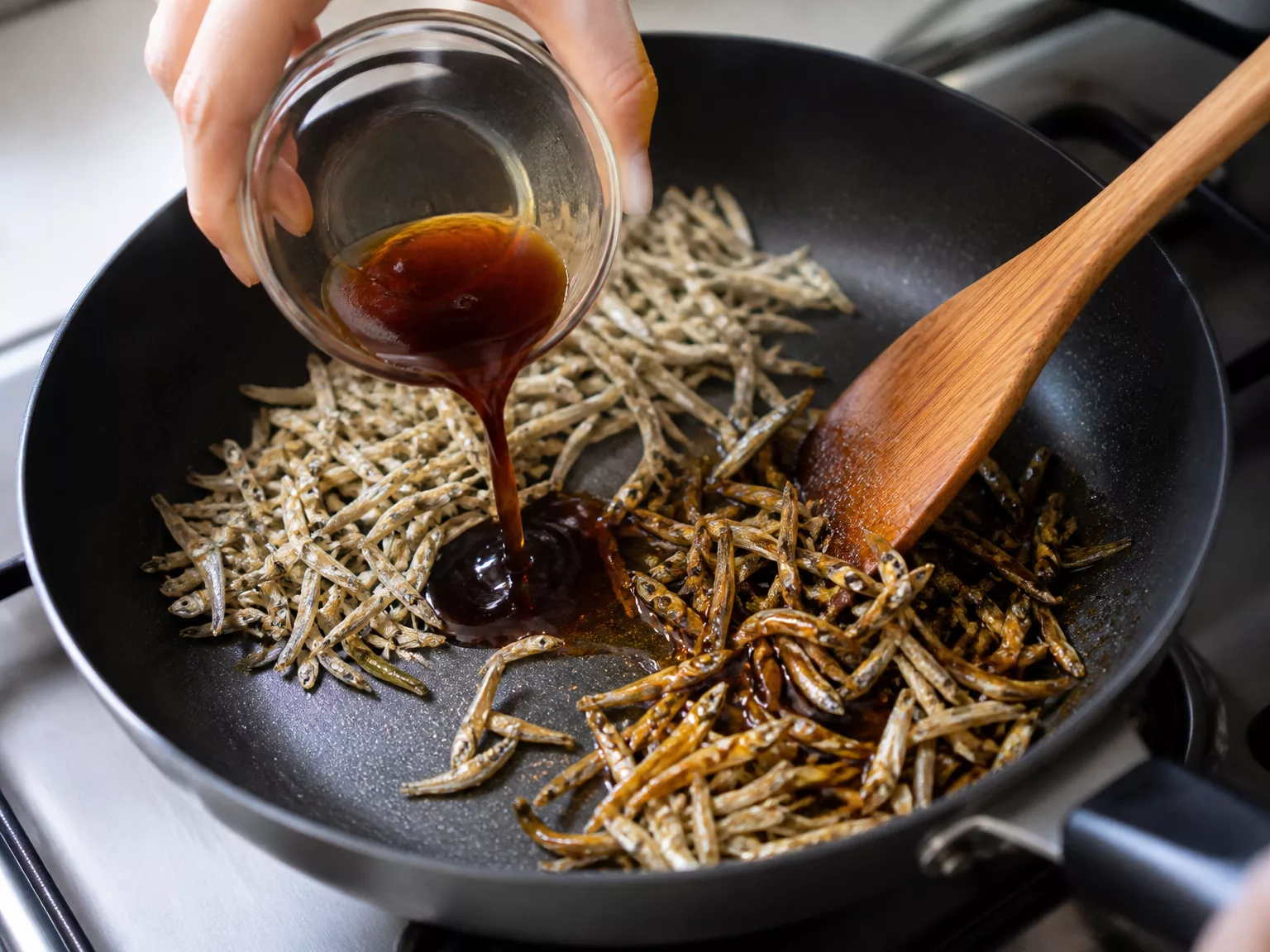
- Push the anchovies aside, pour in the glaze, and toss everything together for about 5 minutes over medium-low heat until the sauce is glossy and coats each fish.
- Take the pan off the heat while the sauce is still slightly wet — it thickens as it cools.
- Finish with toasted sesame seeds and, if you like, a small drizzle of sesame oil.
If you crank the heat up, the sugar burns and the anchovies turn tough, so medium-low the whole way is the rule to keep.
When I look at a pack of dried anchovies abroad, the first thing I check is the size and the label — it should say small dried anchovies for stir-fry, because the large broth-grade ones make the dish fishy and bony.
Ingredients
Main
- 1 cup (40 g) Small dried anchovies for stir-fry (bokkeum-yong myeolchi) — 3-5 cm, silvery with intact bodies
- a light drizzle Neutral oil — for the pan
Sauce & seasoning
- about 2 Tbsp Soy sauce
- about 1 Tbsp Sugar
- about 1 Tbsp Corn or rice syrup
- about 1 tsp Minced garlic
- 2-3 Tbsp Water
To finish
- Toasted sesame seeds — to finish
- a small drizzle Sesame oil — optional finish
Amounts are the ones used in this recipe; where the recipe gives no amount, adjust to taste.
Steps at a glance
-
1Pour the anchovies into a colander and pick out any debris
-
2Heat a pan over medium-low heat with a light drizzle of neutral oil.🔥 medium-low heat
-
 AI-generated photo
What it should look like — AI-generated image of this step, made from the recipe text — not a photo of our kitchen. 3Dry-toast the anchovies about 1-2 minutes, stirring⏱ ~1-2 minutes -
4While they toast, mix the glaze in a small bowl: soy sauce, sugar,…
-
 AI-generated photo
What it should look like — AI-generated image of this step, made from the recipe text — not a photo of our kitchen. 5Push the anchovies aside, pour in the glaze, and toss everything…⏱ ~5 minutes🔥 medium-low heat -
6Take the pan off the heat while the sauce is still slightly wet
-
7Finish with toasted sesame seeds and, if you like, a small drizzle of…
Ingredients and Amounts (With Metric Measures)
One batch uses 1 cup (40 g) of stir-fry-grade anchovies and about 4 Tbsp (60 ml) of glaze, and serves 3-4 as a side dish.
| Ingredient | Amount |
|---|---|
| Stir-fry-grade anchovies (bokkeum-yong myeolchi) | 1 cup (40 g) |
| Soy sauce | about 2 Tbsp |
| Sugar | about 1 Tbsp |
| Corn or rice syrup | about 1 Tbsp |
| Minced garlic | about 1 tsp |
| Water | 2-3 Tbsp |
| Sesame oil and sesame seeds | to finish |
Mix the glaze before it touches the pan, so the sugar dissolves evenly and coats instead of clumping.
If your first batch tastes too salty, pull the soy sauce back by a teaspoon rather than adding sugar.
Which Anchovies To Buy (And What To Substitute)
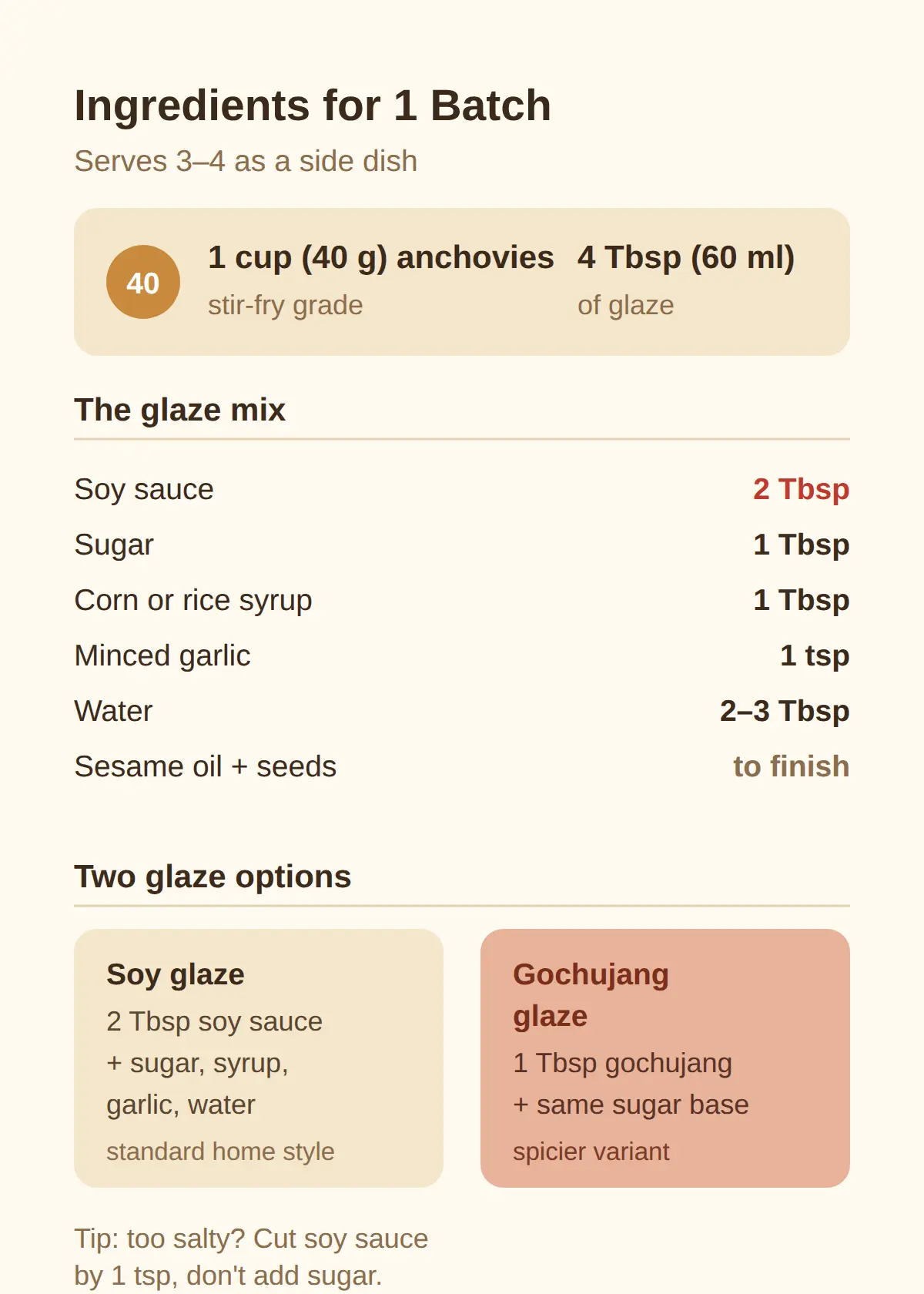
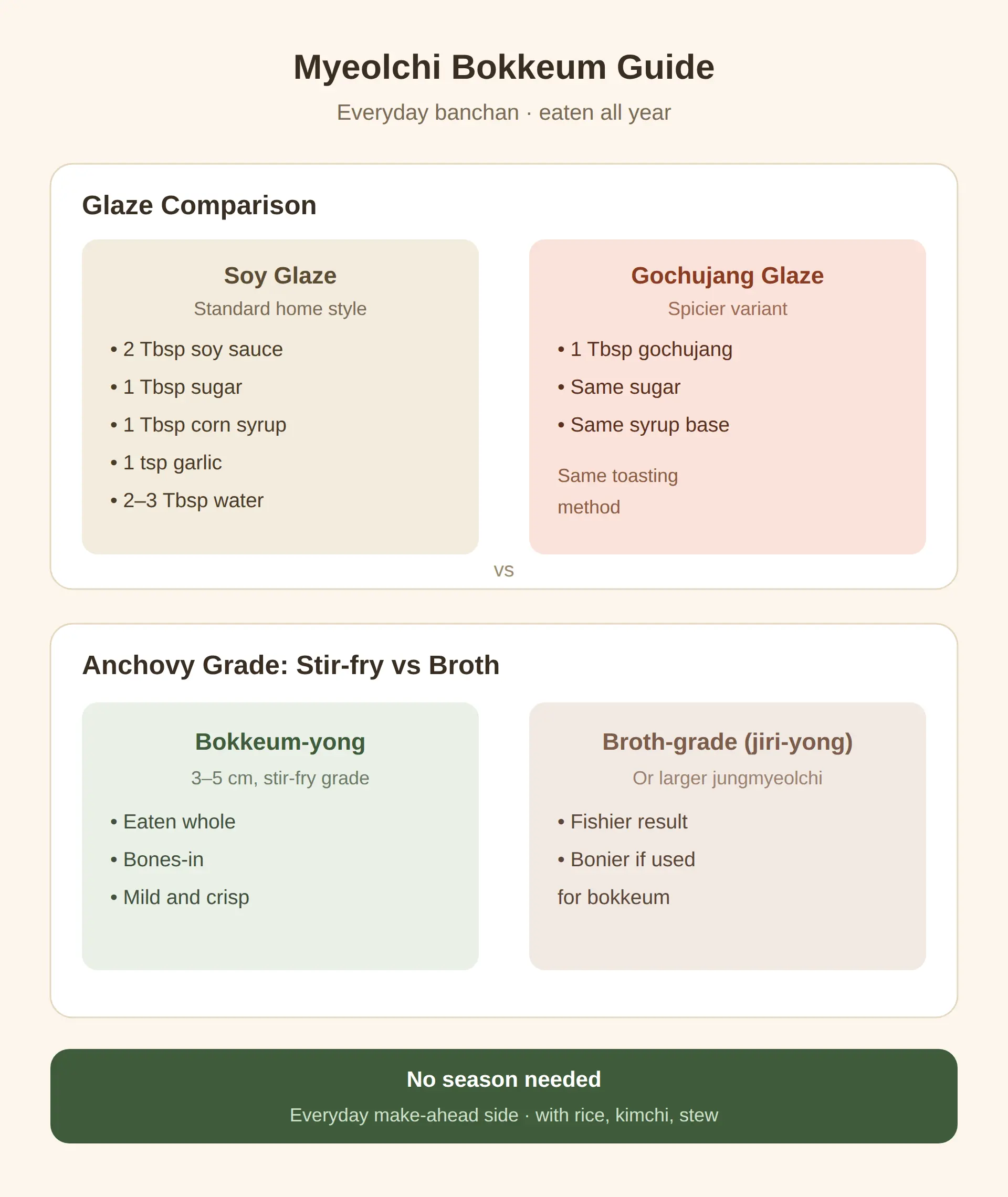
Buy anchovies labeled small dried anchovies for stir-fry — about 3-5 cm long — at Korean or Asian grocery stores or online.
Korean markets grade dried anchovies by size, and the stir-fry grade (bokkeum-yong) is sold separately from the broth grade, so the label does the sorting for you.
In the US, bokkeum-yong anchovies are stocked at H Mart and Zion Market, and online at Amazon and Gochujar.
Small anchovies are eaten whole, bones included, which is why Koreans treat this dish as a calcium-rich side.
Broth-grade or larger anchovies give a fishier, bonier result if you use them for bokkeum, so they are not a swap.
If no dried anchovies are available at all, tiny dried silver fish such as whitebait or dried smelt work — the texture changes, but the sweet-salty glaze is what carries the dish.
For gluten-free cooking, replace the soy sauce with tamari, because standard Korean soy sauce contains wheat.
Pick packs with silvery, shiny skin and intact bodies; dull or yellowed fish are old and taste bitter.
If I were buying abroad, I would freeze whatever I don’t use in a zip bag — frozen anchovies keep for months.
Soy Glaze vs Gochujang Glaze (Plus the Nut Version)
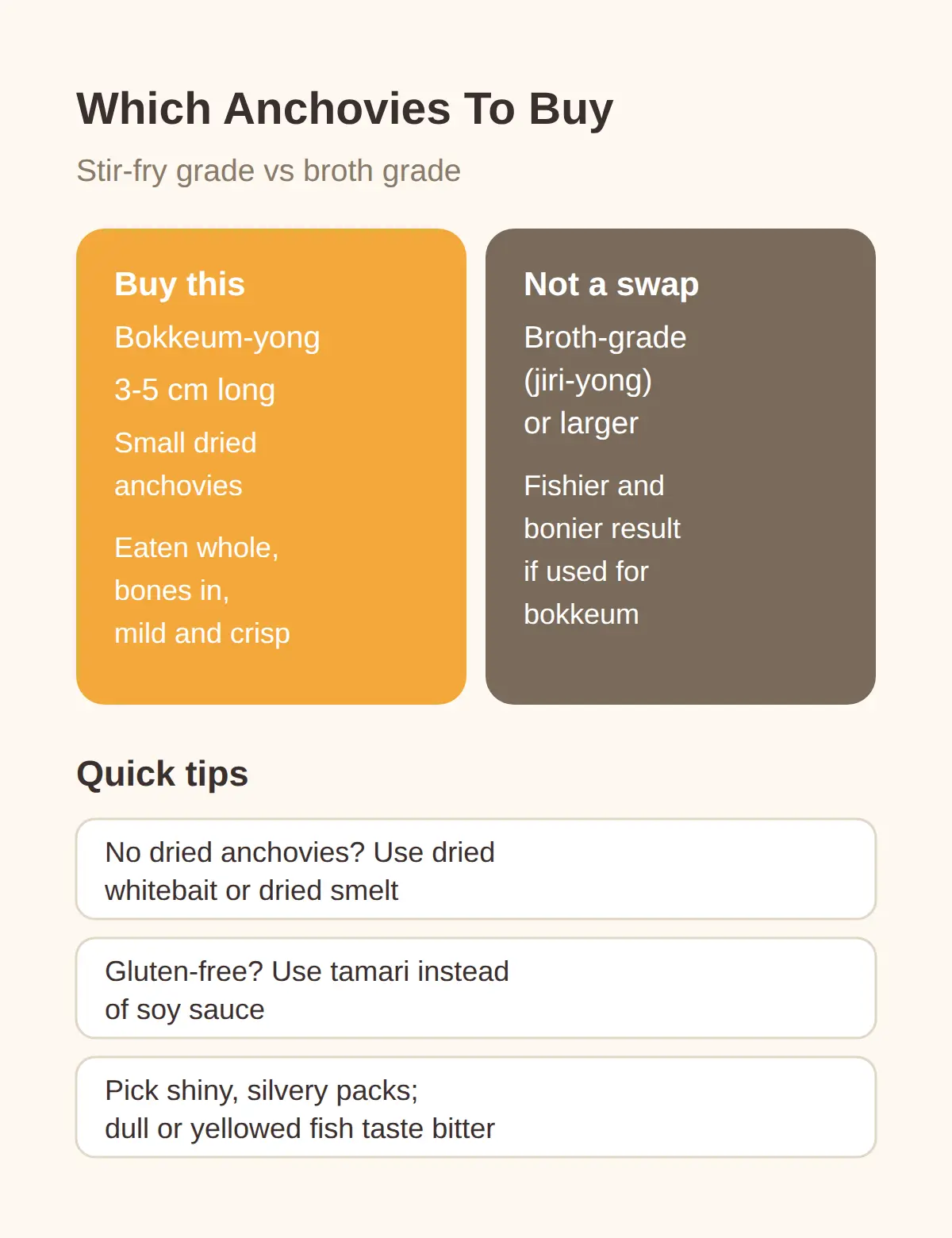
Start with the soy (ganjang) glaze — it is the standard home style — and make the gochujang version second if you want heat.
Both use the same two-stage toasting method; only the glaze changes.
The spicy swap is direct: replace the soy glaze with 1 Tbsp gochujang plus the same sugar and syrup base, and cook it the same way.
Baek Jong-won’s widely circulated version works with medium (jungmyeolchi) or small (janmyeolchi) anchovies and adds 1/2 Tbsp oligosaccharide (or corn syrup) for gloss.
For a nutty lunchbox or party version, add almonds, peanuts, or walnuts in the last minute so they stay crisp.
Leave nuts out entirely if you are cooking for anyone with a nut allergy — the dish is complete without them.
| Soy glaze (make first) | Gochujang glaze (spicier) | |
|---|---|---|
| Base | about 2 Tbsp soy sauce | 1 Tbsp gochujang |
| Sweetener | about 1 Tbsp sugar + about 1 Tbsp syrup | same sugar + syrup base |
| Garlic | about 1 tsp minced | about 1 tsp minced |
| Heat level | none | mild-to-medium heat |
| Method | toast 1-2 min, toss ~5 min | identical |
If kids or a school lunchbox are the audience, the soy version with a few almonds on top is the standard shape this takes in Korea.
Common Mistakes and How To Store It
The two sogginess mistakes are adding the sauce before toasting, and cooking too long after it goes in.
Keep the sauce separate until the anchovies are crisp, then toss about 5 minutes and stop while the glaze is still slightly wet.
Do not add extra salt — the soy sauce plus the anchovies’ own salt is enough, so taste before adding any.
High heat is the third failure: it burns the sugar glaze and toughens the fish.
Stored airtight in the refrigerator, myeolchi bokkeum keeps 2-3 weeks, one of the longest-keeping banchan, which is why it is a lunchbox staple.
Unlike most banchan, it is eaten warm or at room temperature, so it packs for lunchboxes and picnics without needing a reheater.
Room-temperature shelf life beyond a day could not be confirmed from a primary source, so treat same-day as the safe window for packed lunches.
For future batches, freeze raw dried anchovies in a zip bag for months — many Korean households store them in the freezer.
What Myeolchi Bokkeum Is and When Koreans Eat It
Myeolchi bokkeum is a dried-fish banchan — small anchovies stir-fried in a sweet-savory soy glaze — not a fresh-fish dish, and Koreans eat it every day of the year.
It is a standard side with steamed rice, kimchi, and doenjang jjigae, a common porridge side, and a fixture in dosirak lunchboxes.
There is no season attached to it; it is an everyday, make-ahead side.
A nut-topped, mildly sweet version is a standard item in Korean school lunchboxes for children.
The sweet-salty glaze is designed to coat rice, so pair it with plain rice rather than another sweetened dish.
If you are building a first Korean meal set at home, this sits beside kimchi and a stew with almost no extra work.
Related posts
📎 📅 Upcoming Dates — Release & Event Calendar
Sources
- Uses medium anchovies + 1/2 Tbsp oligosaccharide for gloss (cookpick.kr)
- serving_pairing (koreanbapsang.com)
- H Mart and Korean grocery stores stock stir-fry grade anchov (hmart.com)
What To Remember Before You Start
- Bokkeum-yong anchovies are usually sold as ‘small dried anchovies for stir-fry’ — that label, not the grade name, is what you match in-store.
- Toast the anchovies dry for 1-2 minutes before the glaze goes in — that is the step that keeps them crisp instead of soggy.
- Myeolchi bokkeum keeps 2-3 weeks refrigerated in an airtight container, one of the longest-keeping banchan.
- Anchovy nutrition values (calcium mg, protein g, calories per serving) were not confirmed from a primary source, so this post gives no per-serving numbers.
FAQ
Q. How do I make stir-fried dried anchovies at home?
Dry-toast 1 cup (40 g) of small stir-fry-grade anchovies over medium-low heat for 1-2 minutes, add a pre-mixed glaze of soy sauce, sugar, syrup, garlic, and water, toss about 5 minutes, and finish with sesame seeds — about 10 minutes total.
Q. How long does myeolchi bokkeum keep in the fridge?
It keeps 2-3 weeks refrigerated in an airtight container, which makes it a standard make-ahead lunchbox side.
Q. What can I substitute for corn syrup in Korean cooking?
Honey, maple syrup, or Korean rice syrup (jocheong) replace corn syrup 1:1 in this glaze; they add the same gloss and cling.
Q. What can I substitute if I can’t find Korean ingredients?
Tiny dried whitebait or dried smelt stand in for the anchovies, tamari replaces soy sauce for gluten-free cooking, and garlic powder (about 1/4 tsp) replaces 1 tsp fresh minced garlic.
Q. Soy glaze or gochujang glaze — which one should I make first?
Make the soy glaze first, since it is the standard home style, then the gochujang version, which uses 1 Tbsp gochujang plus the same sugar and syrup base with an identical method.
All figures in this post are as of October 6, 2026.
Cover photo: Dried anchovies by myllissa — CC BY 2.0
#myeolchibokkeum #koreanbanchanrecipe #stirfriedanchovies #koreansidedish #banchanforbeginners
📅Upcoming Schedule — this week 4 · D-day Hangul DaySee all →How this article was made: written with AI assistance from the official and public sources cited here, checked automatically against those sources, and reviewed by the site operator after publishing. Last updated 2026-10-08. Editorial policy