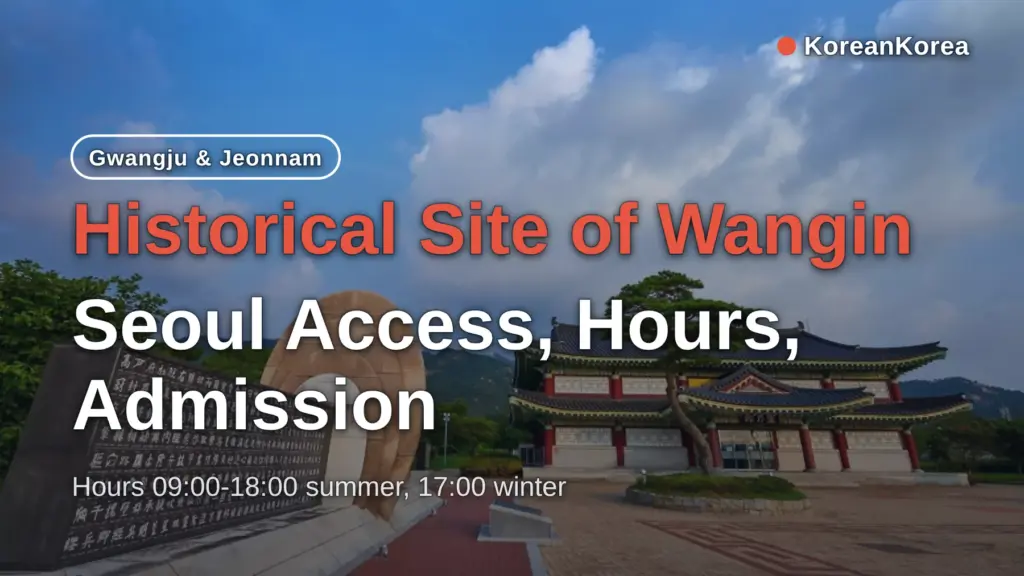
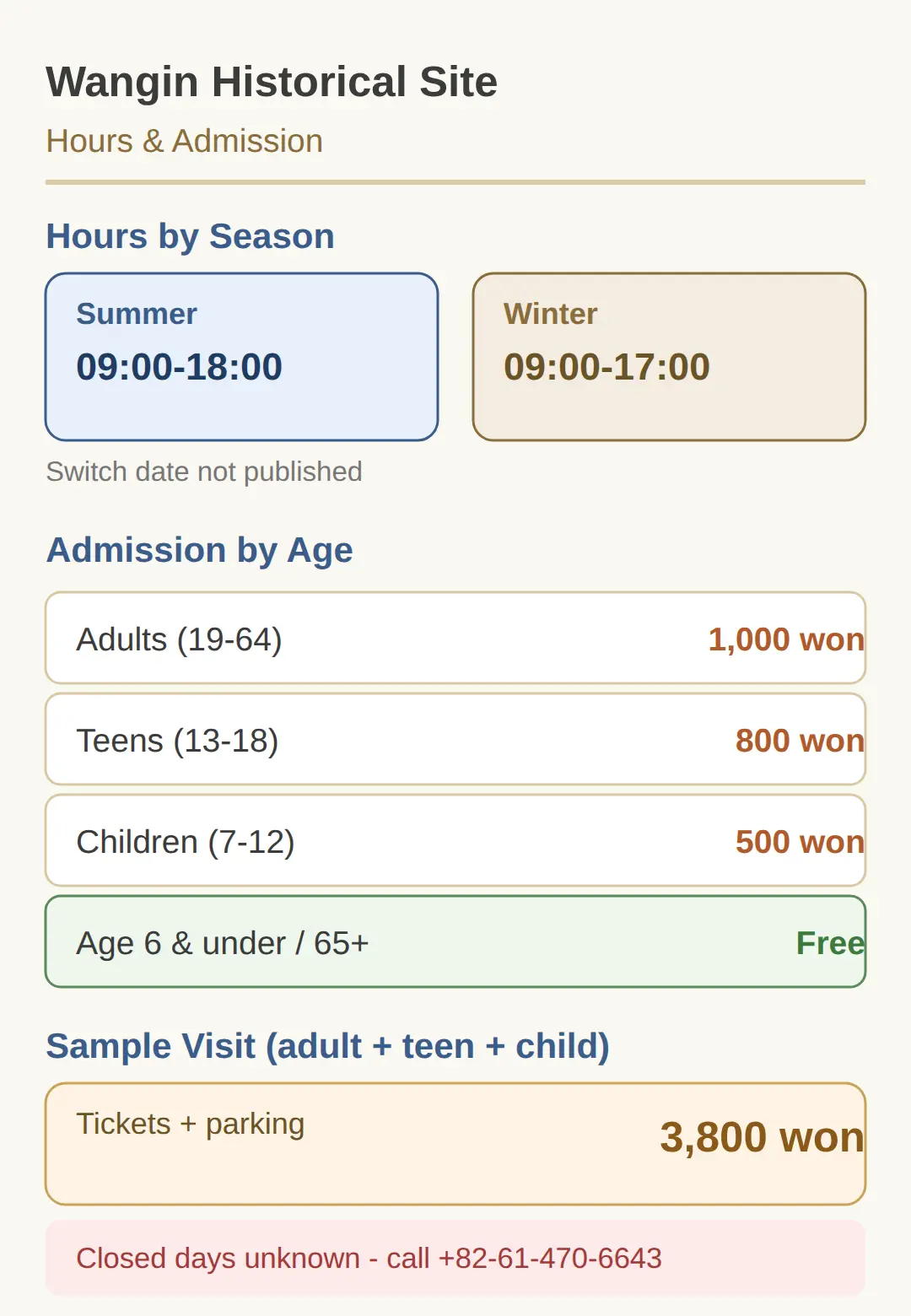
From Seoul, take the KTX toward Gwangju Songjeong or Mokpo, then a bus or taxi to Yeongam’s Gunseo-myeon; the site opens 09:00-18:00 in summer and 09:00-17:00 in winter, and adults pay 1,000 won.
Getting to the Historical Site of Wangin From Seoul
| Location | 440 Wangin-ro, Gunseo-myeon, Yeongam-gun, South Jeolla Province |
|---|---|
| Hours | Summer 09:00-18:00 / Winter 09:00-17:00 |
| Admission (adults 19-64) | 1,000 won |
| Admission (teens 13-18) | 800 won |
| Admission (children 7-12) | 500 won |
| Admission (ages 6 and under, 65+) | Free |
| Parking | 150 spaces; small vehicles 1,500 won / mid-sized 2,000 won / large 2,500 won |
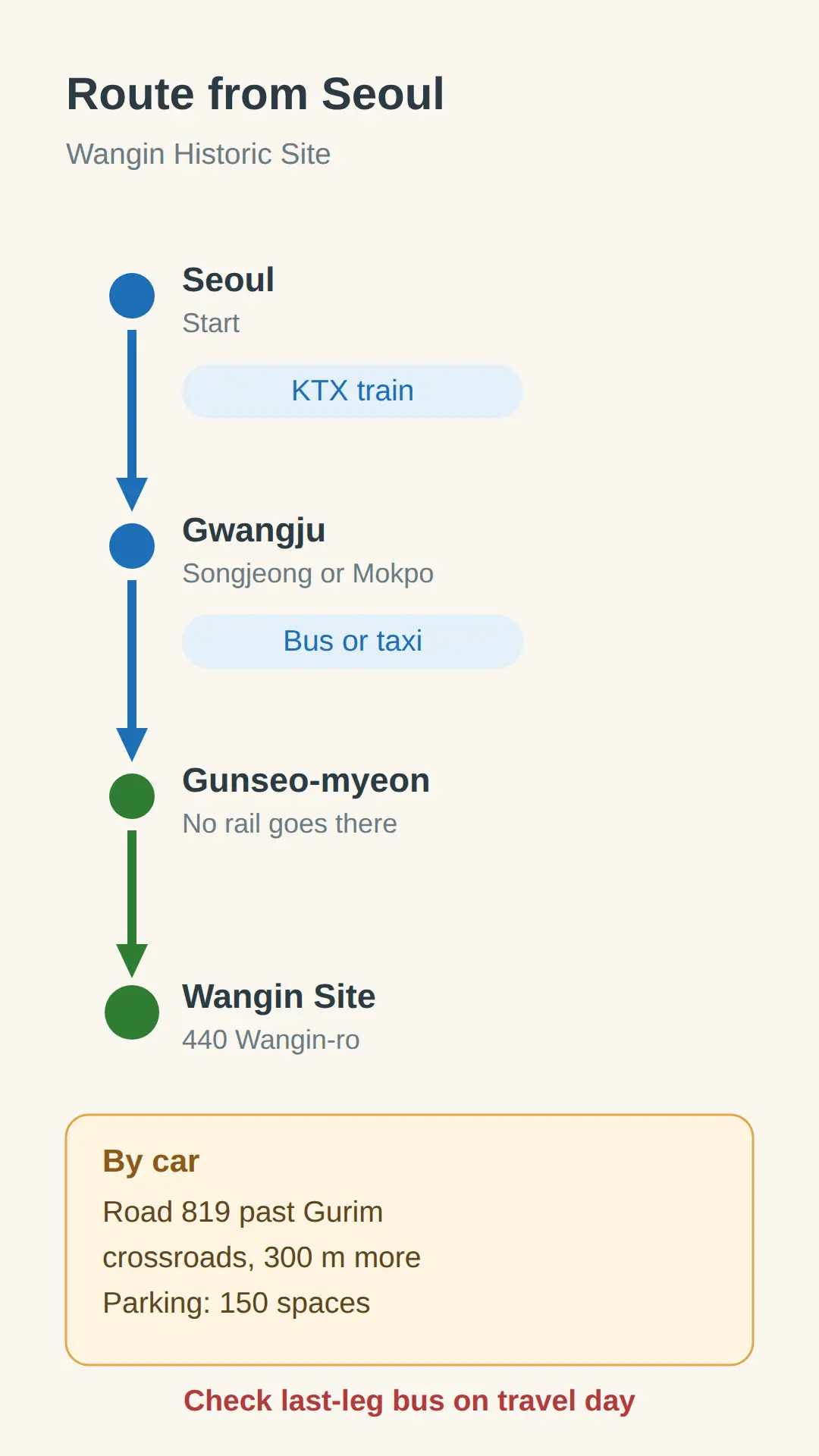
Take the KTX from Seoul toward Gwangju Songjeong or Mokpo, then continue by bus or taxi to Gunseo-myeon in Yeongam-gun; the site address is 440 Wangin-ro.
Yeongam lies beyond Mokpo, so no rail line runs directly there — the last leg is by road.
A traveler without a car should check the local bus toward Gunseo-myeon on the day of travel, because exact route numbers and frequencies are not confirmed in recent sources.
If driving, take local road 819 from Yeongam-eup toward Mokpo and go straight past the Gurim crossroads; the entrance is about 300 m beyond it, and the lot has 150 spaces.
Given those gaps, the last leg is the part to verify before leaving Seoul.
Opening Hours and Admission at the Historical Site of Wangin
Hours are 09:00-18:00 in summer and 09:00-17:00 in winter, per the Korea Tourism Organization; the season switch date is not published.
Admission is 1,000 won for adults aged 19-64, 800 won for teens aged 13-18, and 500 won for children aged 7-12, with free entry for ages 6 and under and 65 and older.
For a family of adult, teen and child, admission totals 2,300 won (1,000 + 800 + 500), and with small-vehicle parking at 1,500 won the full visit comes to 3,800 won.
A senior saves the full 1,000 won adult fee by entering free.
Since no source states closing days or the boundary between summer and winter hours, call +82-61-470-6643 before assuming the site is open daily.
Who Wangin Was and Why the Site Exists
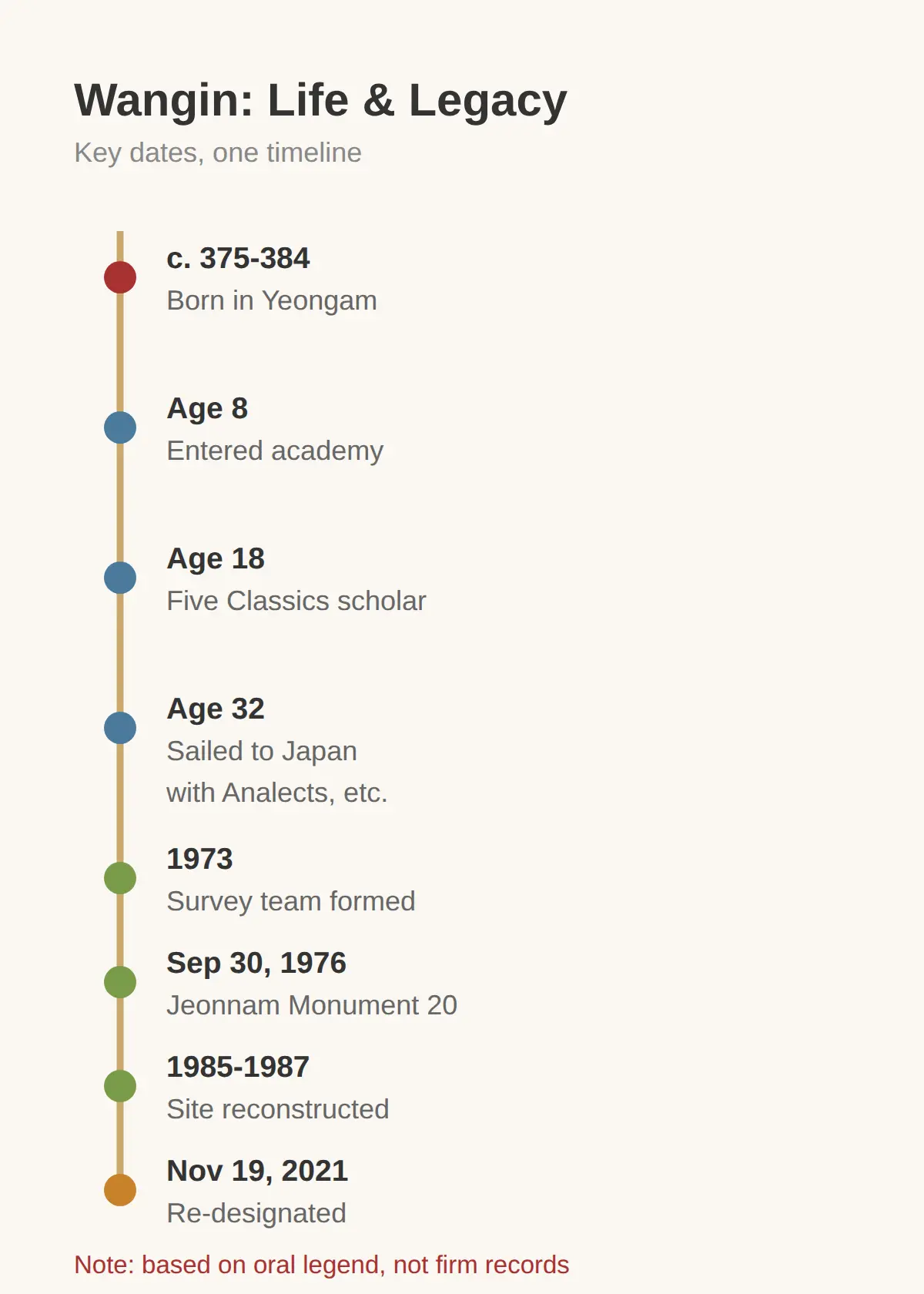
The site honors Wangin, a Baekje scholar born at Seonggidong in Yeongam during the reign of King Geungusu (c.
375-384).
He entered the Munsanjae academy at age 8, was appointed a scholar of the Five Classics at 18, and sailed to Japan at 32 carrying ten volumes of the Analects and one volume of the Thousand Character Classic.
In Japan he tutored the crown prince and is honored there as an originator of Asuka culture.
A survey team formed in 1973 led to reconstruction of the site in 1985-1987; it was designated Jeonnam Monument No.
20 on September 30, 1976 and re-designated on November 19, 2021, about 45 years apart.
One honest caveat: the site rests on oral legend rather than firmly documented records, and its lore partly overlaps with that of the monk Doseon — so treat it as a memorial park built around a story, not a verified ancient ruin.
What to See at the Historical Site of Wangin
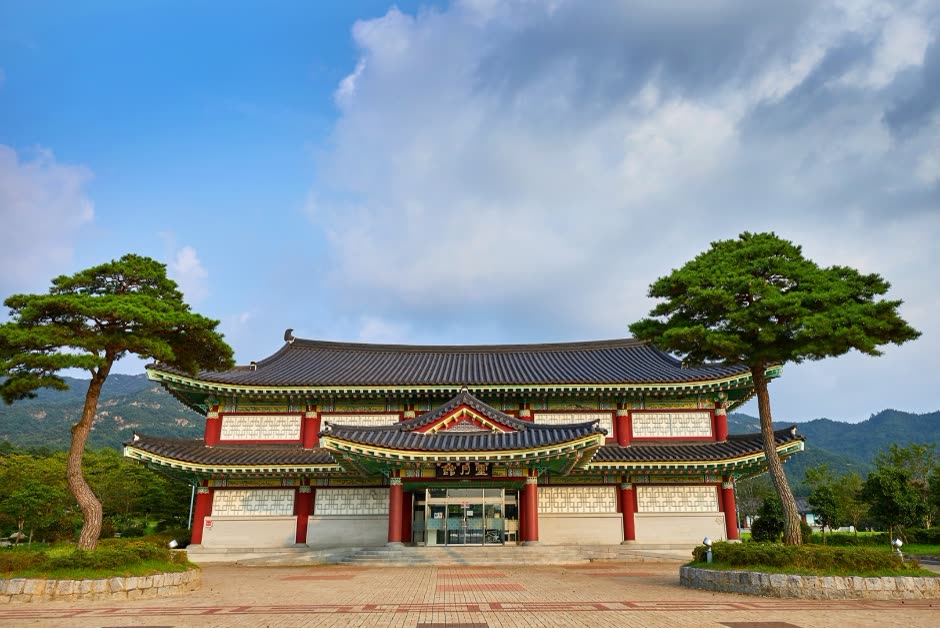
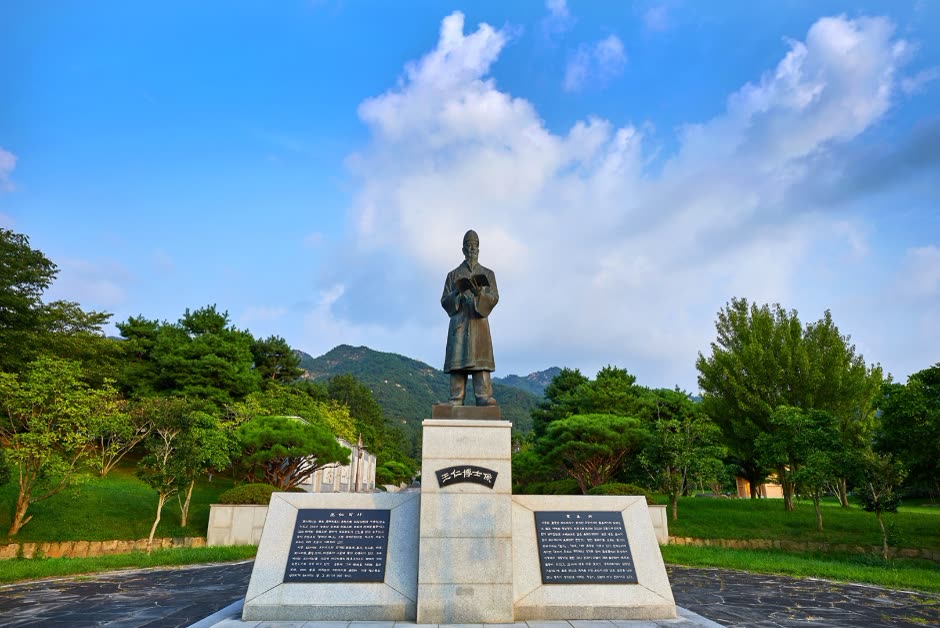
The grounds hold Seonggidong, the marked birthplace with the Yuheobi monument and Seongcheon well, plus a statue of Wangin and six reliefs depicting his life.
Yeongwolgwan is the exhibition hall with a video room, and the Sinseon Taegeuk Garden holds a replica of Wangin’s tomb — the original is in Hirakata, Osaka, designated Osaka Historic Site No.
- The Wangin Suiseki Exhibition Hall displays more than 700 viewing stones donated by Yeongam resident Park Chan-dae.
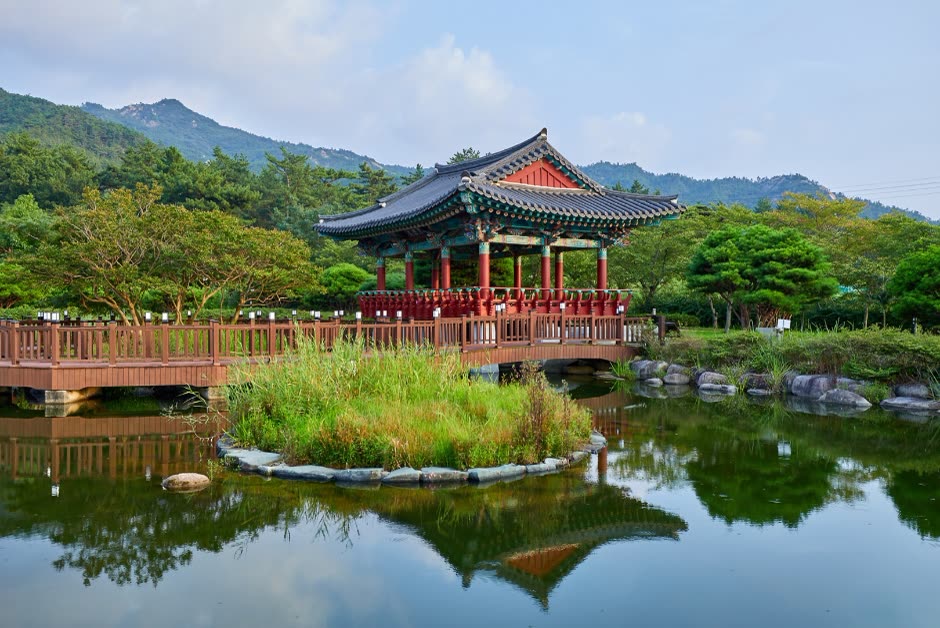
Pavilions (Wolak-ru, Mangujeong), the Bongseondae event grounds, Cheonjamun stairs and Aehyang Suseok Hall round out the site.
If stone collections or replica tombs are not your interests, the birthplace markers and reliefs alone still cover the core story in a shorter stop.
Wolchulsan Study Sites, Festivals and Nearby Stops
Halfway up Wolchulsan Mountain sit Chaekgul (a study cave), Munsanjae and Yangsajae — academies where Wangin is said to have studied and taught, with a memorial rite there every March.
The Wangin Culture Festival runs every early April at cherry-blossom season, and the Wangin Chrysanthemum Festival follows in October.
Wolchulsan National Park and Yeongam’s dolmen sites are the natural pairings for a half-day to full-day trip.
Before anything else, the last leg — what actually connects Gwangju Songjeong or Mokpo to Gunseo-myeon — is what to check first, because that is where this trip can fail.
I would pair the site with Wolchulsan National Park and the Yeongam dolmen area rather than race through both in one morning, because the academies up the mountain deserve their own unhurried visit.
If your dates fit early April, time the visit to the cherry-blossom festival; otherwise, pair the site with Wolchulsan and the dolmen area.
👉 koreankorea.com KTX and trains from Seoul
👉 koreankorea.com Korea travel by region
👉 Yeongam-gun Wangin site page
👉 Digital Yeongam encyclopedia entry
Related posts
📎 Seoul — everything we know
📎 📅 Upcoming Dates — Release & Event Calendar
Sources
- Cherry-blossom festival in early April; chrysanthemum festiv (yeongam.grandculture.net)
- Summer 09:00-18:00 / Winter 09:00-17:00; adults 1,000 won (english.visitkorea.or.kr)
- Available (150 parking spaces) (api.visitkorea.or.kr)
Visiting the Historical Site of Wangin: Key Points
- Budget 1,000 won for an adult ticket and 1,500 won for small-vehicle parking.
- Call +82-61-470-6643 to confirm closing days and the summer-winter hours switch date.
- Verify the bus route from Gwangju Songjeong or Mokpo to Gunseo-myeon on the day you travel.
- Early April brings cherry blossoms and the Wangin Culture Festival; October brings the Chrysanthemum Festival.
- Treat the site as a memorial park built on legend, not a verified ancient ruin.
FAQ
Q. How do I get to the Historical Site of Wangin from Seoul?
Take the KTX from Seoul toward Gwangju Songjeong or Mokpo, then continue by bus or taxi to Gunseo-myeon, Yeongam-gun; the site is at 440 Wangin-ro. Yeongam is beyond the rail network’s end, so the last leg is by road.
Q. When is the site open and how much is admission?
Per KTO data (October 2026), hours are 09:00-18:00 in summer and 09:00-17:00 in winter; adults aged 19-64 pay 1,000 won, teens 800 won, children 500 won, and visitors aged 6 and under or 65 and older enter free.
Q. What is Wangin famous for?
He is recorded as a Baekje scholar who sailed to Japan at 32 carrying the Analects and the Thousand Character Classic, tutored the Japanese crown prince, and is honored as an originator of Asuka culture.
Q. When is the best time to visit the Historical Site of Wangin?
Early April, when the Wangin Culture Festival runs under the cherry blossoms, or October, when the Chrysanthemum Festival is held; both recur every year.
Q. Is parking available at the Historical Site of Wangin?
Yes, per KTO data (October 2026) there are 150 spaces; small vehicles pay 1,500 won, mid-sized vehicles 2,000 won, and large vehicles 2,500 won.
For more Gwangju and Jeonnam guides, see the index of Korea travel by region.
Cover photo: Historical Site of Wangin (왕인박사 유적지) by Korea Tourism Organization — KOGL Type 1 (attribution)
#HistoricalSiteofWangin #Yeongam #SouthJeolla #WanginCultureFestival #KTXfromSeoul #Gwangju&Jeonnam
📅Upcoming Schedule — this week 3 · D-1 documentary 'Always Lalisa' global theatrical release (Oct 1See all →Last updated 2026-10-10. Editorial policy