
Sigeumchi namul, the seasoned spinach side dish, takes under 10 minutes: blanch 30-60 seconds in salted water, shock in ice water, squeeze gently, dress with sesame oil and soy sauce.
Korean Spinach Side Dish: How To Make Sigeumchi Namul At Home
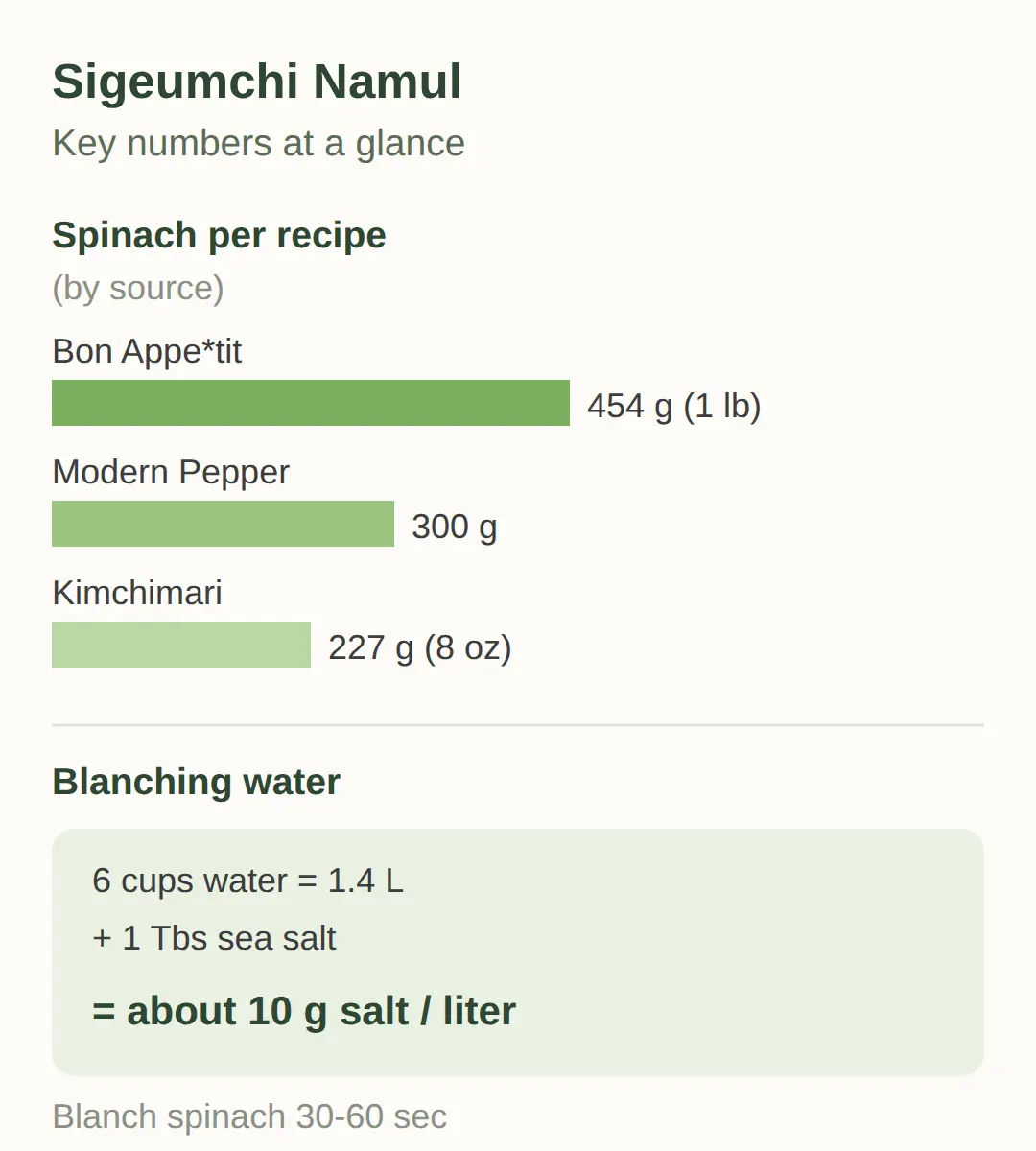
| Fresh spinach (bunch) | 227-454 g (8 oz to 1 lb) |
|---|---|
| Water for blanching | 1.4 L (6 cups) |
| Sea salt for the water | 1 Tbs (about 15 ml / 10 g per liter) |
| Sesame oil | 2 tsp (about 10 ml) |
| Soy sauce (optional version) | 1 tsp |
| Toasted sesame seeds | 1 tsp |
| Fine salt for dressing | 1/2 tsp (about 3 g) |
- Bring 6 cups (1.4 L) of water to a boil and dissolve 1 Tbs of sea salt in it.
- Rinse the spinach; if the root ends are still attached, hold the bunch upright so the roots blanch first for about 10 seconds.
- Drop the spinach in and blanch 30-60 seconds, turning with tongs so it cooks evenly.
- Plunge it straight into ice water, or rinse it in several changes of cold water, to stop the cooking and keep the green color.
- Squeeze gently until no water drips — cooked spinach is tender, so don’t wring it.
- Cut into bite-size lengths.
- Dress with sesame oil, a little salt or soy sauce, and sesame seeds, mixing by hand and separating the leaves so the seasoning coats evenly.
Ingredients
Main
- 227–454 g (8 oz to 1 lb) spinach (bunch, flat-leaf or semi-savoy) — not baby spinach or bagged; keep root ends on if attached
- 6 cups (1.4 L) water for blanching
Sauce & seasoning
- 1 Tbs sea salt for the blanching water
- 1/2 tsp fine salt for dressing — or a little soy sauce
- 1 tsp soy sauce — optional, in place of fine salt
- 2 tsp sesame oil
To finish
- 1 tsp toasted sesame seeds — white or black both work; also sprinkled for serving
Amounts are the ones used in this recipe; where the recipe gives no amount, adjust to taste.
Steps at a glance
-
1Bring 6 cups (1.4 L) of water to a boil and dissolve 1 Tbs of sea…🔥 boil
-
2Rinse the spinach⏱ ~10 seconds
-
3Drop the spinach in and blanch 30-60 seconds, turning with tongs so…⏱ 30-60 seconds
-
4Plunge it straight into ice water, or rinse it in several changes of…
-
5Squeeze gently
-
6Cut into bite-size lengths.
-
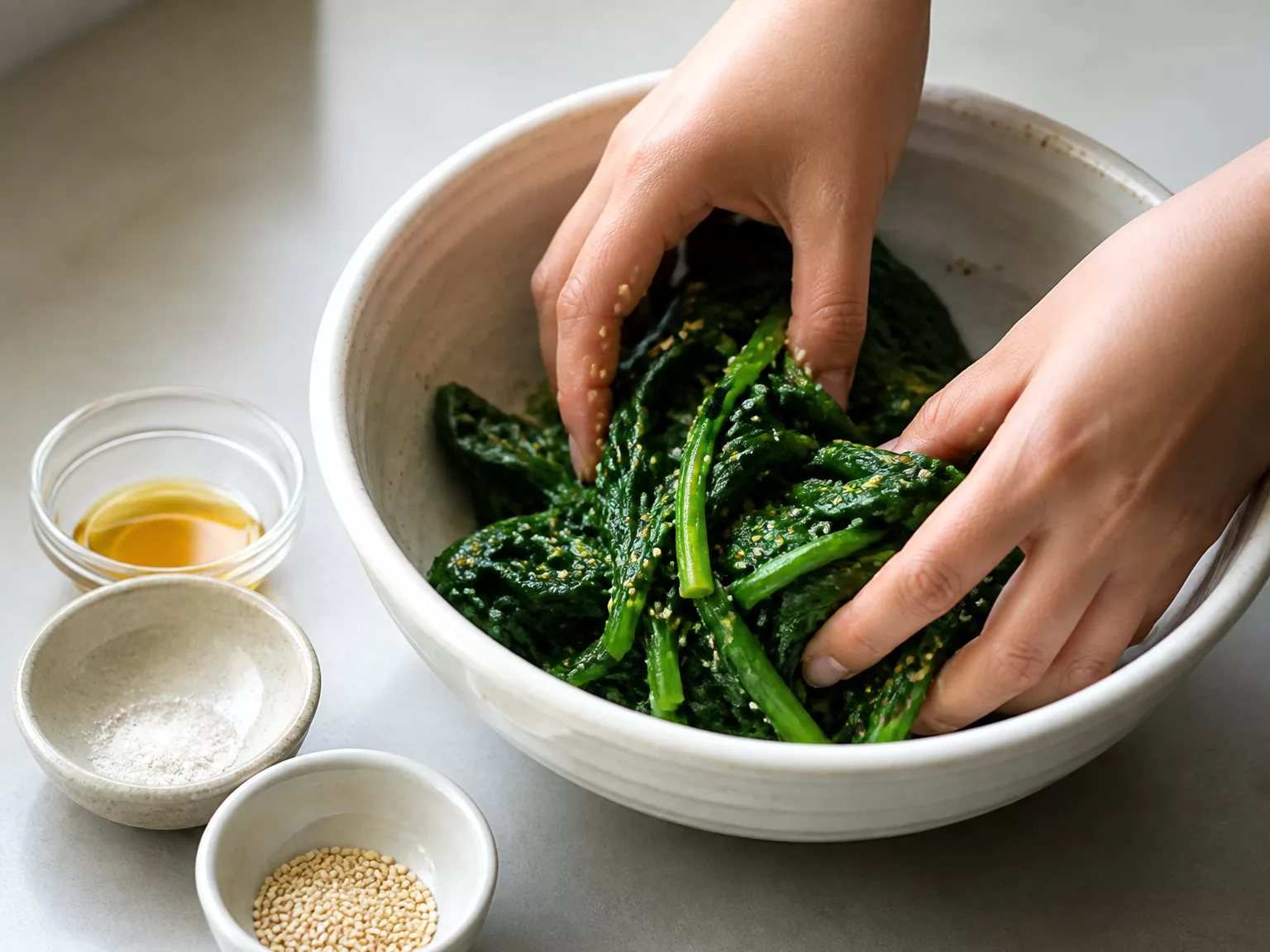 AI-generated photo
What it should look like — AI-generated image of this step, made from the recipe text — not a photo of our kitchen. 7Dress with sesame oil, a little salt or soy sauce, and sesame seeds,…
Ingredients For Sigeumchi Namul (Metric, By Source)
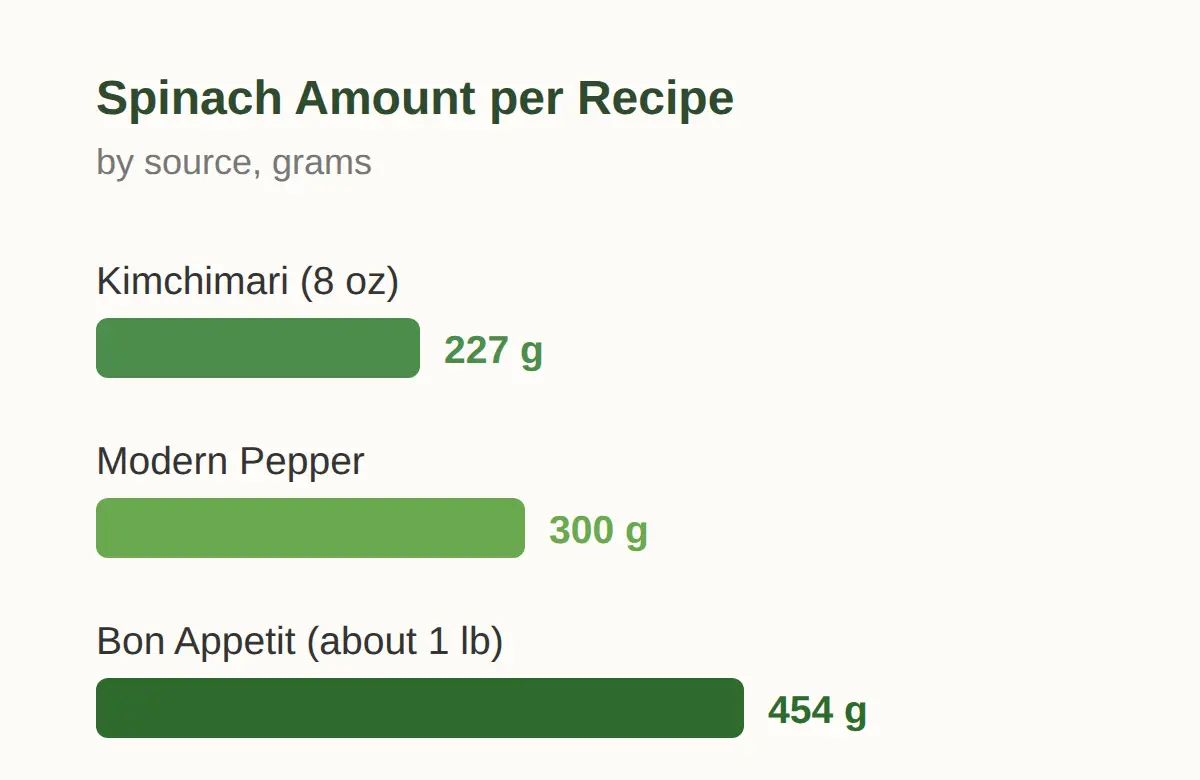
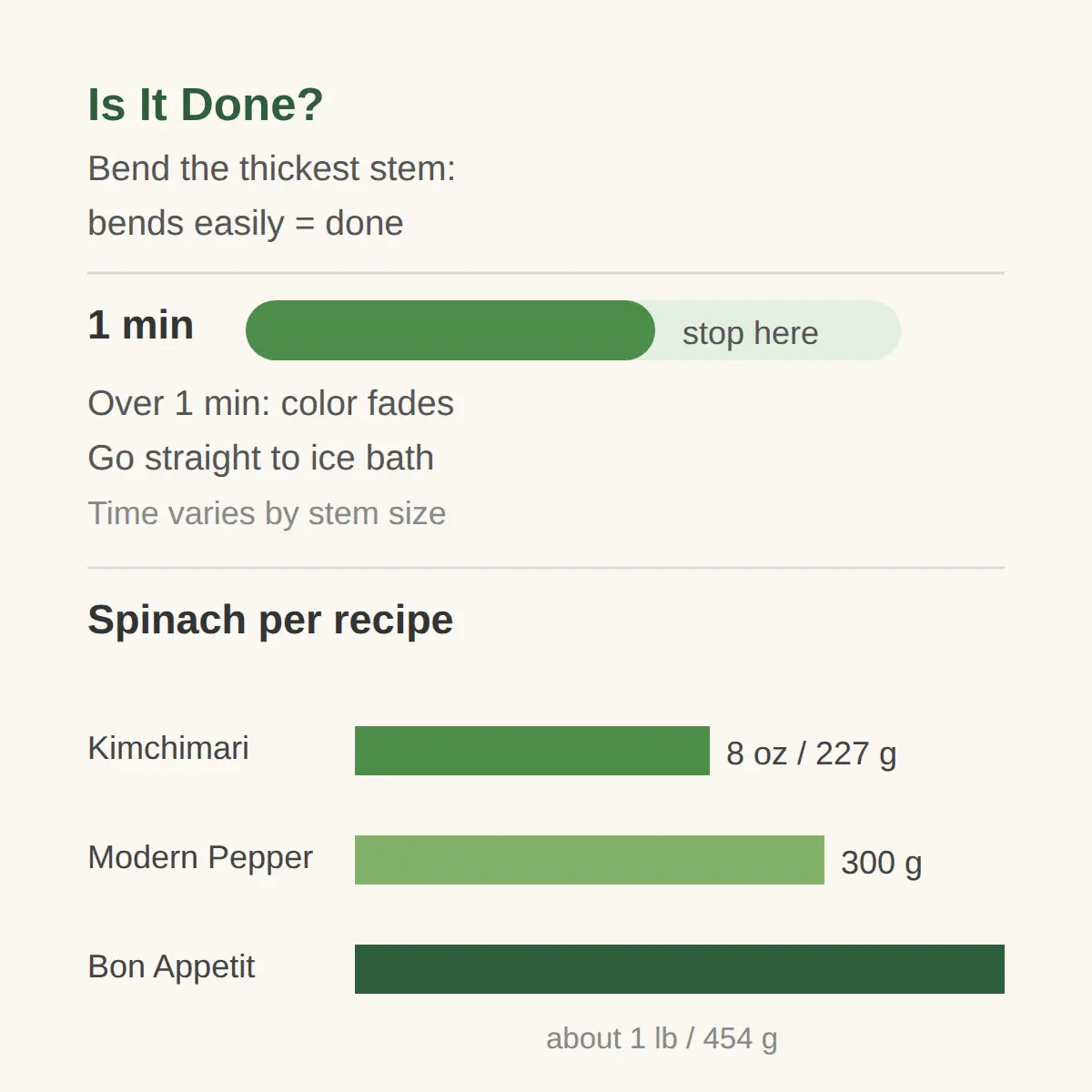
Recipes run from 227 g to 454 g of spinach per batch, so the amounts below are per recipe, not per serving.
| Item | Kimchimari (8 oz / 227 g) | Bon Appétit (~1 lb / 454 g) | Modern Pepper (300 g) |
|---|---|---|---|
| Blanch water salt | 1 Tbs sea salt per 6 cups (1.4 L) water | — | — |
| Blanch time | ~1 minute | roots first 10 sec, then 30–60 sec | — |
| Fine salt | 1/2 tsp | pinch | — |
| Soy sauce | — (none in this version) | 1 tsp | 1 tsp |
| Sesame oil | 2 tsp | 1 tsp | — |
| Garlic | — | 1 crushed clove | 1 grated clove |
| Scallions | 1–2 chopped | — | 1 Tbs minced |
| Sesame seeds | yes | 1 tsp | 1 tsp |
| Sugar | — | pinch | — |
| Black pepper / dashida | — | — | pinch black pepper, pinch beef dashida (optional) |
The core dressing differs by source: one version uses only fine sea salt, sesame oil, scallions and sesame seeds; another adds soy sauce, garlic, and a pinch of sugar and salt.
If it’s your first time, follow one recipe through to the end instead of mixing amounts from two — the salt levels don’t line up.
Which Spinach To Buy
Buy a bunch of flat-leaf or semi-savoy spinach, not baby spinach or bagged — bunches hold their texture after blanching.
Korean flat-leaf spinach is more fibrous than the Western type and stands up better to cooking; Koreans almost always cook spinach rather than eat it raw.
If you only have bagged spinach, pick the larger mature leaves; baby spinach works but is more delicate than the standard.
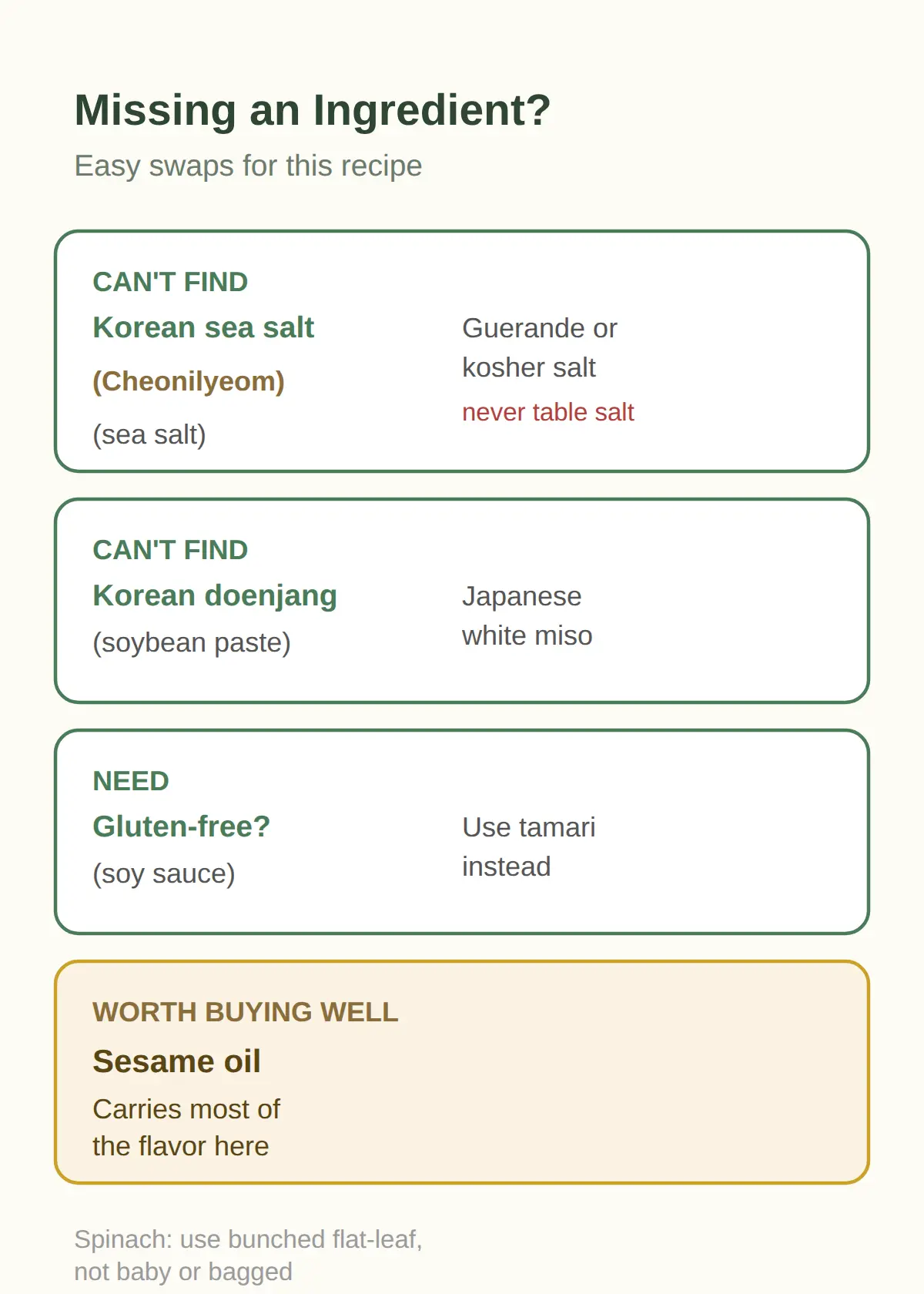
Substitutions If You Can’t Find Korean Ingredients
Use Guérande salt or kosher salt in place of Korean Cheonilyeom sea salt — but skip table salt, because the seasoning is minimal and the salt’s quality shows.
For the doenjang variation, Japanese white miso is the closest stand-in, and tamari replaces soy sauce if you need it gluten-free.
Sesame oil is the one item worth buying properly: it carries most of the flavor.
How To Know It’s Done, And Mistakes To Avoid
Bend the thickest part of a stem: it’s done when it bends easily with a little resistance, at about 1 minute.
Past a minute the spinach loses its bright green color, so pull it right into the ice bath; timing depends on stem size.
Squeeze gently rather than wringing, and mix by hand so the leaves stay separated and the dressing coats evenly.
How To Store It, Serve It, And 3 Variations
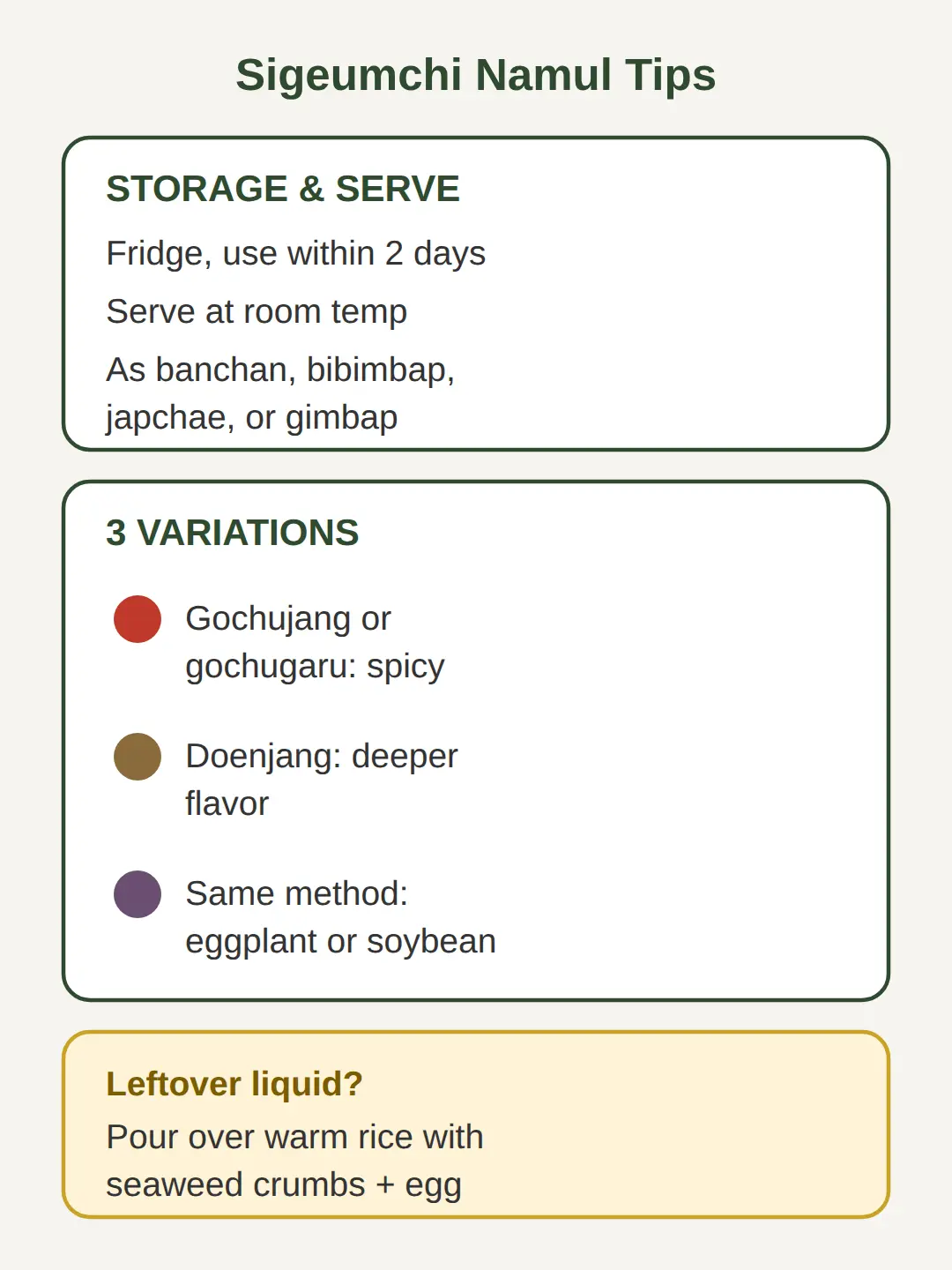
Store it in the fridge and finish it within 2 days; it’s typically served at room temperature as a banchan with rice, kimchi, and bean sprouts, or used in bibimbap, japchae, or gimbap.
Three variations: stir in gochujang or gochugaru for a spicy version; add a touch of doenjang for deeper flavor; use the same method on eggplant (gaji namul) or soybean sprouts (kong namul).
If liquid collects in the container, pour it over warm rice with seaweed crumbs and scrambled egg instead of throwing it out.
If I couldn’t get Korean flat-leaf spinach, I’d buy the bunched semi-savoy spinach and keep the root ends on, blanching roots upright first — the roots are prized in Korean namul and it costs nothing extra.
Related posts
📎 📅 Upcoming Dates — Release & Event Calendar
Sources
- Bon Appétit method: 1 lb spinach, 30–60 s blanch, 1 tsp each (bonappetit.com)
- Kimchimari recipe: 8 oz spinach, 1/2 tsp sea salt, 2 tsp ses (kimchimari.com)
- Sift & Simmer variant with soy sauce, sesame oil, doenjang, (siftandsimmer.com)
Summary
- Before shopping: look for bunched flat-leaf spinach, not bagged baby spinach
- While blanching: bend the thickest stem — it should give with a little resistance
- When dressing: reach for Ottogi premium sesame oil if you can find it
- After eating: check the fridge — any spinach juice that collected can be poured over warm rice
FAQ
Q. How do I make sigeumchi namul at home?
Blanch spinach 30-60 seconds in salted water, shock it in ice water, squeeze gently, cut into bite-size pieces, and dress with sesame oil, soy sauce and sesame seeds.
Q. Can I use baby spinach or bagged spinach?
Bagged larger mature leaves work; a bunched flat-leaf spinach holds texture better, and some recipes do prefer baby spinach for tenderness.
Q. What if I can’t find doenjang or Korean sea salt?
Japanese white miso stands in for doenjang, and Guérande or kosher salt stands in for Cheonilyeom sea salt — table salt is not recommended.
Q. How do I know when the spinach is done blanching?
Bend the thickest stem: done when it bends easily with a little resistance, at about 1 minute.
Q. How long does Korean seasoned spinach keep in the fridge?
Best within 2 days of making.
Add it to a bibimbap night — cook the spinach while the rice finishes.
Cover photo: AI-generated illustration (sesame spinach bowl) — AI-generated image, illustrative only
#sigeumchinamul #koreanspinachsidedish #koreanbanchan #koreanrecipes #seasonedspinach
📅Upcoming Schedule — this week 4 · D-day Hangul DaySee all →How this article was made: written with AI assistance from the official and public sources cited here, checked automatically against those sources, and reviewed by the site operator after publishing. Last updated 2026-10-08. Editorial policy