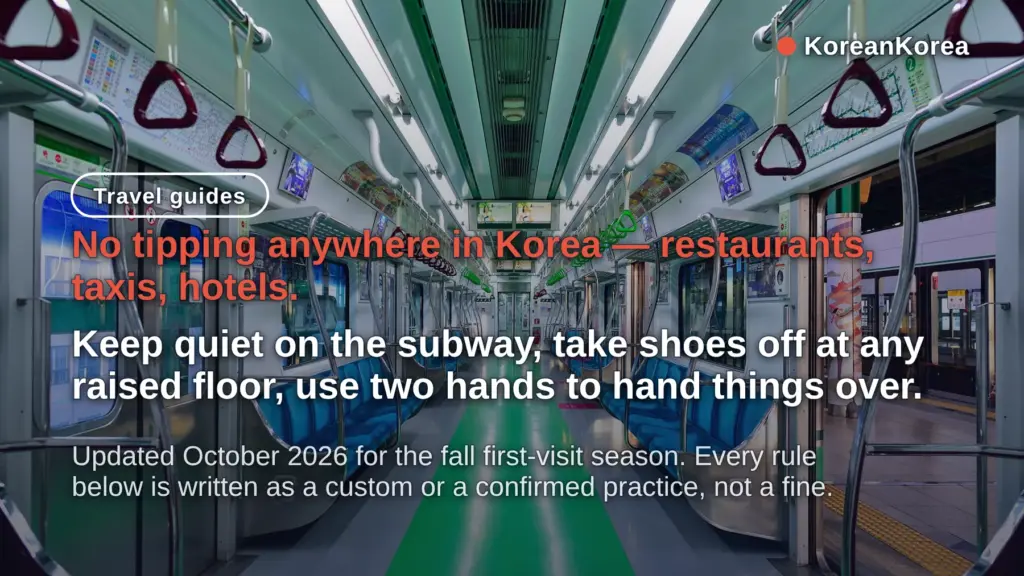
No tipping anywhere in Korea, keep your voice down on the subway, and take your shoes off at any raised floor — those three cover most of what visitors get wrong.
Travel Etiquette in Korea: Is Tipping Expected?
| A waiter or taxi driver treats you well | Don’t tip — it causes confusion, and upscale hotels already include a service charge |
|---|---|
| The pink priority seats are empty on a packed subway | Leave them empty unless you qualify — standing locals don’t sit there |
| Your phone rings inside the subway car | Move to the doorway area between cars to take the call |
| You enter a home, traditional restaurant, jjimjilbang or temple stay | Take your shoes off at the door |
| Someone hands you money, a card or a drink | Use two hands, or the right hand supported at the wrist |
| Drinking starts at a dinner | Wait for the oldest person to take the first sip |
| You exit a taxi | Don’t pull the door shut hard — many older taxis close automatically |
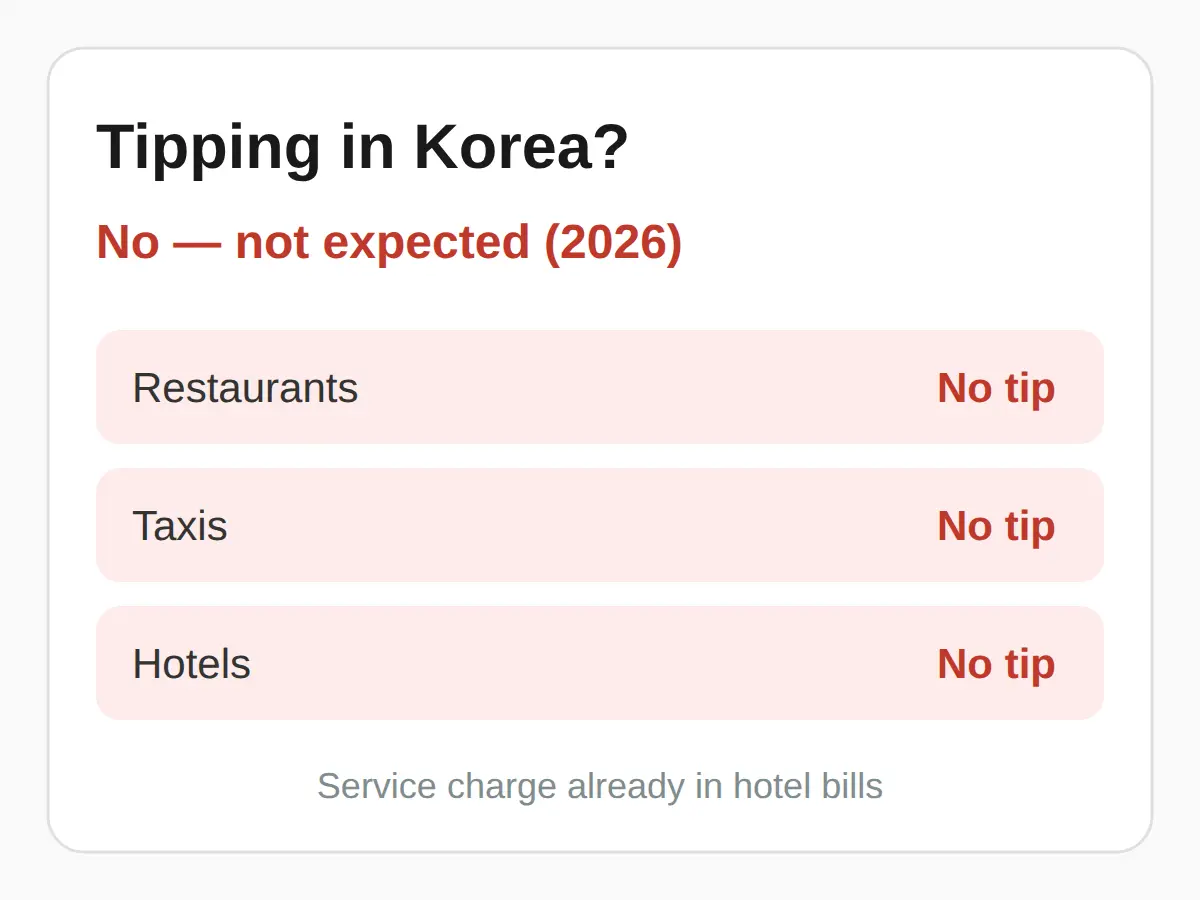
Tipping is not expected anywhere in Korea as of 2026 — restaurants, taxis and hotels, none of them take it.
Handing over extra cash does not make the service better, and it can cause genuine confusion at the counter, because there is no routine for receiving it.
At upscale hotels a service charge is already included in the bill, so the price you see covers it.
If a staff member refuses the money, that is the custom doing its job — put it back in your pocket and say thank you instead.
Subway Etiquette: Priority Seats, Phones and Food
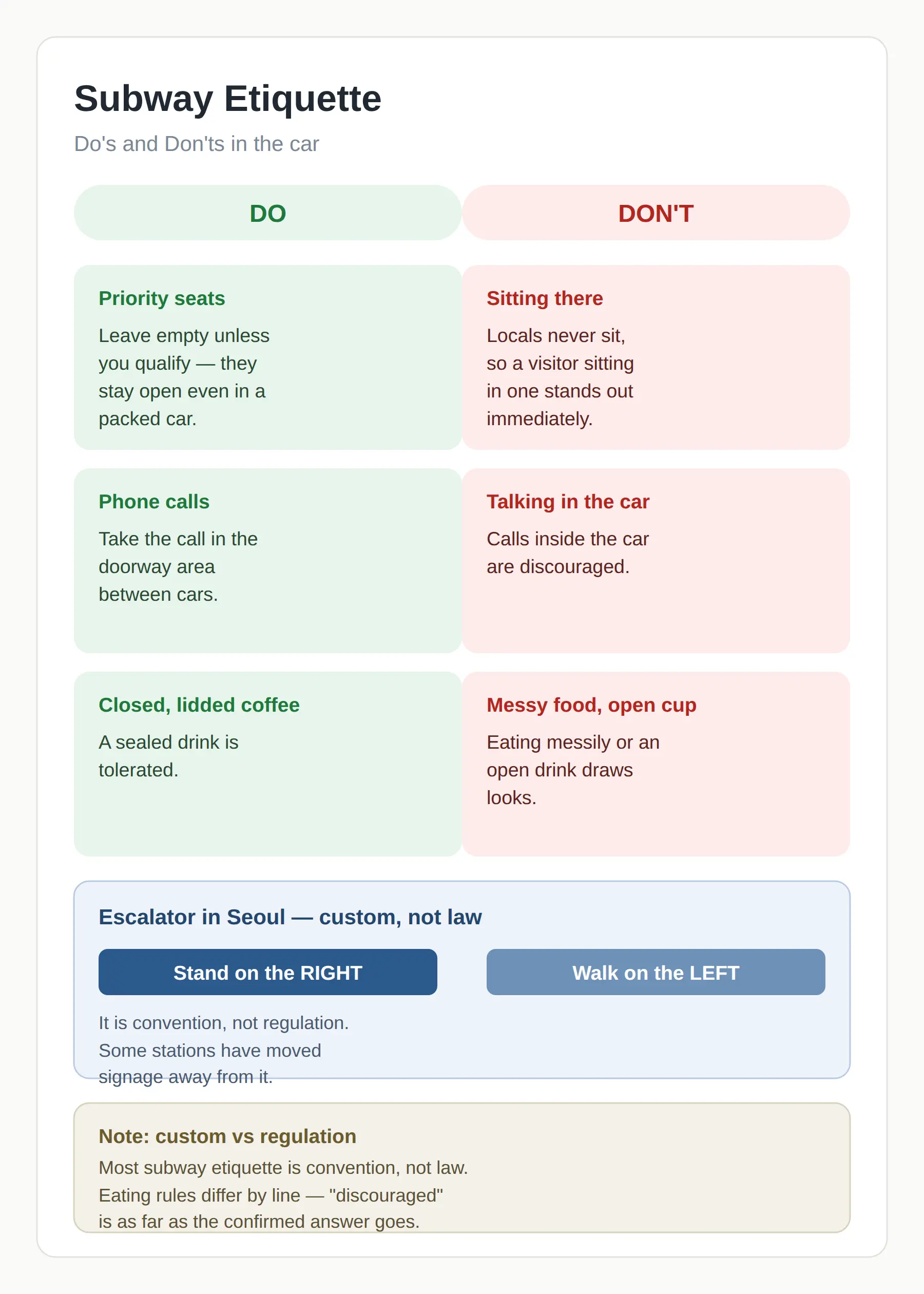
Leave the pink priority seats (the seats reserved for elderly, pregnant and disabled riders) empty unless you qualify — they stay open even in a packed car.
Standing locals simply do not sit there, so a visitor sitting in one stands out immediately.
Phone calls inside the car are discouraged, and the normal practice is to take the call in the doorway area between cars.
Eating messily or carrying an open drink in the car draws looks, while a closed, lidded coffee is tolerated.
In Seoul, stand on the right side of the escalator and walk on the left — treat it as a custom rather than a rule, because it is convention, not law, and some stations have been moving their signage away from it.
When I write any of these down as fact, the first thing I check is whether it is a custom or an actual regulation — most subway etiquette here is convention, and the exact rules for eating differ by line, so ‘discouraged’ is as far as the confirmed answer goes.
Do You Take Your Shoes Off in Korea?
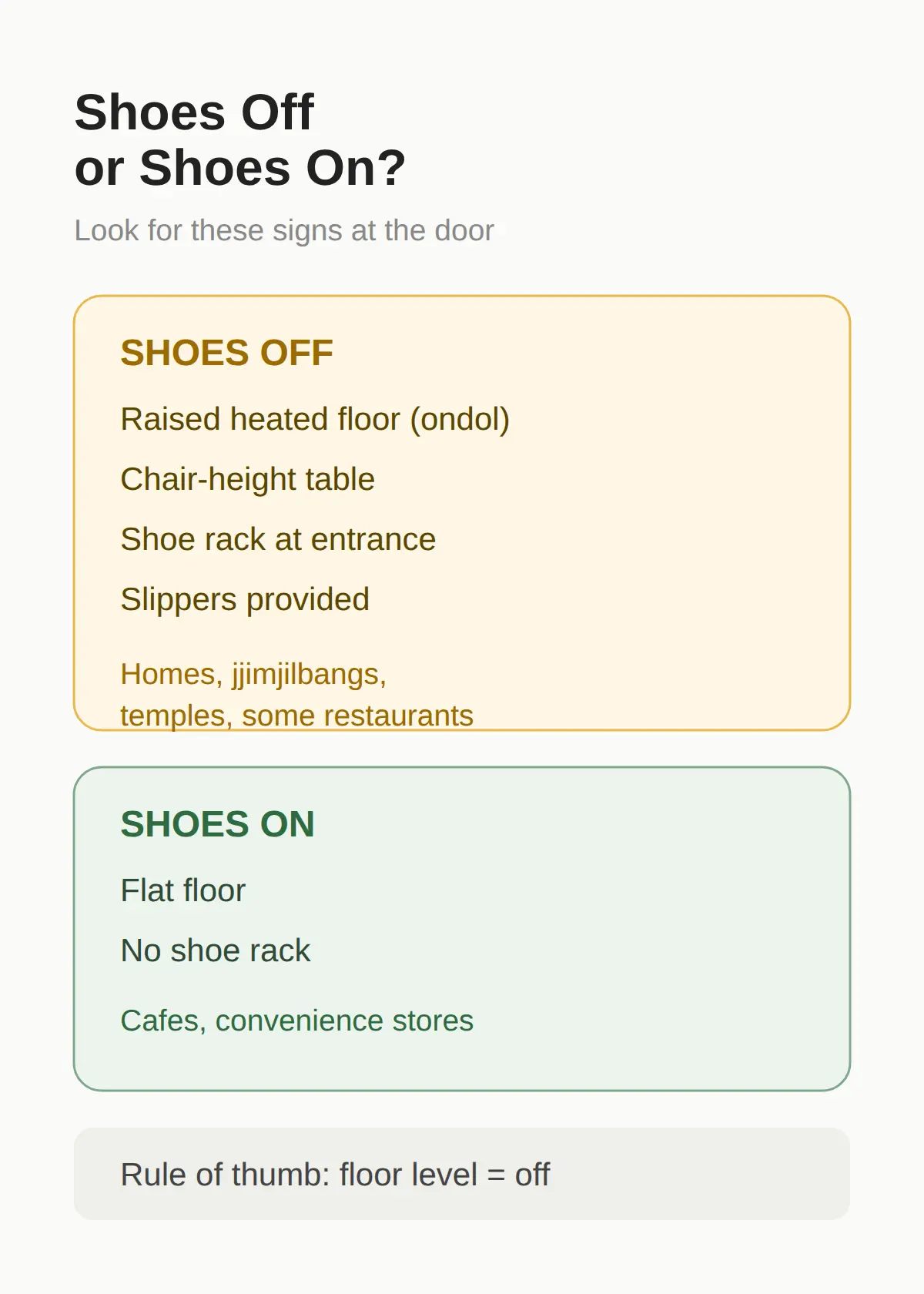
Take your shoes off at the door in homes, some traditional restaurants, jjimjilbangs and temple stays.
The trigger is the floor itself: a raised floor heated from below (ondol, Korea’s traditional underfloor heating) is a shoes-off space, and a chair-height table on it confirms the same thing.
If you see a shoe rack at the entrance, that is the sign — shoes off, and slippers are usually provided.
Flat cafés and convenience stores are normal shoes-on, so you do not need to hover at every doorway wondering.
Jjimjilbang Rules for First-Timers
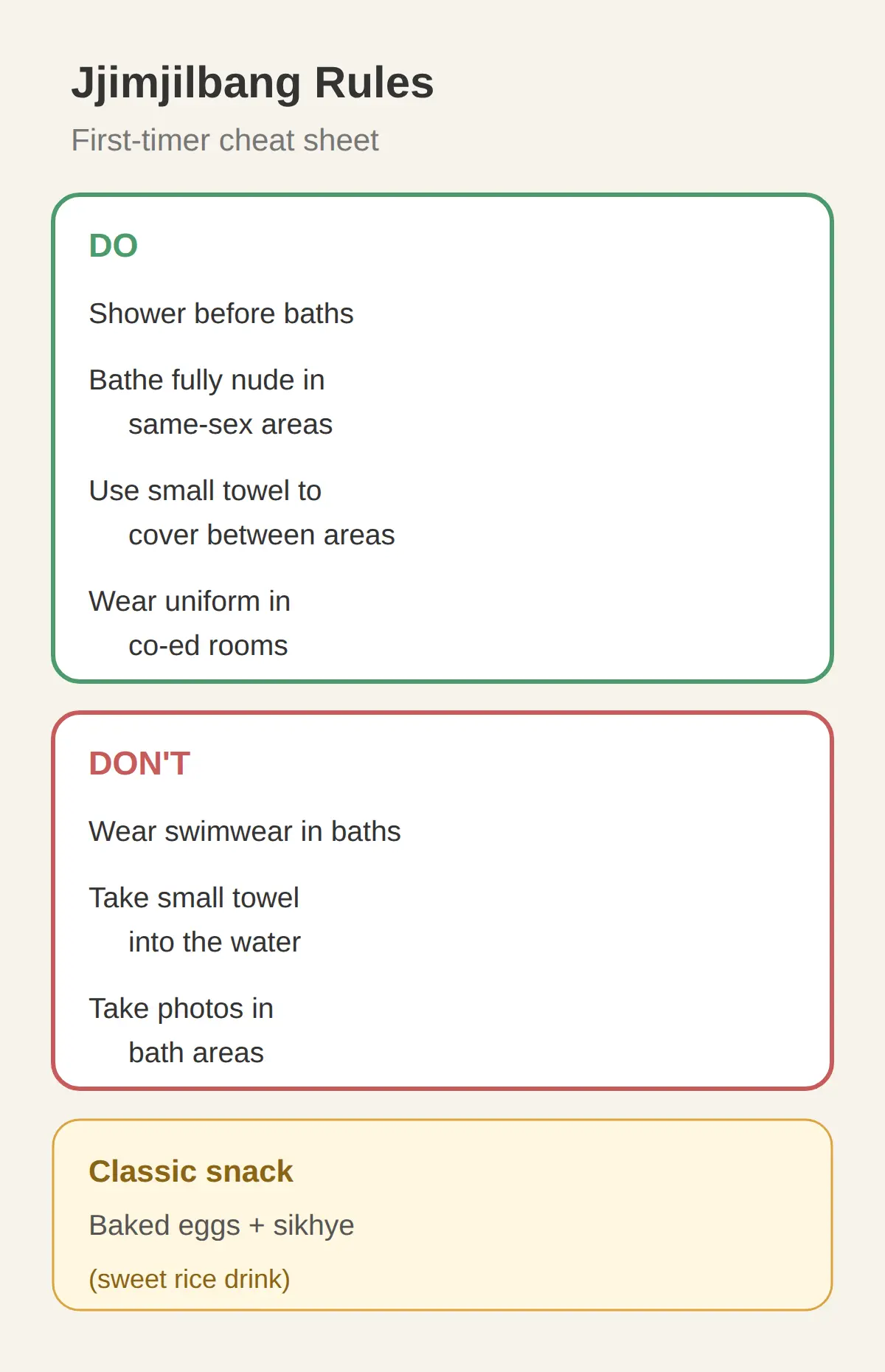
In a jjimjilbang, bathing in the same-sex areas is fully nude — swimwear is not allowed, and you shower before entering the baths.
The small towel provided is used as a modesty cover while walking between stations, not worn in the water.
No photos anywhere inside the bath areas, and in the shared co-ed rooms you wear the uniform (a plain T-shirt and shorts) that comes with your entry.
Baked eggs and sikhye (a sweet rice drink) are the classic snack to have afterward.
If a communal bath sounds too much for a first day in the country, go with a Korean friend or save it for the end of the trip when the awkwardness has worn off.
Drinking and Table Manners at a Korean Dinner
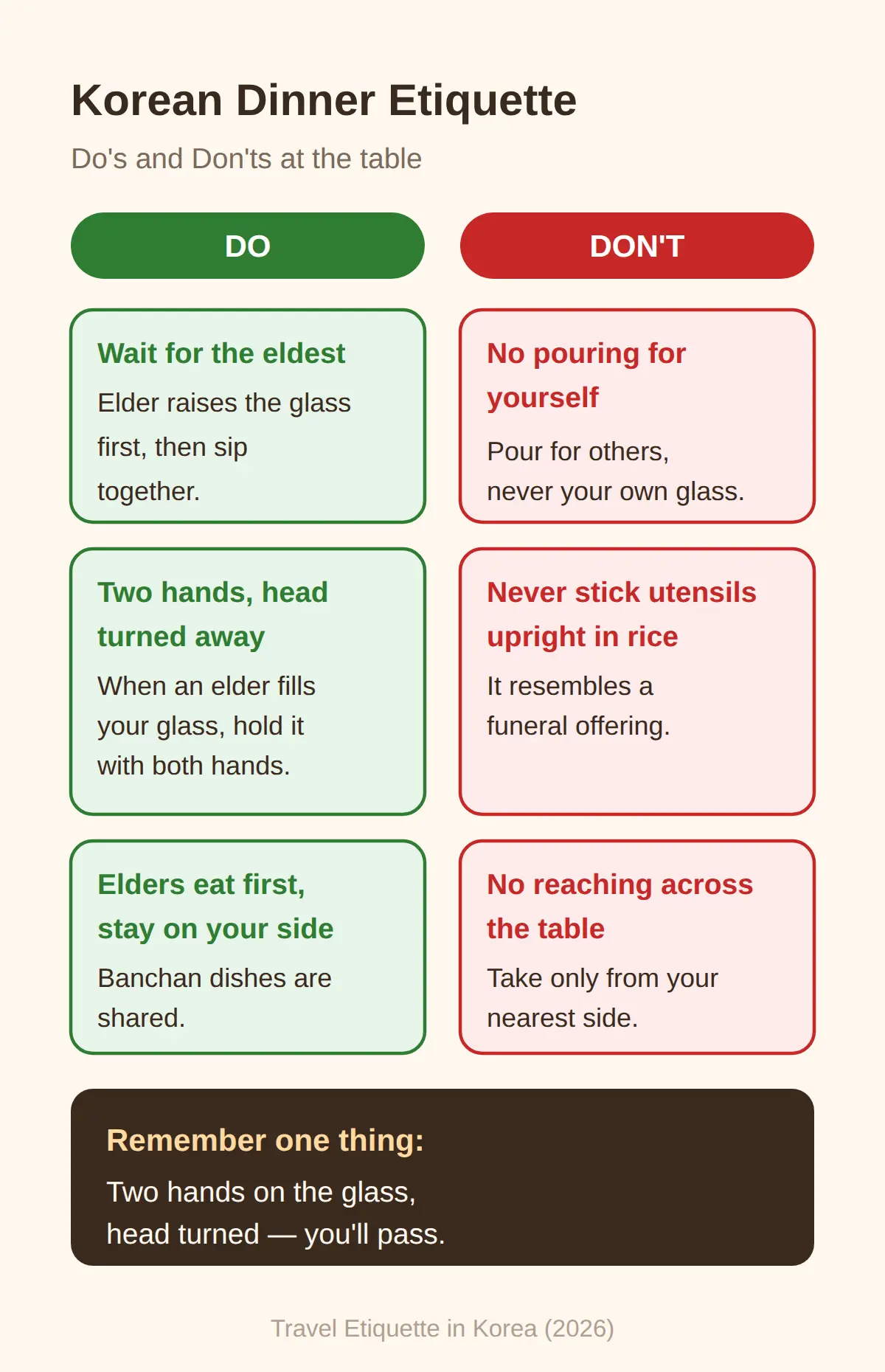
No one drinks until the oldest person at the table raises a glass, and the first sip happens together.
Pour for others, never for your own glass, and when an elder fills yours, hold it with two hands and turn your head away from them as you drink.
Elders begin eating first, and because dishes are shared (banchan), take only from your side rather than reaching across the table.
Never stick chopsticks or a spoon upright in rice — it resembles a funeral offering.
Meal etiquette in detail is covered in a separate Korean dining etiquette article on this site, so this list keeps only the rules that change what you do at the table.
If you copy one thing, copy the glass: two hands, head turned, and you will pass as someone who has been told the rules.
Greeting, Giving, Taxis, Temples and Trash
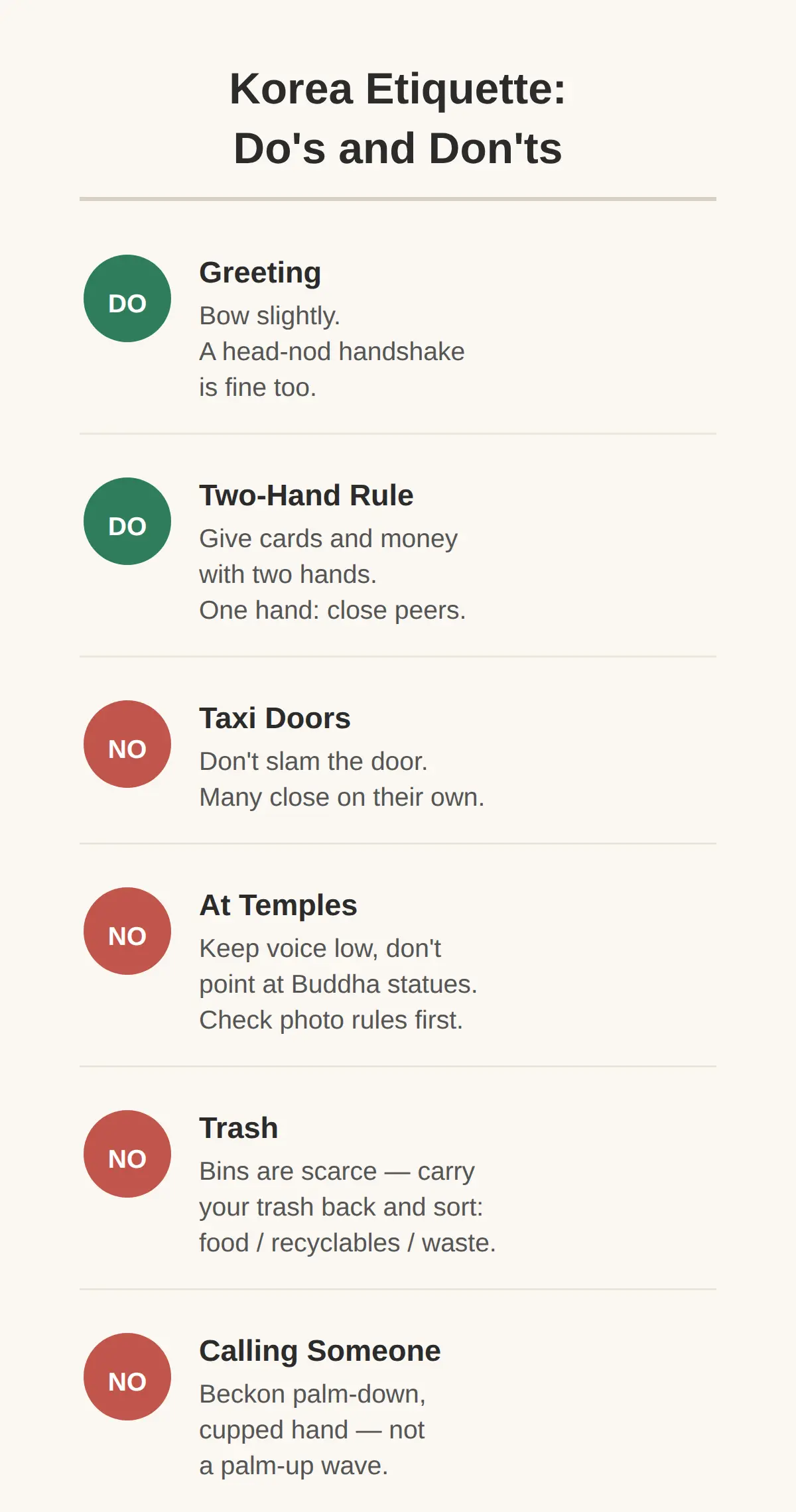
A slight bow is the default greeting, and a handshake with a small bow of the head is completely fine with foreigners.
Give and receive anything — money, cards, drinks, business cards — with two hands, or with the right hand supported at the wrist; one hand is for close peers only.
Don’t slam the taxi door: many older taxis close the doors automatically, and pulling hard can damage them.
At temples keep your voice low and don’t point at the Buddha statues, and check whether photos are allowed in a specific hall, because restrictions vary by temple.
Public trash cans are scarce, so carry your trash back to your accommodation rather than hunting for a bin, and sort it if you can — food waste, recyclables and general waste go separately.
To call someone over, beckon with a cupped hand held palm down; a waving palm-up hand reads as calling a dog.
If I were a first-time visitor, the first rule I’d lock in is the two-hands rule, because it comes up at every payment, store counter and taxi ride.
I’d also keep small bags with me for trash — the sheer shortage of public bins is what catches people off guard, not the sorting rules themselves.
Related posts
📎 Seoul — everything we know
📎 📅 Upcoming Dates — Release & Event Calendar
Sources
- brief.md lists two source pages for etiquette item compositi (deshvideshtravels.com)
- No new verifiable primary page found in this run — existing (livinginkorea.org)
- Visitor friction points: places, foreigner-friendly stores, (github.com)
What To Watch Next
- October 2026 is the year’s biggest month for first-time arrivals, so expect updated visitor guidance around major holiday periods — worth a re-check if your trip falls near a national holiday.
- The three rules that actually trip visitors up: no tipping, shoes off at any raised floor, two hands when handing something over. If I were a first-time visitor, I would carry just those three and let the rest come from watching the people around me.
- Figures and rules in this article are as of October 6, 2026.
FAQ
Q. Is tipping expected in Korea?
No. Tipping is not expected in restaurants, taxis or hotels, and upscale hotels already include a service charge in the bill.
Q. Is tipping rude in Korea?
It is not rude, but it causes confusion because there is no routine for receiving it. Saying thank you is the normal way to show you liked the service.
Q. Can I eat or drink on the Seoul subway?
A closed, lidded drink is tolerated, but eating messily or carrying open containers draws looks, and the rules differ by line. Take phone calls in the doorway area between cars.
Q. Where do I have to take my shoes off in Korea?
In homes, some traditional restaurants, jjimjilbangs and temple stays — anywhere you step onto a raised heated floor. A shoe rack at the entrance is the sign.
Q. Do I have to bathe nude at a jjimjilbang?
Yes, in the same-sex bath areas swimwear is not allowed, and you shower before entering the baths. No photos in the bath areas, and wear the provided uniform in the co-ed rooms.
Planning the trip itself? The month-by-month Korea guide covers when to go and what a first itinerary should include.
Cover photo: Seoul Metro class 2000 VVVF series 2.3th-batch interior 20170916 by Cfktj1596 — CC BY-SA 4.0
#koreatravel #koreanetiquette #seoulsubway #jjimjilbang #koreafirstvisit #koreancustoms
📅Upcoming Schedule — this week 4 · D-day Hangul DaySee all →How this article was made: written with AI assistance from the official and public sources cited here, checked automatically against those sources, and reviewed by the site operator after publishing. Last updated 2026-10-08. Editorial policy