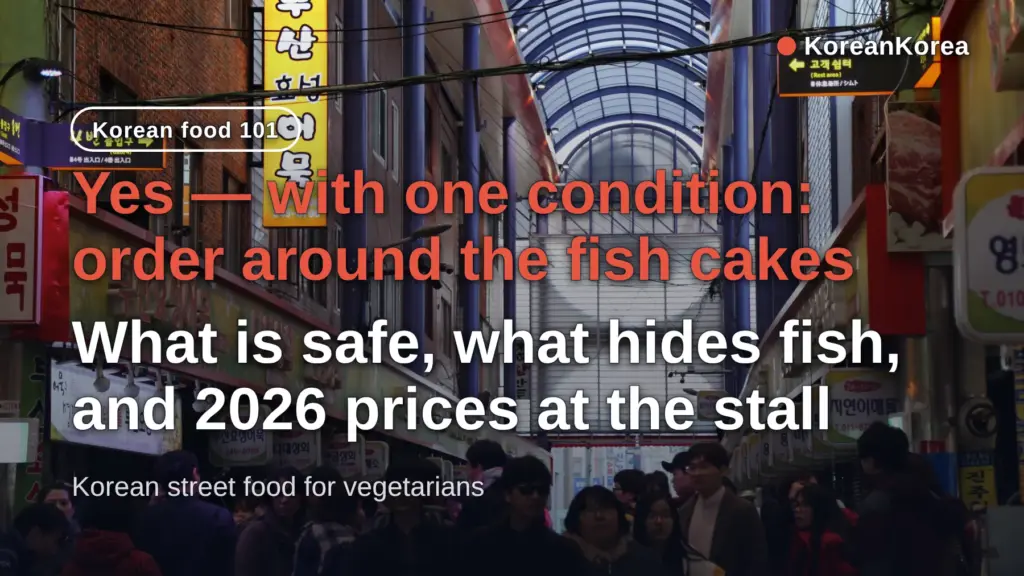
Vegetarians can eat Korean street food in 2026, but the main trap is hidden fish — fish cake (eomuk) and anchovy broth — and street snacks overall run roughly ₩700–6,000 per item, with the cheapest skewers being exactly the ones to skip.
That means most stalls have something you can eat, yet the dish that looks safest is often cooked in fish stock or topped with fermented seafood.
This post lists what is safe and what to skip with prices, the phrases to say at a tteokbokki stand, and two named stalls at Gwangjang and Namdaemun you can walk to and order from.
Key facts — As of 2026-10-09
- Two independent 2026 guides warn the same thing: foods that look vegetarian may still contain fish cake or anchovy stock.
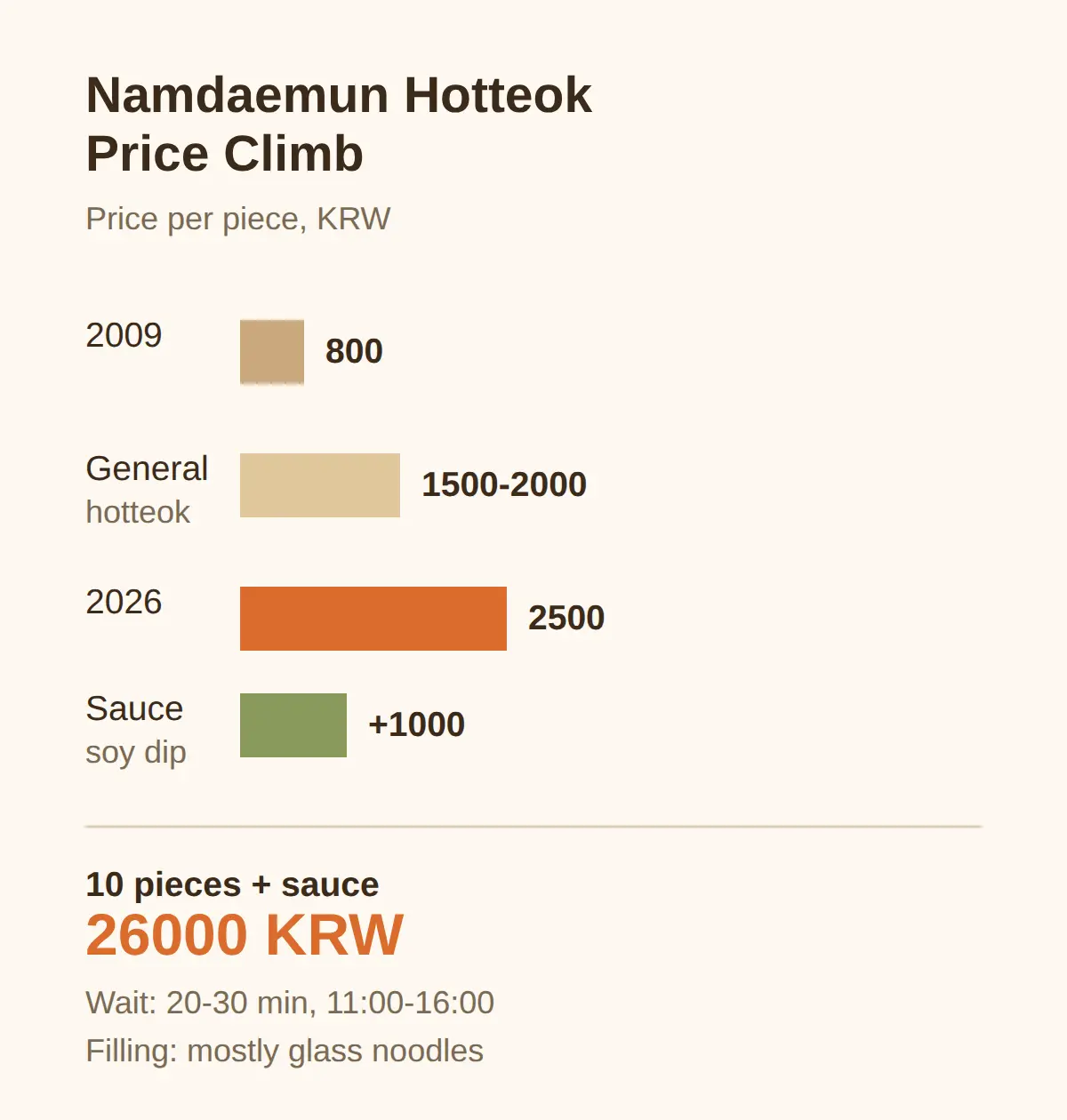
- Namdaemun Vegetable Hotteok sells at ₩2,500 per piece in 2026 — up from ₩1,500, and ₩800 back in 2009.
- Yeolcha-jip, founded in 1954 and designated Seoul Future Heritage, tops its signature bindaetteok with 어리굴젓 (fermented seafood) — so the mung-bean pancake is not automatically vegetarian.
Can Vegetarians Eat Korean Street Food? The Short Answer
Yes — vegetarians can eat Korean street food, but the one thing to watch is hidden fish: fish cake (eomuk) and anchovy-based broth.
Two separate 2026 guides to Korean street food repeat the same warning: foods that look vegetarian may still contain fish cake or anchovy stock.
So the visible ingredients are not the test — the stock and the mix-ins are.
When I look at a snack that seems vegetarian, the first thing I check is what hides in it — fish cake and anchovy stock, not the listed vegetables.
If a dish is fried dough, rice cake, or pancake without a fishy side, it is usually workable; if it comes in broth or with skewered fish cake, ask before you eat.
Is Tteokbokki Vegetarian? What to Say at the Stall
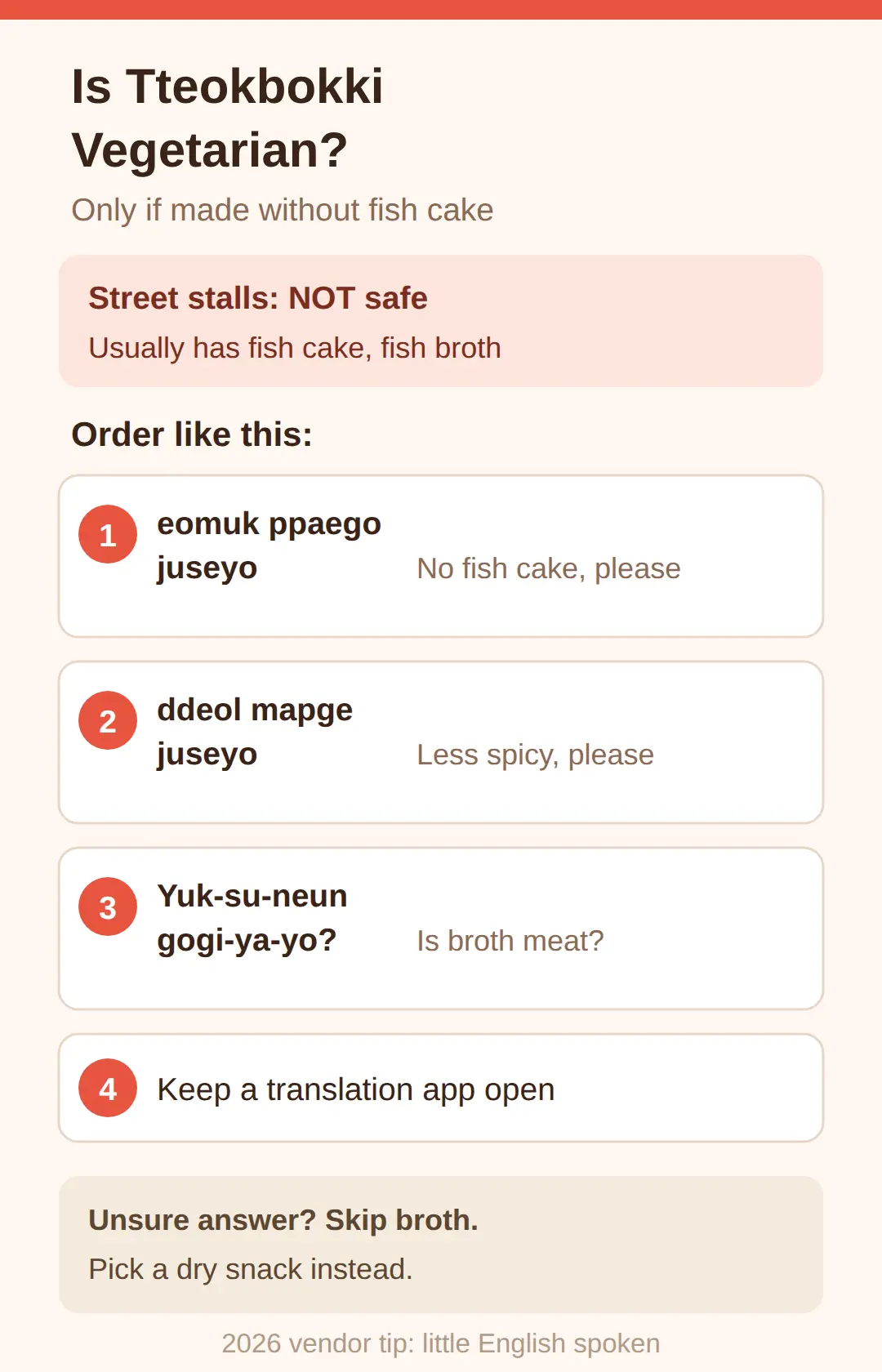
Tteokbokki is vegetarian only if it is made without fish cake — standard street versions usually contain eomuk and are cooked in fish-based broth.
The fix is one phrase: say ‘eomuk ppaego juseyo’ (어묵 빼고 주세요), which means ‘please leave out the fish cake.’
At a tteokbokki stand, do it in this order:
- Ask ‘eomuk ppaego juseyo’ — no fish cake in the dish.
- If the sauce looks too red, add ‘ddeol mapge juseyo’ (덜 맵게 주세요) — ‘please make it less spicy.’
- For any soup-based dish, ask ‘Yuk-su-neun gogi-ya-yo?’ — ‘Is the broth made with meat?’ — before ordering.
- Keep a translation app open; 2026 guides note vendors often speak little English.
Whether a stand will actually honor the no-eomuk request varies by stall, so if the answer sounds unsure, pick a dry snack instead of a broth one.
Safe Snacks vs the One Item to Skip — 2026 Prices
Street snack prices in 2026 run roughly ₩700–6,000 per item, and the cheapest thing on the street is exactly the one vegetarians must skip.
| Item | 2026 price | Vegetarian verdict |
|---|---|---|
| Odaeng / eomuk skewers | ₩700–1,500 | Hard no — fish cake is the main ingredient |
| Hotteok (sweet cinnamon-sugar pancake) | ₩1,500–2,000 | Safe default — flour dough, sugar, nuts |
| Namdaemun vegetable hotteok | ₩2,500 each (+₩1,000 soy dipping sauce) | Mostly safe — filling is glass noodles and carrot, check on site |
| Gwangjang kimbap (carrot + danmuji only) | ₩5,000 for 2 | Safe to order by name |
| Bindaetteok (mung-bean pancake) | ₩5,000 | Vegetarian base, but cooked on a shared griddle |
The table shows the confirmed items: hotteok is the safe default, odaeng skewers are the hard no, and kimchi is a no on the side.
Hotteok at ₩1,500–2,000 sits roughly 2–3 times the cheapest skewer but about a third of the top-end item — so the safe choice is not the expensive one.
If you want a hot, filling snack without any ordering risk, go for hotteok; if you want something savory, the next two sections give named stalls.
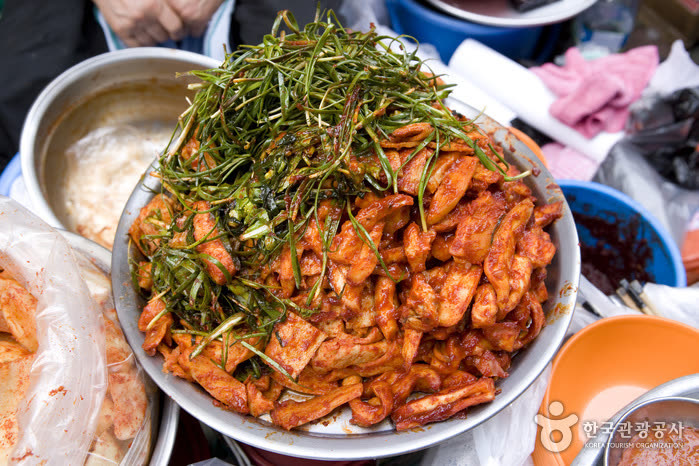
Gwangjang Market: Two Stalls You Can Order From by Name
At Gwangjang Market, vegetarians have two concrete orders: Monnyeo Kimbap’s mustard-dipped kimbap (carrot and pickled radish only) and a stone-ground mung-bean bindaetteok.
Monnyeo Kimbap is the origin stall of mustard-sauce-dipped Gwangjang kimbap and has been rolling kimbap for over 40 years; the filling is only carrot and danmuji (pickled radish), so there is nothing meaty in the roll itself.
It sits at 403-23 Dongho-ro, Jongno-gu, 99 meters from Exit 7 of Jongno 5-ga Station (Line 1); phone 02-2273-8330.
The first-floor shop is at the edge of the market, and a second branch sits in the central aisle.
Parkgane Bindaetteok has 3 branches inside the market, reachable from Jongno 5-ga Station Exits 7 or 8, and takes card payment — unusual for a traditional market.
Its signature is stone-ground (matdol) mung-bean bindaetteok, the vegetarian-friendly base of mung beans and vegetables, plus free pickled onion and a yellow mustard dip on the table.
If I were taking a vegetarian friend to Gwangjang Market, I would order by those two names — Monnyeo’s kimbap and Parkgane’s matdol bindaetteok — and I would double-check hours and prices on the spot, since the published details come from pages without dates.
Namdaemun Vegetable Hotteok: ₩2,500, the Queue, and What Is Really Inside
Namdaemun Vegetable Hotteok sells at ₩2,500 per piece in 2026 — up from ₩1,500, and ₩800 back in 2009 — with a soy dipping sauce at an extra ₩1,000.
The stall is in front of Gate 2 of the Namdaemun Underground Shopping Center, 12 Namdaemun-ro, Jung-gu, Seoul.
Expect a 20–30 minute wait between 11:00 and 16:00; the baseline queue runs about 20 meters and reportedly never disappears.
A 2026 on-site check found the filling is mostly glass noodles with a few carrot pieces — onion and chives were not visible — so ‘vegetable’ on the sign does not list the filling for you.
Ten pieces cost one reporter ₩26,000 total with sauce, so the per-piece price is the number to budget with.
If you are already near Namdaemun, the wait is the only real cost; if you are short on time, plain hotteok at any stall does the same job in half the minutes.
Is Kimchi Vegetarian? And the Traps That Do Not Look Like Traps
Kimchi is generally not vegetarian — most versions contain fish sauce, salted shrimp (saeujeot), or anchovy.
‘Is kimchi vegetarian’ is a live Google autocomplete query, which tells you how many travelers hit this wall before their trip.
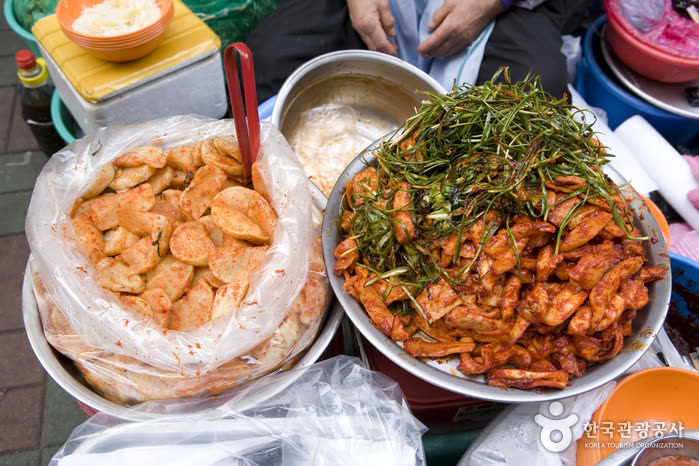
The bigger trap is bindaetteok: it looks like the safest pick (mung bean plus vegetables), but stall versions commonly add jeotgal — fermented seafood — or meat toppings.
A named example: Yeolcha-jip, founded in 1954 in Jongno and designated Seoul Future Heritage, tops its signature bindaetteok with eri-gul-jot (어리굴젓, fermented briny seafood) — so the mung-bean pancake is not automatically vegetarian.
The working rule: at any market stall, ask before eating anything with a topping or a dip, because the same dish name can carry fish at one stall and not at another.
Related posts
📎 📅 Upcoming Dates — Release & Event Calendar
Sources
- No dedicated 2026 source found yet — covered indirectly by t (koreatravellab.com)
- Odaeng ₩700–1,500, hotteok ₩1,500–2,000, ‘eomuk ppaego’ and (mykoreatip.com)
- Broth-check phrase ‘Yuk-su-neun gogi-ya-yo?’ (koreaexperience.com)
Three things to keep on your phone
- Save two phrases before you go: ‘eomuk ppaego juseyo’ (no fish cake) and ‘ddeol mapge juseyo’ (less spicy).
- Check the broth, not the ingredients list — anchovy and meat stock do not show on the surface.
- At markets, order by stall name (Monnyeo Kimbap, Parkgane) instead of by dish name, since the same dish changes from stall to stall.
FAQ
Q. Is tteokbokki vegetarian in Korea?
Only if made without fish cake — most street versions contain eomuk and cook in fish-based broth, so ask ‘eomuk ppaego juseyo’ and accept that some stands may not be able to skip it.
Q. Is kimchi vegetarian?
Generally no — most kimchi contains fish sauce, salted shrimp, or anchovy, so treat it as a non-vegetarian side unless a specific batch is made without them.
Q. What street snacks can vegetarians eat at Gwangjang Market?
Two confirmed orders: Monnyeo Kimbap’s carrot-and-danmuji kimbap dipped in mustard, and stone-ground mung-bean bindaetteok at Parkgane — ask about toppings, since some bindaetteok comes with fermented seafood.
Q. How much is Monnyeo Kimbap’s kimbap roll in 2026?
The stall’s official page does not list prices, so there is no confirmed 2026 figure — check the posted menu on site or call 02-2273-8330.
Q. Is egg bread (gyeran-ppang) okay for vegans?
It contains egg, so it works for lacto-ovo vegetarians but not for vegans; a confirmed vegan-friendly street variant has not been verified, so treat it as off-list.
Before your trip, save the phrases in section 2 and skim the Korean street food guide — one reprint of the order lines on your phone is all you need at the stall.
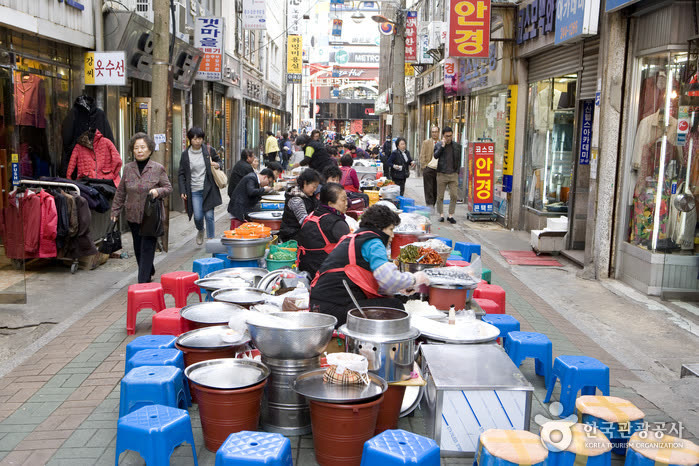
Cover photo: Indoors Market in Busan by Ryan Bodenstein — CC BY 2.0
#Koreanstreetfood #vegetarianKorea #tteokbokki #GwangjangMarket #Namdaemunhotteok #kimchi #streetfoodprices
📅Upcoming Schedule — this week 3 · D-day documentary 'Always Lalisa' global theatrical release (Oct 1See all →Last updated 2026-10-12. Editorial policy