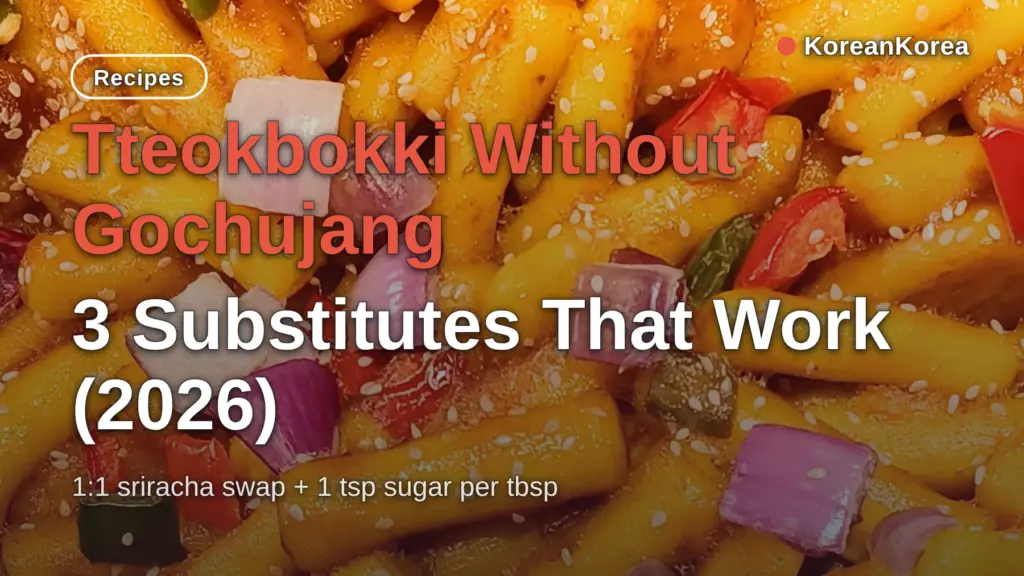
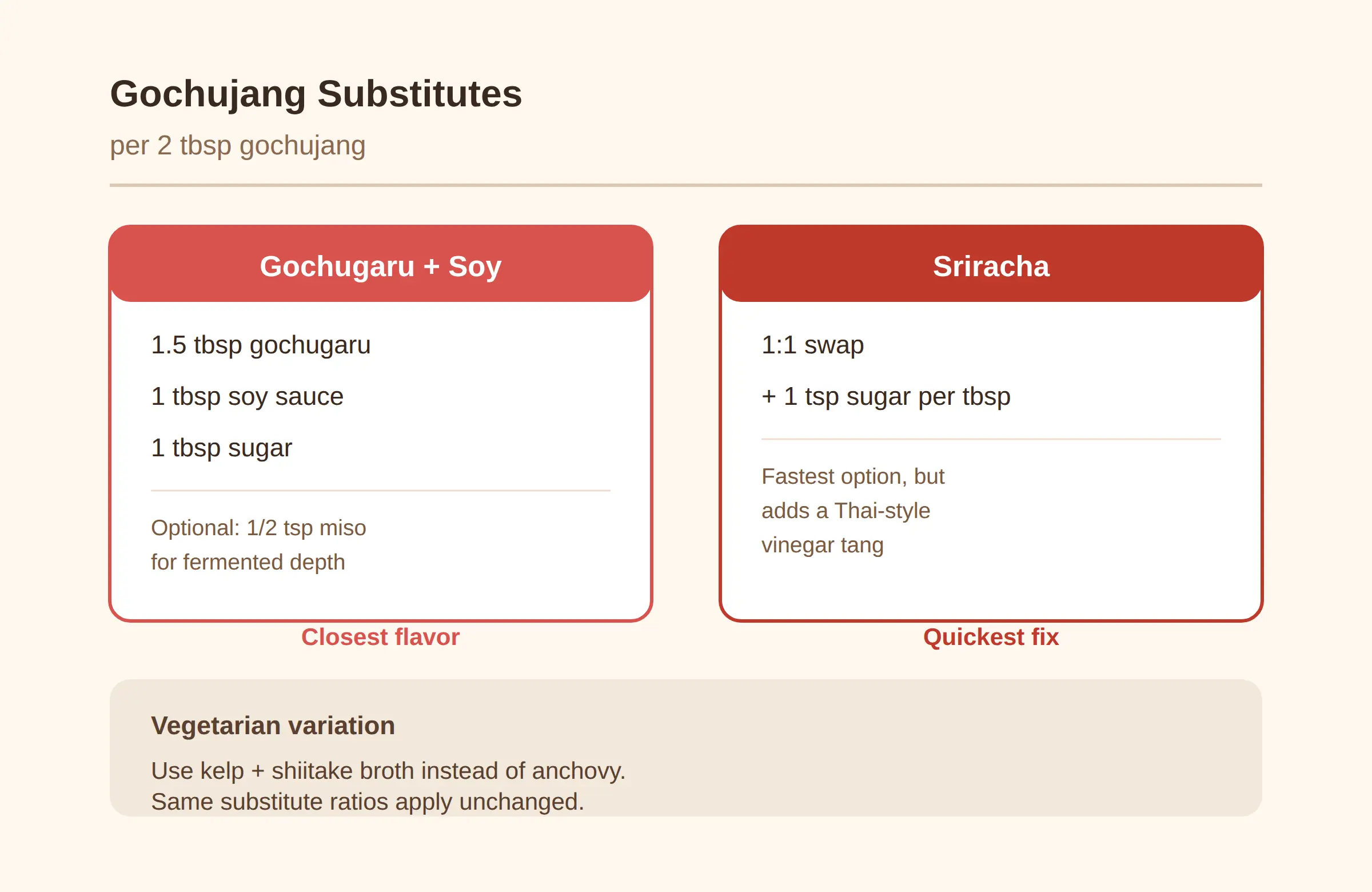
Yes — tteokbokki works without gochujang: replace 2 tbsp of gochujang with 1.5 tbsp Korean chili powder (gochugaru) plus 1 tbsp soy sauce and 1 tbsp sugar.
Key facts — As of 2026-10-11
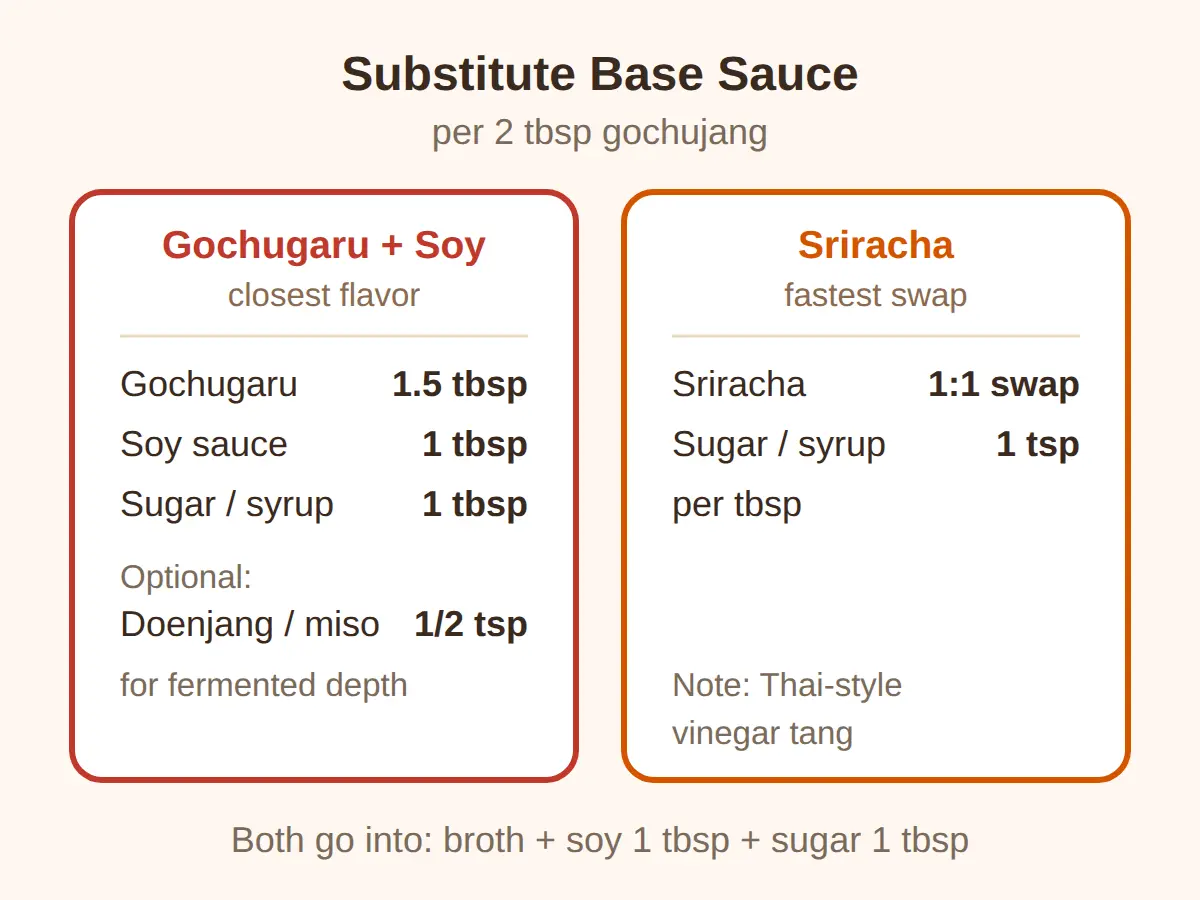
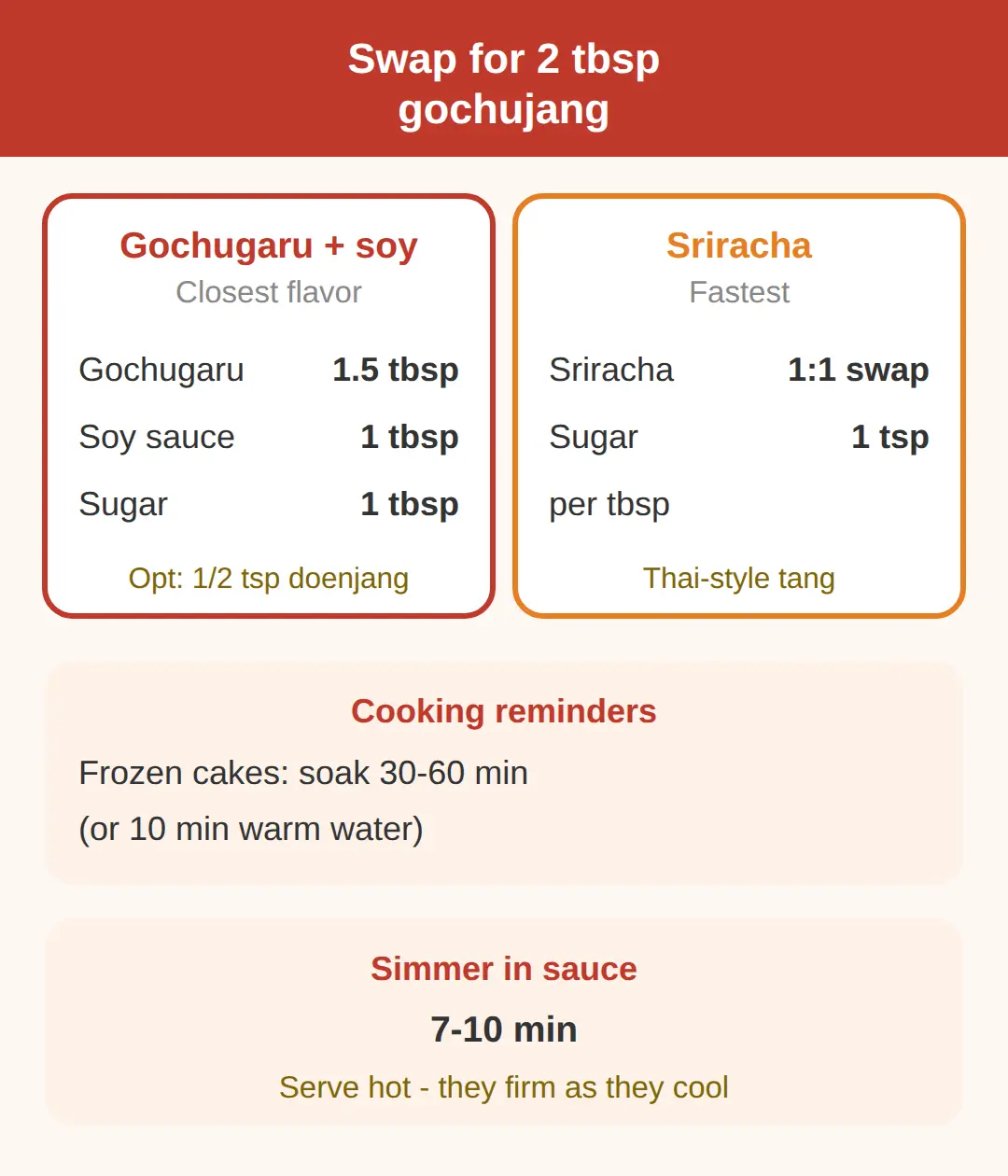
- Per 2 tbsp of gochujang, the closest substitute is 1.5 tbsp Korean chili powder plus 1 tbsp soy sauce plus 1 tbsp sugar, with 1/2 tsp doenjang or miso optional to bring back the fermented depth.
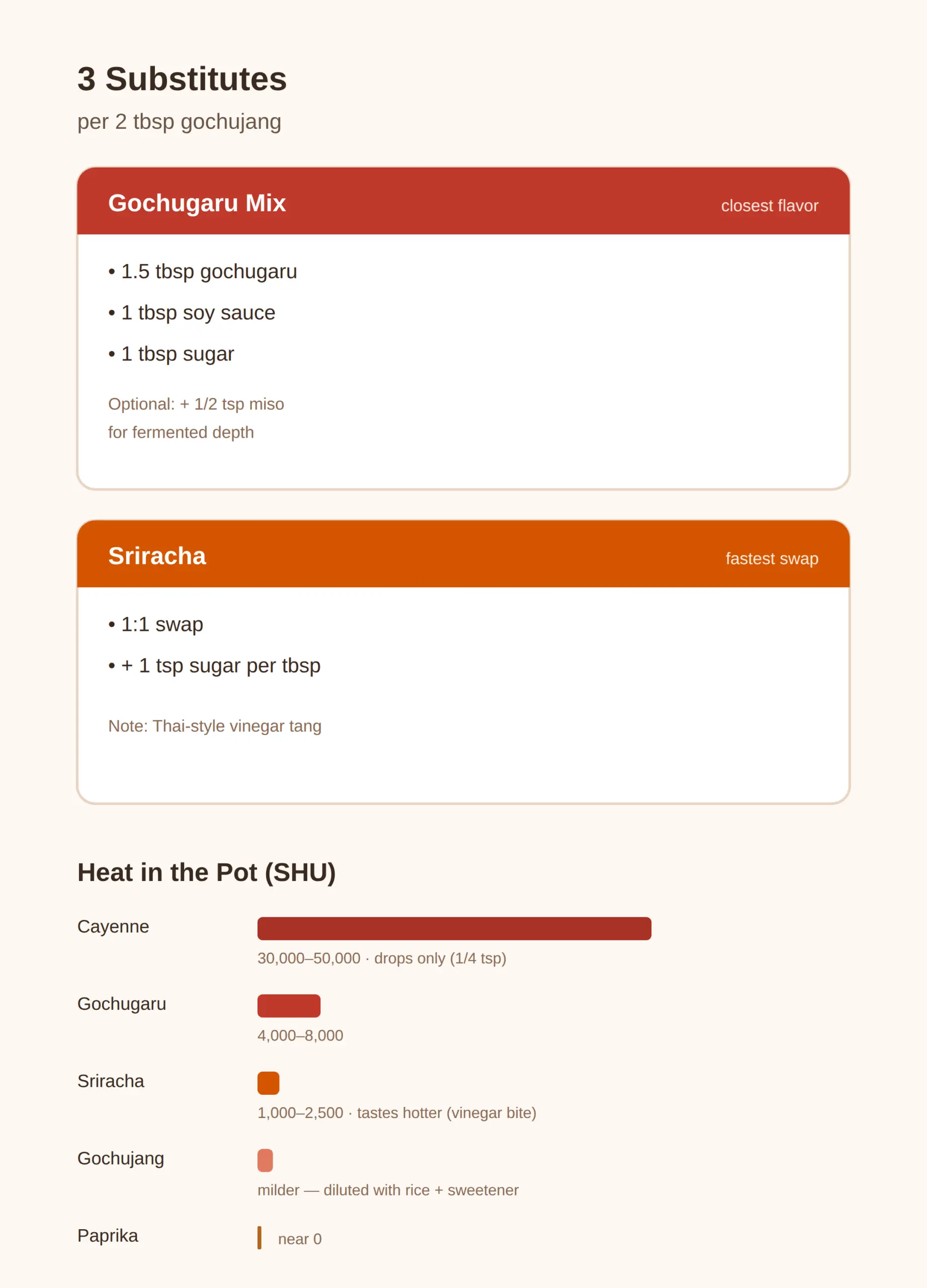
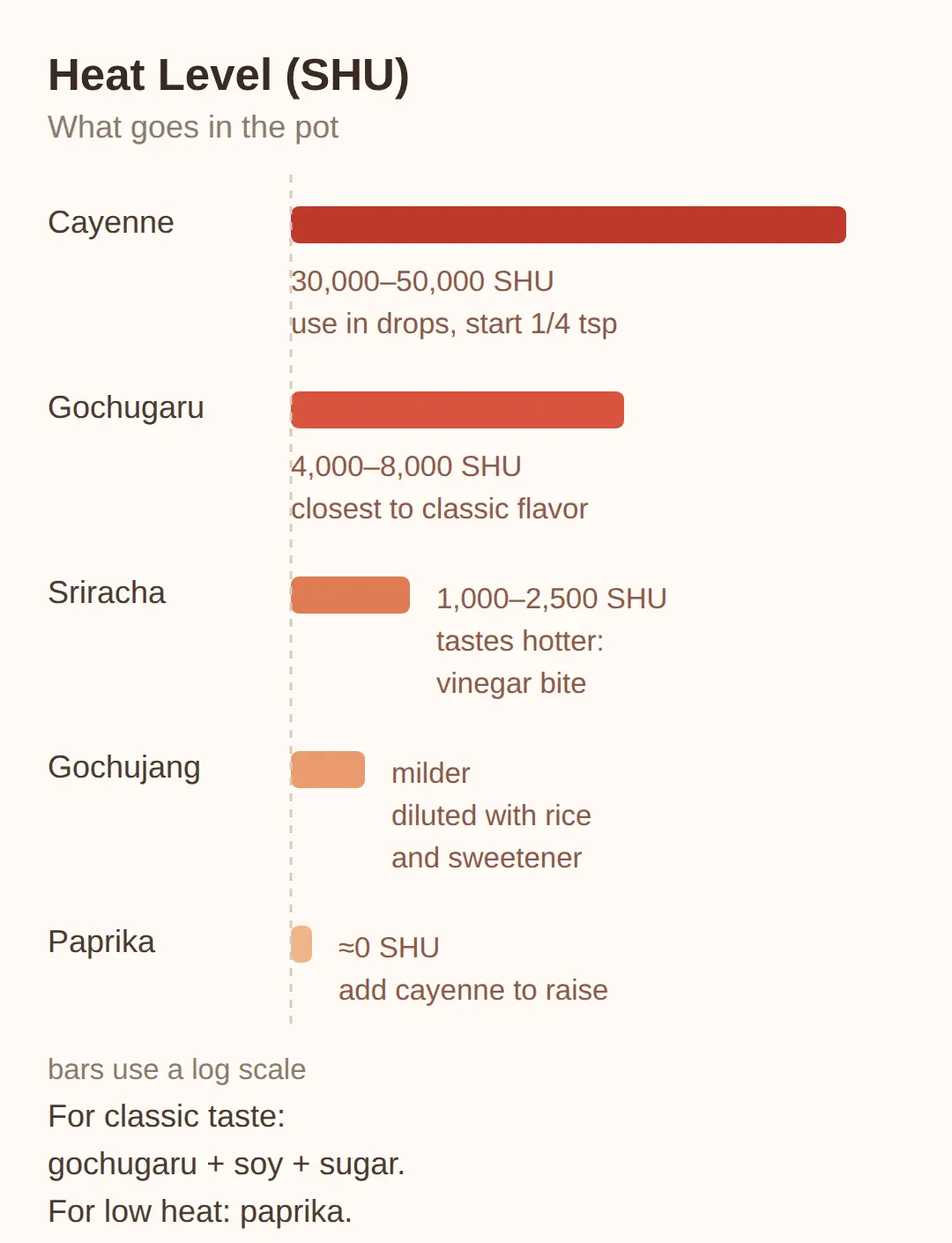
- Gochugaru runs roughly 4,000–8,000 SHU while sriracha sits near 1,000–2,500 SHU — a general reference, since brand-level values are not confirmed from primary sources.
Can You Make Tteokbokki Without Gochujang?
| Gochugaru + soy sauce | 1.5 tbsp gochugaru · 1 tbsp soy sauce · 1 tbsp sugar |
|---|---|
| Sriracha | 1:1 swap, plus 1 tsp sugar per tbsp used |
| Sweet paprika + cayenne | 2 tbsp paprika · 1/4–1/2 tsp cayenne · 1 tbsp soy sauce · 1 tsp sugar |
Yes — the closest swap is 1.5 tbsp gochugaru plus 1 tbsp soy sauce and 1 tbsp sugar for every 2 tbsp gochujang the recipe calls for.
Gochujang does three jobs at once: it brings heat, sweetness, and savory fermented depth.
No single bottle covers all three, so each substitute below is a small mix rather than a one-to-one paste.
When I judge a substitute, the first thing I check is which of those three jobs it leaves out.
Ingredients
Main
- 2 cups anchovy-kelp broth
- onion — sliced
- 1 tsp garlic
- garae-tteok (cylindrical rice cakes) — frozen ones soaked before cooking
Sauce & seasoning
- 1.5 tbsp gochugaru (Korean chili powder)
- 1 tbsp soy sauce
- 1 tbsp soy sauce — added to the base sauce
- 1 tbsp sugar
- 1 tbsp sugar or corn syrup — for the base sauce
Amounts are the ones used in this recipe; where the recipe gives no amount, adjust to taste.
The 3 Substitutes and Their Ratios
| Substitute (per 2 tbsp gochujang) | Ratio | Flavor notes |
|---|---|---|
| Gochugaru + soy sauce | 1.5 tbsp gochugaru + 1 tbsp soy sauce + 1 tbsp sugar | Closest flavor match; optional 1/2 tsp doenjang or miso restores fermented depth |
| Sriracha | 1:1 swap + 1 tsp sugar per tbsp | Garlic-and-vinegar tang instead of Korean fermented sweetness |
| Sweet paprika + cayenne | 2 tbsp paprika + 1/4–1/2 tsp cayenne + 1 tbsp soy sauce + 1 tsp sugar | Deep red color, mildest of the three; heat fully adjustable via cayenne |
Gochugaru+soy is the pick for closest authentic taste, sriracha for speed and pantry availability, and paprika+cayenne for lowest heat and kid-friendly versions.
Gochugaru runs roughly 4,000–8,000 SHU on the Scoville scale while sriracha sits near 1,000–2,500 SHU — a general reference, since brand-level values are not confirmed from primary sources.
Which Substitute Should You Use?
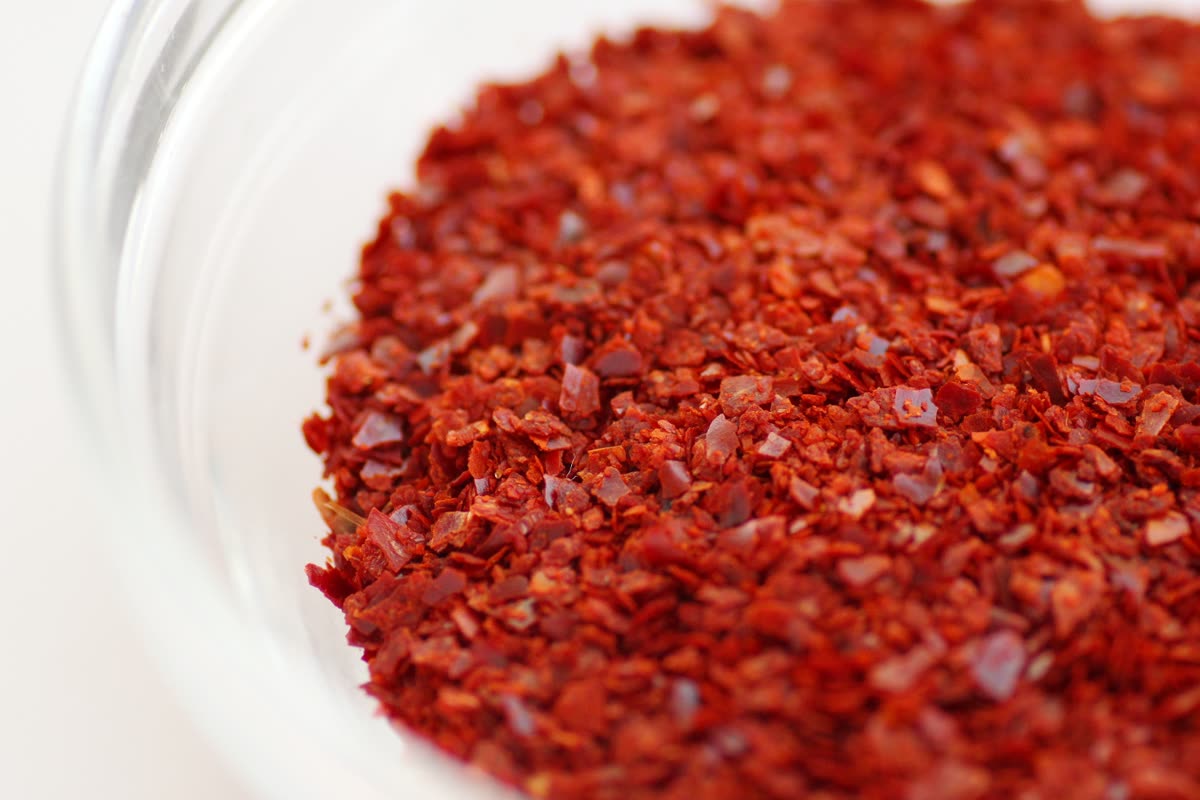
For the taste closest to classic tteokbokki, use the gochugaru version — it tastes cleaner and more savory-spicy, while gochujang is sweeter from fermentation.
For speed and a regular supermarket run, sriracha works: it is available almost anywhere and the fix is just added sugar.
For kids or a low-heat table, the paprika version is the mildest of the three, and the heat is adjustable by how much cayenne you add.
Recipes scale heat roughly linearly — 1 tsp of gochugaru is mild, the full 1.5 tbsp is standard fire flavor, and cayenne should start at 1/4 tsp and be tasted before adding more.
If I were cooking outside Korea, I would start with the paprika version: everything sits in a regular spice aisle, and the heat can be raised drop by drop until it matches what I want.
The Rest of the Sauce — What Carries the Substitute
The sauce around the substitute still needs anchovy-kelp broth (2 cups), garlic (1 tsp), sugar or corn syrup (1 tbsp), and soy sauce (1 tbsp).
Simmer the broth with onion and garlic for 10–15 minutes before anything goes in — up to 20–25 minutes for deeper savory flavor.
- Bring 2 cups of anchovy-kelp broth to a simmer with sliced onion and the garlic.
- Keep it at a low simmer for 10–15 minutes, then strain or fish out the solids.
- Stir in your substitute mix, 1 tbsp soy sauce, and 1 tbsp sugar or corn syrup.
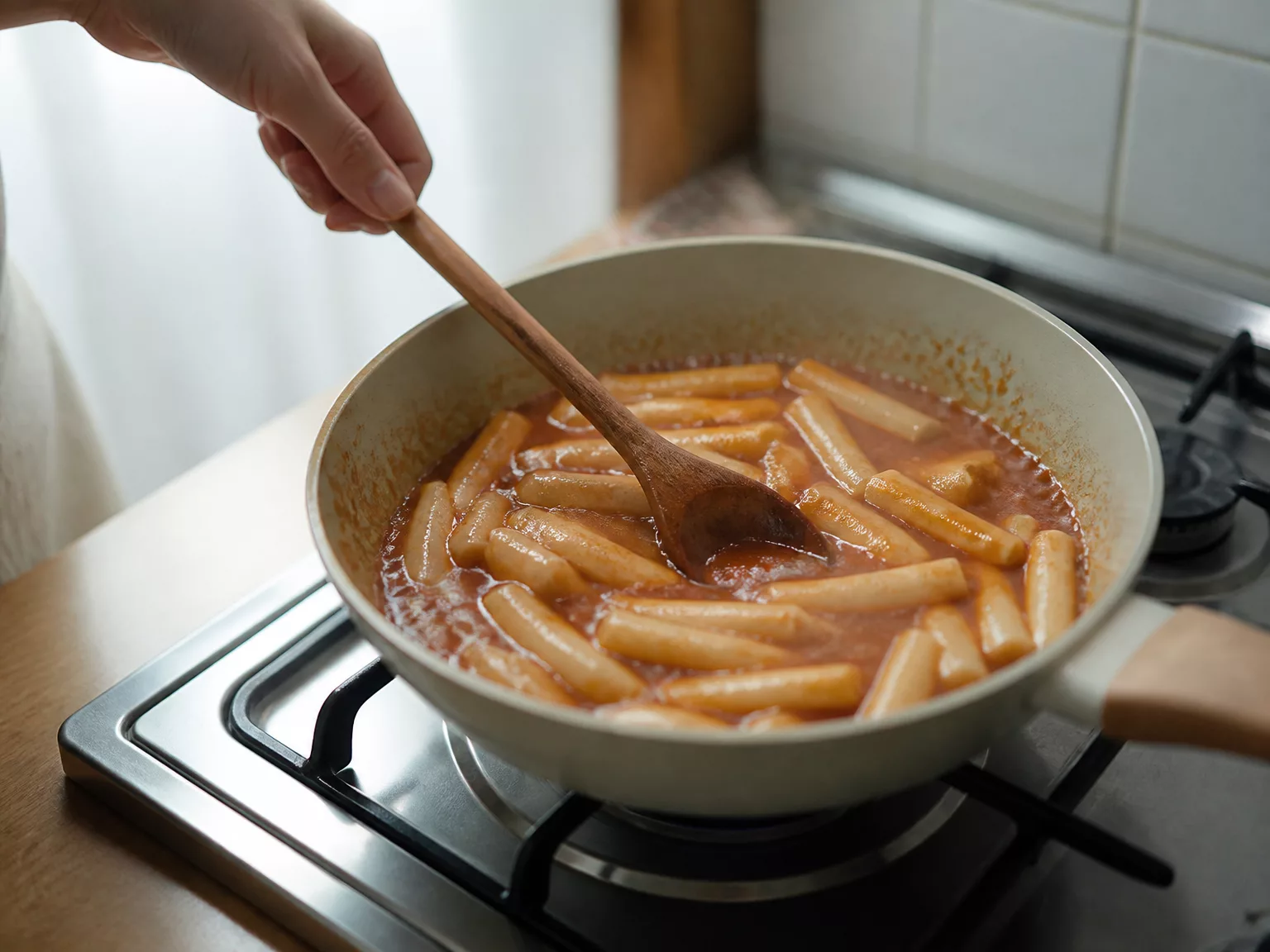
- Add the rice cakes and simmer 7–10 minutes until the sauce reduces and turns glossy.
- If the sauce stays thin, mash a few rice cakes against the pot at the end or simmer 2–3 extra minutes.
Without gochujang’s rice-based body the sauce runs thin, so that last step is what gets you the glossy, clingy texture.
Steps at a glance
-
1Bring 2 cups of anchovy-kelp broth to a simmer with sliced onion and…🔥 simmer
-
2Keep it at a low simmer for 10–15 minutes, then strain or fish out…⏱ 10–15 minutes🔥 simmer
-
3Stir in your substitute mix, 1 tbsp soy sauce, and 1 tbsp sugar or…
-
 AI-generated photo
What it should look like — AI-generated image of this step, made from the recipe text — not a photo of our kitchen. 4Add the rice cakes and simmer 7–10 minutes⏱ 7–10 minutes🔥 simmer -
5If the sauce stays thin, mash a few rice cakes against the pot at the…🔥 simmer
Cooking the Rice Cakes, Serving and Leftovers
The standard rice cake is cylindrical garae-tteok, and frozen ones need soaking before cooking — 30–60 minutes in cold water, or about 10 minutes in warm water, so the centers do not stay hard.
- Soak frozen rice cakes 30–60 minutes in cold water.
- Simmer them in the finished sauce about 7–10 minutes, until the sauce reduces and turns glossy.
- Serve straight away, since rice cakes firm up as they cool.
Fish cakes, a boiled egg, green onion, or mozzarella melted on top are the standard add-ins that carry the dish when the sauce is this simple.
Rice cakes harden as they cool, so leftovers are best revived in a pan with a splash of water rather than the microwave.
Two Variations Worth Knowing
A vegetarian version works with kelp-and-shiitake broth instead of anchovy broth — the same substitute ratios apply unchanged.
Cheese tteokbokki without gochujang is a common variation: mozzarella melted over the paprika-version sauce is the mildest crowd-pleaser.
If the whole pot is for vegetarians, build the sauce on the kelp-and-shiitake broth from the start and skip the anchovy step entirely.
Related posts
📎 📅 Upcoming Dates — Release & Event Calendar
Sources
- Gochugaru+soy+sugar as closest substitute; sriracha 1:1; pap (koreanbapsang.com)
- Yes — three workable substitutes with different heat/sweetne (mykoreankitchen.com)
- Gochugaru ~4,000–8,000 SHU reference via Scoville scale over (en.wikipedia.org)
Quick tips
- Start cayenne at 1/4 tsp, taste, then add more — it runs 30,000–50,000 SHU and is only used in drops.
- Mash a few rice cakes against the pot at the end if the sauce will not thicken.
- Leftovers keep 2–3 days in the fridge — revive them by re-simmering in a splash of water rather than microwaving.
FAQ
Q. Can I make tteokbokki without gochujang?
Yes — per 2 tbsp gochujang, use 1.5 tbsp gochugaru + 1 tbsp soy sauce + 1 tbsp sugar, or the sriracha swap, or the paprika with cayenne version.
Q. What is the best gochujang substitute for tteokbokki?
Gochugaru with soy sauce and sugar — it is the closest match to classic tteokbokki’s flavor, with optional 1/2 tsp doenjang or miso for fermented depth.
Q. How much sriracha equals gochujang?
Sriracha swaps 1:1 for gochujang, plus 1 tsp sugar per tablespoon used to offset its sharper vinegar heat.
Q. How do I make the sauce less spicy without gochujang?
Use the paprika version — 2 tbsp sweet paprika gives the color with near-zero heat, and you control the spice through the cayenne, starting at 1/4 tsp.
None scheduled — check the ingredients table the next time you shop.
Cover photo: Korean rice cake (tteokbokki) by Fumikas Sagisavas — CC0 1.0
#tteokbokki #gochujangsubstitute #koreanrecipe #koreanfoodabroad #ricecakes
📅Upcoming Schedule — this week 3 · D-day documentary 'Always Lalisa' global theatrical release (Oct 1See all →Last updated 2026-10-12. Editorial policy