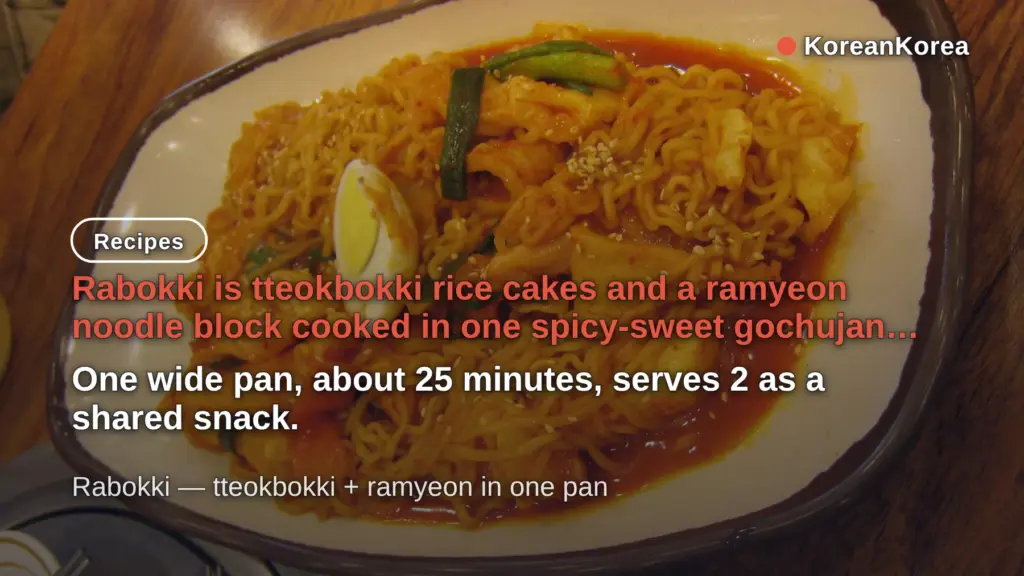
Rabokki is tteokbokki rice cakes and a ramyeon noodle block cooked in one spicy-sweet gochujang sauce — about 25 minutes start to finish, and a 400g rice cake batch plus one noodle block serves 2.
Key facts — As of 2026-10-02
- Rabokki takes about 25 minutes start to finish — roughly 10 minutes prep and 15 minutes cooking — and a 400g rice cake plus one ramyeon noodle block batch serves 2.
Rabokki Recipe: The 25-Minute Method
| Tteokbokki rice cakes (fresh) | 400 g |
|---|---|
| Ramyeon noodle block | 1 |
| Fish cake sheets (eomuk) | 3 |
| Onion | 1/2 |
| Cabbage | 2 handfuls |
| Scallion | 1 |
| Boiled eggs | 2 |
Rabokki takes about 25 minutes start to finish — roughly 10 minutes of prep and 15 minutes of cooking — and one 400g rice cake batch serves 2.
Stir the sauce into 300ml water first, bring it to a boil, and then add the rice cakes and vegetables together.
The sauce is done when the liquid has reduced by about half after 5–7 minutes of simmering over medium heat.
| Step | What to do |
|---|---|
| 1 | Stir 3 tbsp gochujang, 2 tbsp sugar, 1 tbsp soy sauce, 1 tbsp corn syrup, 1 tbsp minced garlic, and 1 tbsp gochugaru into 300ml water in a wide pan |
| 2 | Bring to a boil on high heat, then lower to medium once it bubbles |
| 3 | Add 400g rice cakes, half an onion, and 2 handfuls of cabbage; simmer 5–7 minutes until the liquid is about halved |
| 4 | Tuck in 3 fish cake sheets and the boiled eggs in the last few minutes so they heat through |
| 5 | Add the ramyeon block 3 minutes before serving, while the sauce is nearly absorbed, so the noodles stay chewy |
| 6 | Turn off the heat, stir in chopped scallion, 1/2 tbsp sesame oil, and sesame seeds, and eat straight from the pan |
The noodles are the one timing that decides the dish: add them early and they soak up all the sauce.
If your rice cakes came out of the freezer, slide them in 2–3 minutes earlier without thawing — a separate boil makes them gummy.
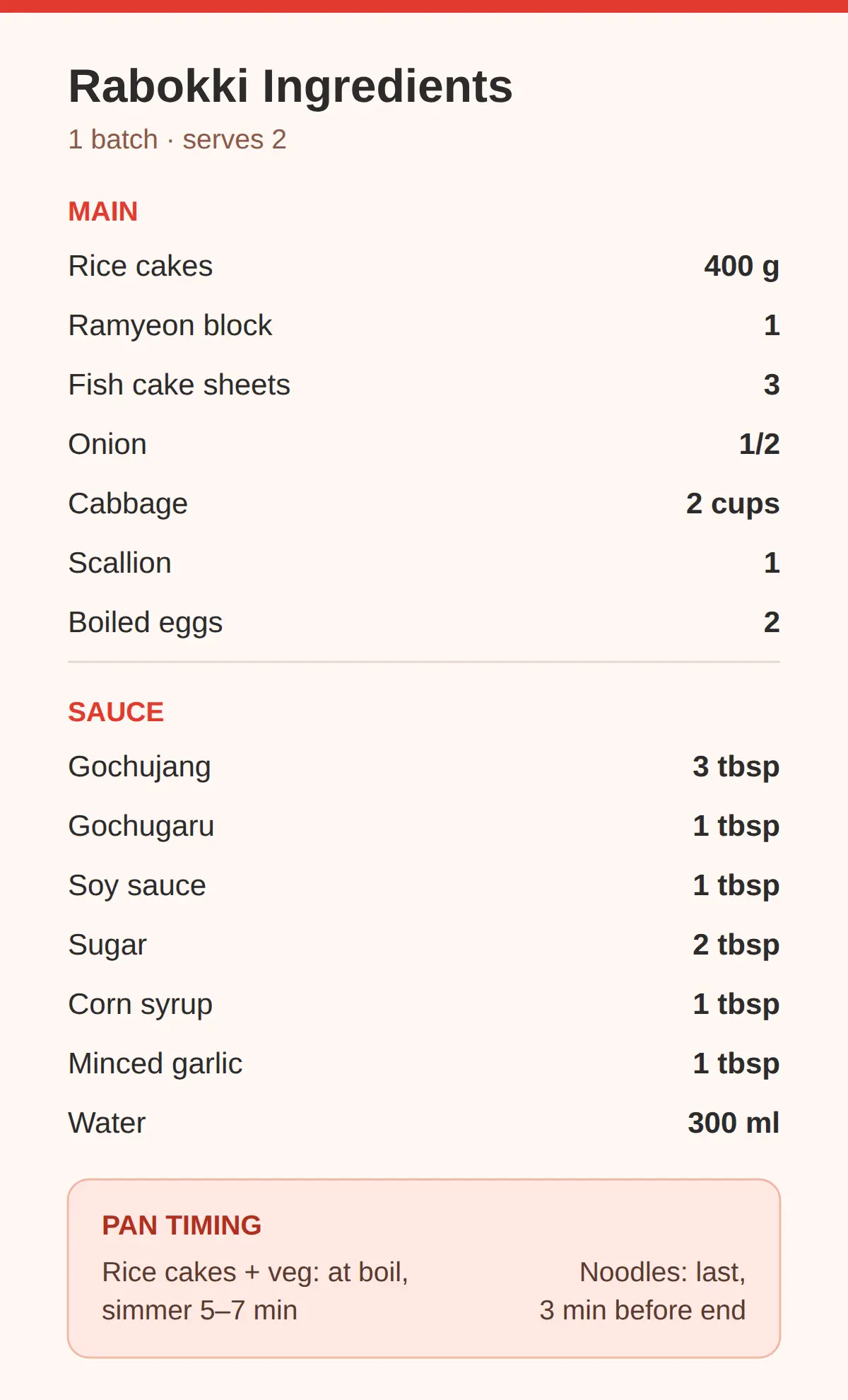
Ingredients
Main
- 400g Tteokbokki rice cakes
- 1 Ramyeon noodle block
- 3 Fish cake (eomuk) sheets
- 1/2 Onion
- 2 handfuls Cabbage
- 2 Boiled eggs
Sauce & seasoning
- 3 tbsp Gochujang (Korean chili paste)
- 1 tbsp Gochugaru (Korean chili flakes)
- 1 tbsp Soy sauce
- 2 tbsp Sugar
- 1 tbsp Corn syrup (mullyeot)
- 1 tbsp Minced garlic
- 300ml Water
To finish
- 1 Scallion — chopped
- 1/2 tbsp Sesame oil
- Sesame seeds
Amounts are the ones used in this recipe; where the recipe gives no amount, adjust to taste.
Ingredients for Rabokki (2 Servings, Metric)
A standard home batch is 400g tteokbokki rice cakes, one ramyeon block, and a handful of vegetables cooked in one pan.
| Ingredient (1 batch, serves 2) | Amount |
|---|---|
| Tteokbokki rice cakes | 400g |
| Ramyeon noodle block | 1 |
| Fish cake (eomuk) sheets | 3 |
| Onion | 1/2 |
| Cabbage | 2 handfuls |
| Scallion | 1 |
| Boiled eggs | 2 |
| Gochujang | 3 tbsp |
| Gochugaru | 1 tbsp |
| Soy sauce | 1 tbsp |
| Sugar | 2 tbsp |
| Corn syrup | 1 tbsp |
| Minced garlic | 1 tbsp |
| Water | 300ml |
Separate rice cakes that are stuck together by hand, and if they feel very cold, soak them 10 minutes in warm water so they soften evenly.
The boiled eggs go in at the end of cooking, not the start, and they are the most common protein addition after the fish cakes.
Some Korean sources describe a similar batch as 3 servings, but in Korea this is usually a snack shared by 2 people — if you are serving it as a full meal for 2, add one more egg or a handful of dumplings.
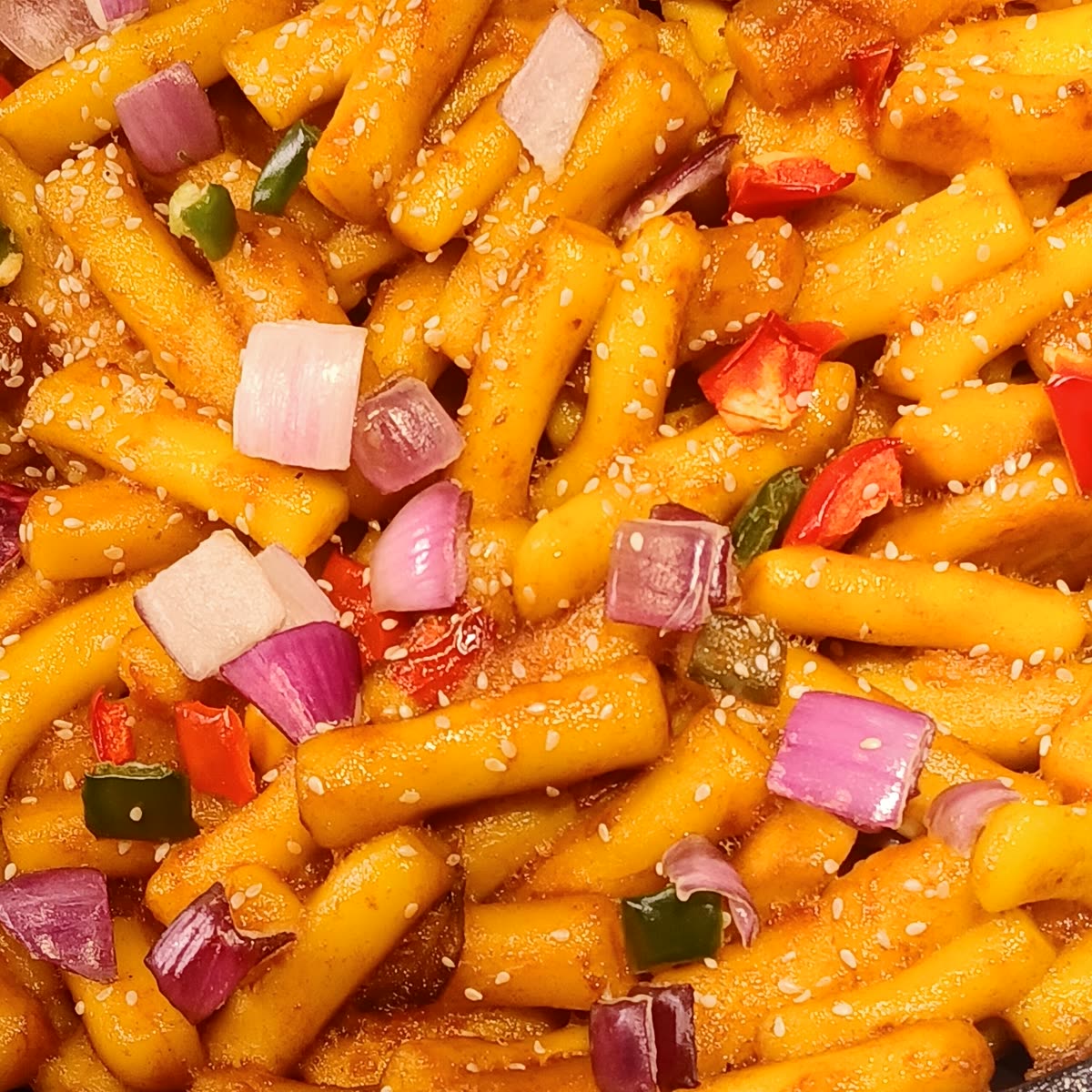
Can’t Find Korean Ingredients? Substitutions That Work
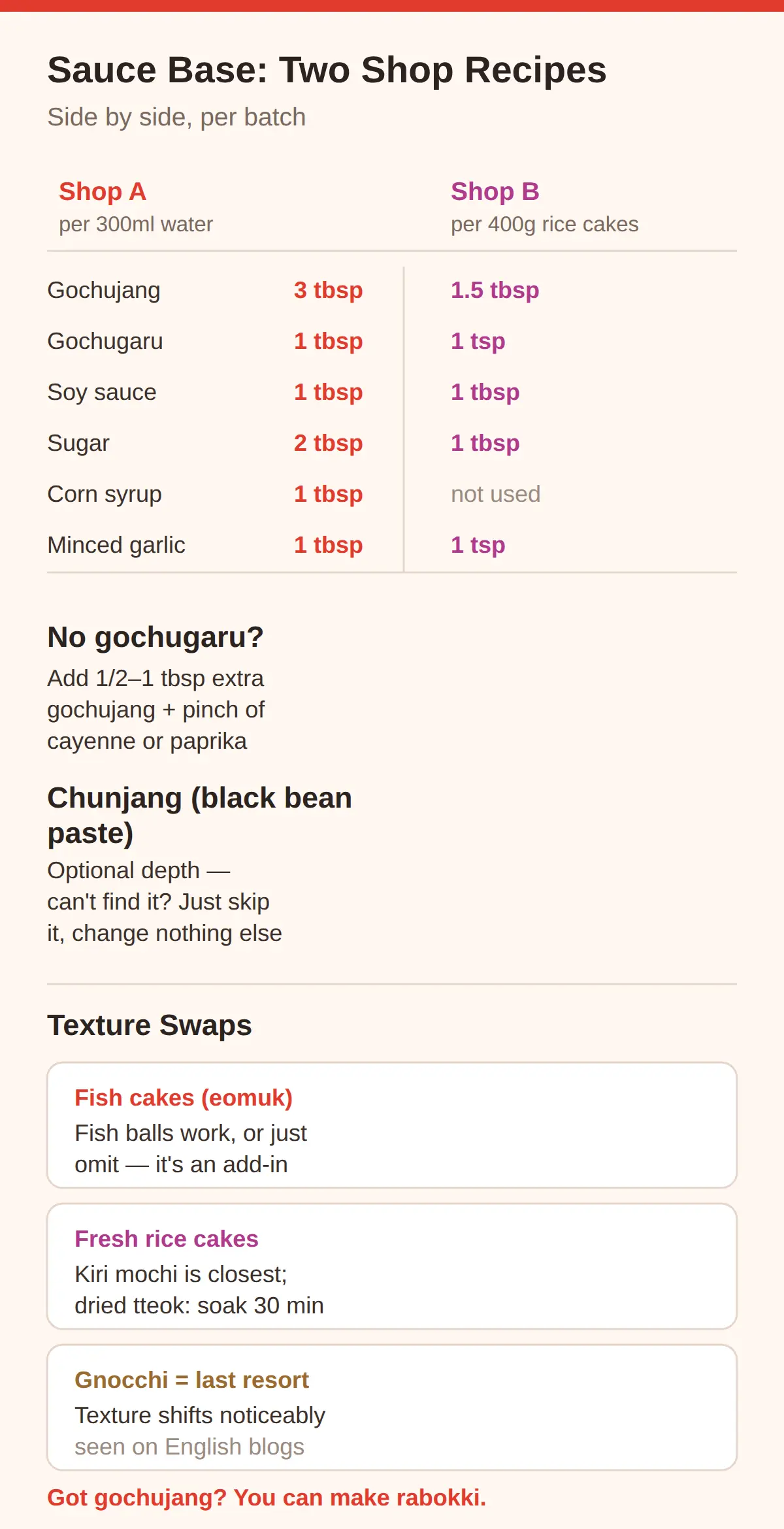
Missing gochugaru is the easiest fix: add an extra 1/2–1 tbsp gochujang plus a pinch of cayenne or paprika, and the color and base flavor hold.
Chunjang (Korean black bean paste) is optional depth — if no Korean or Chinese grocery near you stocks it, skip it and change nothing else.
The rice cakes and fish cakes are harder, and swaps change the texture more than the sauce does.
For fish cakes, fish balls are the common swap, or simply leave them out — eomuk is a standard add-in rather than the dish’s backbone, so omitting it changes little.
For fresh rice cakes, sliced Japanese kiri mochi is the closest texture, and dried Korean tteok works if you soak it 30 minutes first.
Plain gnocchi appears in English-language blogs as a fallback, but treat it as a last resort because the texture shifts noticeably.
If you can find gochujang, you can make rabokki — everything else has a workable substitute or an acceptable omission.
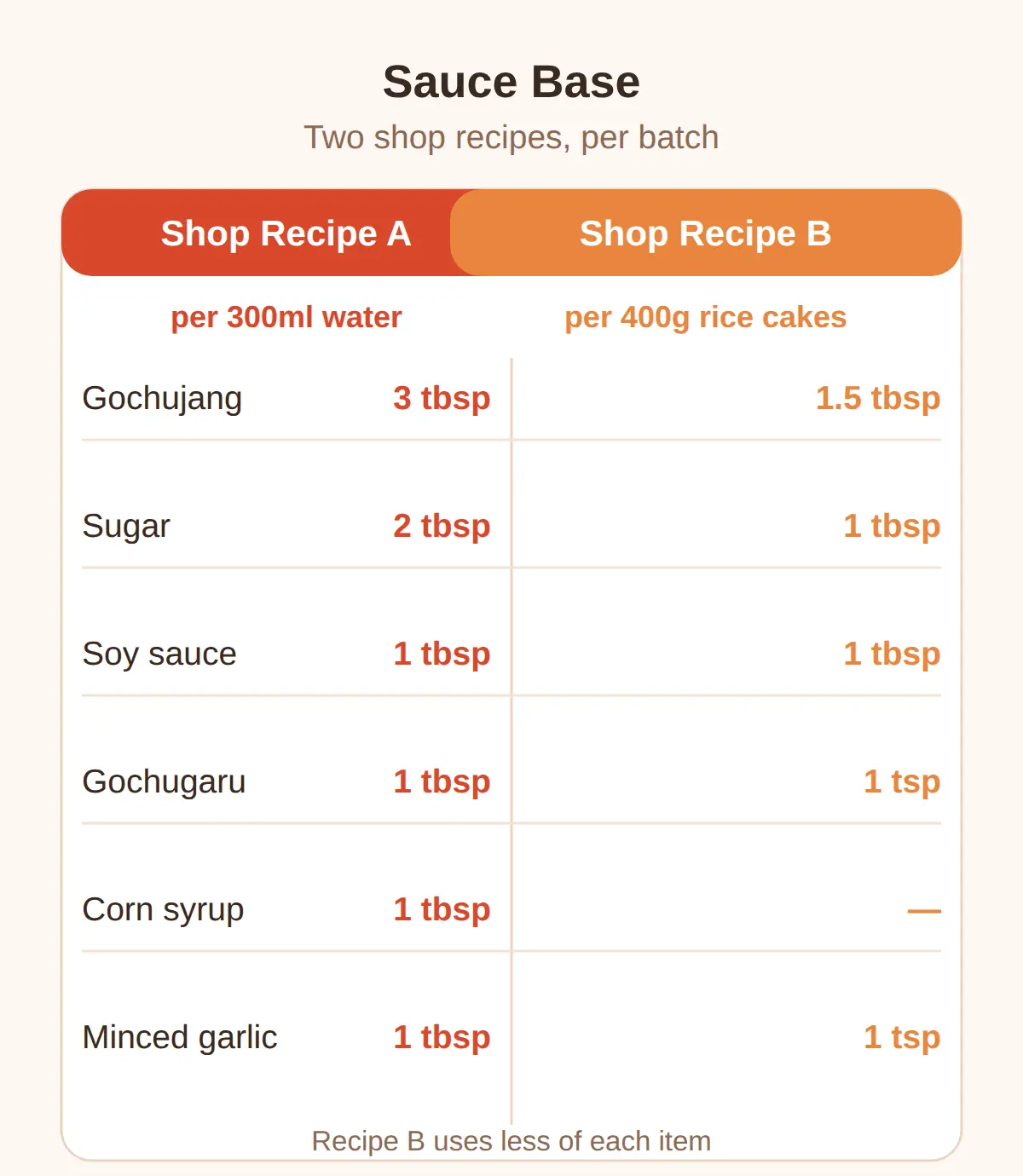
The Snack-Bar Secret: Chunjang, Sugar, and Broth
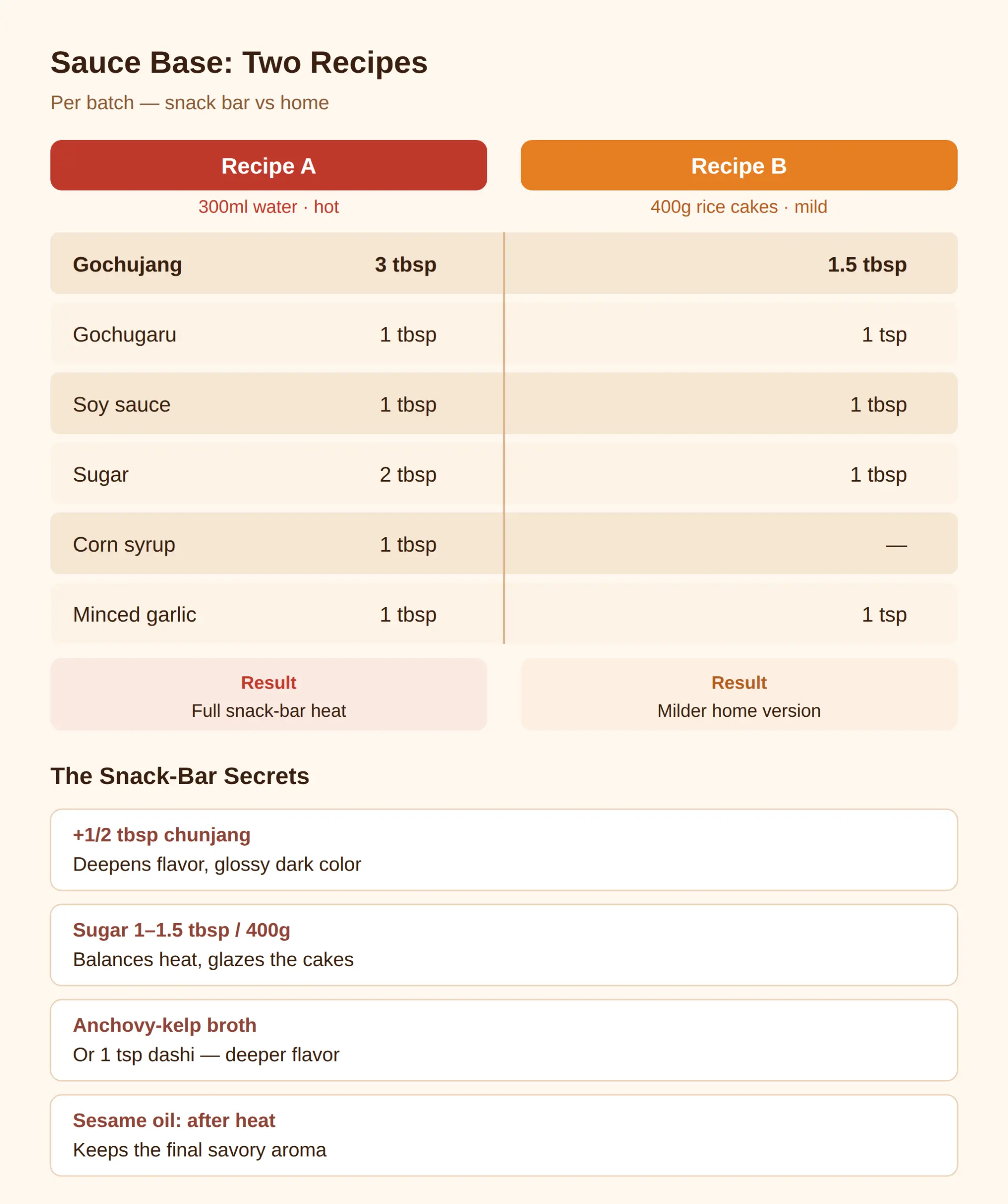
Korean snack bars add 1/2 tbsp chunjang (black bean paste) to the gochujang sauce — it deepens the flavor and gives the sauce a darker, glossier color.
Sugar is not optional: it balances gochujang’s saltiness and helps the sauce glaze the rice cakes instead of sitting as soup — the recipe above uses 2 tbsp for this batch.
Replacing the plain water with anchovy-kelp broth, or stirring 1 tsp dashi powder into the water, deepens the flavor for free.
Sesame oil goes in after the heat is off, which is where the final savory aroma comes from — cooked on heat, it loses that.
| Sauce base (per batch) | Shop recipe A (300ml water) | Shop recipe B (400g rice cakes) |
|---|---|---|
| Gochujang | 3 tbsp | 1.5 tbsp |
| Gochugaru | 1 tbsp | 1 tsp |
| Soy sauce | 1 tbsp | 1 tbsp |
| Sugar | 2 tbsp | 1 tbsp |
| Corn syrup | 1 tbsp | — |
| Minced garlic | 1 tbsp | 1 tsp |
| Result | Full snack-bar heat | Milder home version |
Common Mistakes and How to Avoid Them
The three failures that ruin rabokki are noodles added too early, boiling too hard, and letting the pan sit after cooking.
The ramyeon block goes in last, about 3 minutes before serving — added early, it absorbs all the sauce and you finish with dry, pasty noodles.
Full-blast heat scorches the gochujang and turns it bitter, so start high and drop to medium once the pot boils.
Rice cakes harden as they cool and harden again in storage, so rabokki should be eaten immediately from the pan — it is not a make-ahead dish.
A wide, shallow 26–28cm pan helps: the rice cakes sit in one layer and the sauce reduces evenly without constant stirring.
If you are cooking for more than 2, use a second pan rather than doubling into one deep pot, because the layer depth is what makes the timing work.
Cheese melts off the heat, cream swaps half the water, and leftovers keep 2–3 days
Two popular variations take seconds to make and change the dish completely.
For cheese rabokki, lay 1–2 slices of mozzarella (or a handful of shredded cheese) on top after the heat is off and let it melt before serving.
For a rose-cream version, replace half the water with milk and stir in 2–3 tbsp heavy cream, keeping the gochujang amount the same — this is common practice in home adaptations rather than one fixed recipe.
Leftovers keep 2–3 days refrigerated in an airtight container, reheated with a splash of water to loosen the sauce.
Freezing is not recommended, because reheated rice cakes turn hard.
If you expect leftovers, under-sauce the second half of the batch and refresh it with a splash of water and a spoon of gochujang when reheating — that is the only way the texture survives the fridge.
If I’m making one of these at home, I’d use a wide 26–28cm shallow pan so the rice cakes sit in one layer and the sauce reduces evenly without constant stirring.
Related posts
📎 📅 Upcoming Dates — Release & Event Calendar
Sources
- definition (en.wikipedia.org)
- Standard 25-minute home recipe structure with sauce ratio an (cookpick.kr)
- Not verified (cookpick.kr)
What to Do Next
- Put the noodle timing on your timer: rice cakes in at the boil, noodles 3 minutes before serving.
- Get the sauce staples this week — gochujang, gochugaru, soy sauce, corn syrup, garlic — and rabokki becomes a 25-minute pantry dish any night.
- If a Korean grocery is within reach, buy frozen tteokbokki rice cakes; they keep months and cook straight from frozen.
FAQ
Q. How do you make rabokki at home?
Stir a gochujang sauce (3 tbsp gochujang, 2 tbsp sugar, 1 tbsp soy sauce, 1 tbsp corn syrup, 1 tbsp garlic) into 300ml water, boil, add 400g rice cakes and vegetables, simmer 5–7 minutes, and add one ramyeon block 3 minutes before serving — about 25 minutes total.
Q. When should I add the ramyeon noodles to rabokki?
Add the noodle block last, about 3 minutes before serving when the sauce is nearly absorbed, so the noodles stay chewy — added early, they absorb all the sauce.
Q. What can I use instead of Korean rice cakes for rabokki?
Sliced Japanese kiri mochi is the closest texture, and dried Korean tteok works after a 30-minute soak; frozen rice cakes go straight in 2–3 minutes earlier without thawing.
Q. Is chunjang necessary for rabokki?
No — chunjang is a depth and gloss booster; if you cannot find it, skip it and change nothing else.
Q. How long does rabokki keep in the fridge?
About 2–3 days in an airtight container, reheated with a splash of water; freezing is not recommended because the rice cakes harden.
Rabokki is not a make-ahead dish — plan to serve it the moment it comes off the heat.
Cover photo: Korean food-Rabokki-01 (cropped) by karendotcom127 — CC BY 2.0
#rabokkirecipe #tteokbokki #koreanfood #ramyeon #koreanrecipes
📅Upcoming Schedule — this week 2 · D-2 Hangul DaySee all →