Korean sunscreen differs in the US because the FDA treats sunscreen as an over-the-counter drug, not a cosmetic: as of 2026 only 16 UV filters are allowed, so Korean brands sell separate US formulas.
For you, that means the same brand name on an American site is a different product with a different ingredient list, not a renamed Korean SKU.
This post covers the 16 approved filters, the June 2026 bemotrizinol change, what FDA registration does and does not mean, what to buy now, and what to watch next.
Why Is Korean Sunscreen Different in the US?
| Sunscreen is an over-the-counter drug under OTC Monograph M020 | Sunscreen is a functional cosmetic, reviewed in about 4–6 months |
|---|---|
| Only 16 UV filters are allowed (bemotrizinol added June 2026) | More than 30 filters in practice, including Tinosorb M and Uvinul A Plus |
| Drug Facts box on the label; claims limited to SPF, Broad Spectrum, Water Resistant | SPF plus PA+ to PA++++ grades printed on the label |
| Made in facilities meeting drug cGMP standards | Made under cosmetic manufacturing standards |
The US FDA classifies sunscreen as an over-the-counter drug, not a cosmetic, so every UV filter, claim and label must follow OTC Monograph M020.
Korea treats sunscreen as a functional cosmetic under the food-and-drug ministry, with a review that takes about 4–6 months.
The two systems produce different allowed lists.
The US list holds 16 filters, and until June 2026 it had not gained a new one since the late 1990s.
Korean domestic formulas rely on modern filters like Tinosorb S, Tinosorb M and Uvinul A Plus, most of which are still not on the US list.
So the same brand name ships two different products.
Beauty of Joseon, Innisfree and Round Lab all sell separate US-market formulas built with only FDA-approved filters.
When I look at any sunscreen listing aimed at US buyers, the first thing I check is whether it has a Drug Facts box — no box means it is a third-party import, not a US-legal product.
Which Korean Sunscreen Ingredients Are FDA Approved?
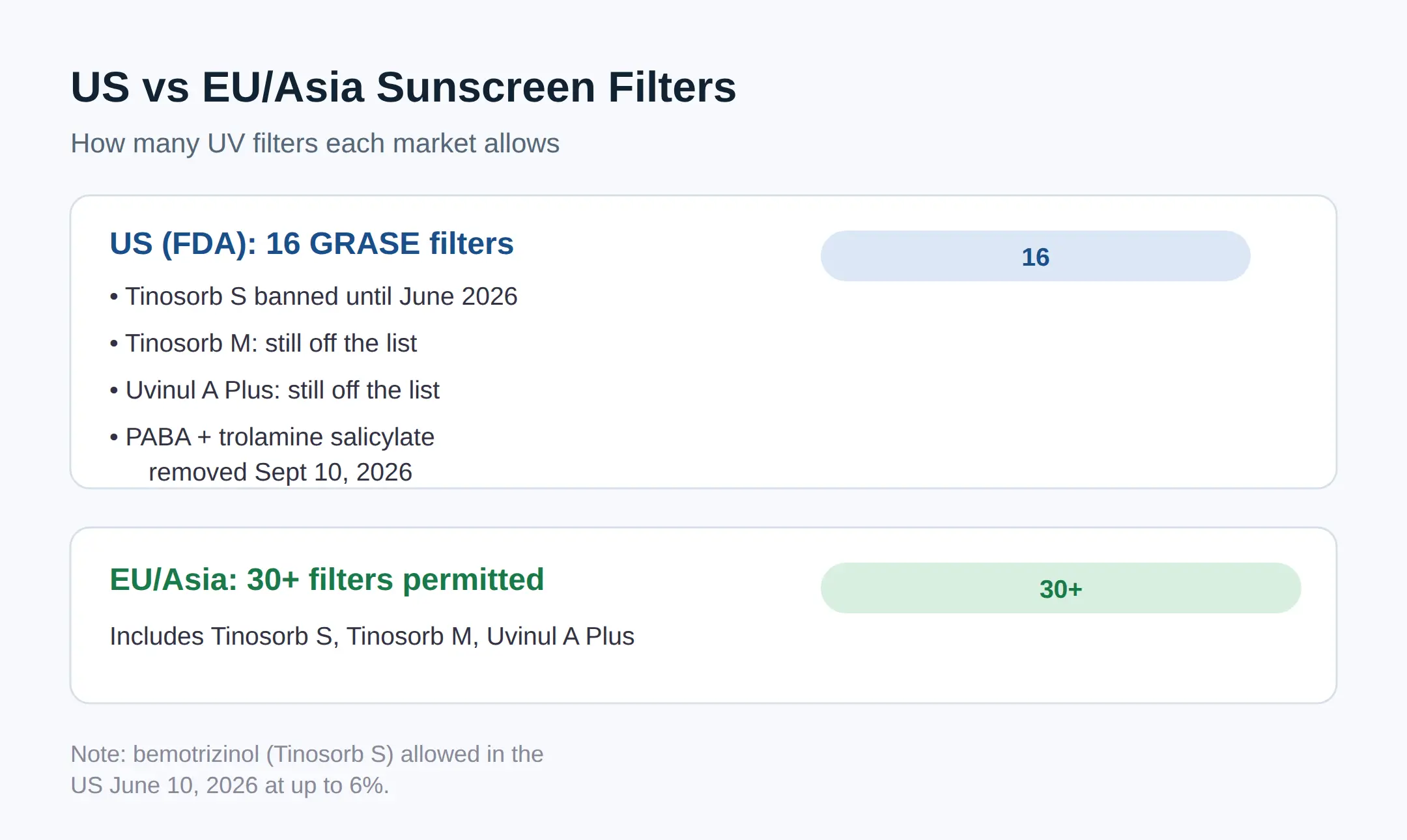
Only 16 UV filters are generally recognized as safe and effective in the US, and bemotrizinol (BEMT, also known as Tinosorb S) joined the list on June 10, 2026 at up to 6% — the first new one in about 25 years, effective August 9.
Bemotrizinol absorbs both UVA and UVB, holds up in sunlight, and has been used for decades in Europe, Australia and Asia.
Finished products using it must test at least SPF 2 and follow the monograph rules for combinations.
The list still misses several Korean favorites.
Tinosorb M and Uvinul A Plus remain off the US list, so formulas built around them cannot be sold as-is.
The FDA had also flagged 12 of the older filters, including avobenzone and oxybenzone, for more safety data.
PABA and trolamine salicylate were reported removed from the permitted list on September 10, 2026, though that report rests on a single Korean industry outlet.
For buying decisions, the practical check is the active ingredient list on the Drug Facts box.
If you see bemotrizinol, zinc oxide or titanium dioxide, the formula sits fully inside US rules.
If the box lists only names you do not recognize, treat it as an import rather than a US product.
Does MoCRA Registration Mean FDA Approval?
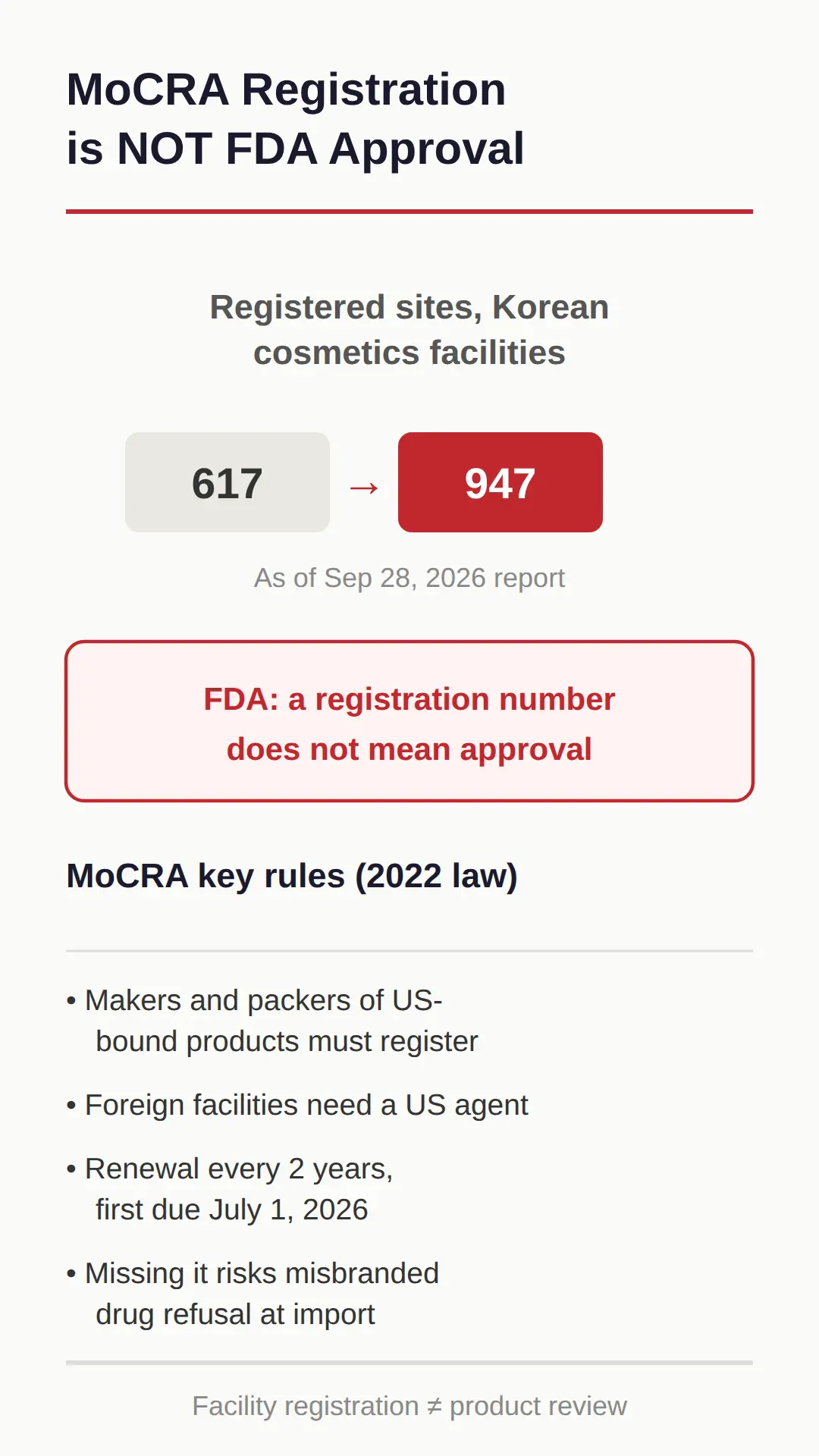
No — registration only puts a facility on FDA’s list, and FDA itself has said a registration number does not mean product approval.
As of the September 28, 2026 report, FDA-registered Korean cosmetics facilities rose from 617 to 947 sites, yet the agency repeated the same point.
Don’t read an FDA registration number as approval — FDA has said the two are not the same.
Registration runs under MoCRA, the 2022 cosmetics law.
Facilities that make or package US-bound products must register, foreign facilities need a US agent, and registration renews every 2 years with the first renewal due July 1, 2026.
Missing registration risks a ‘misbranded drug’ refusal at import.
If a listing or ad shows an FDA number, check what the number actually covers.
A facility registration says nothing about whether the formula passed any product review.
Sunscreen products themselves need to follow the drug rules in sections 1 and 2 above.
Can I Still Buy Korean Sunscreen on Amazon?
Yes — buying a Korean-label sunscreen for personal use is not illegal, but most Amazon listings at roughly $15–35 are third-party imports, not FDA-cleared products.
The compliance burden sits with the seller or manufacturer, not with you as the buyer.
Korean-label imports on Amazon can be old stock, so check the batch date and seller reputation before buying.
Two 2026 changes raised the cost and friction of direct orders.
The US ended the international-mail de minimis exemption on August 29, so packages under $800 no longer enter duty-free.
One Korean news report put the added cost at about $80 per item on Korean sunscreens — treat that as a ballpark from a single report, not a tariff schedule.
FDA also runs entry screening on high-risk imports, and some Korean sunscreen parcels have been held in customs.
If the Korean domestic formula is the one you want, order it knowing the label will show PA++++ and no Drug Facts box.
If you want a guaranteed-legal product with US labeling, the next section is the short answer.
What Korean Sunscreen Should I Buy in the US Right Now?
Buy the US-market products: Innisfree Daily UV Defense Sunscreen Broad Spectrum SPF 50+ or Round Lab Birch Moisturizing Sunscreen UVLock SPF 45+ Broad Spectrum.
Both are separate formulas built to US labeling rules, not renamed Korean SKUs.
Reading the label is different from reading a Korean label.
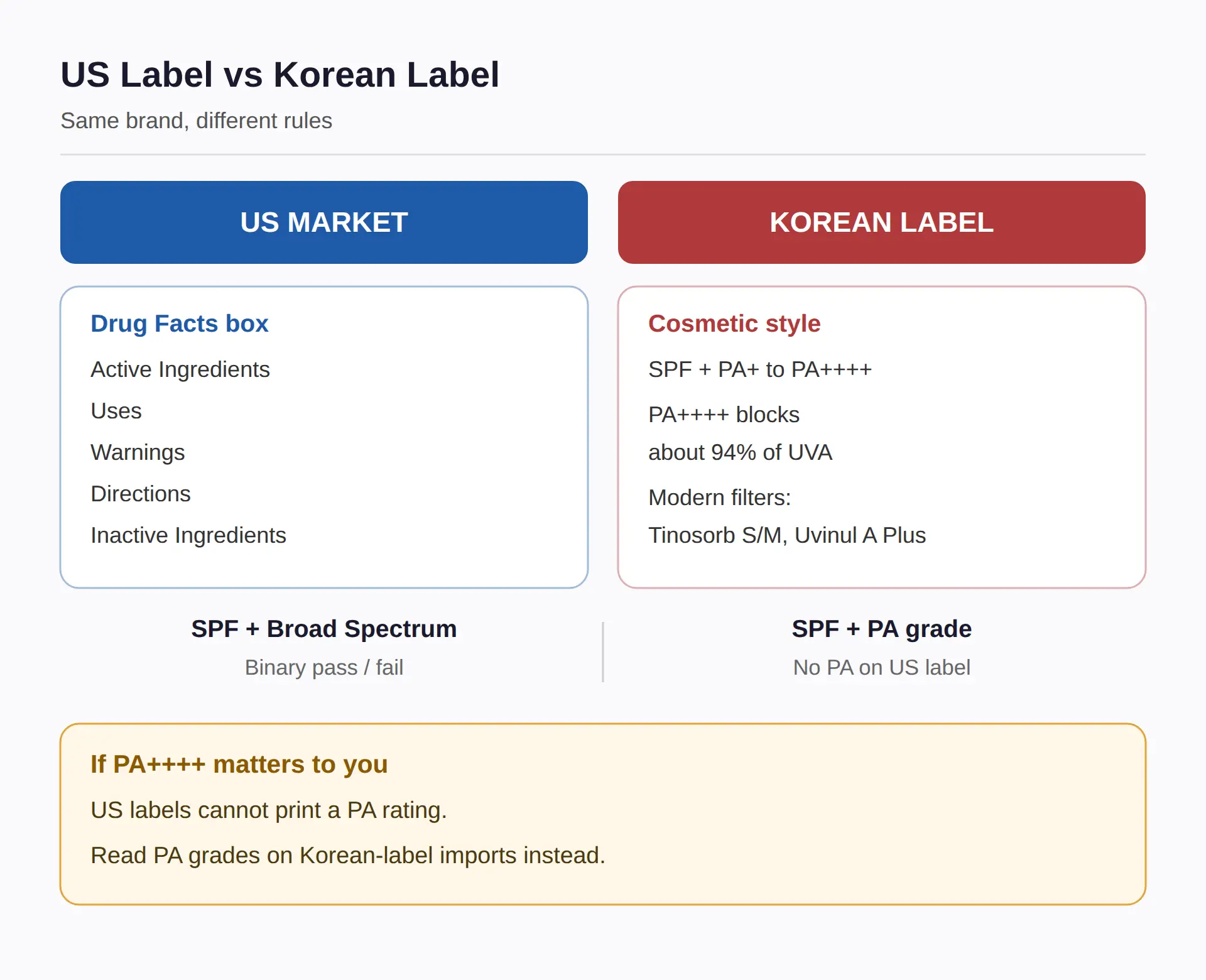
US labels show SPF plus a binary Broad Spectrum pass/fail and cannot print a PA rating.
Korea and Japan print PA+ to PA++++, where PA++++ means about 94% or more of UVA is blocked.
If PA++++ matters to you, read the PA rating on Korean-label imports — you will not find it on US versions.
| Your situation | What to do |
|---|---|
| You want a US-legal Korean-brand sunscreen today | Buy the US-market Innisfree SPF 50+ or Round Lab UVLock SPF 45+ |
| You check labels for PA++++ | US labels can’t show it — read the PA grade on Korean-label imports instead |
When Can I Buy a US Sunscreen With Bemotrizinol?
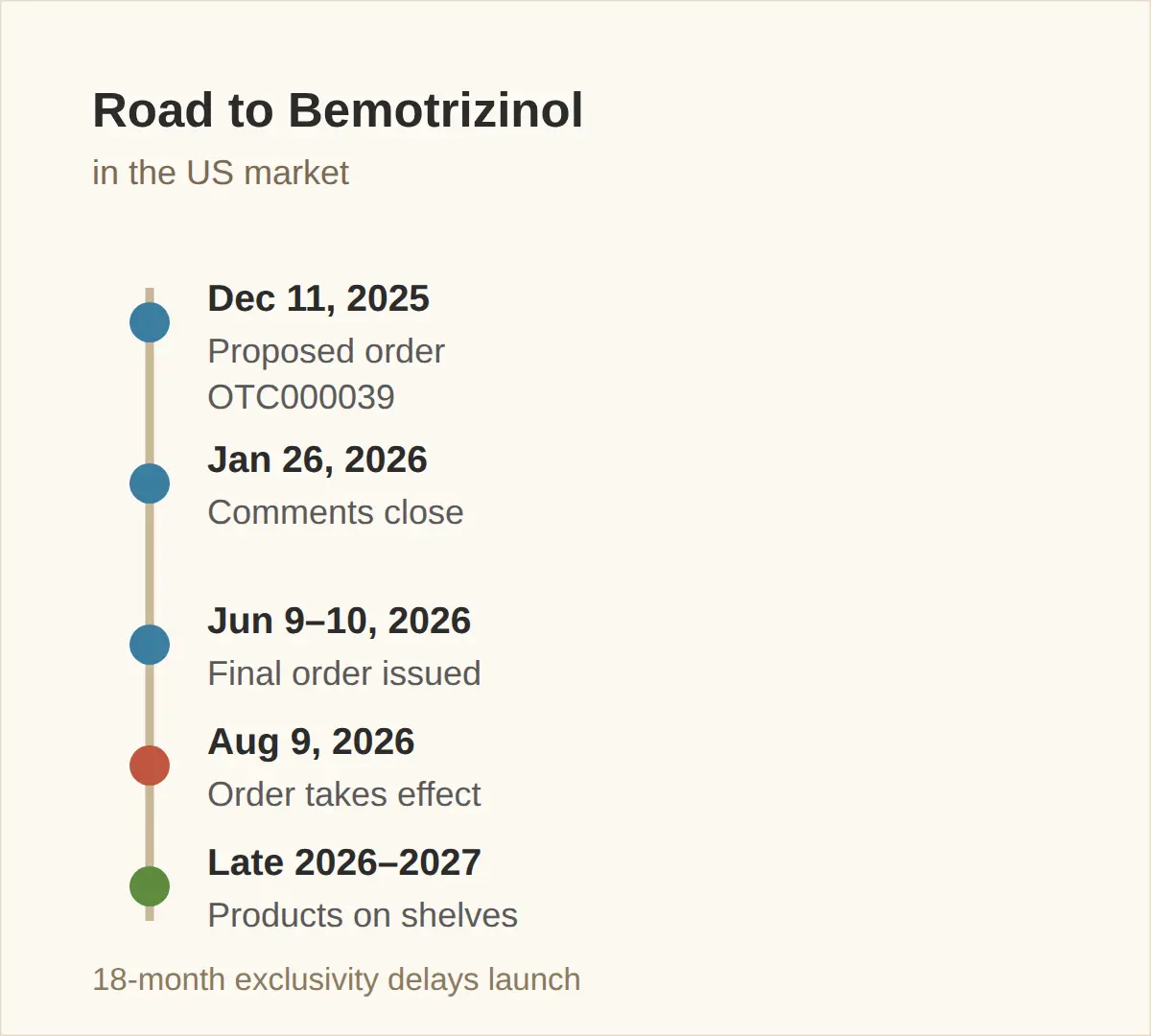
Legal bemotrizinol sunscreen products are expected from late 2026 and into 2027, because the FDA order took effect August 9, 2026 but one supplier holds an 18-month exclusivity.
DSM Nutritional Products, the company that petitioned the change, and its licensees get the exclusive right to market OTC products reflecting the change.
That exclusivity covers finished products, not the raw material itself.
The path ran through the standard docket process, not overnight.
The proposed order OTC000039 was published December 11, 2025, comments closed January 26, 2026, and the final order was signed June 9 and issued June 10.
That is roughly 12 months from approval to the point where the good new formulas reach shelves.
Korean contract manufacturers are already building for it.
Kolmar Korea, which makes Beauty of Joseon, D’Alba and SKIN1004, is developing BEMT formulas and a second US suncare plant, and Cosmecca’s US entity Ingwood Lab unveiled BEMT formulations in July.
If I were buying from the US today I’d pick the US-market Innisfree or Round Lab products, and wait out the 18-month exclusivity before hunting for bemotrizinol formulas.
👉 the June 10, 2026 FDA order adding bemotrizinol and the 18-month exclusivity details
👉 the mousse sunscreen warning letters and the de minimis end date with tariff details
Related posts
📎 📅 Upcoming Dates — Release & Event Calendar
Sources
- FDA classifies sunscreens as OTC drugs, Monograph M020, Drug (calywire.com)
- FDA final administrative order issued June 10, effective Jul (m-i.kr)
- Kolmar/Cosmax ODM opportunity; Korean brands must still buil (newsis.com)
Quick Summary
- Sunscreen is an OTC drug in the US and a functional cosmetic in Korea — that single difference explains every formula gap.
- Bemotrizinol joined the allowed list on June 10, 2026 at up to 6% — the first new filter in about 25 years.
- Tinosorb M and Uvinul A Plus are still not allowed in the US.
- An FDA registration number is not product approval, per FDA’s own repeated statement.
- For a US-legal product today, look for the Drug Facts box: Innisfree Daily UV Defense SPF 50+ or Round Lab Birch UVLock SPF 45+.
- If you order direct from Korea, expect tariffs and possible customs holds since August 29.
FAQ
Q. Why is Korean sunscreen different in the US?
Because the FDA classifies sunscreen as an OTC drug with only 16 approved UV filters, while Korea treats it as a functional cosmetic — so brands ship separate US formulas.
Q. Is Korean sunscreen banned in the US?
No. Buying Korean-label sunscreen for personal use is not illegal, but most listings are third-party imports rather than FDA-cleared products, and direct parcels now face tariffs.
Q. If it’s FDA registered, does that mean it’s approved?
No. Registration only means the facility is on FDA’s list — FDA itself has said a registration number does not mean product approval.
Q. Can I buy the Korean version of Beauty of Joseon sunscreen in the US?
Yes, as an import with a Korean label, but the US formula is a different product built only from FDA-approved filters.
Q. What is PA++++ and why can’t US labels show it?
PA++++ is the Korean/Japanese UVA grade meaning about 94% or more of UVA is blocked; US rules allow only a binary Broad Spectrum pass/fail, so the PA grade cannot be printed.
Bookmark the FDA OTC sunscreen monograph page — new filter orders and warning letters appear there first.
Cover photo: LRP sunscreen bottle by Netstars22 — CC BY-SA 4.0
#koreansunscreen #FDA #OTCsunscreen #bemotrizinol #Tinosorb #K-beautyUS #MoCRA #PA++++
📅Upcoming Schedule — this week 23 · D-day Autumn season = post-summer brightening demand window (UV drSee all →