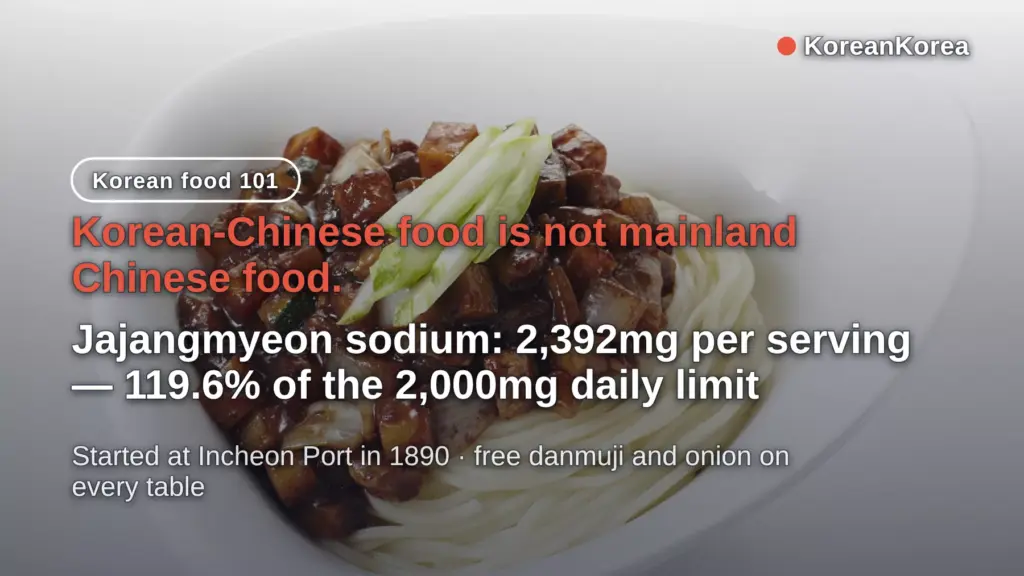
No — Korean-Chinese food (jajangmyeon, jjamppong, tangsuyuk) is a separate Korean tradition that started at Incheon Port around 1890, not mainland Chinese food.
For you as a visitor, this means the noodle dish that looks like Chinese zhajiangmian is oilier, sweeter and saltier, and dishes like jjamppong and tangsuyuk barely exist in Beijing or Shanghai.
This post covers the differences side by side, where the food came from, what to order, how salty it is, and how the table works.
Is Korean Food Like Chinese Food? The Short Answer
| Sauce | Chunjang fried in a lot of oil with onion, vegetables and meat — glossy and sweeter |
|---|---|
| Noodle dish | Jajangmyeon (wheat noodles under a glossy near-black bean sauce) |
| Spicy soup | Jjamppong (fiery red seafood noodle soup) |
| Fried dish | Tangsuyuk (battered deep-fried meat with sweet-and-sour sauce) |
| Free sides | Danmuji (pickled yellow radish) and raw sliced onion with jajang sauce or soy dip |
| Chopsticks | Metal chopsticks and a spoon, like any Korean table |
| Serving | Individual bowls, with a heavy delivery culture (even midnight delivery in Seoul) |
No.
Korean food and Korean-Chinese food run on parallel tracks — they share a country, but they did not grow from the same root.
The four differences show up in how food is cooked: Korean home cooking is built on rice with soup, kimchi and side dishes, cooked by grilling, steaming and fermenting, while Korean-Chinese food is built on oil-fried noodles and sauces.
Korean-Chinese food holds the same cultural slot in Korea that Chinese-American food holds in the US: familiar, ordered for delivery, and largely absent from menus in Beijing or Shanghai.
The core trio — jajangmyeon, jjamppong and tangsuyuk — was built by Shandong immigrants over more than a century, so it is China in origin and self-identification but a completely independent tradition on the plate.
If you expected jajangmyeon to taste like the noodle dish you had in China, it will not — and the next section shows exactly why.
Jajangmyeon vs Zhajiangmian: Same-Looking Noodles, Different Dish
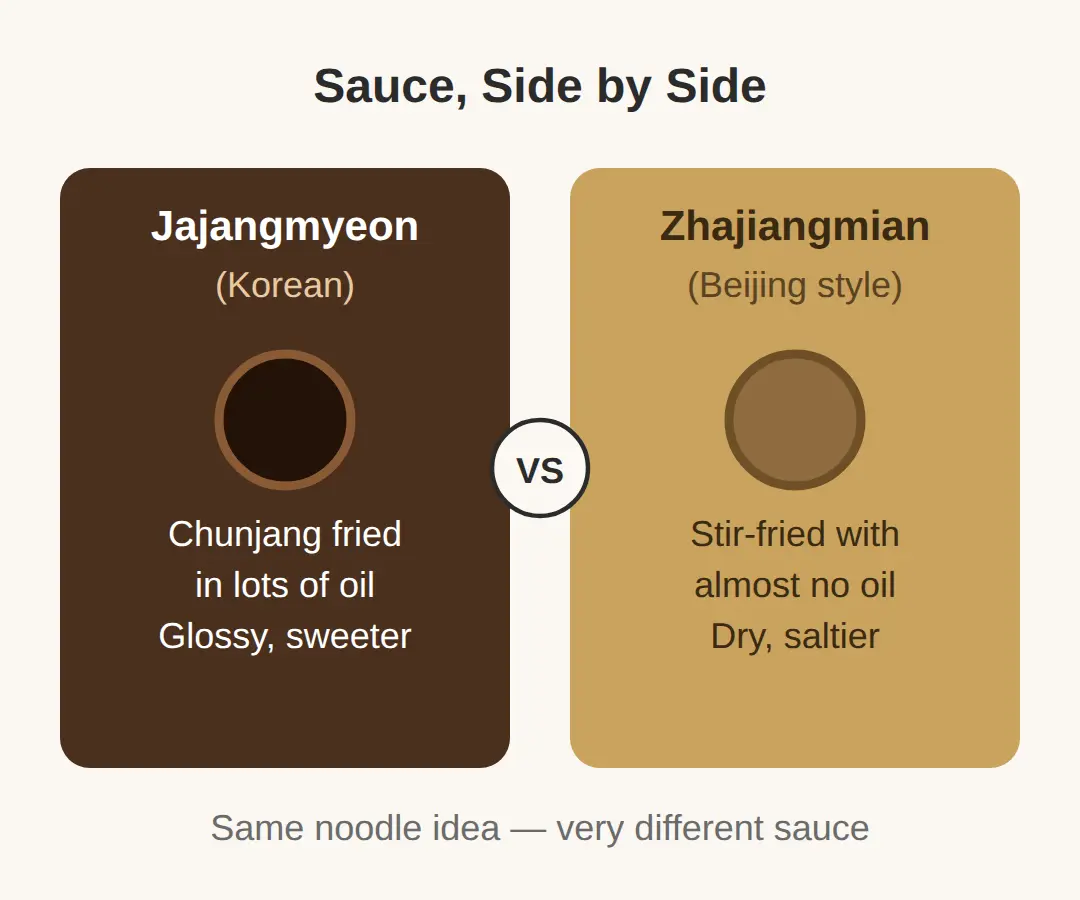
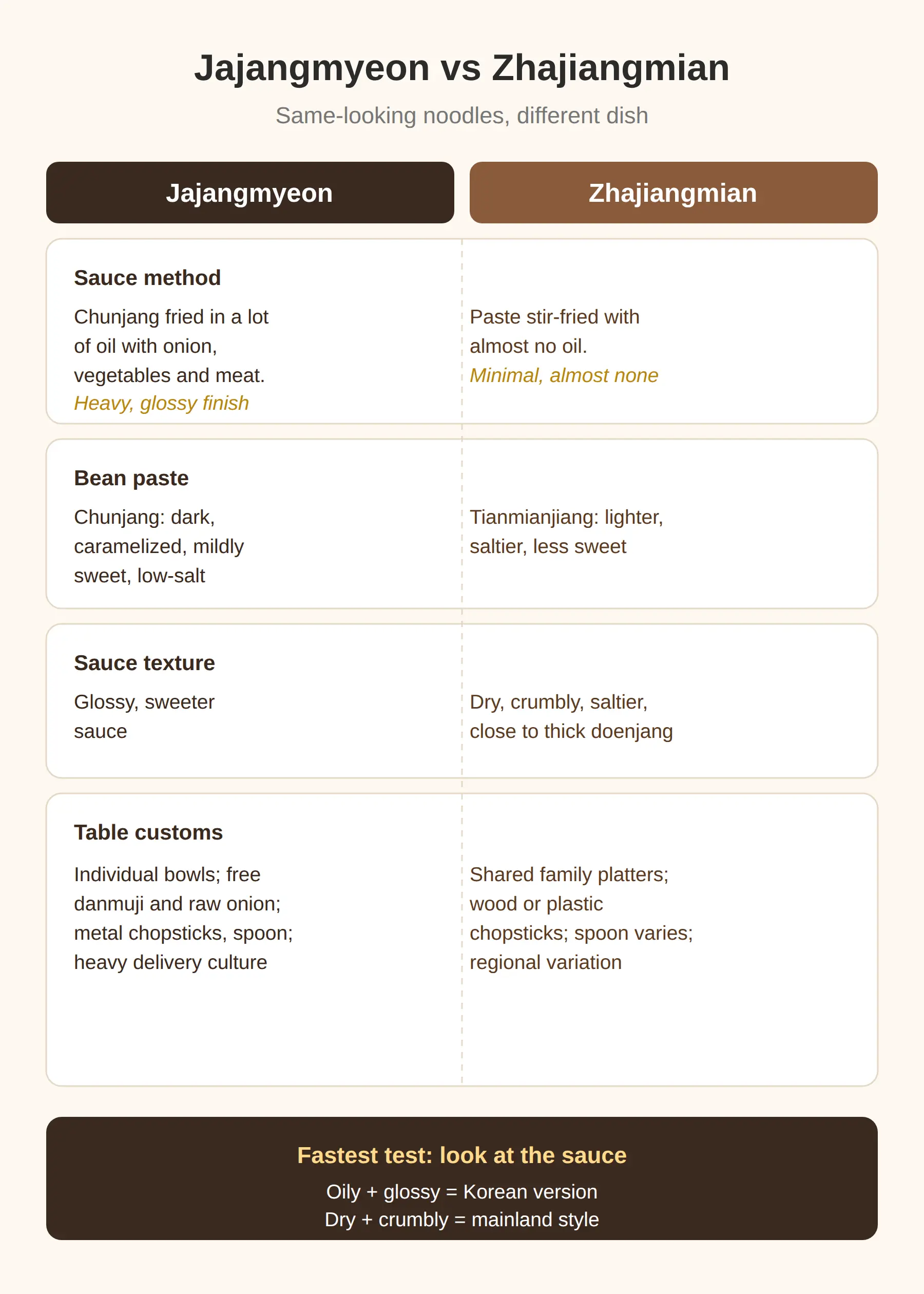
The sauce method is the single most visible difference.
| Korean jajangmyeon | Mainland zhajiangmian | |
|---|---|---|
| Sauce method | Chunjang fried in a lot of oil with onion, vegetables and meat | Stir-fried paste with almost no oil |
| Oil | Heavy, glossy finish | Minimal, almost none |
| Bean paste | Chunjang: dark, caramelized, mildly sweet, low-salt | Tianmianjiang: lighter, saltier, less sweet |
| Texture | Glossy, sweeter sauce | Dry, crumbly, saltier, close to thick doenjang |
The bean paste itself is different, not renamed, and zhajiangmian styles also differ across Chinese regions, so the mainland side of this comparison is not one fixed dish either.
When you look at a Korean-Chinese menu, the fastest test is the sauce: oily and glossy means the Korean version, dry and crumbly means the mainland style.
Where Korean-Chinese Food Came From: Incheon, Around 1890
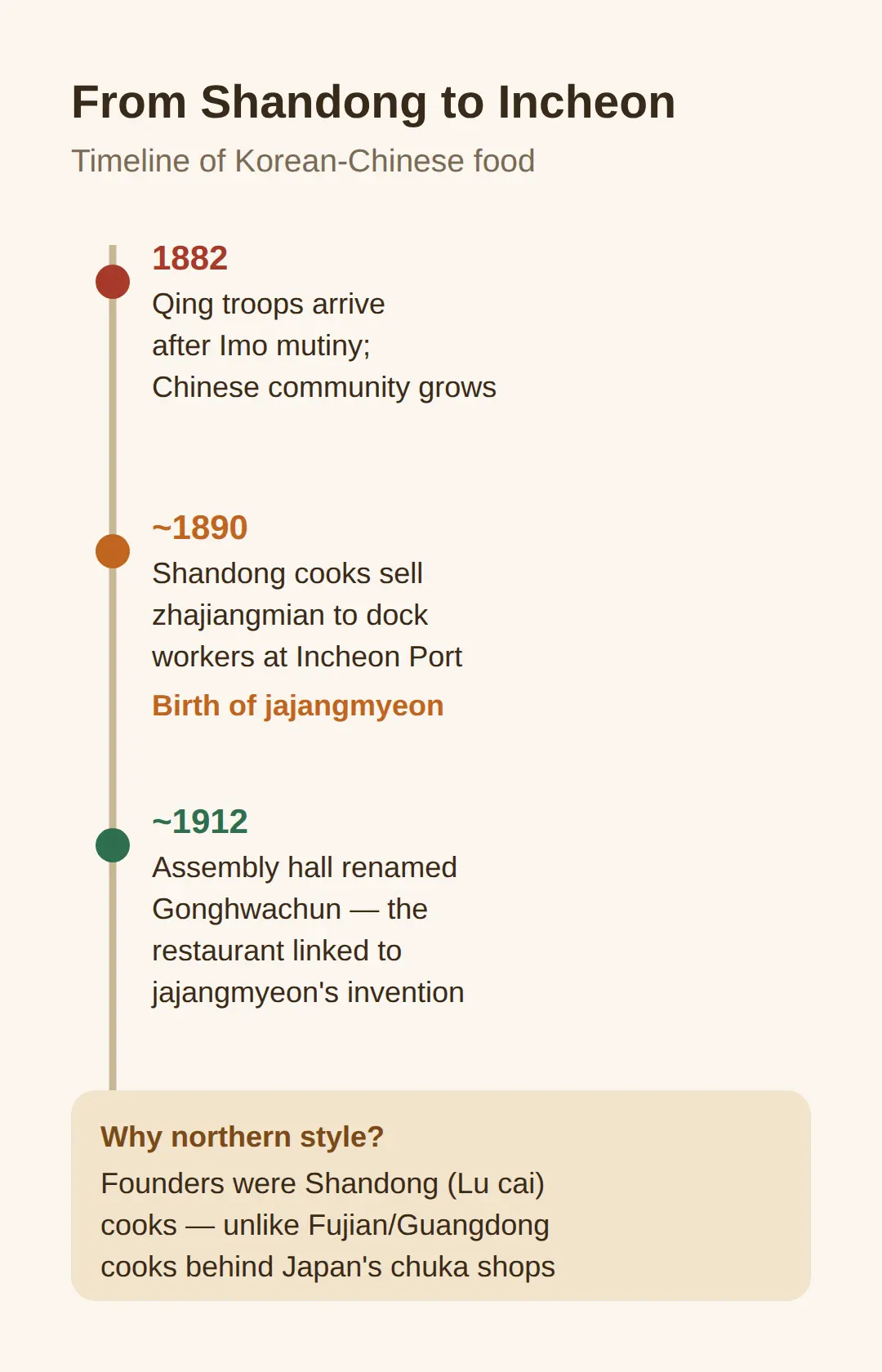
Korean jajangmyeon started around 1890, when cooks from Shandong sold home-style zhajiangmian to Chinese dock workers at Incheon Port.
A Chinese community had formed there after Qing troops arrived in 1882 to suppress the Imo mutiny.
Gonghwachun in Incheon Chinatown — said to have begun as the ‘Shandong Assembly Hall’ and renamed around 1912 — is the restaurant most often cited with jajangmyeon’s invention; its early founding details could not be re-verified from a primary source.
The founders were mostly Shandong (Lu cai) cooks, which is why the base dishes are northern Chinese rather than Cantonese or Sichuanese — a different wave from the Fujian, Guangdong and Taiwan cooks who founded Japan’s chuka shops.
If you want to see where the food started, Incheon Chinatown and Gonghwachun are the place to look, and the naming quirks (like jjambbong and udong) go back to those immigrant kitchens.
What to Order: The Trio, the Free Sides, and What Groups Get
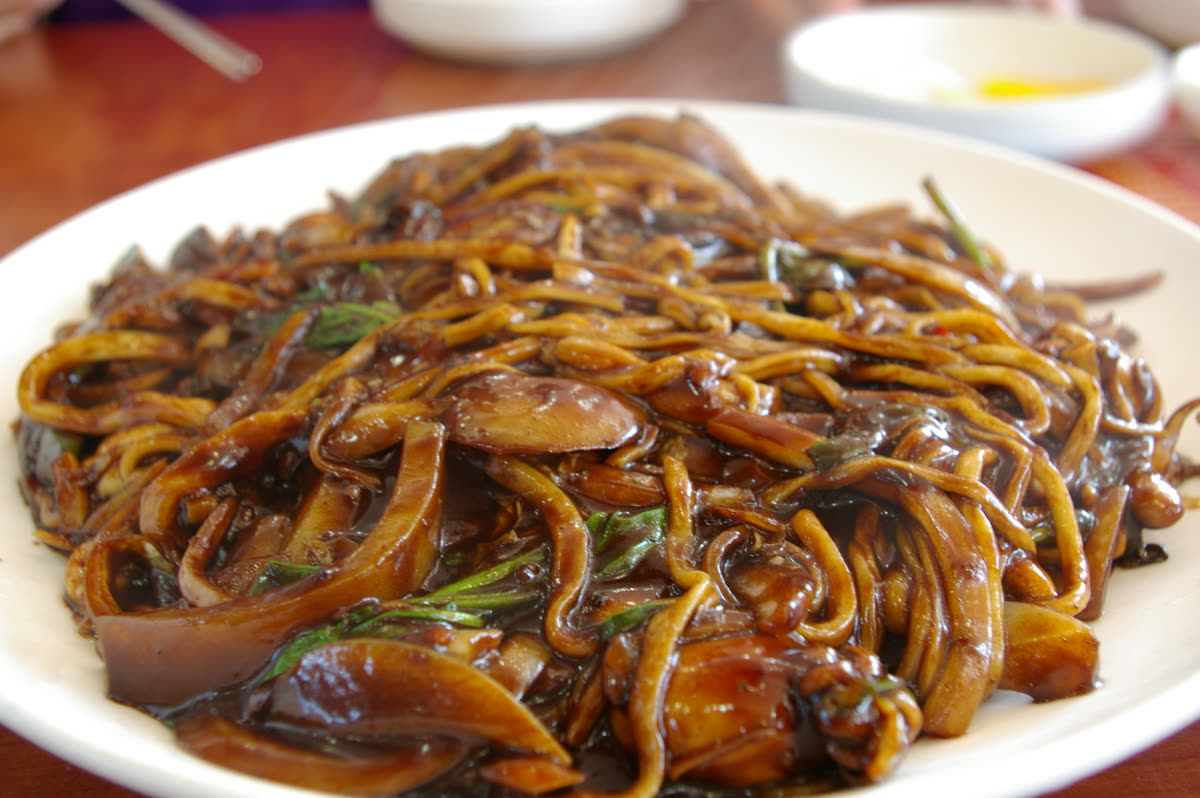
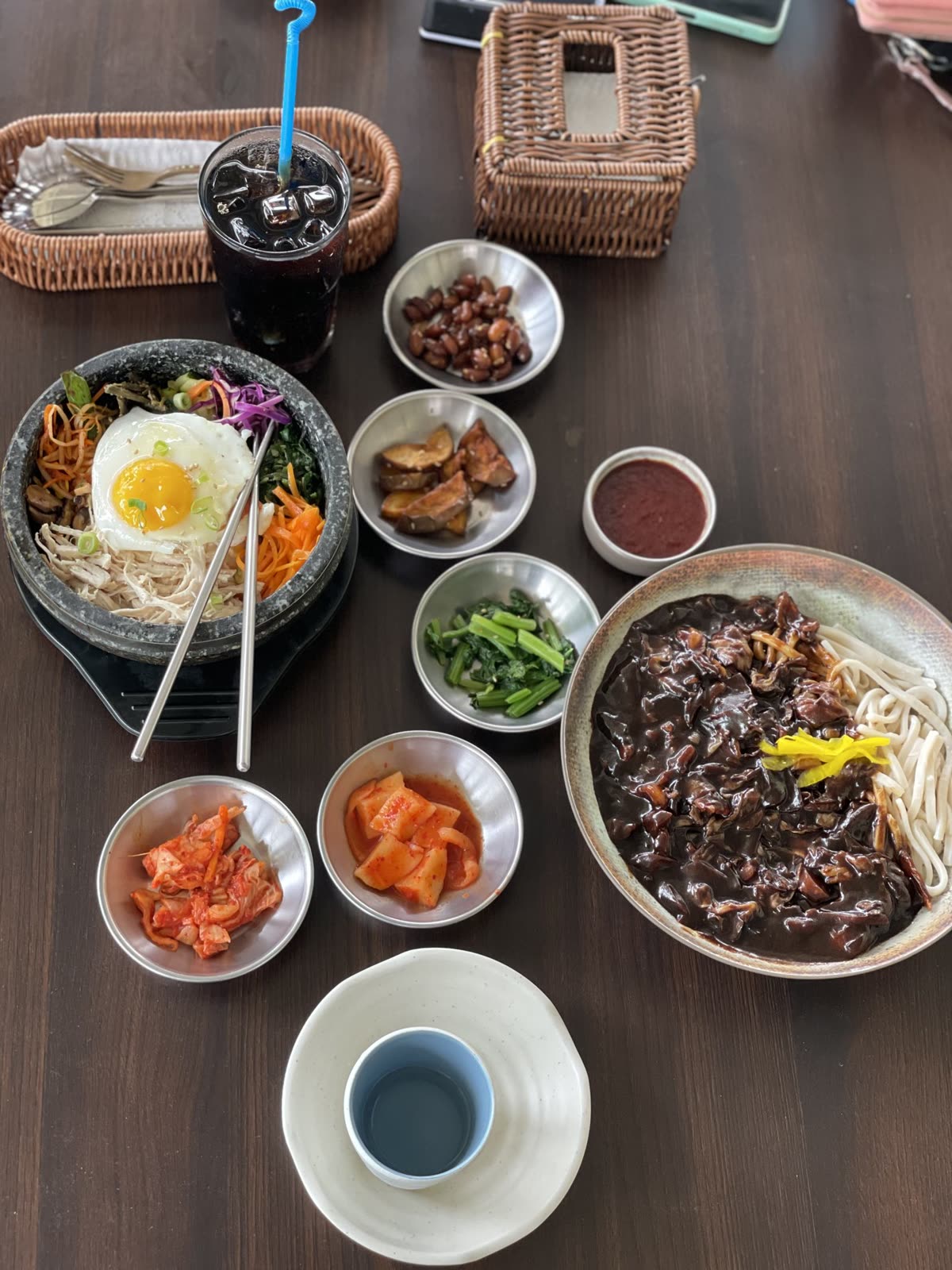
Order from the core trio first: jajangmyeon (wheat noodles in a glossy near-black bean sauce), jjamppong (fiery red seafood noodle soup) and tangsuyuk (battered deep-fried meat with sweet-and-sour sauce).
Nearly every order comes with two free sides: danmuji (pickled yellow radish) and raw sliced onion with jajang sauce or a soy dip.
Gunmandu (pan-fried pork and vegetable dumplings) are a near-default side order next to the noodles, and fried rice with egg and scallion works as a simple side or a light solo meal.
For two or more people, tangsuyuk is the default shared appetizer; kkanpunggi is the spicier alternative.
For a group of six, the banquet sequence runs yangjangpi (cold mung bean starch sheets with mustard sauce) as the opener, then yusanseul or palbochae, then tangsuyuk, then rice.
Jjamppong is the rainy-day and hangover order, and jajangmyeon is the solo weeknight order — copy the habit and the menu stops being confusing.
How Salty Is It? Sodium, MSG and the Spice Question
One serving of jajangmyeon contains about 2,392mg sodium — 119.6% of the 2,000mg daily recommended intake, per a Korean food column figure, and that number comes from a single source, so treat it as an order of magnitude.
The same source says MSG was added to the sauce to offset chunjang’s saltiness, so the salt is masked rather than absent — savory depth dominates over saltiness on the tongue.
On spice, the heat comes from a different source in each country: jjamppong builds heat on gochugaru (Korean chili) in the one source that confirms it, though Korean-Chinese kitchens commonly also use chili oil; mainland northern cooking uses doubanjiang, Sichuan peppercorn or dried chilies depending on the region.
So ‘is Korean food less spicy than Chinese food’ is not a simple yes or no — the chili base differs by dish and region.
Watch the free sides too: one spoon of the chunjang dipping paste is very high in sodium and sugar and contains caramel coloring and additives.
If you are limiting sodium, a whole jajangmyeon puts you about 392mg over the 2,000mg daily limit on its own (2,392 − 2,000 = +392), so share one or leave sauce behind.
How the Table Works: Sides, Utensils, Delivery
Korean-Chinese food serves individual bowls, while mainland northern Chinese meals are shared family-style platters.
You get Korean metal chopsticks and a spoon; mainland dining uses wooden or plastic chopsticks, and spoon use varies by dish.
The free danmuji and raw onion appear at every table — these side and serving rules are the most reliable constant of this cuisine.
Delivery is heavy here, including midnight delivery in Seoul, and the core menu is small and highly standardized nationwide, while menus in China differ dramatically province to province.
If I were introducing this food to a first-time visitor, I would start with the two free sides and the individual bowls first, because they are the clearest proof that this is a cuisine of its own, not a Chinese restaurant abroad.
If you are ordering at a Korean-Chinese restaurant for the first time, expect the individual bowls and the two free sides, and order tangsuyuk if you are two or more people.
👉 First-time visitor Korean food guide
Related posts
📎 📅 Upcoming Dates — Release & Event Calendar
Sources
- Full Korean-Chinese cuisine guide: trio of dishes, chunjang (umamicart.com)
- Beijing zhajiangmian vs Korean jajangmyeon history, MSG use, (reviewtimes.co.kr)
- Korean Chinese restaurants founded by Shandong cooks (Lu cai (ngonews.kr)
What to Remember at the Table
- The oily glossy jajang sauce is the Korean version; the dry crumbly paste is the mainland zhajiang style.
- Jjamppong and tangsuyuk are Korean-Chinese inventions — do not expect them on menus in Beijing or Shanghai.
- Danmuji and raw onion are free on every table.
- Jjamppong’s heat is usually built on gochugaru, Korea’s own chili, though some kitchens lean on chili oil as well.
- Korean-Chinese tables use metal chopsticks and a spoon; mainland tables use wooden ones.
- Two or more people: order tangsuyuk to share. Six or more: follow the banquet sequence.
FAQ
Q. Is Korean food like Chinese food?
Korean food and Korean-Chinese food are two separate traditions — Korean home cooking centers on rice, soup, kimchi and side dishes, while Korean-Chinese food is an oil-and-noodle tradition started by Shandong immigrants in Korea.
Q. How is jajangmyeon different from zhajiangmian?
Korean jajangmyeon fries chunjang in a lot of oil with onion, vegetables and meat, so it is glossy and sweeter; Beijing-style zhajiangmian uses almost no oil, so it is dry, crumbly and saltier.
Q. Is jajangmyeon Chinese or Korean?
It started around 1890 as Chinese Shandong zhajiangmian sold to dock workers at Incheon Port, then became a Korean dish over more than a century — China in origin, Korean in its current form.
Q. Why is jajangmyeon so salty?
One serving runs about 2,392mg sodium (119.6% of the 2,000mg daily limit, single-source figure), and MSG was added to the sauce to mask chunjang’s saltiness, so the salt is masked rather than absent.
Q. Do jjamppong and tangsuyuk exist in China?
They are Korean-Chinese inventions and are largely absent from menus in Beijing or Shanghai; the core trio belongs to Korea’s table.
If you are building a Korea eating list, start with the trio (jajangmyeon, jjamppong, tangsuyuk) and the two free sides — those four items explain the whole ‘it is not Chinese food’ question faster than any history lesson.
Cover photo: Jajangmyeon by 국립국어원 — CC BY-SA 2.0
#koreanchinesefood #jajangmyeon #zhajiangmian #koreanfoodguide #whattoeatinkorea
📅Upcoming Schedule — this week 23 · D-day Autumn season = post-summer brightening demand window (UV drSee all →