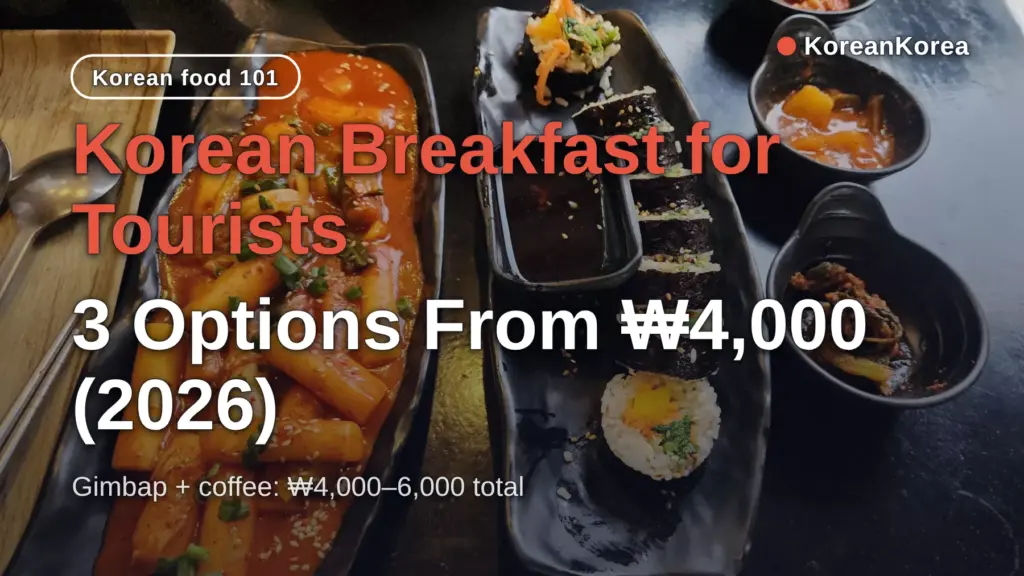
Korean breakfast culture is weak — most locals eat on the go, so your realistic options are a convenience store, a gimbap (bunsik) shop, or an early-morning soup house.
The cheapest confirmed route is convenience-store gimbap plus coffee at ₩4,000–6,000, and the big chains run 24 hours, so it works even before sunrise.
This post compares the three options by price, hours and what you get, and says which one fits which morning.
Key facts — As of 2026-10-12
- Convenience-store gimbap plus coffee totals ₩4,000–6,000 — the figure 2026 overseas first-timer food guides list for a local-style breakfast.
- Most budget and mid-range Korean hotels do not include breakfast; it is mainly a feature of higher-tier and international-brand hotels (2026 guides).
- CU, GS25, 7-Eleven, and Emart24 operate thousands of stores nationwide, typically open 24 hours — making the convenience store the most reliable early-morning option in Korea.
Korean Breakfast for Tourists: What Locals Actually Eat in the Morning
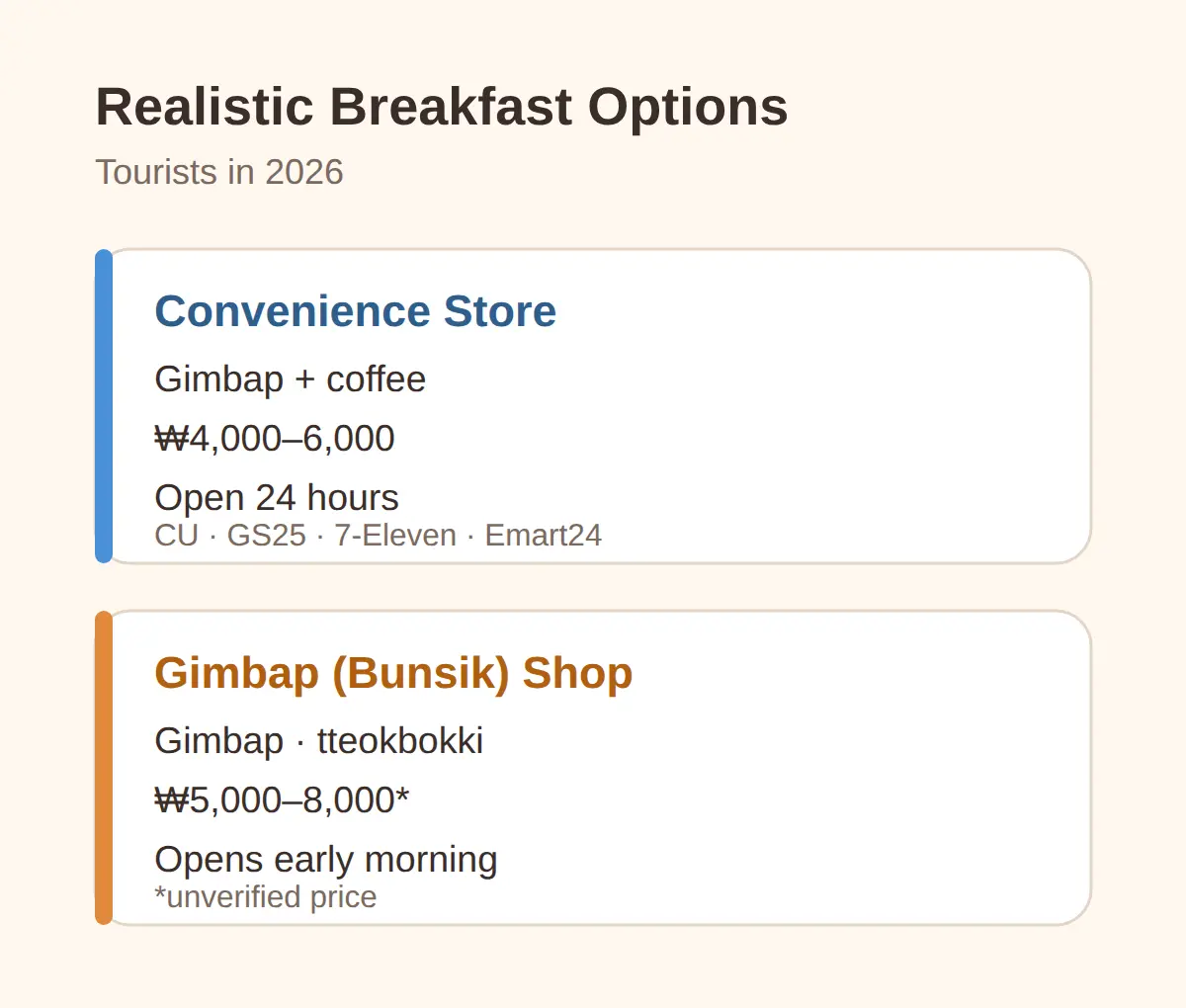
| Convenience store (CU, GS25, 7-Eleven, Emart24) | Gimbap + coffee: ₩4,000–6,000 total (2026 guides) — open 24 hours, microwave and hot water free |
|---|---|
| Gimbap (bunsik) shop | Gimbap, tteokbokki, noodles — price varies by shop; check the menu board when you order |
| Soup house (seolleongtang, gomtang) | Hot soup rice meal — commonly opens early morning, around 7–9 AM; hours and prices vary by shop |
Korean sit-down breakfast culture is weak — most locals eat quickly at convenience stores, gimbap shops, or soup restaurants rather than sitting down to a hotel-style breakfast.
That is why you will not find a diner-style breakfast scene in most Korean neighborhoods, and why 2026 first-timer food guides list breakfast as its own topic.
The three places above are the realistic tourist options, and the confirmed starting price is ₩4,000–6,000 for convenience-store gimbap plus coffee.
So plan your mornings around those three, not around a Western brunch café that may open at 11 AM.
Convenience Store Breakfast: What ₩4,000–6,000 Gets You
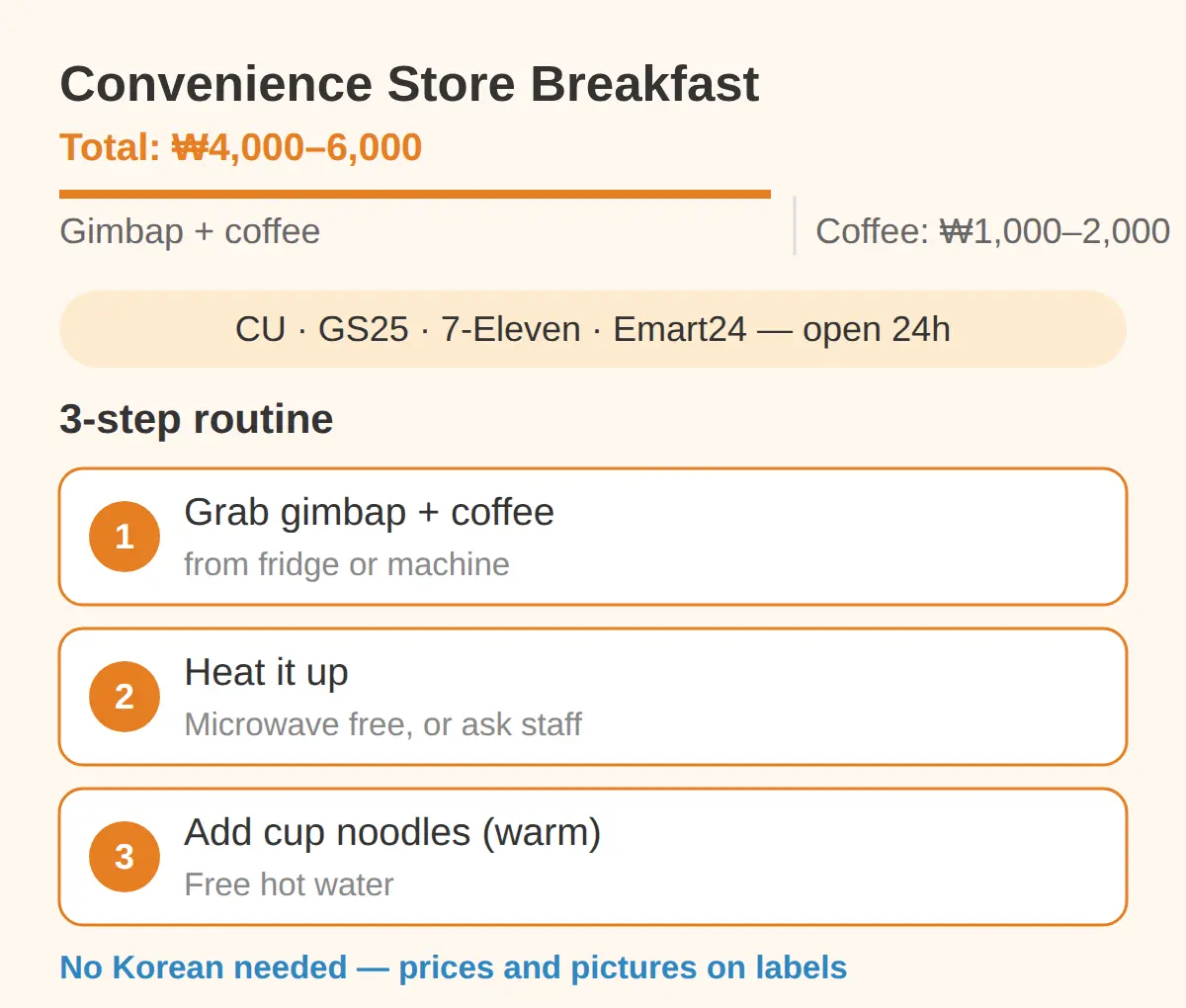
Gimbap at a convenience store costs a few thousand won, and drip or bottled coffee runs roughly ₩1,000–2,000 — together, the ₩4,000–6,000 figure that 2026 visitor guides list for a local-style breakfast.
CU, GS25, 7-Eleven, and Emart24 operate thousands of stores nationwide, typically open 24 hours, which makes the convenience store the most reliable early-morning option in Korea.
Inside, hot water and a microwave are free to use, and there is seating or a counter for a quick meal.
A typical routine:
- Grab a chilled gimbap roll and a coffee from the fridge or coffee machine.
- Ask the staff to heat the gimbap, or use the microwave yourself — no charge.
- Add a cup noodles or instant rice if you want something warm, using the free hot water.
If your Korean is limited, this route needs no conversation at all — everything is labeled with prices and pictures.
Where to Eat Breakfast in Korea Before Noon: The Three Options Compared
Before 8 AM, your real choice is usually the 24-hour convenience store, so the first thing to check is opening hours.
| Option | Typical price | Hours | What you get |
|---|---|---|---|
| Convenience store | ₩4,000–6,000 (gimbap + coffee) | Open 24 hours | Gimbap, onigiri, instant food; microwave and hot water in-store, seating available |
| Gimbap (bunsik) shop | ₩5,000–8,000 (gimbap + tteokbokki or noodles) | Typically opens early morning | Gimbap, tteokbokki, and noodles as a quick counter meal |
| Soup restaurant | ₩8,000–12,000 (seolleongtang/gomtang) | Commonly around 7–9 AM | A warm, sit-down traditional Korean breakfast |
Seolleongtang and gomtang soup houses are one of the few sit-down places open before noon, commonly around 7–9 AM.
One caution: exact 2026 opening hours for gimbap shops and soup restaurants vary by shop and could not be confirmed, so do not build a tight schedule around them — check the posted hours on the door or on Naver Map that morning.
For prices at bunsik shops and soup houses, 2026 visitor guides give rough ranges, but no primary price list was found, so treat any figure you see in guides as a rough guide only and confirm on the menu board.
Is Breakfast Included in Korean Hotels?
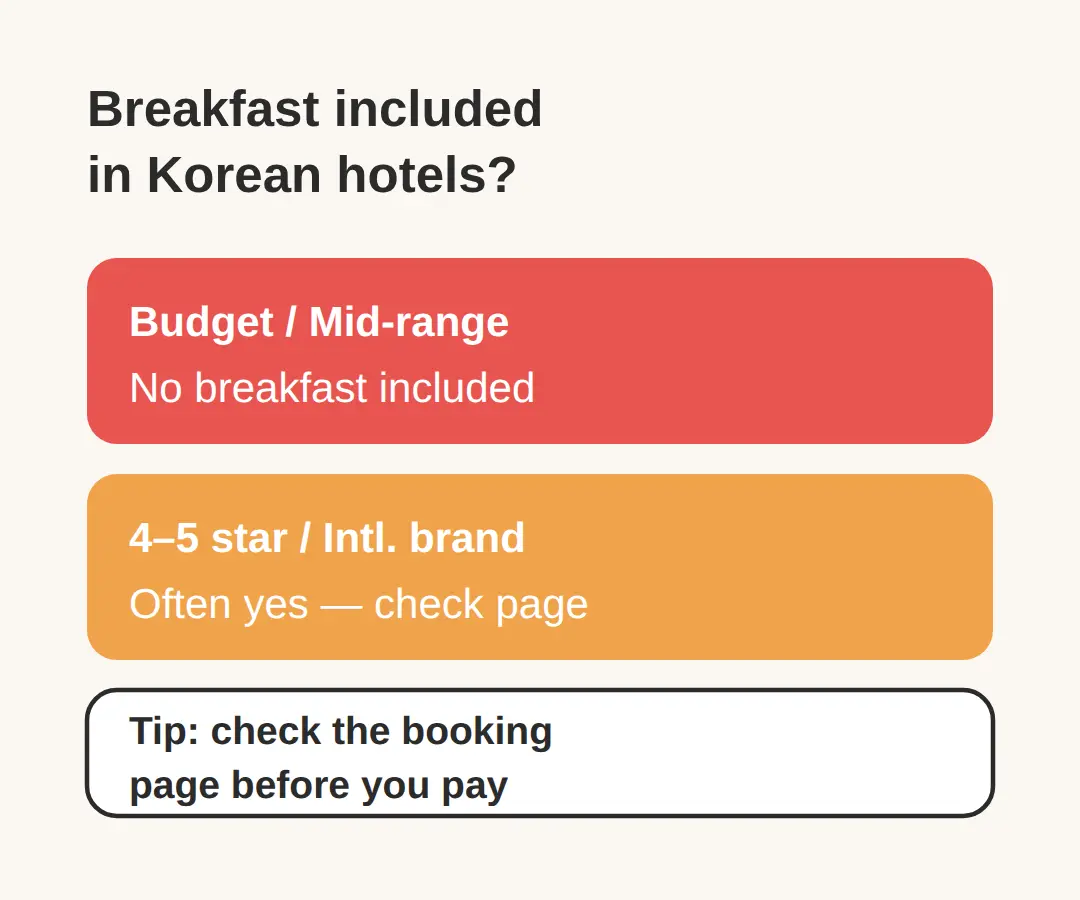
Most budget and mid-range Korean hotels do not include breakfast — 2026 visitor guides say it is mainly a feature of higher-tier and international-brand hotels.
If breakfast is not included, plan a convenience-store meal for around ₩4,000–6,000 instead.
Check the breakfast line on the booking page before you pay, not on the morning you arrive.
Whether 4–5 star hotels include breakfast, and what a buffet costs at those hotels, could not be confirmed from recent sources — the booking page is the place to see it.
Which Breakfast Fits Your Morning?
If you have an early checkout or a morning flight and everything is still closed, go to a convenience store — it is open 24 hours and heats food for free.
If you want the cheapest confirmed breakfast, it is also the convenience store: gimbap plus coffee at ₩4,000–6,000 total.
If you want a warm, sit-down Korean-style breakfast, look for a seolleongtang or gomtang soup house, which commonly opens around 7–9 AM.
If you want cheap hot food from a counter rather than a convenience store, find a gimbap (bunsik) shop — they typically open early and sell gimbap, tteokbokki, and noodles.
If you assumed your hotel booking includes breakfast, check the booking page first — most budget and mid-range places do not offer it.
If I had an early train or checkout, I would go straight to the convenience store — the 24-hour hours and free microwave make it the only option that never lets me down.
Related posts
📎 📅 Upcoming Dates — Release & Event Calendar
Sources
- wokfeed first-timers guide lists convenience-store gimbap + (wokfeed.com)
- coreadesk guide covers convenience-store amenities (hot wate (coreadesk.com)
Three things to check the night before
- Check the breakfast line on your hotel booking page before you pay — most budget and mid-range Korean hotels do not include it.
- Do not plan a tight morning schedule around soup-house or bunsik-shop hours; they vary by shop, so check Naver Map or the door that morning.
- If you have an early train or checkout, go straight to the convenience store — ₩4,000–6,000 for gimbap and coffee, heated on the spot, with no risk of finding the shop closed.
FAQ
Q. Where can I eat breakfast in Korea before noon?
Convenience stores (CU, GS25, 7-Eleven, Emart24) are open 24 hours, gimbap (bunsik) shops typically open early morning, and seolleongtang or gomtang soup houses commonly open around 7–9 AM. Exact shop hours vary, so check the shop’s posted hours that morning.
Q. Which breakfast option fits an early-checkout morning?
The convenience store. It runs 24 hours, has a free microwave and hot water, and gimbap plus coffee comes to ₩4,000–6,000 (2026 guides).
Q. Is breakfast included in Korean hotels?
2026 visitor guides say most budget and mid-range Korean hotels do not include breakfast; it is mainly a feature of higher-tier and international-brand hotels. Check the booking page before you pay.
Q. How much does a typical Korean breakfast cost?
The confirmed figure is ₩4,000–6,000 for convenience-store gimbap plus coffee. Prices at bunsik shops and soup houses vary by shop and were not confirmed against a primary 2026 price list, so treat guide ranges as rough.
Still deciding your first meal? Our Korean convenience-store food guide breaks down what is actually worth grabbing at CU, GS25, and 7-Eleven.
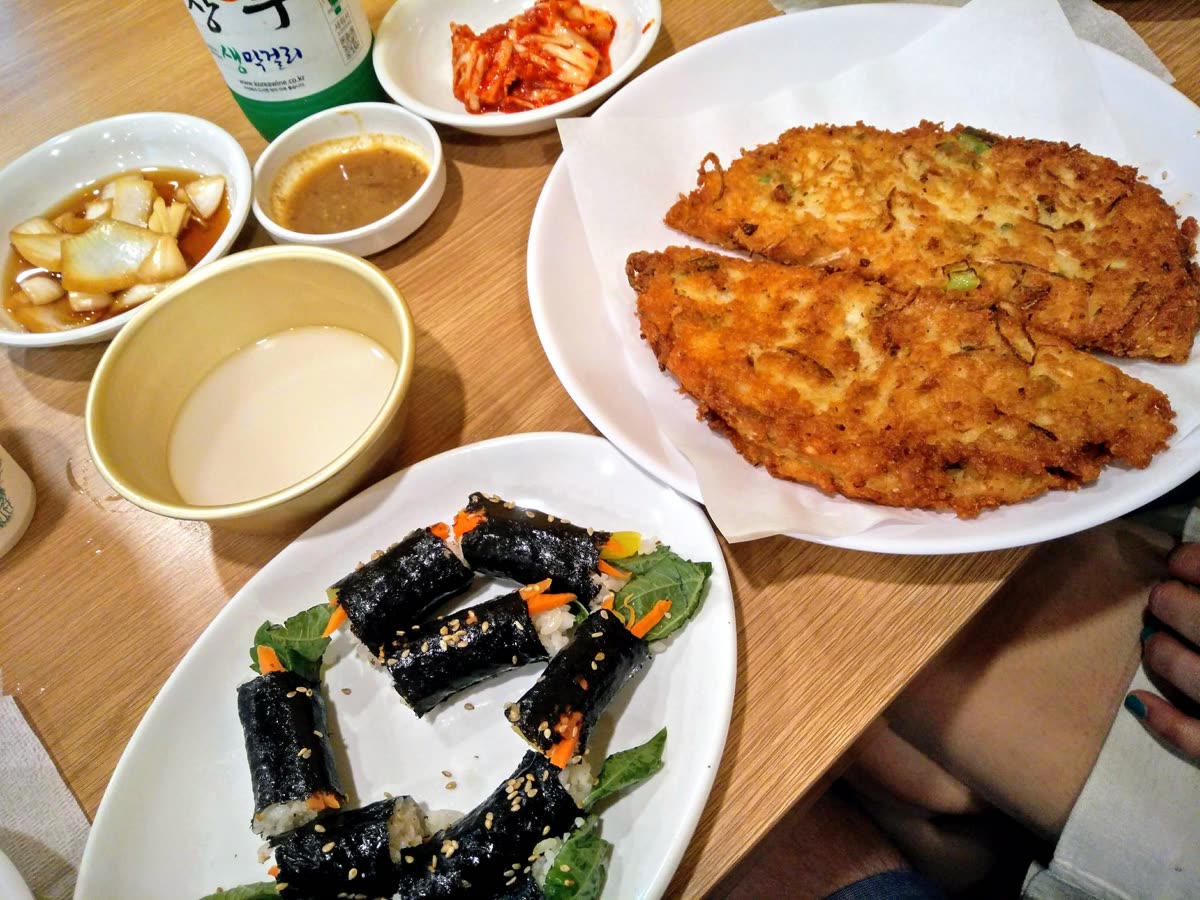
Cover photo: Korean Gimbap & Teokbokki by Sujan Shrestha — CC0 1.0
#koreanbreakfast #breakfastinkorea #koreanfoodfortourists #conveniencestorekorea #gimbap #koreatraveltips
📅Upcoming Schedule — this week 1 · D-7 Godsoi lineup removed from menus after 2026-11-09See all →Last updated 2026-10-13. Editorial policy