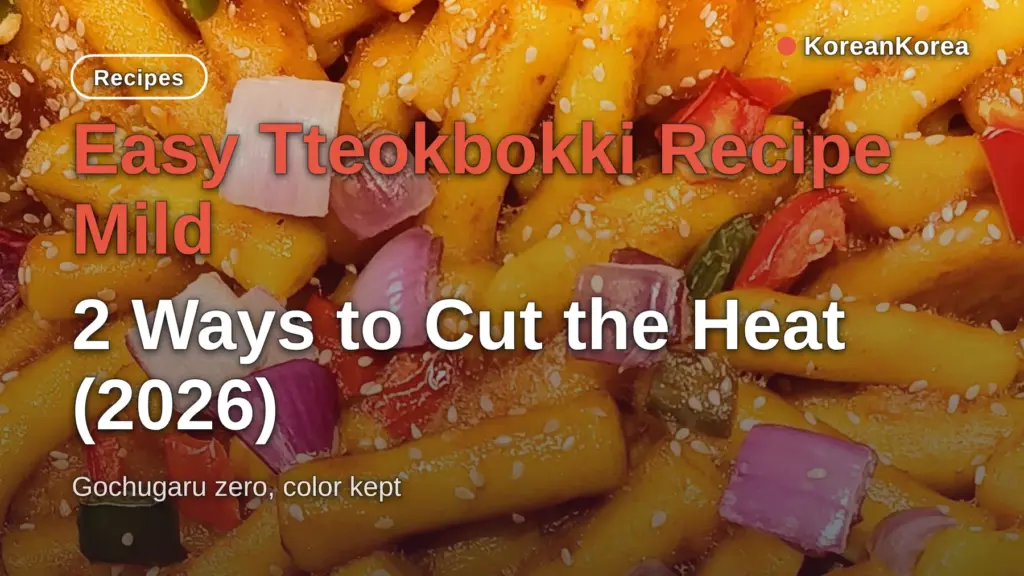
A mild tteokbokki is made by dropping gochugaru (Korean chili flakes) to zero and keeping a small amount of gochujang — the burn disappears while the sauce stays red.
A 2-serving pot takes one pot, about 15–20 minutes, and no special tools.
This post gives the classic vs mild sauce ratios, numbered steps, a one-child serving trick, rice cake and broth substitutes for abroad, storage notes, and the creamy rosé variation.
Key facts — As of 2026-10-10
- Per Maangchi’s classic recipe, a full 500g garaetteok batch uses 2 cups (500ml) of broth, 1-2 tbsp gochujang, and 1 tbsp gochugaru — the mild version keeps everything but the gochugaru.
- A standard home batch — 500g rice cakes and 500ml water, a 1:1 ratio — yields 2-3 servings in one pot in about 20 minutes on the stovetop.
Easy Tteokbokki Recipe Mild: The 2 Ways to Cut the Heat
| Garaetteok (cylinder rice cakes) | 500 g |
|---|---|
| Water or anchovy-kelp broth | 500 ml (2 cups) |
| Gochujang (red pepper paste) | 1–2 tbsp |
| Gochugaru (red pepper flakes) | 1 tbsp — cut to 0 for mild |
| Sweetener (sugar + corn syrup) | about 2 tbsp — up to ~3 tbsp for mild |
| Soy sauce | 1 tbsp |
| Minced garlic | 1 clove |
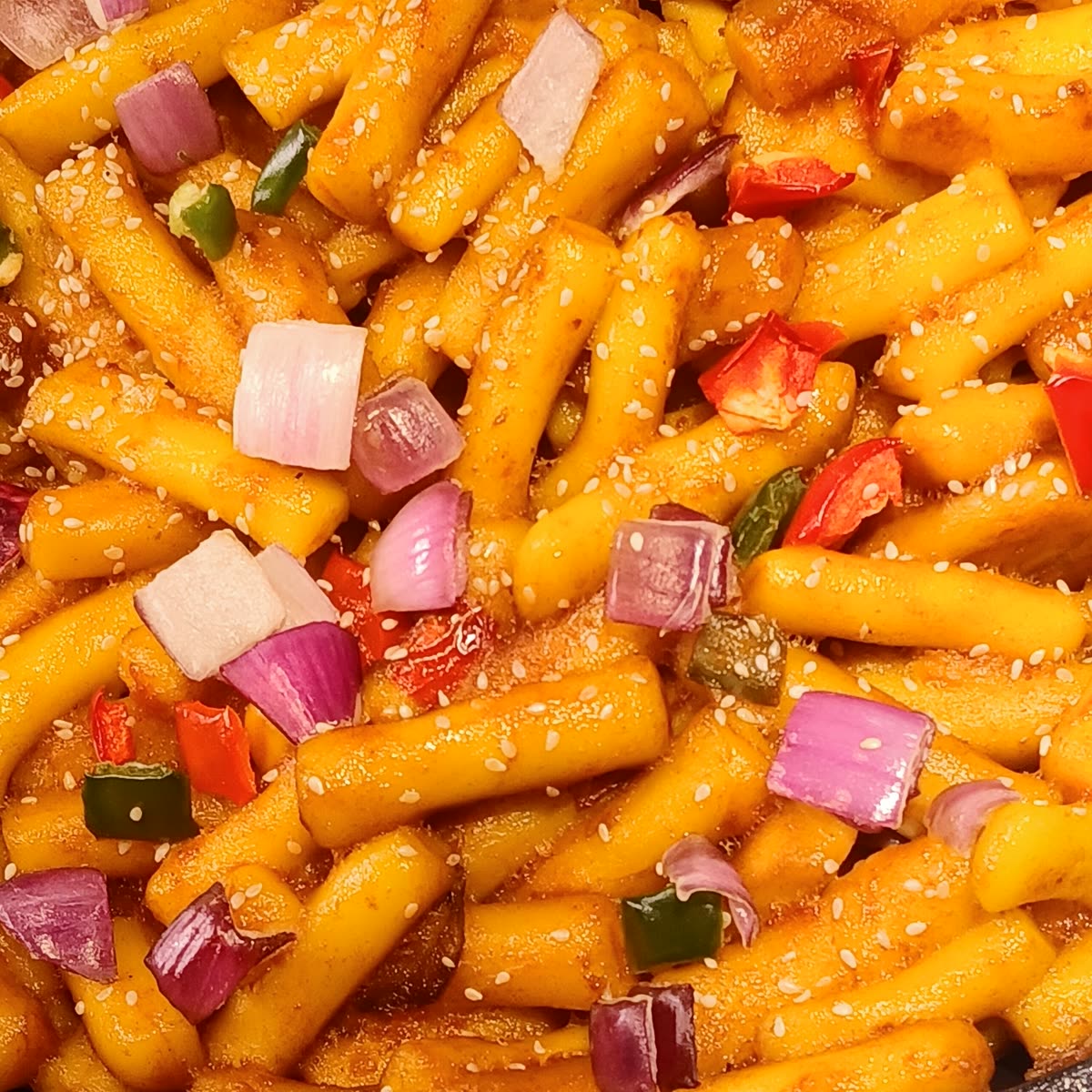
There are two ways to make tteokbokki mild, and the first one does most of the work: leave out the gochugaru completely and let gochujang carry the color.
Gochugaru flakes are what deliver the direct chili burn, while gochujang alone already gives the sauce a deep red-orange color.
That is why an American-style mild version often keeps the gochujang and simply drops the flakes.
The second dial is sweetness: raising the sweetener toward about 3 tbsp total (sugar, corn syrup, or honey) rounds the remaining heat without adding oil.
A 2-serving pot still cooks in about 15–20 minutes, so nothing about the method gets slower.
If you want it to look classic but taste mild, use way 1 plus way 2 together.
Ingredients
Main
- 250 g Garaetteok (cylindrical rice cakes) — soaked in cold water 10–20 minutes
- 500 ml Water or anchovy-kelp broth
- Sliced cabbage — added in the last few minutes
Sauce & seasoning
- 1 tbsp Gochujang (Korean chili paste) — no gochugaru for the mild version
- 1 tbsp Soy sauce
- 1 clove Minced garlic
- 2–3 tbsp Sugar or corn/rice syrup — total sweetener
To finish
- Green onion — added in the last few minutes
Amounts are the ones used in this recipe; where the recipe gives no amount, adjust to taste.
Classic vs Mild: The Sauce Numbers Side by Side
The mild version keeps the classic base and changes two lines: gochugaru goes to zero and the sweetener goes up.
Sources differ slightly on the exact gochujang amount — Maangchi’s classic recipe lists 1–2 tbsp per 500g batch — so treat the numbers below as a range rather than one fixed value.
| Item | Classic (Maangchi, 500g batch) | Mild version |
|---|---|---|
| Rice cakes | 500g garaetteok | 500g garaetteok |
| Water/broth | 2 cups (500ml) — a 1:1 water ratio | Same, sometimes a splash more for kids |
| Gochujang | 1–2 tbsp | About 1 tbsp for a 2-serving pot; 1/2 tbsp for one child |
| Gochugaru | 1 tbsp | 0 — no gochugaru |
| Sweetener | 1 tbsp sugar + 1 tbsp corn syrup | 2–3 tbsp total (sugar or corn/rice syrup, roughly 1:1 with gochujang) |
| Other | 1 tbsp soy sauce, 1 tsp minced garlic | Same |
Maangchi’s classic batch is built on 500g rice cakes and 2 cups (500ml) of broth, a 1:1 water ratio that yields 2–3 servings in one pot.
For one child eating alone, a common Korean home approach is a much smaller spooning amount — about 1/2 tbsp gochujang, sometimes cut with ketchup or tomato puree, to keep the red look while removing virtually all the heat.
How to Make Tteokbokki Not Spicy for Kids: Step by Step
The pot itself stays the same as the classic method — only the sauce amounts and the simmering broth change.
If the rice cakes are refrigerated or frozen, soaking them in cold water first helps them soften evenly and can shorten the simmering time.
If one child is eating while the adults want it spicy, cook the base mild and put extra sauce or gochugaru on the table so adults can spice up their own portion.
| Step | What to do |
|---|---|
| 1 | Soak 500g of rice cakes (2 servings) in cold water for 10–20 minutes while you prepare the rest. |
| 2 | Bring 500ml of water or broth to a gentle boil in a wide pan over medium heat. |
| 3 | Stir in 1 tbsp gochujang, 1 tbsp soy sauce, 1 clove minced garlic, and 2–3 tbsp total sweetener until dissolved — no gochugaru. |
| 4 | Add the drained rice cakes and simmer over medium heat for 8–10 minutes, stirring so nothing sticks to the pan. |
| 5 | Add vegetables such as sliced cabbage or green onion in the last few minutes. |
| 6 | Reduce until the sauce coats the rice cakes and looks glossy, about 15–20 minutes total from the start. |
| 7 | For a single child’s bowl, use about 1/2 tbsp gochujang cut with ketchup, a splash more broth, and serve any extra sauce on the side. |
Which Rice Cakes and Broth to Use Abroad
If you cannot find Korean garaetteok, Japanese-style rice cakes or frozen Korean tteok from H Mart or an Asian grocer both work.
| Situation | What to use |
|---|---|
| Shape | Cylindrical garaetteok over sliced tteok — sliced pieces soften and fall apart faster in the sauce |
| Frozen tteok | Soak 20–30 minutes in cold water to avoid a hard center after cooking |
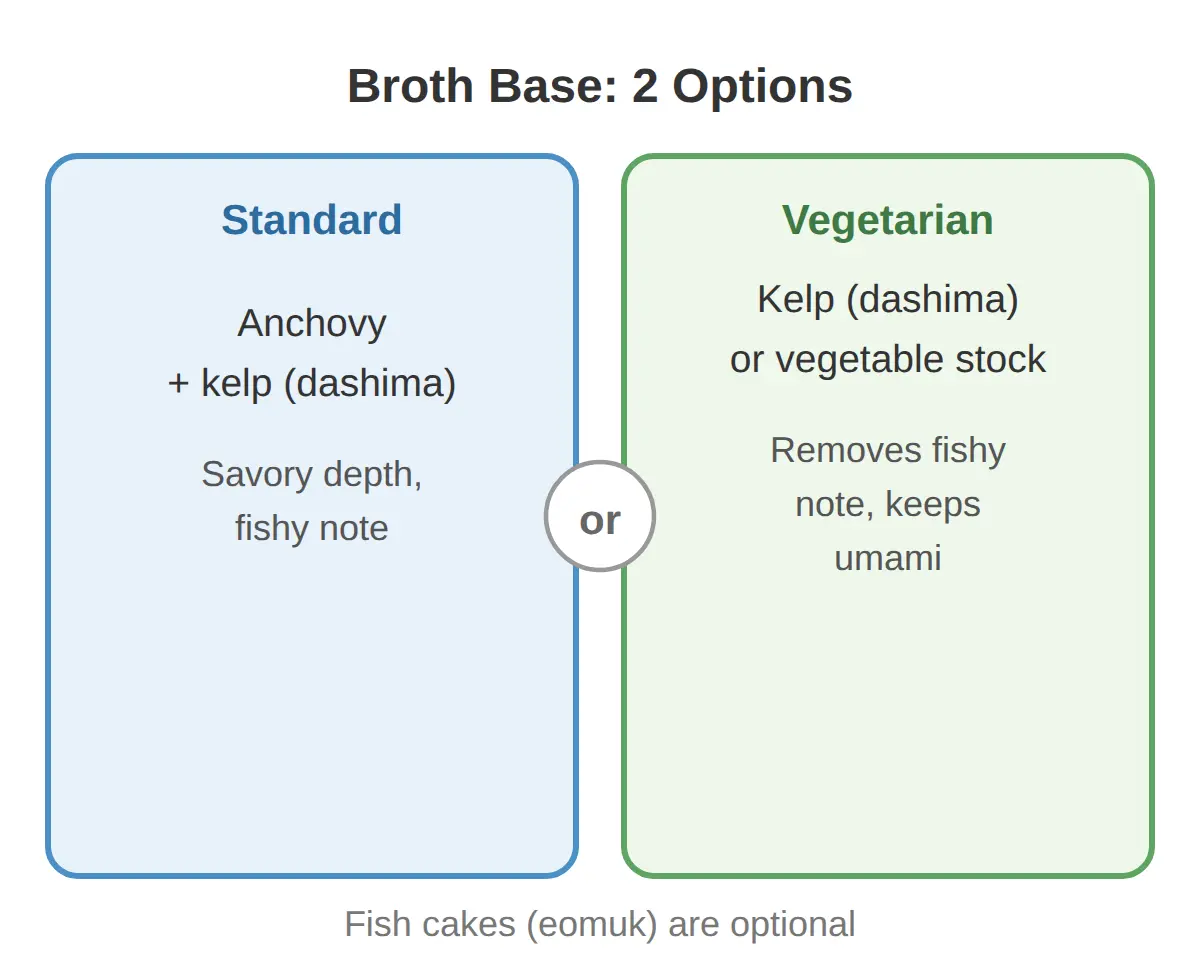
| Broth | Anchovy + kelp (dashima) is standard; kelp-only or vegetable broth works for a vegetarian mild version |
| Fish cakes | Optional — rice cakes, vegetables, and sauce alone make proper tteokbokki |
The Korean Food Foundation’s recipe notes that anchovy broth can be swapped this way, which keeps the savory depth while removing the fishy note.
Fish cakes (eomuk) are optional: rice cakes, vegetables, and sauce alone make proper tteokbokki, which matches the no-eomuk version covered in another post here.
Storage and Reheating: Why Leftover Tteokbokki Hardens
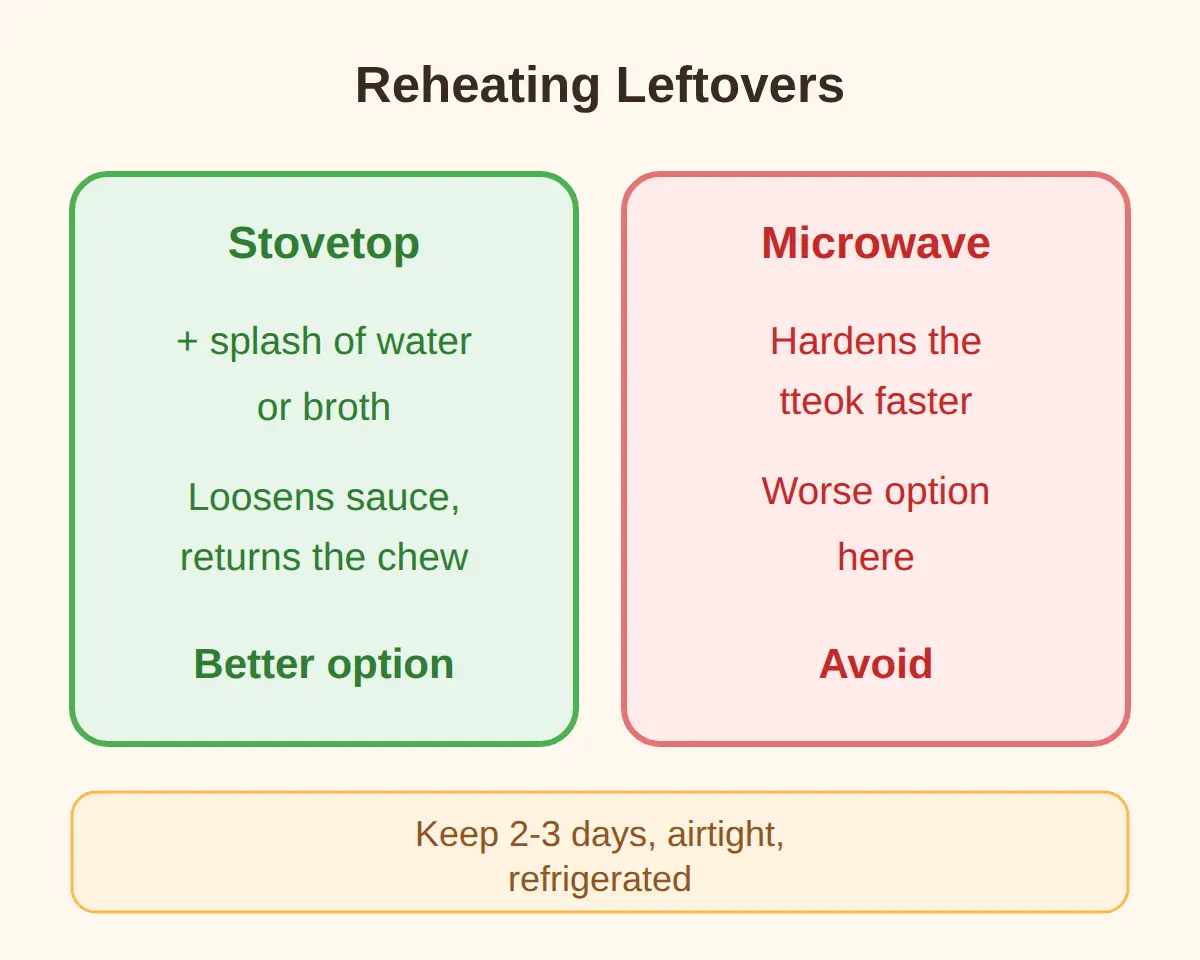
Leftover tteokbokki keeps about 2–3 days refrigerated in an airtight container, though rice cakes always harden when cold.
The hardening happens because rice starch changes structure as it chills, and a reheated batch never fully returns to the just-cooked chew.
Reheat on the stovetop with a splash of water or broth to loosen the sauce and bring back some of the chew.
The microwave hardens the tteok faster, so it is the worse option here.
Treat the 2–3 day figure as general cooking guidance rather than an official number.
Creamy Mild Versions: Milk, Cheese, and Rosé Tteokbokki
If the sauce is still too much for your kids, finish it creamy: stir in a little milk or a slice of cheese at the end.
The rosé style — the same gochujang sauce finished with about 50% milk or cream — is the mainstream mild variant in Korea and drops the perceived spiciness sharply while keeping the red color.
The cost is texture: the sauce turns creamy instead of glossy and sticky.
Sweetener and dairy both work because they round the capsaicin heat rather than removing the color, so the dish still looks like tteokbokki.
If your child refuses the gochujang flavor entirely, the 1/2 tbsp gochujang plus ketchup version from the steps above is the lighter end of the scale.
If I were cooking one pot for kids and adults, I would cook the base mild and finish half the pot with milk or cheese, because it lets everyone eat the same meal without making a second sauce from scratch.
Related posts
📎 📅 Upcoming Dates — Release & Event Calendar
Sources
3 Things That Decide Whether Mild Tteokbokki Works
- Check where the heat comes from before anything else: gochugaru flakes are the burn, gochujang is the color — cut the flakes, keep the paste.
- For one pot serving kids and adults, cook the base mild with extra broth and put extra sauce or gochugaru on the table for the adults.
- Soak cold or frozen rice cakes before cooking — skipping the soak is the most common cause of a hard center.
FAQ
Q. How do I make tteokbokki not spicy for kids?
Drop the gochugaru to zero and keep about 1 tbsp gochujang for color, then raise the sweetener toward 3 tbsp total. For a single child’s bowl, use about 1/2 tbsp gochujang, often cut with ketchup, and add extra broth so the sauce is thinner.
Q. Can I make tteokbokki without fish cakes?
Yes. Fish cakes (eomuk) are optional in the standard recipe — rice cakes, vegetables, and sauce alone make proper tteokbokki.
Q. What rice cakes can I use if I can’t find Korean tteok?
Japanese-style rice cakes or frozen Korean tteok from H Mart or Asian grocers work. Choose the cylindrical shape over sliced, and soak frozen tteok in cold water for 20–30 minutes first.
Q. How do you make tteokbokki less spicy without losing the color?
Gochujang alone gives the sauce its deep red-orange color, so removing the gochugaru flakes cuts the burn while the sauce still looks classic. Finishing with milk or cheese rounds it further.
Sources for the ratios and steps: Maangchi’s tteokbokki recipe and the Korean Food Foundation recipe page.
Cover photo: Korean rice cake (tteokbokki) by Fumikas Sagisavas — CC0 1.0
#tteokbokki #koreanfood #mildrecipe #kids #easyrecipes
📅Upcoming Schedule — this week 3 · D-1 documentary 'Always Lalisa' global theatrical release (Oct 1See all →Last updated 2026-10-11. Editorial policy