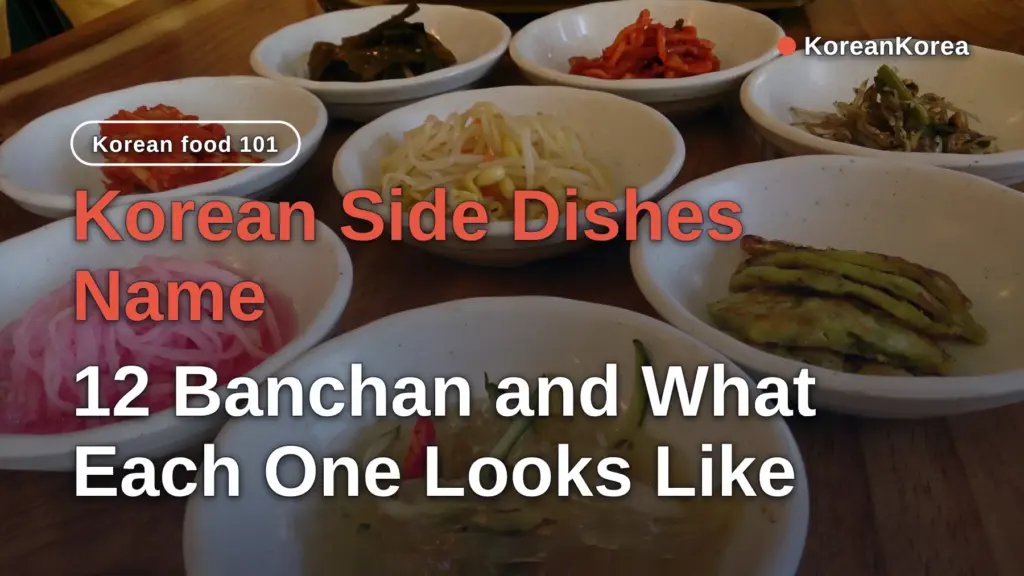
The 12 most common Korean side dishes are kimchi, danmuji, kongjaban, miyeokmuchim, ojingeochae muchim, gamja jorim, gyeran mari, gejang, kkadugi, sigeumchi namul, sukju namul and pajeori — and at most restaurants they cost nothing, refills included.
Key facts — As of 2026-11-22
- On the government Chamgagyeik price portal, the 2026-08 average kimchi jjigae was ₩8,769 — the main dish alone, with banchan bundled in at ₩0.
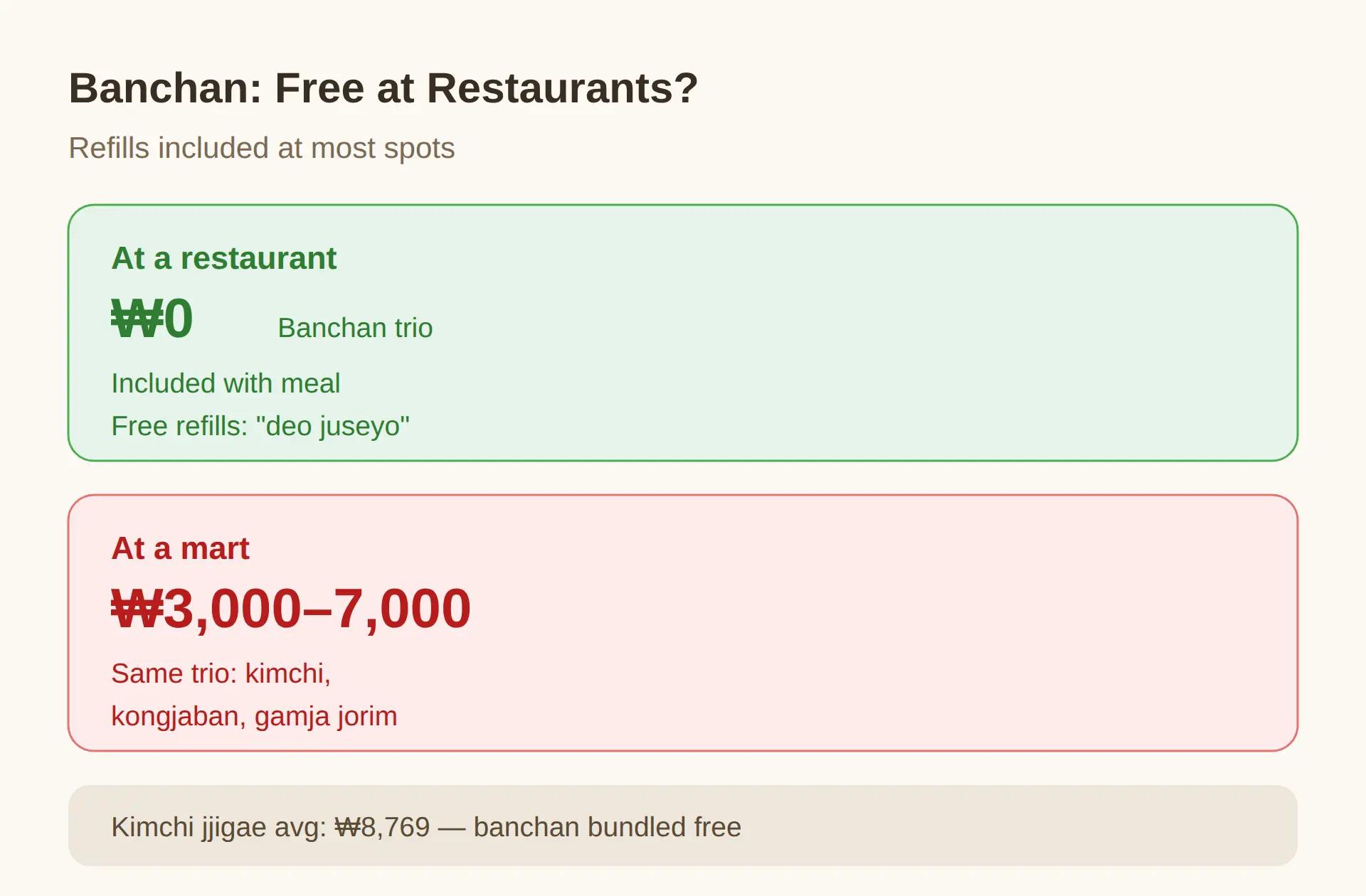
- Buying a typical banchan trio (kimchi, kongjaban, gamja jorim) at a mart runs about ₩3,000-₩7,000 per person; at a restaurant the same spread is free, refills included.
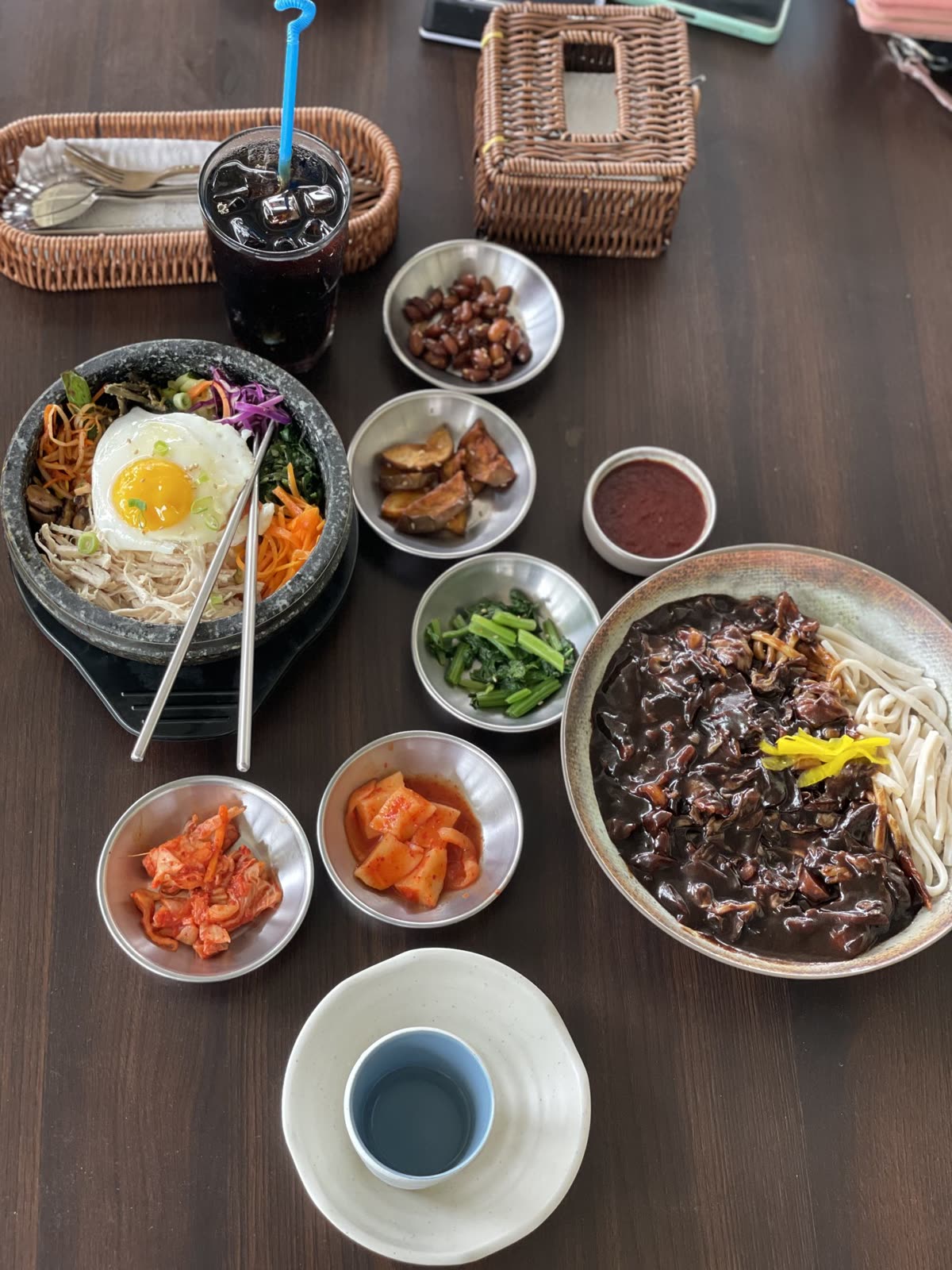
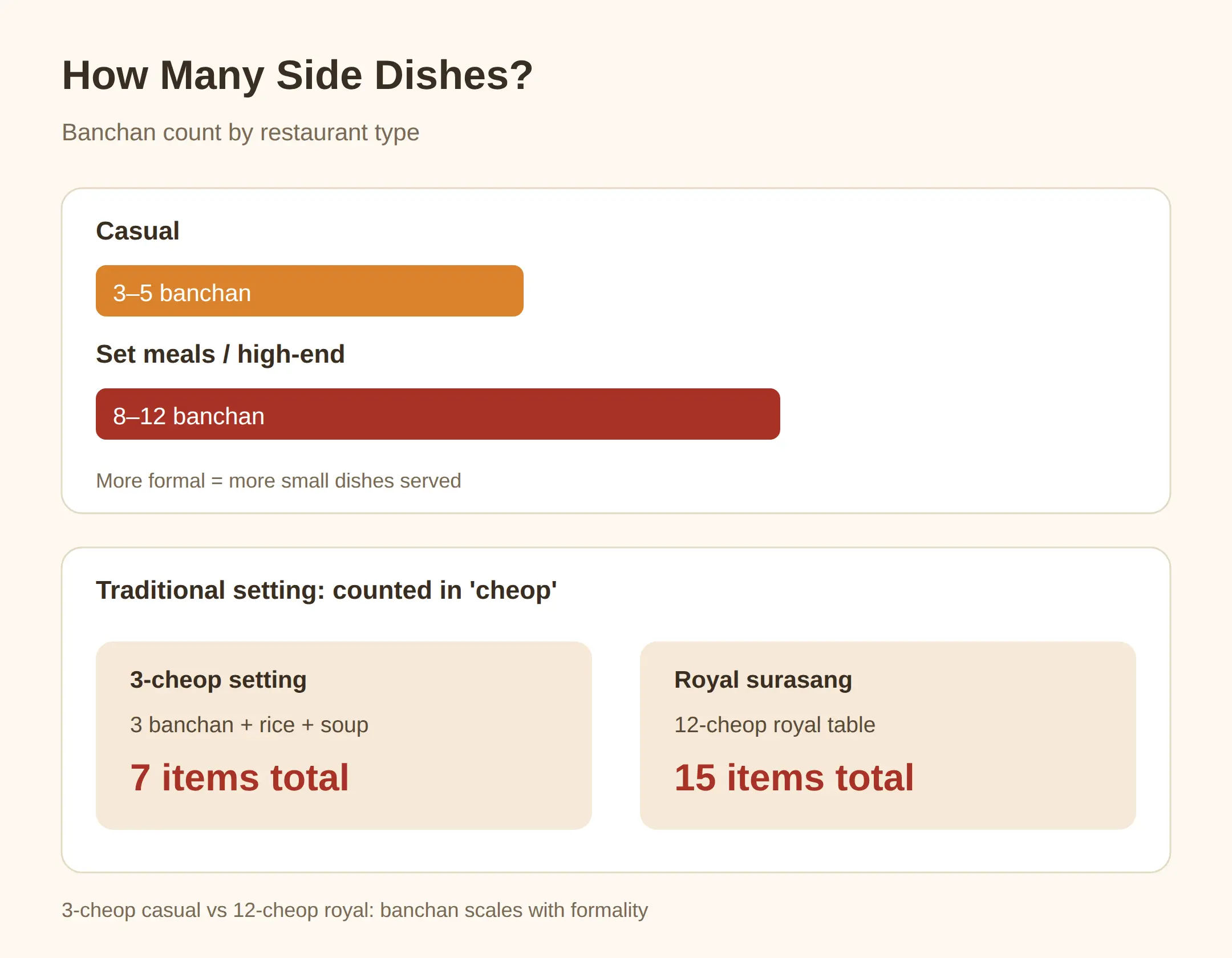
- Casual Korean restaurants commonly serve 3-5 banchan; set meals and higher-end places serve 8-12 — the old royal table set 12 (12-cheop, 15 items with rice and soup).
Korean Side Dishes Name With Pictures: The 12 Banchan
| Casual restaurant | 3–5 banchan, free, refills included |
|---|---|
| Set meal / higher-end | 8–12 banchan, free, refills included |
| Korean BBQ | Lettuce and sesame leaves for wrapping (ssam), refilled free |
| Food court / casual stew place | May charge separately — check the table stand |
The same 12 come up again and again — kimchi (fermented napa cabbage), kkadugi (cubed radish kimchi), danmuji (yellow pickled radish), kongjaban (soy-simmered black soybeans), gamja jorim (soy-braised potato chunks), sigeumchi namul (blanched seasoned spinach), sukju namul (seasoned mung bean sprouts), miyeokmuchim (seaweed salad with vinegar and sesame oil), ojingeochae muchim (shredded dried squid in sweet-spicy gochujang), gyeran mari (rolled omelet), gejang (soy-marinated raw crab), and pajeori (scallion salad with gochugaru).
Cabbage kimchi appears at virtually every Korean meal, including school and workplace cafeterias, so start there and the rest fall into place.
Banchan arrive when you order — usually before or with the main dish — and there is no separate side-dish menu to pick from.
Next for you
Also read: Is Kimchi Spicy? 2 Mild Types, and How Hot Baechu Kimchi Gets · Halal Korean BBQ in Itaewon: ₩15,000–30,000 and Where to Go
Is Banchan Free in Korea? Refills Included?
Yes — banchan are served free of charge at standard Korean restaurants, and refills are included.
| Item | Amount |
|---|---|
| Kimchi jjigae 2026-08 average (Chamgagyeik portal) | ₩8,769 |
| Banchan trio (kimchi, kongjaban, gamja jorim) at a mart | ₩3,000–₩7,000 |
| The same banchan at a restaurant | ₩0 |
Buying the same trio at a mart would run about ₩3,000–₩7,000 per person; at a restaurant it is ₩0 and refills multiply the saving.
On the government Chamgagyeik price portal, the 2026-08 average kimchi jjigae was ₩8,769 — the main dish alone, with banchan bundled in at ₩0.
I would order a kimchi jjigae in that range, treat the free side dishes as part of the price, and say ‘deo juseyo’ for anything I want more of.
Some casual stew spots and food courts charge separately, so check the table stand before assuming refills.
How To Ask For More Banchan in Korean
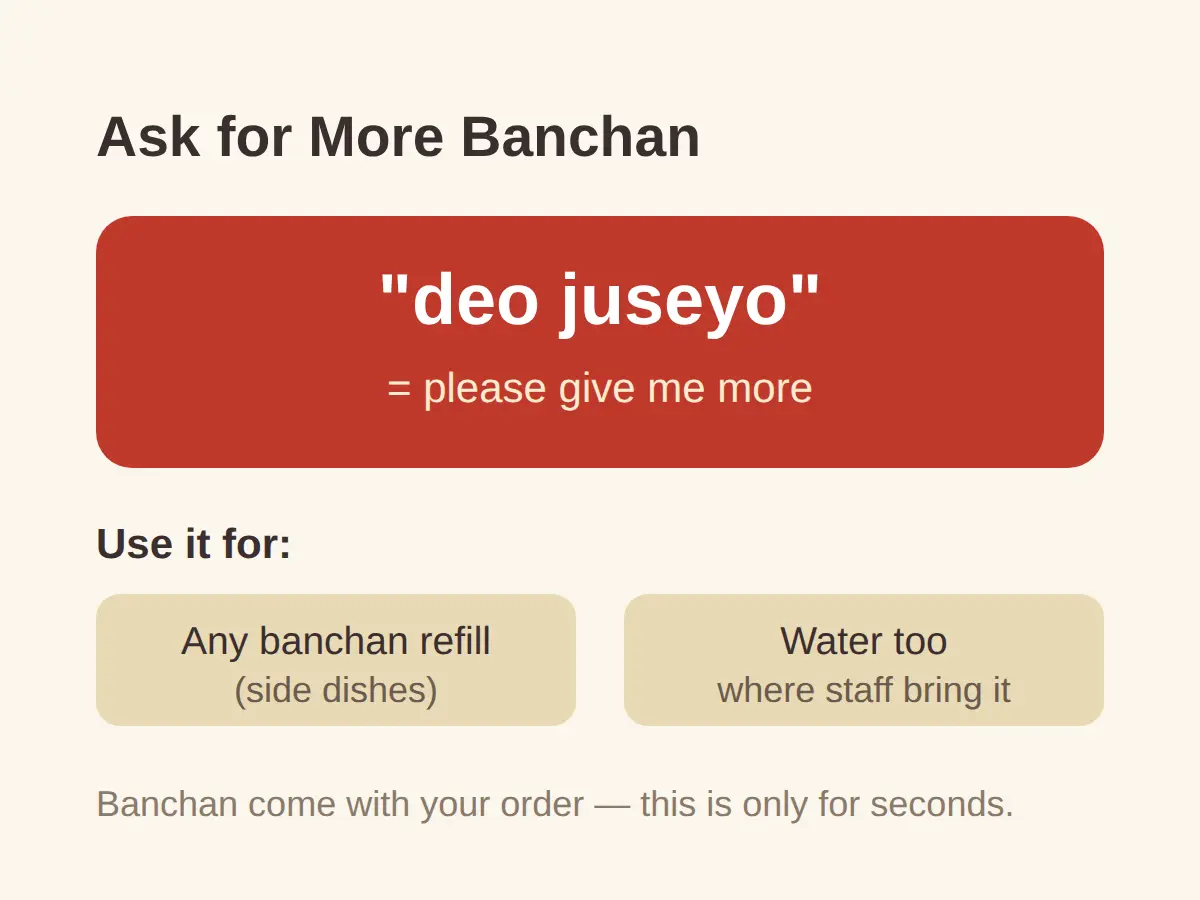
Say ‘deo juseyo’ — it works for any banchan refill you want.
Water is usually self-service at Korean restaurants, and the same phrase pattern covers it where staff do bring it.
Because banchan arrive with your order, there is nothing extra to request at the start; the phrase is only for seconds.
If a place displays banchan on a stand, check whether refills are included before you ask.
How Many Side Dishes Come With a Korean Meal
Casual Korean restaurants commonly serve 3–5 banchan; set meals and higher-end places serve 8–12.
Traditional table setting counts side dishes by ‘cheop’: a 3-cheop setting means 3 banchan plus rice and soup (7 items total), and the 12-cheop royal surasang set 12 banchan (15 items).
Categories repeat across tables — kimchi, namul (seasoned greens), jorim (soy-braised), jangajji (pickled), jeon (pan-fried) and jjigae (stew alongside).
Gejang, raw crab marinated in soy sauce, sits outside the free-refill tier as a premium banchan nicknamed the ‘rice thief.’
If you want the most varied table, Jeolla-do provinces are traditionally known for the richest spread.
👉 VISITKOREA’s official food page explaining the cheop table-setting system (3, 5, 7, 9 or 12 cheop)
Related posts
📎 📅 Upcoming Dates — Release & Event Calendar
Sources
- No tipping / no service charge at Korean restaurants (koreatravelatlas.com)
- Beginner banchan guide; free side-dish custom documented (nowyeogi.com)
- Kimjang UNESCO 2013; cheop table-setting scale; banchan cate (english.visitkorea.or.kr)
Quick recap
- Banchan are free at standard restaurants, refills included — the same trio costs ₩3,000–₩7,000 at a mart.
- Water is usually self-service at casual Korean restaurants, so pour your own between banchan refills.
- Food courts and some casual stew places charge separately — check the table stand first.
FAQ
Q. What are the names of Korean side dishes?
The 12 most common banchan are kimchi, danmuji, kongjaban, miyeokmuchim, ojingeochae muchim, gamja jorim, gyeran mari, gejang, kkadugi, sigeumchi namul, sukju namul and pajeori.
Q. Is banchan free in Korea, with refills included?
Yes at standard restaurants — side dishes are served free and refilled at no charge, though some casual stew spots and food courts charge separately.
Q. How do I ask for more banchan in Korean?
Say ‘deo juseyo’ — it works for any side dish refill.
Q. How much does a Korean meal with side dishes cost?
The 2026-08 government average for kimchi jjigae was ₩8,769, and that price is the main dish alone — banchan are bundled in at no extra cost.
Going beyond the 12? Our Korean food for beginners guide covers ordering, paying, and why the water is self-service too.
Cover photo: Korean Side Dishes by ProjectManhattan — CC BY-SA 3.0
#koreanfood #banchan #koreansidedishes #koreatraveltips #kimchi
📅Upcoming Schedule — this week 1 · D-5 MAMA 2026 ceremony (exact date/venue not yet confirmed in thSee all →Last updated 2026-11-23. Editorial policy