
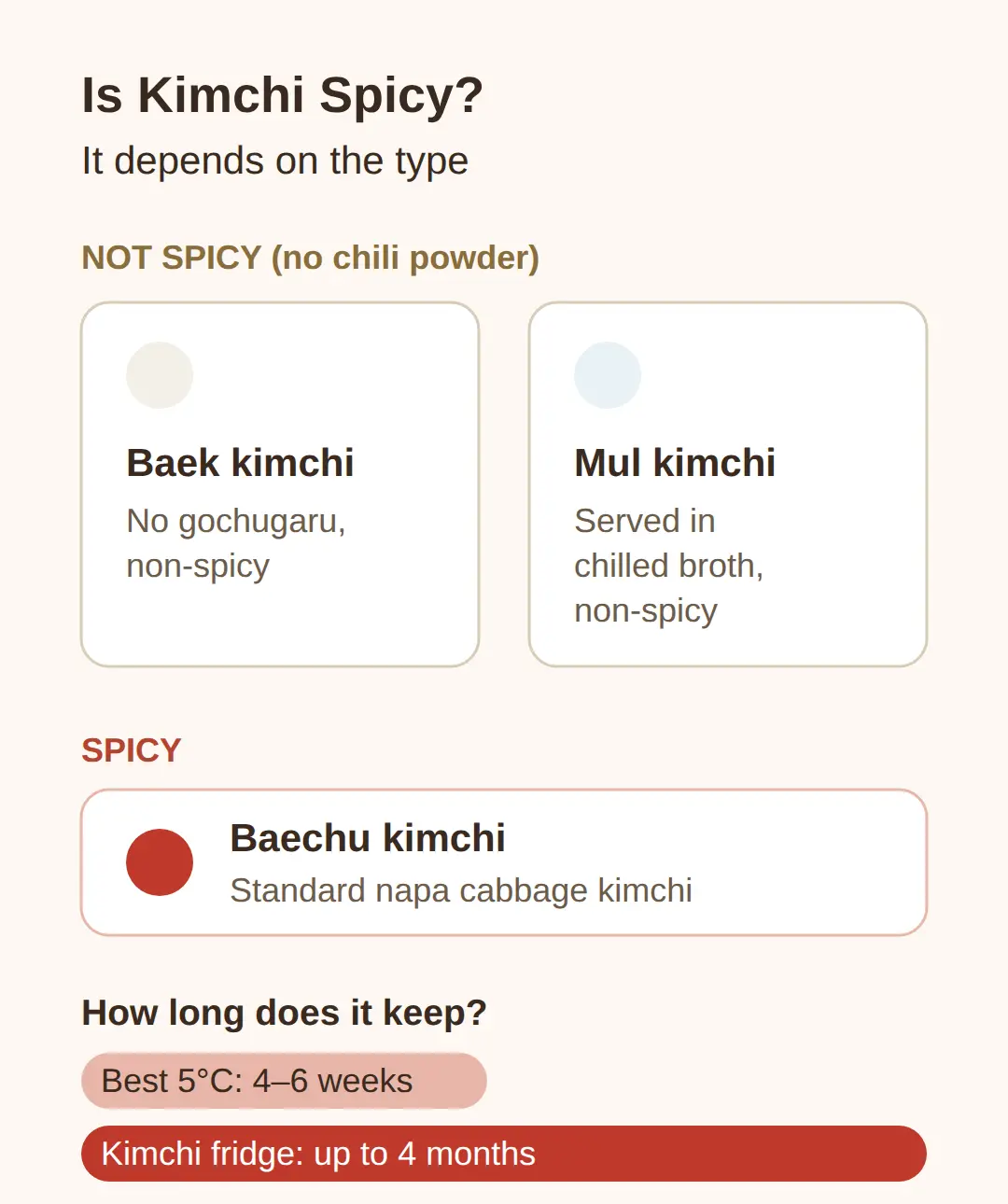
Kimchi can be mild or hot: baek kimchi (white kimchi) and mul kimchi (water kimchi) are not spicy, while standard baechu kimchi made with gochugaru — Korean chili powder — is medium-hot or above.
Is Kimchi Spicy? The Answer Depends on the Type
| Baek kimchi (white kimchi) | None — mild |
|---|---|
| Mul kimchi (dongchimi, water kimchi) | None — mild |
| Baechu kimchi (standard napa cabbage kimchi) | Yes — medium-hot or above, varies by maker |
Standard napa cabbage kimchi is spicy, but two common types — baek kimchi and mul kimchi — are made without chili powder and are not.
This matters because kimchi is not one dish: heat changes with the type, the region, and the household recipe behind it.
Asking ‘is kimchi spicy’ without naming a type gets two opposite answers.
When any kimchi question comes up, the first thing to check is which type is meant — the answer for baek kimchi and mul kimchi is the opposite of baechu kimchi.
 — Is Kimchi Spicy? The Answer Depends on the Type](https://koreankorea.com/wp-content/uploads/2026/11/is-kimchi-spicy-mild-types-heat-levels-02.jpg)
Next for you
Also read: Korean Side Dishes Name: 12 Banchan and What Each One Looks Like · Halal Korean BBQ in Itaewon: ₩15,000–30,000 and Where to Go
Which Kimchi Types Are Not Spicy
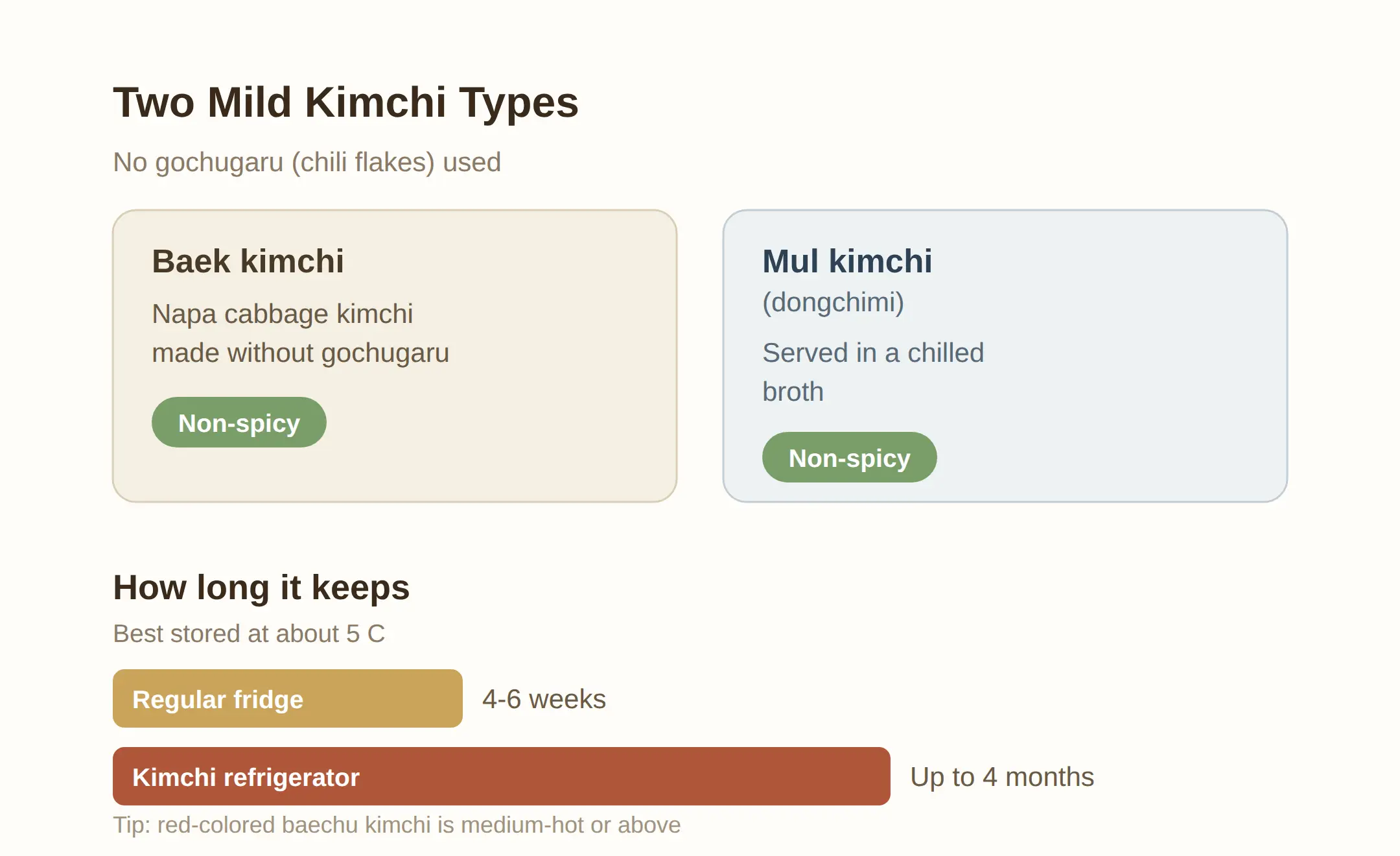
Baek kimchi and mul kimchi are the two mild types consistently named in guides, and they are easy to recognize on the table.
| Type | Gochugaru (chili flakes) | Form on the table |
|---|---|---|
| Baek kimchi | Not used | Napa cabbage kimchi made without gochugaru |
| Mul kimchi (dongchimi) | Not used | Served in a chilled broth |
Regional history explains why both exist: northern regions such as Hwanghae, Pyongan and Hamgyeong used little chili, so white-style kimchi and water kimchi were their staples, while Jeolla and Gyeongsang in the south used more chili and fermented seafood, making their kimchi hotter and saltier.
If heat is a concern, baek kimchi or dongchimi is the safe pick, and any red-colored baechu kimchi should be treated as medium-hot or above.
How Hot Is Baechu Kimchi? What a Test of 13 Commercial Kimchis Measured
Across 13 commercial kimchi samples, total capsaicinoid content — the compounds that produce chili heat — ranged from 9.02 to 30.50 mg/kg.
Trained tasters scored the samples on a 0-to-9 scale calibrated against capsaicin solutions, where 0.5 ppm of capsaicin scored 1, 2.0 ppm scored 4, 4.0 ppm scored 7, and 6.0 ppm scored 9.
No commercial sample in that test exceeded the 6.0 ppm level, so everyday store-bought kimchi stays within a defined hot-but-not-extreme band.
Capsaicinoid content and perceived spiciness moved together with a correlation of 0.78, which means chili content explains most, but not all, of the heat tasters felt.
For a first-time eater, this points to a simple rule: red baechu kimchi is genuinely hot, but it does not reach the extreme end of the chili scale.

Why the Same Kimchi Can Taste Hotter or Milder
The same-looking kimchi can taste noticeably different, and the main reason is sugar, not chili.
In the 13-sample test, free sugar content showed no direct link to capsaicinoid content at all, yet it was the strongest factor changing how hot the kimchi tasted, with a partial correlation of 0.901 — pH followed at 0.814, free amino acids at 0.778, acidity at 0.762 and salinity at 0.694.
One sample with nearly twice the capsaicinoid content of another was not rated significantly hotter, so sweetness, salt, acidity and pH all soften or sharpen the burn.
Fermentation does the same over time: as kimchi ripens, harsh pungent compounds are rounded into a softer, deeper taste.
If a first spoonful feels too strong, waiting a few days of ripening often makes the same batch milder.

Non-Spicy Does Not Mean Vegetarian
Baek kimchi and mul kimchi skip the chili, but they can still contain fish sauce, shrimp or other meat-based ingredients.
Korea’s official tourism guide warns that kimchi and other Korean dishes may include these ingredients even when they do not taste or look like meat, so anyone avoiding them should check the ingredient list rather than the heat level.
Mild heat and plant-only ingredients are two separate questions.
For the ingredient side in detail, the existing guide on whether kimchi is vegetarian covers it, and follow-up posts on vegan, gluten-free and halal kimchi go through each case.
If I were eating kimchi in Korea and heat mattered to me, I would pick baek kimchi or dongchimi first, because they skip gochugaru entirely and keep the heat question out of the equation.
What I check first is the ingredient list, not the color, since fish sauce or shrimp can hide in either type.
Related posts
📎 📅 Upcoming Dates — Release & Event Calendar
Sources
- Foods 2021 study: capsaicinoid 9.02–30.50 mg/kg, Pearson r=0 (pmc.ncbi.nlm.nih.gov)
- 3-level heat classification for Korean food exists (beginner (nowyeogi.com)
- Visit Korea warns kimchi may contain non-vegan ingredients ( (english.visitkorea.or.kr)
Quick Takeaways
- If heat matters, pick baek kimchi or mul (dongchimi) kimchi first and treat any red baechu kimchi as medium-hot or above.
- Heat varies by brand, region and maker, so check the label or ingredient list for gochugaru and pick a milder-marked one when buying.
- Mild kimchi can still contain fish sauce, shrimp or meat, so vegetarians and vegans need to check ingredients, not just heat.
FAQ
Q. Which kimchi should I order in Korea if I cannot eat spicy food?
Ask for baek kimchi or dongchimi — both are made without chili powder. These are the two types consistently named as non-spicy, and heat in red baechu kimchi varies by brand and maker.
Q. Is kimchi vegetarian?
Not always. Korea’s official tourism guide warns that kimchi may contain fish sauce, shrimp or meat-based ingredients, even the mild white and water types, so the ingredient list is the only reliable check.
Q. Is kimchi healthy?
Kimchi was named among the world’s five healthiest foods in 2006 and was added to the Codex Alimentarius food standard in 2001. Specific health claims about capsaicin and garlic compounds are reported but not proven, so they should not be counted on.
Q. How long does kimchi keep?
Kimchi keeps best at about 5°C for 4–6 weeks, while a dedicated kimchi refrigerator stores it for up to 4 months — roughly three times longer.
For more on this theme, the guide on Korean food for beginners walks through other dishes worth knowing before a trip.
Cover photo: AI-generated illustration (kimchi jars) — AI-generated image, illustrative only
#kimchi #Koreanfood #spicyfood #baekkimchi #traveltoKorea
📅Upcoming Schedule — this week 1 · D-5 MAMA 2026 ceremony (exact date/venue not yet confirmed in thSee all →Last updated 2026-11-22. Editorial policy