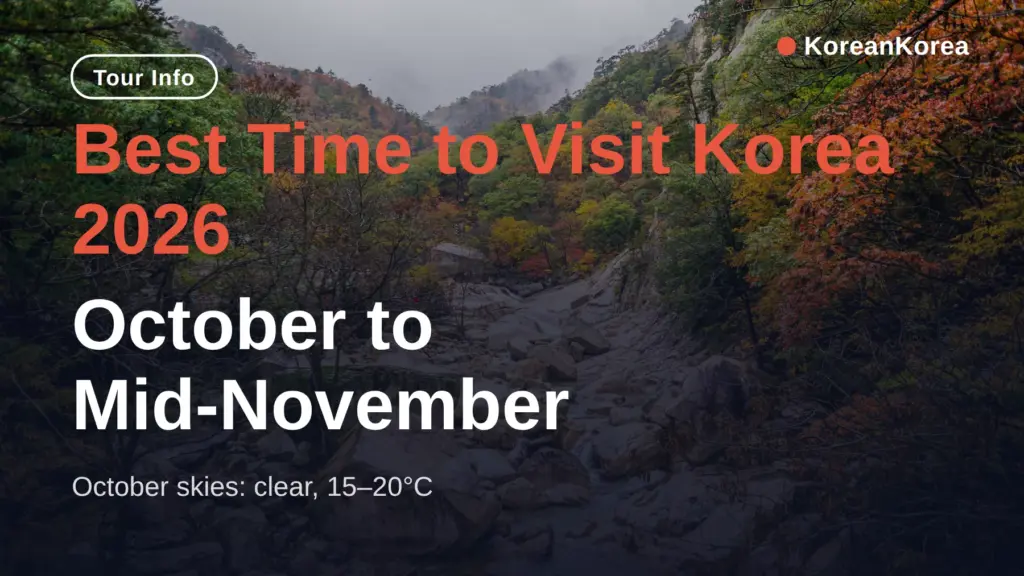
For a 2026 trip, aim for October to mid-November, or May if you want spring.
Autumn gives you 13–23°C days, clear skies and peak foliage, while May offers the same mild range without monsoon risk.
This guide ranks every month, gives the monsoon and cherry blossom windows, and lists how far ahead to book.
The Best Time to Visit Korea: May and October Lead
| March | 12–22°C spring window begins; yellow dust possible |
|---|---|
| April | Seoul highs ~17–19°C, lows ~7–9°C; cherry blossoms, driest pleasant month |
| May | Mild and stable; the most reliable spring month |
| June | Pleasant early June; monsoon can start late June |
| July–August | Monsoon then peak heat; August high ~29°C, ~14 rainy days |
| September | 10–25°C; typhoon risk drops sharply after mid-September |
| October | 15–20°C, clear skies; peak foliage late October, ~8 rainy days, high ~23°C across best months (Apr–Jun, Sep–Oct) |
October to mid-November is the best window for a 2026 trip, with May as the top spring alternative.
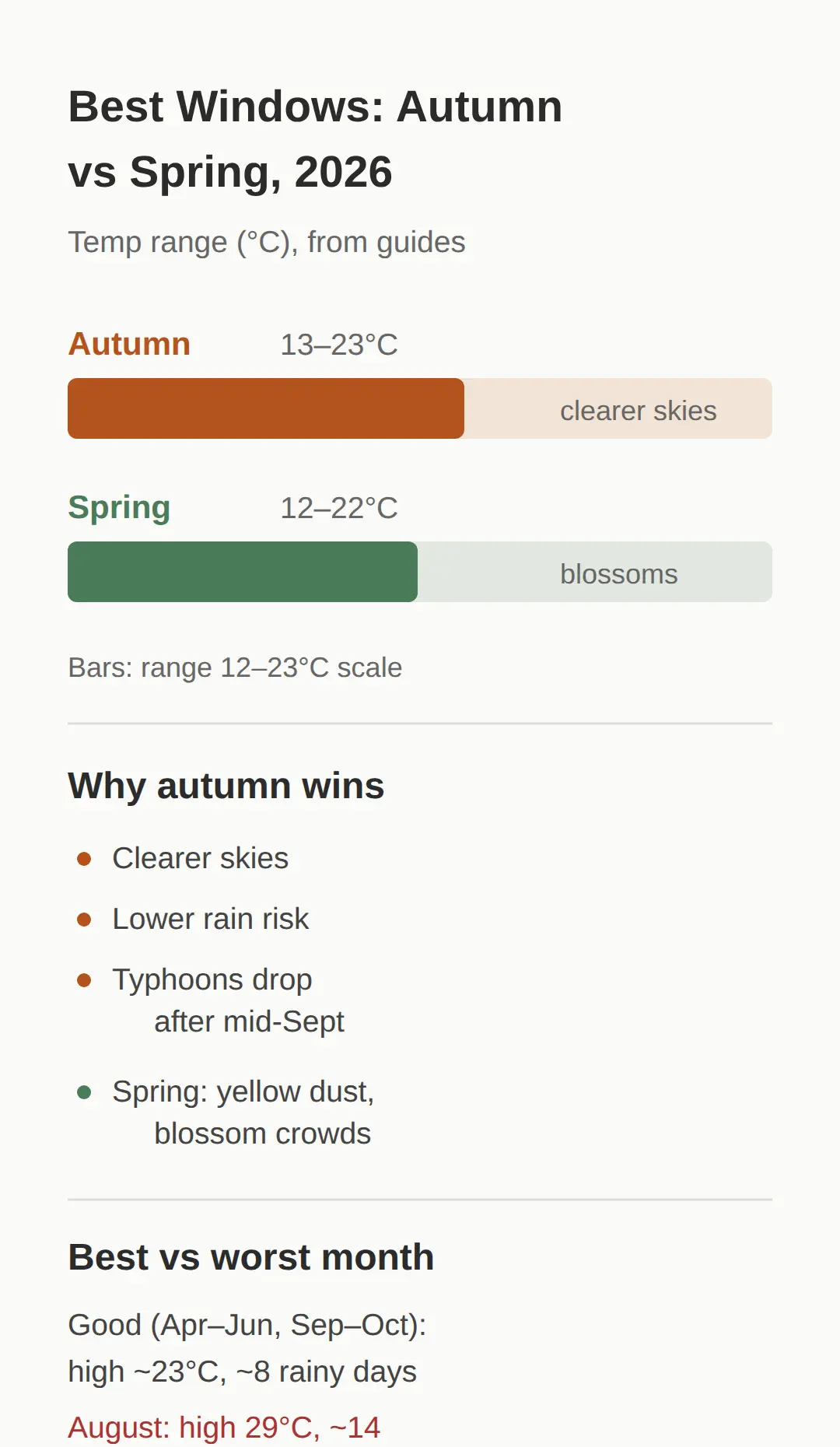
Two 2026 travel guides converge on the same ranking: autumn first at 13–23°C, spring second at 12–22°C, and the two windows overlap almost exactly.
Autumn edges spring on clearer skies, lower rain and typhoon risk that drops sharply after mid-September, not on temperature.
If I were picking one 2026 window, I would take October over April — the temperature ranges are nearly identical, but October skips the yellow dust and the blossom crowds.
Korea Month by Month: Weather and Rain
| Month | High temp | Rainy days | What it means for your trip |
|---|---|---|---|
| April–June | ~23°C | ~8 | Comfortable shoulder season |
| September–October | ~23°C | ~8 | Comfortable shoulder season |
| August | 29°C | ~14 | Worst month for comfort, scoring 5.2/10 for climate |
| December–February | 2–5°C (Seoul) | Low | Cold and dry — when Gangwon ski resorts run |
If beach season is your goal, accept the August heat and the crowds; if not, October delivers the same outdoor comfort with far less rain.
When Is Fall Foliage Peak in Korea 2026?
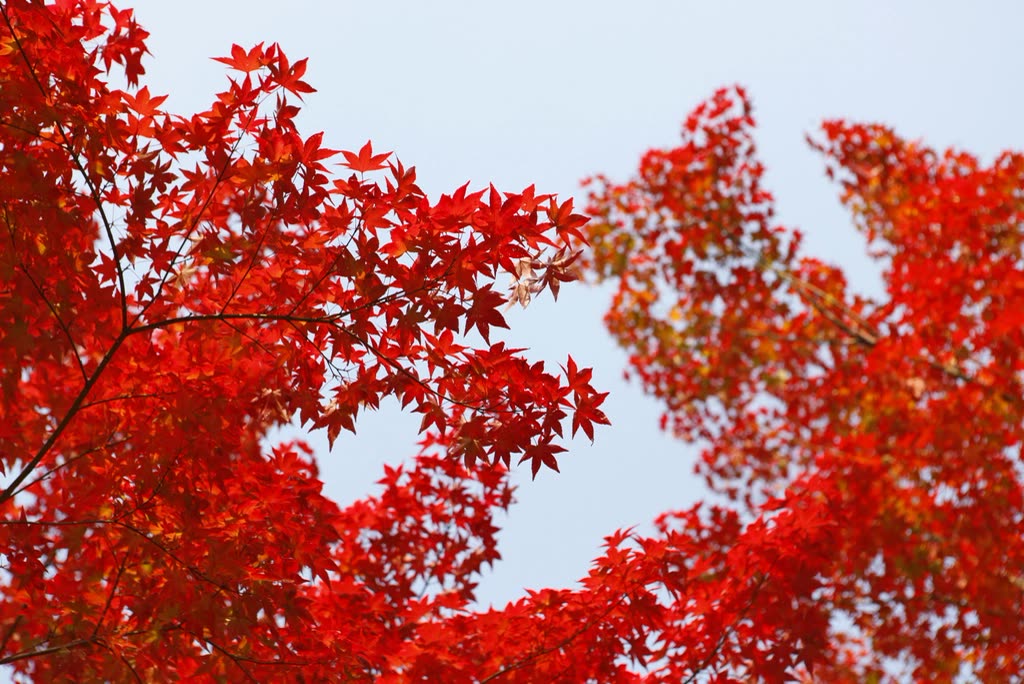
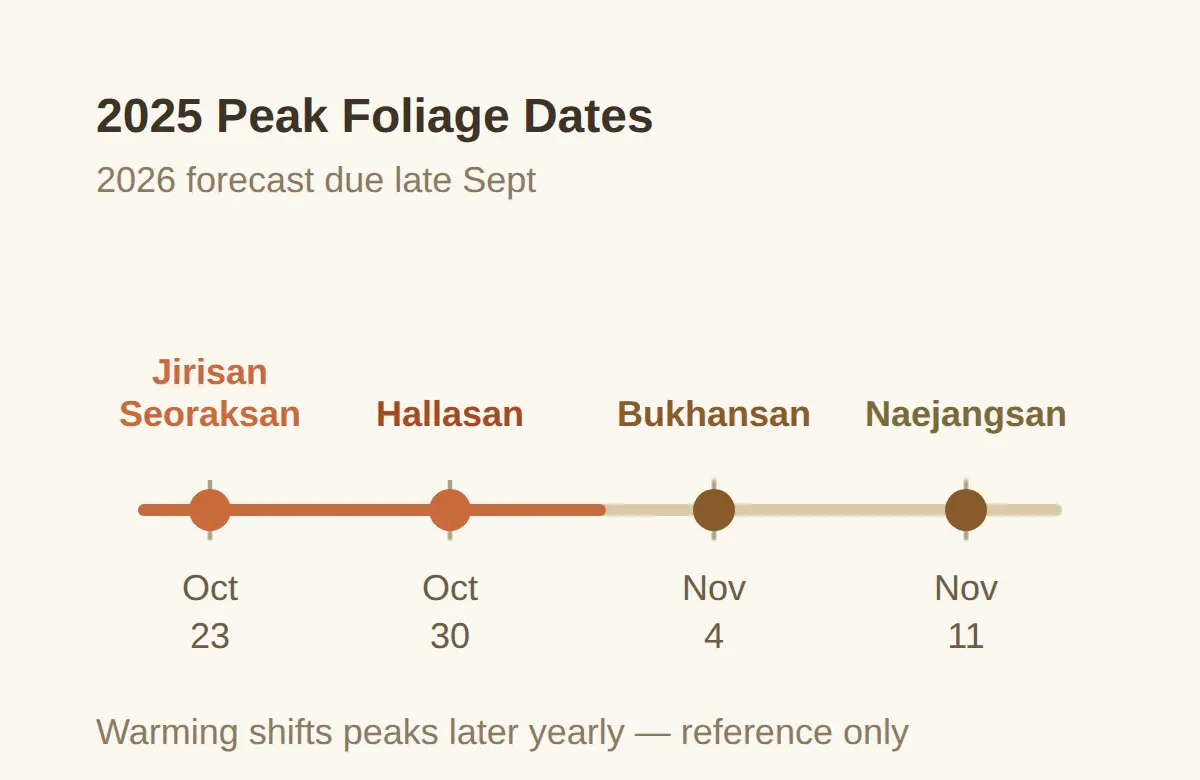
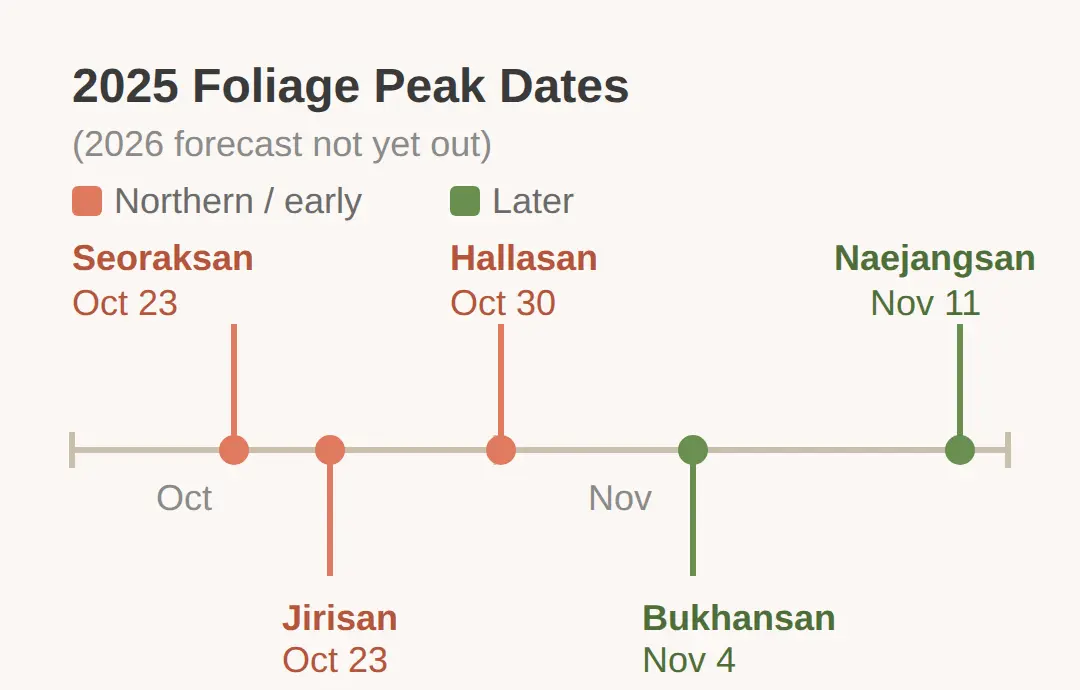
Peak foliage hit Seoraksan and Jirisan on October 23 in 2025, and the 2026 forecast is due in late September.
‘First foliage’ means 20% of leaves colored and ‘peak’ means 80%; color starts in the northern highlands in late September and moves south through November.
The 2025 VisitKorea forecast put peaks at Seoraksan and Jirisan on October 23, Hallasan on October 30, Bukhansan on November 4 and Naejangsan on November 11.
Peak dates have shifted later each year with warming, so treat the 2025 dates as a reference only and check the new forecast before locking mountain dates.
When Is Cherry Blossom Season in Korea?
Cherry blossoms open in Jeju and Busan in mid-to-late March and reach Seoul in early April, with the peak lasting about one week.
Gangwon blooms a few days after Seoul, and dates move 3–8 days from year to year — 2025 bloomed 3–8 days earlier than average.
The Korea Tourism Organization publishes its blossom forecast each February–March, so book refundable rooms if your trip depends on catching the peak.
If blossoms matter more than anything else, aim for the first week after the forecast bloom date for each city, not the day it opens.
When Is Korea’s Monsoon Season?
The monsoon (jangma) averages a start of June 19 in Jeju, June 23 on the southern coast and June 25 in central Korea including Seoul, lasting 31–32 days on average.
Those averages are poor predictors: the 2020 monsoon ran 49–54 days, while 2025 lasted only about two weeks in Jeju and about 12 days in the southern inland.
The Korea Meteorological Administration issues its monsoon forecast each May–June, so check it before any June–July trip.
Avoid late September 2026 Chuseok travel days too — KTX and express bus tickets sell out weeks ahead.
How Far Ahead Should You Book, by Month?
Book April and Jinhae cherry blossom stays 4–8 weeks ahead, May and June 1–2 weeks, and October foliage trips 3–4 weeks.
July beach trips need 4–6 weeks and August 4–8 weeks, because East coast and Busan lodging rates surge from mid-July to early August.
Ski season in January needs 2–4 weeks, stretching to 6–8 around Seollal, and Chuseok or Seollal weeks deserve an extra 3–4 weeks of lead time.
If your dates land on a national holiday, shift your trip by a day or book early rather than paying surge rates.
Related posts
📎 📅 Upcoming Dates — Release & Event Calendar
Sources
- Seoulstart month-by-month guide: May and October best; folia (seoulstart.com)
- Spring 12-22°C, autumn 13-23°C golden season (travelguidesfinder.com)
- travlists.com resident ranking: autumn > spring > winter > s (travlists.com)
Dates to Put on Your Calendar
- Cherry blossom forecast comes out in February–March — confirm 2026 dates before booking spring flights
- KMA’s monsoon forecast is announced in May–June — check it before any July trip
- The foliage forecast is published in late September — verify peak dates before locking October plans
- October stays need booking 3–4 weeks ahead, more if Chuseok overlaps with foliage peak
- KTX and express buses sell out weeks before Chuseok and Seollal — reserve early or shift travel days
FAQ
Q. When is the best time to go to South Korea?
October to mid-November, followed by May. Both offer mild temperatures, but autumn adds clear skies and peak foliage.
Q. How warm is Korea in October?
October daytime temperatures run 15–20°C with clear skies and sharply lower typhoon risk after mid-September.
Q. Is November too cold in Korea?
November runs 5–15°C. It is cool but comfortable for sightseeing, and early November still catches late foliage at Naejangsan.
Q. When is cherry blossom season in Korea?
Mid-to-late March in Jeju and Busan, early April in Seoul, with the peak lasting about one week after first bloom.
Q. When is Korea’s monsoon season?
Late June through July on average (starts around June 19–25 depending on region), but only the KMA forecast each May–June is reliable.
Before locking dates, check the three official forecasts: KTO cherry blossoms (February–March), KMA monsoon (May–June) and the foliage forecast (late September) — every date in this guide shifts a few days each year.
Cover photo: <div class=’fn’> Beautiful Foliage In South Korea</div> by Eirien — CC BY 3.0
#besttimetovisitkorea #koreainoctoberweather #koreainnovemberweather #koreacherryblossom #koreamonsoonseason #koreafallfoliage
📅Upcoming Schedule — this week 23 · D-1 Autumn season = post-summer brightening demand window (UV drSee all →