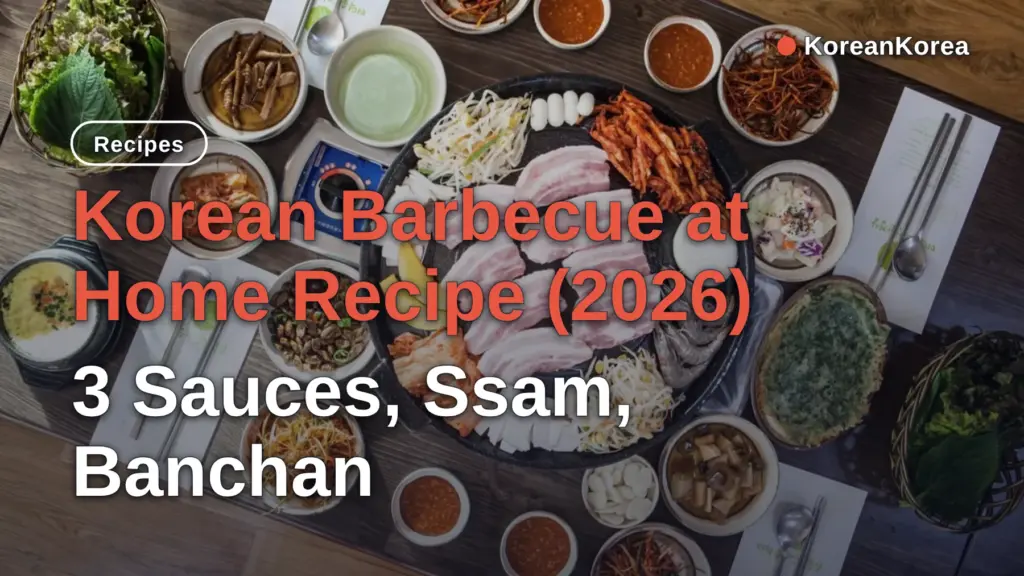
A home Korean BBQ spread is grilled meat plus three sauces — ssamjang, sesame oil dip, and quick pickled onions — with ssam greens and banchan around one grill pan.
That setup, not the grilling, is what makes the meal taste like the restaurant version.
This post gives the sauce ratios, the wrap steps, the greens-to-people count, and the substitutions that work outside Korea.
Korean Barbecue at Home Recipe: The 3-Sauce Setup
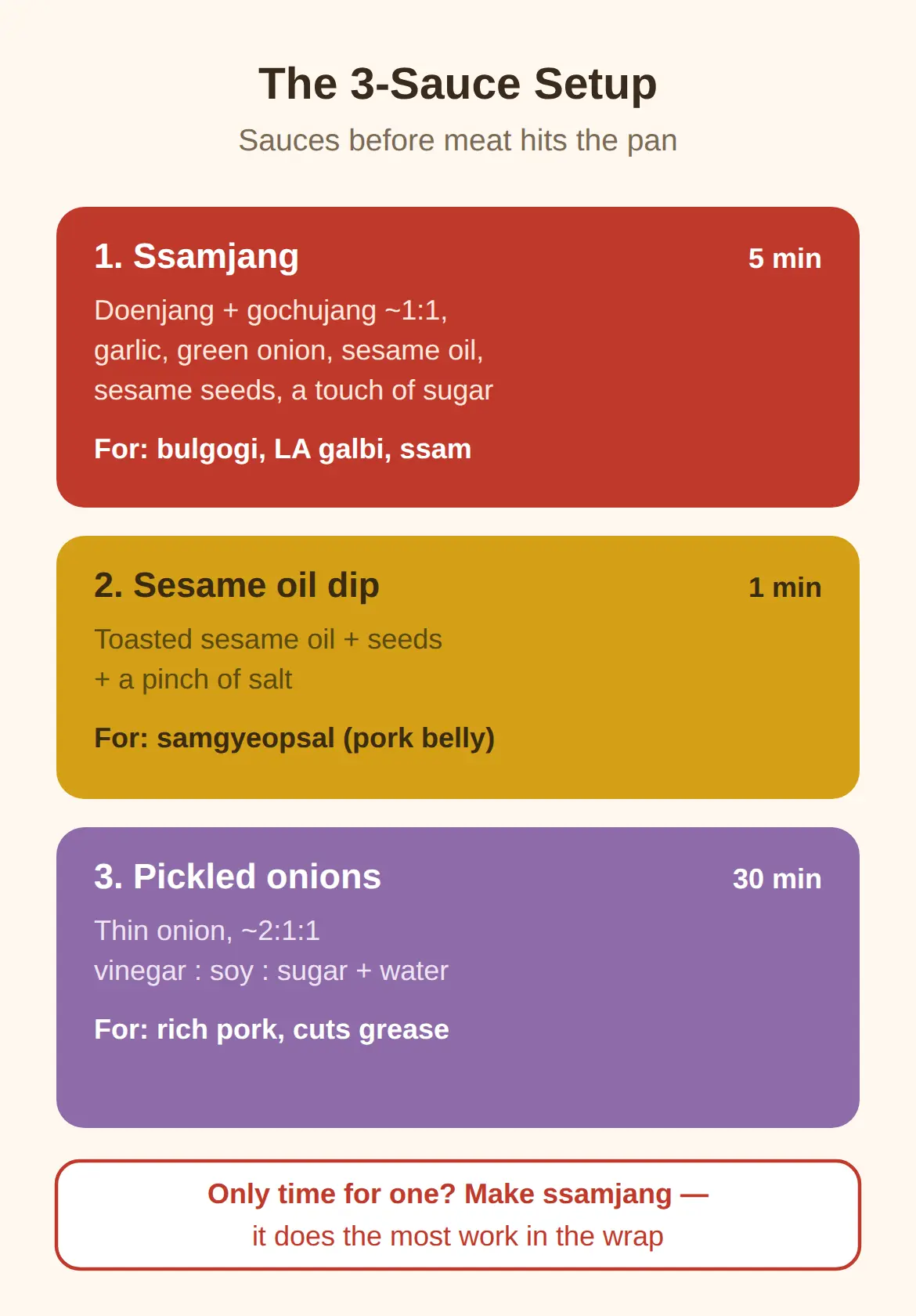
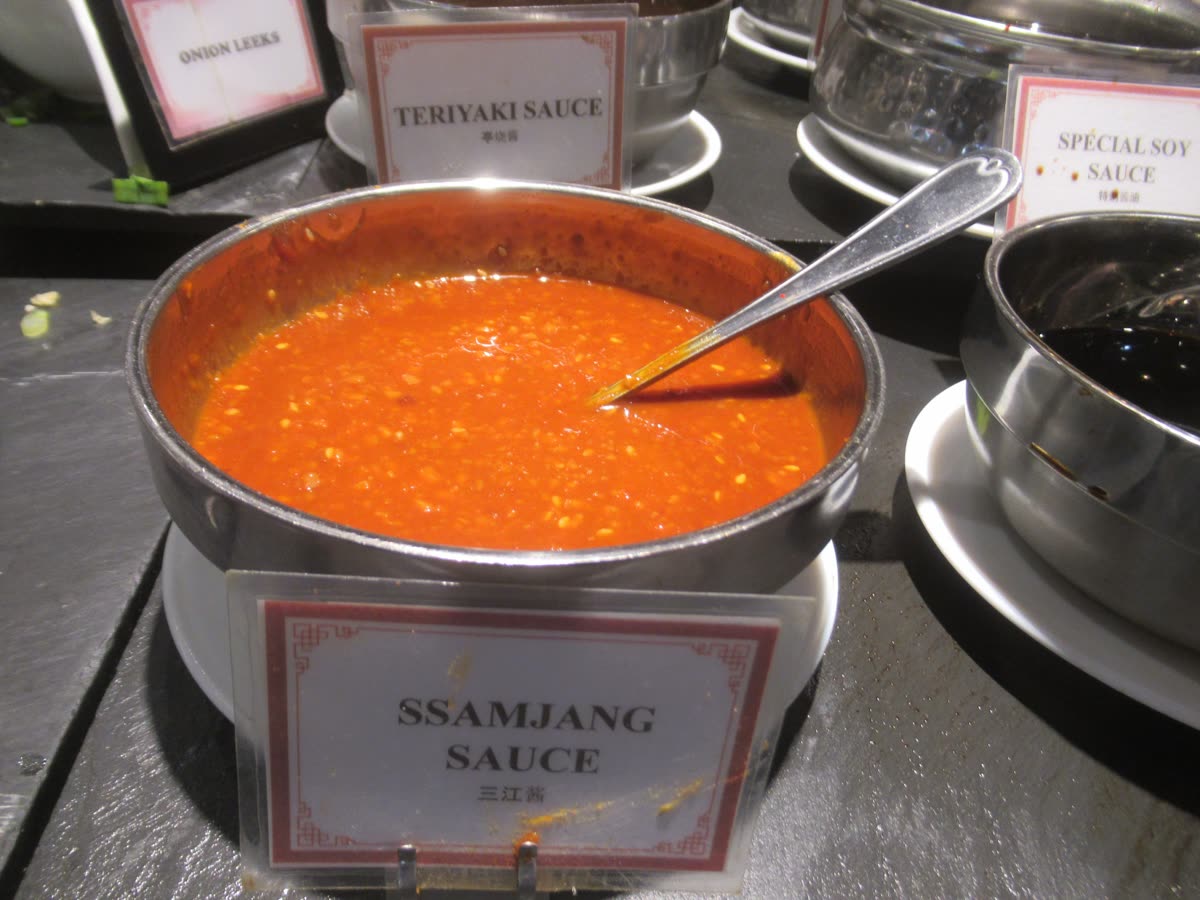
| Ssamjang | Doenjang + gochujang about 1:1, plus garlic, green onion, sesame oil, seeds, ~1 tsp sugar |
|---|---|
| Sesame oil dip | Toasted sesame oil + sesame seeds + a pinch of salt (some add chopped scallion) |
| Pickled onions | Thin onion in about 2:1:1 vinegar:soy:sugar plus a little water; ready in ~30 minutes |
Three sauces carry the spread: ssamjang for wrapping, sesame oil dip for dipping, and quick pickled onions on the side.
| Sauce | Base | Pairs with | Ready in |
|---|---|---|---|
| Ssamjang | Doenjang + gochujang mixed roughly 1:1, plus minced garlic, green onion, sesame oil, sesame seeds, and a touch of sugar | Marinated beef (bulgogi, LA galbi) and the ssam | Mixed by hand in minutes |
| Sesame oil dip | Toasted sesame oil + toasted sesame seeds + a pinch of salt | Unseasoned pork belly (samgyeopsal) | 1 minute |
| Pickled onions | Thin-sliced onion in roughly 2:1:1 vinegar:soy:sugar with a little water | Rich pork cuts, on the side to cut the grease | About 30 minutes |
Per the method on Maangchi’s ssamjang page, the ssamjang ratio above is the base; adjust to taste.
In the standard at-home spread, the sauces and ssam greens matter as much as the meat — the communal format only works when ssamjang, the sesame oil dip, pickled onions, lettuce, and perilla are all within arm’s reach before anything hits the grill pan.
If you only have time for one sauce, make ssamjang; it does the most work in the wrap.
How do you wrap a Korean BBQ ssam?
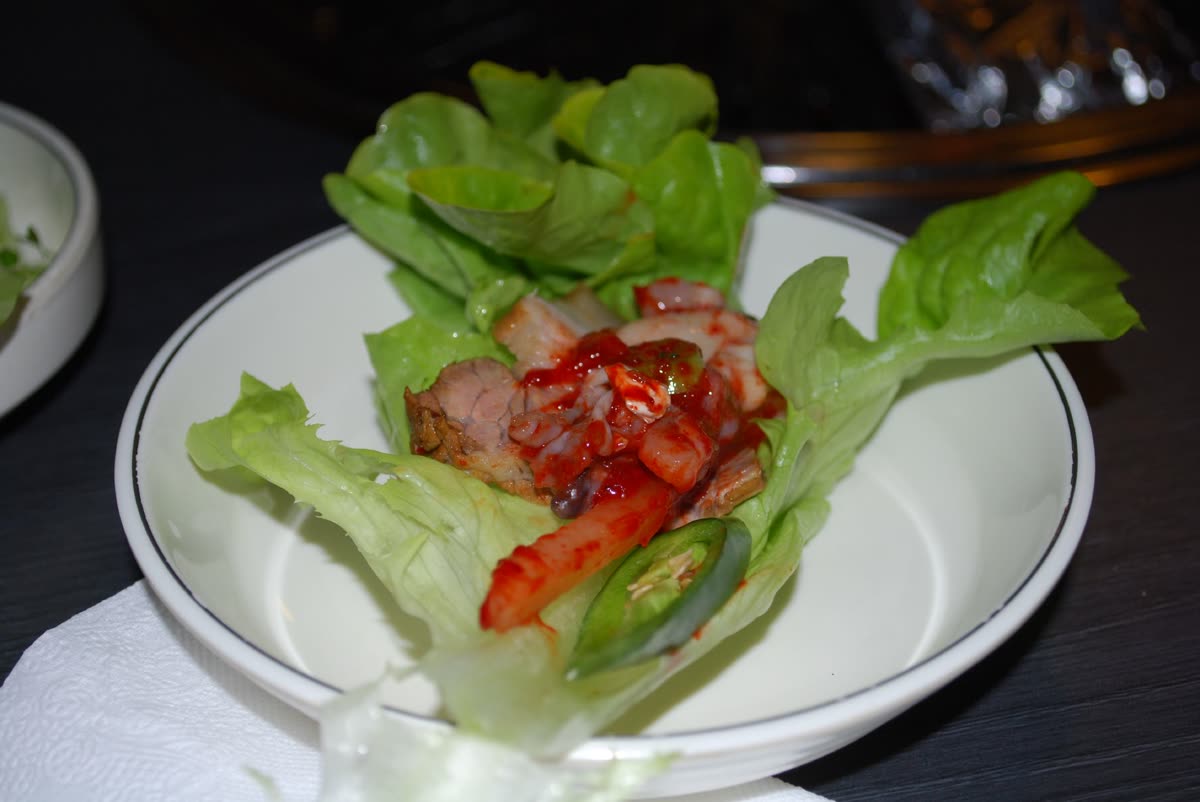
A ssam is one lettuce leaf holding meat, sauce, and sides, eaten in a single bite.
The order is simple:
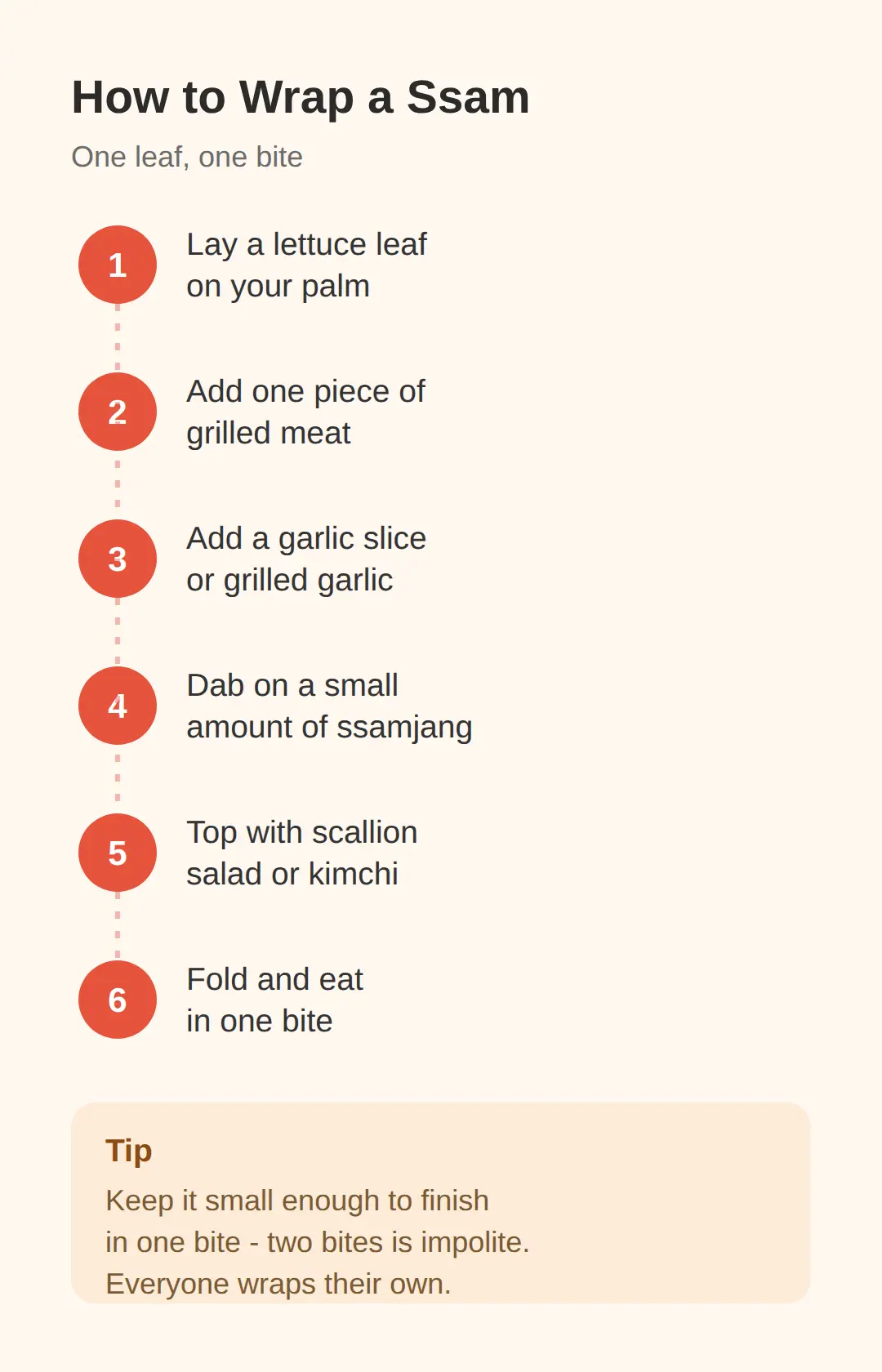
- Lay a lettuce leaf on your palm.
- Add one piece of grilled meat.
- Add a garlic slice or a piece of grilled garlic.
- Dab on a small amount of ssamjang.
- Top with pamu chim (shredded scallion salad) or kimchi.
- Fold and eat it in one bite.
Two bites is considered impolite, so keep the wrap small enough to finish at once.
Each person wraps their own — assembling one for someone else is not the custom.
Steps at a glance
-
1Lay a lettuce leaf on your palm.
-
2Add one piece of grilled meat.
-
3Add a garlic slice or a piece of grilled garlic.
-
4Dab on a small amount of ssamjang.
-
5Top with pamu chim (shredded scallion salad) or kimchi.
-
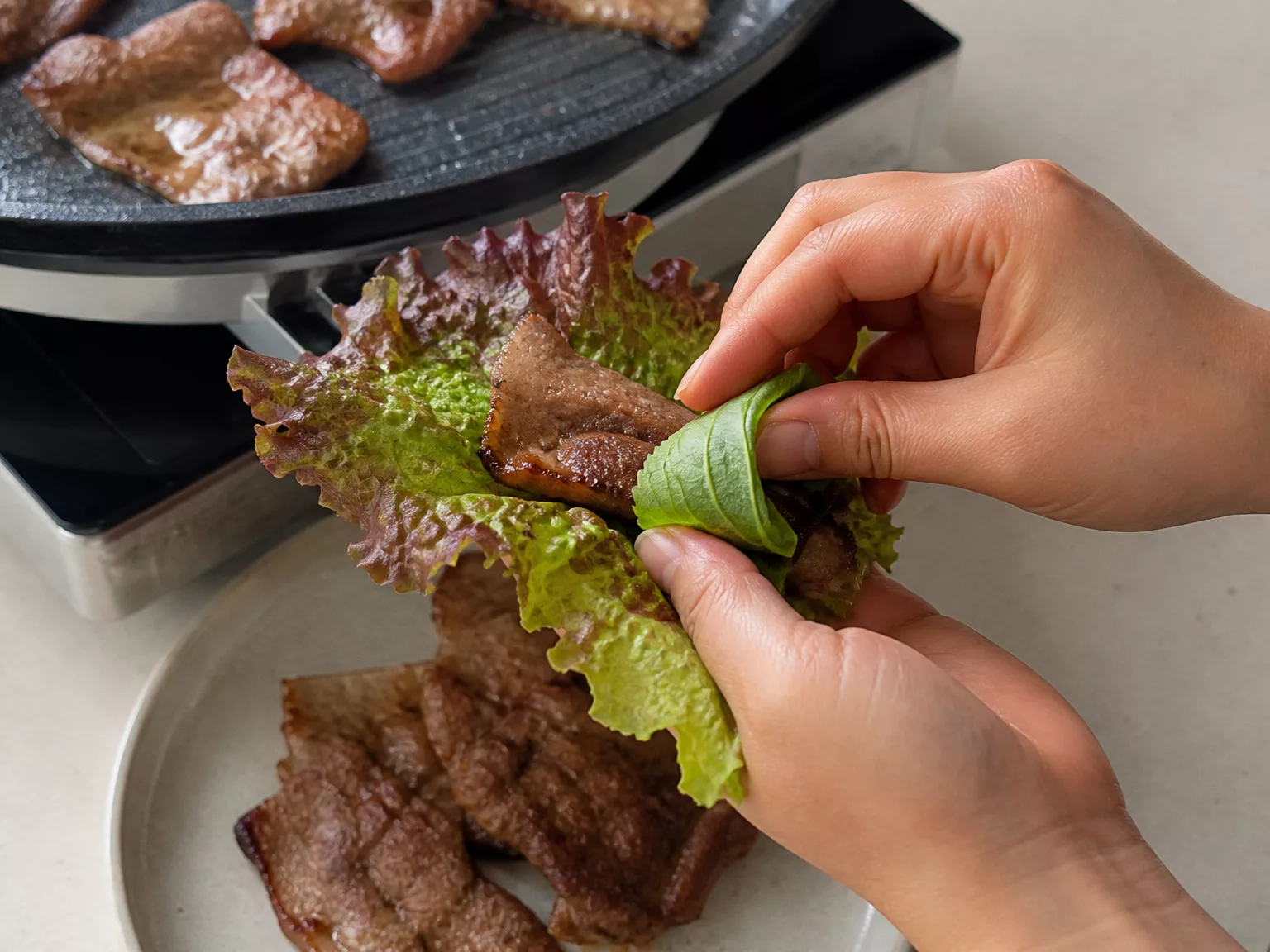 AI-generated photo
What it should look like — AI-generated image of this step, made from the recipe text — not a photo of our kitchen. 6Fold and eat it in one bite.
What goes around the grill: banchan and greens
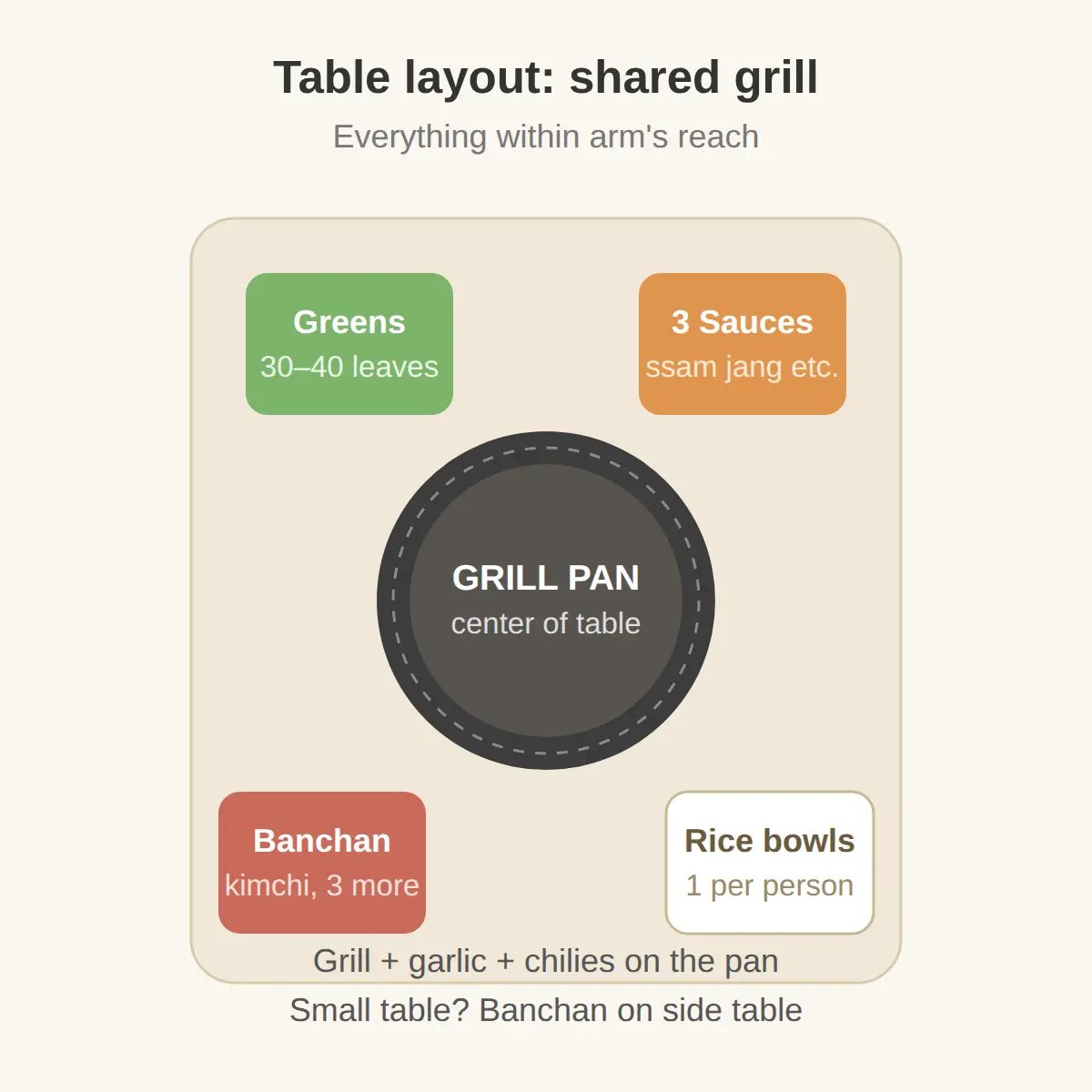
For four people, plan about 1 head of red or green leaf lettuce plus 1 pack of perilla leaves — roughly 30–40 leaves total.
The standard banchan set is kimchi, sangchu-geotjeoli (seasoned lettuce salad), baechu-geotjeoli, and pamu chim, with white rice in individual bowls.
Whole garlic cloves and green chilies go on the grill pan beside the meat and end up inside the wraps.
Center the grill pan on the table and keep the greens, sauces, banchan, and rice within arm’s reach of everyone — this is a shared format, not plated courses.
If your table is small, put the grill in the middle and the banchan on a side table; reaching matters more than arrangement.
Which meat goes with which sauce?
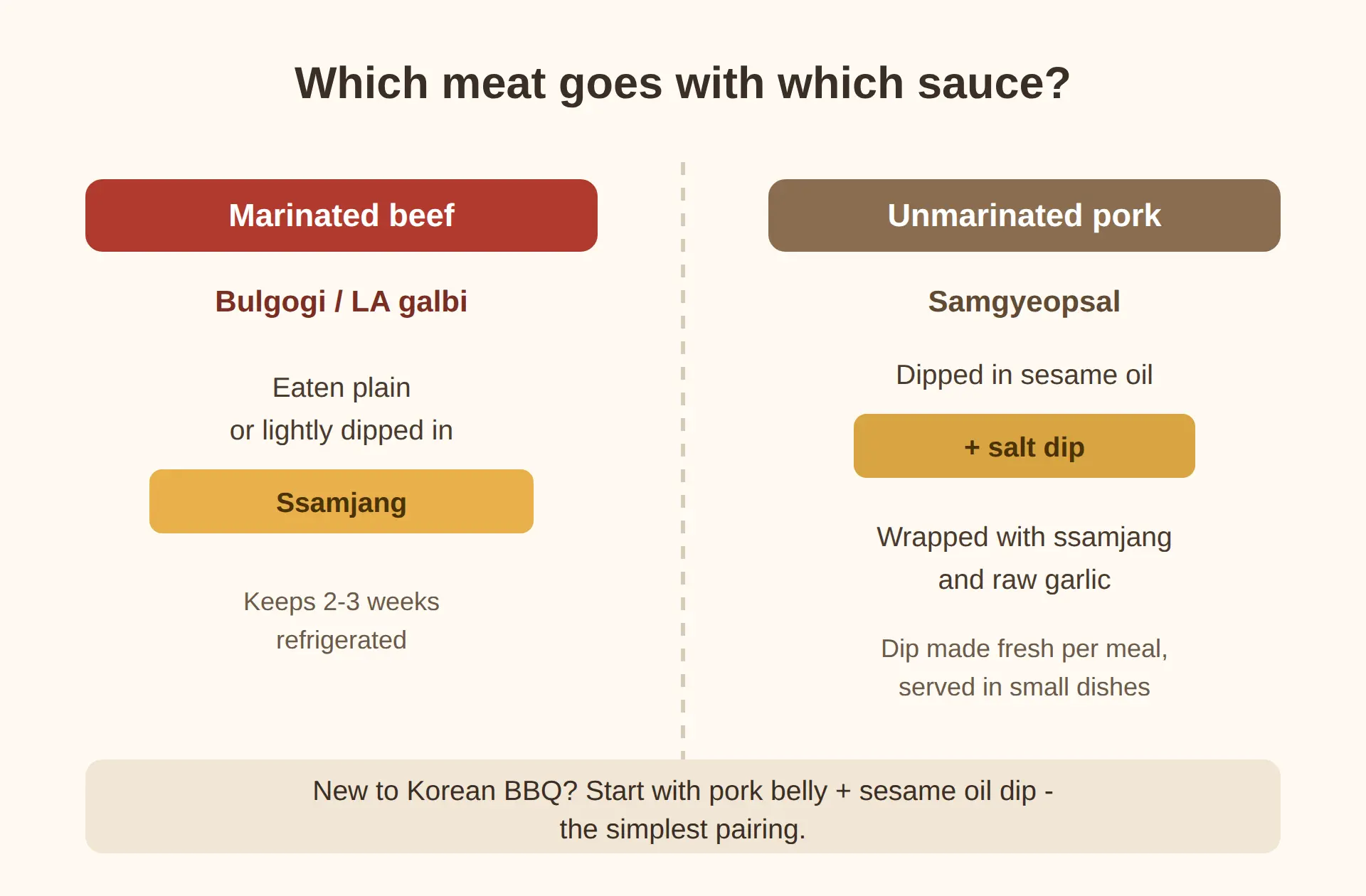
Marinated beef (bulgogi, LA galbi) is eaten plain or with a light dip in ssamjang, while unseasoned pork belly gets the sesame oil and salt dip.
The sauces are what separate the two meat groups, so the pairing decides your shopping list.
For a first-timer spread, the standard trio is bulgogi (thin-sliced marinated beef), LA galbi (soy-marinated short ribs), and samgyeopsal (pork belly).
A flat grill pan or the oven broiler replaces the tabletop grill, and grilling in batches keeps the meat searing instead of steaming.
The meat recipes are in the existing bulgogi and LA galbi posts; this setup is what goes around them.
If guests are new to Korean BBQ, start with pork belly and the sesame oil dip — it is the simplest pairing to eat.
Ssamjang without gochujang, store-bought shortcuts, and substitutions
If gochujang is unavailable, Maangchi’s fallback is gochugaru (Korean chili flakes) mixed into doenjang with a little honey.
Store-bought ssamjang from Sempio, Chungjungone, or CJ is a standard shortcut, and mixing it with extra gochujang, garlic, and sesame oil revives the flavor.
Regular supermarkets work for the lettuce base: romaine hearts replace red leaf lettuce.
H Mart and other Korean grocers carry perilla leaves, doenjang, gochujang, and toasted sesame oil.
Check the doenjang label if you cook gluten-free — traditional fermented doenjang is wheat-free, but some commercial brands add wheat flour.
If the closest store is a regular supermarket, buy romaine and make the gochugaru version; the sauces matter more to the format than the exact lettuce does.
If I were setting this up for first-time guests, I’d grill thick-cut pork belly alongside the marinated beef, because that way each of the three sauces gets a clear job — ssamjang on the beef ssam, sesame oil dip for the pork.
Related posts
📎 📅 Upcoming Dates — Release & Event Calendar
Sources
- Ssam greens set (red/green lettuce, perilla, garlic), bancha (charim.soundedfun.dev)
- Authoritative framing of ssam as core Korean food culture (korean-culture.org)
- Live recipe page: doenjang + gochujang 1:1, sugar, garlic, s (maangchi.com)
Summary: the first-timer’s Korean BBQ checklist
- Make ssamjang first — doenjang and gochujang about 1:1, plus garlic, green onion, sesame oil, seeds, and a touch of sugar.
- The sesame oil dip is three ingredients; the pickled onions need about 30 minutes.
- For four people: about 1 head of lettuce plus 1 pack of perilla, roughly 30–40 leaves total.
- Shopping list for the full spread: lettuce, perilla, doenjang, gochujang, sesame oil, onion, garlic, scallions, kimchi, rice, and your chosen meat cuts — all standard Korean-grocery items.
- Eat every ssam in one bite, and wrap your own.
FAQ
Q. Which sauces are essential for Korean BBQ at home?
Ssamjang (doenjang + gochujang about 1:1), a sesame oil dip (oil, seeds, salt), and quick pickled onions (about 2:1:1 vinegar:soy:sugar) cover the standard spread.
Q. How do you wrap a Korean BBQ ssam?
Lettuce leaf, one piece of meat, garlic, a dab of ssamjang, pamu chim or kimchi — fold and eat in one bite.
Q. Can I make ssamjang without gochujang?
Mix gochugaru (Korean chili flakes) into doenjang with a little honey — that is the standard fallback when gochujang is unavailable.
Q. Is store-bought ssamjang good enough for Korean BBQ at home?
Yes. Sempio, Chungjungone, and CJ versions are standard shortcuts, and mixing in extra gochujang, garlic, and sesame oil brightens the flavor.
Q. How long do quick pickled onions keep in the fridge?
They are ready in about 30 minutes and keep 3–4 days refrigerated, per the ratio published on Korean Bapsang.
Next on the calendar: grill the meat from the bulgogi and LA galbi posts, and set the sauces out 30 minutes before dinner — the pickled onions can chill while the table is set.
피프 — 드디어 클로드로 영상까지 만듭니다
Cover photo: Grilled pork belly bbq — CC0 1.0
#koreanbarbecueathomerecipe #koreanbbqathome #ssamjangrecipe #sesameoildip #koreanlettucewraps #koreanbanchan
📅Upcoming Schedule — this week 23 · D-1 Autumn season = post-summer brightening demand window (UV drSee all →