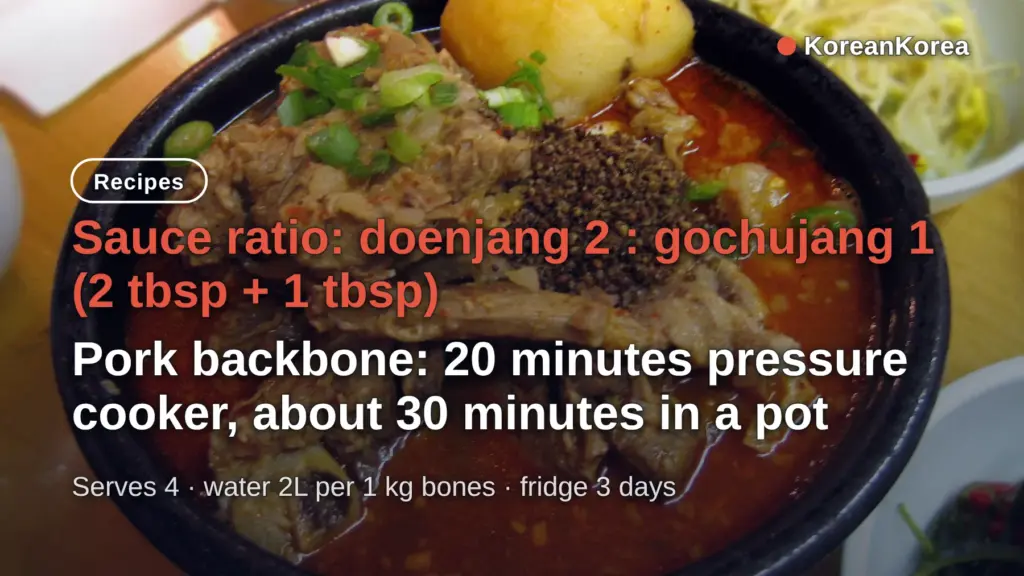
The gamjatang sauce ratio is doenjang 2 : gochujang 1 — 2 tablespoons plus 1 tablespoon — and pork backbone cooks in 20 minutes in a pressure cooker or about 30 minutes after boil in a regular pot.
That ratio and timing work per 1 kg of backbone for 4 servings.
This post covers the full steps, both sauce versions, what to use in place of siraegi, and how to store leftovers.
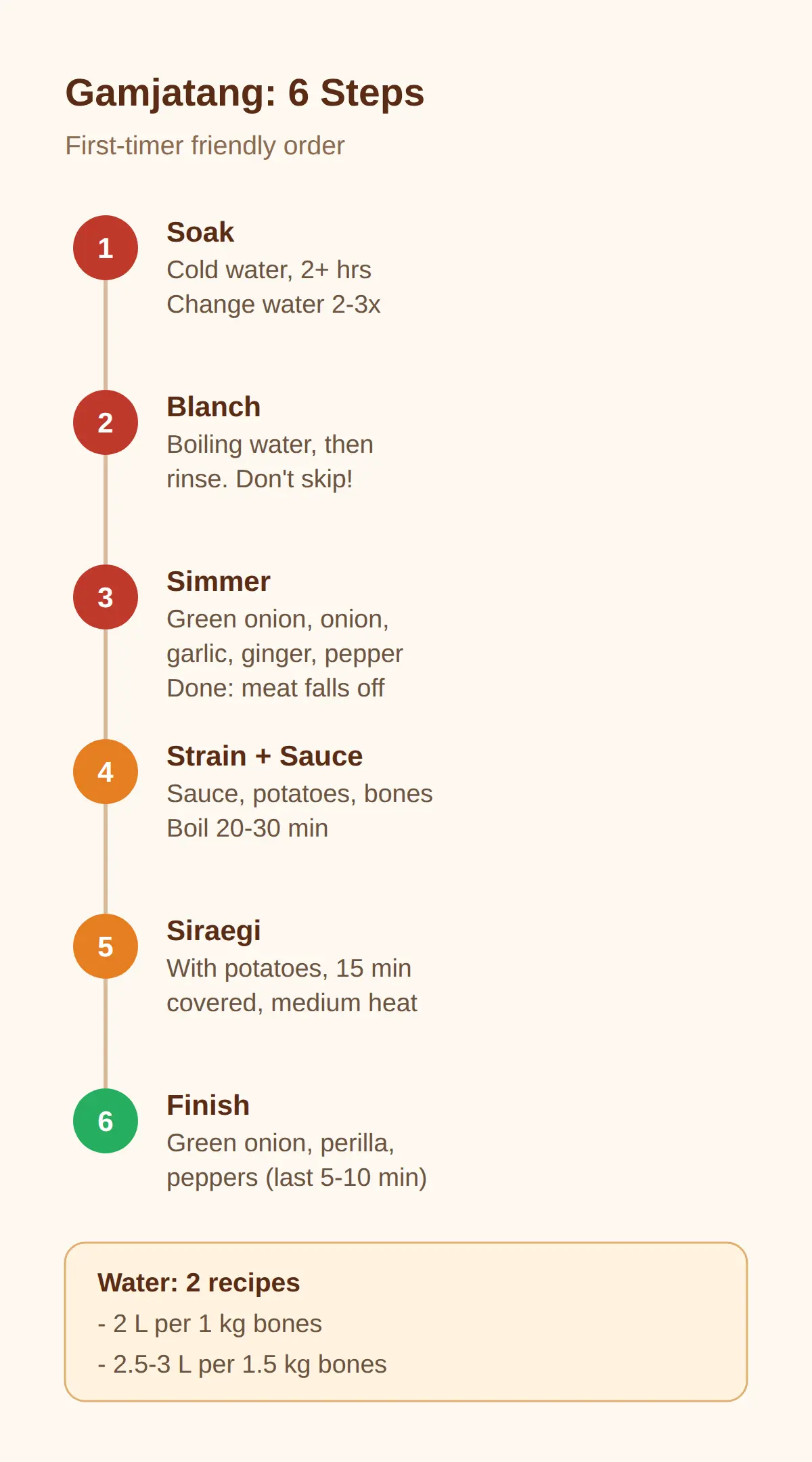
Gamjatang Recipe: Steps a First-Timer Can Follow
| Pressure cooker | 1 kg pork backbone, 2L water | 20 minutes under pressure | Confirmed by two Korean recipe pages, retrieved September 27, 2026 |
|---|---|
| Regular pot | 1 kg pork backbone, 2L water | about 30 minutes after boil | about 1+ hour if you want a deep bone broth |
| Larger batch (variant recipe) | 1.5 kg backbone, 2.5–3L water, 3–4 potatoes | simmer at least 1 hour until meat is tender | same 2L per 1 kg water-to-bone ratio |
| Step | What to do |
|---|---|
| 1. Soak | Soak the pork backbone in cold water for at least 2 hours, changing the water 2–3 times, to draw out the blood. |
| 2. Blanch | Blanch the bones in boiling water, then rinse them under running water. |
| 3. Simmer | Simmer the bones with green onion, half an onion, 6–7 whole garlic cloves, a slice of ginger, whole peppercorns, and optional kelp or anchovy, until the meat is tender. |
| 4. Strain and sauce | Strain the broth, then add the sauce, quartered potatoes, and the bones back in, and boil for 20–30 minutes. |
| 5. Siraegi | Add siraegi (dried greens) with the potatoes, simmering 15 minutes covered over medium heat, until a chopstick slides in easily. |
| 6. Finish | Finish with diagonally sliced green onion, torn perilla leaves, and optional cheongyang peppers in the last 5–10 minutes. |
Blanching is the step most first-timers skip, and it is what keeps the broth from turning gray.
The blood-soak and the blanch do different jobs: the soak removes blood inside the bone, the blanch removes surface impurities.
If the broth still tastes gamey, the cause is usually one of these two steps being cut short.
If the meat falls off the bone when you pull at it with a chopstick, the broth stage is done — move on to the sauce.
If not, keep simmering; the variant recipe allows 1 hour or more.
What Is the Gamjatang Sauce Ratio?
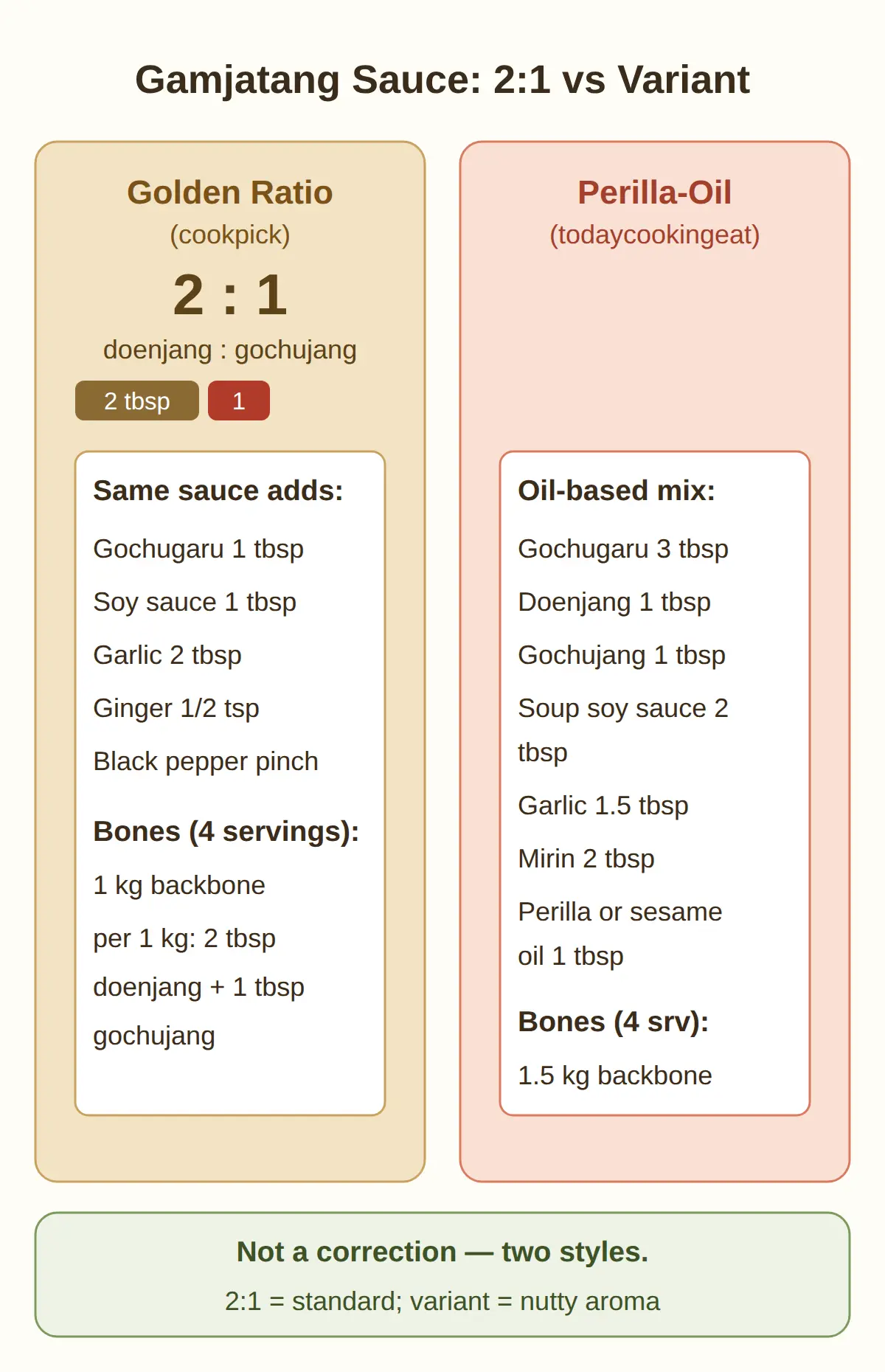
The gamjatang sauce golden ratio is doenjang 2 : gochujang 1 — 2 tablespoons of doenjang plus 1 tablespoon of gochujang per 1 kg backbone — confirmed by two independent Korean recipe pages, both retrieved September 27, 2026.
That is 3 tablespoons of wet paste in total.
The same recipe adds gochugaru 1 tbsp, soy sauce 1 tbsp, minced garlic 2 tbsp, ginger powder 1/2 tsp, and a pinch of black pepper to the paste.
A second recipe mixes a different, perilla-oil-based sauce: gochugaru 3 tbsp, doenjang 1 tbsp, gochujang 1 tbsp, soup soy sauce 2 tbsp, garlic 1.5 tbsp, mirin 2 tbsp, and 1 tbsp perilla or sesame oil.
The variant is not a correction of the 2:1 ratio — it is a separate, nuttier, oil-based version.
If you want the standard gamjatang taste, start with the 2:1 base; if you like a perilla-oil aroma in the broth itself, use the variant.
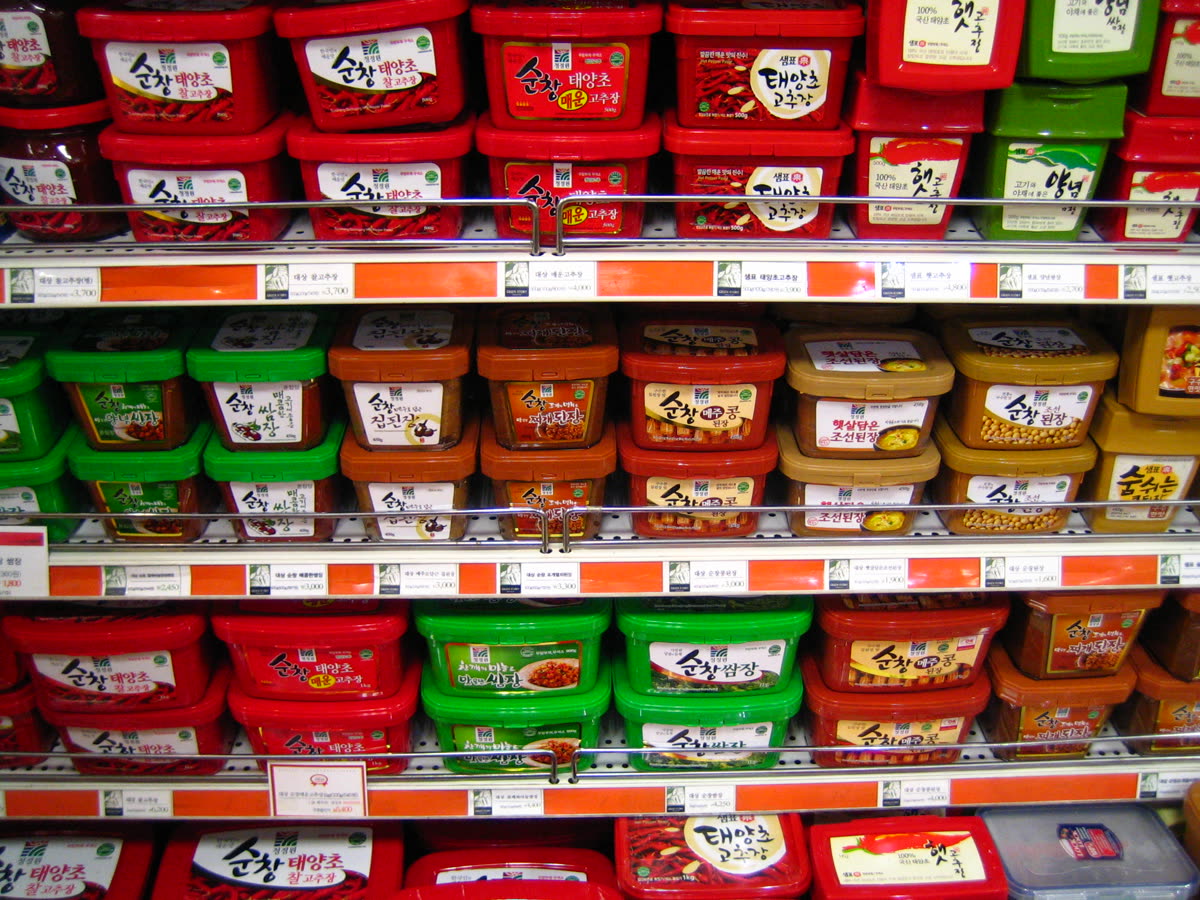
Where to buy soup soy sauce (gukganjang) and deulkkae powder abroad was not confirmed in this check — regular soy sauce and the perilla-oil sauce version are the closer options at a general supermarket.
Pressure Cooker vs Regular Pot: How Long Does Gamjatang Take?
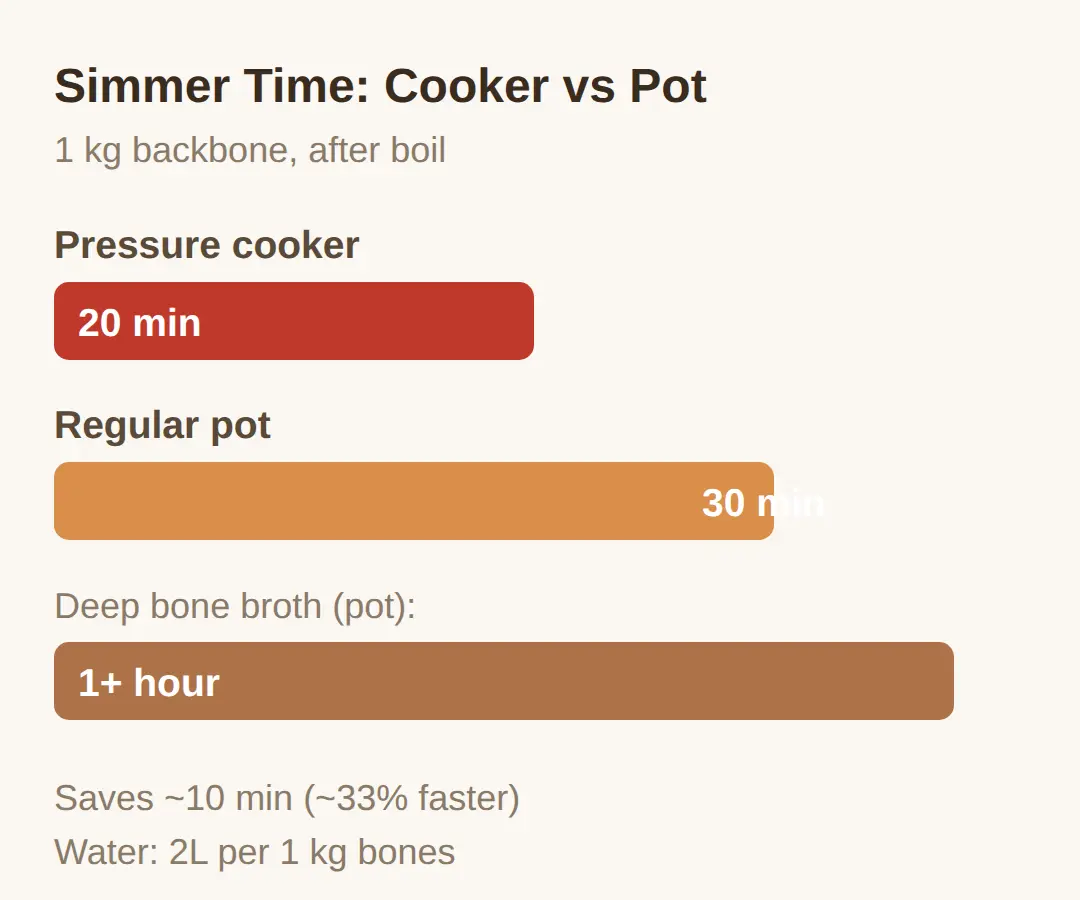
Pork backbone cooks in 20 minutes in a pressure cooker versus about 30 minutes after boil in a regular pot — roughly 10 minutes saved, about 33% faster on the simmer stage, per the cookpick timings.
The variant recipe quotes a longer window of 30–45 minutes total, roughly half the active cooking time in a pressure cooker.
Keep the numbers separate: they come from different recipes and answer different kitchens.
The 30-minute pot figure is the minimum for a seasoned, ready-to-eat soup.
If you want a deeper, restaurant-style bone broth, the variant recipe simmers at least 1 hour on medium-low heat, straining the broth once the meat is tender.
Both timings hold the same water-to-bone ratio of about 2L per 1 kg backbone, so scale the water by bone weight rather than by pot size.
If you have a pressure cooker, the 20-minute figure is the faster and fully confirmed path.
If you only have a regular pot, plan for the 30-minute boil or the 1-hour deep-broth version and start soaking the bones earlier in the day.
Can I Make Gamjatang Without Siraegi?
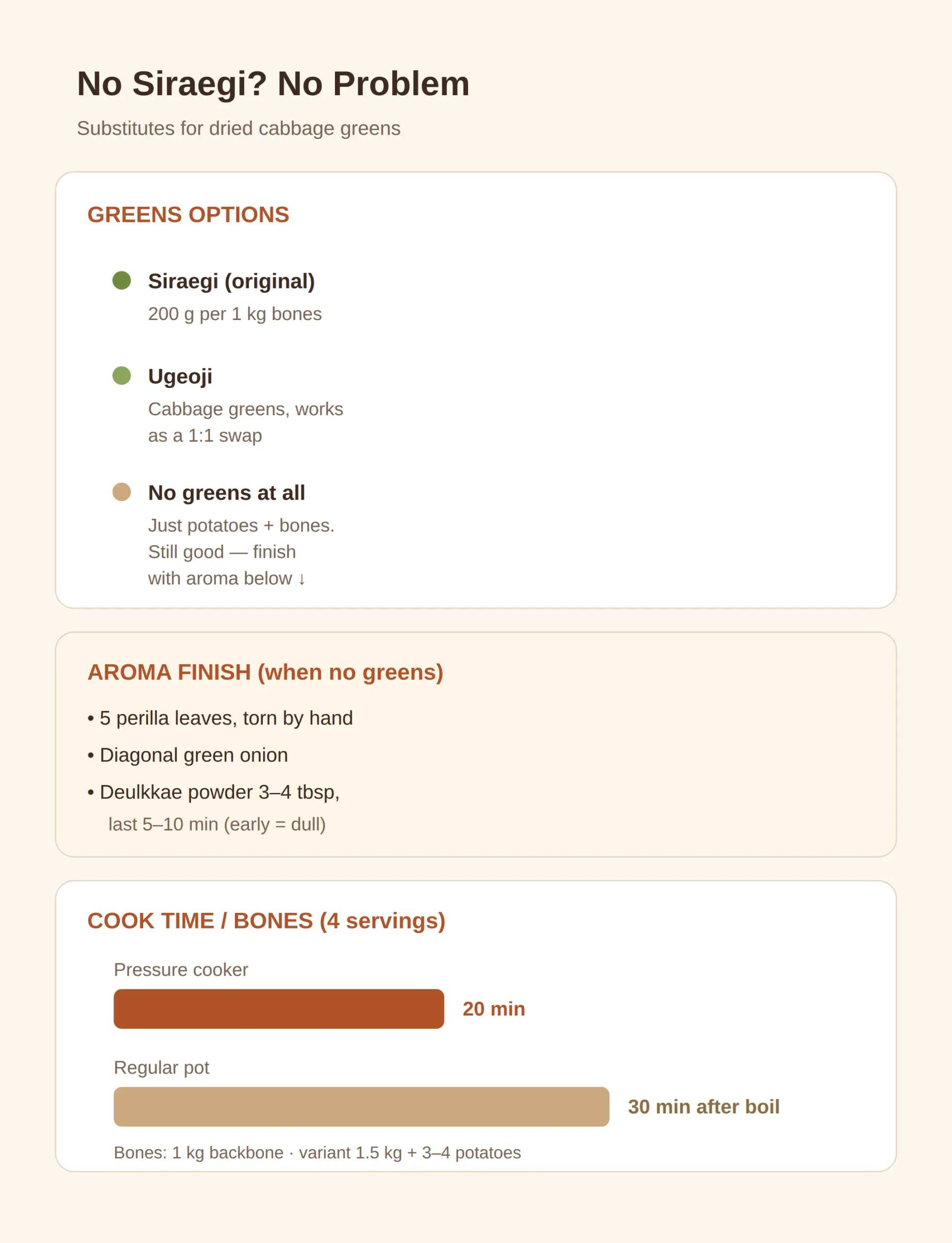
Yes — ugeoji (cabbage greens) works in place of siraegi, and the dish is still good without any dried greens at all, just potatoes and bones.
The cookpick recipe states this directly for the 200 g siraegi per 1 kg backbone version.
Without dried greens, the aroma has to come from the finish: 5 perilla leaves torn by hand, diagonally sliced green onion, and optionally deulkkae (perilla seed) powder 3–4 tbsp added in the last 5–10 minutes.
Deulkkae powder goes in late on purpose — adding it earlier dulls the nutty aroma.
Mukeunji (aged kimchi) gamjatang is another common variation that uses the same broth, though whether it keeps the same 2:1 sauce ratio was not confirmed.
If neither siraegi nor ugeoji is available where you live, cook the potatoes and bones only and let perilla leaves plus deulkkae powder carry the aroma — the recipe explicitly still works that way.
That is the path I would take rather than dropping the dish.
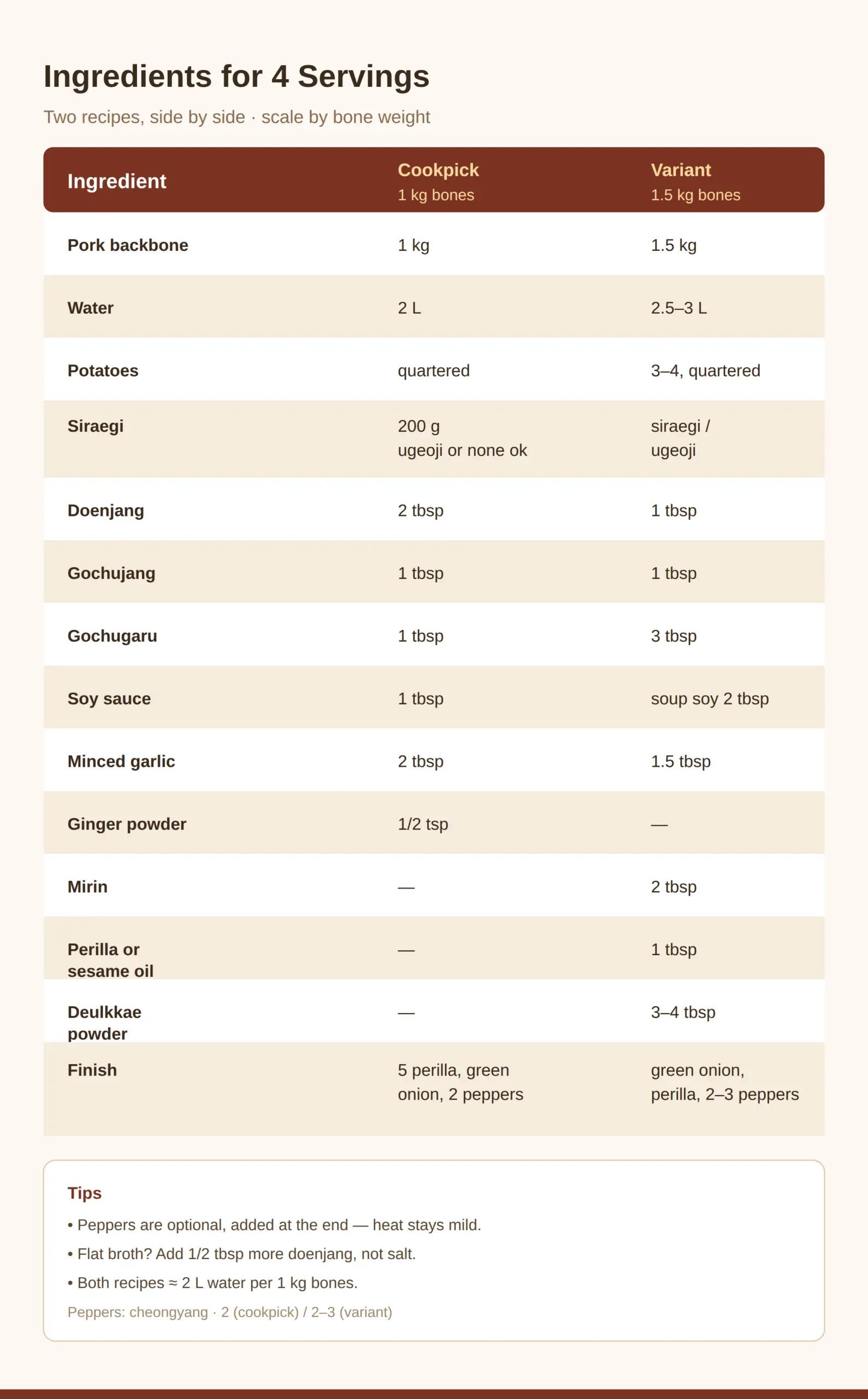
Ingredients for 4 Servings
Two Korean recipes, kept separate: the cookpick recipe uses 1 kg backbone and 2L water, and the variant recipe uses 1.5 kg backbone with 3–4 potatoes and 2.5–3L water.
Both hold about 2L of water per 1 kg of backbone, so scale by bone weight.
| Ingredient | Cookpick (1 kg bones) | Variant (1.5 kg bones) |
|---|---|---|
| Pork backbone | 1 kg | 1.5 kg |
| Water | 2 L | 2.5–3 L |
| Potatoes | quartered | 3–4, quartered |
| Siraegi | 200 g (ugeoji or none ok) | siraegi/ugeoji |
| Doenjang | 2 tbsp | 1 tbsp |
| Gochujang | 1 tbsp | 1 tbsp |
| Gochugaru | 1 tbsp | 3 tbsp |
| Soy sauce | 1 tbsp | soup soy sauce 2 tbsp |
| Minced garlic | 2 tbsp | 1.5 tbsp |
| Ginger powder | 1/2 tsp | — |
| Mirin | — | 2 tbsp |
| Perilla or sesame oil | — | 1 tbsp |
| Deulkkae powder | — | 3–4 tbsp |
| Finish | 5 perilla leaves, green onion, 2 cheongyang peppers | green onion, perilla leaves, 2–3 cheongyang peppers |
The perilla-oil variant lists its own amounts in the sauce section above.
The cheongyang peppers are optional and go in at the end, so the soup stays mild and the heat is fully controlled by whoever is serving.
If the broth tastes flat at the end, add 1/2 tbsp more doenjang rather than salt — the source recipe adjusts depth with the paste, not with salt.
How Do I Store Leftover Gamjatang?
Leftover gamjatang keeps 3 days in the fridge, and the broth without potatoes can be frozen for up to 2 weeks.
The 2-week freezer figure appears in one recipe only, so treat it as that recipe’s practice rather than a hard rule.
Freezing works better without the potatoes because boiled potatoes go grainy when thawed, so separate them from the broth before freezing.
A common home practice shown in recipe blogs is turning next-day leftover broth plus rice and perilla powder into fried rice or porridge — that is everyday practice from recipe blogs, not a figure from a tested recipe, so treat it as an idea rather than a method with set amounts.
If you cook for two, the freezer route is the one that makes the larger batch worth it: fridge keeps you 3 days, and the broth-only freezer portion stretches the batch beyond that.
No verified shelf-life figure exists beyond these two windows.
Related posts
📎 📅 Upcoming Dates — Release & Event Calendar
Sources
- Golden-recipe page: 2:1 doenjang:gochujang sauce, 1 kg backb (cookpick.kr)
- Second variant: 1.5 kg bones, 2.5-3 L water, sauce with miri (todaycookingeat.tistory.com)
One-Line Summary
- Sauce 2:1 — doenjang 2 tbsp + gochujang 1 tbsp per 1 kg backbone.
- A pressure cooker finishes in 20 minutes; a regular pot needs about 30 minutes after it boils, or 1 hour or more if you simmer the bone broth the slow way.
- No siraegi? Ugeoji works, or potatoes and bones alone with perilla leaves at the finish.
- Bland broth: add 1/2 tbsp more doenjang, not salt.
- Fridge 3 days; freeze the broth without potatoes (one recipe’s practice: 2 weeks).
FAQ
Q. Do I really need a pressure cooker for gamjatang?
No. A regular pot works with about 30 minutes of simmer after boil, or 1+ hour for a deeper bone broth; the pressure cooker does the same job in 20 minutes.
Q. What is the gamjatang sauce ratio?
Doenjang 2 : gochujang 1 — 2 tablespoons plus 1 tablespoon per 1 kg pork backbone, plus gochugaru, soy sauce, garlic, ginger powder, and black pepper.
Q. How long to cook gamjatang in a pressure cooker?
20 minutes under pressure for 1 kg pork backbone, per two Korean recipe pages retrieved September 27, 2026.
Q. Can I make gamjatang without siraegi?
Yes. Ugeoji (cabbage greens) substitutes, or skip dried greens entirely and let torn perilla leaves and deulkkae powder carry the aroma.
Q. How do I store leftover gamjatang?
3 days in the fridge. The broth freezes without potatoes — 2 weeks in one source recipe, so treat that figure as one recipe’s practice.
Next on the calendar: nothing to track — this is a classic dish you can cook any weekend. Pick a weekend, start the bone soak the evening before.
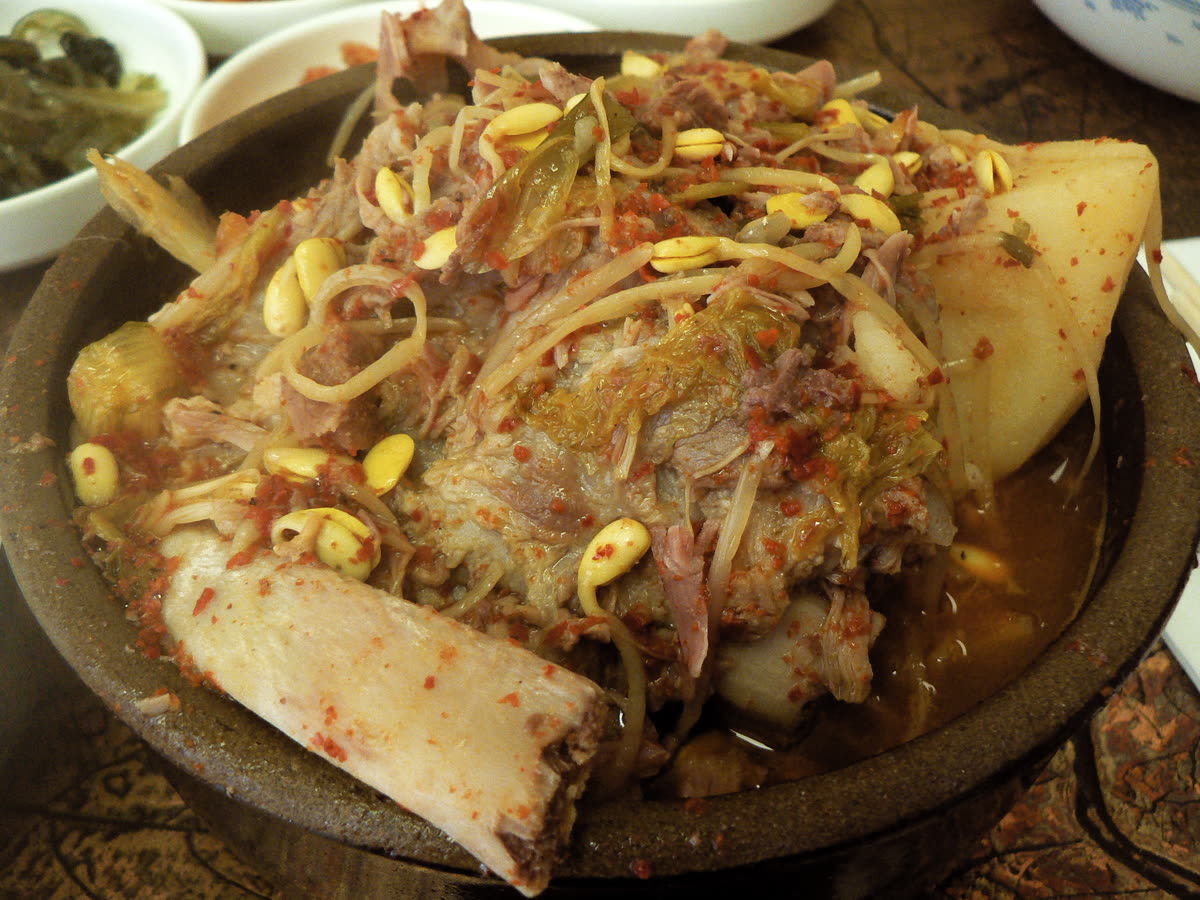
Cover photo: Korean.food-Gamjatang-01 by comicpie (a flickr user) — CC BY 2.0
#gamjatangrecipe #porkbonepotatostew #Koreanstew #doenjanggochujangsauceratio #pressurecookerKoreanrecipe #siraegisubstitute
📅Upcoming Schedule — this week 23 · D-1 Autumn season = post-summer brightening demand window (UV drSee all →