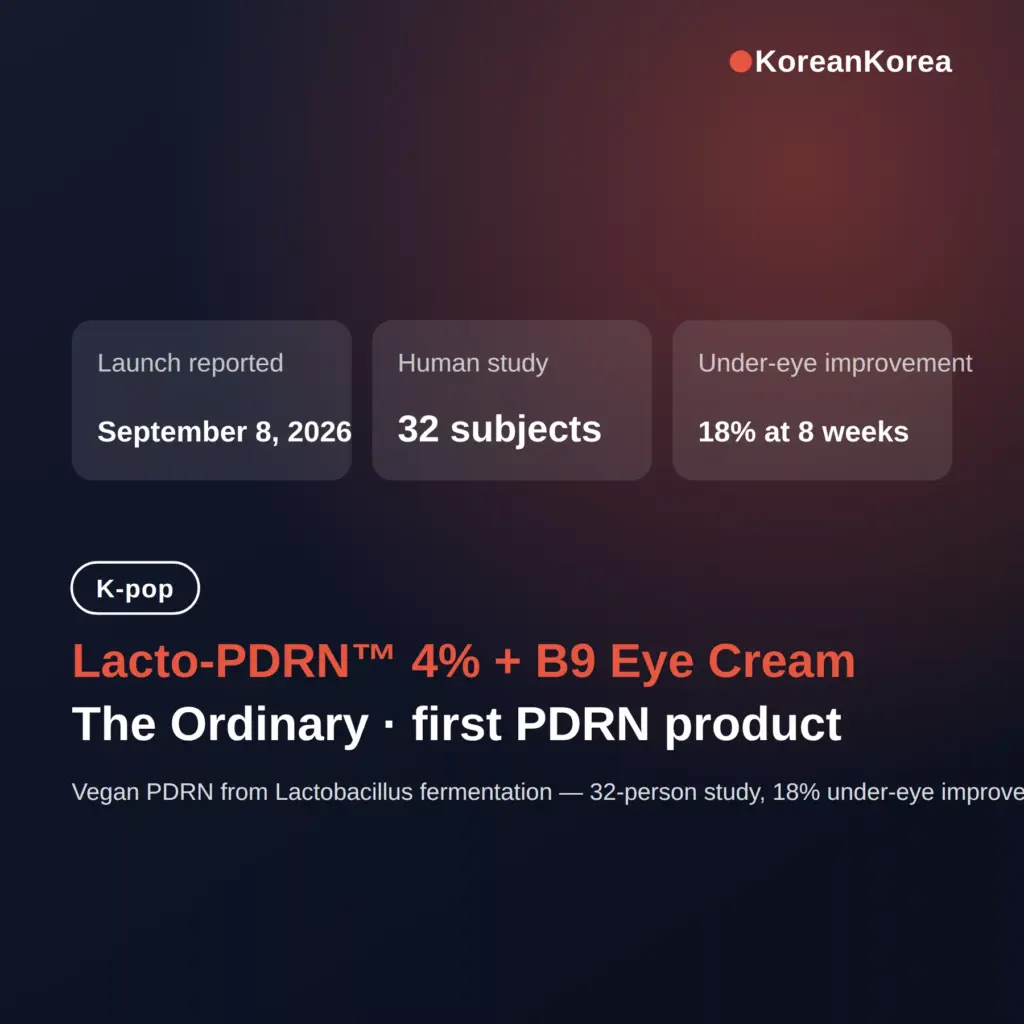
The Ordinary’s launch of Lacto-PDRN™ 4% + B9 Eye Cream, its first PDRN product, was reported on September 8, 2026 — a vegan formula made from Lactobacillus rhamnosus fermentation rather than fish.
PDRN, a DNA component long used in Korean dermatology, is no longer limited to salmon-derived formulas, so the ‘vegan or salmon’ choice now sits on your shopping list.
This post compares the two origins, shows what the study numbers say, and lists the label checks that actually separate a good PDRN product from a hyped one.
Contents
- What is Lacto-PDRN and what launched on September 8, 2026?
- Vegan PDRN vs salmon PDRN — the differences that matter
- How to choose a PDRN product — label checks that work
- What PDRN is approved for in Korea
- PDRN in Korea 2024–2026, and buying from abroad
- pdrn vs pdlla — related reading
What is Lacto-PDRN and what launched on September 8, 2026?
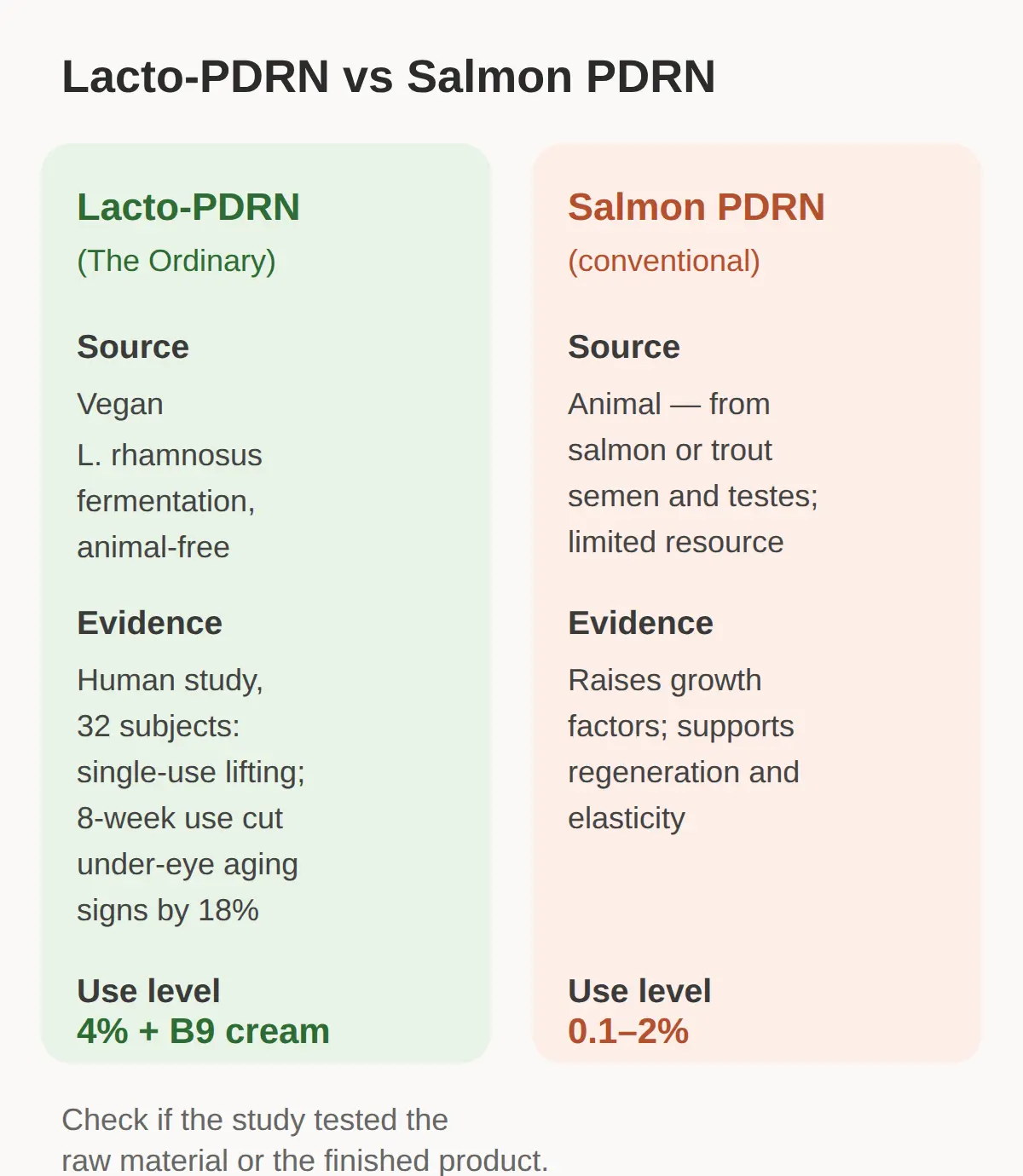
Lacto-PDRN™ is a vegan form of PDRN made from Lactobacillus rhamnosus fermentation, and The Ordinary launched it in a 4% + B9 Eye Cream — the brand’s first PDRN product, reported September 8, 2026.
PDRN itself is a nucleotide component of DNA.
Applied to skin, it supports regeneration and elasticity and is widely used in Korean dermatology, which is why the ‘Salmon DNA Ampoule’ boom of 2024–2025 put the ingredient on your radar.
The new cream comes with human testing numbers: a 32-person study showed a lifting effect after a single use, and 8 weeks of use (56 days) improved under-eye aging signs by 18%.
When I see a PDRN product, I first check the full ingredient list and whether the study behind it was on the raw material or the finished product — before looking at any ‘vegan’ or ‘salmon’ claim on the front, because whether that 18% figure comes from a finished-product test or a raw-material test is exactly the kind of detail that decides how much it means for the jar in your cart.
| Origin | Vegan — Lactobacillus rhamnosus fermentation, animal-free; fish-free |
|---|---|
| Where it appears | The Ordinary Lacto-PDRN™ 4% + B9 Eye Cream (the brand’s first PDRN product) |
| Human evidence | 32 subjects — single-use lifting effect; 18% improvement in under-eye aging signs after 8 weeks (56 days) |
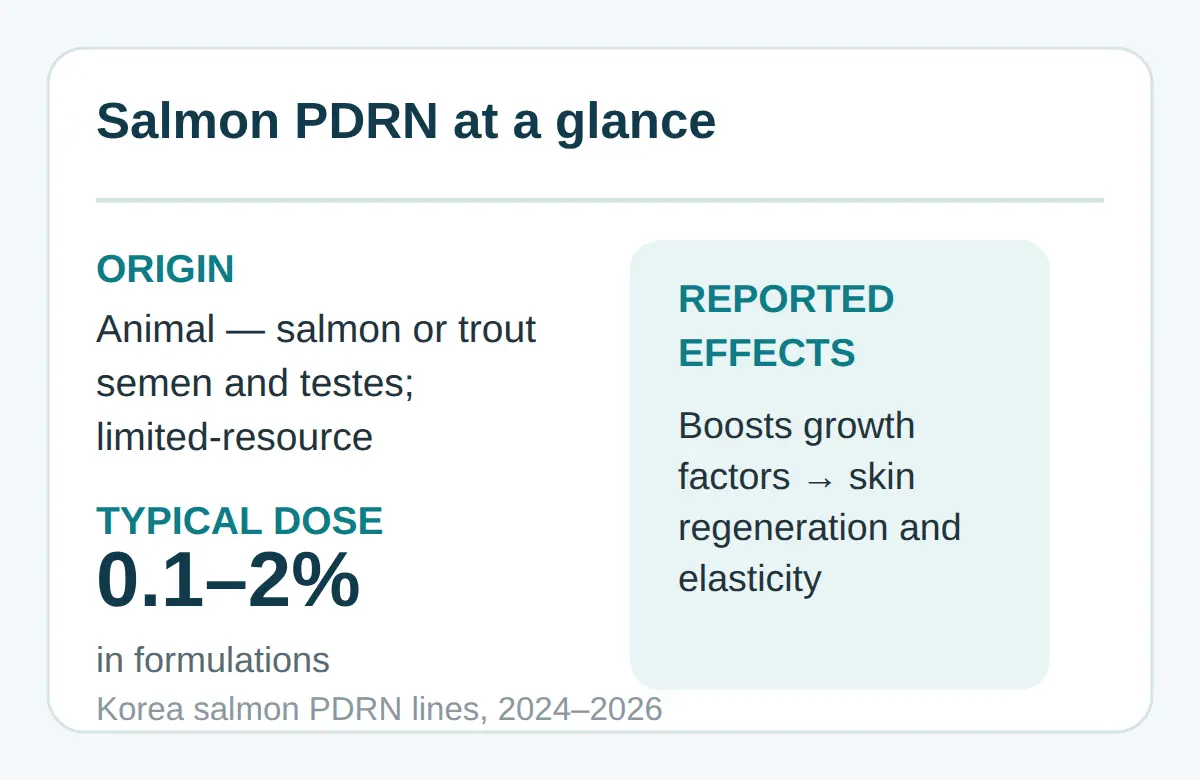
| Typical use level | Conventional salmon PDRN is usually formulated at 0.1–2% (recommended range); the eye cream’s front claims 4% |
| Supply | Salmon PDRN: extracted from the semen and testes of salmon or trout — a limited, resource-intensive animal source |
| Head-to-head | No published finished-product comparison of salmon vs vegan PDRN was found in this run |
Vegan PDRN vs salmon PDRN — the differences that matter
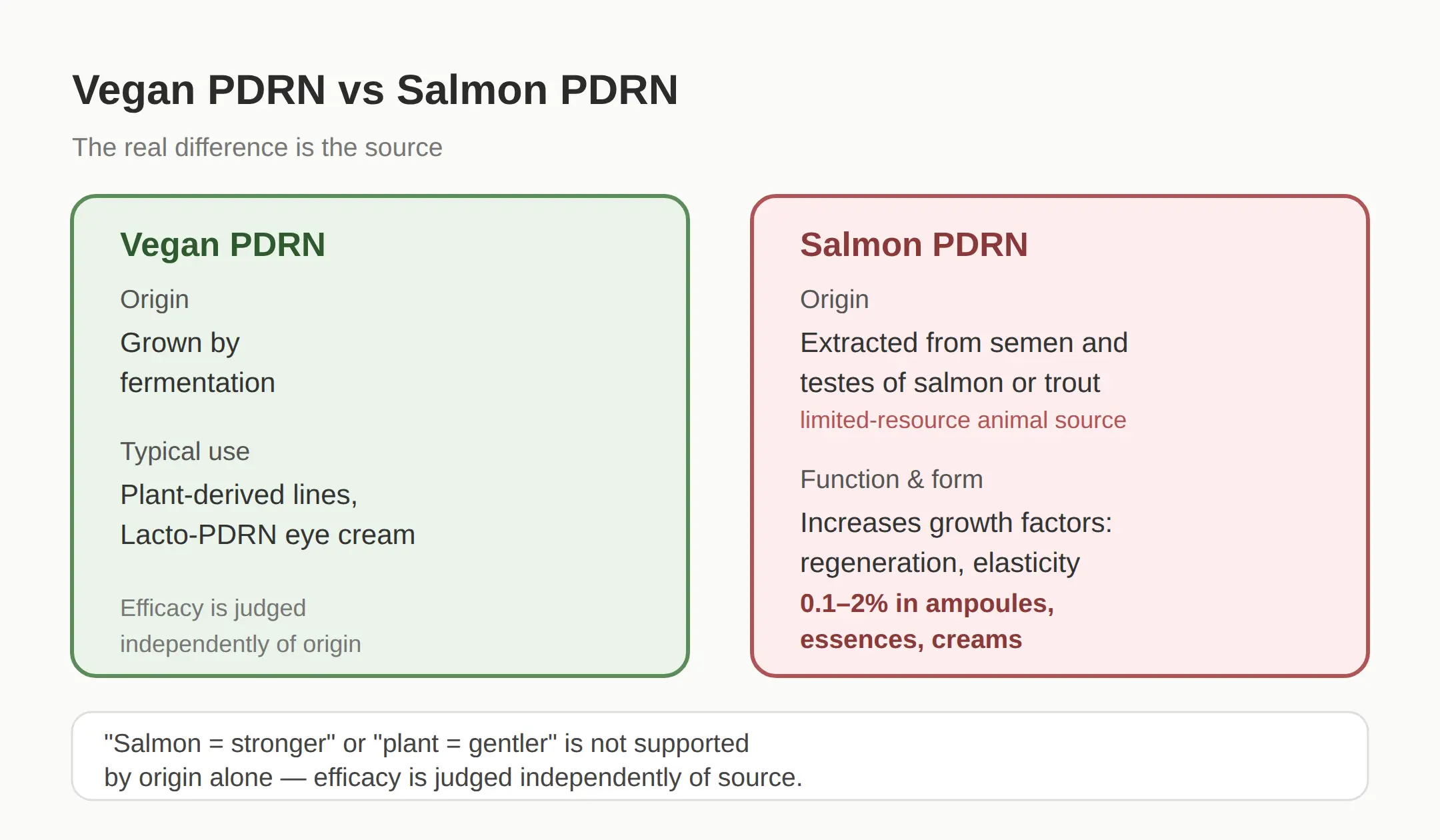
The real difference is the source: vegan PDRN is grown by fermentation, while conventional PDRN is extracted from the semen and testes of salmon or trout — a limited-resource animal source, which is one stated reason vegan alternatives exist.
Functionally, salmon PDRN increases the expression of various growth factors, promoting skin regeneration and elasticity, and is typically formulated at 0.1–2% in ampoules, essences and creams.
In Korea it is mostly used for wound and inflammation treatment in medicine, while PN — a related material from the same salmon germ cells — is mainly used for wrinkle and elasticity procedures.
Plant-derived lines already exist in Korea: Moacam’s Vegan PDRN comes in Ginseng, Rice, Rose, Aloe and Centella versions, extracted with EWG Green–grade materials and deep-sea salt from the East Sea instead of phenol or chloroform, and at equal concentration Rose PDRN beat Salmon PDRN on an antioxidant (ROS) test, Aloe on an anti-inflammatory (IL-6) test, and Centella on brightening and anti-aging (MMP-1 reduction) tests.
If you avoid animal-derived ingredients, the Lacto-PDRN eye cream is the relevant new option.
If you want the salmon PDRN effect seen in Korean ‘Salmon DNA Ampoules’, salmon ampoules and creams remain the widely used form at 0.1–2%.
If you are judging by origin alone — ‘salmon = stronger’ or ‘plant-derived = gentler’ — that conclusion is not supported, because efficacy is judged independently of origin.
👉 Foundation-free sunscreen korean: how to pick one with no white cast that sits well under makeup
How to choose a PDRN product — label checks that work
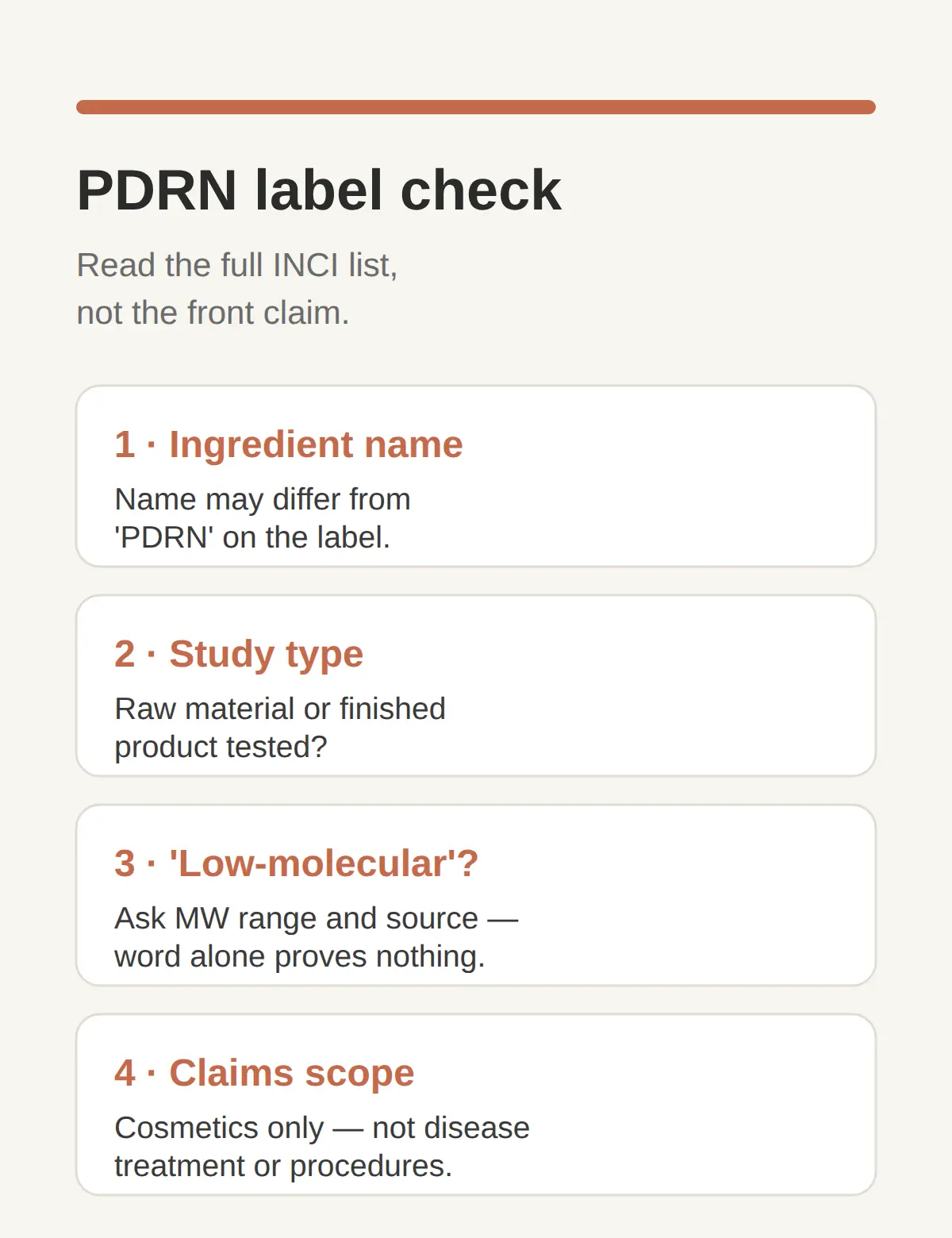
The check that works is the full ingredient list, not the front of the pack — in Korea the ingredient name on the label may differ from ‘PDRN’, so a front claim alone does not tell you what is inside.
- Read the full INCI list, not the front claim — the ingredient name may differ from ‘PDRN’.
- Ask whether the study behind the product tested the raw material or the finished product — a PDRN study existing does not mean every PDRN serum works the same.
- If you see ‘low-molecular PDRN’, ask for the molecular weight range and its source — the word alone does not prove skin penetration.
- Keep the claims within cosmetics scope — regeneration and recovery marketing must not drift into disease treatment or medical procedures, and PDRN is also an approved drug in Korea, which is exactly why that line matters.
When a product shows only ‘PDRN’ on the front and no study type or concentration on the page, I put it back and compare it against one that names its numbers.
What PDRN is approved for in Korea
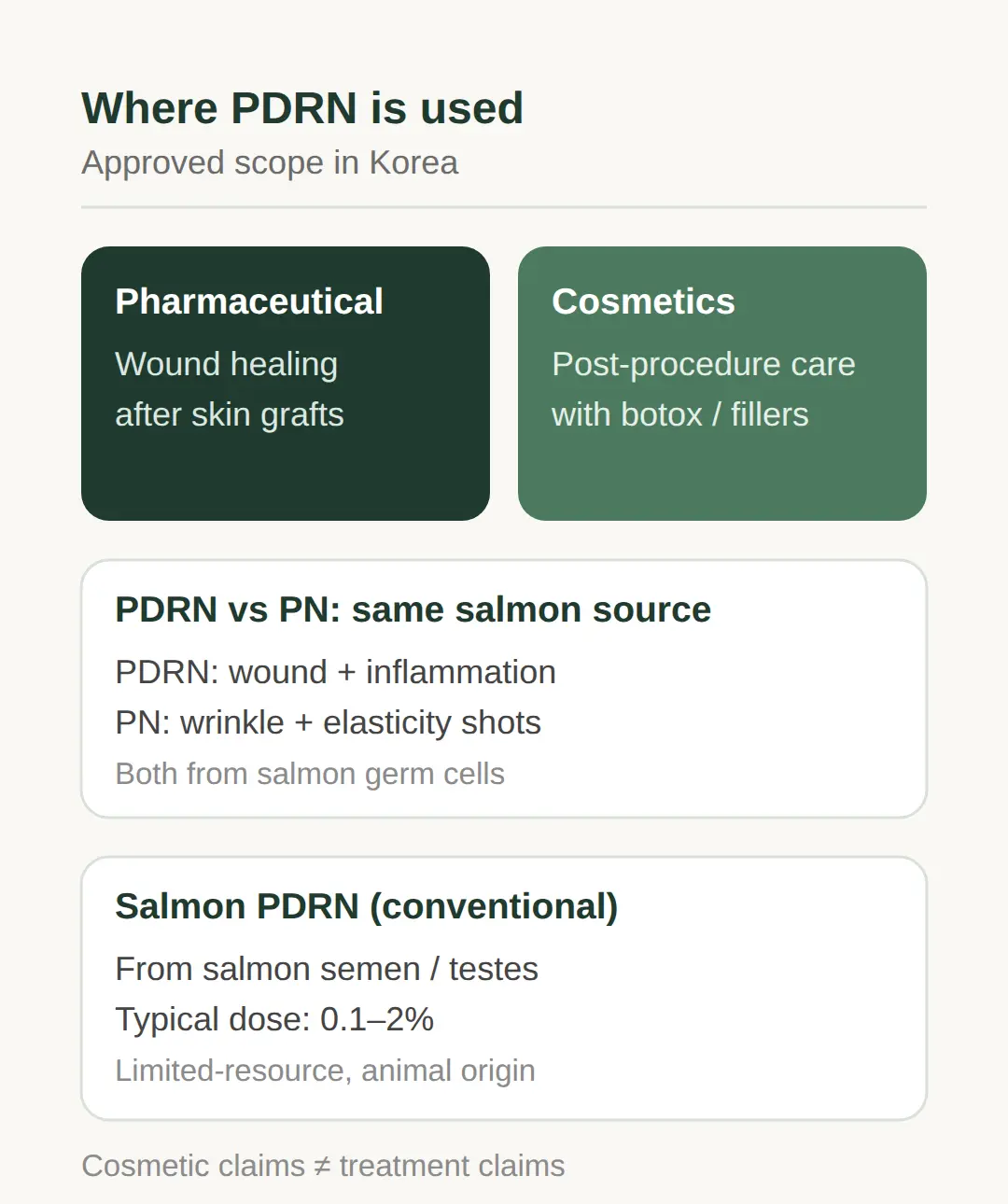
In Korea, PDRN is approved as a pharmaceutical for wound healing after skin grafts, and it is also used in cosmetics and in post-procedure care alongside botox and fillers.
Both PDRN and PN come from salmon germ cells, but they split by use: PDRN is mostly used for wound and inflammation treatment in medicine, while PN is mainly used for wrinkle and elasticity aesthetic procedures.
For you as a buyer, this means marketing words like ‘regeneration’ or ‘recovery’ on a cosmetic must stay within cosmetic scope — they are not claims to treat a condition, and a product that talks like a medical procedure is one to step away from.
PDRN in Korea 2024–2026, and buying from abroad
Salmon PDRN ampoules and creams, sold as ‘Salmon DNA Ampoule’-type products, surged in 2024–2025, and PDRN anti-aging and regeneration lines are cited among the fastest-growing OEM/ODM categories.
The category is still expanding: domestic PDRN and NAD+ home-care launches were reported on September 16, 2026, so more Korean PDRN options are arriving for home use.
For readers buying from abroad: The Ordinary’s Lacto-PDRN eye cream would be sold through the brand’s own channel, and Korean salmon PDRN ampoules typically route through Olive Young Global or forwarding agents — but the retail price of the eye cream and its Korea stocking date were not confirmed in this run, so check theordinary.com for the current price and INCI list before ordering.
Korean salmon ampoule prices were also not re-verified within the last 6 months, so treat any older price you find online as a starting point only.
pdrn vs pdlla — related reading
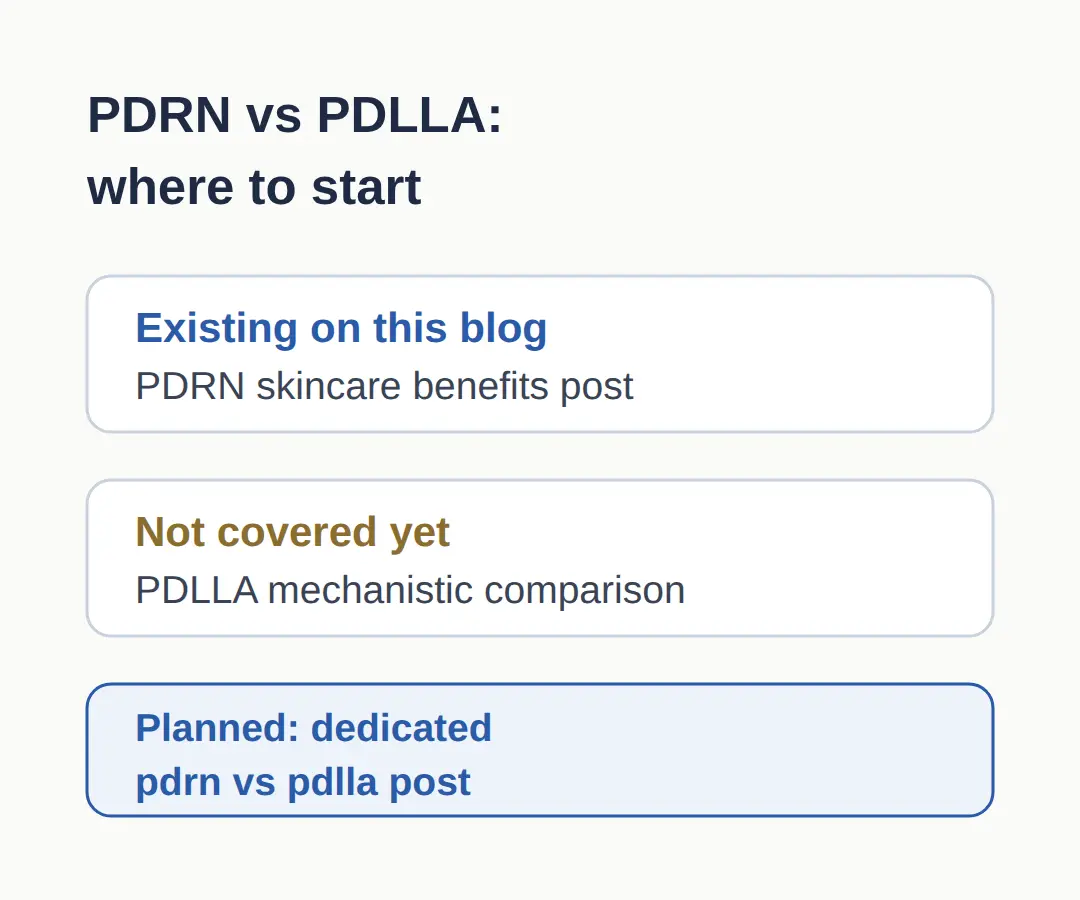
If your question is PDRN vs PDLLA, start with the existing ‘PDRN skincare benefits’ post on this blog, which covers what PDRN does and how Korean products use it.
The PDLLA side of a direct mechanistic comparison was not covered by a dedicated source in this run, so a full comparison table would say less than the question deserves.
When a comparison source is confirmed, it belongs in a dedicated pdrn vs pdlla post — the search demand for it already shows up in this blog’s own search data.
Related posts
📎 Copper Peptides Korean Skincare: What’s Actually at Olive Young Right Now, and Who Each Product Is For
📎 numbuzin 3 toner reformulation — What Changed and What to Check Before Reordering
📎 📅 다가오는 일정 — 발매·개봉·발표 캘린더
Sources
- Ginseng/Rice PDRN brightening + antioxidant efficacy; Rose/A (cosinkorea.com)
- PDRN approved as drug for wound treatment; PN used mainly fo (hitnews.co.kr)
- 0.1–2% recommended usage range in ampoule/essence/cream/mask (cosgarden.tistory.com)
What to check before you buy
- Look for the exact ingredient name on the label — the 4% claim should match a full INCI name you can verify.
- Judge efficacy independently of origin — neither ‘salmon = stronger’ nor ‘vegan = gentler’ follows from the source.
- If a product sells ‘low-molecular PDRN’, the molecular weight range and its origin should be stated somewhere.
- If you avoid animal-derived ingredients, the new Lacto-PDRN eye cream is the option; the dermatology-standard salmon form at 0.1–2% remains the widely used one.
FAQ
Q. Is vegan PDRN better than salmon PDRN?
Not proven either way. No published head-to-head finished-product comparison of salmon PDRN vs vegan PDRN was found, and efficacy is judged independently of origin — ‘salmon = stronger’ or ‘plant-derived = gentler’ is not a supported conclusion.
Q. What is Lacto-PDRN made from?
Lacto-PDRN™ is produced from Lactobacillus rhamnosus fermentation, so it is vegan and animal-free, unlike conventional PDRN extracted from the semen and testes of salmon or trout.
Q. How much under-eye improvement did the Lacto-PDRN study show?
A 32-person human study showed a single-use lifting effect and an 18% improvement in under-eye aging signs after 8 weeks of use (56 days).
Q. How much does The Ordinary Lacto-PDRN 4% + B9 Eye Cream cost?
No primary price page was confirmed in this run, so no price is stated here — check theordinary.com for the current price and the full ingredient list before ordering.
Q. What is PDRN approved for in Korea?
PDRN is approved in Korea as a pharmaceutical for wound healing after skin grafts, and it is also used in cosmetics and post-procedure care products — cosmetic marketing must stay within cosmetic scope.
Before buying any PDRN product, open the full ingredient list and check the study type behind the claim.
#PDRN #veganPDRN #salmonPDRN #Lacto-PDRN #TheOrdinary #K-beautyingredients
📅Upcoming Dates — 이번 주 16 · D-day 'The Scandal' global Netflix release전체 보기 →