
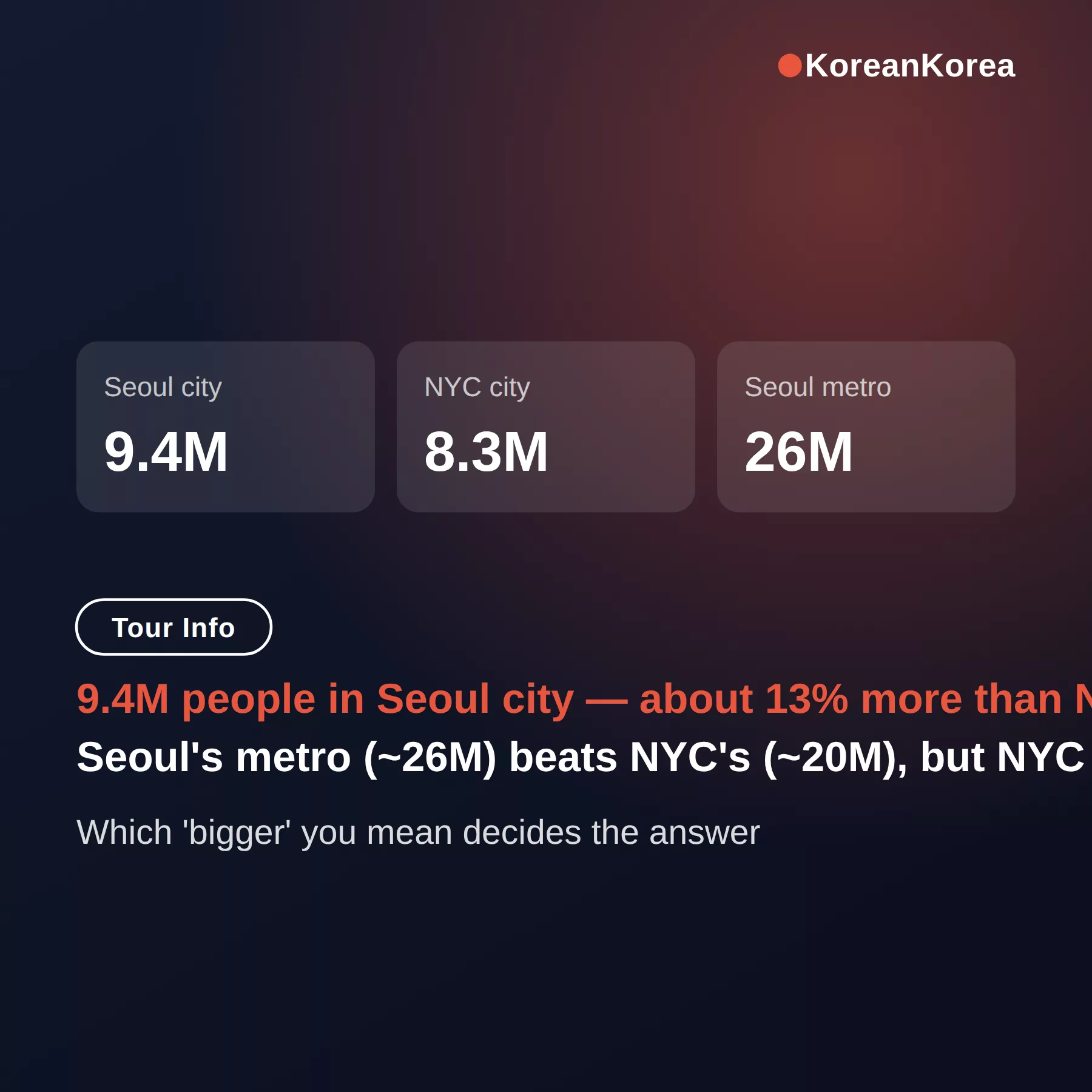
Depends on the measure: Seoul the city is bigger by population (about 9.4M vs 8.3M, +13%), New York City is bigger in land area (about 778 vs 605 km²), and Seoul’s metro (about 26M) beats the NYC metro (about 20M).
For a trip, the useful number is density: Seoul packs about 16,000 people per km², so its attractions sit closer together.
This post gives the city-vs-city table, the world-ranking context, and what the size difference means for your itinerary.
Contents
- Is Seoul bigger than New York? — population says yes, area says no
- Is Seoul one of the biggest cities in the world?
- Seoul vs New York by the numbers
- What Seoul’s size means for your itinerary
- How long is KTX from Seoul to Busan — and is it a day trip?
Is Seoul bigger than New York? — population says yes, area says no
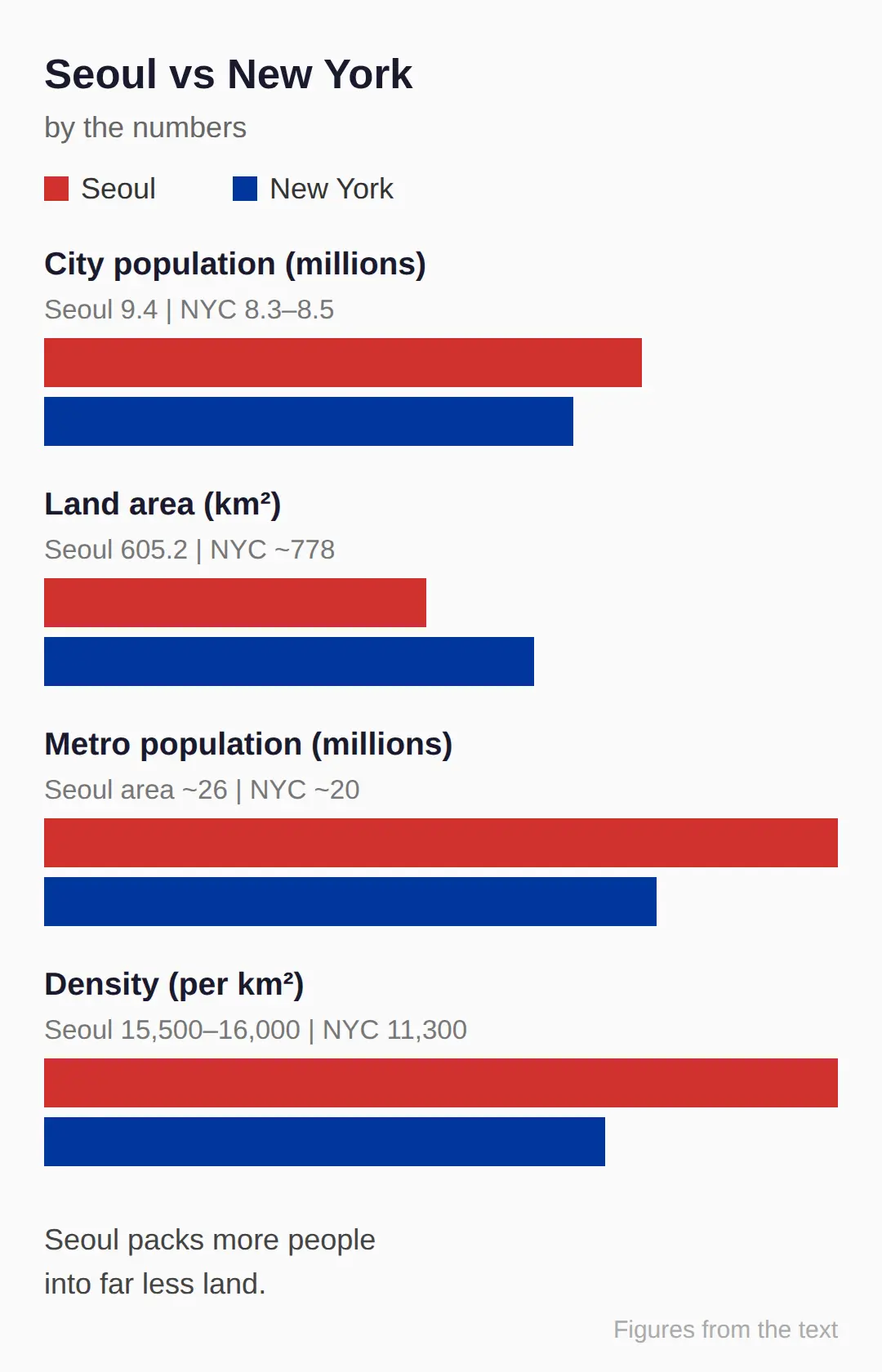
By population, yes: Seoul’s 2024–2025 resident registration counts about 9.4 million people inside city limits — roughly 1.1 million more than New York City’s 8.3–8.5 million (2024 census estimate).
The answer flips on land.
Measured land-to-land, New York City is about 28% larger than Seoul: about 778 km² versus Seoul’s 605.2 km² — about 10 Manhattans would fit inside Seoul.
The metro numbers flip it back.
The Seoul Capital Area’s about 26 million people top the New York metro’s about 20 million under the MSA definition.
Which line you draw decides your answer.
Seoul’s city boundary is drawn tight, because Korea splits metro growth into separate cities such as Incheon and Suwon, while NYC’s five boroughs absorb what would be separate cities elsewhere.
When you read a ‘bigger city’ claim anywhere, check which boundary it uses — city limits, metro area, or land versus total area.
NYC’s total area including water is about 1,213 km², but land is about 778 km², so land-to-land is the fair comparison.
| City-proper population | About 9.4M (2024–2025 resident registration) (2002)[R3] |
|---|---|
| City land area | 605.2 km² / about 234 sq mi (2003)[R1] |
| Metro population | About 26M (Seoul ~9.4M + Gyeonggi ~13.6M + Incheon ~3.0M) (2004)[R2] |
| Population density | About 16,000 per km² (2005)[R1] |
| Subway | About 23 lines, 290+ stations; one fare card covers nearly the whole metro area (2006)[R4] |
| Internal divisions | 25 gu (districts) (2007)[R1] |
Is Seoul one of the biggest cities in the world?
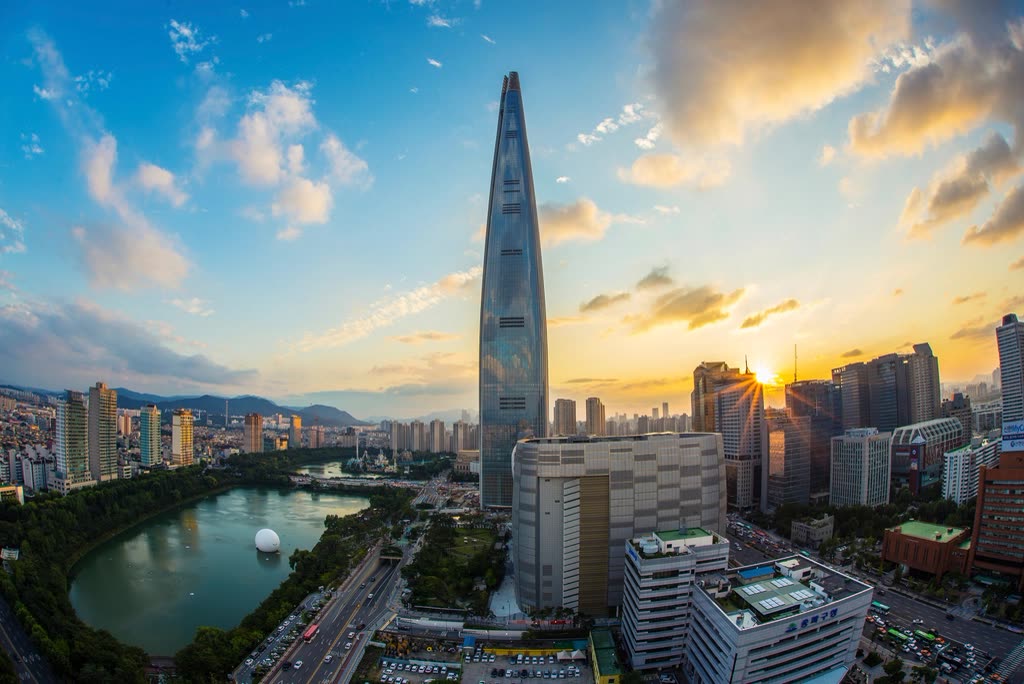
By metro population, yes — the Seoul Capital Area (about 26M) typically sits among the world’s top 3 largest metro areas, and Tokyo (about 37M) holds #1 in both common listings.
The New York metro (about 20M, MSA definition) usually ranks inside the global top 10.
Still, Seoul is not the biggest city in the world by any single measure.
It is not #1 by city-proper population or by land area, and the rank shifts with the definition used.
Call it one of the largest metro areas on earth, not the largest city.
If a source names a single rank without saying city-proper, urban area, or MSA, treat it as a rough claim rather than a stat.
👉 Seoul bus strike September 2026: will buses run, is the subway normal?
Seoul vs New York by the numbers
The two cities are close on people and far apart on shape.
| Measure | Seoul | New York City |
|---|---|---|
| City population | About 9.4 million | About 8.3-8.5 million |
| City land area | 605.2 km² (~234 sq mi) | About 778-784 km² (land 302.6 sq mi) |
| Metro population | About 26 million (Seoul Capital Area) | About 19.9-20 million |
| Population density | About 15,500-16,000 per km² | About 11,300 per km² |
| Subway | ~23 lines, ~290+ stations, one fare card | 28 routes / 424 stations, separate NJ systems |
Two rows are missing here because the metro-area land figures could not be confirmed on primary pages; check them on KOSIS and the US Census before relying on one.
For your own trip math, density is the row that matters.
Seoul’s roughly 16,000 people per km² is about 40% denser than NYC’s roughly 11,300, which is why shorter per-stop itineraries work there.
What Seoul’s size means for your itinerary
One district a day works in Seoul without a car.
The city is split into 25 gu, and the dense subway puts most attractions within a 30-minute ride of each other.
The satellite cities inside the metro are usable day trips from a Seoul base.
Suwon, Goyang, and Yongin in Gyeonggi Province are reachable in under an hour by subway, and Incheon — where most international travelers land at ICN — is part of the same 26M metro.
Scale comparison: Manhattan is about 59 km², roughly a tenth of Seoul’s 605 km², and Gangnam-gu alone (about 40 km²) is nearly two-thirds of Manhattan’s land.
If you usually cover one NYC borough per day, plan on more stops per day in Seoul — the districts are smaller and closer.
If your days are palace-and-Shopping heavy, two districts a day is realistic.
👉 Is Seoul Tap Water Safe to Drink? The Official Numbers and Where to Refill
How long is KTX from Seoul to Busan — and is it a day trip?
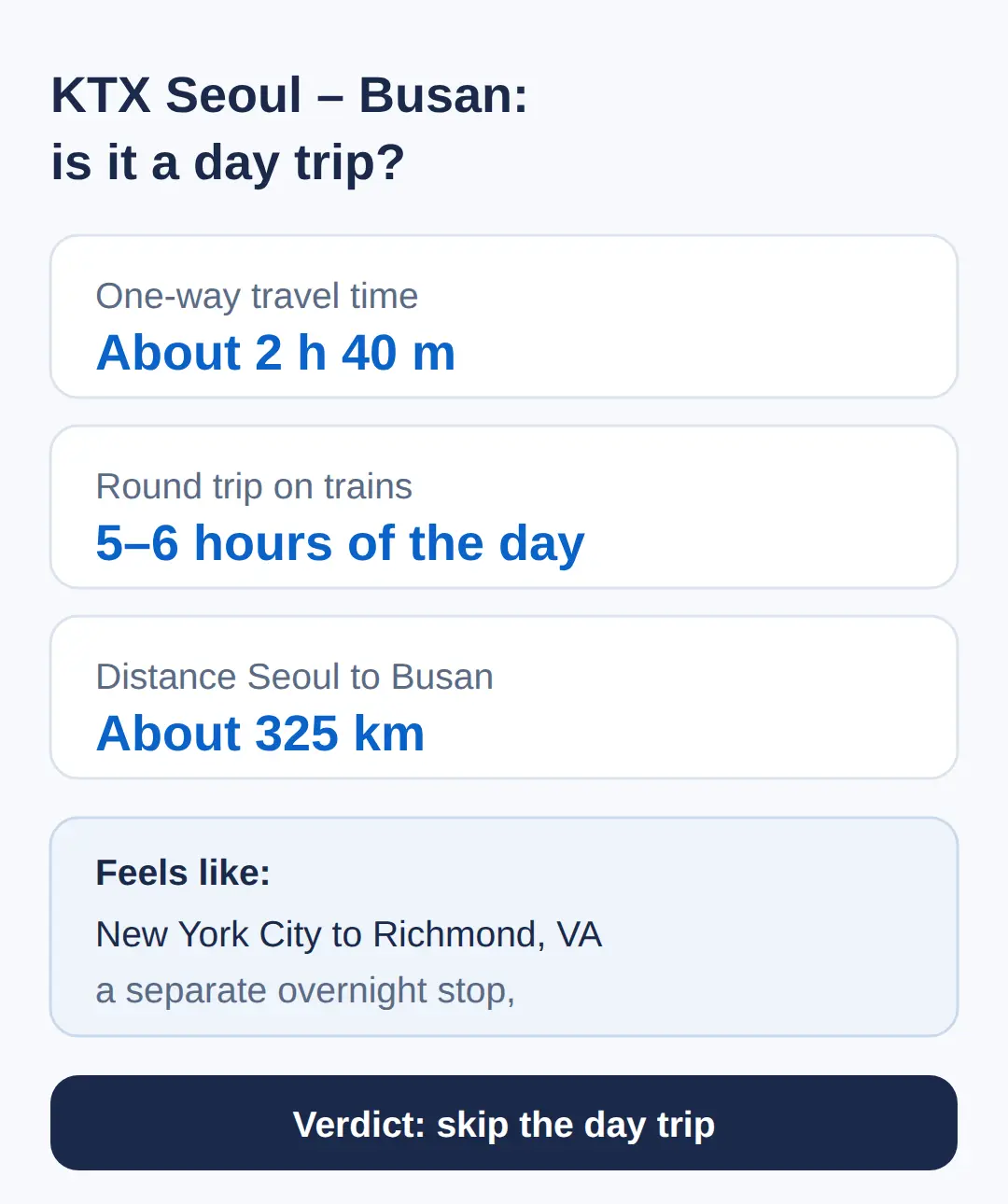
KTX from Seoul Station to Busan takes about 2 hours 40 minutes each way, and Busan sits about 325 km from Seoul.
A same-day round trip is technically possible, but trains eat 5–6 hours of the day.
Proportionally, it is like traveling from New York City to Richmond, VA — a separate overnight destination, not a morning-to-evening detour.
The current one-way fare could not be confirmed on a primary Korail page; check the fare on letskorail.com when you book.
If I were planning a first Seoul trip, I would skip the Busan day trip and spend the saved transit day on two more gu — the density means palaces, Seoul Tower, and shopping areas sit within one 30-minute subway ride anyway.
👉 Seoul Metropolitan Subway line map and station count
👉 Seoul city population and area figures
👉 New York metropolitan area population estimate
👉 Manhattan land area and population for comparison
👉 KTX Seoul–Busan timetable and fares
Related posts
📎 Seoul — everything we know
📎 is seoul station open 24 hours? No — Closed Around 1 AM
📎 Is Seoul safe at night for women: trains, taxis, scams
📎 📅 다가오는 일정 — 발매·개봉·발표 캘린더
Sources
- Seoul ~9.4M city, ~26M metro (Wikipedia, to verify at draft) (en.wikipedia.org)
- NYC ~8.3-8.5M city, ~20M metro (Wikipedia, to verify at draf (en.wikipedia.org)
- MSA spans roughly 34,000 km² (en.wikipedia.org)
Summary
- Population: Seoul bigger (9.4M vs 8.3M city limits). Land: NYC bigger (~778 vs 605 km²). Metro: Seoul bigger (26M vs 20M MSA).
- Seoul is a top-3 metro area but not the biggest city by population or land.
- One district a day is the workable Seoul itinerary; Busan needs an overnight.
- Seoul’s subway fare card covers nearly the whole metro area — no separate tickets for satellite cities.
FAQ
Q. Is Seoul bigger than New York?
By population yes — about 9.4M vs 8.3M inside city limits. By land area no — NYC is about 778 km² of land versus Seoul’s 605.2 km².
Q. Is Seoul one of the biggest cities in the world?
The Seoul Capital Area (~26M people) is typically ranked among the world’s top 3 metro areas. Seoul is not #1 by city-proper population or by land area.
Q. Is Seoul the biggest city in the world?
No. Tokyo (~37M) outranks it on metro population, and Seoul does not lead on city-proper population or area either.
Q. Which is bigger, Seoul or NYC metro?
The Seoul metro is bigger: about 26 million (Seoul + Gyeonggi + Incheon) versus about 20 million for the New York metro under the MSA definition.
Q. How long is KTX from Seoul to Busan?
About 2 hours 40 minutes each way from Seoul Station. A round trip consumes 5–6 hours in transit, so it is better as an overnight.
Before booking anything time-sensitive, re-check the current KTX fare on Korail and city figures on official statistics sites.
#Seoul #NewYork #citycomparison #Koreatravel #KTX #itinerary
📅Upcoming Dates — 이번 주 16 · D-day 'The Scandal' global Netflix release전체 보기 →