
Jeyuk bokkeum (spicy stir-fried pork) takes about 450–500 g of thin-sliced pork, a 30-minute marinade in gochujang-based sauce, and 10–15 minutes over high heat — it serves 3–4 with rice.
If gochujang or gochugaru is missing from your local store, every one of those ingredients has a workable stand-in.
This post covers the full ingredient table, the numbered steps, the spice dial, substitutions, common mistakes, and freezing.
Spicy Korean Pork Recipe, Start to Finish
Slice 450–500 g of pork belly or shoulder thin (about 0.5 cm), marinate it at least 30 minutes, then stir-fry over high heat for 10–15 minutes.
That is the whole dish: three to four servings with rice, out of one wide pan.
First thing to check before cooking is your pan, not your ingredients — a wide pan (28 cm or larger) decides whether the pork sears or steams.
| What | Amount | Note |
|---|---|---|
| Pork belly or shoulder, 0.5 cm slices | 450–500 g | Serves 3–4 with rice |
| Gochujang | 2 tbsp | The paste base |
| Gochugaru | 1–2 tbsp | Heat dial; up to 3 tbsp for extra spicy |
| Soy sauce | 1 tbsp | Do not add salt before tasting |
| Sugar | 1–2 tbsp | Carries the glossy, caramelized coat |
| Minced garlic | 1 tbsp | — |
| Sesame oil | 1 tbsp | Plus toasted sesame seeds to finish |
| Onion, sliced | 1 medium | Stir-fried with the pork |
| Scallions, cut into 3–4 cm pieces | 2–3 | Some in the pan, some as garnish |
| Carrot (optional), thin-julienned | ½ | Toss in for the last 2–3 minutes |
Steps
- Slice the pork about 0.5 cm thin across the grain — semi-frozen pork slices cleaner.
- Whisk gochujang, gochugaru, soy sauce, sugar, garlic, and sesame oil in a bowl until smooth.
- Coat the pork in the marinade with your hands and rest it at least 30 minutes (up to overnight).
- Preheat a wide pan over medium-high to high heat until a drop of water skitters on the surface.
- Add the pork in a single layer, in two batches if your pan is small — it should sizzle loudly on contact.
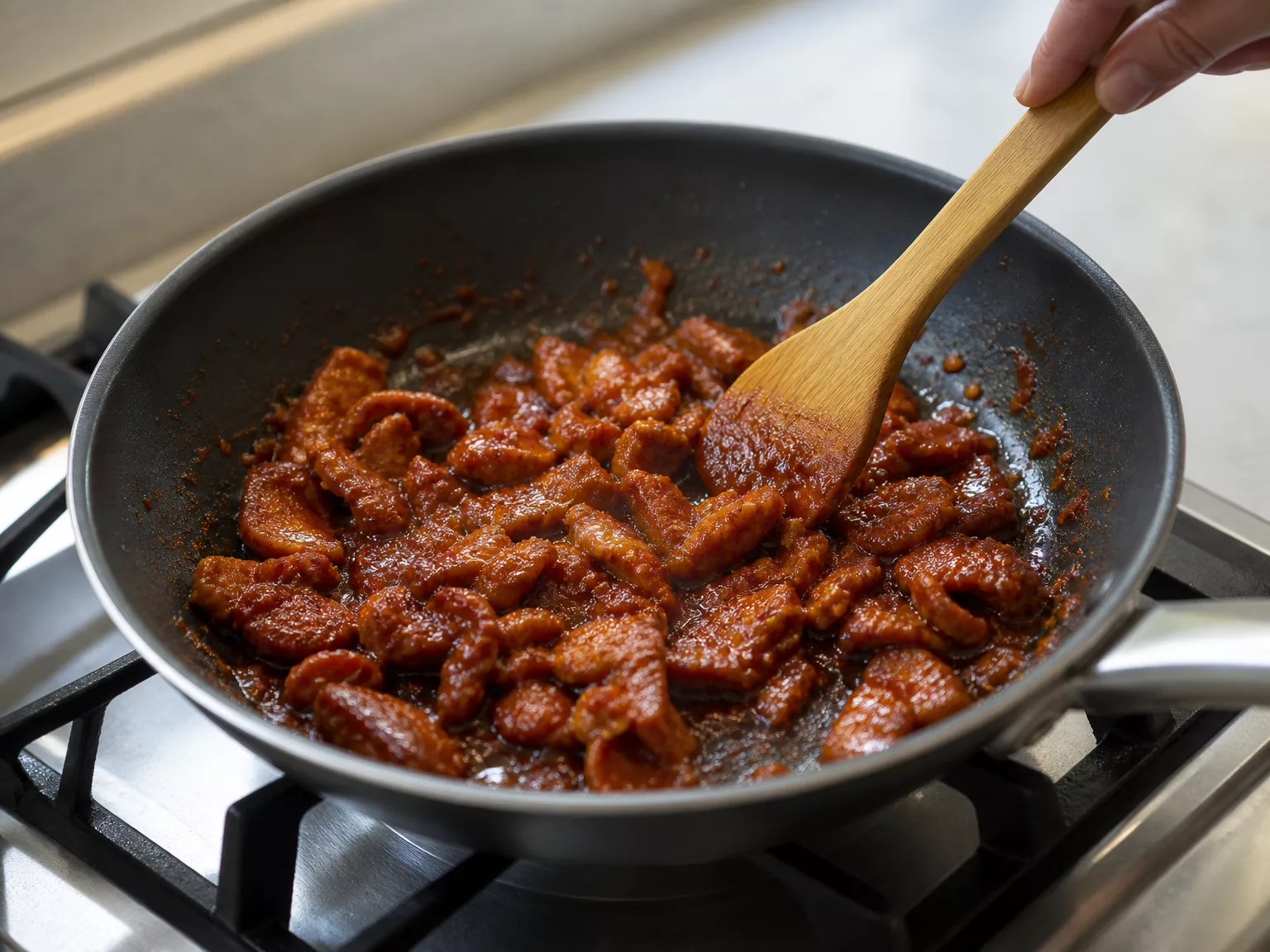
- Stir constantly for 10–15 minutes until the sauce reduces to a glossy, brick-red coat and the edges catch slightly.
- If the pan starts to scorch and go dark, add 2–3 tbsp water or rice wine and scrape the browned bits back into the sauce.
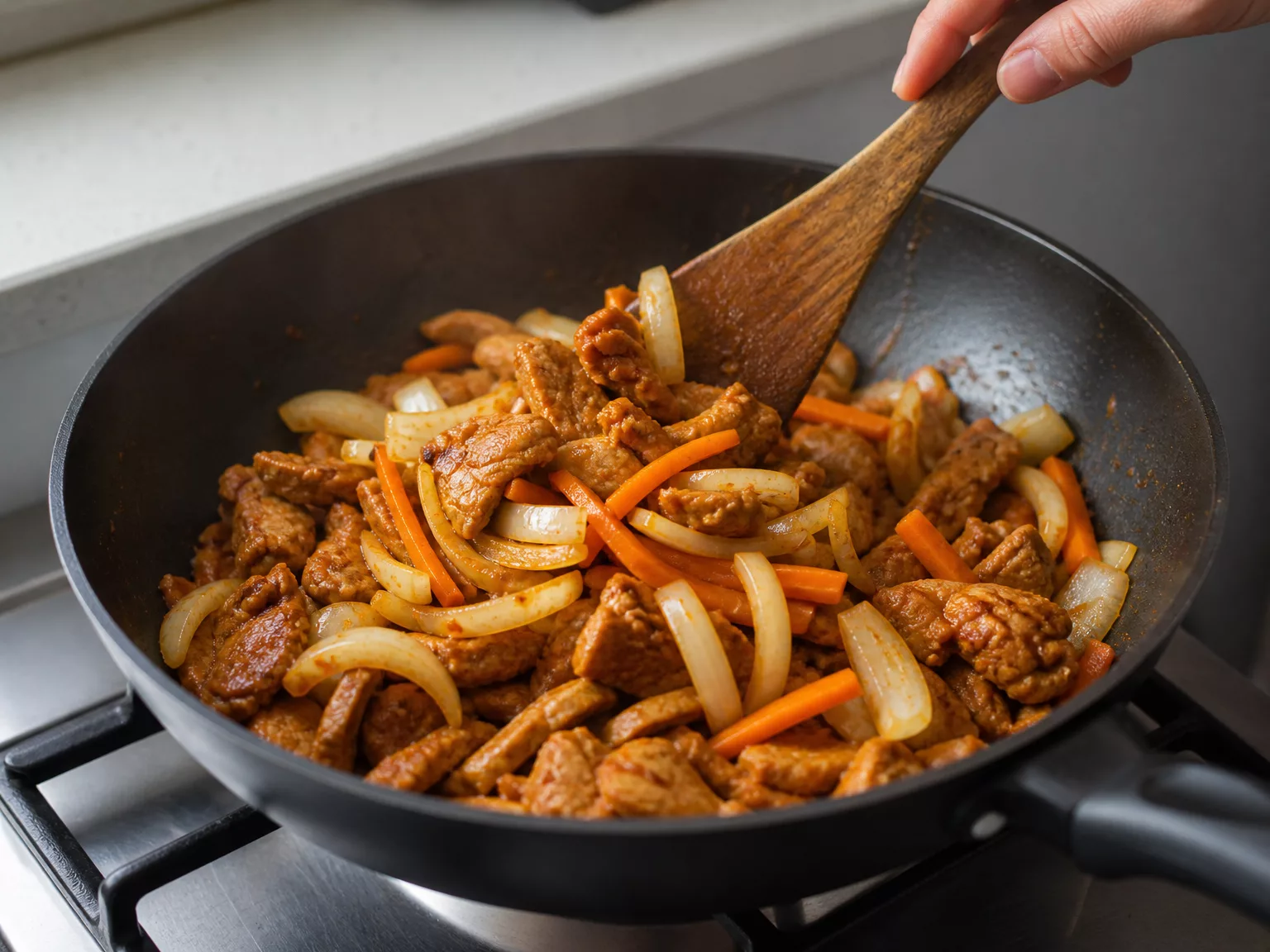
- Add the onion and carrot for the last 2–3 minutes, until the onion turns translucent but still holds its shape.
- Kill the heat, toss in the scallions, and finish with a drizzle of sesame oil and toasted sesame seeds.
- Serve hot with steamed rice and lettuce or perilla leaves for wrapping.
Minimum time to table is about 40–45 minutes including a 30-minute marinade and 10–15 minutes of cooking, so get the pork marinating first.
Ingredients
Main
- 450–500 g Pork belly or shoulder — thin-sliced, about 0.5 cm
- 1 medium Onion — sliced
- 2–3 Scallions — cut into 3–4 cm pieces
- ½ Carrot — thin-julienned, optional
Sauce & seasoning
- 2 tbsp Gochujang
- 1–2 tbsp Gochugaru
- 1 tbsp Soy sauce
- 1–2 tbsp Sugar
- 1 tbsp Minced garlic
- 1 tbsp Sesame oil — plus a drizzle to finish
To finish
- Toasted sesame seeds — to finish
Amounts are the ones used in this recipe; where the recipe gives no amount, adjust to taste.
Steps at a glance
-
1Slice the pork about 0.5 cm thin across the grain
-
2Whisk gochujang, gochugaru, soy sauce, sugar, garlic, and sesame oil…
-
3Coat the pork in the marinade with your hands and rest it at least 30…⏱ 30 minutes
-
4Preheat a wide pan over medium-high to high heat🔥 high heat
-
5Add the pork in a single layer, in two batches if your pan is small
-
 AI-generated photo
What it should look like — AI-generated image of this step, made from the recipe text — not a photo of our kitchen. 6Stir constantly for 10–15 minutes⏱ 10–15 minutes -
7If the pan starts to scorch and go dark, add 2–3 tbsp water or rice…
-
 AI-generated photo
What it should look like — AI-generated image of this step, made from the recipe text — not a photo of our kitchen. 8Add the onion and carrot for the last 2–3 minutes⏱ 2–3 minutes -
9Kill the heat, toss in the scallions, and finish with a drizzle of…
-
10Serve hot with steamed rice and lettuce or perilla leaves for…
What Is Jeyuk Bokkeum and When Do Koreans Eat It?
Jeyuk bokkeum is Korean spicy stir-fried pork — thin slices of pork belly or shoulder coated in a gochujang-based sauce and cooked hot and fast.
It is a standard home lunch and dinner dish in Korea, and it is also a common anju, the food Koreans order alongside soju.
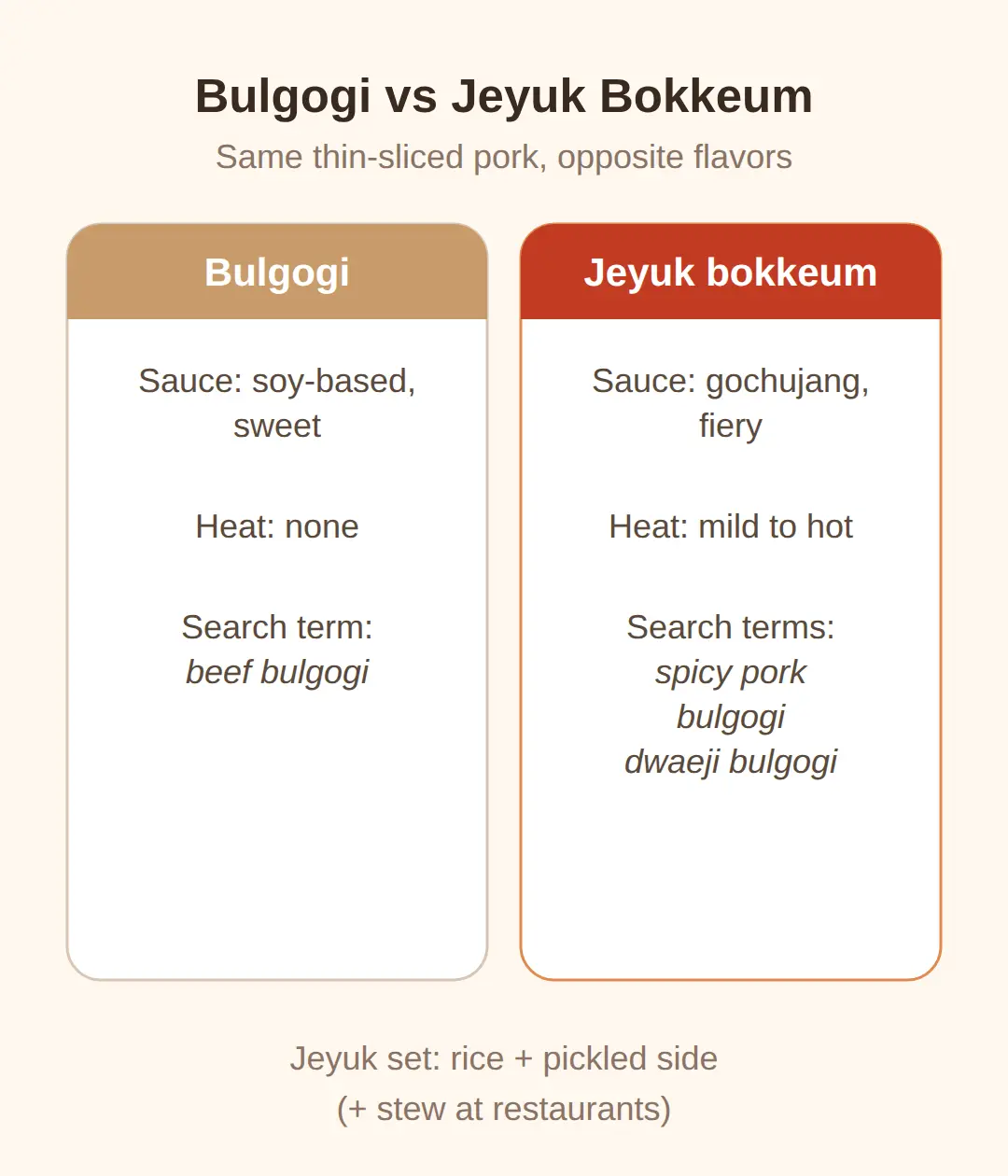
In English-language recipes the same dish also goes by ‘spicy pork bulgogi’ or ‘dwaeji bulgogi’, so recipes under those names are this same thing.
Bulgogi and jeyuk bokkeum share the thin-sliced-pork idea but sit at opposite ends of the flavor line.
| Bulgogi | Jeyuk bokkeum | |
|---|---|---|
| Sauce base | Soy-based, sweet | Gochujang-based, fiery |
| Heat level | None | Adjustable, from mild to hot |
| Common search label | ‘beef bulgogi’ | ‘spicy pork bulgogi’ |
In Korea, restaurants that list ‘jeyuk’ on the menu typically serve it as a full set with rice, a soybean paste stew, and steamed egg.
At home, all that pairing requires is rice plus any pickled side dish you already have.
If you want the classic set at home, a simple stew or a bowl of kimchi on the side gets you most of the way there.
The Marinade: How Spicy Should You Make It?
Per 450–500 g of pork, the representative marinade is 2 tbsp gochujang, 1–2 tbsp gochugaru, 1 tbsp soy sauce, 1–2 tbsp sugar, 1 tbsp garlic, and 1 tbsp sesame oil.
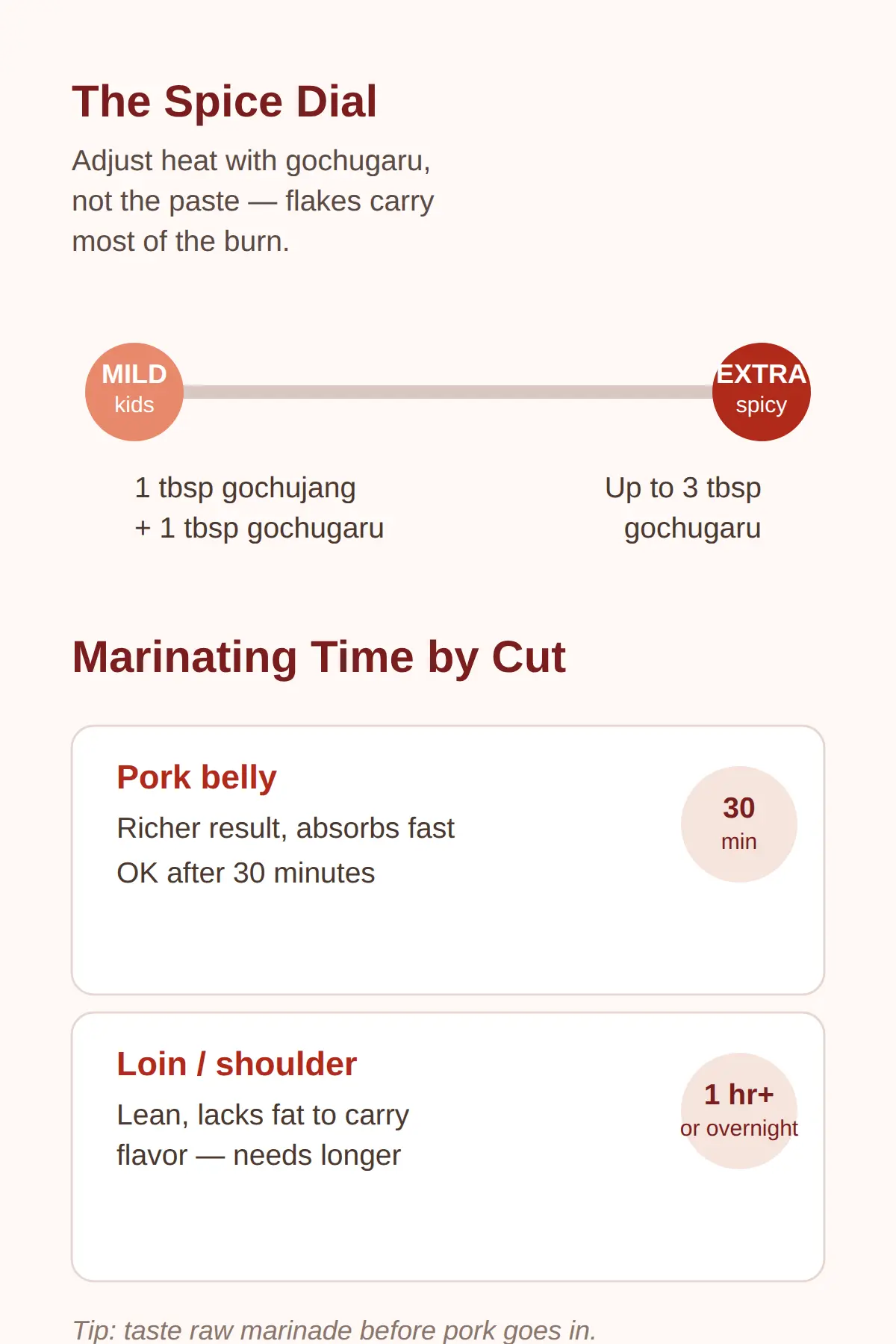
Heat is fully adjustable, and the flakes (gochugaru), not the paste, carry most of the burn.
Some recipes also add grated Asian pear, apple, or kiwi as a natural tenderizer — keep it to about 2–3 tbsp of puree per pound, because excess enzymes turn the texture mushy.
The spice dial works like this: 1 tbsp gochujang plus 1 tbsp gochugaru lands at a mild, kid-friendly level, and going up to 3 tbsp gochugaru is the extra-spicy end.
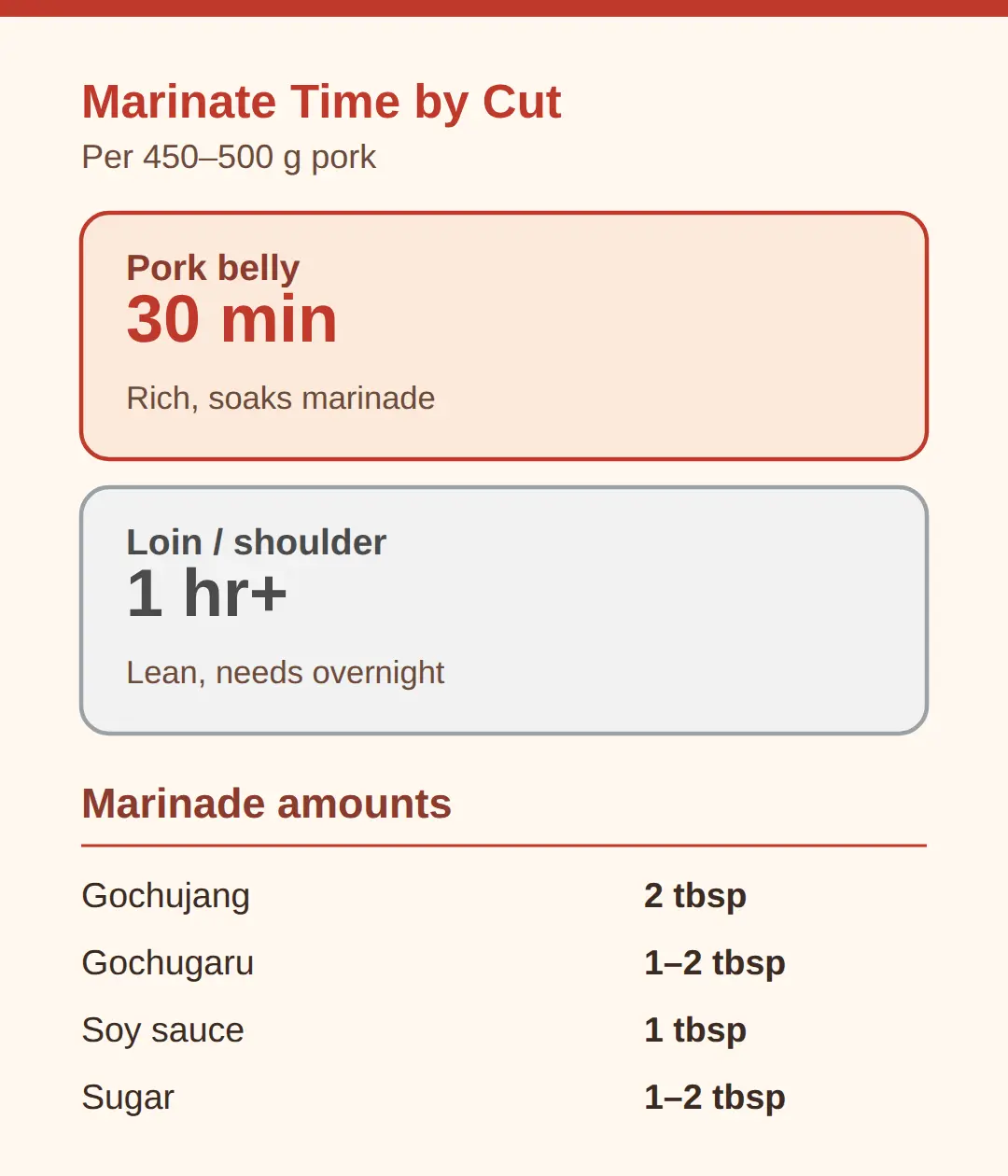
Marinating time depends on the cut — fatty pork belly absorbs the marinade fast and is fine after 30 minutes, while leaner loin or shoulder wants at least 1 hour or overnight, because it lacks fat to carry the flavor.
If you are cooking for kids, hold gochugaru at 1 tbsp and taste the raw marinade before the pork goes in — the paste itself is already salty and moderately hot.
If you are using a lean cut, overnight marinating is the safer choice; 30 minutes only suits fatty belly.
Substitutions When You Cannot Find the Korean Ingredients
Every core ingredient has a commonly suggested stand-in, though the substitutes are community recipes rather than institution-verified ratios — the taste will be close, not identical.
Start with the table, then check the gluten note if anyone at the table avoids wheat.
| Missing ingredient | Substitute | What changes |
|---|---|---|
| Gochujang | Sriracha or any red pepper paste + soy sauce + a little sugar or honey; or miso + chili flakes + sugar for depth | Sweeter and thinner; the miso route adds the fermented depth |
| Gochugaru | Paprika + a pinch of cayenne | Restores color and mild sweetness; cayenne-only is hotter but less fruity |
| Mirin | Equal mix of rice wine (or dry sherry) plus a pinch of sugar | Nearly indistinguishable in a cooked sauce |
| Asian pear / pear syrup | Half an apple grated, or 1 tbsp pear or brown sugar syrup | Same tenderizing job, slightly brighter sweetness |
Gochujang, gochugaru, and sesame oil are stocked at Korean and Asian groceries and mainstream online retailers in the US and EU, so no local Korean market is required.
For gluten-free readers: standard gochujang usually contains wheat, so either look for a certified gluten-free brand or build the marinade on gochugaru instead.
If a Korean grocery is within reach, buying gochujang and gochugaru and mixing the marinade yourself is the standard route — ready-made sauce packets exist in Korea, but mixing your own is the normal home method.
Gochugaru burns, a crowded pan steams, and soy sauce plus salt oversalts
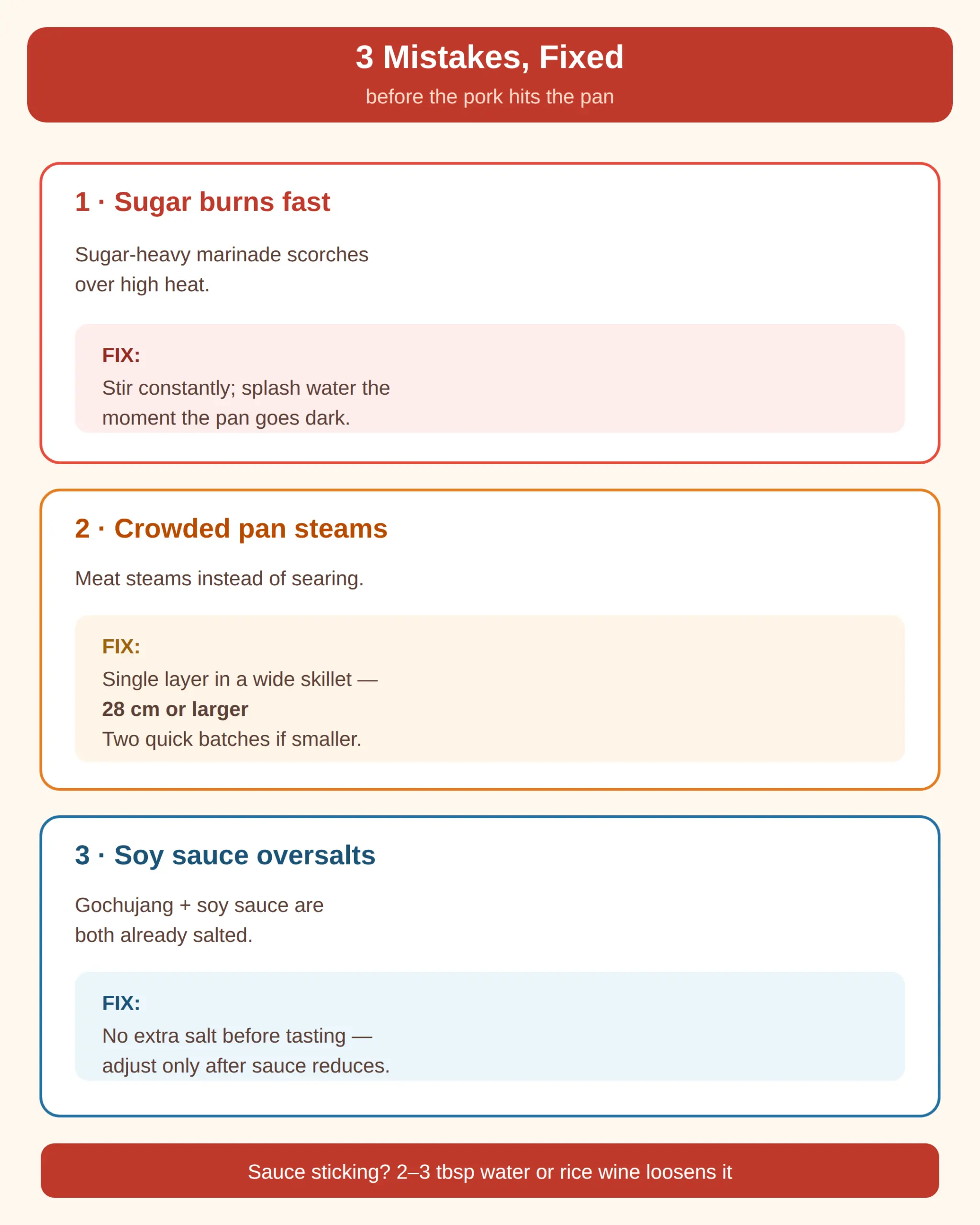
Three mistakes account for almost every failed batch: the sugar scorching, the pan crowding, and over-salting.
All three are fixed before the pork ever hits the pan.
A sugar-heavy marinade burns fast over high heat, so stir constantly and add a splash of water the moment the pan goes dark instead of waiting for the smoke.
Crowding the pan steams the meat instead of searing it — a single layer in a wide (28 cm+) skillet, wok, or cast-iron griddle is the standard, in batches if needed.
On salt: gochujang and soy sauce are both salted, so do not add extra salt before tasting — adjust only after the sauce has reduced.
If the sauce starts sticking and scorching near the end, 2–3 tbsp of water or rice wine loosens the browned bits back into the sauce, and you finish without a burnt taste.
If your pan is smaller than 28 cm, two quick batches beat one slow crowded one every time.
Storage, Freezing, and Make-Ahead
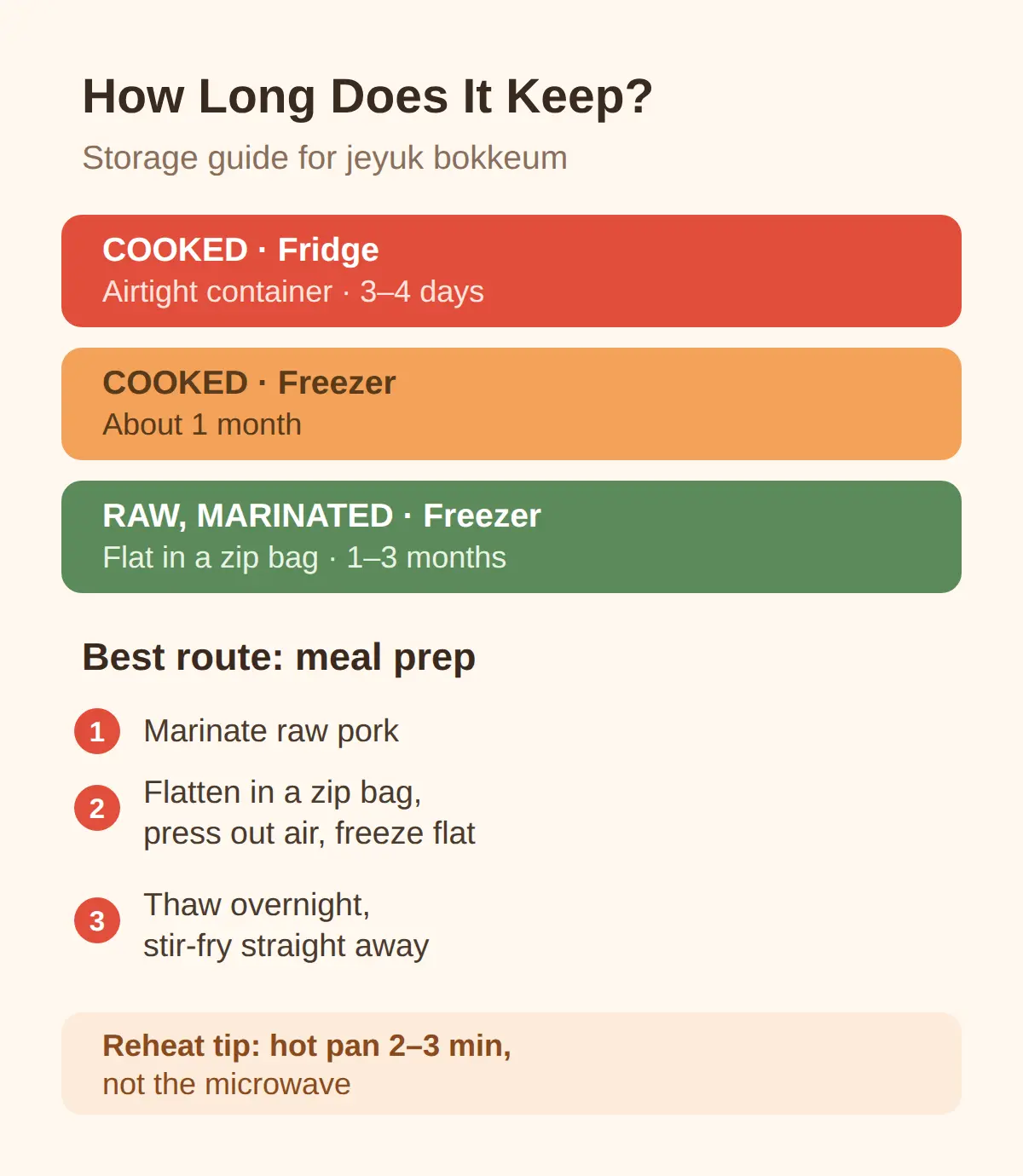
Leftovers keep about 3–4 days refrigerated in an airtight container, and reheating in a hot pan (not the microwave) keeps the texture right.
Freezing works for both states: cooked jeyuk bokkeum for up to about a month, and raw marinated pork for roughly 1–3 months depending on the source — durations vary between recipes, so treat these as ranges.
The meal-prep route is the more useful one: marinate the raw pork in a flat zip bag, press the air out, freeze it flat, then thaw overnight and stir-fry straight from thawed.
Leftovers have standard second lives in Korean home kitchens.
| State | Where | How long |
|---|---|---|
| Cooked | Fridge, airtight | 3–4 days |
| Cooked | Freezer | About 1 month |
| Raw, marinated | Freezer, flat in a zip bag | 1–3 months (sources vary) |
Reheat in a hot pan for 2–3 minutes, and the leftover pork becomes a rice bowl, a gimbap filling, or a topping for kimchi fried rice.
If I am using a leaner cut, I marinate it overnight, because lean pork absorbs far less flavor in a quick 30-minute rest.
If you cook for one, freezing the marinated raw portion flat is the single change that turns this into a weeknight dish — thaw-and-cook takes less time than delivery.
Related posts
📎 📅 Upcoming Dates — Release & Event Calendar
Sources
How to Choose Your Version
- Classic version, Korean grocery nearby: buy gochujang and gochugaru and mix the marinade yourself — that is the standard home method.
- Out of gochujang: sriracha or any red pepper paste plus soy sauce and sugar gets you close; miso with chili flakes and sugar adds depth, though the taste will not be identical.
- No gochugaru: paprika plus a pinch of cayenne — cayenne alone is hotter but loses the fruity sweetness.
- Cooking for kids: 1 tbsp gochujang + 1 tbsp gochugaru keeps it mild; go up to 3 tbsp gochugaru for extra spicy.
- Meal-prepping: freeze the marinated raw pork flat in a zip bag, thaw overnight, and stir-fry straight from thawed — no extra step on cooking day.
FAQ
Q. How do I make jeyuk bokkeum (spicy stir-fried pork) at home?
Marinate 450–500 g thin-sliced pork in 2 tbsp gochujang, 1 tbsp gochugaru, 1 tbsp soy sauce, 1 tbsp sugar, 1 tbsp garlic, and 1 tbsp sesame oil for at least 30 minutes, then stir-fry in a single layer over high heat for 10–15 minutes. Serves 3–4 with rice.
Q. What can I substitute for gochujang, gochugaru, mirin, and pear?
For gochujang, use sriracha or red pepper paste plus soy sauce and sugar, or miso with chili flakes and sugar. For gochugaru, paprika plus a pinch of cayenne. For mirin, rice wine or dry sherry with a pinch of sugar. For pear, half a grated apple or a tablespoon of syrup. These are common home-kitchen approximations, so expect a slightly different taste.
Q. How spicy is jeyuk bokkeum?
You control it: 1 tbsp gochujang plus 1 tbsp gochugaru is mild, and up to 3 tbsp gochugaru is extra spicy. The flakes carry most of the heat, so adjust gochugaru first.
Q. Can I freeze marinated spicy pork?
Yes. Marinate it flat in a zip bag, freeze for roughly 1–3 months (sources vary), thaw overnight in the fridge, and stir-fry straight from thawed. Cooked leftovers also freeze for about a month.
Q. Can I make jeyuk bokkeum without pork?
Commonly suggested swaps are chicken thigh, firm tofu, or bulgogi-cut beef using the same marinade — the marinade is the dish, and the protein is swappable. Lean proteins benefit from at least an hour of marinating.
Variations worth trying once the basic version works: a soy-based, gochujang-free version that uses soy sauce and gochugaru as the base, and the common home style of serving it over rice with melted cheese (cheese jeyuk) or wrapped in lettuce (ssam).
Cover photo: Stir-fried ginger pork (8486598866) by Ruth Hartnup from Vancouver, Canada — CC BY 2.0
#jeyukbokkeum #spicyporkbulgogi #koreanporkrecipe #gochujang #koreanstir-fry
📅Upcoming Schedule — this week 4 · D-day Series launch at stores nationwide + 25% NH Nonghyup card diSee all →