

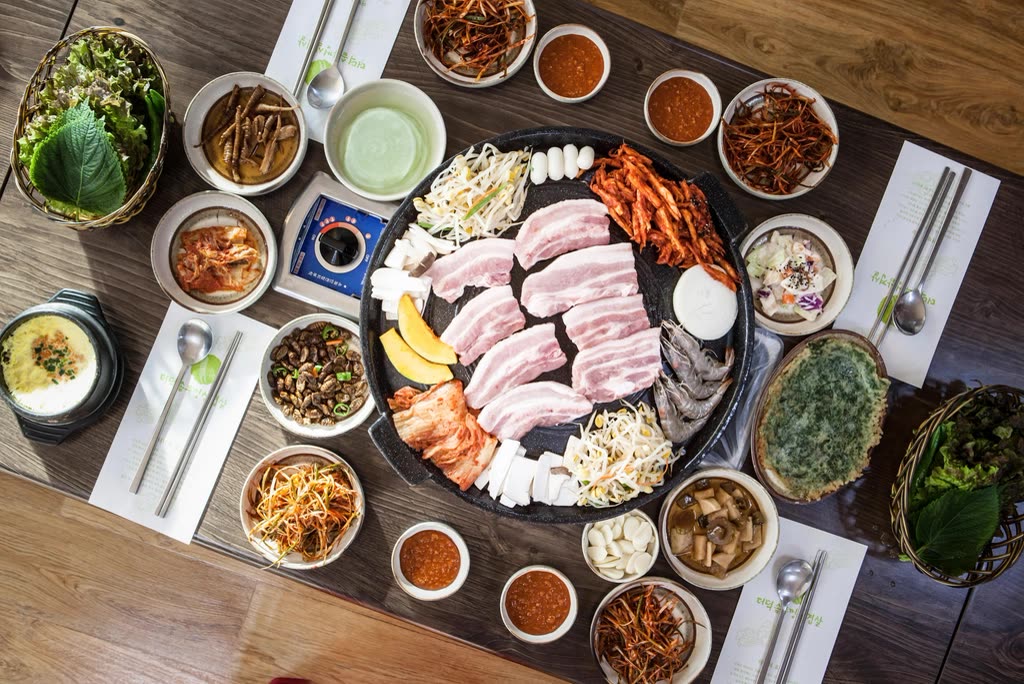
Korean BBQ can fit a calorie deficit, but only if the cut and the table habits fit it too — thin-shaved daepae or cha-dol-baegi instead of thick pork belly, wrapped in lettuce, and no cheese-dip finish.
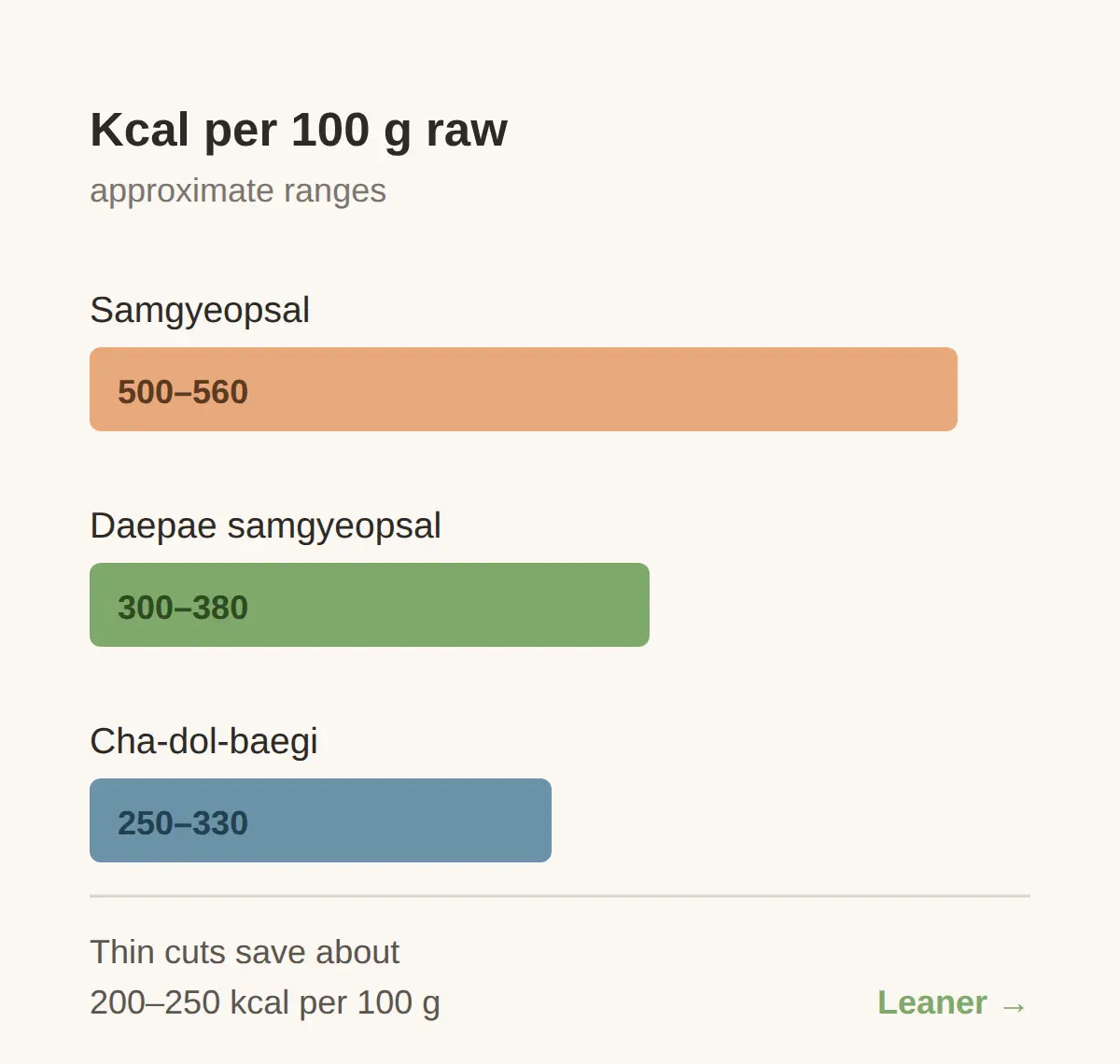
For an overseas reader ordering at a Korean grill, the difference between cuts is roughly 200–250 kcal per 100 g, which is most of one meal’s margin.
This post answers which cut to order, how grilling method changes what ends up on the meat, whether marinades help, and which habits undo the deficit.
Contents
- is korean bbq healthy for weight loss — what actually changes
- Samgyeopsal vs daepae samgyeopsal vs cha-dol-baegi
- How you grill changes what ends up on the meat
- Do marinades and beer help?
- Table habits that undo a calorie deficit
- What I would order, in one line
is korean bbq healthy for weight loss — what actually changes
Yes, if you order thin cuts like daepae samgyeopsal or cha-dol-baegi instead of thick pork belly — the per-100 g gap is roughly 200–250 kcal — and wrap the meat in lettuce.
Thick samgyeopsal is the high-fat option, and the cut you point at on the menu decides most of the meal’s calories before any side dish arrives.
Thin slices also cook faster, and short grilling is the single habit that reduces both of the two harmful compounds Korean BBQ produces at once.
When I look at any ‘Korean BBQ is healthy’ claim, the first thing I check is which cut and which habit it assumes — the answer changes completely between thick samgyeopsal and daepae.
If the rest of the day already runs close to your calorie target, the cut choice is not optional; it is the decision.
| Regular samgyeopsal (pork belly) | ~500–560 kcal |
|---|---|
| Daepae samgyeopsal (thin-shaved) | ~300–380 kcal |
| Cha-dol-baegi (beef brisket slice) | ~250–330 kcal |
Samgyeopsal vs daepae samgyeopsal vs cha-dol-baegi
| Cut | kcal per 100 g (approximate) |
|---|---|
| Samgyeopsal | 500–560 |
| Daepae samgyeopsal | 300–380 |
| Cha-dol-baegi | 250–330 |
Daepae is pork belly shaved thin, so more fat renders out during cooking, and cha-dol-baegi is beef brisket slice, which is leaner to begin with.
The two thin cuts also finish on the grill in seconds instead of minutes, which lines up with the short-grilling habit that keeps harmful compounds down.
If you want pork but stay in a deficit, order daepae samgyeopsal; if you are fine with beef, cha-dol-baegi is the leanest of the three.
How you grill changes what ends up on the meat
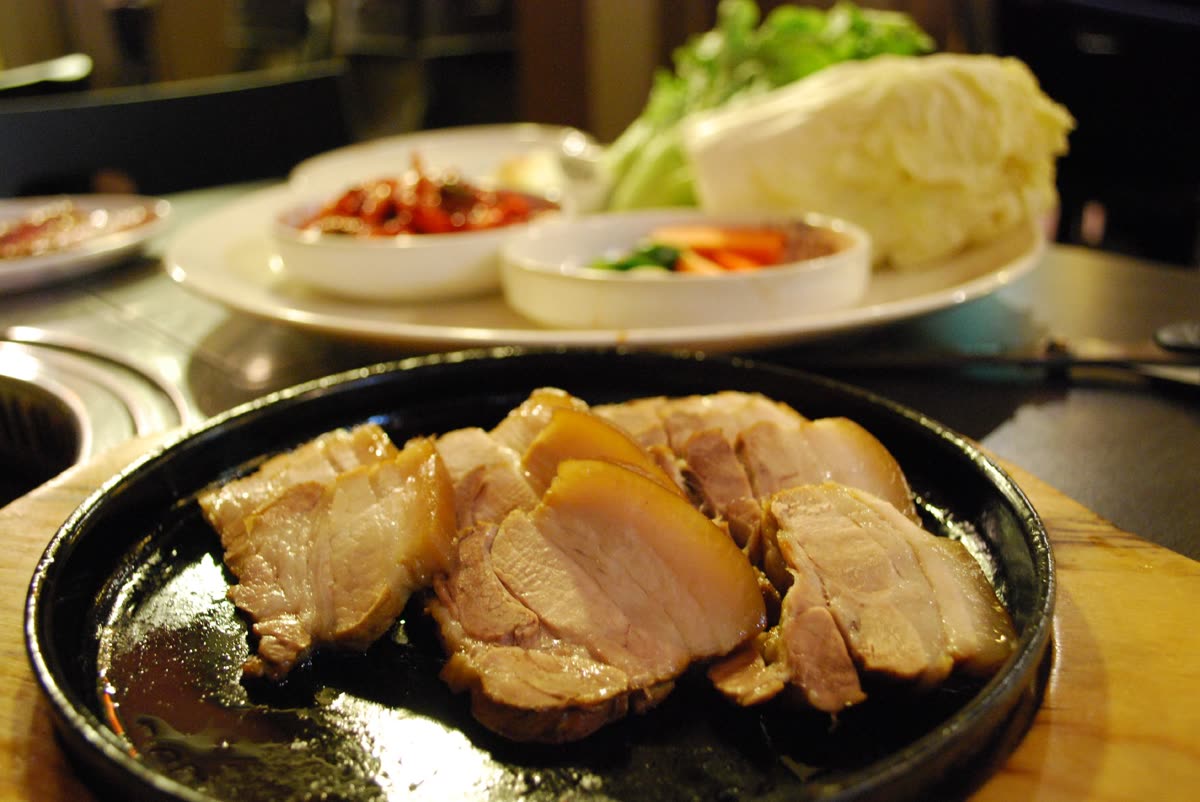
Grilling method decides two separate things — how much fat stays on the meat, and which smoke-formed compounds land on it.
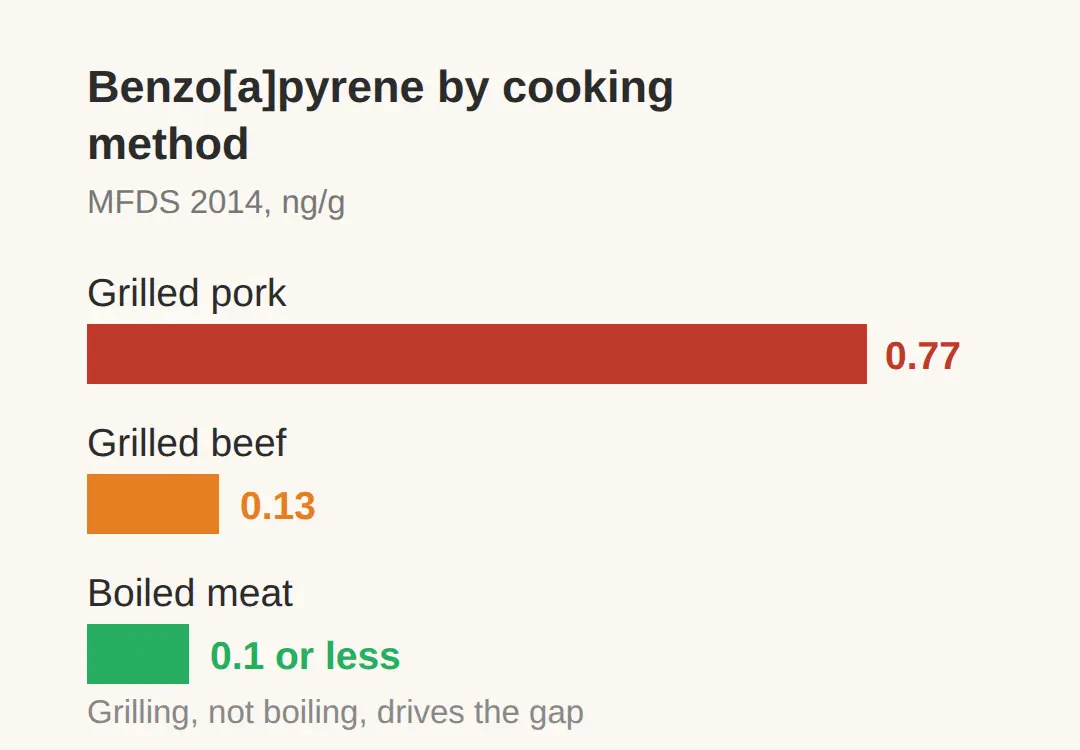
In a 2014 Korean government test, grilled pork averaged 0.77 ng/g of benzo[a]pyrene against 0.13 ng/g for grilled beef and 0.1 ng/g or less for boiled meat — the gap shows up only when meat is grilled, not boiled.
The same government ranking put charcoal briquettes highest for that compound, then binchotan charcoal, then gas grill, with pan-frying lowest.
Two compounds are at play, and they behave differently: benzo[a]pyrene lands on the meat through smoke from dripping fat, while heterocyclic amines form inside the meat at high heat — so trimming charred bits only fixes the first one.
- Use a grill pan instead of letting meat sit directly on the grate.
- Preheat the pan fully before the first slice goes on.
- Change the pan often and trim any blackened parts before eating.
- Ventilate well, or steam or boil the meat indoors instead.
If your home setup cannot ventilate smoke, the steam-or-boil route is the one the guidance recommends outright.
Do marinades and beer help?
Marinating before grilling reduced one harmful compound by 92–99% in a grilling study — but only when the grilling stayed short, and total values still rose from 56 to 330 ng/g as grilling stretched from 20 to 40 minutes.
A separate charcoal-pork experiment found a dark-beer marinade suppressed the smoke-related compounds by 53%, against 25% for non-alcoholic pilsner and 13% for regular pilsner — and this was a raw-meat soak before cooking, so drinking beer at the table has no claimed effect.
Both results come from different meats, fuels, and grill times than Korean charcoal samgyeopsal, so treat them as pointing somewhere rather than proving it for your table.
One more tradeoff: commercial marinades and basting sauces are typically high in sugar, so a thin, low-sugar marinade beats a sweet bottled one.
If you cook at home, soak the meat in a dark liquid briefly, slice it thin, and keep grill time short — the marinade does not rescue a piece left on the heat for 40 minutes.
Table habits that undo a calorie deficit
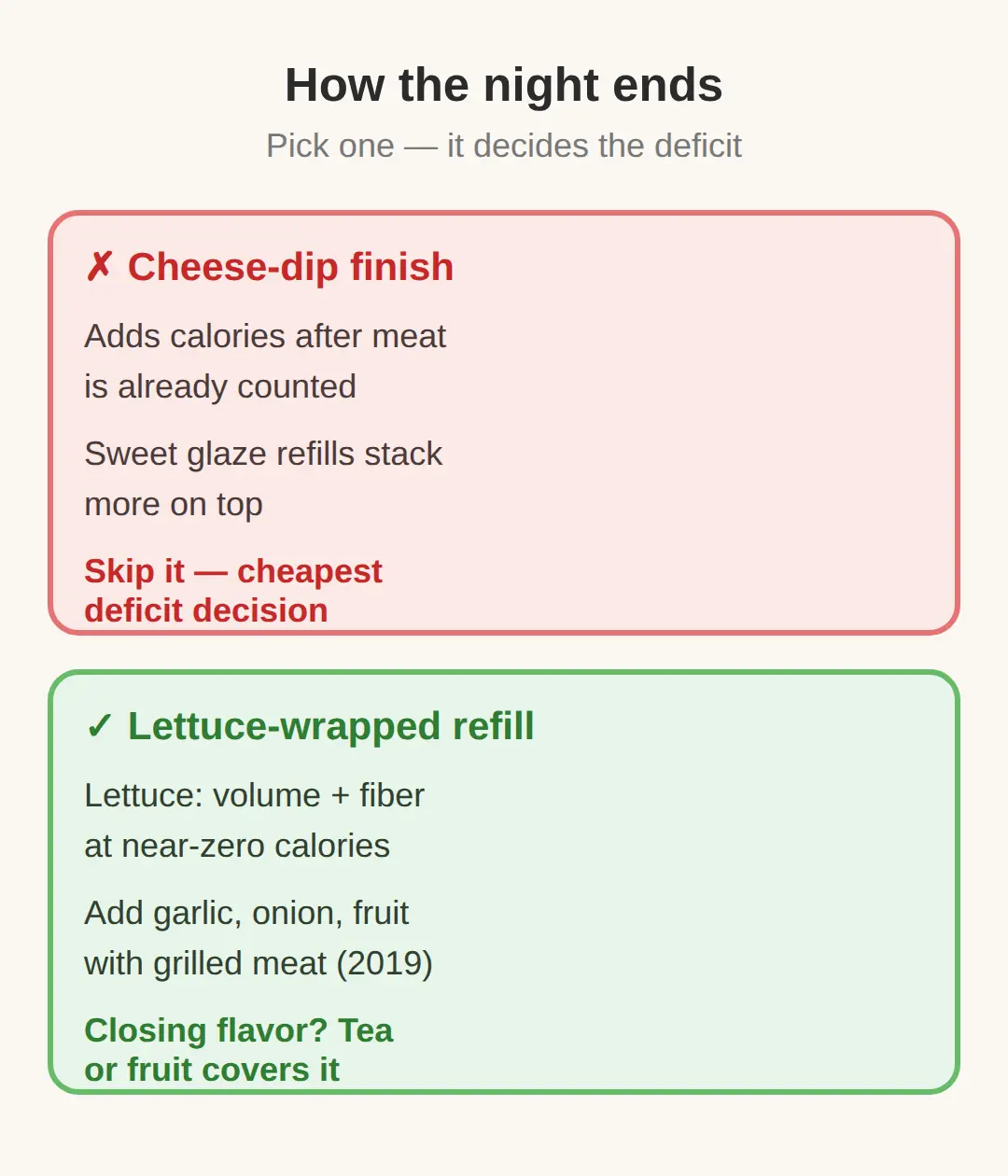
The late-meal rounds are what undo an otherwise fine order — cheese-dip finishes and sweet glaze refills add significant calories after the meat is already accounted for.
Government guidance from 2019 recommends eating vegetables or fruit with grilled meat — lettuce, garlic, and onion with the meal, then black tea or strawberry after — to lower the toxicity of the smoke-deposited compound, though no reduction percentage has been published.
Wrapping meat in lettuce adds volume and fiber at near-zero calories, so each wrap fills more of your plate per calorie than a second slice of pork.
If a shared cheese-dip round or a sweet sauce refill appears at the table, skipping it is the cheapest deficit decision of the night.
If you want a closing flavor, tea or fruit covers it; if you want the meat itself, a refill of daepae wrapped in lettuce beats a cheese finish on both counts.
What I would order, in one line
Daepae samgyeopsal or cha-dol-baegi, grilled fast on the rack, wrapped in lettuce with ssamjang, and the meal stops before the cheese-dip round.
That single order pattern covers all three intervention points at once — lower cut calories, shorter grilling time, and the officially recommended vegetable pairing.
If your grill nights are rare, the exact numbers matter less than the cut choice; if you eat K-BBQ weekly, the cheese-dip and sauce round is the habit worth breaking first.
If I were ordering for a deficit, I would take daepae samgyeopsal or cha-dol-baegi, because the leaner cut and the shorter grill time do the same job in one move.
What I check first is not the marinade but how long the meat sits on the grill — that is the habit the evidence points to most clearly.
👉 Korean BBQ chains now operate in 57 countries (Genesis BBQ group)
👉 Benzo[a]pyrene by cooking method and grilling recommendations
👉 Grilled pork vs beef benzo[a]pyrene averages
Related posts
Sources
- Foodcombi article compiling MFDS 2014, Salmon 1997, Viegas 2 (foodcombi.kr)
- Autocomplete-confirmed phrasing; no existing post answers th (google.com)
- Only secondary blog figures (already collected as facts 31-3 (mfds.go.kr)
What to remember
- Thin cuts over thick: daepae samgyeopsal or cha-dol-baegi instead of regular samgyeopsal saves roughly 200–250 kcal per 100 g (approximate figures).
- Grill time is the strongest lever — short grilling reduces both smoke-deposited and in-meat compounds at once.
- Wrapping in lettuce, garlic, and onion is government-recommended with grilled meat; no reduction percentage has been published for it.
- Marinade and beer findings come from studies on other meats and grills, so treat them as a direction to check, not a proven effect on samgyeopsal.
- Skip cheese-dip finishes and sweet glaze refills — they land late in the meal, when the deficit is already tight.
FAQ
Q. Is Korean BBQ healthy for weight loss?
Yes, if you order thin cuts such as daepae samgyeopsal or cha-dol-baegi, grill them fast, wrap in lettuce, and skip cheese-dip and sweet-sauce rounds.
Q. Samgyeopsal vs daepae samgyeopsal calories — how big is the difference?
Regular samgyeopsal is commonly listed around 500–560 kcal per 100 g and daepae around 300–380 kcal, a gap of roughly 200–250 kcal — figures are approximate until confirmed against Korean labeling data.
Q. Does wrapping in lettuce make Korean BBQ healthier?
It adds volume and fiber at near-zero calories, and Korean food-safety guidance officially recommends vegetables with grilled meat; no specific reduction percentage has been published.
Q. Is charcoal grilling worse than gas or pan?
In a 2014 Korean government test, charcoal briquettes ranked highest for benzo[a]pyrene, followed by binchotan charcoal, then gas grill, with pan-frying lowest.
Q. What Korean BBQ habits undo a calorie deficit?
Cheese-dip finishes and sweet commercial glaze refills late in the meal, plus long grilling, are the habits most likely to undo the deficit.
Planning a K-BBQ night at home — the grill-pan steps in section 3 apply before the meat ever reaches the table.
Cover photo: Free Korean barbecue image — CC0 1.0
#KoreanBBQ #samgyeopsal #daepaesamgyeopsal #cha-dol-baegi #Koreanfoodhealth #caloriedeficit
📅Upcoming Dates — 이번 주 18 · D-3 Final two episodes drop on Disney+/Hulu전체 보기 →