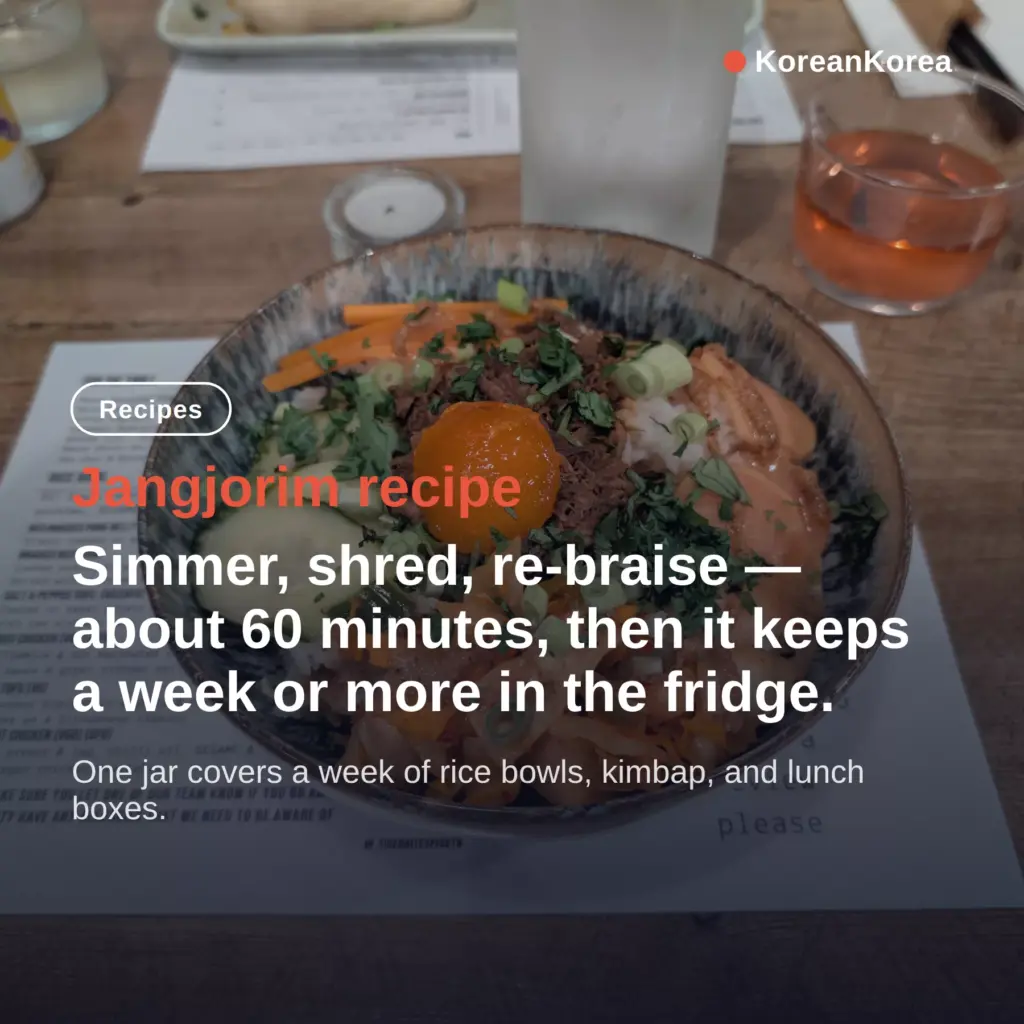
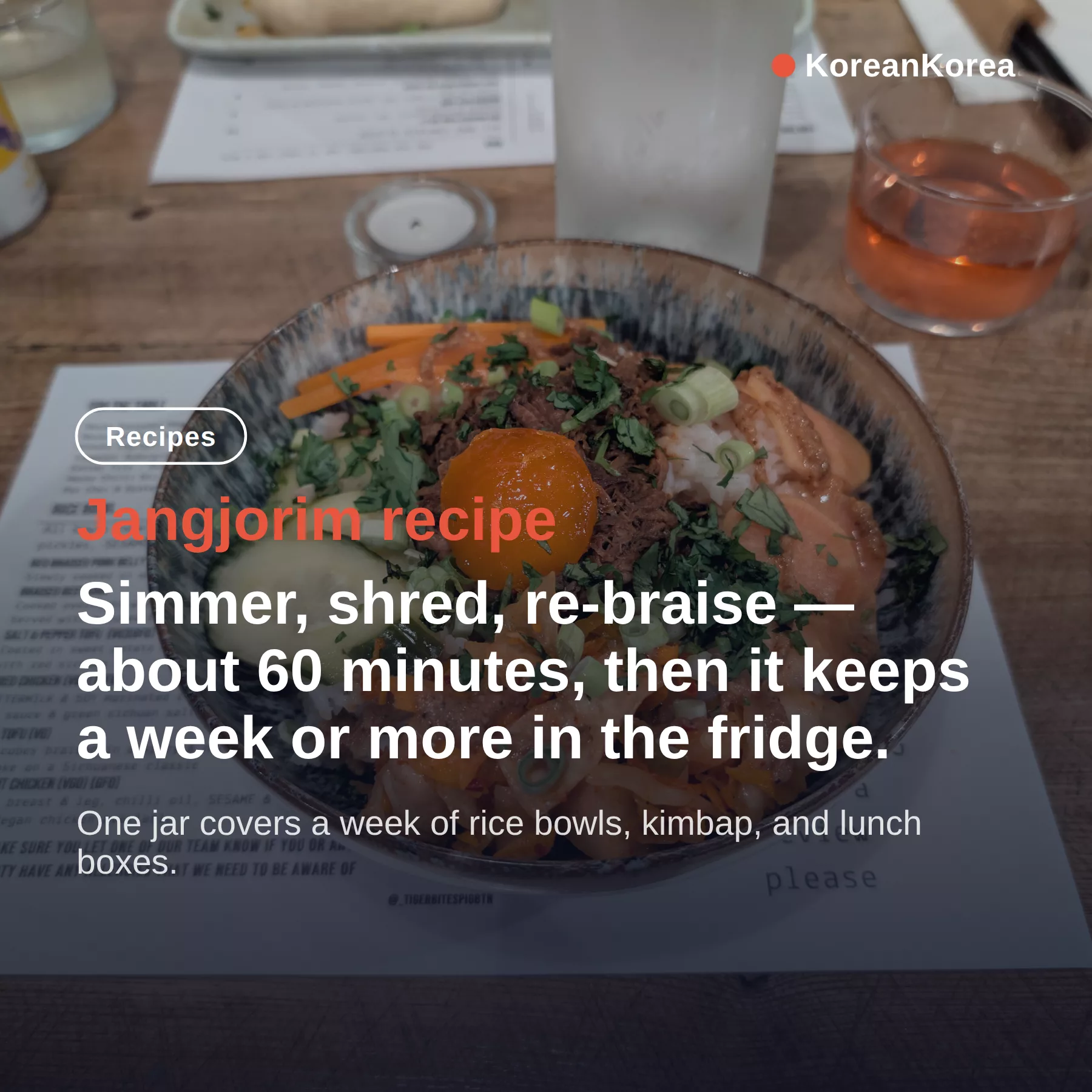
Jangjorim — Korean soy-braised beef — takes about 60 minutes of cooking: poach the beef 30 minutes, shred it warm, then braise it 30 minutes in a broth-soy-sugar base, and the jar keeps a week or more refrigerated.
Contents
- Jangjorim recipe: the basic method, start to jar
- How long does jangjorim keep in the fridge?
- Why is my jangjorim too salty?
- Which cut of beef, and can you skip shredding?
- Pork jangjorim and spicy versions
- How to use a jar of jangjorim
Jangjorim recipe: the basic method, start to jar
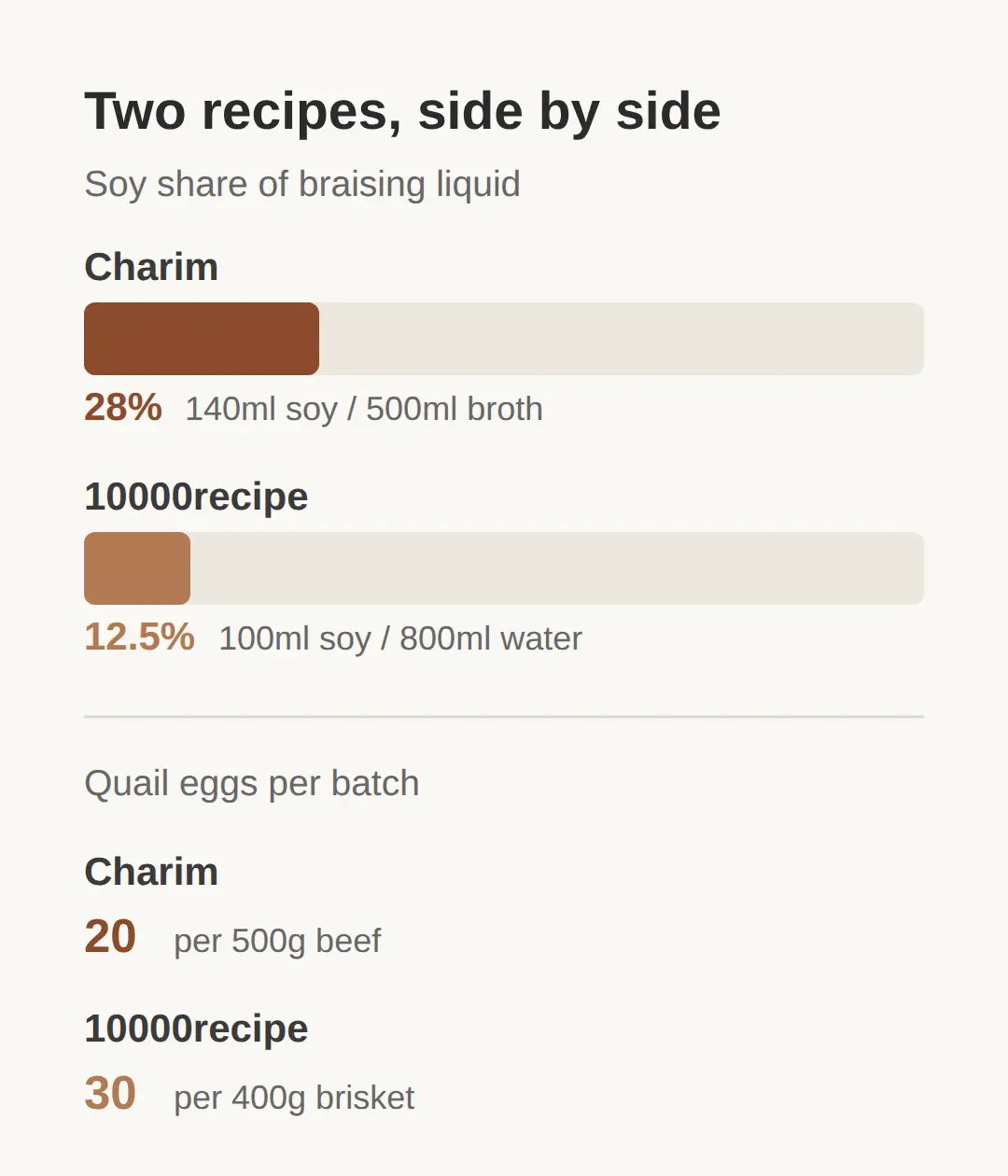
A standard batch braises 500ml of broth with 140ml of soy sauce and 25g of sugar, about 28% soy by liquid, for 30 minutes with 20 quail eggs.
That one 500ml base covers 500g of beef and the eggs — a single-jar batch.
- Soak the raw beef in cold water for 20–30 minutes to draw out the blood.
- Poach it 30 minutes in 900ml water with 40g green onion, 20g garlic, and 2 bay leaves; skim the foam after the boil starts.
- Shred the beef along the grain while it still holds a little warmth — strands about 0.8–1cm wide absorb the sauce best.
- Braise the shreds 30 minutes on medium-low in the strained broth-soy-sugar base with the eggs, until the liquid reduces to about a third and the eggs turn brown.
- Cool it fully, then refrigerate.
When I look at a jangjorim recipe, the first thing I check is how much soy sauce goes into how much liquid, because that ratio decides whether the batch is edible or too salty.
| Charim-style standard beef (500g beef, 20 quail eggs) | 500ml broth + 140ml soy + 25g sugar — about 28% soy, 30-min simmer |
|---|---|
| Home-cook version (400g brisket, 30 quail eggs) | 800ml poaching water + 100ml soy + 2T oligosaccharide — about 12.5% soy, ~20-min simmer |
| Pre-made gomtang broth version (no extra meat simmering) | 200ml broth + only about 60ml soy + 1.5T oligosaccharide — about 23% soy, eggs last 5 minutes only |
How long does jangjorim keep in the fridge?
Refrigerated jangjorim keeps a week or more, and the cooling step is what protects that week.
Let it cool fully before packing so the braising liquid gels into a coating layer over the meat and eggs — that coating holds the flavor in the fridge.
Freezing also works: portion it into small bags or containers, freeze up to about a month, and thaw in the fridge or microwave.
The exact freezer life beyond that is not confirmed by a food-safety source, so freeze in portions you will finish within a month.
If you cook on Sunday for the work week, one standard batch covers it; pack in single-meal portions so the rest stays sealed.
Why is my jangjorim too salty?
It is too salty because the soy share of your braising liquid is too high for the broth you used.
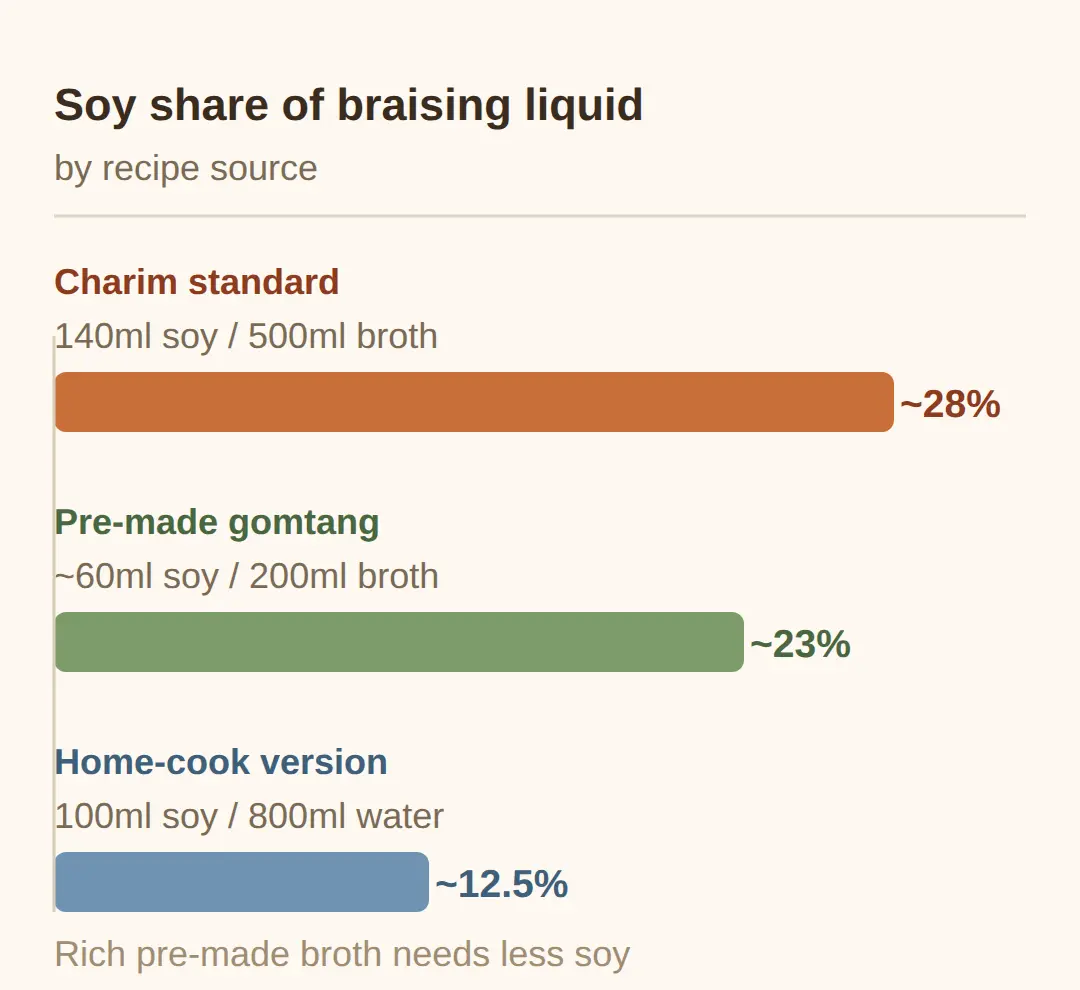
Recipes range from about 12.5% to about 28% soy by liquid, and there is no single canonical ratio.
| Source | Braising liquid | Soy share |
|---|---|---|
| Charim standard | 500ml broth + 140ml soy | about 28% |
| Home-cook version | 800ml water + 100ml soy | about 12.5% |
| Pre-made gomtang broth | 200ml broth + about 60ml soy | about 23%, lower soy than the Charim version because the broth is already savory |
If you start from pre-made gomtang or seolleongtang broth, use 200ml of broth with only about 60ml of soy sauce, and do not copy the ‘1 cup soy to 2 cups water’ home ratio — it over-salts rich broth.
Quail eggs show the saltness fastest.
They take the full 30-minute simmer in a standard braise, but in rich pre-made broth they go in for only the last 5 minutes, basted with liquid instead of flipped.
Which cut of beef, and can you skip shredding?
Documented cuts are brisket (400g), chuck roll (1kg), and top round eye of round — all shredded along the grain after a slight rest.
If you hate shredding, chef Kim Kang-woo’s version skips it entirely: 1kg of chuck roll poached 50 minutes, then braised 20 minutes in 300ml soy sauce with 1 tablespoon of oyster sauce.
His version is also a different scale: about 70 minutes of cooking (50 poach + 20 braise) versus 60 for the standard version, with about 500g of quail eggs and sikhye rice punch as the sweetener instead of separate sugar.
Shredding timing matters when you do shred — meat that is too hot tears raggedly, and fully cooled meat turns tough.
If you want one jar fast from 500g of beef, follow the standard 60-minute flow.
If you have a kilo and no patience for shredding, the no-shred chunk version is the documented alternative.
Pork jangjorim and spicy versions
Pork chuck or flank works in place of beef — softer and cheaper, and popular for lunch boxes.
The pork version uses a 3:1 soy-to-sugar ratio (6 tablespoons soy to 2 tablespoons sugar): simmer the pork 20 minutes in water with green onion and mirin, then braise 10 minutes on medium-low with quail eggs and cheongyang peppers.
Pork jangjorim keeps 2 weeks refrigerated and 1 month frozen in a sealed container with the braising liquid.
For heat, add 2 cheongyang peppers or gochugaru to the braise.
For crisp, milder heat, fork-poke the chilies and add them off the heat with the lid on for 10 minutes of residual heat — that keeps them crisp instead of softened by the simmer.
How to use a jar of jangjorim
Shredded jangjorim works four ways: mixed into hot rice, as a kimbap filling, as a noodle topping, and packed in lunch boxes.
It is built for exactly that make-ahead rhythm — one simmer, then a week of meals.
Two small fixes keep the jar good to the last spoonful.
If some meat sits above the liquid, that is normal; spoon the boiling sauce over it once or twice.
Dipping the warm shreds back into the braising liquid for about a minute before packing restores the gloss.
After the final simmer, leave the lid on off the heat for 10 minutes of residual heat — the flavor spreads evenly without over-salting the meat.
If I were packing for the week, I would make the standard charim-ratio batch, cool it fully so the gelled liquid coats everything, and store it — that coating is what keeps the flavor in the fridge.
Related posts
Sources
- Keeps a week or more refrigerated; gelled coating preserves (charim.soundedfun.dev)
- 800ml poaching water, 100ml soy, 30 quail eggs, 20 min simme (10000recipe.com)
- 200ml broth + ~60ml soy to avoid over-salting (jini-us.com)
What to check before you jar it
- Check one ratio before anything else: 140ml soy per 500ml broth in the standard version, but only about 60ml soy per 200ml when using rich pre-made gomtang broth.
- Strand width matters: 0.8-1cm strips soak up the braising liquid most evenly.
- Let the batch cool completely before packing; the gelled sauce layer is what keeps flavor intact in the fridge.
- Match egg timing to broth strength: whole simmer in a standard braise, last 5 minutes only in a concentrated broth.
- Freeze in single-meal portions and use within a month; exact freezer life beyond that is not confirmed.
FAQ
Q. How long does jangjorim keep in the fridge?
A week or more refrigerated, verified across Korean recipe sources. Cool it fully before packing so the gelled braising liquid coats the meat and eggs.
Q. Can you freeze jangjorim?
It freezes well in small portions; thaw in the fridge or microwave. A commonly cited duration is about 1 month, though that is not confirmed by a food-safety authority, so plan to finish a batch within a month.
Q. Why does the same recipe turn out too salty sometimes?
The soy share of the braising liquid differs by recipe — from about 12.5% to about 28% by liquid. Using the full ‘1 cup soy to 2 cups water’ ratio with rich pre-made broth is the most common over-salting mistake.
Q. Can you make jangjorim without shredding the beef?
Yes. Chef Kim Kang-woo’s version skips shredding: 1kg chuck roll poached 50 minutes, then braised 20 minutes in 300ml soy sauce and 1 tablespoon oyster sauce, sweetened with sikhye rice punch.
Q. What cut of beef is best for jangjorim?
Brisket, chuck roll, and top round are the documented cuts. All are shredded along the grain after a short rest; brisket gives the classic texture, chuck roll suits the no-shred version.
Next in this series: jangjorim as a kimbap filling, and other freezer make-ahead banchan.
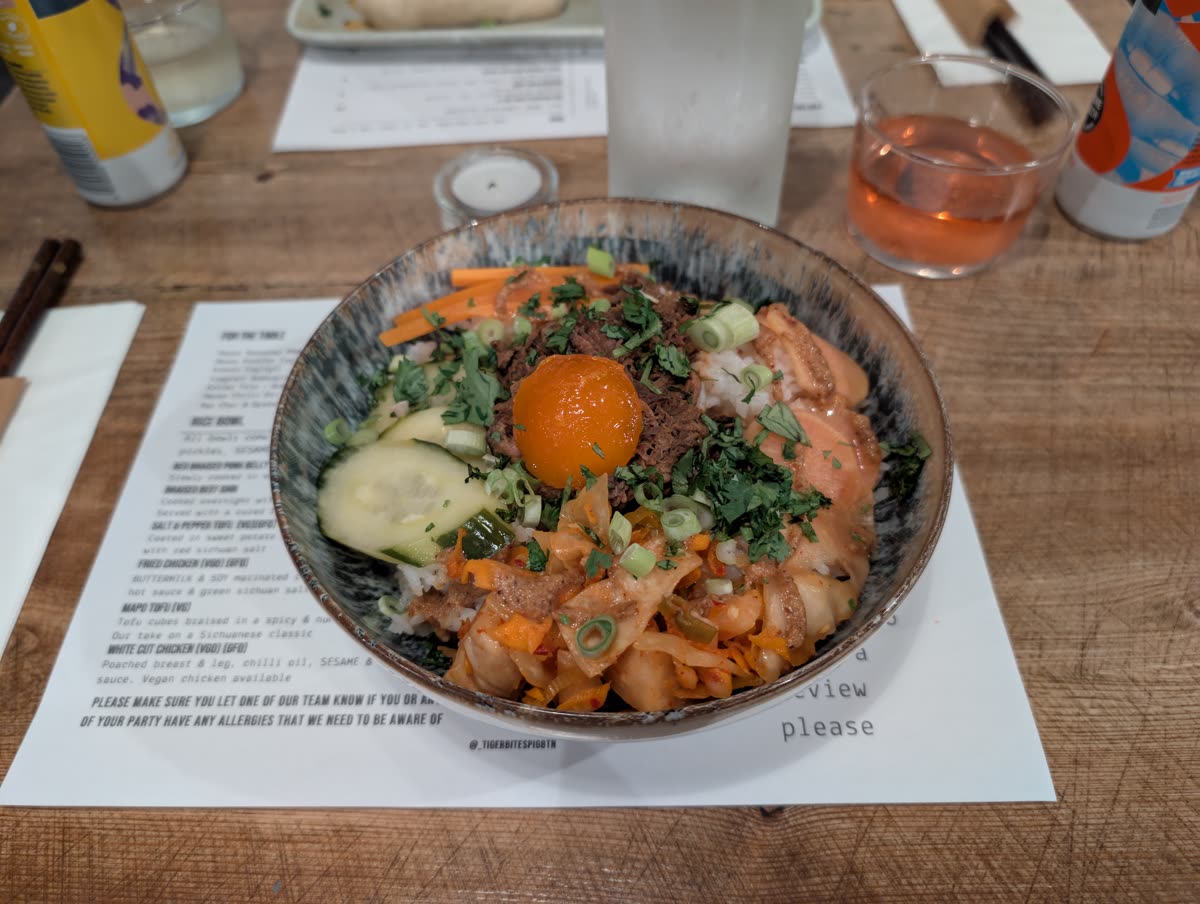
Cover photo: Braised Beef Shin Rice Bowl – Tiger Bites Pig 2025-09-17 by Andy Li — CC0 1.0
#jangjorim #jangjorimrecipe #soybraisedbeef #Koreansidedish #banchan #make-ahead #lunchbox #quaileggs
📅Upcoming Dates — 이번 주 19 · D-2 Final two episodes drop on Disney+/Hulu전체 보기 →