Yes — tteokbokki works without fish cakes, and the base is just 4 ingredients: rice cakes, gochujang, sugar, and soy sauce, cooked in about 20 minutes for 2 servings.
Fish cakes are the ingredient overseas cooks trip on most — allergy, halal concerns, or a store that simply doesn’t stock them.
This post gives the 4-ingredient steps, then answers the follow-up questions people type: no gochugaru, no gochujang, a milder sauce, and what to buy and store abroad.
Key facts — As of 2026-10-09
- For a 2-serving batch, 1 tablespoon of soy sauce replaces the umami depth that fish-cake broth normally provides — 0.5 tbsp per serving.
Easy Tteokbokki Recipe Without Fish Cakes: the 4-Ingredient Base
| Rice cakes (tteok) | The body of the dish — garae-tteok, the long cylinder type, is the standard choice |
|---|---|
| Gochujang (chili paste) | Carries the red color and the sweet heat |
| Sugar | Balances the gochujang heat and helps the sauce turn glossy |
| Soy sauce | About 1 tablespoon per 2-serving batch — supplies the savory depth fish cakes normally add |
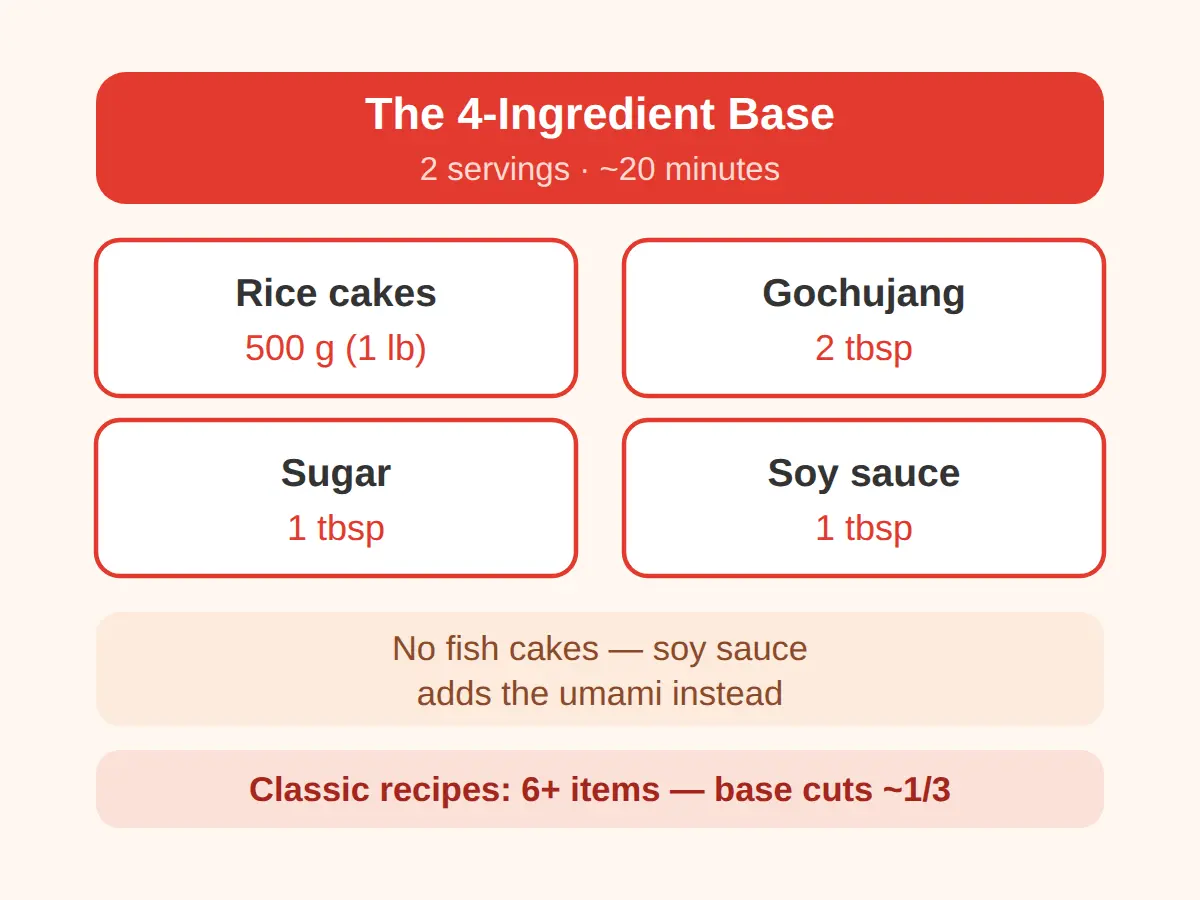
The base recipe is 4 ingredients — rice cakes, gochujang, sugar, and soy sauce — and it takes about 20 minutes from boil to table for 2 servings.
Fish cakes are left out entirely; nothing replaces them except the soy sauce.
Classic recipes commonly list 6 or more ingredients, so this base cuts the list by roughly a third.
| Ingredient | Amount (2 servings) |
|---|---|
| Rice cakes (garae-tteok) | 500 g (1 lb) |
| Gochujang | 2 tablespoons |
| Sugar | 1 tablespoon |
| Soy sauce | 1 tablespoon |
If your tteok is fresh or refrigerated, no soaking is needed — just pull the clumps apart by hand.
Frozen or dried tteok should soak in warm water for about 10 minutes first; boiling it straight from frozen is what makes it hard or sticky.
- Cut garae-tteok (long cylinder rice cakes) into finger-length pieces, or separate store-bought cut pieces by hand.
- Add just enough water to mostly cover the rice cakes and bring it to a boil over medium heat.
- Stir in gochujang and sugar, then about 1 tablespoon of soy sauce for a 2-serving batch.
- Simmer about 20 minutes total, stirring often so the rice cakes don’t stick to the bottom.
- Keep simmering until the sauce thickens and coats the tteok — the sauce thickens on its own from the rice cakes’ released starch, so no flour is needed.
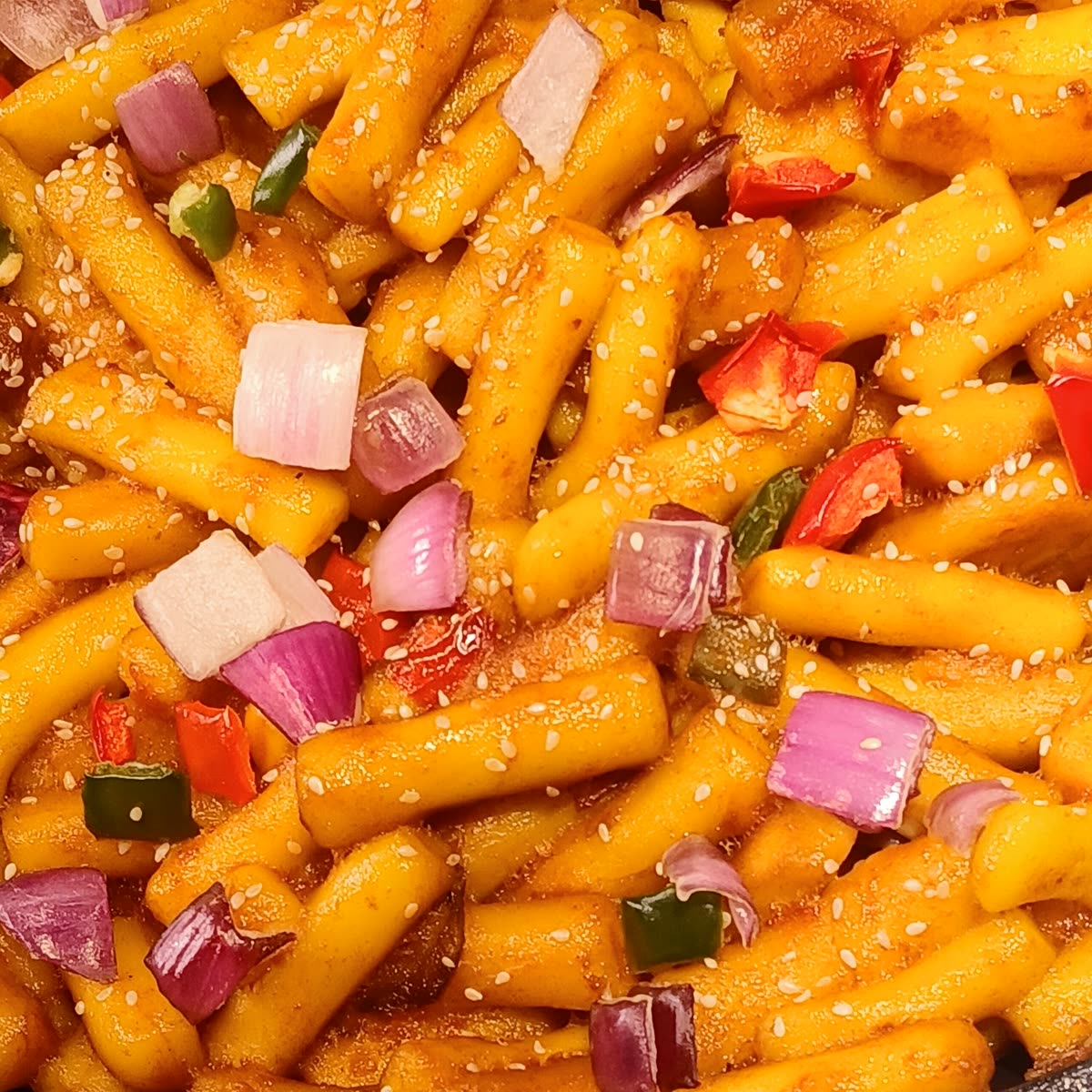
- Serve hot, plain or with a boiled egg, scallion, or onion in the pot.
When I check a shortened recipe like this, the first thing I look at is whether the savory base survives without the omitted ingredient — here the soy sauce step is that check.
Ingredients
Main
- 500 g (1 lb) Rice cakes (garae-tteok)
- Water
Sauce & seasoning
- 2 tablespoons Gochujang (Korean chili paste)
- 1 tablespoon Sugar
- 1 tablespoon Soy sauce
Amounts are the ones used in this recipe; where the recipe gives no amount, adjust to taste.
Steps at a glance
-
1Cut garae-tteok (long cylinder rice cakes) into finger-length pieces,…
-
2Add just enough water to mostly cover the rice cakes and bring it to…🔥 boil
-
3Stir in gochujang and sugar, then about 1 tablespoon of soy sauce for…
-
4Simmer about 20 minutes total, stirring often so the rice cakes don’t…⏱ ~20 minutes🔥 simmer
-
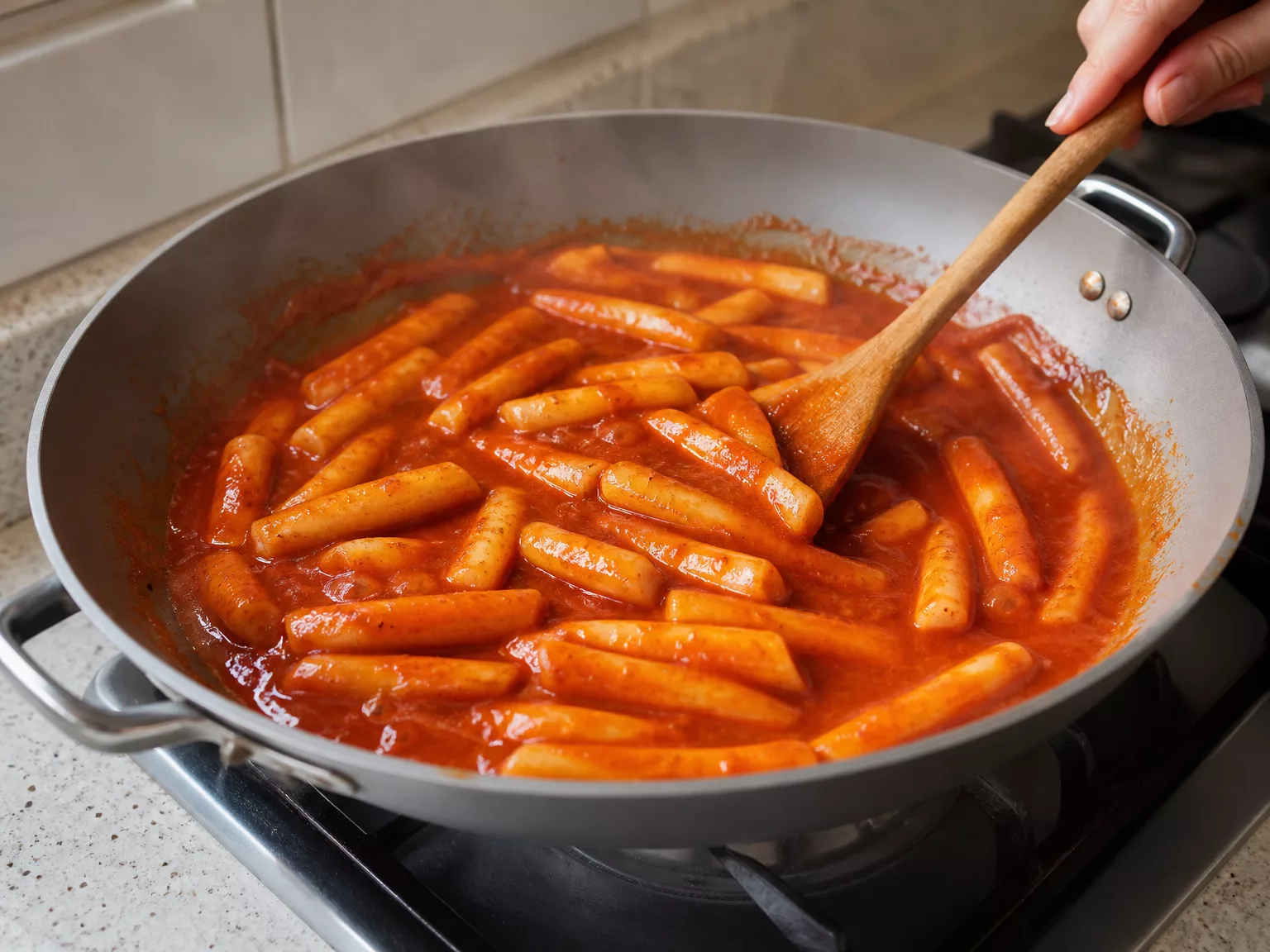 AI-generated photo
What it should look like — AI-generated image of this step, made from the recipe text — not a photo of our kitchen. 5Keep simmering -
6Serve hot, plain or with a boiled egg, scallion, or onion in the pot.
What About the Fish-Cake Flavor? Soy Sauce Covers It
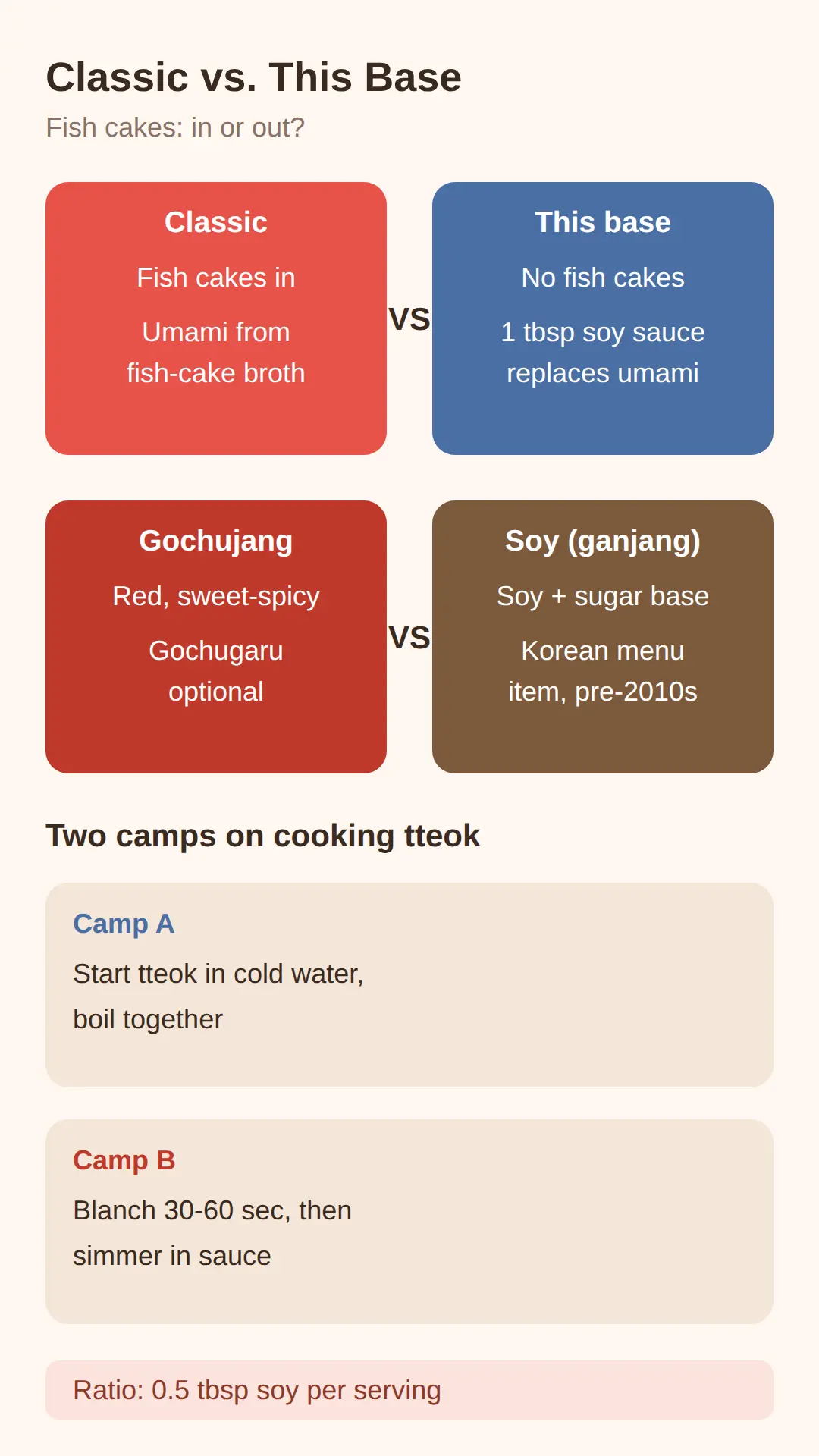
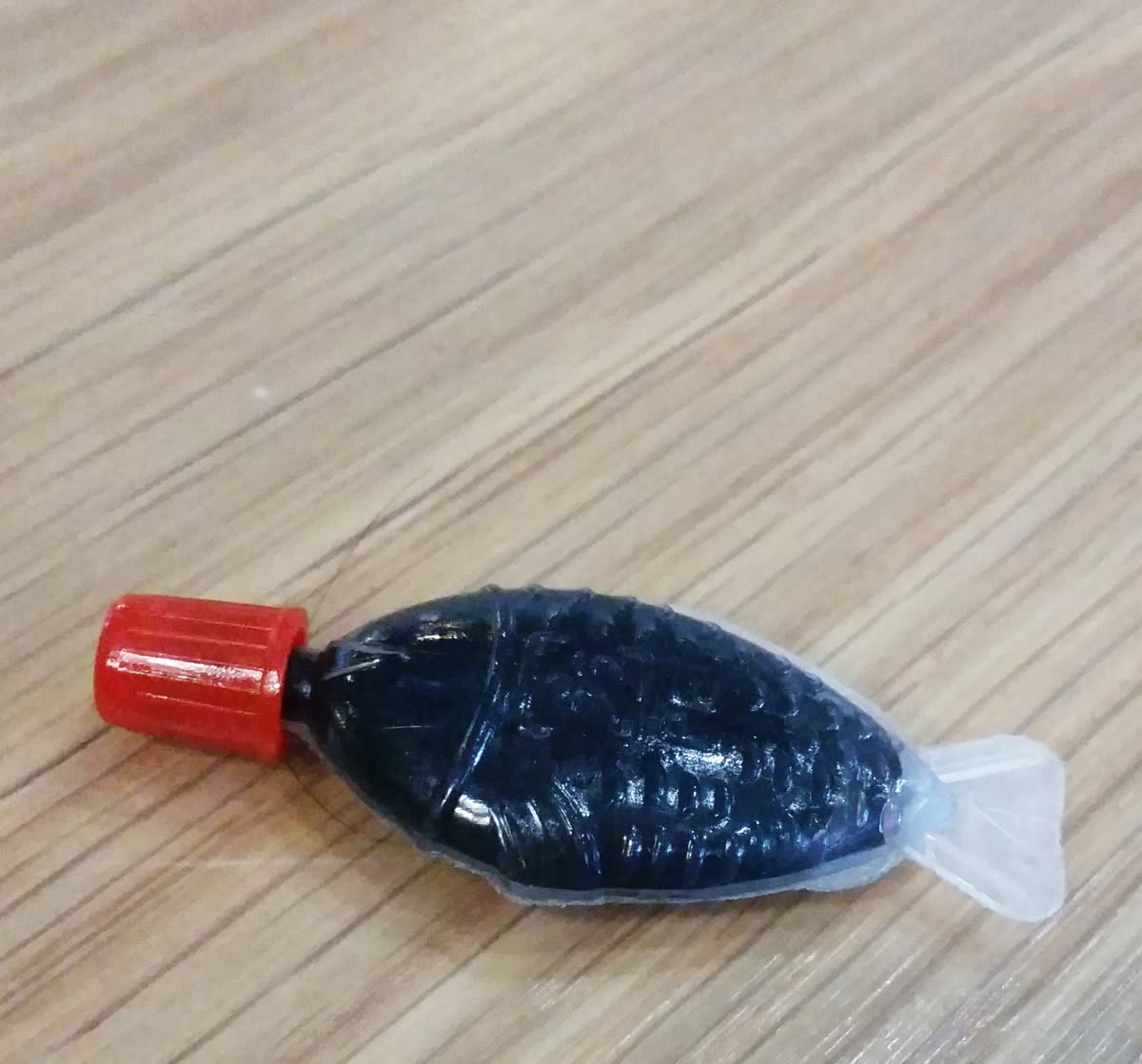
About 1 tablespoon of soy sauce per 2-serving batch replaces the savory depth that fish-cake broth normally provides — roughly 0.5 tablespoon per serving.
In classic recipes, fish cakes do two jobs: they are a topping, and their broth adds savory depth to the sauce.
In this base the topping is simply dropped, and the soy sauce takes over the second job, with sugar rounding off the gochujang heat.
The chewiness of the dish depends on the rice cake itself — cylindrical garae-tteok is the common home choice — not on the fish cakes.
If you skip fish cakes for allergy, halal, or availability reasons, the base recipe stands as written; the texture changes less than the flavor does.
Common no-fish-cake add-ins are a boiled egg, scallion, onion, or cabbage, and none of them change the 4-ingredient base.
Is Gochugaru Required? No — Gochujang Alone Carries It
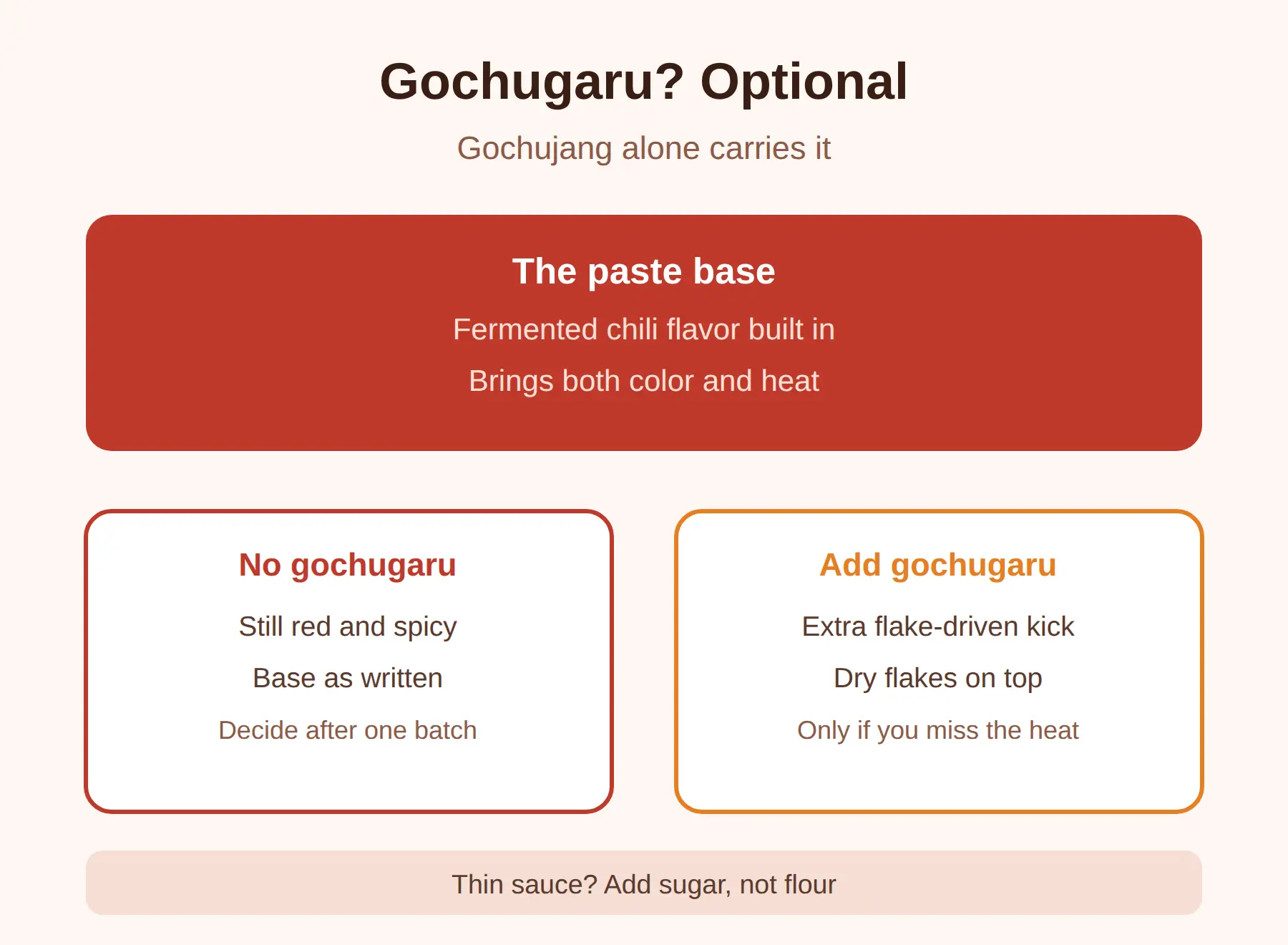
Gochugaru (Korean chili flakes) is optional in this base — gochujang alone carries both the color and the heat.
Gochugaru is a dry flake, gochujang is a paste, and the paste already brings fermented chili flavor with it.
So a batch without gochugaru still comes out red and spicy; you simply don’t get the extra flake-driven kick some recipes add.
The same starch thickening applies: as the rice cakes simmer, the sauce firms up on its own, and a thinner sauce is fixed with a bit more sugar — not flour.
If your pantry has gochujang but no gochugaru, make the base as written and decide after one batch whether you miss the extra heat.
Can I Make Tteokbokki Without Gochujang?
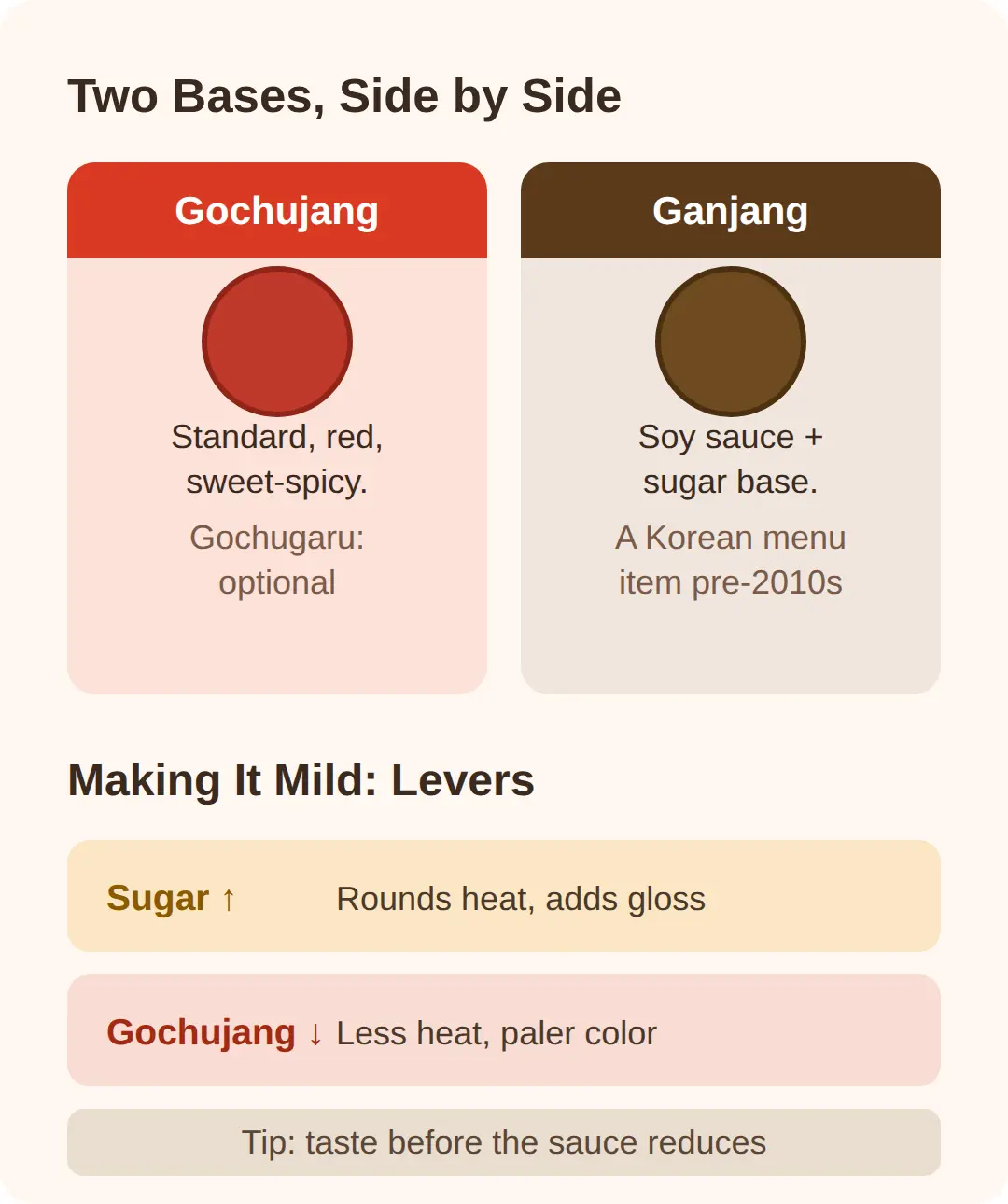
Yes — soy-sauce tteokbokki (ganjang tteokbokki) is an established Korean dish that existed before the 2010s, so a no-gochujang batch is a real recipe, not a workaround.
The soy-based version runs on soy sauce plus sugar, with a little gochugaru or paprika for mild color.
It is the older style of the dish; the red gochujang version is the one most people picture today.
If you have no gochujang at all, the soy version gets you tteokbokki tonight; if you have gochujang, the base recipe is the faster and more standard route.
How Do I Make Tteokbokki Mild?
Mildness is a ratio question, not a different dish: add more sugar, use less gochujang, or dilute the paste — don’t add more water.
Sugar does double duty in the sauce: it rounds the heat and helps the sauce turn glossy.
Cutting gochujang lowers the heat but also thins the color, so sugar is usually the lever to raise first.
For a creamy mild version, mozzarella stirred in during the last minute or two off heat is the most-searched topping, and a milk-based, rose-style broth is the second.
If you are cooking for children or for anyone who avoids spice, start with less gochujang and more sugar, then taste before the sauce reduces.
Buying Tteok Abroad, Leftovers, and the Halal Check
Overseas readers find refrigerated or frozen tteok at Korean and Asian grocery stores such as H Mart, or online, typically in 1 lb (500 g) packs.
If garae-tteok is unavailable, sliced rice cake sticks are the usual substitute; frozen tteok from a Korean mart is the closest match to fresh.
Cooked tteok hardens within hours at room temperature, so leftovers go into an airtight container in the fridge — Korean cooking sites suggest eating them within a day or two.
Reheat in a pan over low heat with a splash of water; the microwave is what leaves the tteok hard.
Uncooked tteok freezes well for up to 3 months, and 30 minutes in cold water thaws it before use.
On halal: once fish cakes are out, the main thing to check is the gochujang label for alcohol-containing additives — a 30-second read at the store settles it.
Standard pairings without fish cakes are fried dumplings (gunmandu), kimbap, or a boiled egg in the pot.
If I were writing the shopping list myself, I would double-check the gochujang label first, because the halal check is the one step that can’t be fixed after cooking.
What I look at before buying tteok abroad is the pack date and whether it’s refrigerated or frozen, since that decides whether a 10-minute soak is needed.
Where to eat tteokbokki in Korea (떡볶이)
- Sooble Busan — Busan
Restaurants from official tourism listings (city and national tourism organizations) that list tteokbokki as a signature dish — our guides to each, not a ranking.
Related posts
📎 📅 Upcoming Dates — Release & Event Calendar
Sources
- 4-ingredient base (tteok, gochujang, sugar, soy) confirmed a (maangchi.com)
- Substitution pattern: soy sauce + sugar replaces fish-cake b (cookpick.kr)
- Refrigerated or frozen tteok available at Korean/Asian groce (hmart.com)
Tteokbokki Without Fish Cakes: the Short Version
- 4 ingredients, about 20 minutes, 2 servings: rice cakes, gochujang, sugar, and about 1 tablespoon soy sauce.
- No gochugaru or no gochujang is fine — the first needs nothing, the second switches to soy sauce plus sugar.
- Stir often while it simmers, and reheat leftovers in a pan with a splash of water, not the microwave.
FAQ
Q. Can I make tteokbokki without fish cakes?
Yes. The base is rice cakes, gochujang, sugar, and soy sauce — fish cakes are omitted entirely, and soy sauce supplies the savory depth their broth normally adds.
Q. Can I make tteokbokki without gochujang?
Yes — soy-sauce tteokbokki (ganjang tteokbokki) is an established Korean dish made with soy sauce, sugar, and a little gochugaru or paprika for color.
Q. How do I make tteokbokki less spicy?
Add more sugar, use less gochujang, or dilute the paste. Don’t thin it with water — sugar rounds the heat and keeps the sauce glossy. Cheese or a milk-based rose-style broth makes it mild and creamy.
Q. How long does tteokbokki last in the fridge?
Cooked tteok hardens within hours at room temperature, so refrigerate leftovers in an airtight container and plan to eat them within a day or two, reheating in a pan with a splash of water.
If you want rice-paper tteokbokki, note that it is a distinct noodle-based dish rather than a rice-cake variation.
Cover photo: Korean rice cake (tteokbokki) by Fumikas Sagisavas — CC0 1.0
#tteokbokki #koreanrecipes #nofishcakes #gochujang #halalfriendly #easykoreanfood
📅Upcoming Schedule — this week 3 · D-1 documentary 'Always Lalisa' global theatrical release (Oct 1See all →Last updated 2026-10-10. Editorial policy