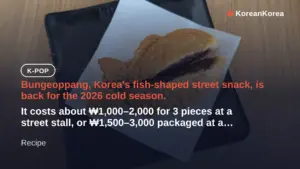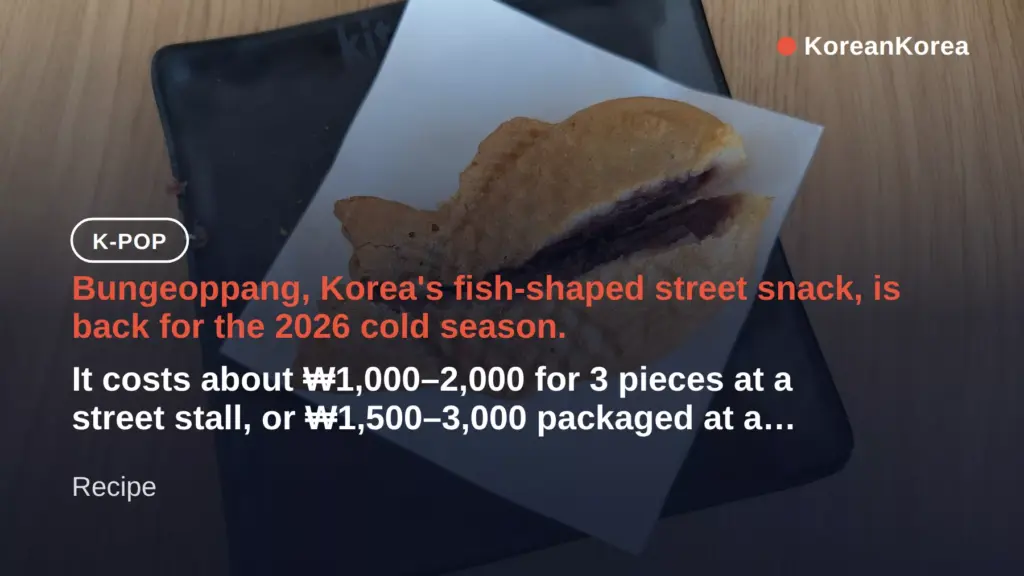
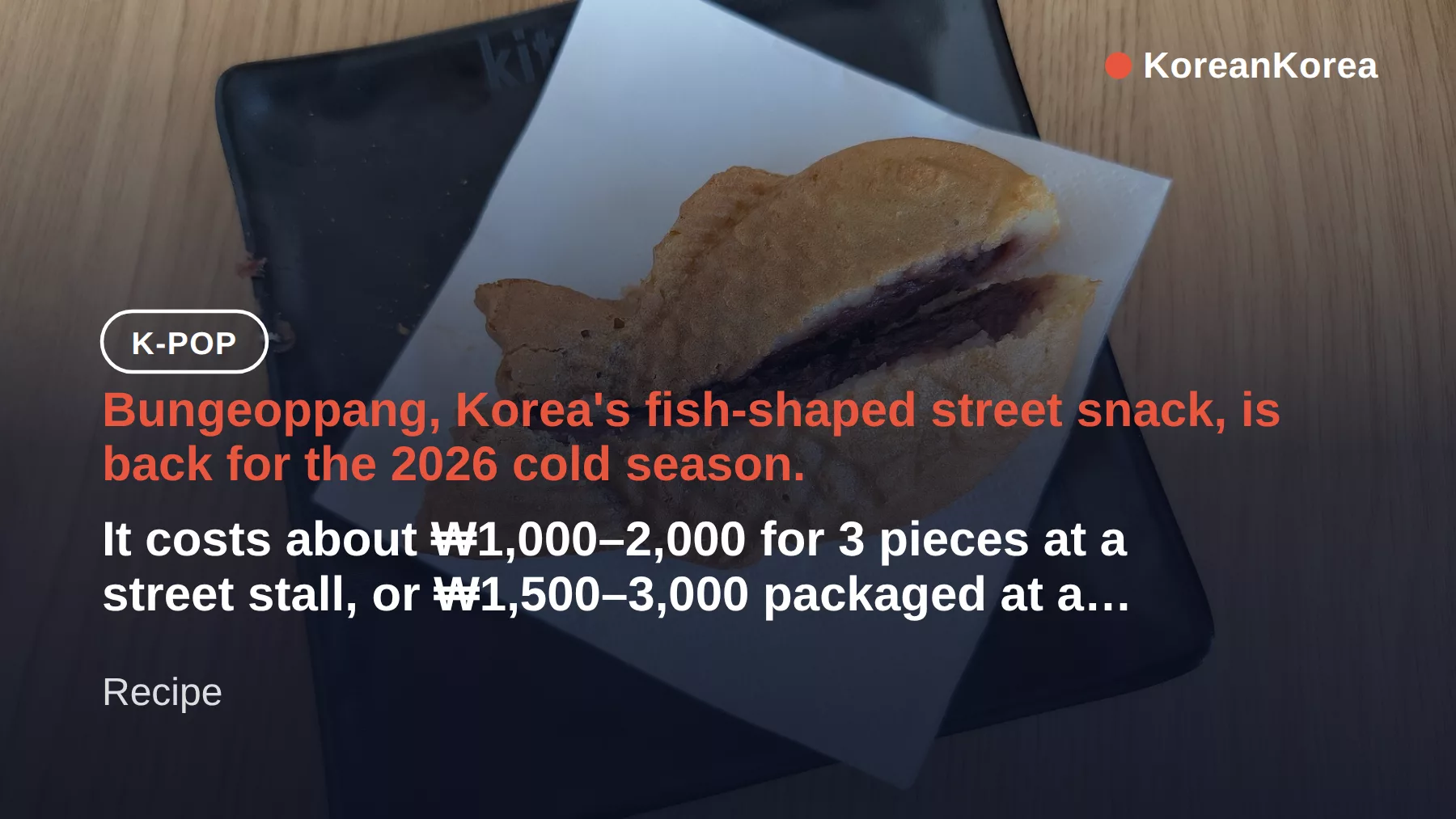
Bungeoppang is a fish-shaped Korean street snack filled with sweet red bean or custard, sold for roughly ₩1,000–2,000 per 3-piece batch as the 2026 cold season starts.
A September 21, 2026 r/KoreanFood thread titled "Anyone else obsessed with bungeoppang?" is the first English-language signal that stall season is beginning.
This guide covers what it is, what a batch costs, where stalls show up, which filling to pick first, and how it differs from Japanese taiyaki.
Contents
- Bungeoppang Korean street food: what it is and why it is back now
- How much does bungeoppang cost
- Where to buy bungeoppang in Korea
- Red bean or custard: which filling to pick
- Bungeoppang vs taiyaki: same thing?
- How it is made, and how to eat it
Bungeoppang Korean street food: what it is and why it is back now
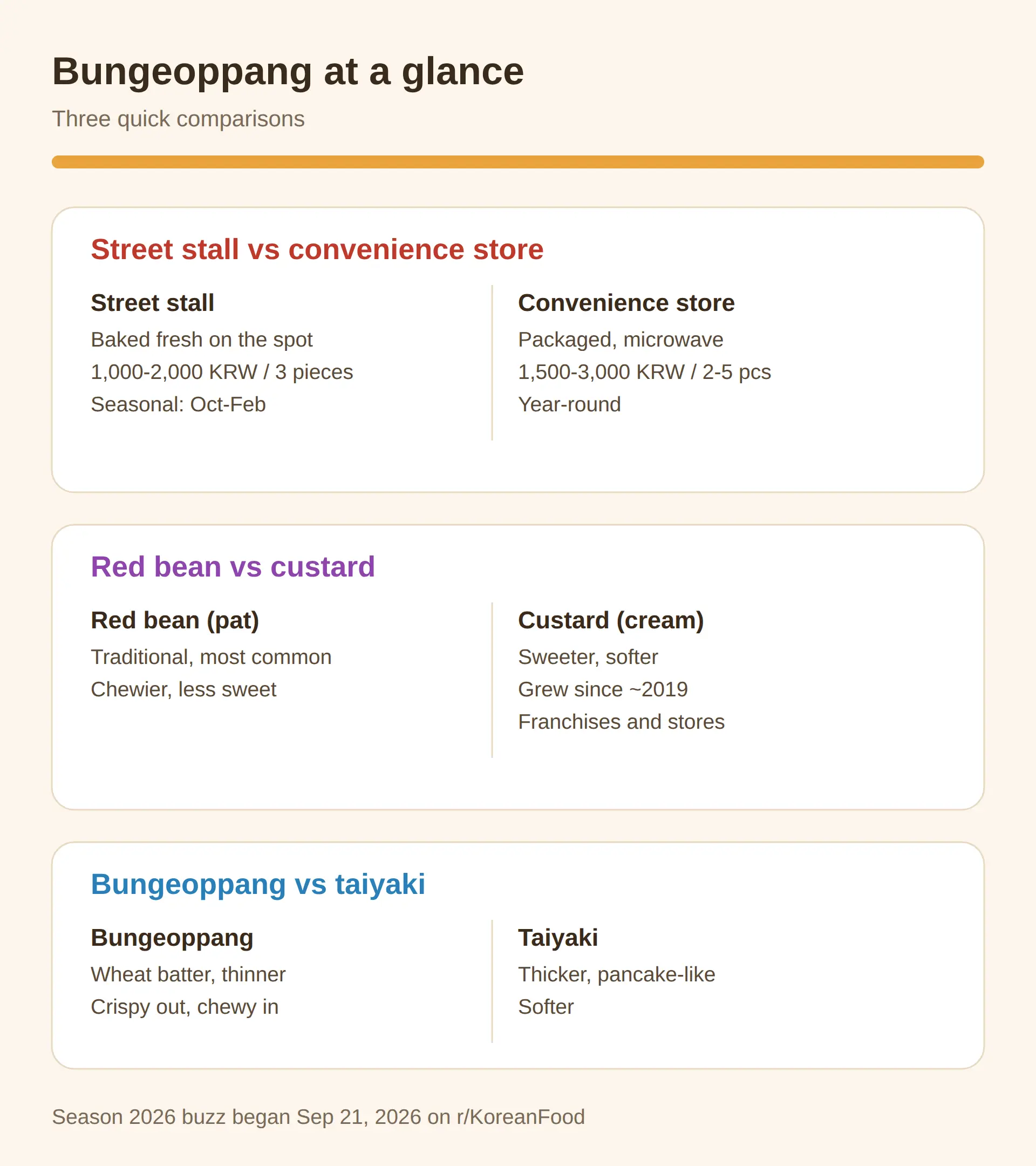
Bungeoppang is a fish-shaped batter cake filled mostly with sweet red bean paste, cooked in a closed metal mold.
The name literally means "carp bread" — bungeo means carp and ppang means bread — and the carp shape stands for luck and prosperity in Korea.
Bungeoppang is a fall-and-winter snack: carts and stalls appear from late September and disappear again in spring.
On September 21, 2026, a r/KoreanFood thread titled "Anyone else obsessed with bungeoppang?" marked the start of the 2026 season buzz among English-speaking fans.
Overseas readers usually meet bungeoppang through K-drama or K-variety scenes, where the fish shape and the red bean filling are the details people ask about most.
If you have seen someone bite the tail off a little fish-shaped cake in a drama, that was this snack.
| Street cart | Hot, fresh-baked; roughly ₩1,000–2,000 for 3 pieces, depending on stall and size |
|---|---|
| Convenience store (CU, GS25, 7-Eleven) | Packaged chilled or frozen for the microwave; 2–5 pieces per pack, around ₩1,500–3,000 |
| Cafe or bakery versions | Branded bungeoppang desserts; price varies by shop |
How much does bungeoppang cost
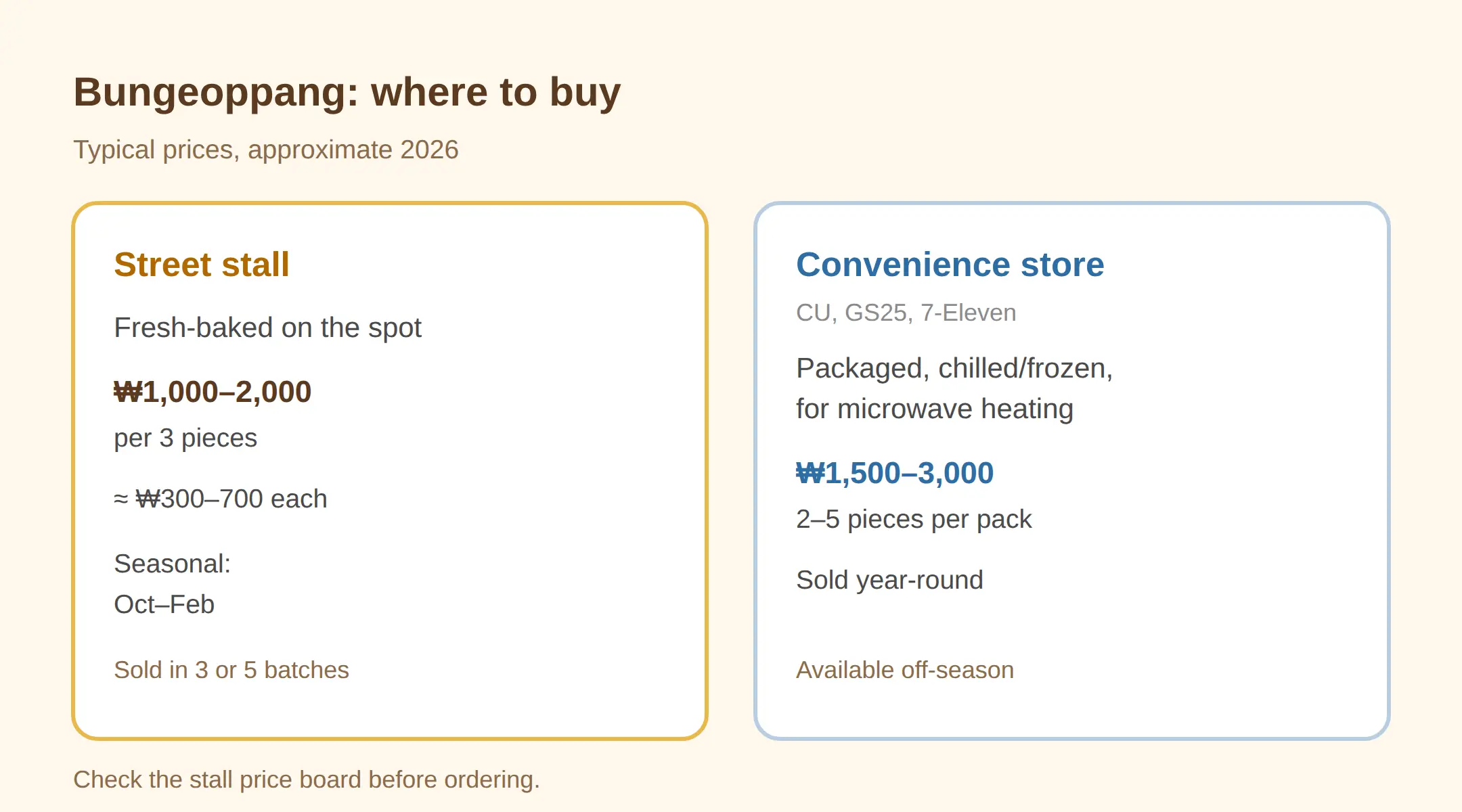
At street stalls, bungeoppang typically costs about ₩1,000–2,000 for 3 pieces, which works out to roughly ₩300–700 per piece depending on the stall and size.
| Where | Format | Typical price |
|---|---|---|
| Street stall | 3-piece batch | ₩1,000–2,000 (about ₩300–700 per piece) |
| Street stall | 5-piece batch | set per stall; batch pricing lowers per-piece cost |
| Convenience store (CU, GS25, 7-Eleven) | 2–5 pieces per pack, chilled or frozen for microwaving | ₩1,500–3,000 |
Stalls usually sell in batches of 3 or 5 rather than single pieces, so buying a batch lowers the per-piece cost.
Convenience stores sell packaged chilled or frozen bungeoppang year-round, so the snack is available even outside the stall season.
Treat these ranges as approximate: no 2026-dated official price list exists, and each stall sets its own price.
When you reach a stall, check the price board for the batch price before ordering.
Where to buy bungeoppang in Korea
Bungeoppang stalls show up in the same places each cold season, so the search is about spotting them.
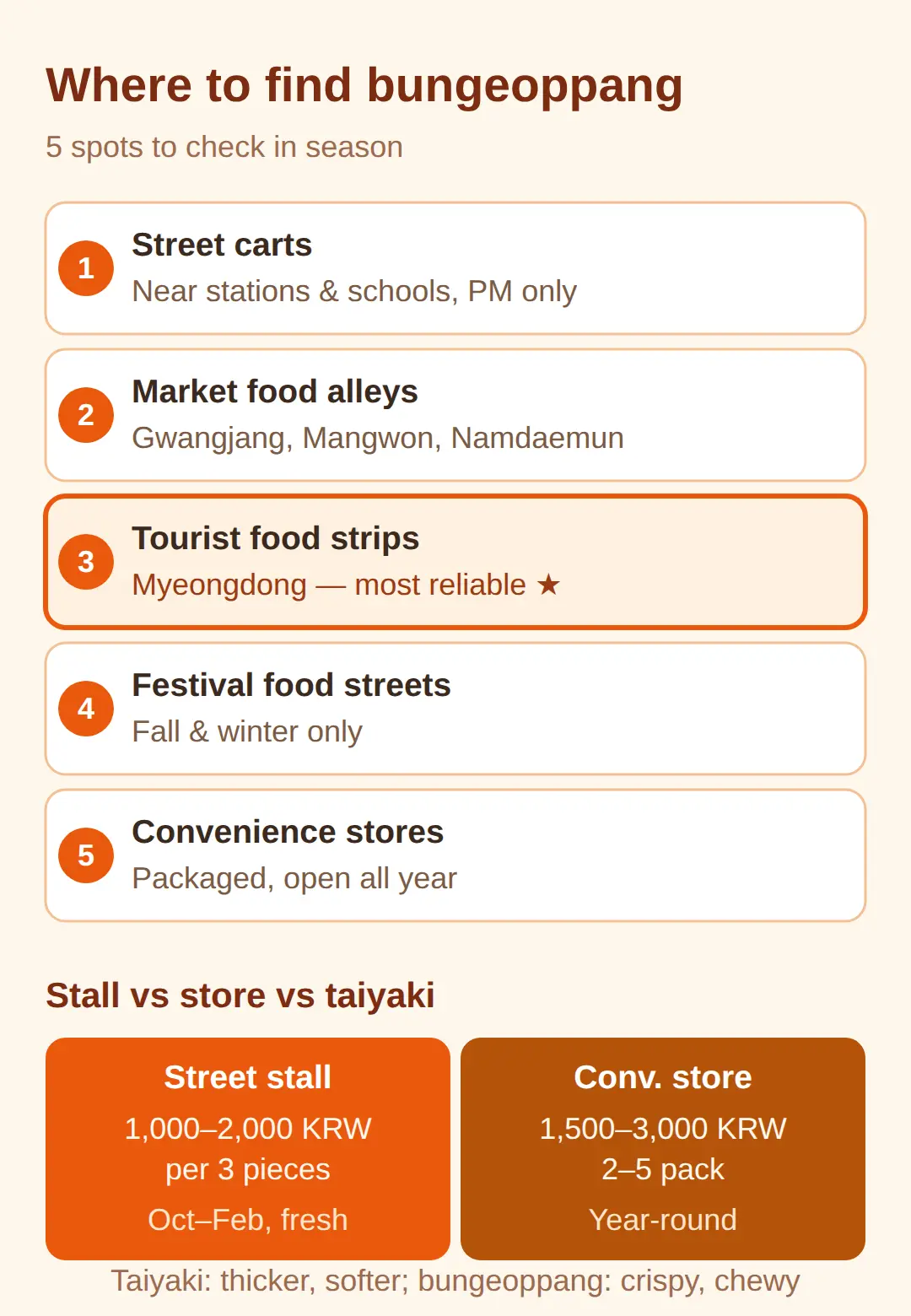
- Street carts near subway stations and schools.
- Traditional market food alleys — Gwangjang Market, Mangwon Market, and Namdaemun Market in Seoul.
- Myeongdong and other tourist street-food strips, where stalls run through the cold months.
- Festival food streets in fall and winter.
- Convenience stores, for the packaged version any day of the year.
Gwangjang Market and the Myeongdong strips are the most reliable areas for visitors, since market food alleys carry the stalls every cold season.
Stalls tend to light up from late afternoon into evening near stations and schools, so morning hunting is usually a miss.
Specific tourist-area stall locations are not confirmed for 2026, so check a spot on a map before counting on it.
Red bean or custard: which filling to pick
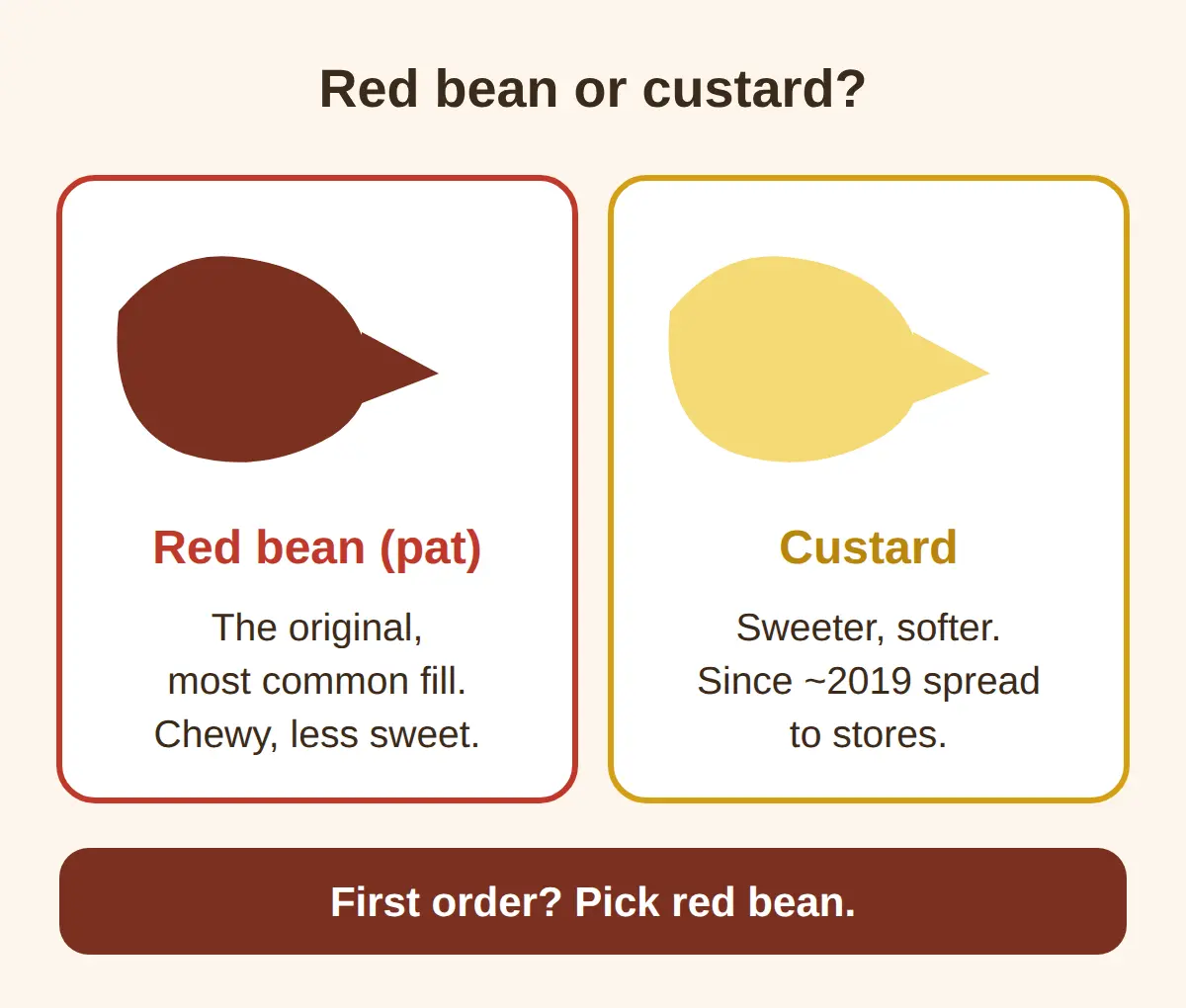
Sweet red bean (pat) is the original and most common filling, and it is the one first-timers are usually told to try.
Red bean is chewier and less sweet, while custard (choux cream) is sweeter and softer — since around 2019, custard versions have spread from franchise brands into convenience store seasonal lineups.
Newer stalls also fill them with nutella, sweet potato, pizza cheese, or kimchi.
If you are ordering once, go with red bean first, because that is the version the snack is known for.
A quick quality check: a good bungeoppang has red bean filled all the way to the tail — a thin, empty tail is a running joke for stalls that skimp on the filling.
Bungeoppang vs taiyaki: same thing?
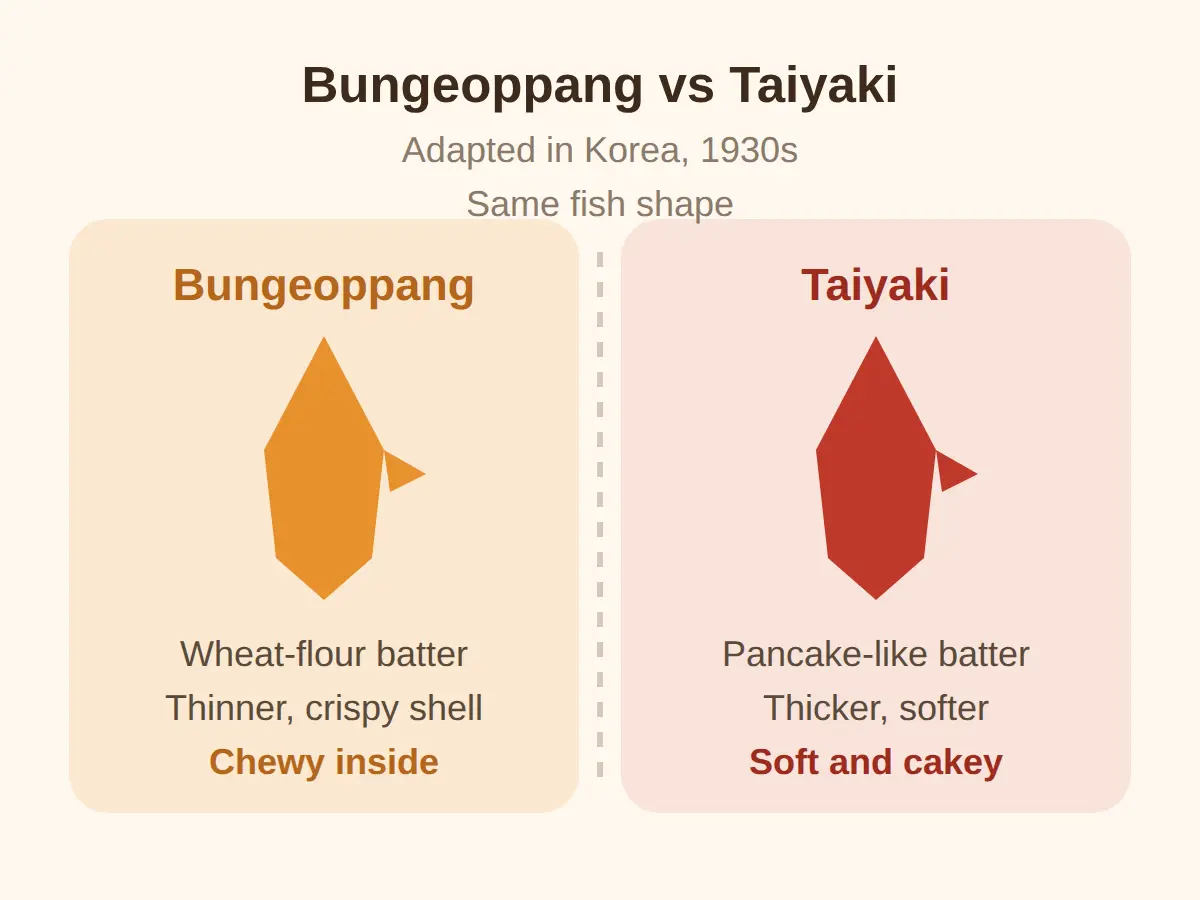
Bungeoppang and Japanese taiyaki share the same fish-shaped mold origin, but they are not the same snack.
Bungeoppang was adapted from taiyaki in Korea in the 1930s, during the Japanese colonial era.
The Korean version uses a wheat-flour batter that bakes up thin, with a crisp outside and a chewy inside, while taiyaki batter is closer to pancake or waffle batter and comes out thicker and softer.
If you have had taiyaki before, expect bungeoppang to be chewier and crisper than what you remember.
If you like soft and cakey, that is what taiyaki is for.
How it is made, and how to eat it
A stall makes bungeoppang by pouring batter into a closed fish-shaped metal mold, adding the filling, and flipping the whole mold grid over heat — a busy stall often runs dozens of molds at once.
Eat it hot, straight from the paper cup or bag, within minutes of buying, because the crisp edges soften as it cools.
The same winter carts usually sell hotteok (a Korean sweet pancake) and roasted sweet potato, so one stop covers the cold-weather snack set.
If it is off-season or there is no stall nearby, the convenience store packaged version microwaved at home is the fallback — reheated, not fresh-baked.
When I stop at a bungeoppang stall, the first two things I look at are the price board for the 3- or 5-piece batch price and whether the filling runs all the way to the tail of the fish.
If I were taking a visitor, I would wait for a stall that sells batches, because fresh-baked bungeoppang is the whole point and the per-piece price works out lower.
Related posts
Sources
- No 2026-dated primary price page found in this session; pric (reddit.com)
- Typical price per piece (english.visitkorea.or.kr)
- Choux custard bungeoppang became a major red-bean alternativ (en.wikipedia.org)
How to get a good bungeoppang
- Order a batch of 3 or 5 rather than singles — batch pricing lowers the per-piece cost.
- Check the tail: red bean filled to the tail is the mark of a well-made one.
- Eat it within minutes of buying; the crisp edges soften fast.
- If a stall has no red bean, custard is the standard alternative — sweeter and softer.
FAQ
Q. What is bungeoppang?
A fish-shaped Korean winter street snack — batter baked in a fish mold, filled mostly with sweet red bean paste. The name means "carp bread."
Q. How much does bungeoppang cost?
At street stalls, about ₩1,000–2,000 for 3 pieces, sold in batches. Packaged convenience store versions run around ₩1,500–3,000 for 2–5 pieces. Prices vary by stall and no official 2026 price list exists.
Q. Where can I buy bungeoppang in Korea?
Street carts near stations and schools, market food alleys like Gwangjang, Mangwon, and Namdaemun, the Myeongdong street-food strips, festival streets, and convenience stores year-round.
Q. Is bungeoppang the same as taiyaki?
They share the same fish mold origin, but bungeoppang was adapted in Korea in the 1930s and its wheat-flour batter is chewier and crisper, while taiyaki is thicker and pancake-soft.
Q. Is red bean or custard bungeoppang better?
Red bean is the traditional, less-sweet choice and the usual first pick; custard is sweeter and creamier. Try red bean first if you are ordering once.
Watch for street-cart and convenience store seasonal menus to expand through October–December 2026; typical stall season runs roughly October through February.
피프 — 드디어 클로드로 영상까지 만듭니다
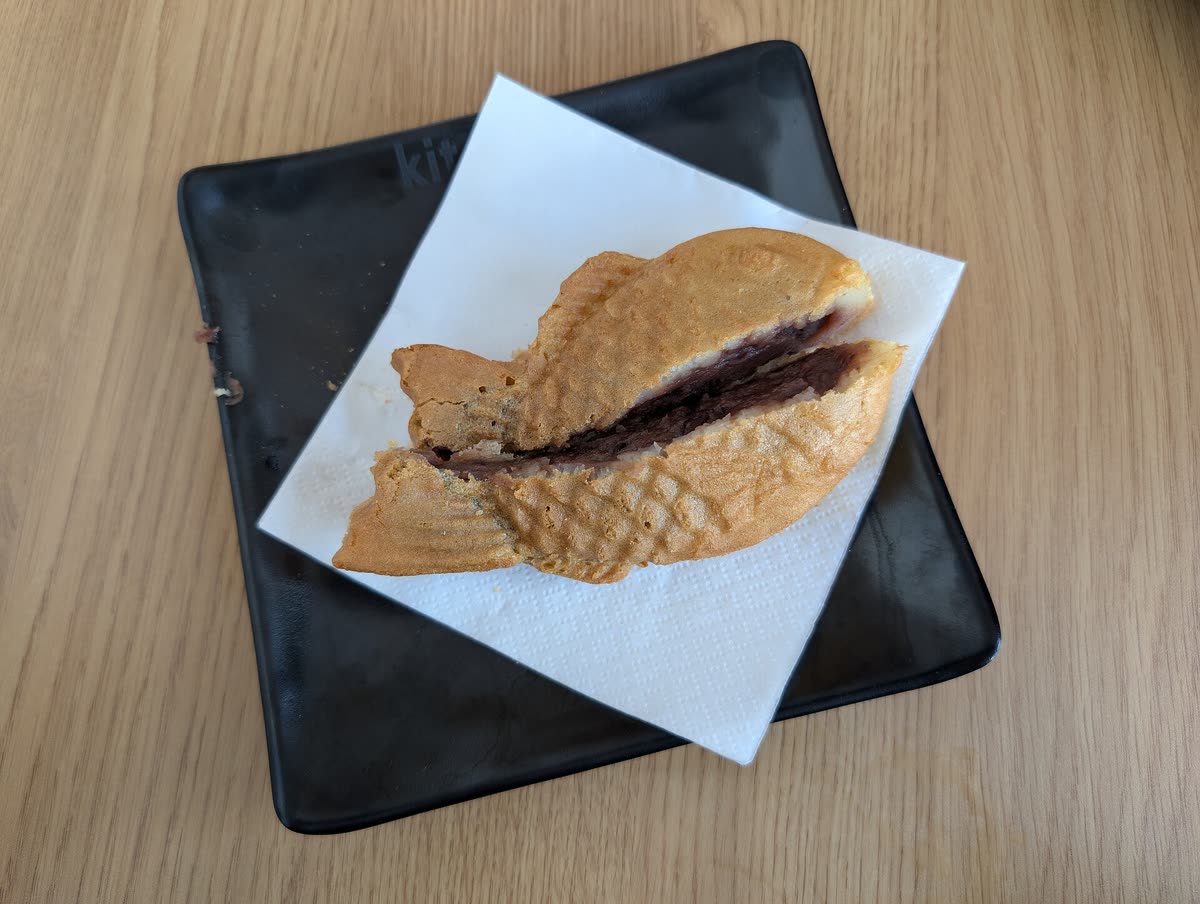
Cover photo: Taiyaki Japanese Fish-shaped Cake (cut in half) – Kitokito 2025-09-23 by Andy Li — CC0
#bungeoppang #koreanstreetfood #winterstreetsnacks #redbean #koreatravelfood
📅Upcoming Dates — 이번 주 20 · D-1 Final two episodes drop on Disney+/Hulu전체 보기 →