
Yes — kimchi is fine during pregnancy if you pick store-bought kimchi, keep portions small (1-2 pieces, 1-2 times a week), and prefer heated dishes like kimchi-jjigae.
It is a personal decision that weighs the nutritional benefits against food-safety risk, and the risk depends mostly on how the kimchi was made and stored.
This post covers which kinds are safest, how much you can eat, the sodium and folate numbers, what to order at a Korean restaurant, and when to ask a doctor first.
Key facts — As of 2026-11-22
- Kimchi has 566mg of sodium per 100g — 28% of the KDCA’s 2,000mg daily limit for pregnancy-hypertension diets (Korean Rural Development Administration median of 18 samples).
- Kimchi’s 23µg of folate per 100g covers only about 6% of the 400µg/day pregnancy reference intake (KDCA) — below the 15% ‘rich source’ threshold.
- Kimchi-jjigae at casual Korean restaurants runs 8,000-10,000 KRW per serving in 2026, versus 1,000-3,000 KRW for a basic kimchi side order.
Can I Eat Kimchi While Pregnant?
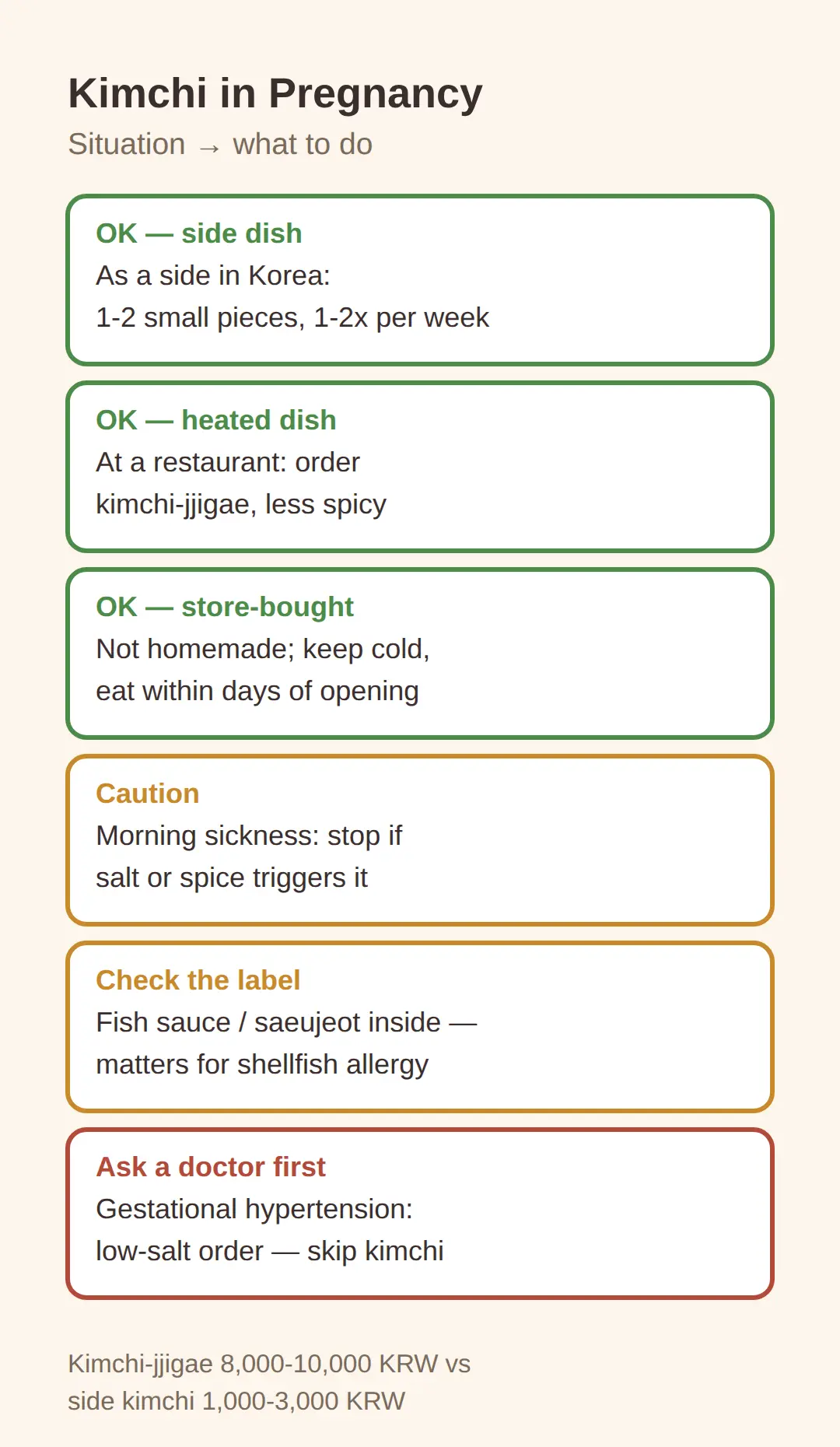
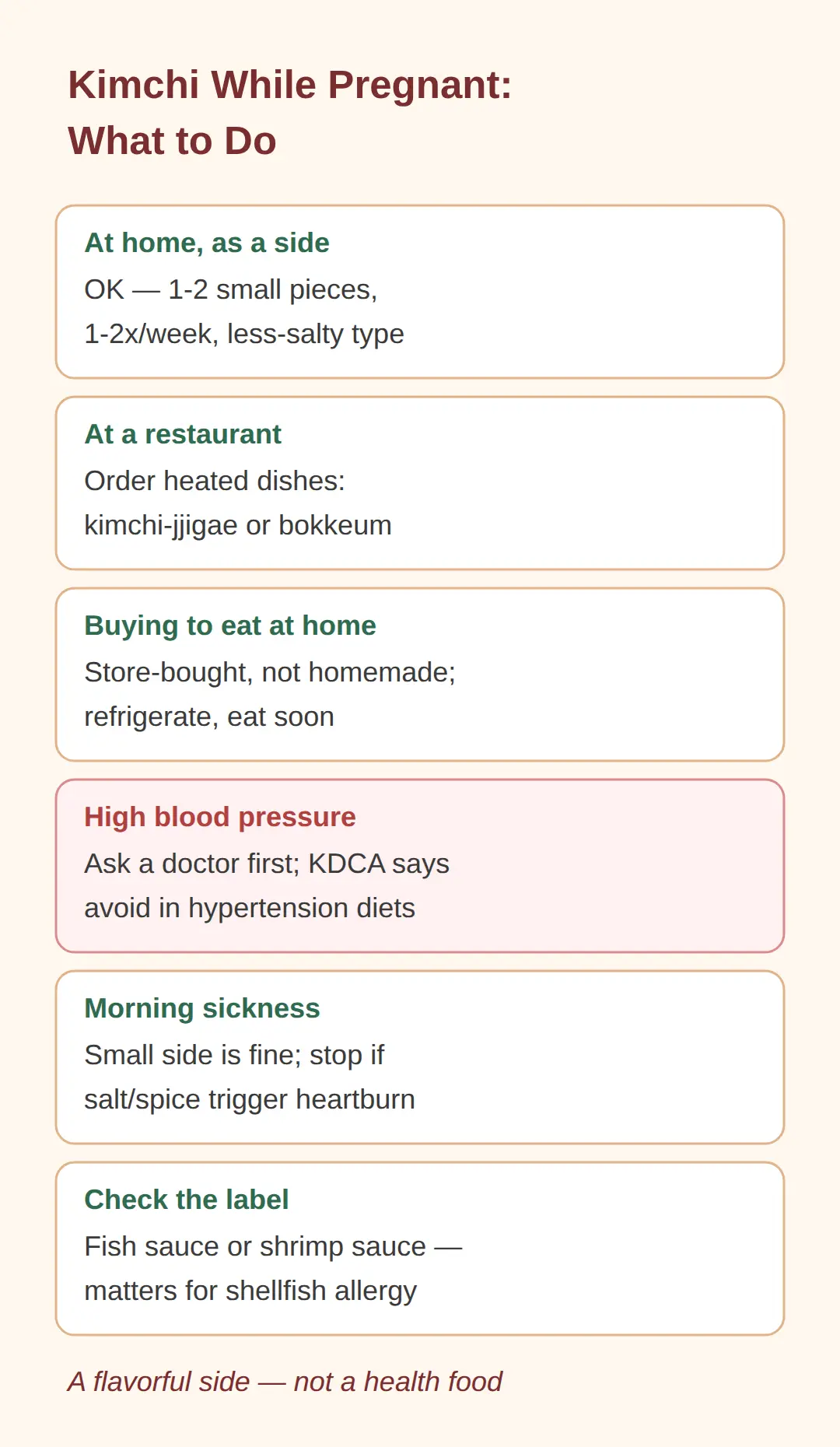
| Eating kimchi as a side dish in Korea | OK — 1-2 small pieces per meal, 1-2 times a week, choose less-salty types |
|---|---|
| Ordering at a Korean restaurant | Order heated dishes — kimchi-jjigae or kimchi-bokkeum — and ask for "less spicy" (deol maepge) |
| Buying kimchi to eat at home | Buy store-bought, not homemade; refrigerate and eat within a few days of opening |
| Gestational hypertension or a low-salt order | Ask a doctor first; Korean health guidance lists kimchi among high-sodium foods to avoid |
| First 2-3 months, morning sickness | A small, properly-chosen side is fine, but stop if the salt and spice trigger heartburn or nausea |
Yes, kimchi can be part of a pregnancy diet when it is store-bought, kept cold, and eaten in small amounts as a side dish.
Kimchi is fermented vegetables — usually cabbage, radish, or cucumber — with salt, garlic, ginger, chili, and fish sauce, and fermented vegetables are typically safe from harmful bacteria when prepared and stored correctly.
Commercial brands follow regulated standards and have equipment that reduces risk, while more cases of foodborne illness are linked to homemade fermented foods.
When I look at kimchi for a pregnant reader, the first thing I check is how it was made and stored — store-bought, refrigerated, and how long since opening.
If your pregnancy has complications like gestational hypertension, check the doctor list further down before deciding.
Next for you
Also read: Korean Side Dishes Name: 12 Banchan and What Each One Looks Like · Is Kimchi Spicy? 2 Mild Types, and How Hot Baechu Kimchi Gets
Heated Kimchi Dishes vs. Raw Side Kimchi — Which Is Safer, and What It Costs
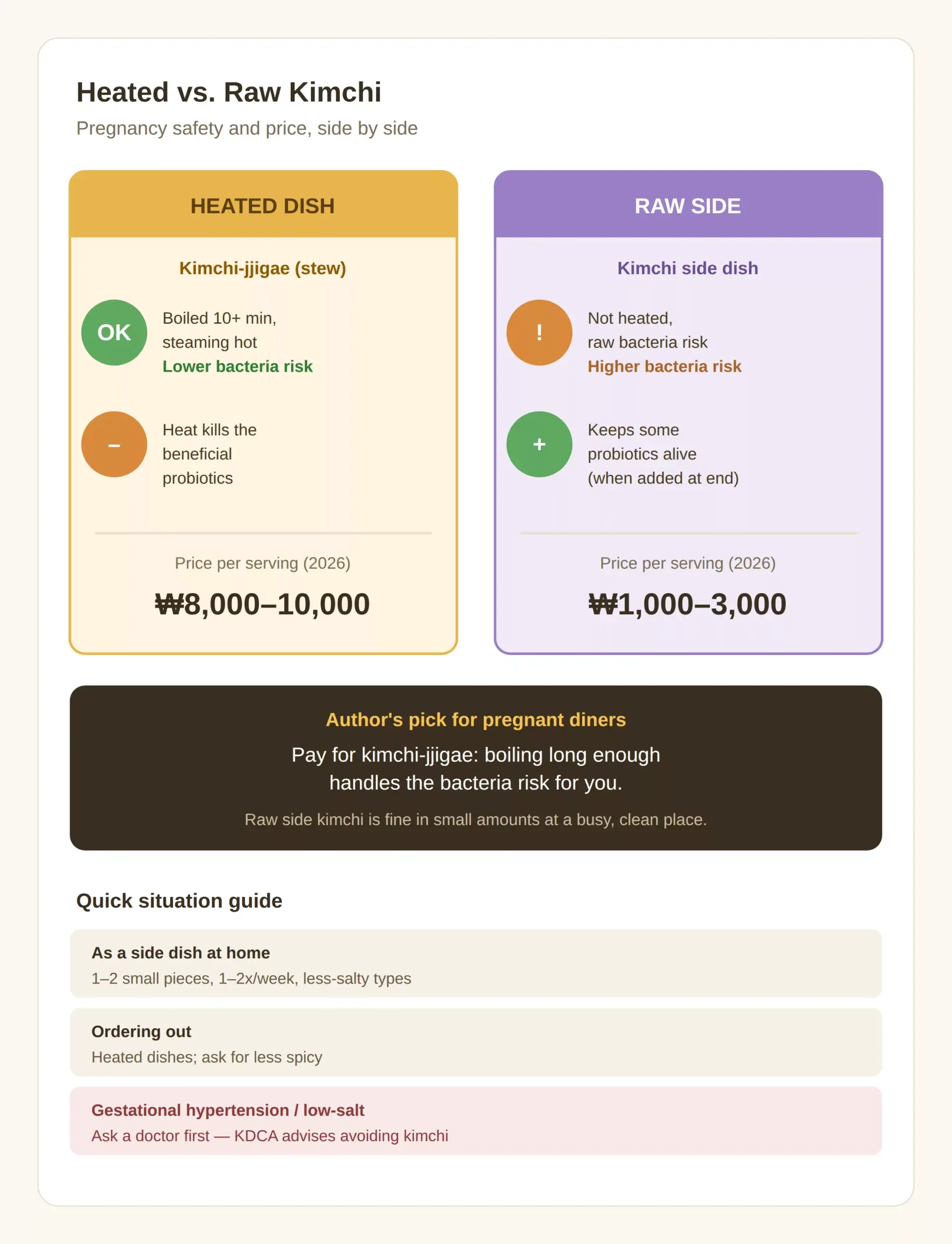
Heated kimchi dishes are the safer choice for pregnant diners, because heating kimchi until steaming hot reduces harmful-bacteria risk in the same way the deli-meat rule works.
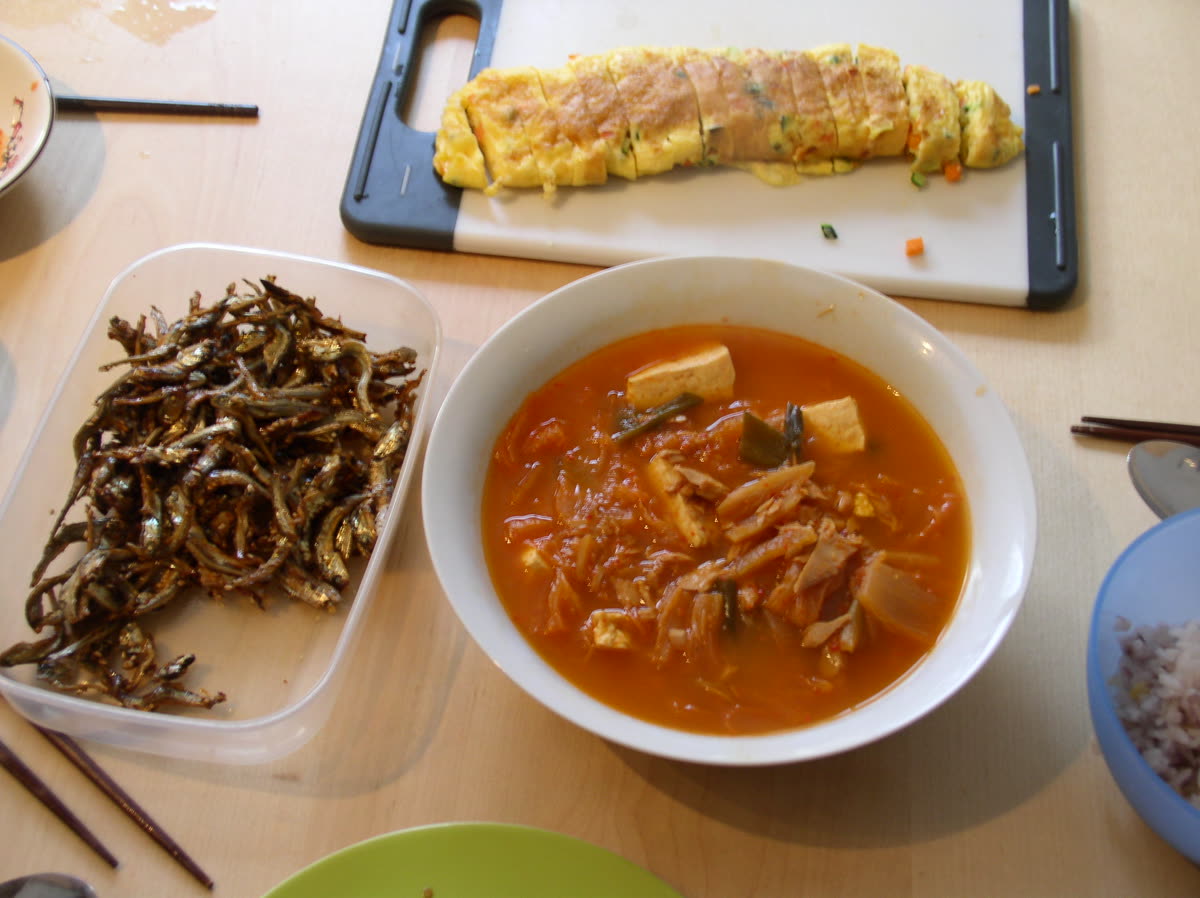
Kimchi-jjigae (kimchi stew) at casual Korean restaurants runs ₩8,000-10,000 per serving in 2026, versus ₩1,000-3,000 for a basic kimchi side order.
Stewed dishes boil for 10 or more minutes, well past the steaming-hot threshold cited in pregnancy nutrition guidance.
There is a tradeoff: full heating also kills the beneficial probiotic bacteria, while raw kimchi added at the end of cooking keeps some of them alive but carries more bacteria risk.
If I were pregnant and ordering in Korea, I would pay the ₩8,000-10,000 for kimchi-jjigae rather than raw side kimchi — the stew has been boiled long enough that the bacteria risk is handled for me.
Raw side kimchi is still fine in small amounts if it comes from a busy, clean restaurant; heated dishes are simply the option with the least left to chance.
How Much Kimchi Can You Eat While Pregnant?
One expert-reviewed nutrition guide advises pregnant women to keep kimchi to 1-2 small pieces per meal, about 1-2 times a week, choosing less-salty types — a side dish, not a daily staple.
The number to know is sodium: kimchi has 566mg of sodium per 100g, which is 28% of the 2,000mg daily sodium limit for pregnancy set by Korea’s disease control agency (Korean Rural Development Administration median of 18 samples).
Folate is the opposite story — kimchi’s 23µg of folate per 100g covers only about 6% of the 400µg/day pregnancy reference intake, below the 15% threshold for a ‘rich source’, so kimchi is not a food to avoid but also not a folate pillar.
So a few pieces with a meal fits the sodium budget comfortably, while a large daily bowl of it does not.
If salt has been cut in your diet for blood pressure, treat kimchi as something to ask your doctor about rather than something to cut on your own.
Buying and Storing Kimchi at Home — Safe-Handling Steps
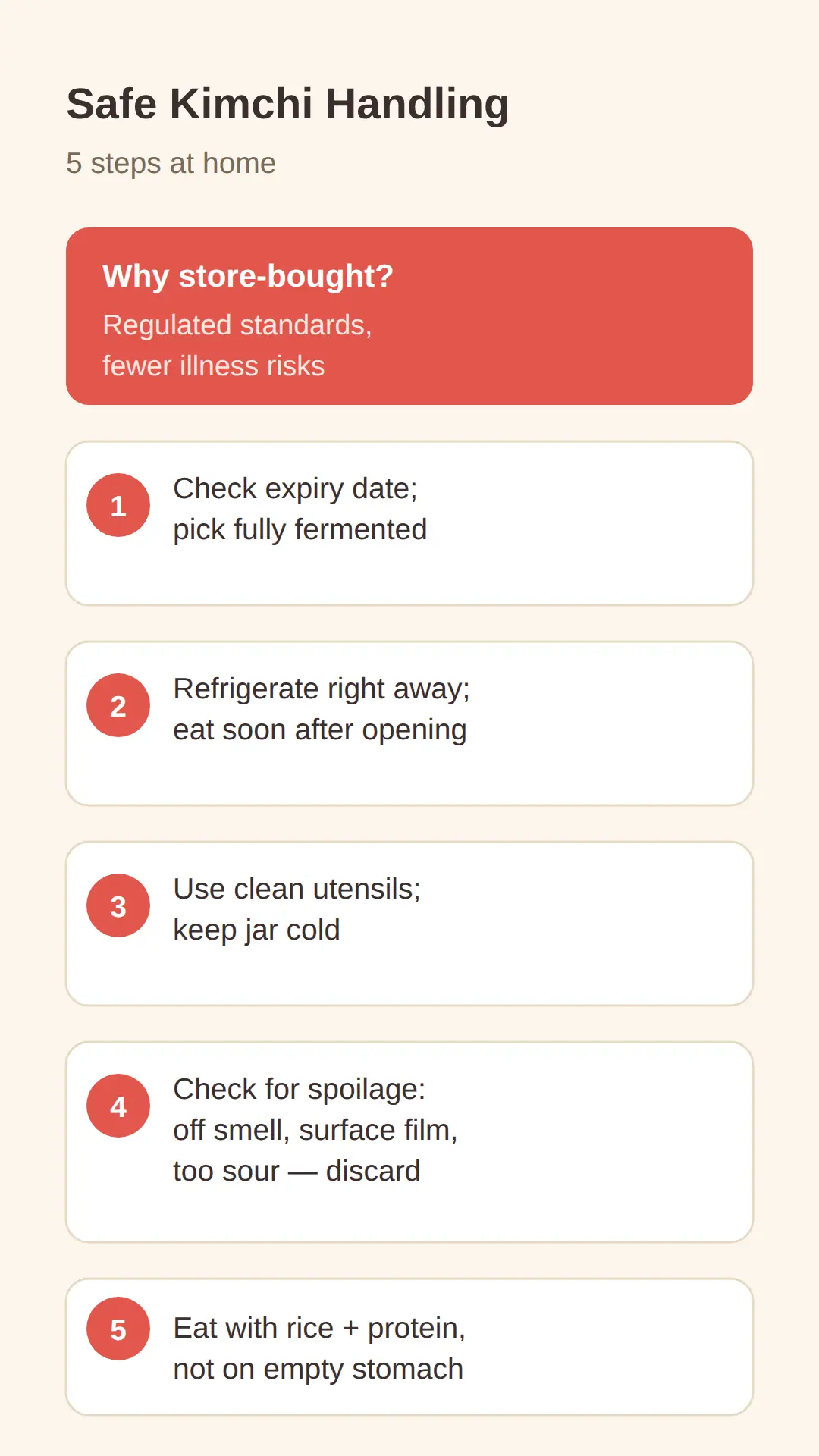
Store-bought kimchi is the recommended choice over homemade, because commercial brands follow regulated standards and homemade fermented foods account for more foodborne-illness cases.
Follow these steps once the jar is home:
- Check the expiration date before buying, and prefer fully fermented products over freshly-made (not fully fermented) kimchi.
- Refrigerate the kimchi right away and eat it within a few days of opening.
- Use clean utensils each time and keep the jar cold rather than leaving it out through a meal.
- Before eating, check for signs it has gone bad — an off smell, surface film, or being too sour; spoilage can carry harmful bacteria or mycotoxins and sometimes shows a foul smell with no visible mold.
- Eat kimchi with rice, vegetables, and protein rather than on an empty stomach, since kimchi itself is low in energy and nutrients.
Some packaged commercial kimchi also contains preservatives, additives, and extra sugar or salt, so small amounts work in your favor for that reason too.
Is Kimchi Healthy to Eat?
Kimchi offers vitamins A, B6, and C, non-heme iron, plant-based calcium, selenium, potassium, fiber, and probiotic bacteria that support gut health and immunity.
The good bacteria in kimchi may also help prevent yeast infections, which are more common during pregnancy.
On the other hand, kimchi is not a proven probiotic supplement for pregnancy — a ‘live culture’ label does not by itself establish a specific health benefit or pathogen safety.
And as the numbers above show, kimchi is not a meaningful folate source, so it should be chosen for taste and variety rather than as a pregnancy supplement.
Eat it with rice and protein instead of on an empty stomach, and treat it as a flavorful side, not a health food.
When to Skip Kimchi and Ask a Doctor
Ask a doctor before eating kimchi if you have gestational hypertension, a preeclampsia history, heart disease, a low-salt prescription, ulcers or severe reflux, or frequent diarrhea or IBS.
For pregnancy-related hypertension, Korea’s disease control agency specifically lists kimchi, fermented seafood (jeotgal), and pickled vegetables (jangajji) among the high-sodium foods to avoid, and advises building meals around protein, calcium, and potassium instead.
The same agency suggests keeping flavor with lemon juice, vinegar, chili powder, mustard, pepper, garlic, or ginger, and drinking less soup broth — a way to keep kimchi flavor while cutting salt.
Stop eating kimchi and see a doctor if you get stomach pain, repeated diarrhea, a rash, or breathing difficulty after eating it.
In the first 2-3 months, a small, properly-chosen side is fine, but the salt and spice can worsen morning sickness, heartburn, and reflux for some women — stop if your body reacts.
One more check before ordering: fish sauce (myeolchi-aejeot) and fermented shrimp (saeujeot) are standard kimchi ingredients, so readers with shellfish allergy or spice sensitivity should ask what comes in it and request "less spicy" (deol maepge).
Related posts
📎 📅 Upcoming Dates — Release & Event Calendar
Sources
- Store-bought over homemade; consume within a few days of ope (theprenatalnutritionist.com)
- 100g: 37 kcal, sodium 566mg (28% DV), folate 23μg (6% DV) — (eatbefore.kr)
- KDCA 2026-04: reduce kimchi/jeotgal/jangajji, choose solids (health.kdca.go.kr)
Quick Recap
- Store-bought over homemade, refrigerated, and eaten within a few days of opening — this single rule removes most of the risk.
- At a restaurant, kimchi-jjigae (₩8,000-10,000) is the low-effort safe order; raw side kimchi (₩1,000-3,000) is fine in 1-2 small pieces.
- Sodium is the real limit — 566mg per 100g is 28% of the pregnancy daily cap, so keep it to 1-2 times a week and ask a doctor first if salt is restricted.
FAQ
Q. Can you eat kimchi when pregnant in Korea?
Yes. Store-bought kimchi in small amounts (1-2 pieces, 1-2 times a week) is the commonly advised pattern, and heated dishes like kimchi-jjigae are the lowest-risk choice when eating out.
Q. Is kimchi healthy to eat?
It provides vitamins A, B6, and C, iron, potassium, fiber, and probiotic bacteria that support gut health, but it is high in sodium (566mg per 100g) and not a meaningful folate source, so it works as a side dish rather than a health food.
Q. How much kimchi is safe during pregnancy?
One expert-reviewed guide advises 1-2 small pieces per meal, about 1-2 times a week, choosing less-salty types. A 100g serving already uses 28% of the 2,000mg daily sodium limit for pregnancy.
Q. Can pregnant women eat kimchi-jjigae?
Yes, and it is often the easier choice — kimchi-jjigae is boiled for 10 or more minutes, well past the steaming-hot threshold that pregnancy nutrition guidance uses, and it runs ₩8,000-10,000 per serving at casual restaurants in 2026.
Want the sodium-light way to order Korean food while pregnant? Check our Korean food 101 guides next.
Cover photo: AI-generated illustration (kimchi jars) — AI-generated image, illustrative only
#kimchi #koreanfood #pregnancy #koreanrestaurant #foodsafety
📅Upcoming Schedule — this week 5 · D-4 MAMA 2026 ceremony (exact date/venue not yet confirmed in thSee all →Last updated 2026-11-24. Editorial policy