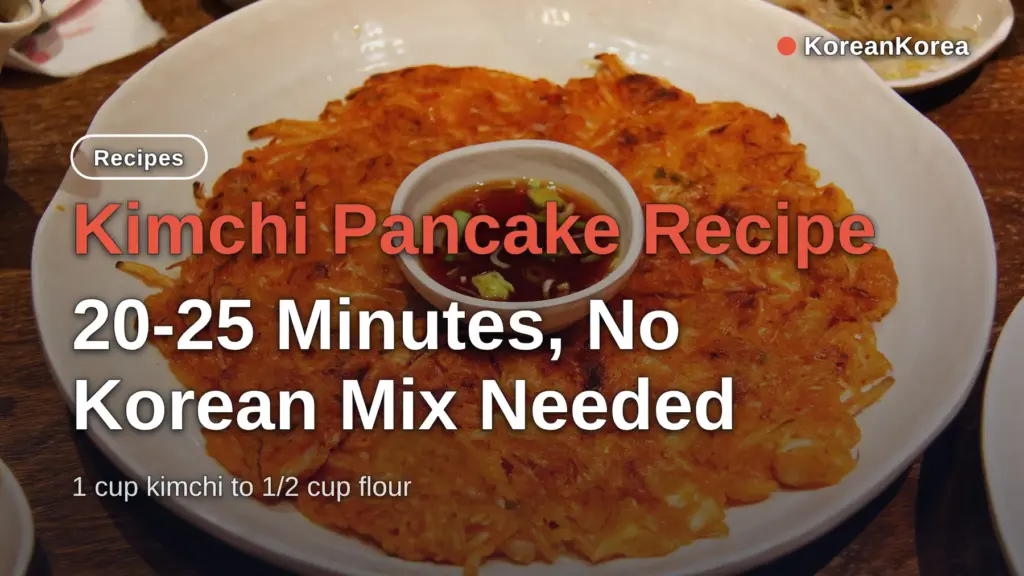
Mix about 1 cup chopped sour kimchi with 1/2 cup all-purpose flour and 3/4 cup cold water, spread the batter thin in a well-oiled pan, and fry it about 3-4 minutes per side.
That ratio makes 2-3 servings in about 20-25 minutes — no Korean pancake mix, no egg, and nothing else hard to find outside Korea.
This post gives the working steps first, then the amounts, the substitutions for missing Korean ingredients, the variations, the crispy-crust fixes, and why Koreans eat it on rainy days.
Kimchi Pancake Recipe: the Ratio and Working Steps
| Chopped sour kimchi | About 1 cup (roughly 150-200 g; sources differ) |
|---|---|
| All-purpose flour | 1/2 cup |
| Cold water | 3/4 cup, some of it replaced by kimchi juice |
| Sugar (for very sour kimchi) | 1/2 to 1 tsp |
| Chopped scallion | About 1 stalk (most recipes) |
| Neutral oil | 2-3 tbsp per batch |
| Prep / cook time | About 10 min / 10-15 min, serves 2-3 |
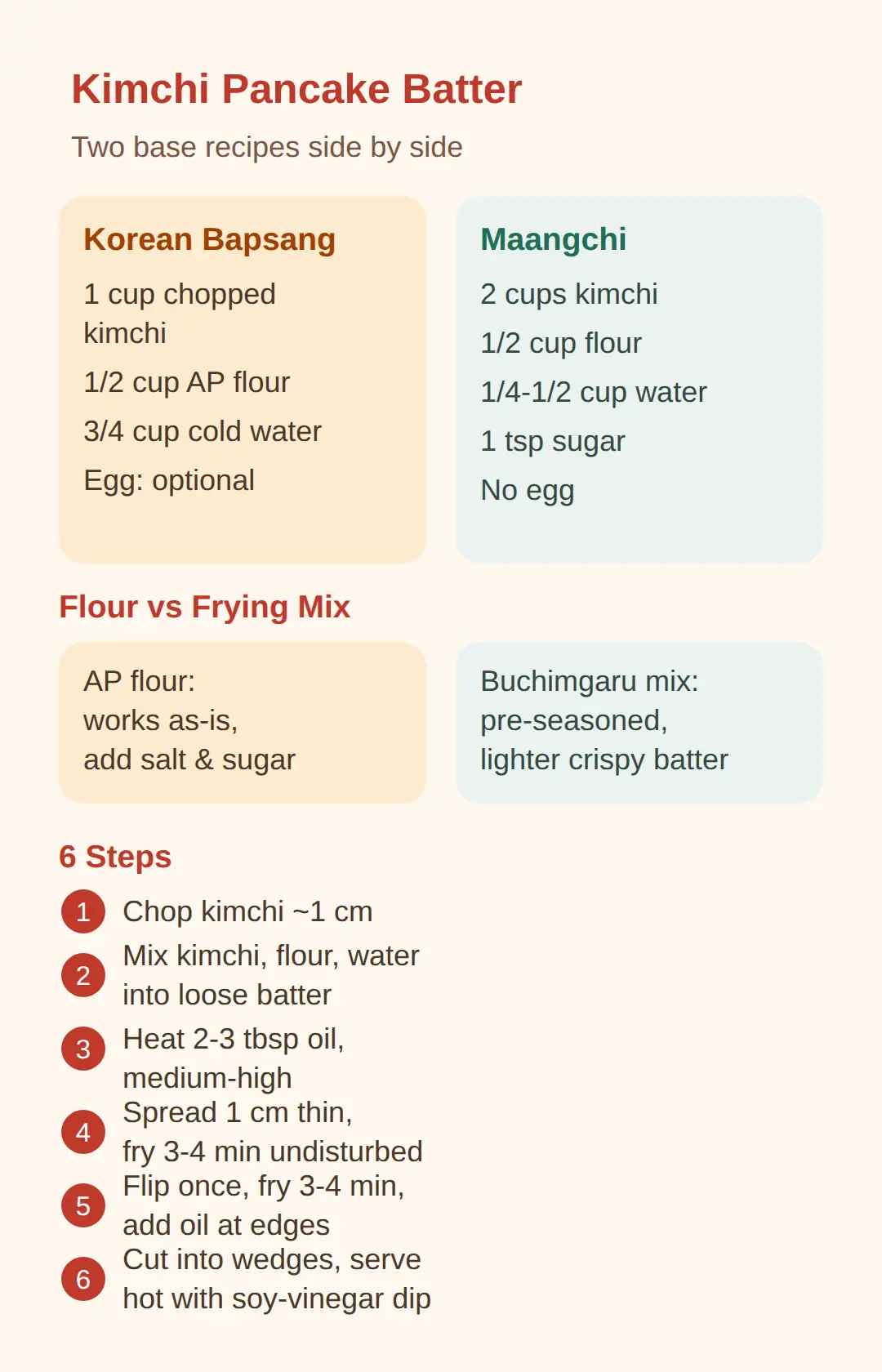
The base ratio is about 1 cup chopped kimchi to 1/2 cup all-purpose flour plus 3/4 cup cold water, per Korean Bapsang’s base recipe.
Egg is optional — the base version leaves it out, and the batter holds together without it.
Chop the kimchi small (about 1 cm) so it spreads evenly and the pancake fries flat, then stir everything into a loose batter.
If your kimchi is very ripe, add 1/2 to 1 tsp sugar to balance the sourness.
- Chop well-fermented sour kimchi into roughly 1 cm pieces.
- Stir 1 cup kimchi, 1/2 cup all-purpose flour, and 3/4 cup cold water together into a loose batter; use some kimchi juice from the jar in place of part of the water.
- Heat a pan over medium-high heat with 2-3 tbsp neutral oil until it shimmers.
- Spread the batter about 1 cm thin in the pan and leave it undisturbed 3-4 minutes, until the underside is browned and crisp.
- Flip once and fry the other side 3-4 minutes, adding more oil at the edges if the pan looks dry.
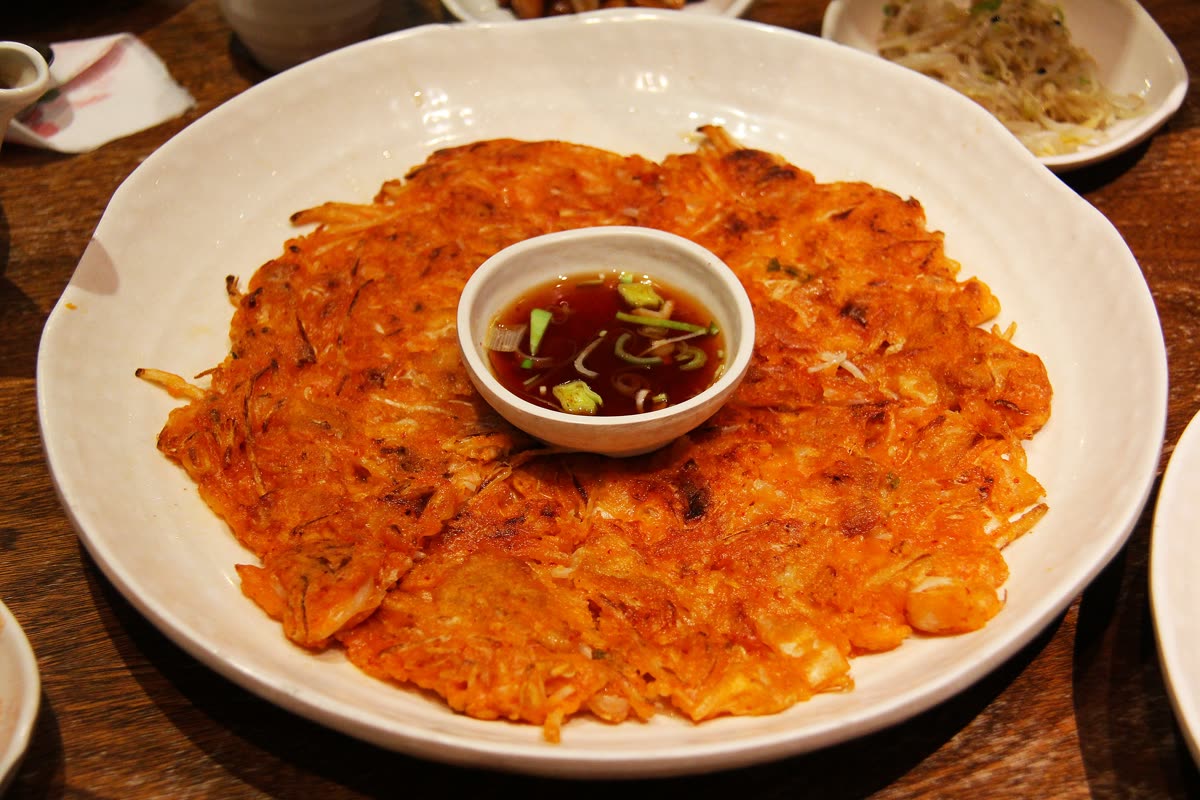
- Cut into bite-sized wedges and serve hot with soy-vinegar dip.
Steps at a glance
-
1Chop well-fermented sour kimchi into roughly 1 cm pieces.
-
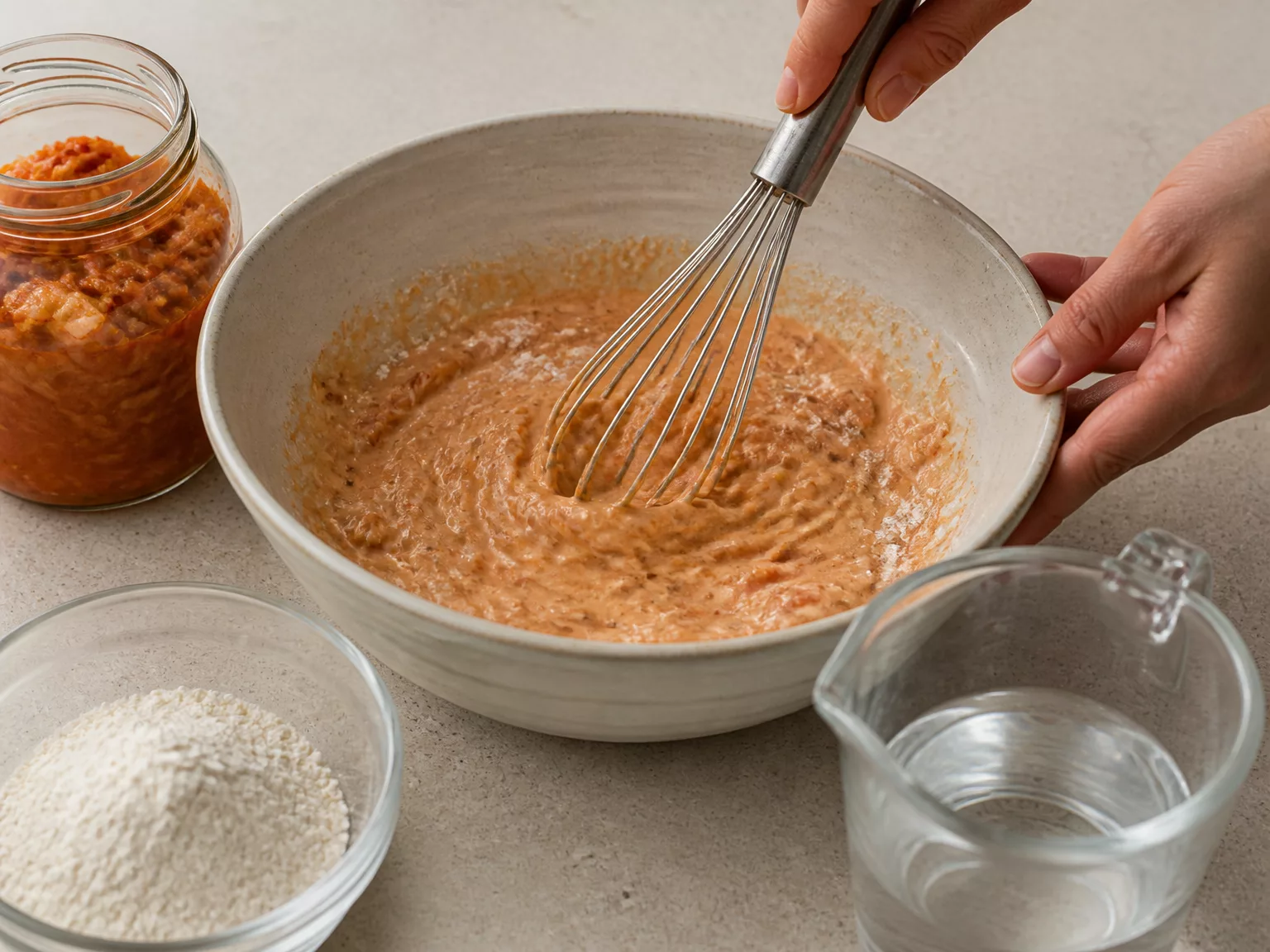 AI-generated photo
What it should look like — AI-generated image of this step, made from the recipe text — not a photo of our kitchen. 2Stir 1 cup kimchi, 1/2 cup all-purpose flour, and 3/4 cup cold water… -
3Heat a pan over medium-high heat with 2-3 tbsp neutral oil🔥 medium-high heat
-
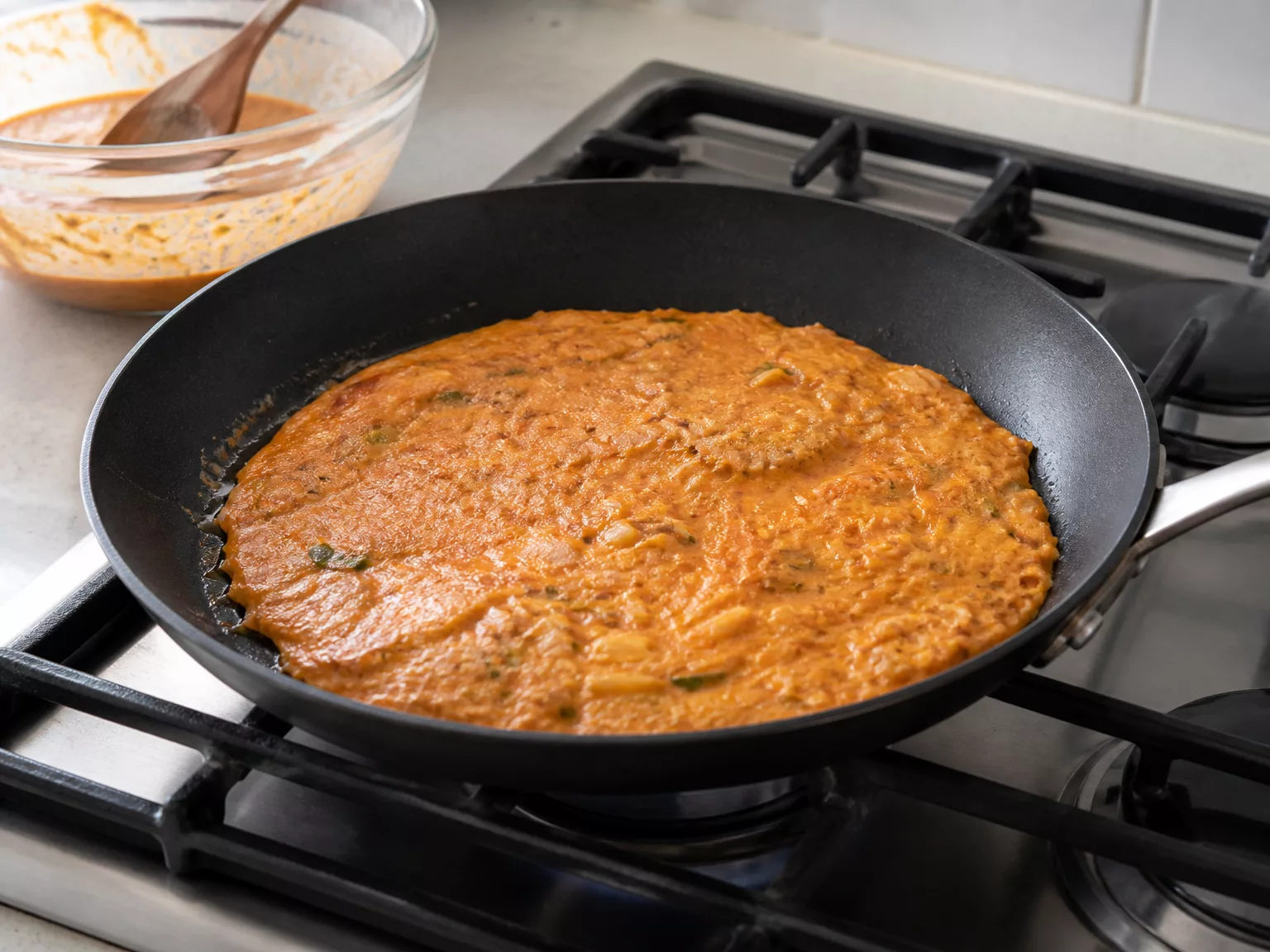 AI-generated photo
What it should look like — AI-generated image of this step, made from the recipe text — not a photo of our kitchen. 4Spread the batter about 1 cm thin in the pan and leave it undisturbed…⏱ 3-4 minutes -
5Flip once and fry the other side 3-4 minutes, adding more oil at the…⏱ 3-4 minutes
-
6Cut into bite-sized wedges and serve hot with soy-vinegar dip.
Ingredients and Amounts (With Servings and Time)
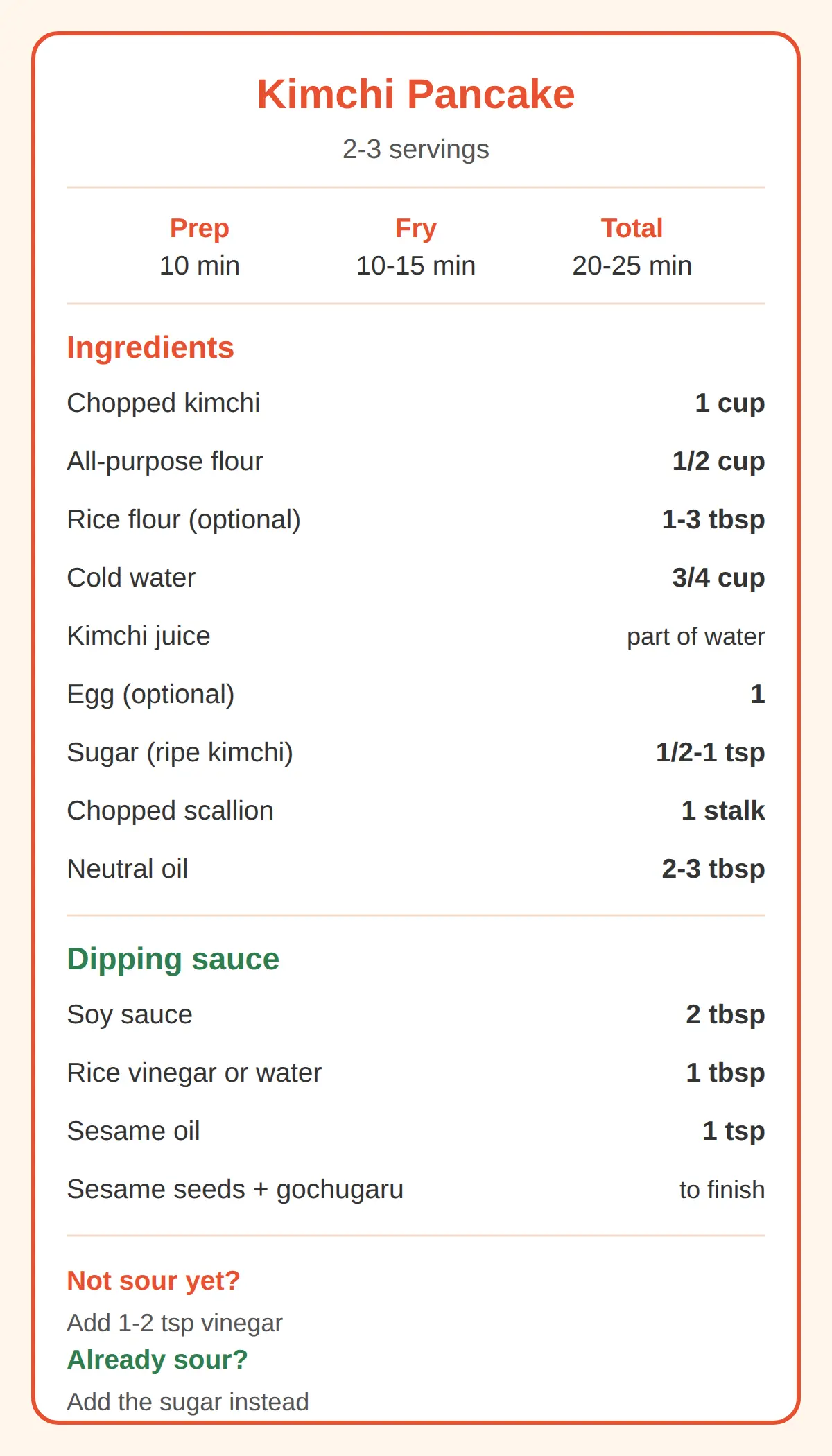
Total time is 20-25 minutes: about 10 minutes of prep and 10-15 minutes of frying, serving 2-3 as a side or snack.
| Ingredient | Amount |
|---|---|
| Chopped well-fermented kimchi | 1 cup |
| All-purpose flour | 1/2 cup |
| Rice flour (for crispiness, optional) | 1-3 tbsp |
| Cold water | 3/4 cup |
| Kimchi juice from the jar | replaces part of the water |
| Egg (optional) | 1 |
| Sugar (for very ripe kimchi) | 1/2 to 1 tsp |
| Chopped scallion | about 1 stalk |
| Neutral oil for frying | 2-3 tbsp |
The classic dip is 2 tbsp soy sauce, 1 tbsp rice vinegar (or water), and 1 tsp sesame oil, finished with toasted sesame seeds and, if you have it, a pinch of gochugaru — Korean chili flakes.
Most recipes also fold a chopped scallion, about 1 stalk, into the batter for green flecks and flavor.
If your kimchi is fresh and not sour yet, add 1-2 tsp vinegar (and optionally a little sugar) to the batter to mimic the aged tang; if it’s already sour, the sugar does that job instead.
What To Use if You Can’t Find the Korean Ingredients
You need none of them.
All-purpose flour works as-is, and any napa cabbage kimchi from an ordinary supermarket works — the ratio stays the same.
Substitutions that change the result:
- No pancake mix (buchimgaru): all-purpose flour is the base; add your own pinch of salt and the sugar above.
- Have the mix instead: use it as the sole batter base — Maangchi’s kimchijeon uses 1 cup mix, 3/4 cup water and 1 beaten egg, no extra flour — and do not add salt, because the mix is pre-seasoned.
- Gluten-free: rice flour or a 1:1 gluten-free blend replaces the flour, but the pancake comes out denser.
- Only mild/young kimchi: add 1-2 tsp gochugaru and 1 tsp vinegar to the batter to stand in for aged tang.
- Want it crispier: replace part of the flour with potato starch, or use cold sparkling water instead of still water — some recipes do one or the other; exact starch ratios vary by source, so treat it as an experiment.
If my kimchi isn’t sour yet, I’d wait a few days or add vinegar to the batter — sour kimchi is the flavor of the dish, and fresh kimchi just makes a bland pancake.
Variations: Seafood, Tuna and More Scallion
The same batter method covers the whole jeon (savory pancake) family, so variations are additions, not new recipes.
- Haemul kimchi-jeon: add shrimp, squid or oysters plus scallions — scallion is a standard addition in most versions.
- Chamchi (tuna) kimchijeon: drain a can of tuna and fold it into the batter; it’s a common Korean home variation.
- Pajeon-style: raise the scallion and cut the kimchi back, and you’ve drifted toward green onion pancake with the same technique.
A seafood batch fries the same 3-4 minutes per side as the plain one — raw shrimp and squid cook through at that thickness.
If you want a chewier crust, part potato starch is the crispy path from the substitutions section.
Too much flour, too few flips — why the crust won’t crisp
The top reported failure is too much flour, which produces a heavy, doughy pancake — start with less and add only if the batter is loose.
Second is thickness: spread the batter about 1 cm thin, because thick pancakes stay gummy inside.
The pan side matters as much as the batter.
Use a preheated cast-iron or good nonstick pan over medium-high heat with 2-3 tbsp neutral oil — stingy oil is what makes the edges soft.
Then leave the pancake alone for about 3-4 minutes per side and flip once; frequent flipping and stirring break the crust before it sets.
Judgment call: if your kitchen runs cool or the pan is crowded, fry smaller pancakes so each still gets a thin layer and full heat under it.
Why Koreans Eat It on Rainy Days — and Storage
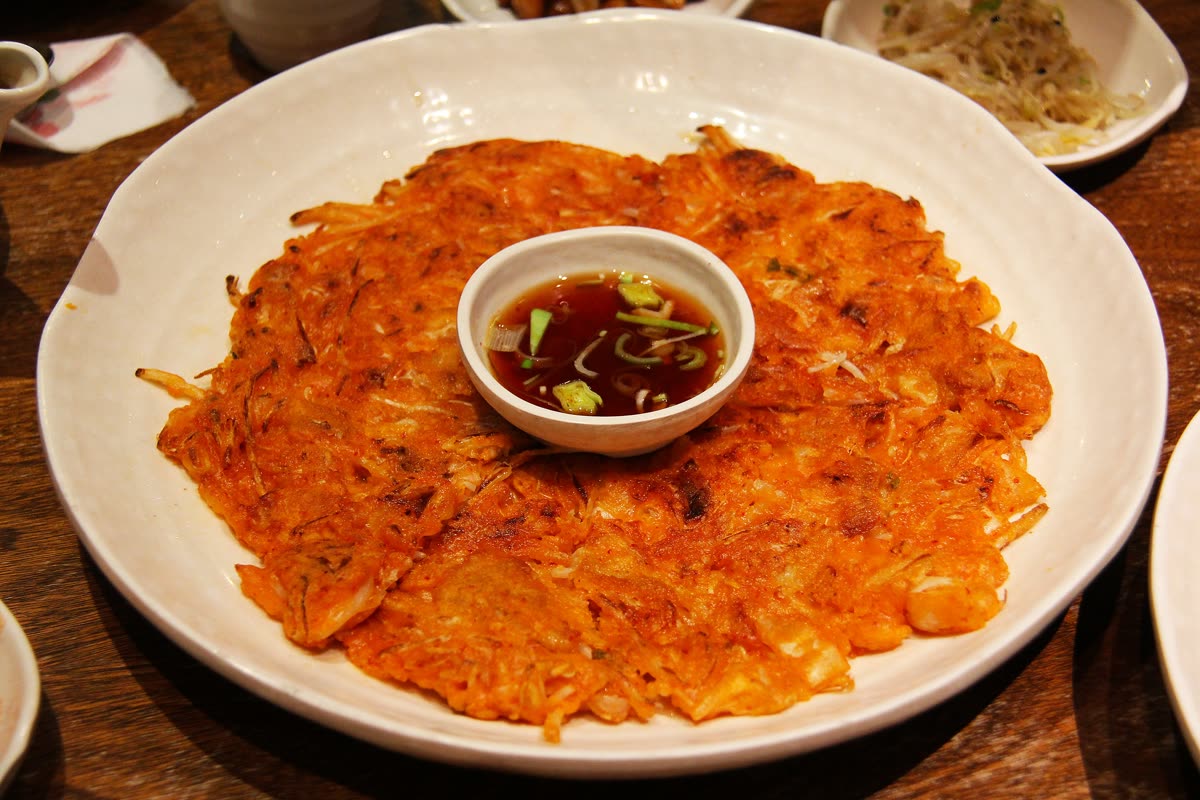
Koreans associate jeon — the savory-pancake family that includes kimchijeon (also called kimchi buchimgae) — with rainy days, and the common explanation is that the sound of batter frying in oil resembles the sound of rain.
It is eaten as anju, food served with alcohol, and the classic pairing is makgeolli, the cloudy rice wine.
Leftovers keep 3-4 days refrigerated in an airtight container.
Reheat in a dry pan over medium heat to bring the crispness back — the microwave warms the pancake but not the crust, so skip it.
Serve it the way it’s served in Korea: cut into bite-sized wedges, dipped in the soy-vinegar sauce, with makgeolli if you drink and plain tea or water if you don’t.
Related posts
📎 📅 Upcoming Dates — Release & Event Calendar
Sources
- koreanbapsang.com
- My Korean Kitchen: sparkling water option, scallion addition (mykoreankitchen.com)
- Rain-frying-sound folklore and makgeolli pairing confirmed (en.wikipedia.org)
The Short Version
- Kimchi-to-flour ratio is 1 cup : 1/2 cup, with 3/4 cup cold water — and kimchi juice can replace part of the water.
- Sour, well-fermented kimchi makes the best pancake; add 1-2 tsp vinegar if yours is fresh.
- Spread the batter about 1 cm thin, use 2-3 tbsp oil, and flip once after 3-4 minutes.
- No extra salt if you use commercial buchimgaru — the mix is pre-seasoned.
- Gluten-free rice flour or a 1:1 GF blend works, but the texture comes out denser.
- Re-crisp leftovers in a dry pan over medium heat, not the microwave.
FAQ
Q. What is the kimchi-to-flour ratio?
About 1 cup chopped kimchi to 1/2 cup all-purpose flour plus 3/4 cup cold water, per Korean Bapsang’s base recipe. Maangchi’s version is heavier on kimchi (about 2 cups) with less water (1/4-1/2 cup) and 1 tsp sugar — pick one recipe and stay with it rather than mixing ratios.
Q. Can I make kimchi pancake without Korean pancake mix?
Yes — all-purpose flour, kimchi and cold water are the entire base, and egg is optional. Commercial mix (buchimgaru) is a substitute for the flour, not a requirement.
Q. Why is sour kimchi better for kimchijeon?
Well-fermented sour kimchi carries the tang that defines the dish; fresh kimchi lacks it. Cooks compensate with 1-2 tsp vinegar and a little sugar when the kimchi is not ripe yet.
Q. What alcohol goes with kimchi pancake?
Makgeolli, the cloudy Korean rice wine, is the classic pairing — kimchijeon is served as anju, drinking food, at home and at jeon restaurants.
Q. How long does kimchi pancake keep, and how do I reheat it?
About 3-4 days refrigerated in an airtight container. Re-crisp in a dry pan over medium heat; the microwave softens the crust.
Kimchijeon is eaten as anju alongside makgeolli, and Koreans associate it with rainy days — the sizzle of the batter in oil is even compared to the sound of rain, a pairing widely cited as why the dish is craved when the weather turns wet.
Cover photo: Kimchibuchimgae (kimchi pancake) by sharonang — CC0 1.0
#kimchipancakerecipe #kimchijeon #koreanfood #savorypancake #nopancakemix
📅Upcoming Schedule — this week 21 · D-day Global rollout / overseas restock of September launches typiSee all →