
For a sore throat, Koreans grab honey water (꿀물) first — CU’s acacia honey water is the store-brand version, alongside small vitamin and electrolyte bottles like Bacchus F and Vita 500.
None of these drinks treat a sore throat.
Honey, ginger and doraji (bellflower) drinks soothe, vitamin and electrolyte drinks support hydration, and real medicine means a pharmacy with the ‘약’ sign.
This post gives the confirmed shelf prices, where each drink sits in the store, how to read the caffeine label, and when to stop at a pharmacy instead.
Key facts — As of 2026-11-24
- Per CU’s official catalogue (847 drinks, median list price ₩2,400), 51.6% of those drinks were on 1+1 or 2+1 deals as of 2 Oct 2026 — so a full-price single bottle is usually the wrong way to buy.
- Per the confirmed shelf prices, Vita 500 costs ₩1,100 per 100 ml and Condition (컨디션헛개) costs ₩5,000 per 100 ml — the same size, roughly a five-fold difference between a vitamin drink and a pharmacy-style herbal extract.
- Bacchus F is ₩1,000 for a 120 ml bottle with 30 mg of caffeine, while the D version with 2,000 mg taurine is pharmacy-only — the convenience-store shelf carries the weaker one.
What Drink Do Koreans Buy at a Convenience Store for a Sore Throat?
| Bacchus F (박카스F) | 120 ml · ₩1,000 · 30 mg caffeine |
|---|---|
| Vita 500 (비타500) | 100 ml · ₩1,100 · no caffeine |
| Let’s Be canned coffee (레쓰비) | 200 ml · ₩1,300 · caffeinated |
| Borac sikhye (비락식혜) | 238 ml can · ₩1,400 · no caffeine |
| Corn silk tea (옥수수수염차) | 500 ml · ₩2,400 · 0 g sugar |
| Condition (컨디션헛개) | 100 ml · ₩5,000 · no caffeine |
Honey water is the default.
Korean home remedies treat warm honey water as the first move against a scratchy throat, and convenience stores carry versions of it — CU sells two honey waters under its own HEYROU brand, acacia (sweet) and flat peach (fragrant), both in 280 ml glass bottles.
The catch is the label: everything on that shelf is in Korean.
If you are standing in front of the fridge, you are in the wrong aisle.
Per the confirmed shelf prices, Vita 500 costs ₩1,100 per 100 ml and Condition (컨디션헛개) costs ₩5,000 per 100 ml — the same bottle size, roughly a five-fold difference between a vitamin drink and a pharmacy-style herbal extract.
Next for you
Also read: Korean Convenience Store Food: 3 Combos Under ₩5,000 (CU Prices) · Can You Eat Kimchi While Pregnant? Portions & Safety (2026)
Price List: Every Drink on the Sore-Throat Shelf, Cheapest to Priciest
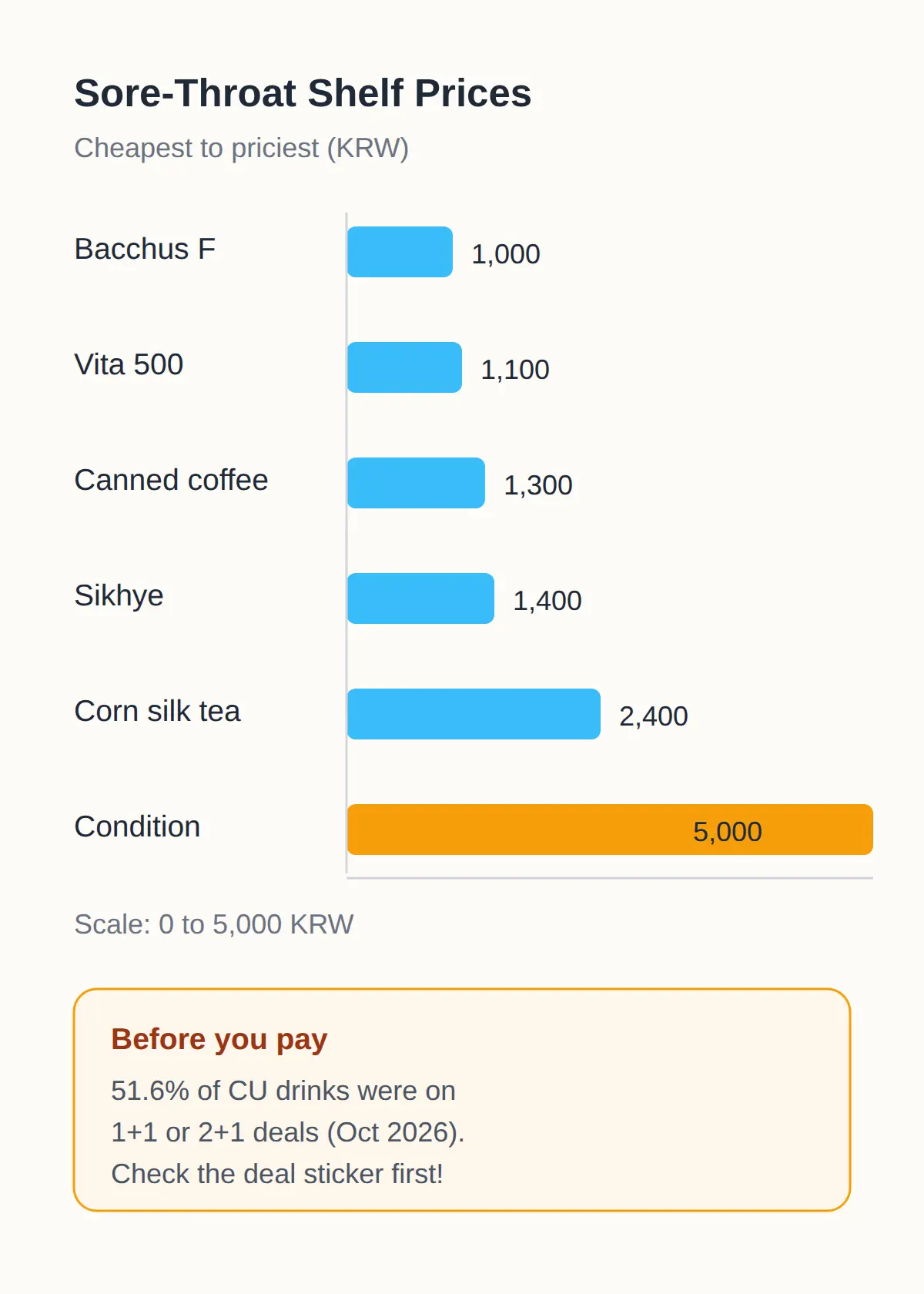
Bacchus F starts the shelf at ₩1,000 and Condition tops it at ₩5,000.
Between those sit Vita 500 (₩1,100), a canned coffee (₩1,300), traditional sikhye (₩1,400), and unsweetened corn silk tea (₩2,400) — every item confirmed at ₩5,000 or less, so one banknote covers any of them.
| Drink | Size | Price | Sugar | Caffeine |
|---|---|---|---|---|
| Bacchus F | 120 ml | ₩1,000 | high | yes |
| Vita 500 | 100 ml | ₩1,100 | moderate | none |
| Canned coffee | 200 ml | ₩1,300 | moderate | yes |
| Sikhye (traditional) | 238 ml | ₩1,400 | high | none |
| Corn silk tea (unsweetened) | 500 ml | ₩2,400 | none | none |
| Condition (jelly drink) | 100 ml | ₩5,000 | moderate | none |
One more thing before you pay: per CU’s official catalogue (847 drinks, median list price ₩2,400), 51.6% of those drinks were on 1+1 or 2+1 deals as of October 2, 2026 — so a full-price single bottle is usually the wrong way to buy.
If two bottles both look plausible, check the deal sticker first and take the one already bundled.

Where It Sits in the Store (and Why You Can’t Find It)
Skip the cold fridge.
Honey water, ginger tea, doraji drinks and traditional teas live on the unrefrigerated instant/tea shelf, and this single fact explains most of the confusion visitors report.
Preparation is the second surprise: honey tea and ginger tea are usually mixed with hot water at the in-store hot-water machine — the same station used for coffee.
Cold bottled versions exist, but the warm ones often start as a concentrate or pouch.
When you do pick something from the fridge, check one printed line: drinks with 0.15 mg/ml or more of caffeine must print a ‘high caffeine’ notice (고카페 함유) and the total mg on the label.
Does It Actually Help, or Just Feel Good?
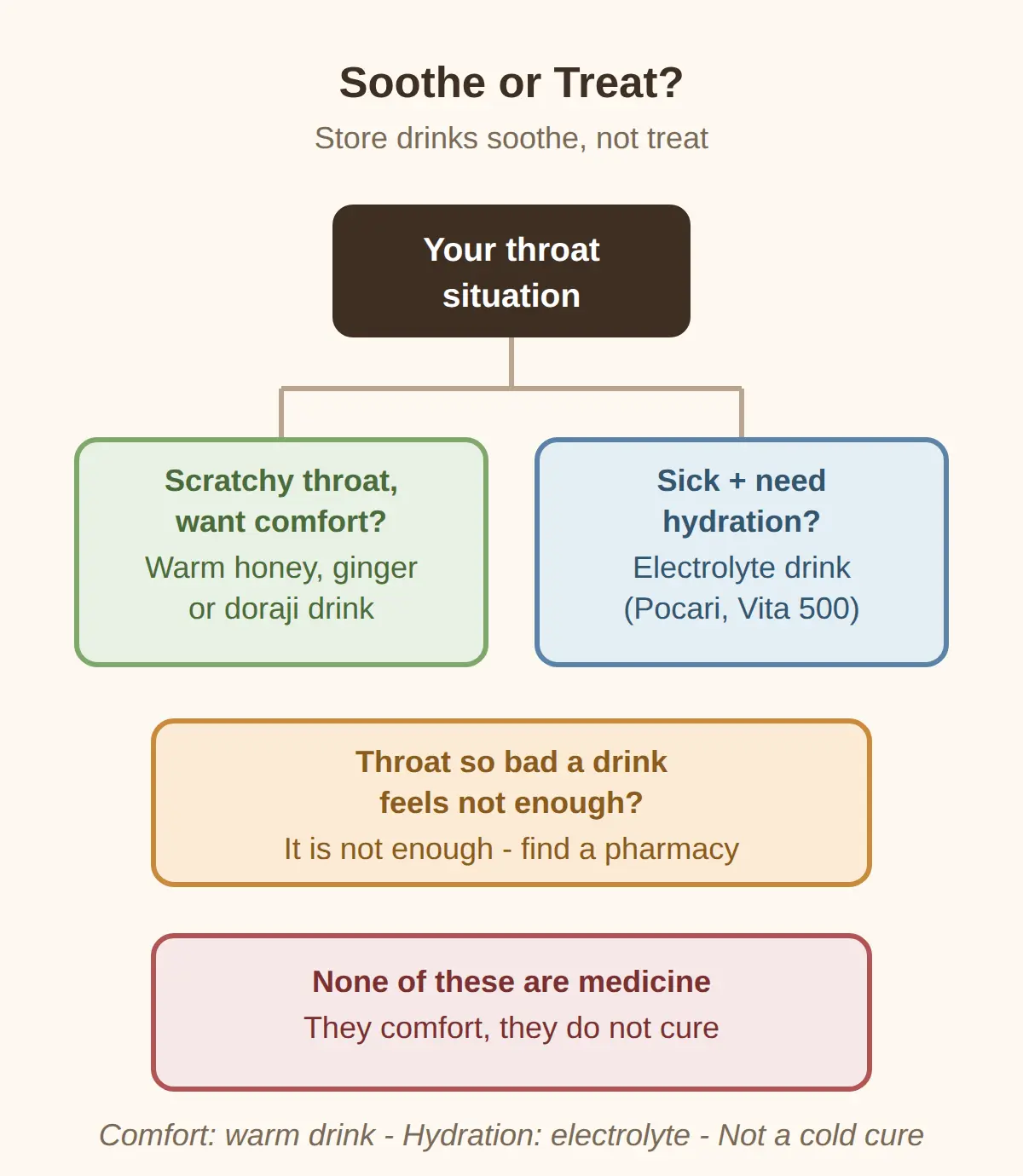
It soothes; it does not treat.
Warm honey, ginger and doraji drinks ease a scratchy throat the way any warm drink does, vitamin and electrolyte drinks (Vita 500, Pocari Sweat) support hydration, and none of them is medicine.
Bacchus F is the one to read carefully: it is ₩1,000 for a 120 ml bottle with 30 mg of caffeine — useful for dragging through a sluggish day, not for a throat.
The stronger D version with 2,000 mg of taurine is pharmacy-only, so the convenience-store shelf carries the weaker one.
If your goal is comfort, pick the warm honey or ginger option; if your goal is hydration while sick, pick an electrolyte drink — but do not expect either to shorten the cold.
Bottle, Stick, or Jelly — Which Format for a Travel Day
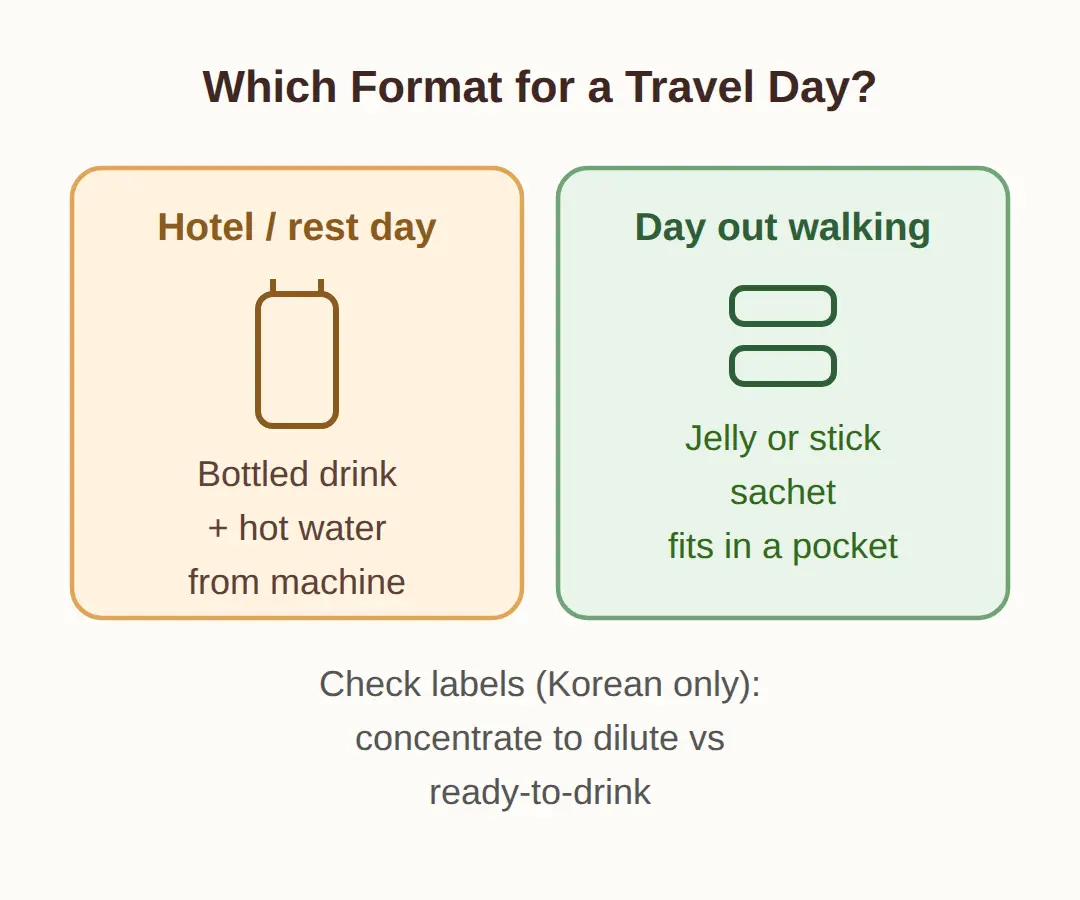
Bottled drinks need nothing but a hand; sticks and jellies need nothing at all.
Honey sticks and honey jelly sachets are easier to carry in a bag or pocket, which matters on a day of walking between sights.
Check what is actually in it before buying a honey or ginger product: honey items may contain sweeteners and citrus, and ginger drinks vary from real ginger to mostly sugar.
Labels are Korean-only, so the ingredient you can verify by eye is the serving format — concentrate to dilute versus ready-to-drink.
For a hotel or guesthouse day, a bottled drink plus hot water from the in-store machine is the simplest setup; for a day out, a jelly or stick sachet travels better.
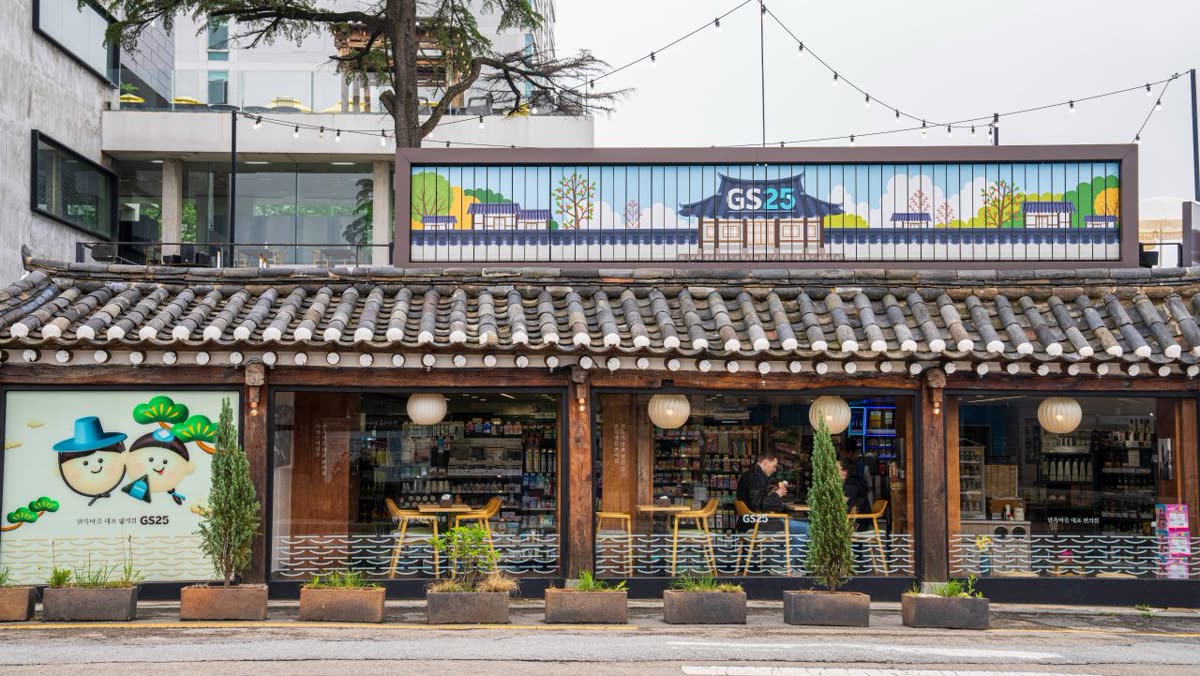
When to Go to a Pharmacy Instead (약국, the ‘약’ Sign)
The boundary is simple: if you want treatment, not comfort, you need a pharmacy (약국) — look for the large ‘약’ sign on the storefront.
Convenience-store drinks are the self-care stop before that, not a substitute for it.
Timing matters, because cold season in Korea runs roughly November through February, right in winter travel season.
That is when the sore-throat shelf demand peaks and when a scratchy throat is most likely to turn into something an antibiotic or proper cold medicine should handle.
If swallowing hurts, you have a fever, or three days of honey water changed nothing, stop buying drinks and find the ‘약’ sign — pharmacists can sell over-the-counter cold medicine without a prescription for common cases.
When I look at a sore-throat drink shelf, the first thing I check is what’s actually in it, because most bottles soothe rather than treat.
If I felt a fever coming on, I would skip the shelf entirely and head straight for the pharmacy — drinks are for a scratchy throat, not for being sick.
👉 Korean food price guide covering convenience-store items and typical meal costs
👉 2026 Korea food etiquette notes: posted prices and the no-tipping norm
👉 street food guide for first-time visitors with ingredient and spice cautions
Related posts
📎 📅 Upcoming Dates — Release & Event Calendar
Sources
- Context: prices are posted, no tipping (koreatravelatlas.com)
- No dedicated primary-page price list; secondary lifestyle ar (food.daily.co.kr)
- Condition 100ml ₩5,000, ~6g sugar, no caffeine (epickor.com)
Quick Rules for the Sore-Throat Shelf
- Match the drink to the goal: warm honey/ginger/doraji for comfort, Vita 500 or Pocari Sweat for hydration, Bacchus F or canned coffee only if you need to function.
- Look in the unrefrigerated tea/instant aisle, not the cold fridge — and use the hot-water machine for honey or ginger tea.
- Before paying, check the 1+1 or 2+1 deal sticker; over half of CU’s drink range was on a deal as of October 2, 2026.
FAQ
Q. What drink do Koreans buy at the convenience store for a sore throat, and how much is it?
Honey water (꿀물) is the default — CU sells store-brand acacia and flat peach honey waters in 280 ml glass bottles, and the cheapest confirmed store item on this list is Bacchus F at ₩1,000.
Q. Is honey water at Korean convenience stores actually medicine?
No. Honey, ginger and doraji drinks soothe a scratchy throat and vitamin or electrolyte drinks support hydration, but none treat a cold — for actual medicine you need a pharmacy (약국), the storefront with the ‘약’ sign.
Q. Where in a Korean convenience store do I find honey water or ginger tea?
In the non-refrigerated instant and tea aisle, not the cold-beverage fridge. Honey tea and ginger tea usually mix with hot water at the in-store hot-water station.
Q. Can I drink Bacchus F when I have a sore throat?
You can, but it is an energy drink — ₩1,000 for 120 ml with 30 mg of caffeine. It helps a sluggish day, not a throat, and the stronger D version is sold only at pharmacies.
Bottom line: honey water is what Koreans reach for, Bacchus F at ₩1,000 is the cheapest confirmed buy on the shelf, and the ‘약’ sign is the next stop if a drink is not enough.
Winter trip dates matter here: cold season runs November through February, so pack this into any November–February Korea itinerary.
This article’s figures are as of October 2, 2026.
Cover photo: 2024 공연관광 DB 불편한 편의점_4 by Korea Tourism Organization — KOGL Type 1 (attribution)
#koreanconveniencestore #sorethroatdrinkkorea #honeywaterkorea #vita500 #koreanpharmacy #koreawintertravel
📅Upcoming Schedule — this week 5 · D-2 MAMA 2026 ceremony (exact date/venue not yet confirmed in thSee all →Last updated 2026-11-26. Editorial policy