The soy garlic glaze comes together in about 5 minutes on the stove, and it goes on the chicken only in the last 5 minutes of cooking — earlier, and the crust goes soggy.
That single timing rule is what separates glossy, crispy soy garlic chicken from a sticky, soft-skinned disappointment, and it works on the same double-fried base as the spicy version.
This post gives the sauce ratio, when to glaze, double-fry temperatures and times, a 500 g coating spec, air-fryer and pot fallbacks, and how to serve it.
Contents
- Korean Fried Chicken Recipe Soy Garlic: The Exact Sauce Ratio
- When to Glaze the Chicken: Last 5 Minutes Only
- Double-Fry Temperatures and Timing
- Cuts and Coating Before Frying
- Air Fryer, Oven, and Pot Versions
- How to Serve It: Chicken-Mu and Chimaek
Korean Fried Chicken Recipe Soy Garlic: The Exact Sauce Ratio
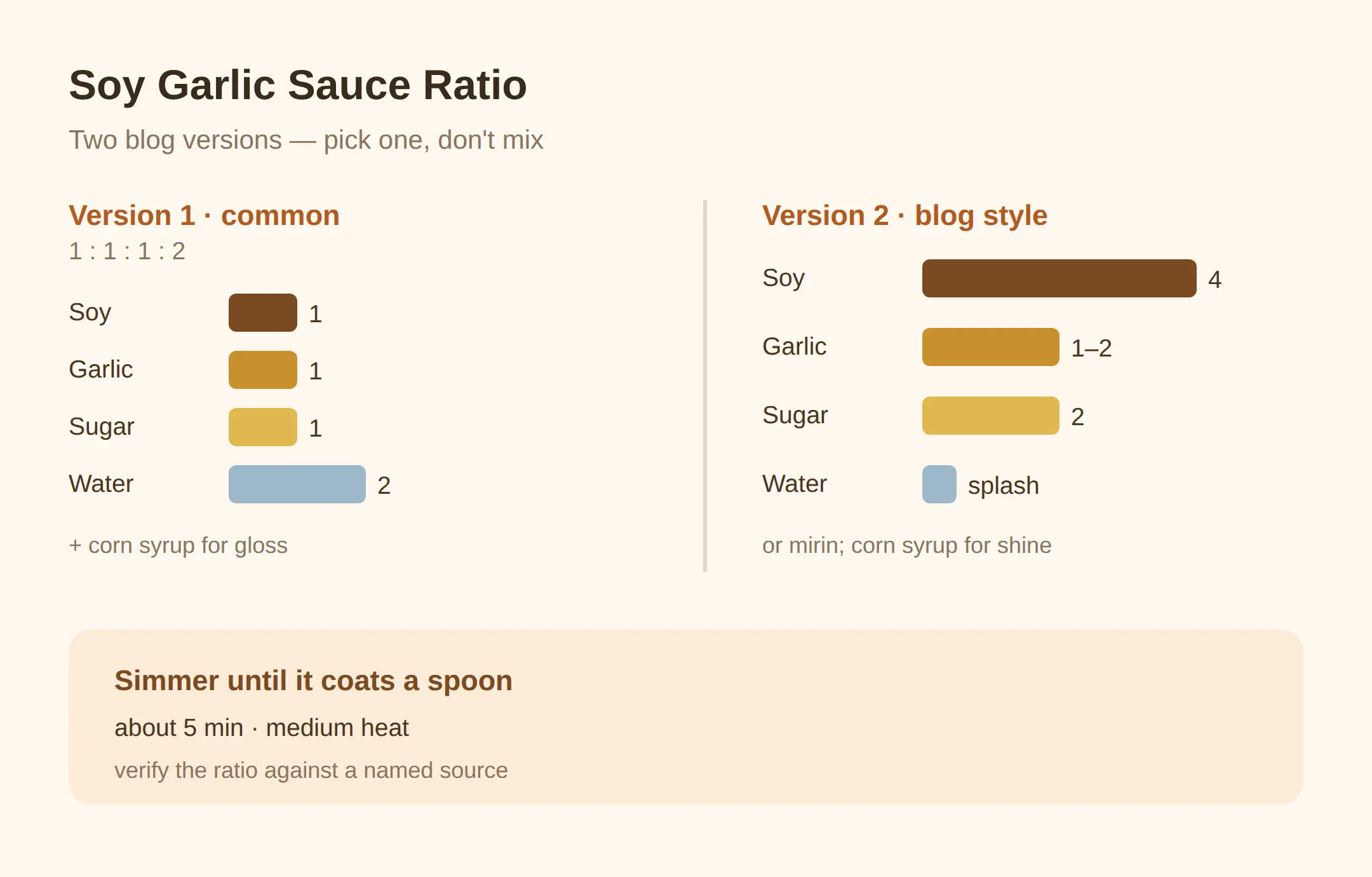
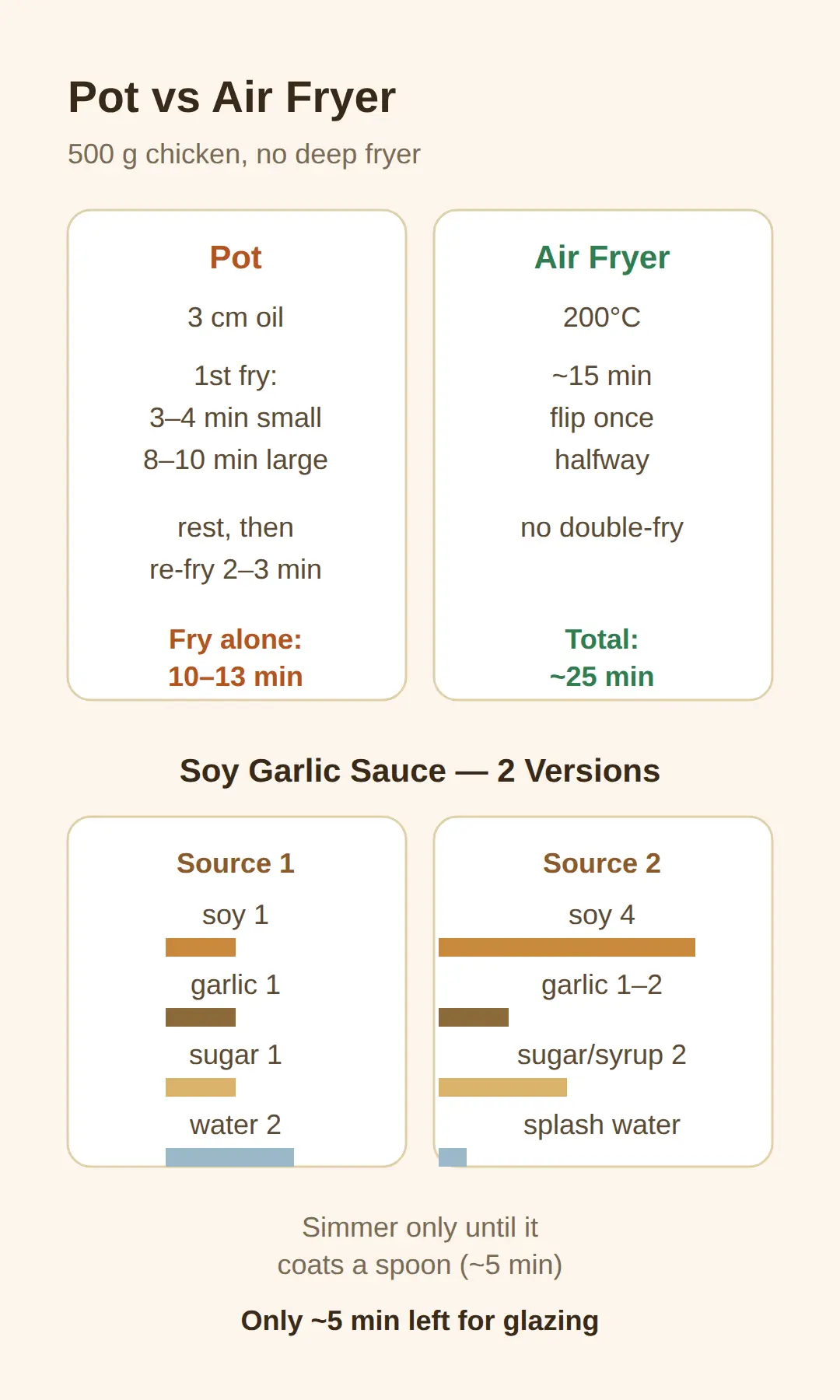
Recipe blogs for soy garlic glaze cluster around a 1 : 1 : 1 : 2 mix of soy sauce, garlic, sugar, and water, with a second common version at roughly 4 parts soy, 1–2 parts garlic, 2 parts sugar or corn syrup, and a splash of water or mirin.
| Ingredient | Version 1 (common ratio) | Version 2 (blog style) |
|---|---|---|
| Soy sauce | 1 part | 4 parts |
| Minced garlic | 1 part | 1–2 parts |
| Sugar | 1 part | 2 parts |
| Water / mirin | 2 parts water | small splash of water or mirin |
| Gloss | corn syrup or oligodang optional | corn syrup or oligodang for shine |
Both versions share one rule: simmer only until the sauce turns sticky and coats a spoon, which takes about 5 minutes over medium heat.
The gloss is what makes the glaze look like delivery chicken.
Korean recipes get it from corn syrup (mul-yeot) or oligosaccharide syrup (oligodang); one blog lists 30 g of corn syrup, another 2–3 tablespoons of oligodang.
If you have neither, sugar alone works but the glaze sets with less shine, and honey is the easiest substitute.
If you want one set of numbers, follow one recipe end to end instead of mixing parts across versions — and verify the ratio against Maangchi or another named source before you commit to it.
One related method to know: the garlic-forward cousin builds its sauce by melting butter and sautéing minced garlic over LOW heat until golden, then adding soy and sugar, because high heat burns the garlic.
| Soy sauce | 1 part — about 4 parts in the larger cluster |
|---|---|
| Minced garlic | 1 part — 1–2 parts in the cluster |
| Sugar | 1 part — 2 parts in the cluster |
| Water | 2 parts — a small splash of water or mirin in the cluster |
| Gloss (optional) | Honey or corn syrup — sugar alone gives less shine |
When to Glaze the Chicken: Last 5 Minutes Only
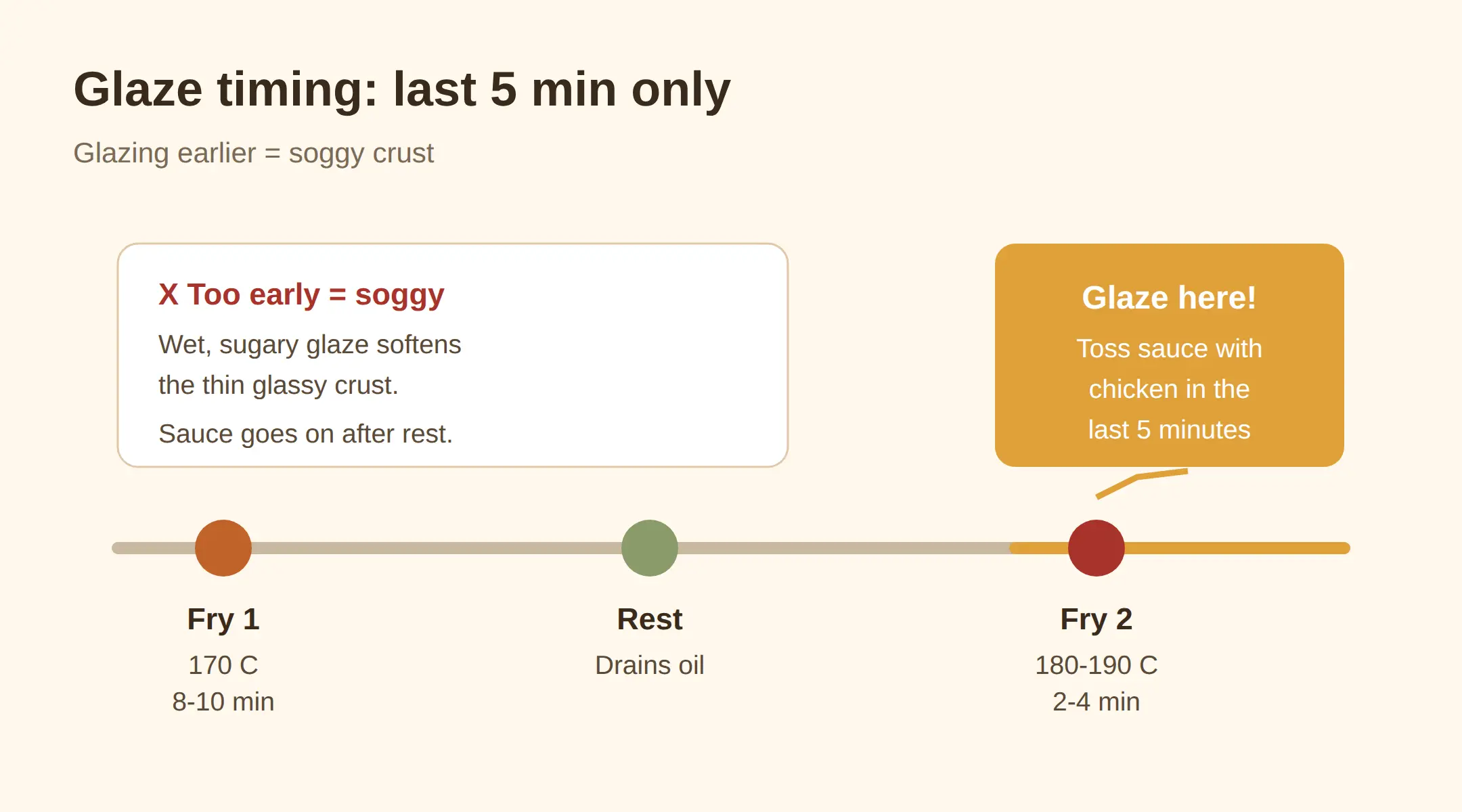
Toss the sauce with the chicken only in the last 5 minutes of cooking — glazing any earlier turns the crispy coating soggy.
This rule matters more than the exact sauce ratio, because a good ratio on a ruined crust still gives you soft chicken.
The reason is simple: the glaze is wet and sugary, and sitting in it softens the thin, glassy crust that double-frying builds.
The rest between the two fries also drains oil out of the meat, so the sauce goes on after that rest, not before it.
Double-Fry Temperatures and Timing
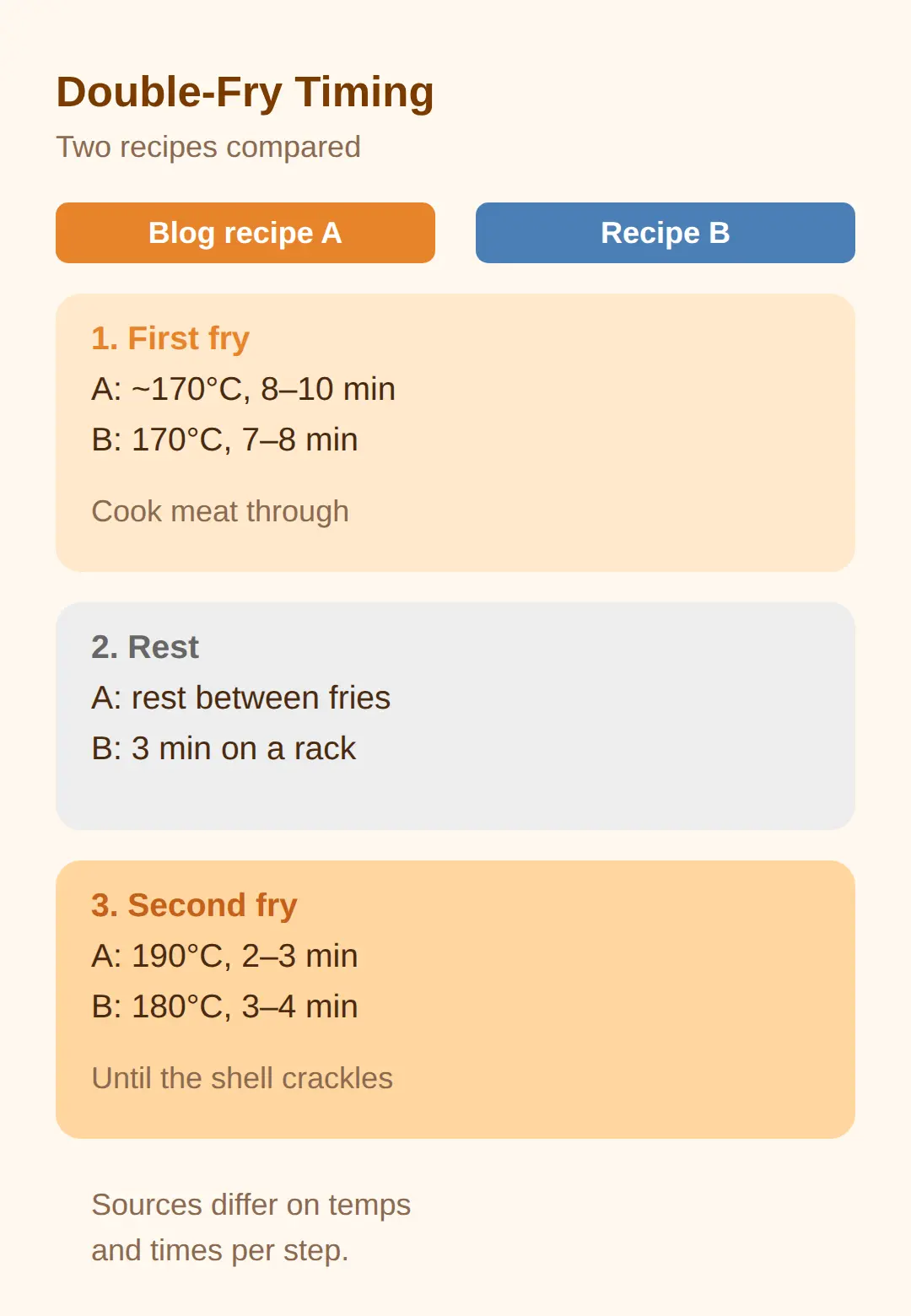
Fry twice: first at about 170°C for 7–10 minutes to cook the meat through, rest about 3 minutes, then fry again at about 180°C for 2–3 minutes for the crackling shell.
- First fry: ~170°C, 7–10 minutes, until cooked through.
- Rest: about 3 minutes on a rack, so oil trapped inside drains out.
- Second fry: 180–190°C, 2–3 minutes, until the shell crackles.
info_table_head: ["Step", "Blog recipe A", "Recipe B (Cookpick)" info_table:
| Step | Blog recipe A | Recipe B (Cookpick) |
|---|---|---|
| First fry | ~170°C, 8–10 min | 170°C, 7–8 min |
| Rest | rest between fries | 3 min |
| Second fry | 190°C, 2–3 min | 180°C, 3–4 min |
Cuts and Coating Before Frying
Use wings or drumsticks cut into even-sized pieces — whole birds cook unevenly per part, and breast meat easily dries out during the two-stage fry.
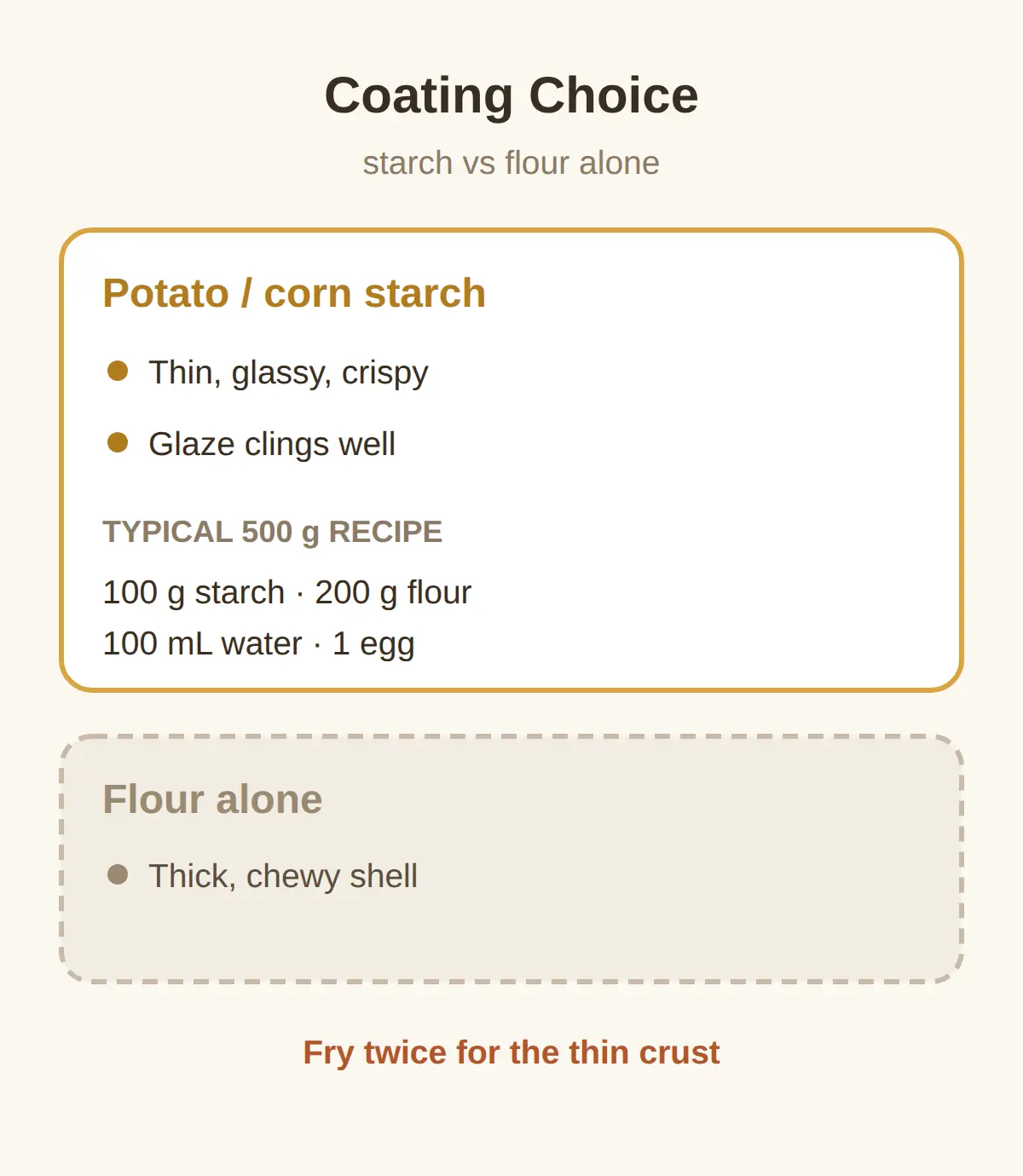
Korean fried chicken uses a thin starch coating fried twice, unlike the thick American breading, and that thin glassy coat is what lets the soy glaze cling without going bready-soggy.
Potato starch or corn starch gives that thin, crispy shell; flour alone bakes up chewy and thick.
A typical home recipe for about 500 g of chicken uses roughly 100 g starch, 200 g flour, 100 mL water, and 1 egg in the batter, with a dry flour-salt-pepper mix for the final dusting — the exact spec comes from one undated recipe page, so weigh it as a guide.
Some recipes also suggest a 20–30 minute milk or buttermilk soak to tenderize the meat and tame the chicken smell; it is optional, not part of the standard method.
If all you have is breast, expect drier meat — or pick up wings instead.
Air Fryer, Oven, and Pot Versions
No fryer is needed: an air-fryer version cooks 500 g of chicken at 200°C for about 15 minutes in a single layer, flipped once halfway, then tossed in the sauce — no double-fry.
- Lightly oil the air-fryer basket.
- Lay the pieces in one layer without touching.
- Cook 15 minutes at 200°C, flipping once halfway.
- Toss in the warmed glaze.
The batter order for the air fryer: mix half the flour with egg, starch, and water into a batter, dip the chicken, then dredge in the remaining seasoned flour.
If you have no appliances at all, a home pot works too — 3 cm of oil on high heat, first fry 3–4 minutes, rest, then re-fry 2–3 minutes.
A baked variant also exists: marinate 20 minutes, bake at 180°C for 20 minutes, then toss in simmered sauce for 1–2 minutes.
Overall, count roughly 25 minutes total for the air-fryer route versus about 10–13 minutes of frying alone for the pot method with small pieces — which means only about the last 5 minutes are available for glazing either way.
How to Serve It: Chicken-Mu and Chimaek
Serve soy garlic fried chicken with chicken-mu (quick-pickled radish) and beer — the pickled radish cuts the rich, sticky glaze, and the chicken-plus-beer pairing is so standard in Korea it has its own blend word, chimaek.
Chicken is Korea’s top delivery food, so this is the flavor of the country’s default order.
Soy sauce chicken (ganjang chicken) is an established menu variant alongside the spicy yangnyeom style, so this glaze is a mainstream choice, not a niche one.
If you already cook the gochujang version on this blog, keep the fry method identical and swap only the sauce — that is the whole difference.
Glaze | Base ingredients | Character:
Soy garlic: soy sauce, garlic, sugar or corn syrup, splash of water or mirin — mild, sticky, non-spicy.
Gochujang sibling: gochujang, gochugaru, corn syrup, ketchup, soy, garlic, chili oil, sesame oil — hot and sweet.
If you avoid spicy food, this is the glaze to start with; if you want heat, use the gochujang sauce instead.
If I were cooking this, I’d follow one recipe’s numbers end to end, because mixing ratios from different versions is the easiest way to end up with a glaze that is either too salty or too sweet.
The first thing I check is the sugar-to-syrup balance, since that is what decides whether the glaze sets sticky or dries dull.
Related posts
Sources
- sauce_base_ratio (koreanbapsang.com)
- coating_starch (mykoreankitchen.com)
- milk_marinade (seonkyounglongest.com)
Which Version Should You Cook?
- Want the non-spicy sibling of the blog’s gochujang glaze? Use this soy garlic sauce on the same double-fried base — same fry method, different sauce.
- No corn syrup or oligodang at home? Sugar alone works but shines less — add honey if you have it.
- Only chicken breast in the fridge? Get wings or drumsticks instead, or expect drier meat.
- Tempted to glaze early to save time? Don’t — toss the sauce only in the last 5 minutes of cooking.
- Want it less greasy? Keep the second fry short and hot (180°C+, 2–3 minutes) and keep the 3-minute rest between fries.
FAQ
Q. Can I make Korean fried chicken soy garlic without corn syrup?
Yes — sugar alone works, but the glaze sets with less shine. Honey is the closest easy substitute for the sticky gloss that corn syrup or oligodang gives.
Q. How do I keep the soy garlic glaze from making the chicken soggy?
Glaze only in the last 5 minutes of cooking. The wet sauce softens the thin double-fried crust if it sits on it longer, and the glaze needs just a minute or two to cling.
Q. What is the soy garlic sauce ratio?
Recipe blogs cluster around soy : garlic : sugar : water of roughly 1 : 1 : 1 : 2, or about 4 : 1.5 : 2 with a splash of water or mirin in a second common version. The exact ratio varies between sources, so verify against a named recipe before committing.
Q. When do I glaze the chicken?
In the last 5 minutes only — after the rest between the two fries. Earlier glazing turns the crispy coating soggy.
Q. What temperature is the double fry?
About 170°C for the first fry (7–10 minutes), a 3-minute rest, then 180–190°C for 2–4 minutes. Sources differ on the second-fry number; keep it short and at 180°C or above.
Comfort-food cooking season starts in October 2026 — the gochujang glaze and the air-fryer Korean fried chicken posts pair with this one.
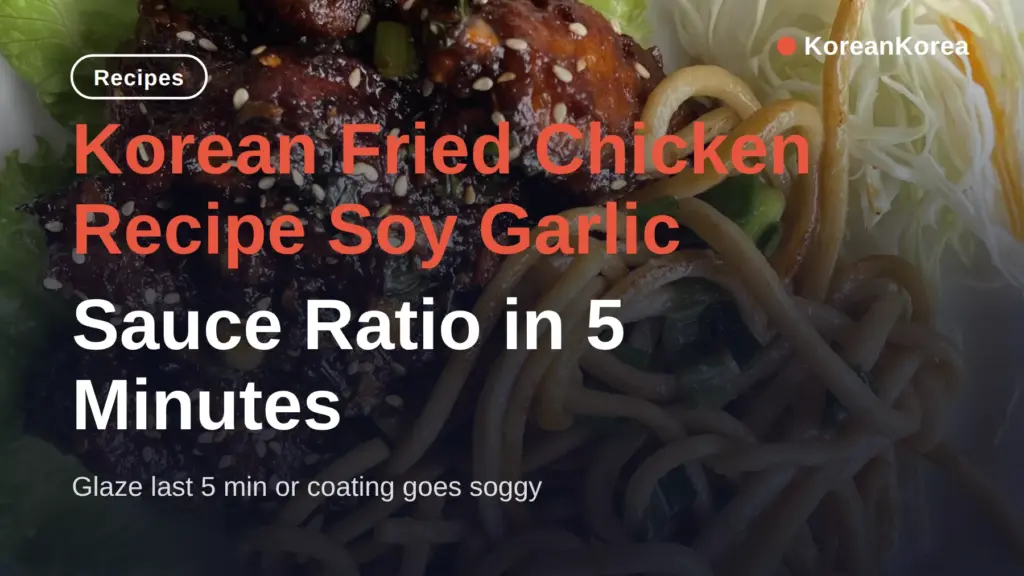
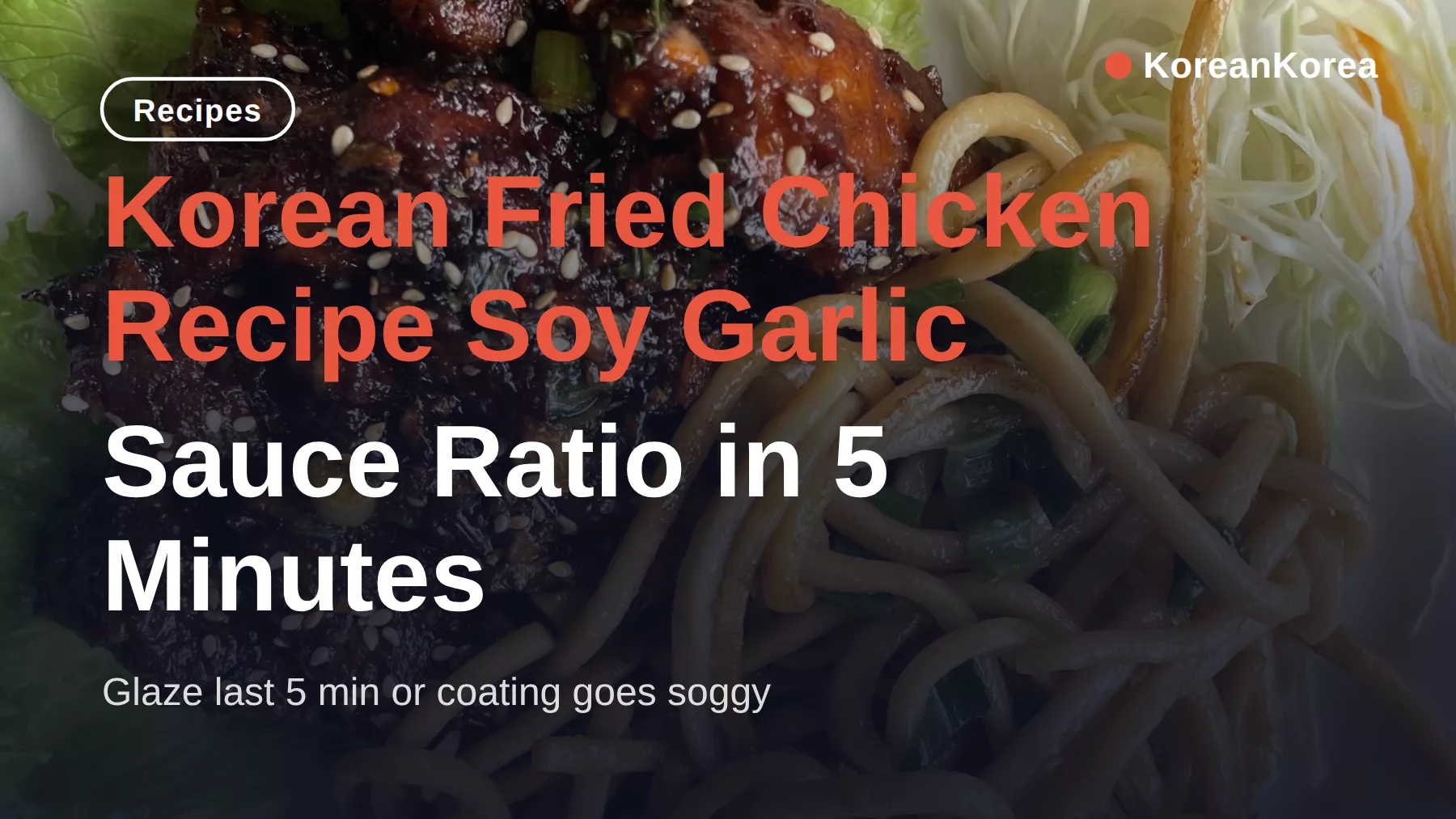
Cover photo: Top-down close-up of a meal on a white plate with stir-fried noodles, glazed chicken topped with sesame seeds on lettuce, and shredded cabbage on the side. by Tilak Bahadur Karki — CC0 1.0
#koreanfriedchicken #soygarlicchicken #ganjangchicken #yangnyeomchicken #doublefry #chickenrecipe
📅Upcoming Dates — 이번 주 32 · D-day Chuseok holiday period — rice cake interest peaks전체 보기 →