
Korean fruit mochi is a whole strawberry or grape wrapped in red bean paste and a thin sweet rice dough, and one home batch makes 8 pieces.
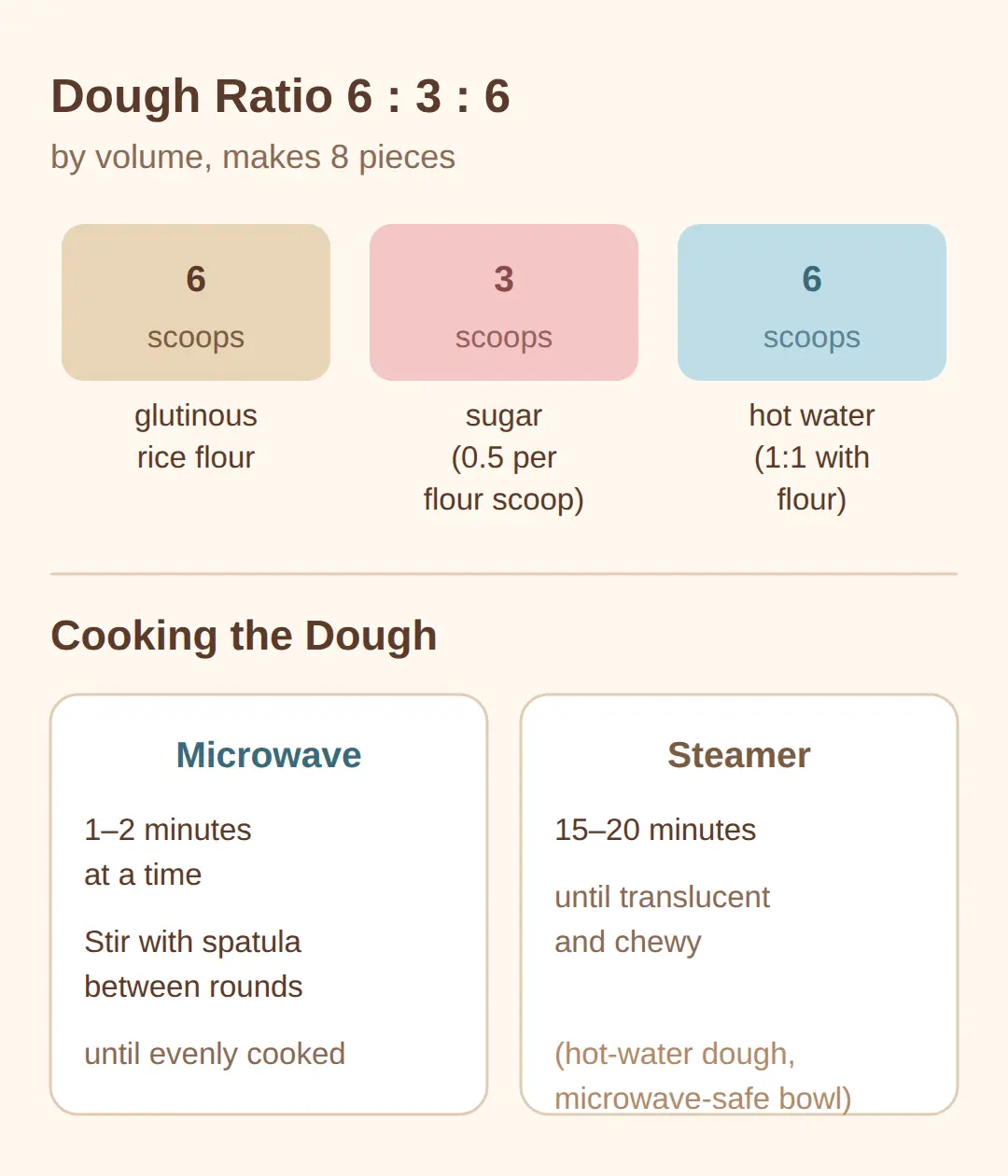
The dough is 6 scoops glutinous rice flour, 3 scoops sugar, and 6 scoops hot water — a ratio you can measure with any cup or spoon you have.
Below are the steps in order, the steamer option, which fruit to use, what to substitute abroad, and how to store the finished mochi.
Korean Fruit Mochi Recipe Dough Ratio: 6:3:6 for 8 Pieces
| You have tteokbokki-style glutinous rice flour | Use it as-is — the dough becomes much easier to handle |
|---|---|
| You can only find regular glutinous rice flour | Use it, but add a little corn syrup (mullyeot) to make up the missing stickiness |
| You don’t own a microwave | Steam the dough 15–20 minutes instead, until translucent and chewy |
| You can’t find red bean paste or yanggaeng | Soften yanggaeng in the microwave as the filling (3 bars for 8 pieces); if neither is available, whipped sweet cream is the other standard filling |
| Your fruit is very ripe and juicy | Skip it — use only firm, moderate-moisture fruit like strawberry, green grape, or kiwi |
| This is your first attempt | Mix a small dough portion and shape a few test pieces before committing the full batch |
The household dough ratio is 6 scoops glutinous rice flour, 3 scoops sugar, and 6 scoops hot water, mixed as a cooked hot-water dough in a microwave-safe bowl.
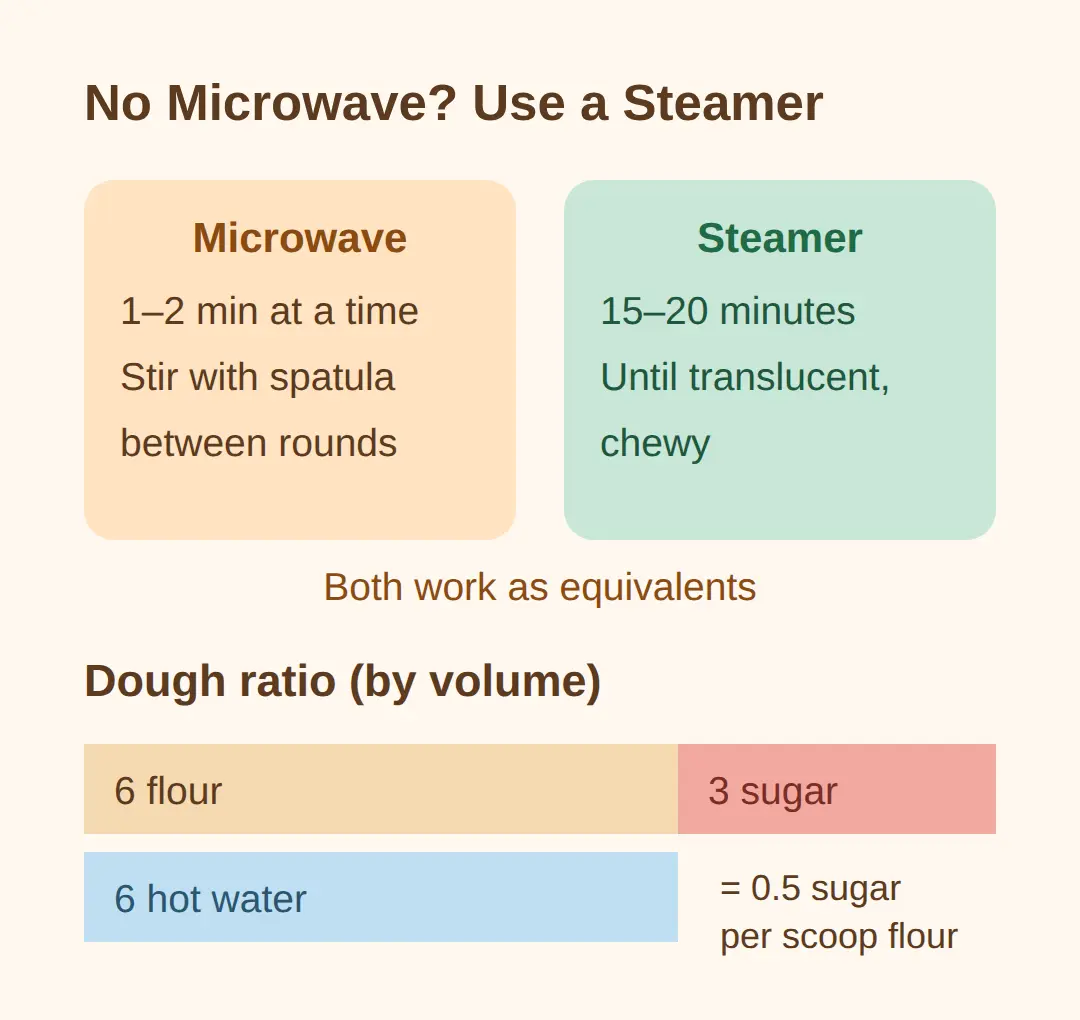
That is 0.5 scoops of sugar per scoop of flour, and hot water equal to the flour by volume.
One home recipe yields 8 strawberry mochi from 8 strawberries — one fruit per piece — and 3 red bean jelly bars (yeon-yanggaeng) softened in the microwave for the filling, so 0.375 yanggaeng bar per mochi.
Korean home recipes give the ratio in scoops only, and no verified gram weights per scoop were found, so the numbers here stay in scoops.
When I look at a fruit mochi recipe, I check two things first: whether the dough ratio is in something I can measure at home, and whether it says what to do about the fruit’s moisture — that is where most batches fail.
How to make it, from dough to sealed mochi
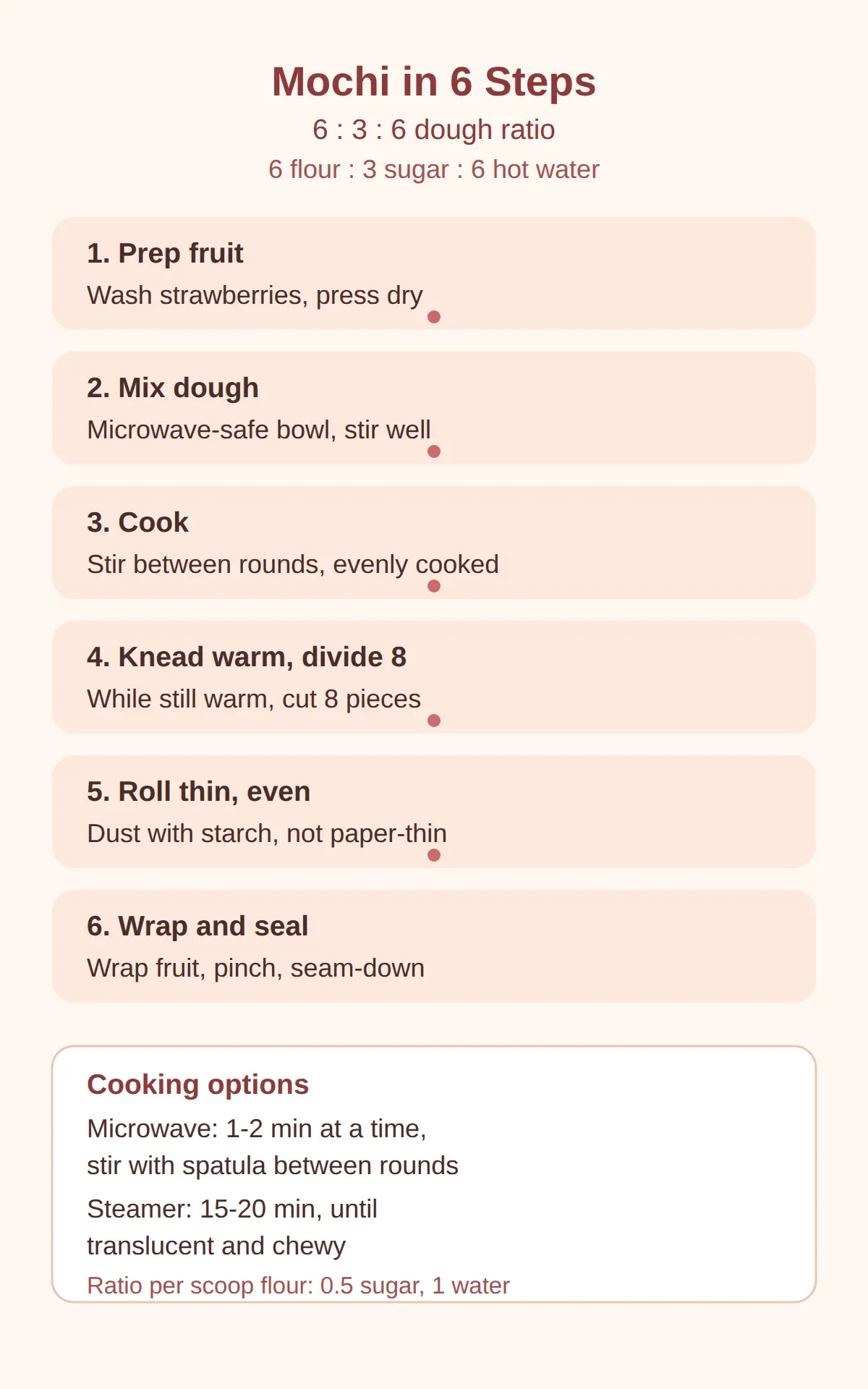
The full flow is: mix the dough, cook it, knead it warm, roll it thin, wrap the fruit in filling first and then dough, and seal.
Korean home recipes agree on this step order, and no special tools are needed beyond a microwave (or steamer) and a rolling pin.
- Wash the strawberries ahead of time and press them firmly dry with a kitchen towel, until no surface water remains.
- Mix 6 scoops glutinous rice flour, 3 scoops sugar, and 6 scoops hot water in a microwave-safe bowl.
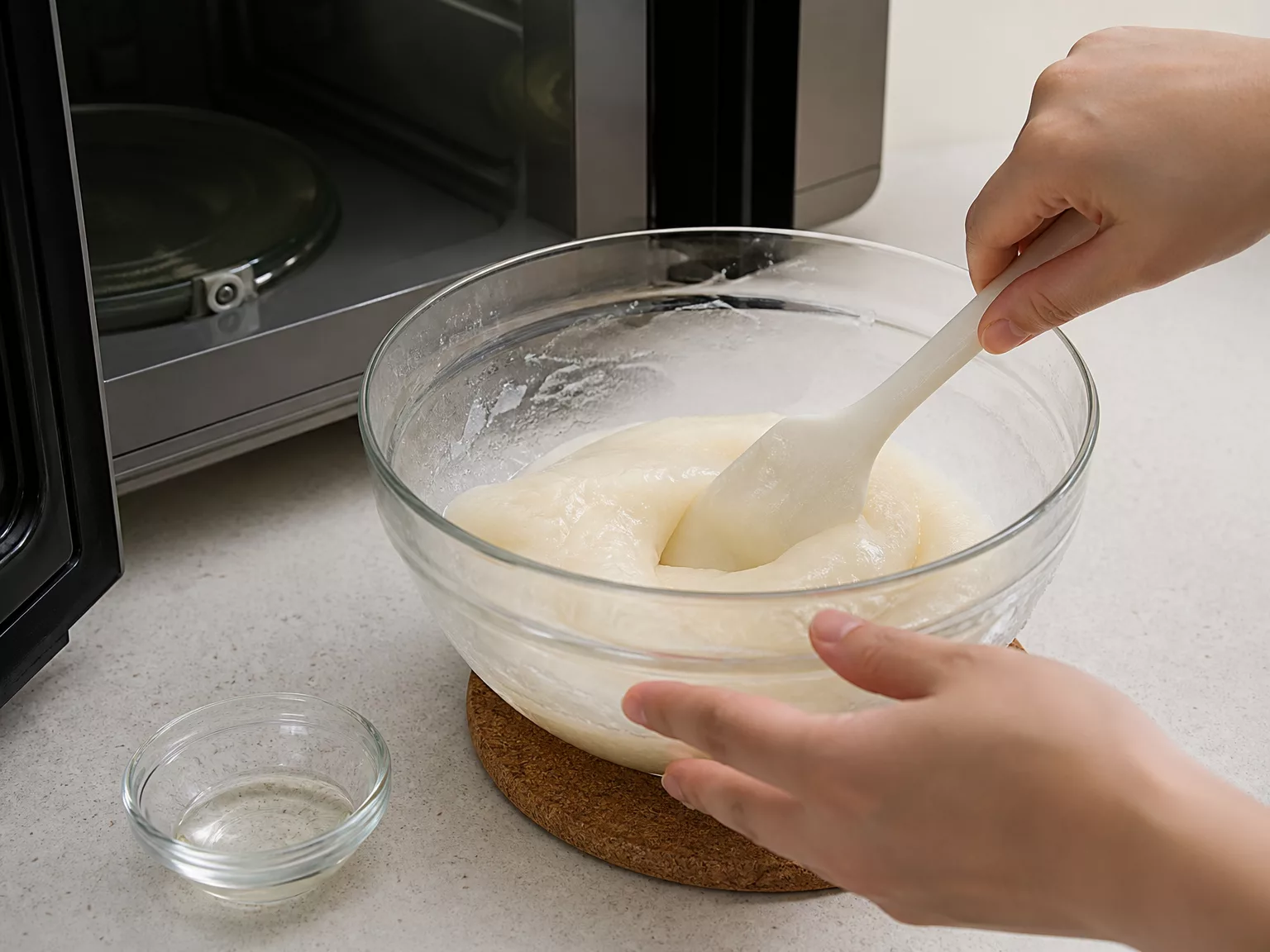
- Microwave 1–2 minutes at a time, stirring with a spatula between rounds, until the dough is evenly cooked.
- Knead the dough thoroughly while it is still warm, then divide into 8 pieces.
- Dust the rolling pin and your hands with starch, and roll each piece thin and round, keeping the thickness even.
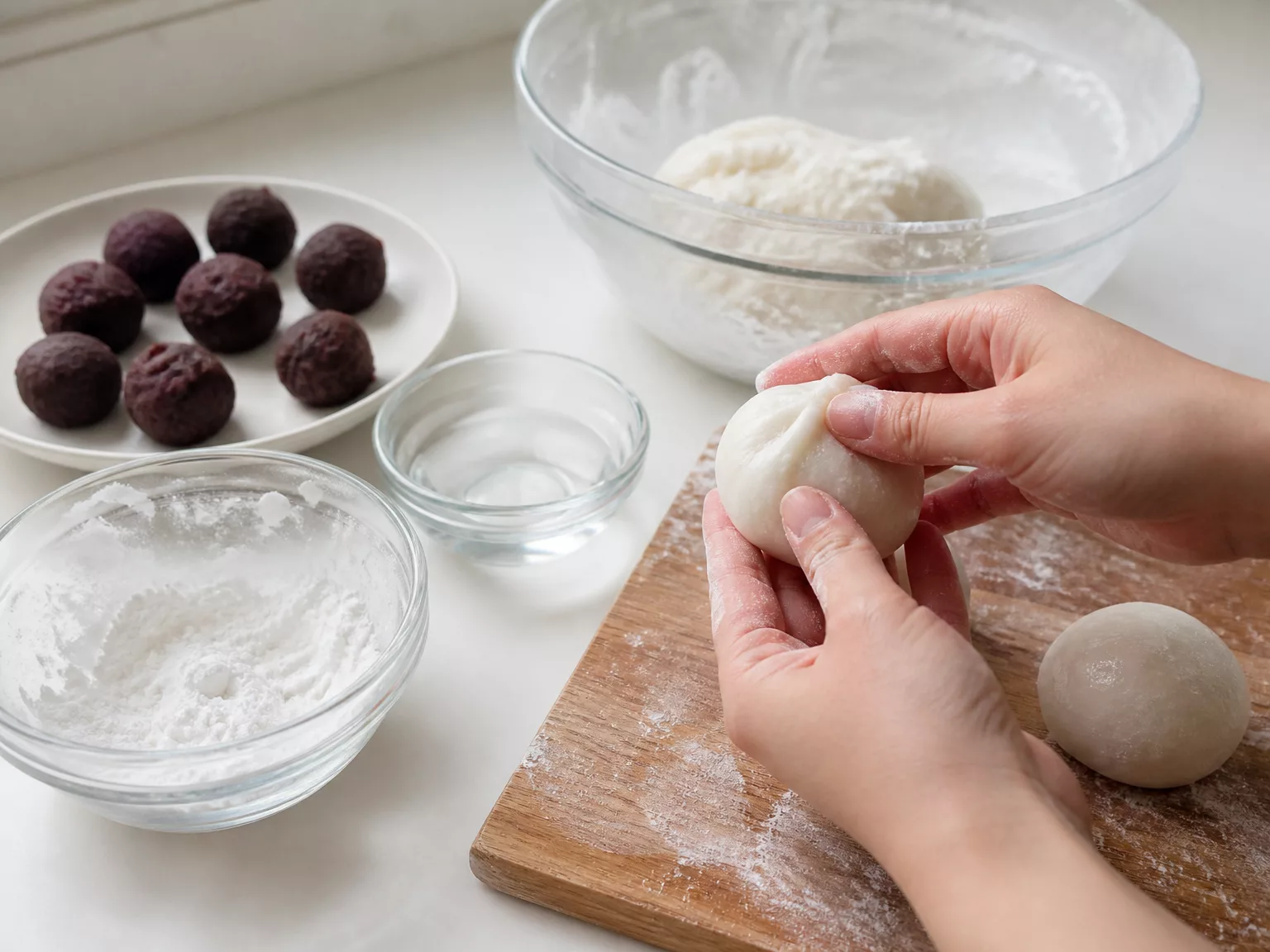
- Wrap each fruit in the bean paste first, place it in the dough’s center, gather the edges, dab a little water where the edges meet, pinch closed, flip seam-down, roll gently with your palm, and brush off excess starch.
Keep the dough thin but not paper-thin — too thin tears easily, and an even thickness matters more than the thinnest possible layer.
Steps at a glance
-
1Wash the strawberries ahead of time and press them firmly dry with a…
-
2Mix 6 scoops glutinous rice flour, 3 scoops sugar, and 6 scoops hot…
-
 AI-generated photo
What it should look like — AI-generated image of this step, made from the recipe text — not a photo of our kitchen. 3Microwave 1–2 minutes at a time, stirring with a spatula between…⏱ 1–2 minutes -
4Knead the dough thoroughly while it is still warm, then divide into 8…
-
5Dust the rolling pin and your hands with starch, and roll each piece…
-
 AI-generated photo
What it should look like — AI-generated image of this step, made from the recipe text — not a photo of our kitchen. 6Wrap each fruit in the bean paste first, place it in the dough’s…
No microwave? Steamer time and dough fixes
Without a microwave, steam the dough 15–20 minutes until it turns translucent and chewy.
Both methods are given as equivalents in the recipe flow, though whether steaming changes the texture compared with microwaving was not verified — the sources only confirm that both work.
If the dough is too stiff or too sticky to shape while kneading, add small amounts of water or glutinous rice flour gradually until it comes together.
The fix is done during kneading, not before rolling.
If your kitchen has a steamer but no microwave, the steamer route is a complete substitute, not a fallback — plan for the full 15–20 minutes.
What fruit works, and how dry it needs to be
Only firm, moderate-moisture fruit works: strawberry, green grape, and kiwi are the recommended options.
Overripe or very juicy fruit risks splitting the dough and should be avoided.
Strawberries must be washed ahead and pressed firmly dry with a kitchen towel before wrapping — surface water is the main cause of soggy, leaking mochi.
The bean paste layer between fruit and dough acts as a moisture barrier, keeping juice from touching the rice dough directly so the shape holds longer.
Two things decide café-level results, and both are in your hands: kneading the rice dough thoroughly, and removing all moisture from the fruit.
If your strawberries are soft the day you cook, use grapes or kiwi instead.
Substitutions when you can’t find Korean ingredients
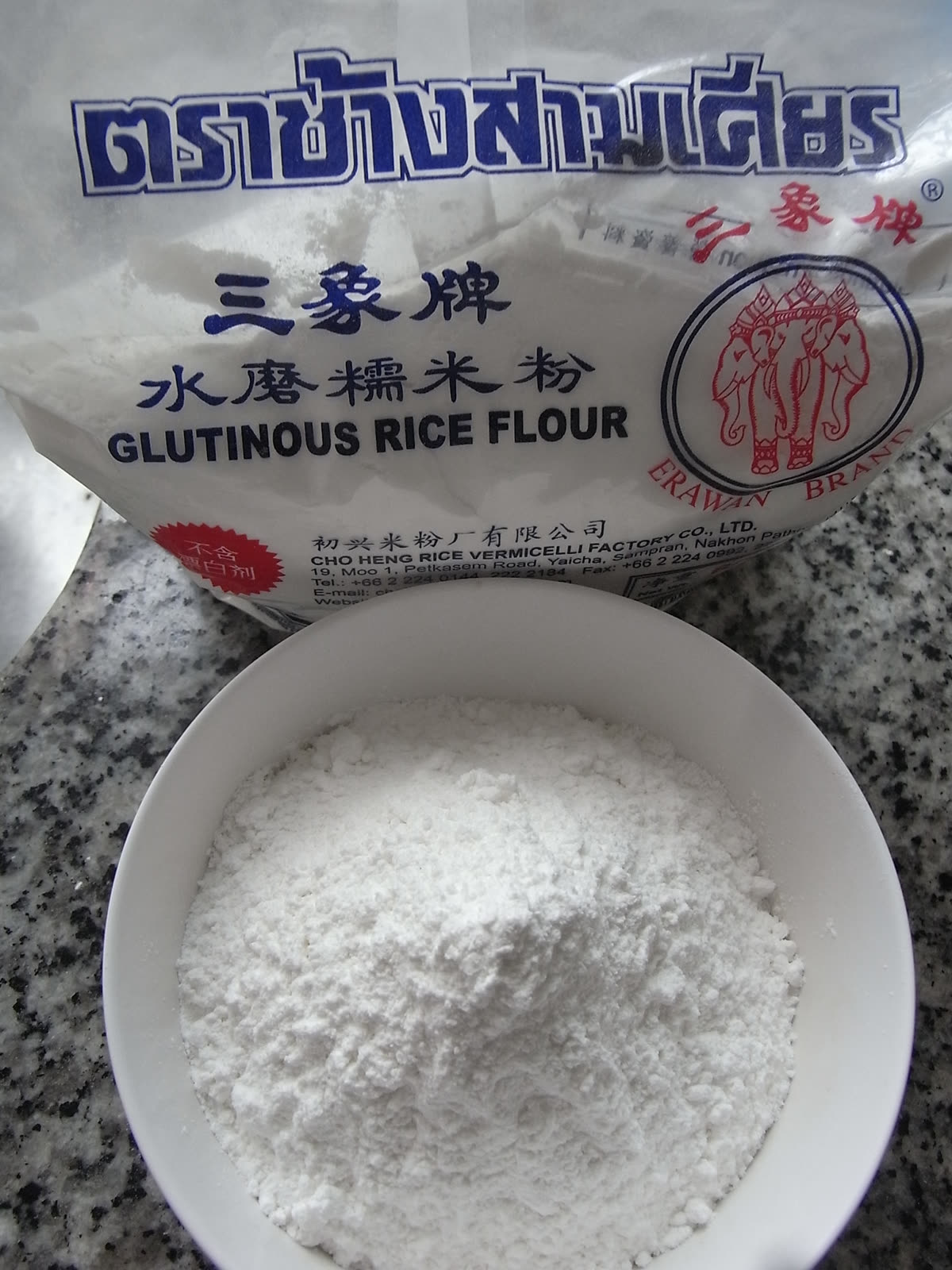
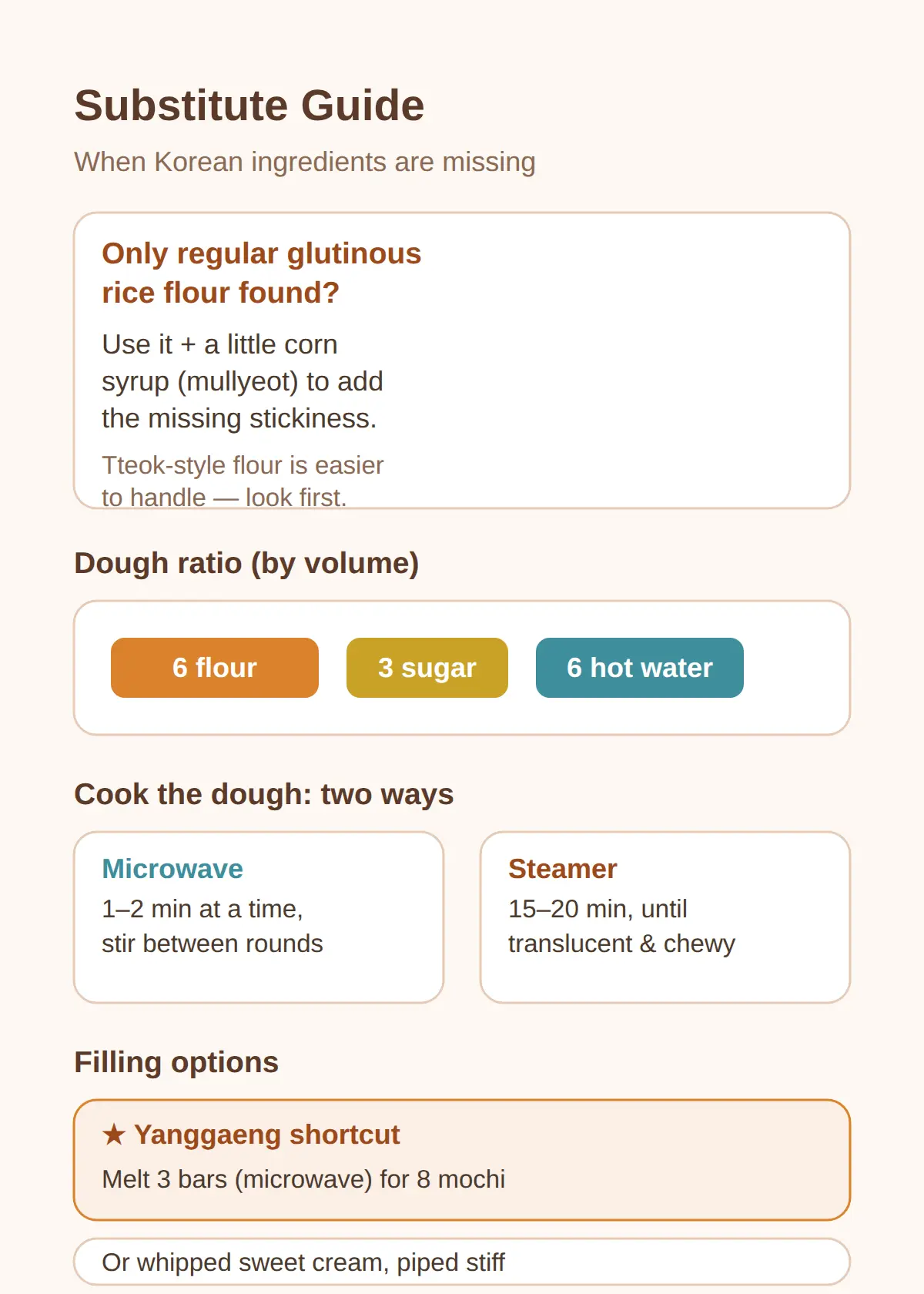
If tteokbokki-style glutinous rice flour is unavailable, use regular glutinous rice flour with a little corn syrup (mullyeot) to add the missing stickiness.
The tteok-style flour makes the dough much easier to handle, so it is worth looking for first.
For the filling, melted yanggaeng is the shortcut: soften 3 bars in the microwave for 8 mochi — it sets cleanly and suits eaters who dislike chewing whole red-bean skins.
Whipped sweet cream is the other standard filling; whip it stiff and pipe it from a pastry bag.
Commonly suggested swaps such as mochiko for the flour or tapioca starch for dusting were not verified in the sources, so treat them as unconfirmed.
If I were making this for the first time, I would use the yanggaeng shortcut — 3 bars melted for 8 pieces — because it sets cleanly and avoids fighting with coarse red-bean skins on a first attempt.
Where to try fruit mochi in Seoul: Hanjungsun in Seongsu
In Seoul, you can buy this style of fruit mochi at Hanjungsun, a take-out chapssal-tteok shop in Seongsu-dong, Seongdong-gu.
It wraps whole fresh fruit — strawberry, gold kiwi and persimmon among them — in a thin, chewy rice dough, the same build as the home recipe above.
The Seongsu shop is open every day from 10:30 a.m. to 10:00 p.m. and sells to take away only.
If you are in Seoul, try one there first, then use this recipe to copy the texture at home.
Storage, common mistakes, and variations
Fruit mochi is best eaten fresh, and no verified refrigerated or frozen storage duration was found in the sources — so plan the batch for same-day or next-day serving rather than making it far ahead.
What to check if you must store some: how the dough’s texture changes overnight, which the sources do not cover.
The three common mistakes are wet fruit, uneven dough thickness, and skipping the double wrap.
Wet fruit leaks, uneven dough tears, and fruit placed straight against the dough lets juice seep in so the shape collapses — wrap the fruit in bean paste first, every time.
For variations, a cream filling and other firm fruits both appear in the standard filling list, though cream-variation details such as sugar percentage and whipping ratio were not verified.
For a first attempt, mix a small dough portion and shape a few test pieces before committing the full batch.
👉 Korean fruit mochi made with a microwave dough and yanggaeng filling
👉 Fruit mochi steps from cooking the dough to sealing and dusting with starch
Related posts
📎 📅 Upcoming Dates — Release & Event Calendar
Sources
- Full strawberry mochi step flow: 6 scoops flour : 3 sugar : (arisongstory.tistory.com)
- Not verified from a dated primary source (arcom.kr)
- hanjungsun_shop (happycow.net)
Summary
- Dough: 6 scoops glutinous rice flour, 3 scoops sugar, 6 scoops hot water — 0.5 scoop sugar per scoop flour.
- Cook the dough in the microwave 1–2 minutes at a time with stirring, or steam 15–20 minutes until translucent and chewy.
- One batch: 8 mochi, 8 firm strawberries, and 3 yanggaeng bars softened for the filling.
- Wash and thoroughly dry the fruit ahead; wrap fruit in bean paste first, then dough.
- Fix stiff or sticky dough while kneading with small additions of water or glutinous rice flour.
FAQ
Q. How do I make Korean fruit mochi at home?
Mix 6 scoops glutinous rice flour, 3 scoops sugar, and 6 scoops hot water, cook it 1–2 minutes at a time in the microwave, knead warm, roll thin, wrap the fruit in bean paste first and then dough, and seal with a dab of water — one batch makes 8 pieces.
Q. Can I make this without a microwave?
Yes — steam the dough 15–20 minutes until translucent and chewy; both cooking methods are given as equivalents in the recipe flow.
Q. What fruit works best?
Firm, moderate-moisture fruit only: strawberry, green grape, and kiwi; overly soft or juicy fruit risks splitting the dough.
Q. Can I skip red bean paste?
Yes — whipped sweet cream is the other standard filling, or use 3 bars of yanggaeng softened in the microwave as the paste shortcut for 8 mochi.
Q. How long does fruit mochi keep?
It is best eaten fresh; a verified refrigerated or frozen storage duration was not found, so plan to serve the batch within a day of making it.
Q. Where can I try Korean fruit mochi in Seoul?
Hanjungsun in Seongsu-dong, Seongdong-gu sells it — a take-out chapssal-tteok shop open daily 10:30 a.m. to 10:00 p.m. with fillings such as strawberry, gold kiwi and persimmon.
No dates to mark on a calendar for this one — the only timing that matters is cooking day: make the batch the day you serve it.
Cover photo: Strawberry flavored mochi by Fumikas Sagisavas — CC0 1.0
#koreanfruitmochirecipe #chapssaltteok #strawberrymochi #koreandessert #glutinousriceflour #Hanjungsun #Seongsu
📅Upcoming Schedule — this week 23 · D-1 Autumn season = post-summer brightening demand window (UV drSee all →