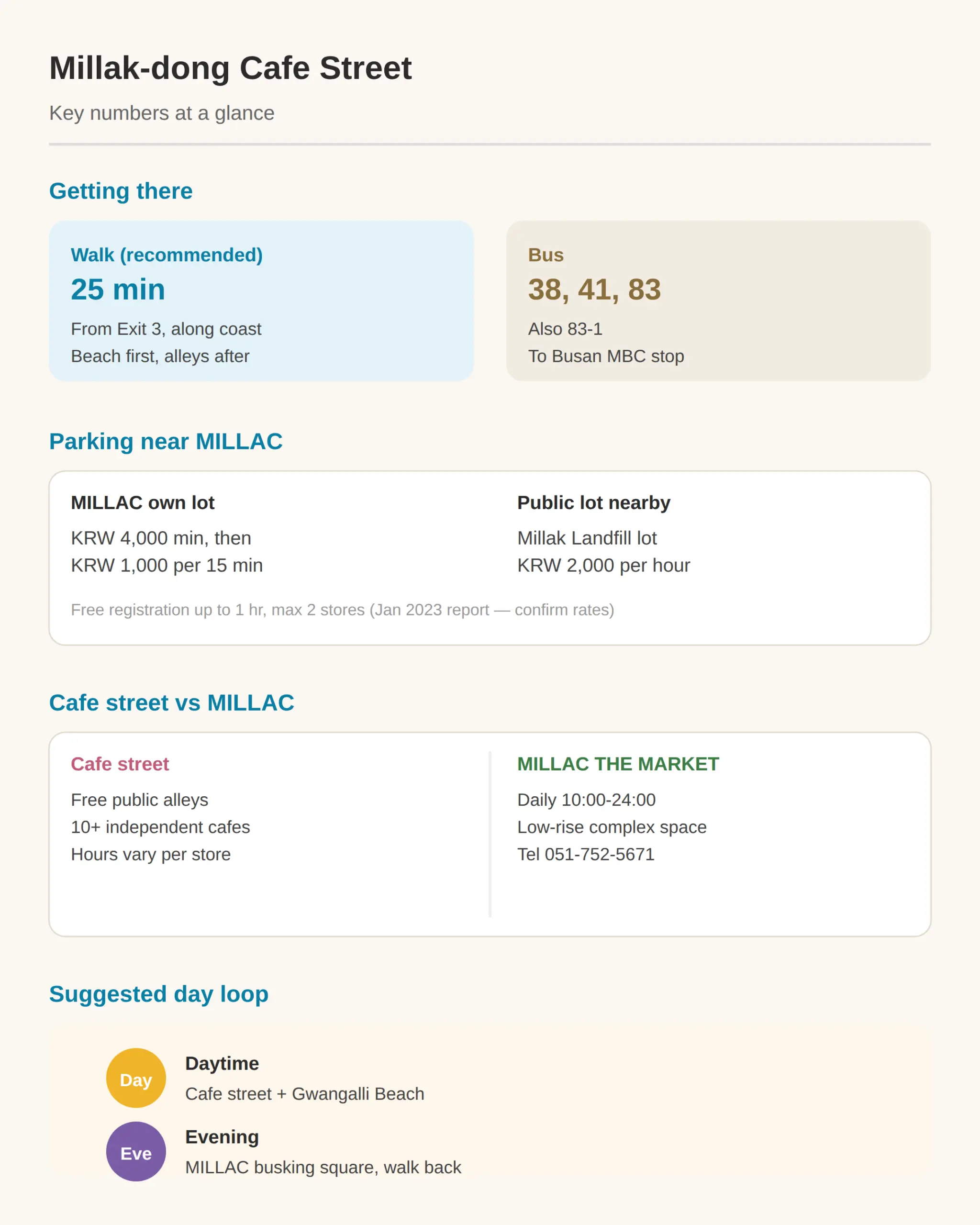
Millak-dong Cafe Street is a free public alleyway in Suyeong-gu, Busan, with more than 10 independent cafes; take Metro Line 2 to Gwangan Station Exit 3 (25-minute walk) or bus 38, 41, 83 or 83-1 to the Busan MBC stop.
Hours, closing days and cafe prices all vary by store, so you plan around a place rather than a timetable.
This post covers the walking and bus routes, hours and fees, what the alleys look like, the adjacent MILLAC THE MARKET, parking, and where to eat nearby.
Millak-dong Cafe Street Busan: How to Get There from Gwangan Station or by Bus
| Metro | Line 2 to Gwangan Station Exit 3, then 25 minutes on foot |
|---|---|
| Bus | Bus 38, 41, 83 or 83-1 — get off at the Busan MBC stop |
| Car | Millak Landfill Public Parking Lot |
| Entry fee | None — the street is a free public alley |
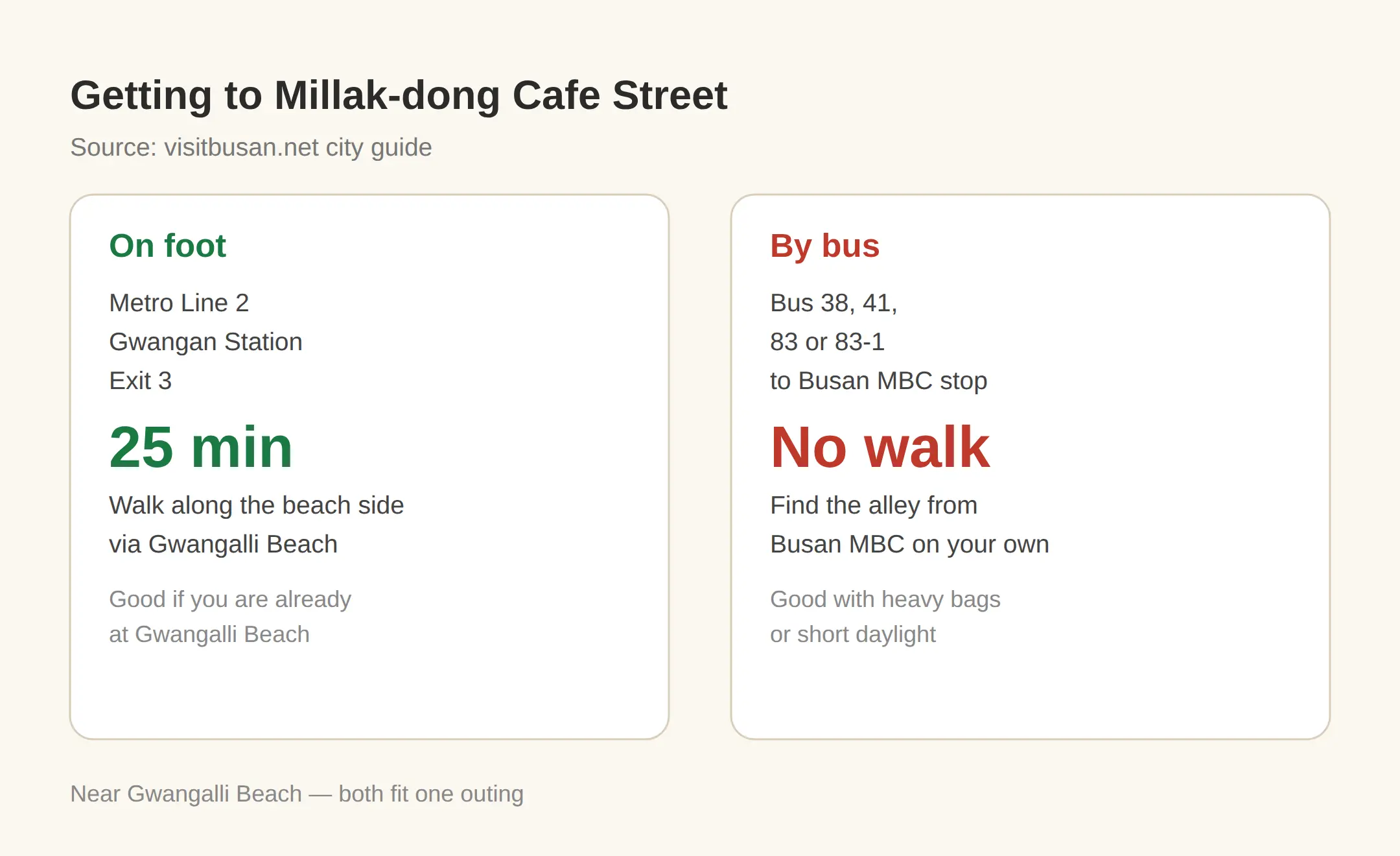
Per Busan Metropolitan City’s English guide (visitbusan.net, September 27, 2026), Millak-dong Cafe Street is reached from Metro Line 2 Gwangan Station Exit 3 with a 25-minute walk, or by bus 38, 41, 83 or 83-1 to the Busan MBC stop.
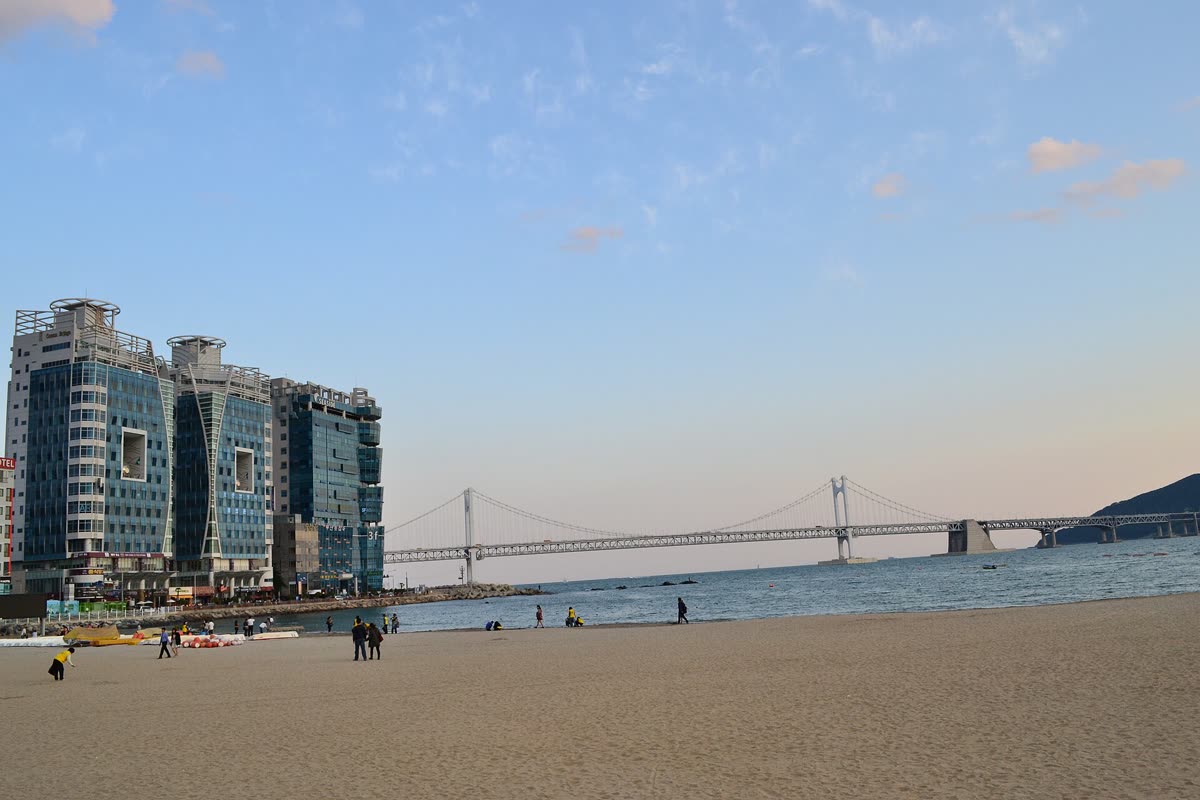
The street sits quite close to Gwangalli Beach, so the two fit into the same outing without extra transit.
Both routes are listed in the city’s guide for the cafe street itself, not for the wider Millak area.
The walking route is spelled out in the guide: from Gwangalli Beach, go past the Millak-dong Raw Fish Street, keep the apartment complex on your right, and turn left into the residential alleyways.
The 25 minutes on foot runs along the beach side, so the walk doubles as part of the Gwangalli visit.
The bus saves the walk, but you still have to find the alley from the Busan MBC stop on your own.
If you are already at Gwangalli Beach, walk it; if you are coming from another part of Busan with heavy bags or short daylight, take the bus.
Hours and Fees — What ‘Varies Each Store’ Means
The city guide lists hours, closing days and fees for Millak-dong Cafe Street as ‘varies each store’ — the alley itself is a free public street with no entrance fee.
That means you can walk through at any hour of the day, but a specific cafe may open late, close early, or shut for the day without a city-level notice.
Prices are set per cafe, so the only cost you can count on is what your own coffee and dessert add up to.
The guide names three cafes as examples: Casual Book Shop, in a retro apricot-tiled building with a wood-tone interior; Cafe Voisin, next to the old Okcheontang Public Bath; and rad.
Coffee Stand, with an exposed-concrete interior.
Note that these names come from the guide’s English text and may be loose translations of the Korean shop names, and there is no recent confirmation that every named cafe is still open.
Before you build a plan around one specific cafe, check its name on a map app the day you go — that is the one check the city guide cannot do for you.
What the Alleys Look Like
Millak-dong’s alleys are old residential lanes where 1980s–90s storefronts — a laundromat, a public bath, two-story houses — stand next to cafes painted in strong colors.
Yellow, mint, green, blue, pink and orange walls line the low alleys, a look the city guide compares to Indian or Latin American cityscapes.
It is a working residential neighborhood, so the cafes are woven into houses people live in rather than a purpose-built strip.
The clearest landmark in the guide’s write-up is Cafe Voisin, which stands next to the old Okcheontang public bath with a pointed roof and floor-to-ceiling glass.
Its sign reads ‘we serve coffee’ over a bath pictogram, which makes it easy to spot from the alley.
The springtime guide piece also mentions plum blossoms and camellias along the alley walls, but that framing comes from a spring feature — do not count on flowers in September or October; the painted alleys and cafes are there year-round.
If retro storefronts are the reason you are going, the bath-and-cafe pairing around Okcheontang is the block to aim for.
MILLAC THE MARKET: Hours, Address and How to Get There
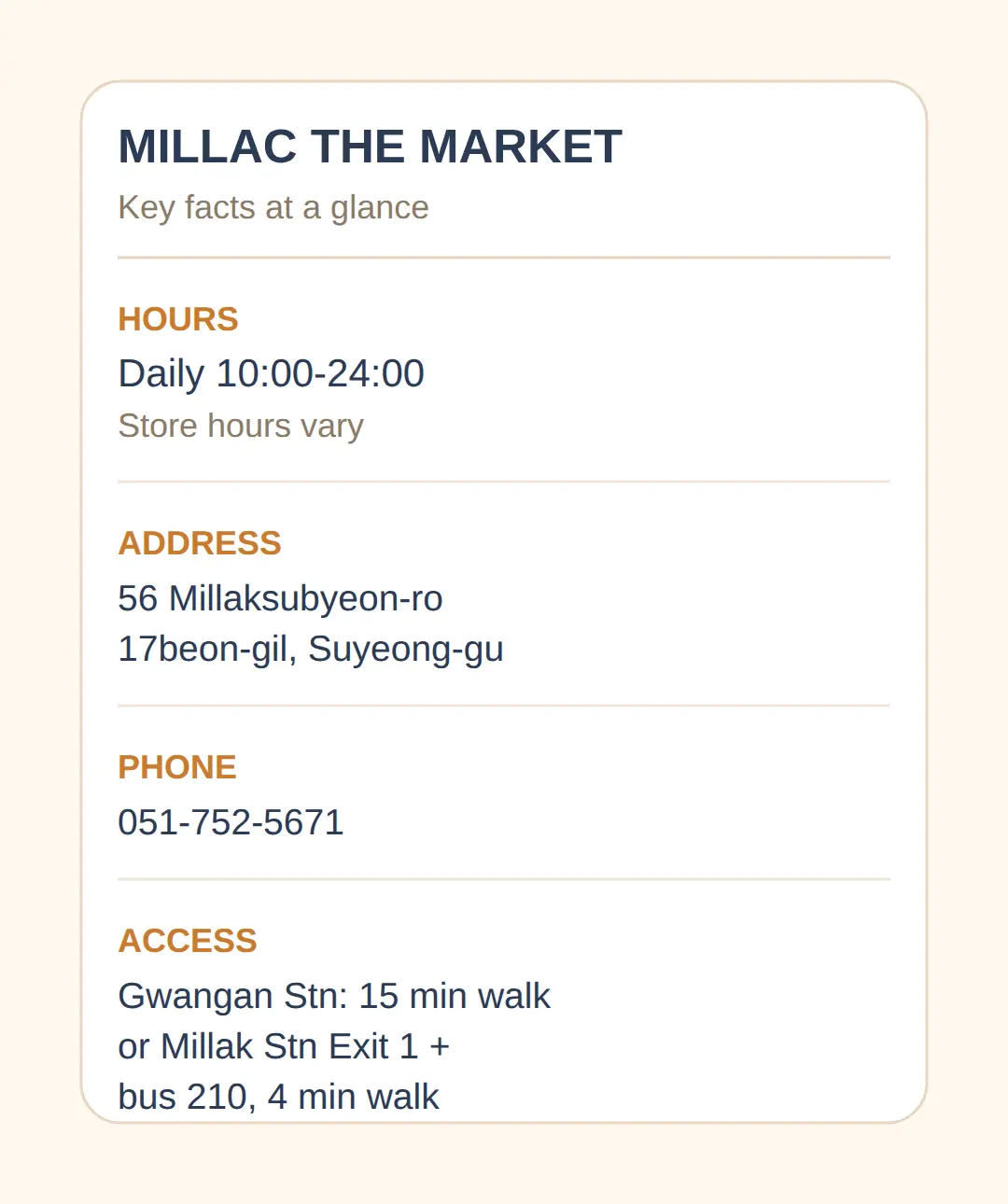
MILLAC THE MARKET, on the adjacent 7,722 m2 reclaimed site, opens daily 10:00–24:00 (individual store hours vary), per the Visit Busan shopping page.
That is 14 hours a day, which makes it the reliable indoor-ish stop when the alley cafes’ hours are unknown.
Its address is 56 Millaksubyeon-ro 17beon-gil, Suyeong-gu, Busan, and the phone number is 051-752-5671.
Access from Gwangan Station is about 15 minutes’ walk, or Metro Line 2 Millak Station Exit 1 → bus 210 from the Suyeong Hyundai Apt/Millak Station stop → get off at the Millak Landfill Public Parking Lot stop and walk 4 minutes.
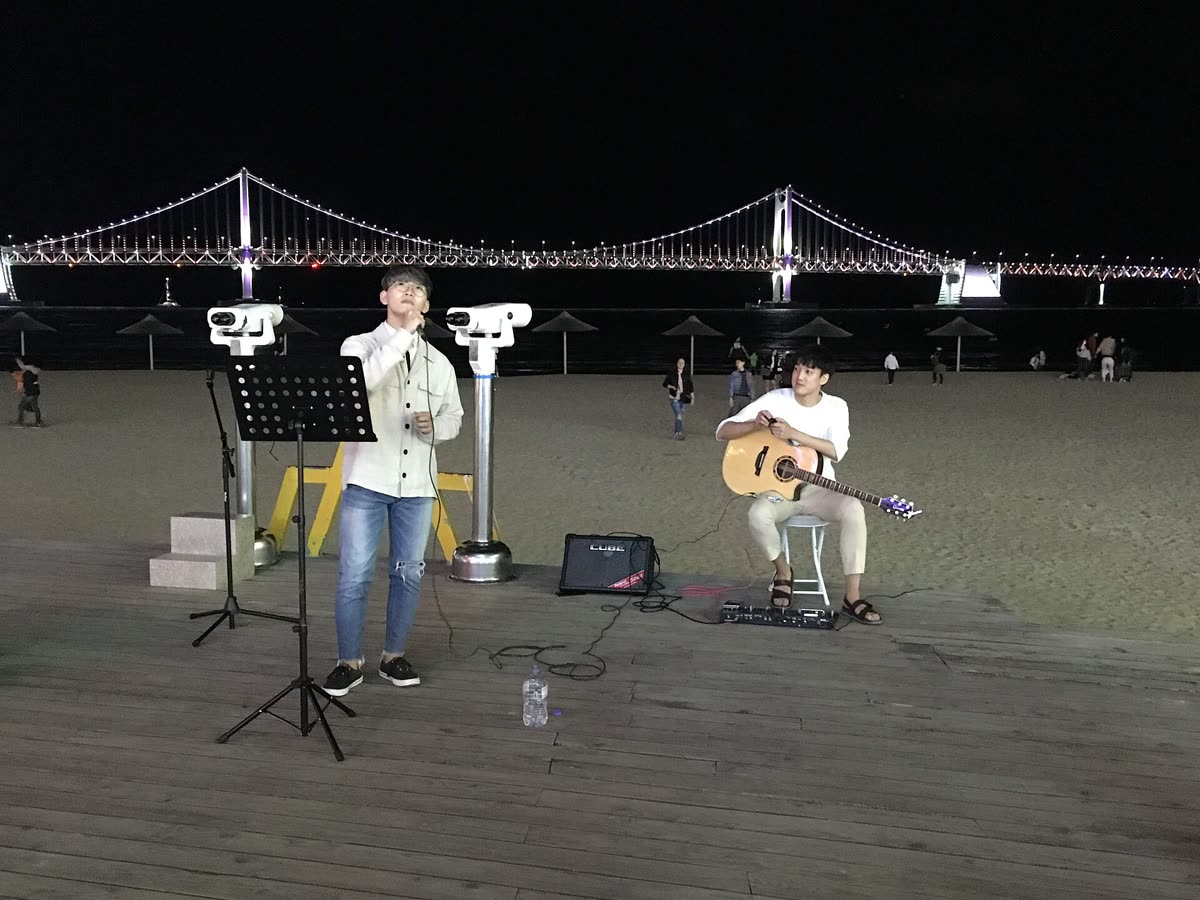
The complex is a low-rise hall with a grand stair and a curtain wall facing Gwangan Bridge, and the busking square with stand-type seating is its signature space.
The Visit Busan shopping page recommends the late afternoon or evening, because the interior is dim in the morning.
If you want a guaranteed open time and a bridge view, put MILLAC in the late afternoon and let the alley cafes fill the earlier part of the day.
Parking at Millak-dong: What It Costs
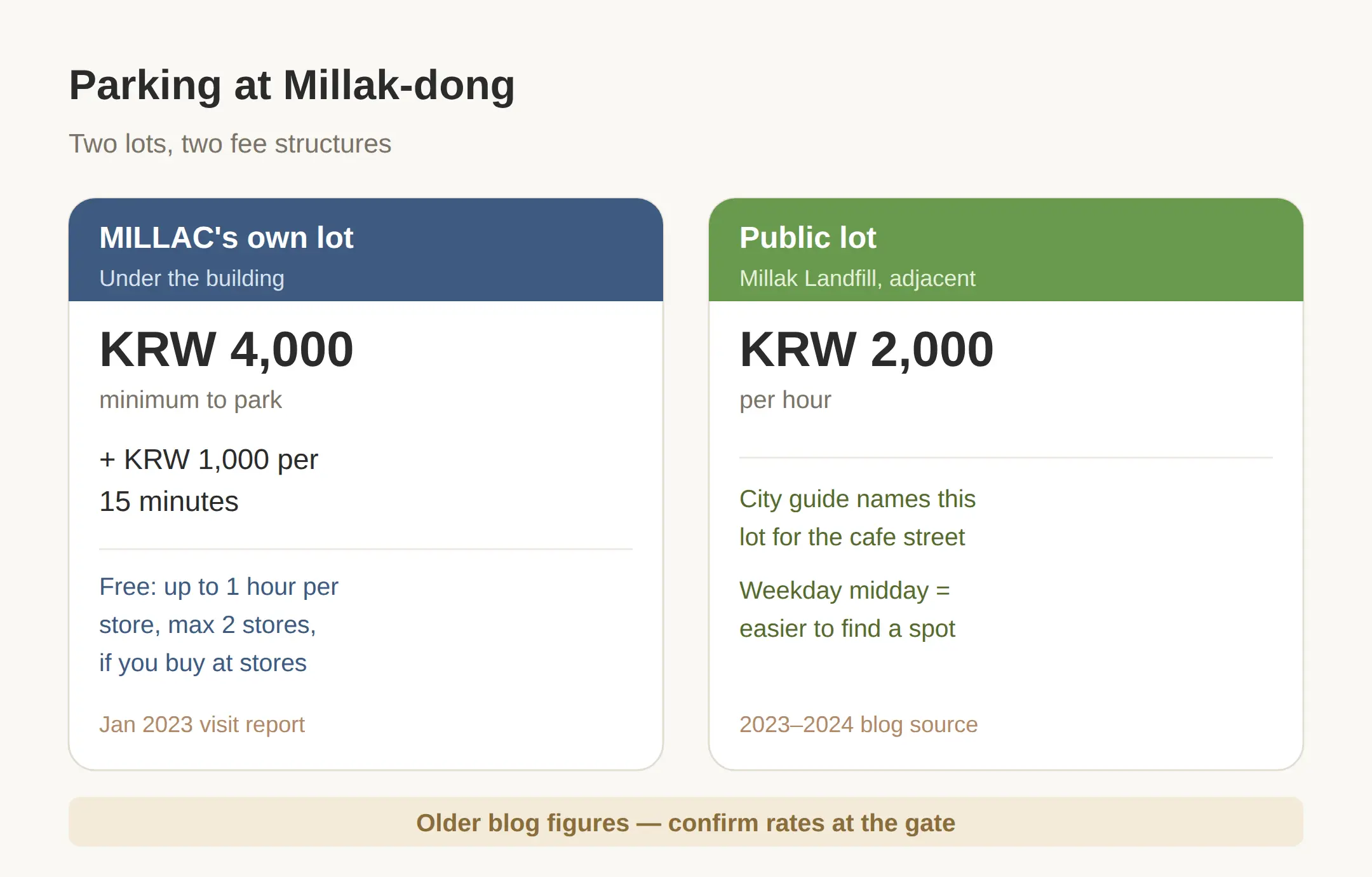
Two parking options sit next to each other — MILLAC’s own lot under the building, and the public Millak Landfill Parking Lot the city guide names for the cafe street.
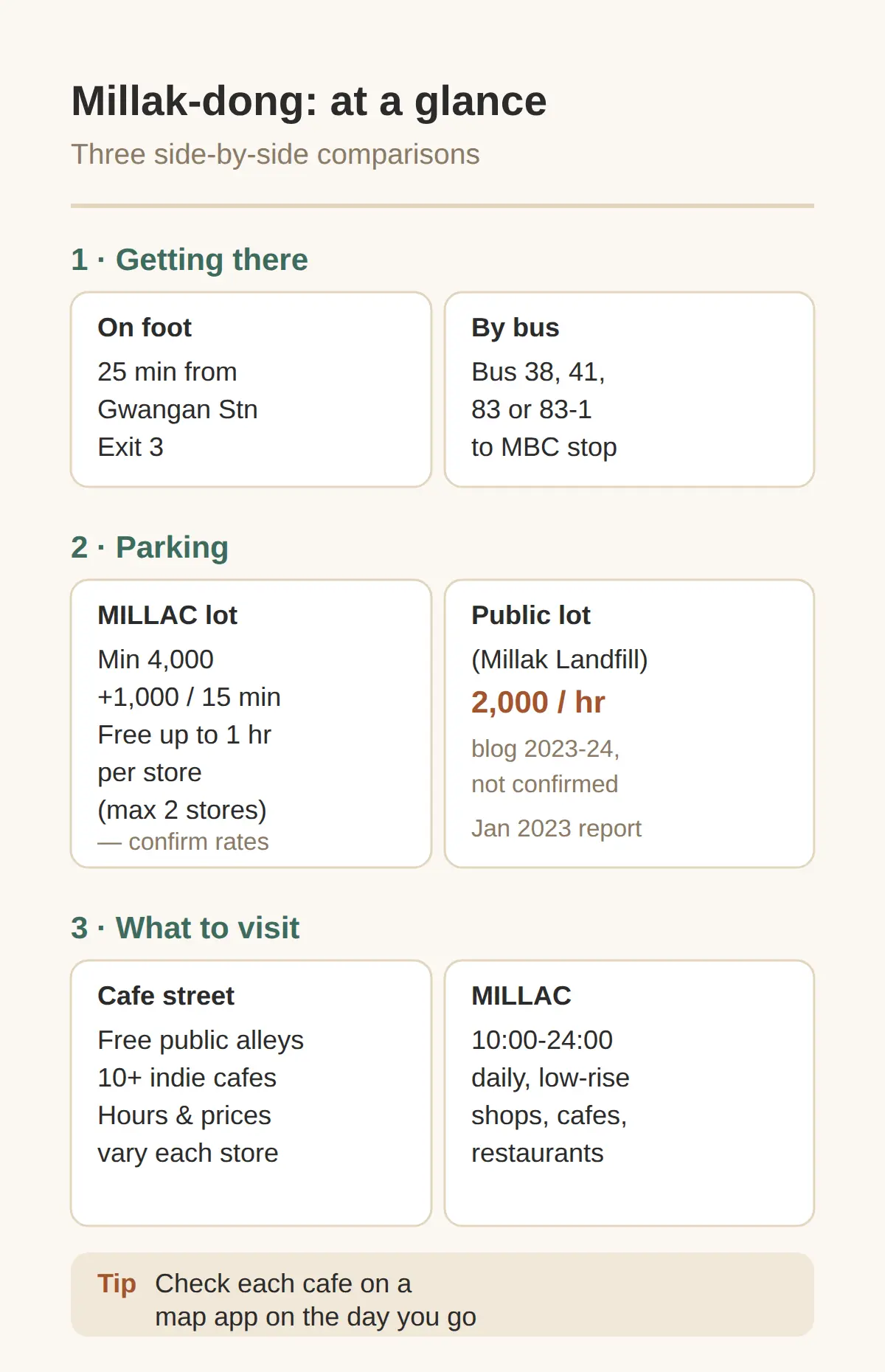
A January 2023 visit report lists MILLAC’s lot at a minimum of KRW 4,000, then KRW 1,000 per 15 minutes, with free registration of up to 1 hour per store (max 2 stores) if you buy at participating stores.
A blog source dated 2023–2024 lists the adjacent public lot at KRW 2,000 per hour.
Both figures come from older blog reports, not a current official page — confirm the rate at the gate before you park.
These are two different sources and two different fee structures, so treat them as separate numbers rather than one merged price list.
The MILLAC rule matters most at weekend lunchtime: the same report notes the market lot gets congested on weekends and popular restaurants have long waits.
If your plan is the cafe street rather than MILLAC, the public lot is the one the city guide itself points to; drive at midday on a weekday if you want a spot without waiting.
Where to Eat and How It Fits a Busan Day
The city guide names two eateries near the street.
| Place | What it’s known for |
|---|---|
| Yoikuma | Tendon with seasonal fried ingredients |
| Meerock Super | Creative Korean seasonal dishes |
For a wider meal plan, koreankorea.com keeps a list of places to eat in Suyeong-gu drawn from the city’s own guide.
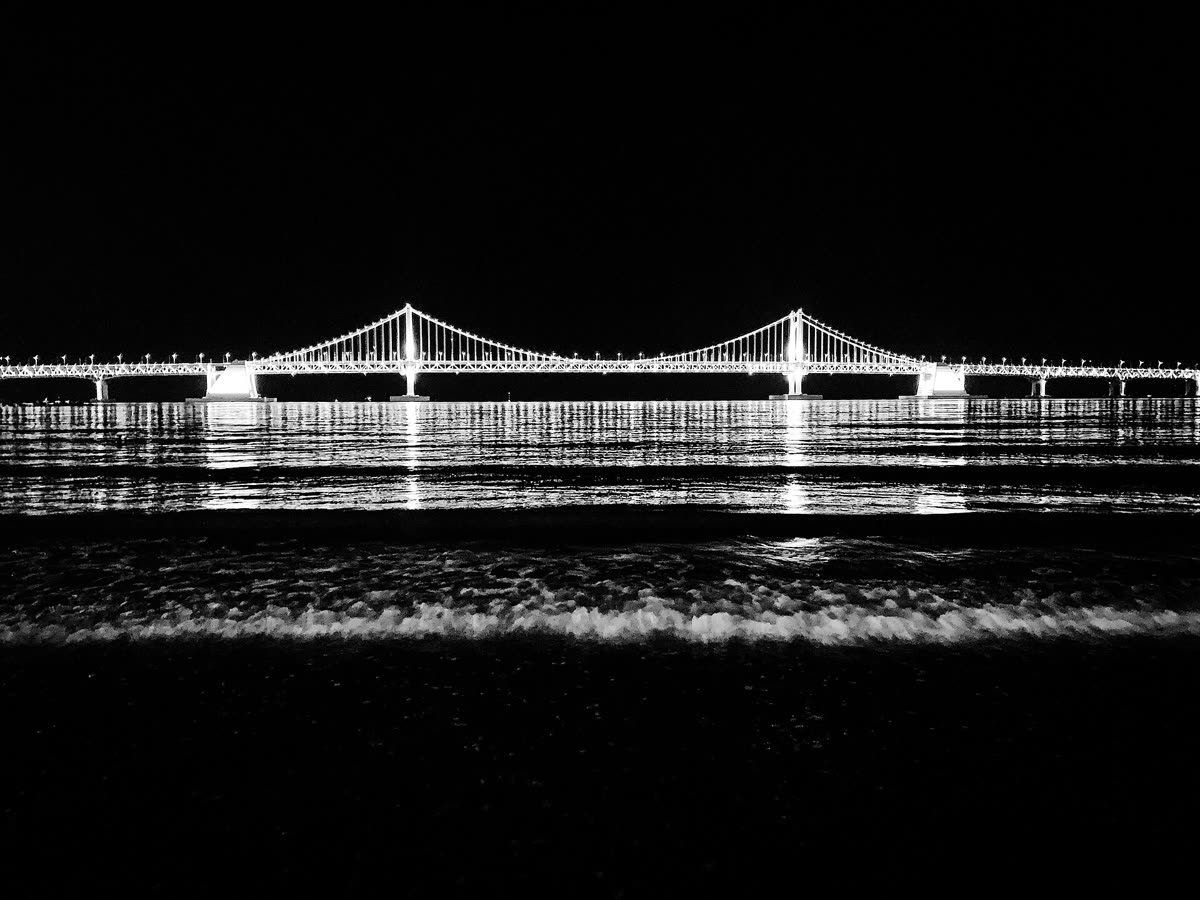
After the cafes and MILLAC, the walk back along Gwangalli Beach closes the loop — the street, the beach and the bridge are all within the same 25-minute radius from Gwangan Station.
The first thing I check for a street of independent cafes is whether each store’s hours and prices are actually published anywhere — here the city guide only says ‘varies each store’, so I plan around the place, not a timetable.
If you are fitting this into a day trip from Seoul, koreankorea.com carries today’s KTX timetable Seoul ↔ Busan, and a Gwangalli-plus-cafe-street loop fits comfortably in an afternoon and evening.
Pair the street with the beach for the daytime half and MILLAC’s busking square for the evening half; that order also matches the lighting the shopping page recommends.
I would take the metro to Gwangan Station and walk the 25 minutes along the coast, because the approach past the Millak-dong Raw Fish Street gives you the beach first and the alleyways after.
👉 today’s KTX timetable Seoul ↔ Busan
👉 Busan Metropolitan City’s English guide — Millak-dong Cafe Street
👉 Visit Busan shopping page — MILLAC THE MARKET
Related posts
📎 📅 Upcoming Dates — Release & Event Calendar
Sources
- City guide themed trip: location, 10+ cafes, named cafes, ac (visitbusan.net)
- Dim interior, best late afternoon/evening; sunlit glass squa (visitbusan.net)
- complex cultural space, 2022 opening, busking square, access (magazine.brique.co)
Summary
- Free public alley near Gwangalli Beach; 10+ independent cafes with per-store hours and prices
- Check each cafe’s hours and closing day before you go — the city guide only says ‘varies each store’
- MILLAC THE MARKET next door runs daily 10:00–24:00; visit the busking square in the late afternoon
- Parking fees from blog reports are dated 2023–2024 — confirm at the gate
- Plum-blossom framing is from a spring guide piece; the painted alleys and cafes are year-round
FAQ
Q. How do I get to Millak-dong Cafe Street in Busan?
Take Metro Line 2 to Gwangan Station Exit 3 and walk 25 minutes toward Gwangalli Beach, or take bus 38, 41, 83 or 83-1 and get off at the Busan MBC stop (city guide, September 27, 2026).
Q. When is Millak-dong Cafe Street open?
The alley is a free public street you can walk at any time; each cafe sets its own hours and closing days — the city guide lists both as ‘varies each store’.
Q. What does Millak-dong Cafe Street cost?
Nothing to enter — it is a public street. Each cafe charges its own prices, which the city guide also lists as ‘varies each store’.
Q. What is there to do around Millak-dong besides the cafes?
MILLAC THE MARKET next door opens daily 10:00–24:00 with a busking square facing Gwangan Bridge, best in the late afternoon or evening; Gwangalli Beach and Millak-dong Raw Fish Street are on the walking route.
Before you go, check your cafe’s name on a map app — per-store hours are the one thing no city page lists.
Cover photo: Construction in Centum City by netstrolling — CC BY 2.0
#Busan #Millak-dongCafeStreet #Gwangalli #Suyeong-gu #MILLACTHEMARKET #Koreatravel
📅Upcoming Schedule — this week 23 · D-1 Autumn season = post-summer brightening demand window (UV drSee all →