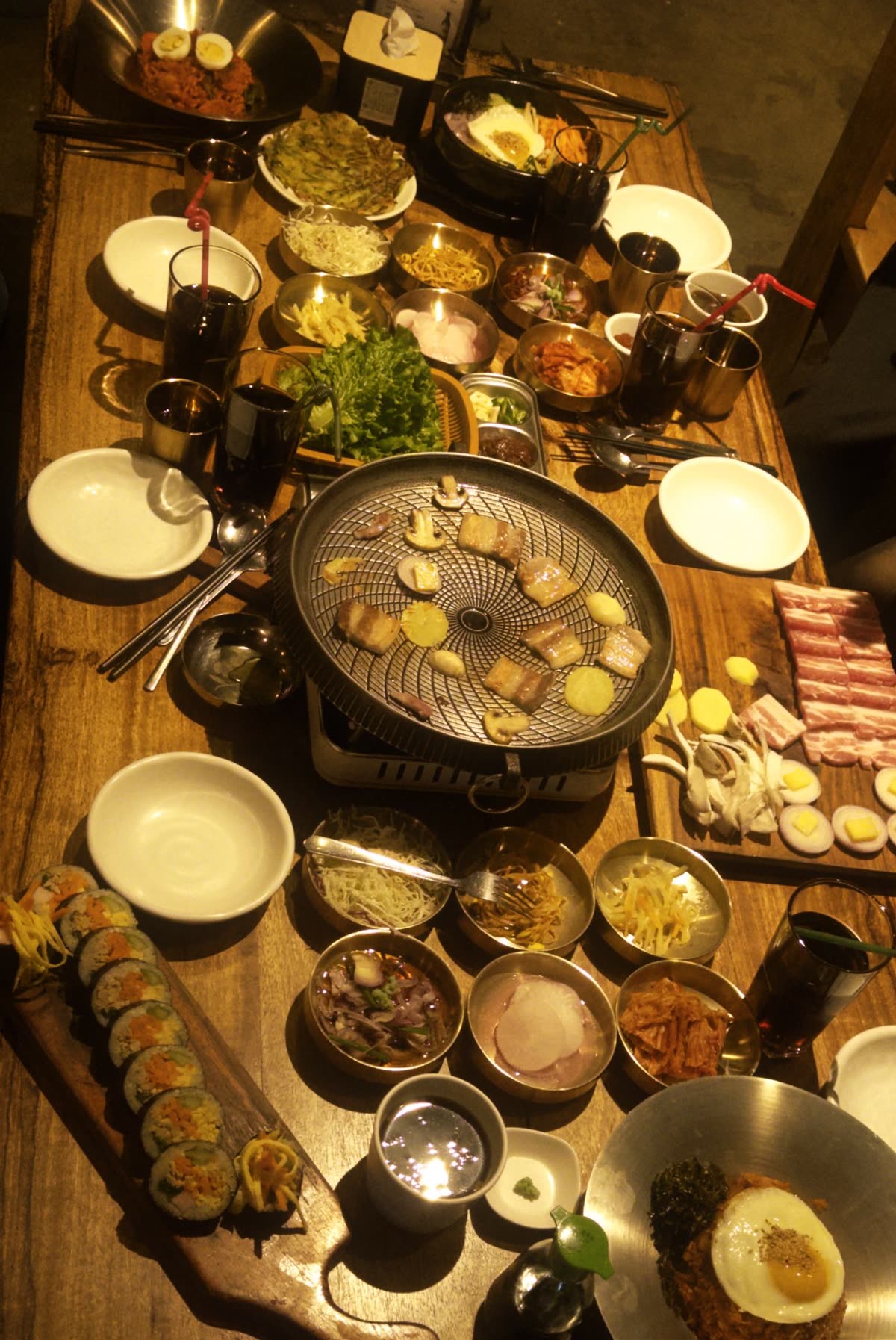
For Korean BBQ you need: a beef cut (bulgogi or galbi), lettuce or perilla for wraps, ssamjang, kimchi, garlic, rice, sesame oil, soy sauce, sugar, and pear for the marinade.
If you live outside Korea, most of those items are at H Mart or a regular supermarket, and the few that are not have documented swaps.
This page gives the full checklist with swap columns, the homemade ssamjang ratio, the thin-slicing method for beef, and where to buy each item.
What Ingredients Do You Need for Korean BBQ — The Full Checklist
| Main protein | Bulgogi or galbi cut, pre-sliced — swap: chuck roll or ribeye, frozen 1–2 hours and sliced thin |
|---|---|
| Wrapping greens | Kkaennip (perilla leaf) and lettuce — swap: romaine or green leaf lettuce, texture is slightly different |
| Dipping paste | Packaged ssamjang — swap: doenjang + gochujang mixed about 2:1 plus sesame oil, garlic, sugar |
| Kimchi | Any store kimchi — no swap needed, stocked at Korean marts and many large supermarkets |
| Garlic | Fresh garlic, served raw on the grill or pickled (maneul-jangajji) — no special product needed |
| Rice | Any short-grain rice — no swap needed |
| Sesame oil | Marinade item and finishing dip mixed with salt and pepper — stocked at most large supermarkets now |
| Item | Role on the table | Buy or swap abroad |
|---|---|---|
| Galbi or bulgogi cut | The main protein | Swap: chuck roll or ribeye sliced thin at home |
| Lettuce / perilla (kkaennip) | Wrapping greens for ssam | Romaine or green leaf lettuce |
| Ssamjang | The dip for every wrap | Mix doenjang + gochujang + sesame oil + garlic |
| Kimchi | Standard side dish | Any large supermarket now stocks it |
| Garlic | Grilled raw slices and pickled | Fresh garlic — no special product |
| Rice | The base of the meal | Any rice works |
| Soy sauce | Bulgogi marinade base | Easy substitution level |
| Sugar | Marinade sweetness | Ordinary sugar |
| Sesame oil | Marinade plus finishing dip | Most supermarkets carry it |
| Korean pear | Marinade tenderizer | Grated Asian pear 1:1; apple as fallback |
The bulgogi marinade itself is soy sauce, sugar, pear (or apple) puree, garlic, sesame oil, black pepper, green onion, and onion — the same base listed in Maangchi’s standard bulgogi recipe.
Sesame oil does double duty: it goes into the marinade and is also the finishing dip mixed with salt and pepper.
Garlic needs no special product — restaurants grill raw garlic slices and serve soy-vinegar pickled garlic made from the same fresh bulb.
A reader outside Korea should first check which of these items the local shelf already carries, and only then plan a trip to a Korean mart for the protein and the greens.
A shredded green onion salad (pajeori) is the one standard side made entirely from regular green onions, so it needs no Korean grocery trip either.
What Can I Substitute for Perilla Leaves and Ssamjang Abroad?
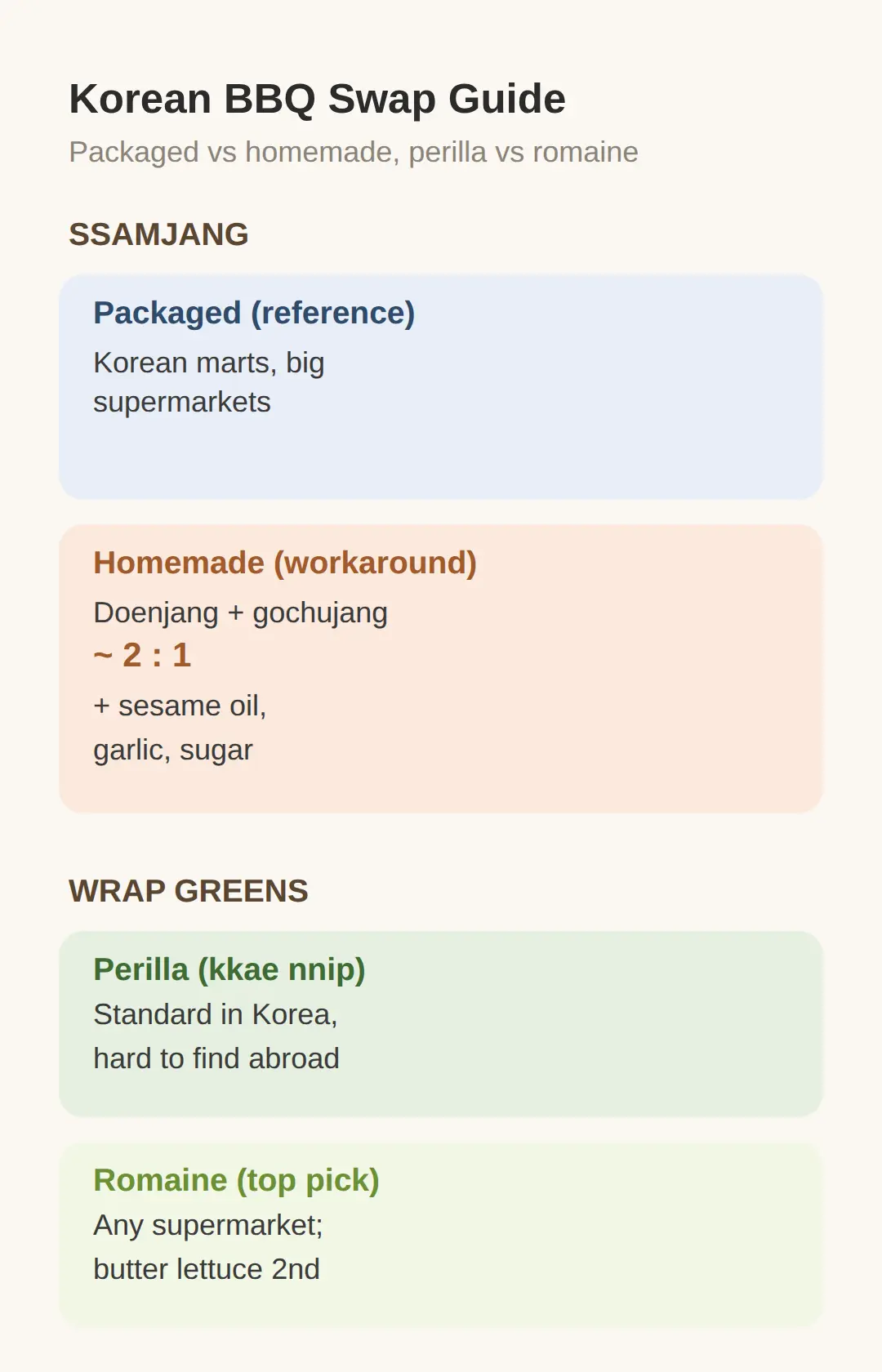
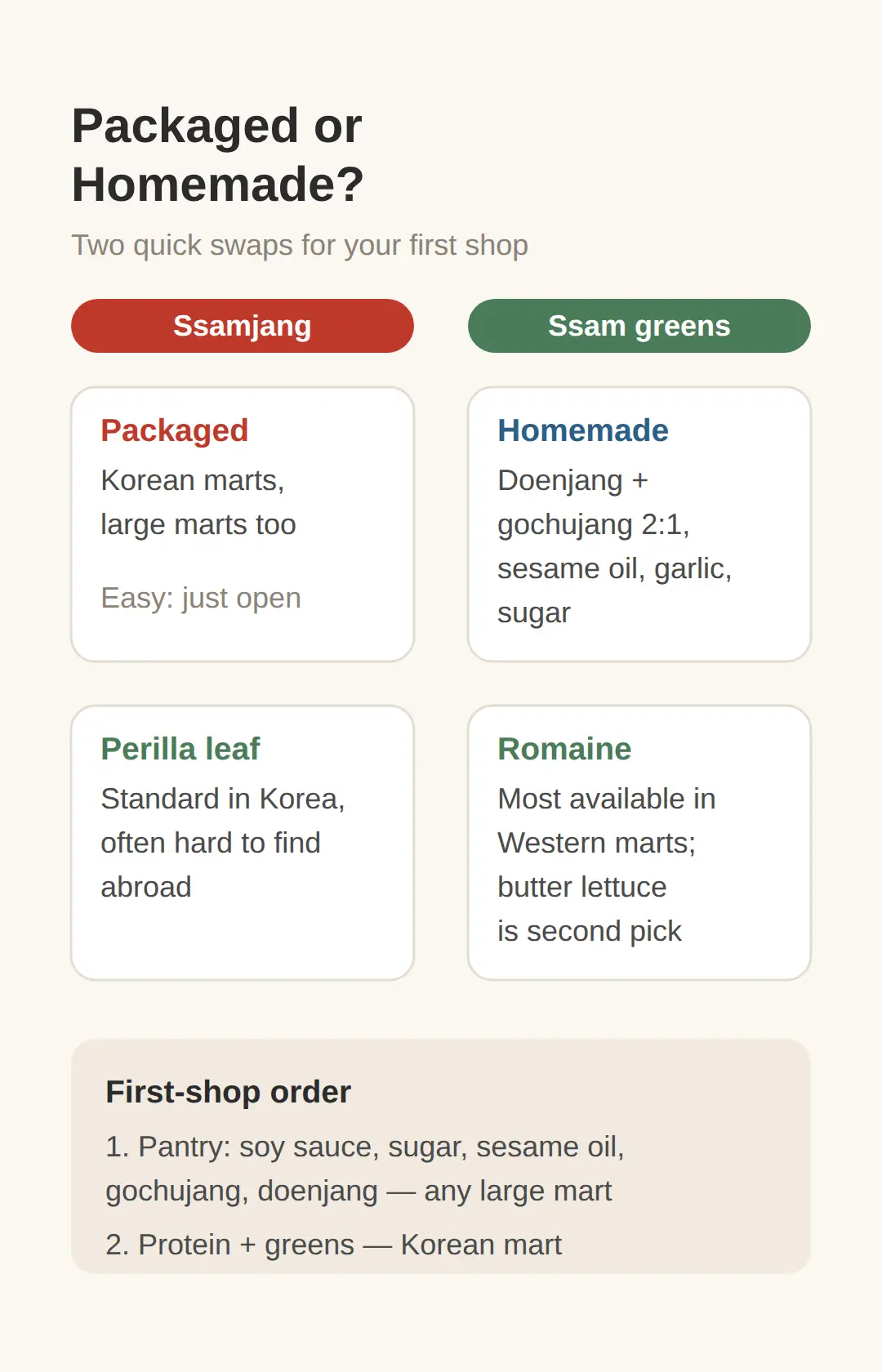
Romaine or green leaf lettuce is the common swap for kkaennip (perilla leaf), and the taste difference is texture — perilla is softer and more aromatic.
Butter lettuce is the second-choice green when romaine is sold out.
For ssamjang, mix doenjang and gochujang at about 2:1, plus a little sesame oil, garlic, and sugar.
Packaged ssamjang is still the reference taste, so treat the homemade mix as the workaround for when it is not stocked locally.
When both lettuce and perilla are unavailable, rice paper is a documented wrap alternative used abroad, though it is a home workaround rather than a restaurant standard.
If the wrap greens matter most to you, buy lettuce at any supermarket and save the Korean mart trip for the pastes.
What Cut of Beef for Bulgogi If There Is No Korean Market?
Chuck roll or ribeye sliced thin at home is the standard supermarket cut when Korean pre-sliced bulgogi is unavailable.
The slicing method is the same one documented in Korean cooking guides:
- Ask the butcher for chuck roll or ribeye, or buy the block.
- Freeze the beef 1–2 hours until firm but not solid.
- Slice thinly against the grain — thin enough to cook through in 3–5 minutes.
LA-style pre-sliced galbi cut is the harder item to find, so asking the butcher for Korean BBQ cuts is the documented alternative.
Marinade ingredients and steps stay the same either way — only the sourcing changes.
If your supermarket has a butcher counter, one request there replaces the specialist store for the protein.
Steps at a glance
-
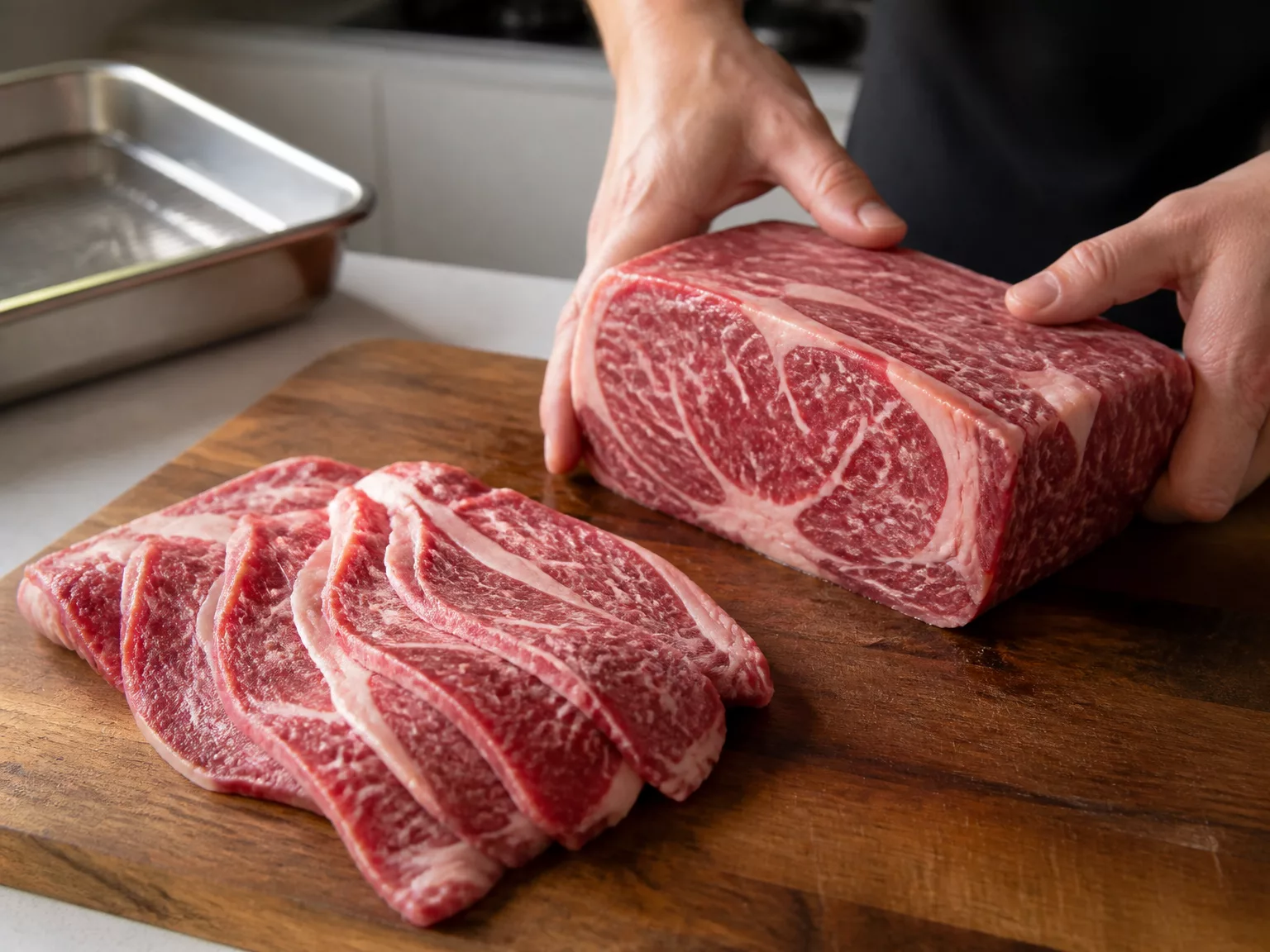 AI-generated photo
What it should look like — AI-generated image of this step, made from the recipe text — not a photo of our kitchen. 1Ask the butcher for chuck roll or ribeye, or buy the block. -
2Freeze the beef 1–2 hours⏱ 1–2 hours
-
3Slice thinly against the grain⏱ 3–5 minutes
Do I Need Korean Pear for the Bulgogi Marinade?
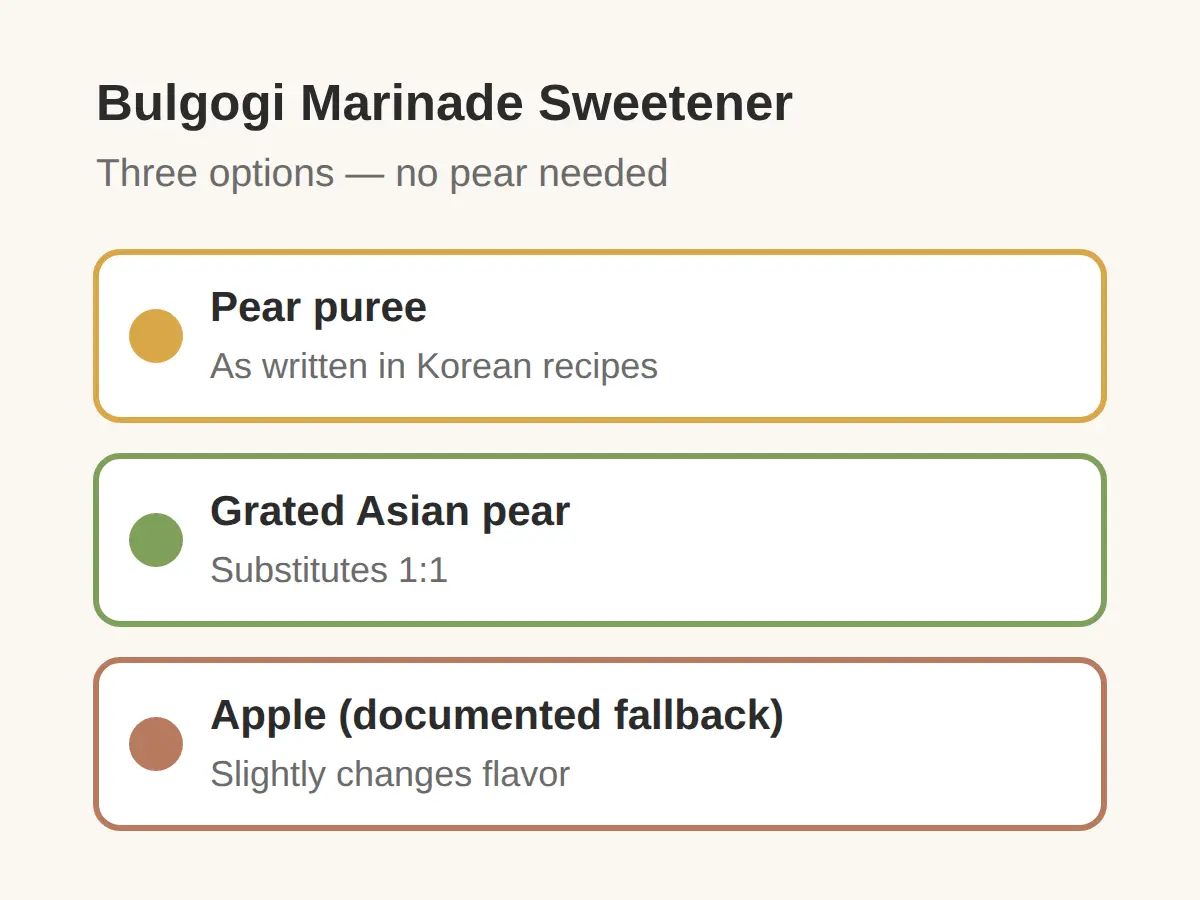
No — grated Asian pear substitutes 1:1 for pear puree, and apple is the documented fallback.
Korean recipes specify sugar or Korean pear puree as the marinade sweetener, so the choice between them is already part of the recipe, not a compromise.
Plain sugar is the third option named in recipes, which covers the case where neither fruit is on hand.
One Asian pear yields about 1 cup of puree, and one apple works in the same amount.
If your regular supermarket stocks Asian pears, use one; otherwise an apple changes the flavor slightly but nothing else in the recipe.
Where Do I Buy Korean BBQ Ingredients?
H Mart, Assi Plaza, and Korean online marts are the primary overseas stores, and gochujang and doenjang are now stocked at most large supermarkets abroad.
Costco has carried LA-galbi and ssamjang in some regions, but availability varies by country and store, so check your local warehouse before counting on it.
Large chains such as Tesco have increased their gochujang and ssamjang stock over the past few years.
No fixed per-item prices are listed here, because retailer price pages change and this round could not confirm current values from a primary page.
A practical order for a first shop: pantry items (soy sauce, sugar, sesame oil, gochujang, doenjang) from any large supermarket, then the protein and greens from a Korean mart.
Do I Need a Charcoal Grill, and How Long Does Gochujang Keep?
No charcoal grill is needed — a pan, grill pan, or electric grill cooks 4–6 oz of sliced pork belly or beef in 3–5 minutes at home.
That pan setup is the standard home substitute for the restaurant charcoal grill, and it is what the recipes themselves assume.
Gochujang keeps about 1 year unopened at room temperature, and several months refrigerated after opening.
That is the one storage fact documented here — shelf-life details for doenjang, ssamjang, and sesame oil were not confirmed this round, so the label on your jar is the better guide.
If I were shopping this list abroad, I would lead with the items any large supermarket already stocks — gochujang, sesame oil, garlic, sugar — and save the Korean mart trip for the protein and the greens, because that is where the substitution effort actually pays off.
If you grill often, an electric grill pays off; if this is a first attempt, a heavy pan is enough.
Related posts
📎 📅 Upcoming Dates — Release & Event Calendar
Sources
- Korean BBQ cited as representative everyday menu (Korea Time (koreatimes.co.kr)
- H Mart/Assi/Korean online marts cited as primary shopping ch (hmart.com)
- Costco availability (costco.com)
What to Watch Next
- Store-bought kimchi, rice, garlic, and soy sauce need no substitution — tick them off the list first.
- Freeze the beef 1–2 hours before slicing; slicing it raw and soft is the most common first-timer mistake.
- Mix ssamjang at about 2:1 doenjang to gochujang only when the packaged paste is not on the shelf.
- Refrigerate gochujang after opening; unopened it keeps about 1 year.
- Pajeori, the green onion side, uses regular green onions — no Korean mart needed.
FAQ
Q. What ingredients do you need for Korean BBQ?
Beef (bulgogi or galbi cut), lettuce or perilla for wraps, ssamjang, kimchi, garlic, rice, soy sauce, sugar, sesame oil, and pear for the marinade — most are at H Mart or regular supermarkets.
Q. What can I substitute for ssamjang and perilla leaves abroad?
Romaine or green leaf lettuce replaces perilla with a texture difference, and ssamjang can be mixed at home from doenjang and gochujang at about 2:1 plus sesame oil, garlic, and sugar.
Q. How do I slice beef thin for bulgogi at home?
Freeze chuck roll or ribeye 1–2 hours until firm, then slice thinly against the grain — the documented substitute for Korean pre-sliced cuts.
Q. Do I need Korean pear for the bulgogi marinade?
No. Grated Asian pear substitutes 1:1 for pear puree, apple is the documented fallback, and plain sugar is the third option named in recipes.
Q. How long does gochujang keep?
About 1 year unopened at room temperature, and several months refrigerated after opening.
Sister guides on this blog cover the grill setup and the three dipping sauces, so this checklist pairs with them for a full home Korean BBQ.
Cover photo: Grilled pork belly bbq — CC0 1.0
#koreanbbq #bulgogiingredients #ssamjangsubstitute #koreangroceryabroad #koreanfood101
📅Upcoming Schedule — this week 23 · D-1 Autumn season = post-summer brightening demand window (UV drSee all →