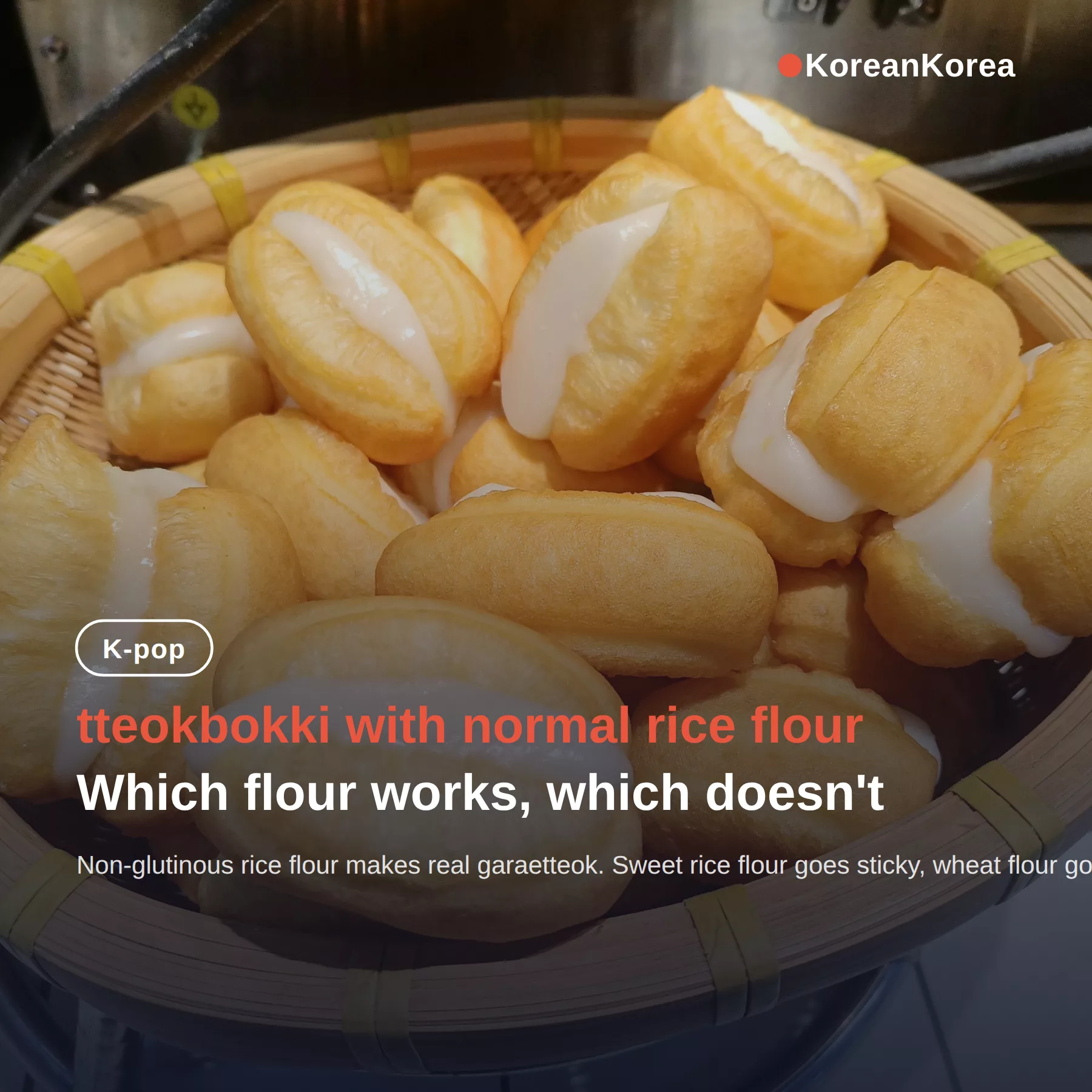
Yes — tteokbokki works with normal (non-glutinous) rice flour, and the cakes come out softer and more breakable than the store-bought ones.
That means the chewy bounce is a little gentler, so the flour choice and two extra steps decide whether your cakes hold together in the sauce.
This post covers which bag to buy, what goes wrong with sweet rice flour or wheat flour, the hot-water dough method, and when to just buy frozen cakes.
Contents
- Which rice flour makes real tteokbokki cakes
- Normal rice flour vs glutinous rice flour vs wheat flour
- How to make tteokbokki cakes with normal rice flour
- Store-bought tteok vs homemade: when the shortcut wins
- Where to buy the right rice flour abroad
Which rice flour makes real tteokbokki cakes
The tteokbokki cake itself is called garaetteok, and the traditional version is made from rice that is soaked, ground, and pressed into rice powder.
That rice powder is non-glutinous rice — not the sweet rice flour labeled chapssal-garu or mochiko that fills Asian-market shelves abroad.
Korea.net’s official food series describes tteokbokki as rice cakes simmered in gochujang sauce, so the cake, not the sauce, is the part that decides whether the dish reads as tteokbokki.
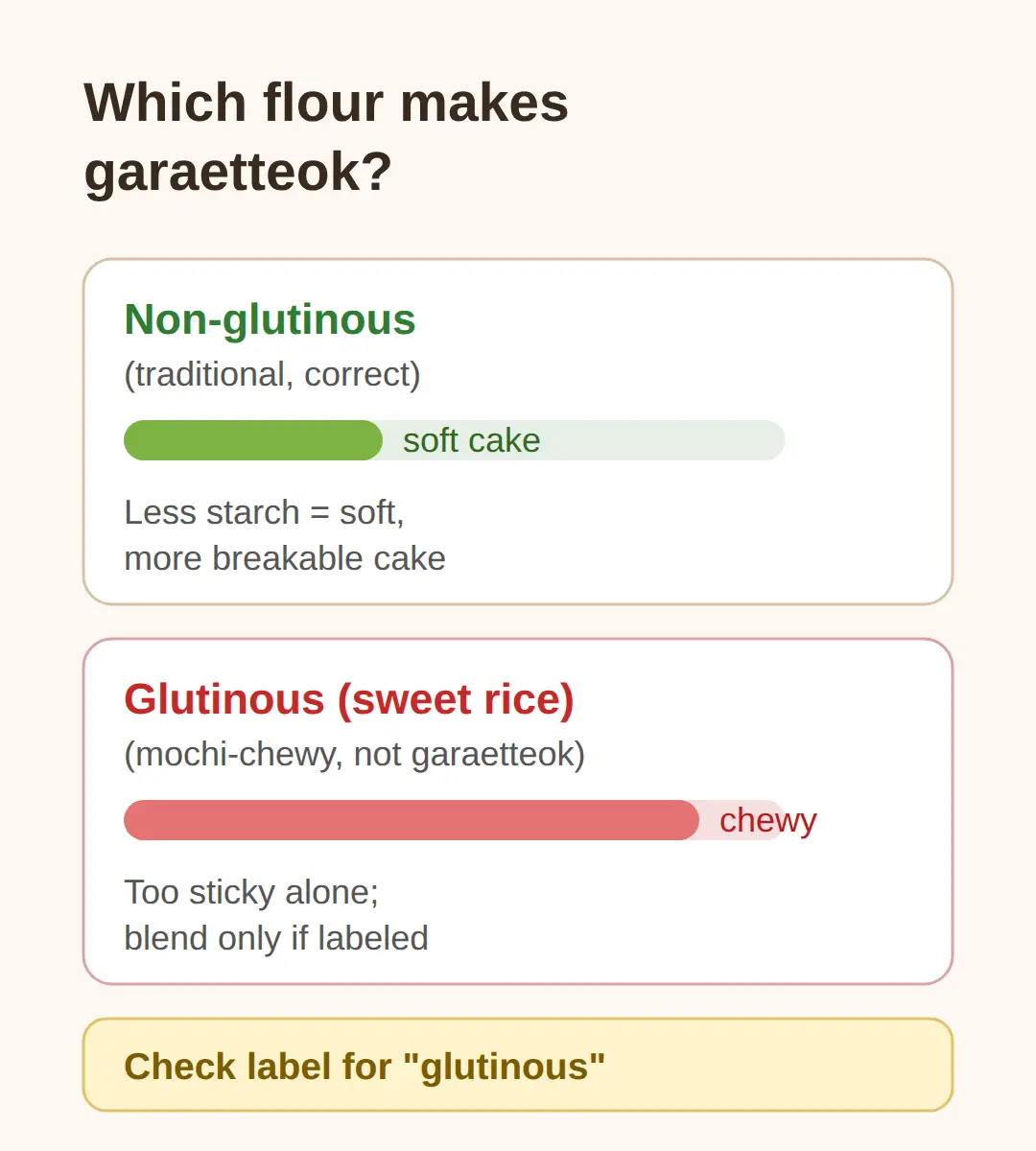
Non-glutinous rice flour gives a softer, more breakable cake, because it carries less of the starch that makes dough stretchy and chewy.
Glutinous flour is mostly that starch, so it gives chewier, more elastic cakes, but a dough made from it alone gets too soft and sticky to roll into a cylinder.
When a bag abroad only says sweet rice flour or sweet white rice flour, check for the word glutinous on the label before you buy it.
If the label says glutinous, that bag makes mochi-chewy cakes, not garaetteok, and you should keep looking for a bag labeled non-glutinous rice flour or sweet white rice flour to blend with it.
| Non-glutinous rice flour (ssalgaru) | Yes — softer, lighter, slightly breakable; the standard home fix |
|---|---|
| Glutinous / sweet rice flour (chapssal-garu, mochiko) | Not alone — too soft and sticky to hold a cylinder shape |
| 1:1 blend of glutinous and non-glutinous | Chewier cakes, keeps shape |
| All-purpose wheat flour | No — dumpling texture, not a rice cake; sauce thickener only |
Normal rice flour vs glutinous rice flour vs wheat flour
Normal (non-glutinous) rice flour is the only one of the three that makes a proper garaetteok-style cake.
Glutinous sweet rice flour and wheat flour both fail, but in opposite directions: glutinous goes sticky and loses its bite, while wheat flour never becomes a rice cake at all.
All-purpose wheat flour makes a dumpling-like dough, not the chewy-rice texture, so keep it out of the cake entirely.
Wheat flour does show up in some Korean street and restaurant versions of tteokbokki, but only as a small amount of thickener stirred into the gochujang sauce so it clings to the cakes.
Wheat-flour cake variants like mil-tteokbokki exist too, but they are a different dish family from rice-cake tteokbokki.
So if your sauce is loose, a little wheat flour in the sauce is authentic; in the dough it is a different dish.
If you want the chewy bounce of store-bought cakes, use a 1:1 blend of glutinous and non-glutinous rice flour, and if you want the light, soft homemade version, use non-glutinous rice flour on its own.
👉 Bulgogi recipe: why Asian pear makes the marinade, and what to use instead
How to make tteokbokki cakes with normal rice flour
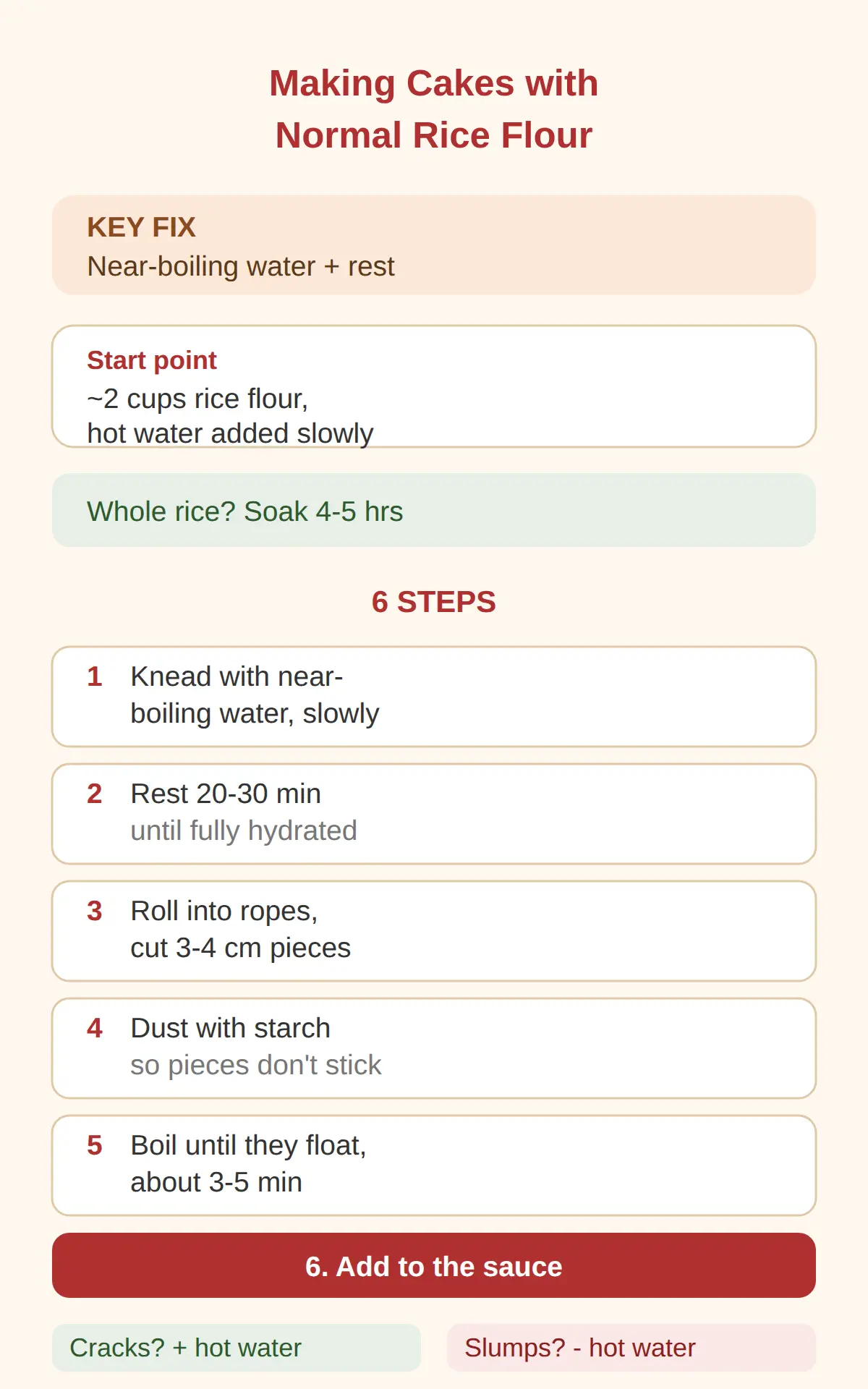
The fix for soft, crumbly non-glutinous dough is very hot water and a rest, and the method itself is short.
Using near-boiling water instead of cold water gelatinizes the starch, so the dough turns pliable instead of crumbly.
Commonly cited starting point is about 2 cups of rice flour with hot water added gradually — add it slowly, because too much water makes mushy cakes and too little makes them crack.
- Soak non-glutinous rice for 4–5 hours if starting from whole rice, or start from non-glutinous rice flour directly.
- Knead the flour with very hot (near-boiling) water, added gradually, until a pliable dough forms.
- Rest the kneaded dough for about 20–30 minutes so the flour fully hydrates before shaping.
- Roll the dough into finger-thick ropes and cut into 3–4 cm (about 1.5 inch) pieces.
- Dust the cut pieces with a little starch or rice flour so they don’t stick together.
- Boil fresh cakes in water until they float — roughly 3–5 minutes — then add them to the sauce.
If your ropes crack while rolling, the dough needs a bit more hot water; if it slumps, it has too much, and the next batch should hold the water back.
Store-bought tteok vs homemade: when the shortcut wins
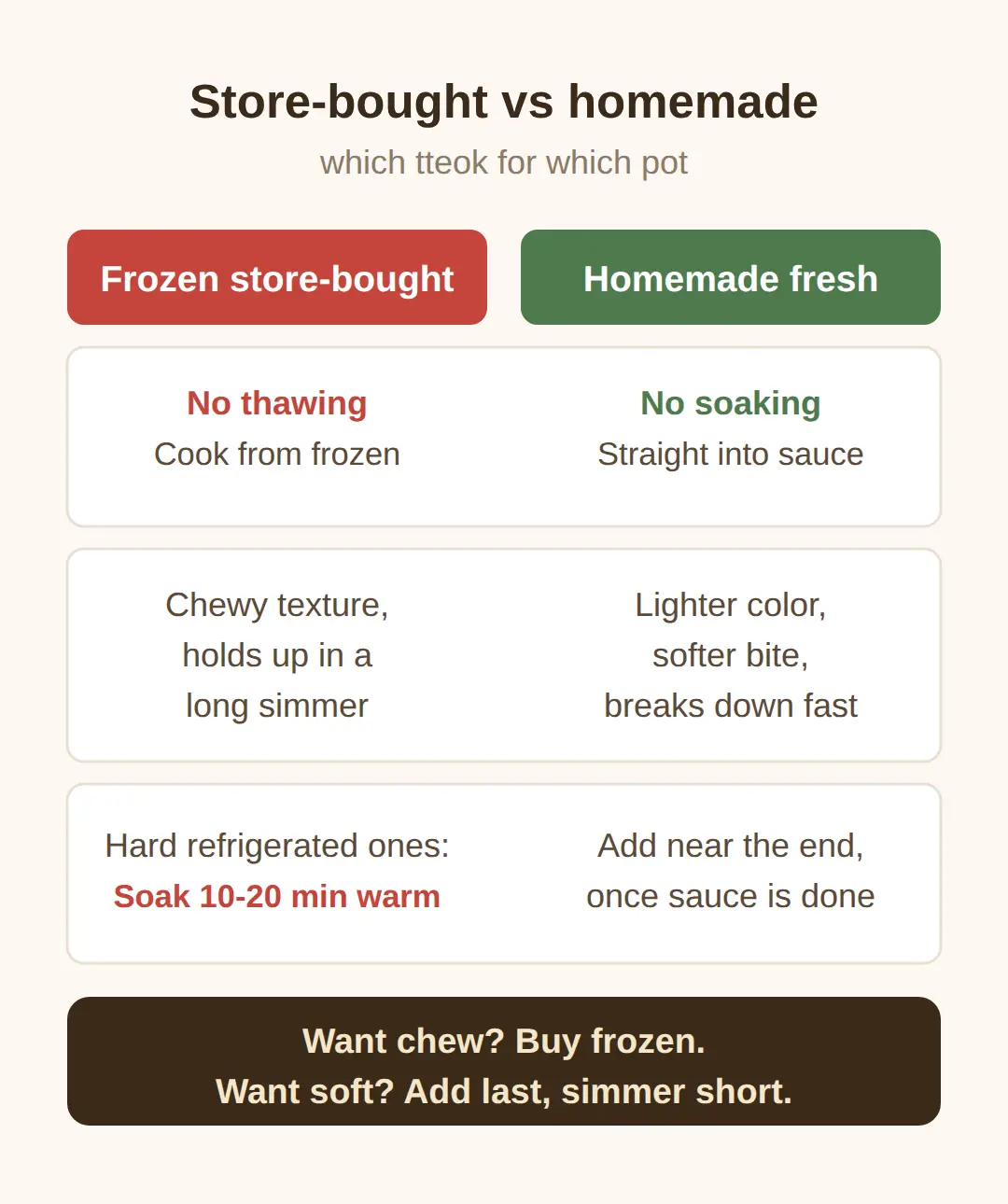
Packaged frozen rice cakes can go straight into your recipe with no dough work, and that shortcut is a valid choice, not a compromise.
Frozen store-bought or homemade tteok cooks directly from frozen without thawing, because thawed cakes turn gummy.
Fresh homemade cakes need no soaking either and go right into the sauce, while hard refrigerated store-bought ones benefit from a 10–20 minute soak in warm water first.
Homemade non-glutinous cakes are lighter in color and softer than commercial garaetteok, and they start to soften and break down if they simmer too long in the sauce.
That is why they go in near the end of cooking, once the sauce is already done.
If your homemade batch is meant for a big pot that sits simmering on the stove, the store-bought frozen cakes hold up better.
If you want the chewy commercial texture with minimal risk, buy frozen garaetteok; if you want the softer homemade version, keep the simmer short and add the cakes last.
👉 Doenjang jjigae recipe — 75g doenjang per 700g rice water, the official Korea.net ratio
Where to buy the right rice flour abroad
Korean grocery stores abroad stock both ssalgaru (non-glutinous rice flour) and chapssal-garu (glutinous sweet rice flour), usually side by side in the same aisle.
The common first-timer mistake is grabbing a bag labeled sweet rice flour or mochiko, which is the glutinous kind, not the flour garaetteok needs.
Any Asian market’s glutinous sweet rice flour still works if you blend it 1:1 with a non-glutinous flour, so a wrong bag is recoverable.
The label is the only reliable guide: the bag needs to say non-glutinous, or you plan for a blend.
Whether the plain rice flour in Western supermarket baking aisles is non-glutinous varies by brand, so check the label there too.
If only glutinous flour is available where you shop, plan your batch around a 1:1 blend once you can get non-glutinous rice flour, since 100% glutinous dough is too soft and sticky to hold a cylinder shape.
Related posts
📎 Easy Tteokbokki Recipe with Gochujang: 2 Tbsp per 500ml, 20 Minutes, One Pan
📎 Samgyetang Recipe: Fight Summer Heat With a Boiling Soup, Not Ice
📎 📅 다가오는 일정 — 발매·개봉·발표 캘린더
Sources
- Official definition of tteokbokki as rice cakes simmered in (korean-culture.org)
- Cook frozen tteok straight from freezer without thawing (mykoreankitchen.com)
What to remember
- Non-glutinous rice flour makes real garaetteok-style cakes; sweet rice flour alone goes sticky and wheat flour makes dumplings.
- Knead with near-boiling water and rest the dough 20–30 minutes to stop the cracking.
- Boil fresh cakes until they float, about 3–5 minutes, and add them to the sauce last.
- Frozen store-bought cakes cook straight from frozen — never thaw them first.
FAQ
Q. Can I make tteokbokki with normal rice flour?
Yes. Non-glutinous (normal) rice flour makes real garaetteok-style cakes. They come out softer and more breakable than commercial ones, so knead with hot water, rest the dough 20–30 minutes, and add the cakes to the sauce at the end.
Q. What is the difference between glutinous and normal rice flour for tteok?
Normal non-glutinous rice flour gives a softer, lighter, more breakable cake. Glutinous sweet rice flour (chapssal-garu, mochiko) gives more chew but goes too soft and sticky on its own to hold a cylinder shape, so it is usually blended with non-glutinous flour instead of used alone.
Q. Can I use normal wheat flour for tteokbokki cakes?
No. Wheat flour makes a dumpling-like dough, not a chewy rice cake. Its only accepted role is a small amount of thickener stirred into the gochujang sauce in some Korean street and restaurant versions.
Q. Why did my homemade tteokbokki cakes fall apart in the sauce?
Cakes made from non-glutinous rice flour soften and break down in prolonged simmering. Boil them separately until they float, then stir them into the finished sauce and serve soon after.
Q. Can I freeze homemade tteokbokki rice cakes?
Homemade tteok is commonly frozen raw on a tray and then bagged. Cook from frozen without thawing, since thawed cakes turn gummy. Double-check this step against the recipe you follow before relying on it.
Cooking the sauce too? The gochujang sauce post on this blog covers the simmer, sweetness level, and add-ins that go with these cakes.
Cover photo: Rice cake with fried dough sticks by Fumikas Sagisavas — CC0 1.0
#tteokbokki #riceflour #garaetteok #Koreanfoodabroad #homemadetteok #gluten-free
📅Upcoming Dates — 이번 주 16 · D-day 'The Scandal' global Netflix release전체 보기 →