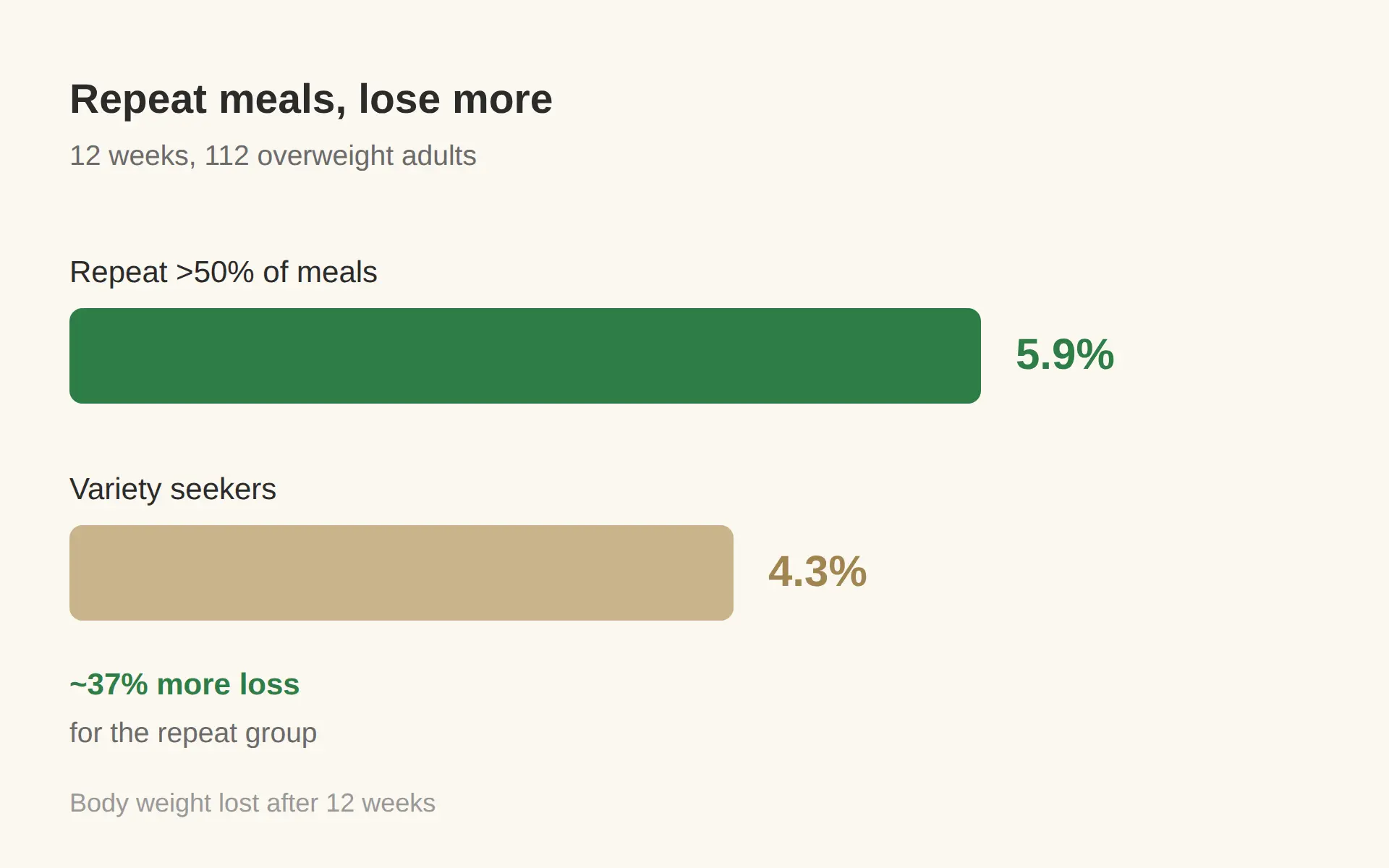
Korean food can help with weight loss: in a 12-week study, people who repeated more than half their meals lost 5.9% of body weight versus 4.3% for people who sought variety.
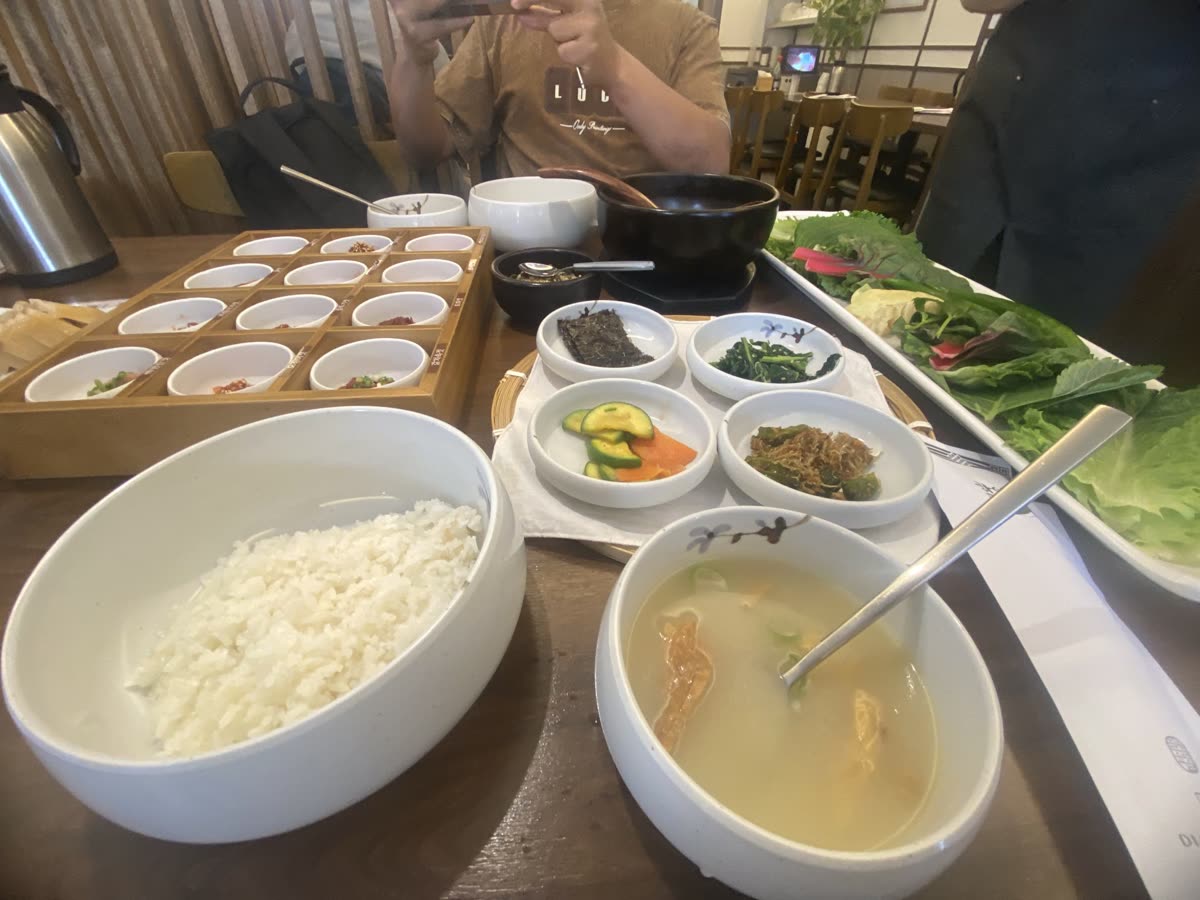
For a reader eating rice-based meals, that means the meal structure itself — rice, soup, small vegetable side dishes — already works in your favor, and what decides the result is the rice portion, the salt, and the clock.
This post answers the question with the study numbers, the meal-timing data, the fasting comparison, the spicy-food reality and where tteok desserts change the picture.
Contents
- Is Korean food good for weight loss? The 5.9% answer on rice and timing
- Does when you eat matter more than what you eat?
- Intermittent fasting or eating less — which should you pick?
- Does spicy food burn fat? The real numbers
- Rice, kimchi and tteok — where the calories actually are
Is Korean food good for weight loss? The 5.9% answer on rice and timing
Yes, with conditions: the repeat-meal study shows the structure works, and rice portion plus sodium decide whether it works for you.
In a 12-week study of 112 overweight adults, people who repeated more than half their meals lost 5.9% of body weight, versus 4.3% for those who sought variety — about 37% more loss for the repeaters.
Repeating a simple, balanced meal structure makes eating less easier without counting calories, because a fixed structure removes daily food decisions.
It is not a single-food diet like eating only bananas — the repeat group kept a balanced structure and simply stopped reinventing every meal.
The weight-loss-friendly core of a Korean meal is its vegetable side dishes and fermented staples like kimchi and doenjang, which are low in calories per dish; the rice portion and the sodium level are what decide the outcome.
When judging whether a Korean meal helps weight loss, my first three checks are the rice portion, the sodium in the side dishes and soups, and what time dinner happens — not the dish’s name.
| Repeat more than half of meals (12 weeks, 112 adults) | 5.9% body weight lost |
|---|---|
| Seek variety at most meals (same 12-week study) | 4.3% body weight lost — about 37% less than repeaters |
| Intermittent fasting, 3 days/week (6 months, 209 adults) | About 7kg lost |
| Eat 70% of usual calories (same 6-month trial) | About 7kg lost — no real difference from fasting |
| 8-hour eating window, 12pm–8pm (16 weeks, 337 adults) | Body weight down 4.6%, liver fat down 23.7% — no diet change |
Does when you eat matter more than what you eat?
For the same food, earlier eating wins: the women with the lowest BMI ate breakfast around 7:30am and kept at least 10.5 hours between dinner and the next breakfast.
That comes from a 5-year study that followed about 7,000 adults aged 40–65, and the pattern held for earlier dinner and earlier breakfast across the group.
The reason is biological: insulin sensitivity and appetite hormones follow the daylight cycle, so the same food eaten late at night is more easily stored as fat.
This is not 16:8 fasting — the early-dinner, early-breakfast approach keeps all three meals and only shifts the clock, which makes it easier to keep doing than skipping food for 16 hours.
One Korean trial put the timing idea to a harder test: 337 overweight adults ate only between 12pm and 8pm for 16 weeks, changed nothing else about what they ate, and still cut liver fat 23.7% and body weight 4.6%, against 0.7% weight loss in the group that carried on as before.
If your dinner lands after 9pm, moving it earlier is the single change to try first — keep breakfast, do not drop it.
👉 Is Korean Food Sweet? The Answer Depends on the Dish, Not the Cuisine
Intermittent fasting or eating less — which should you pick?
Either one works about the same, so pick whichever you can keep doing.
In an 18-month trial of 209 adults with obesity, the fasting group ate 30% of their daily calories between 8am and noon on 3 non-consecutive days a week, and the other group ate 70% of their usual calories every day.
Both lost about 7kg at 6 months.
Both gained part of it back: by 18 months the fasting group had kept off 4.4kg and the calorie-cutters 5.2kg — a difference too small to rule out chance, and the regains worked out to roughly 3kg and 1.8kg respectively.
The two diets got there by different routes — calorie cutting reduced binge-eating urges and increased conscious control, while fasting worked without major behavior change — so the right one depends on which friction you tolerate better.
If strict rules on certain days suit you, fasting fits; if you would rather eat a little less every day, that route held up just as well.
Does spicy food burn fat? The real numbers
Spice is a small bonus and a big sodium trap, not a fat-burning method.
Capsaicin, the heat compound in chili peppers, raises body temperature and fat oxidation and temporarily suppresses appetite; one Korean diet-information site puts the added daily burn at roughly 50–100kcal — a supplement to a balanced diet, not a method on its own.
The trap is not the spice but what spicy dishes come with: tteokbokki, buldak ramen and maratang carry 70–100% of the 2,000mg daily sodium limit in one serving, and sodium-driven water retention is a common reason the scale goes up the next morning.
Do not count a lighter scale right after a spicy, sweaty meal as fat loss — that drop is water, and it comes back with your next glass of water.
| Dish (per serving) | Calories | Sodium |
|---|---|---|
| Cheongyang-pepper tofu doenjang-jjigae | ~120kcal | 600mg |
| Chicken-breast spicy stir-fry | ~200kcal | 700mg |
| Buldak ramen | ~530kcal | 1,900mg |
| Maratang | ~600–800kcal | 2,000mg+ |
The same heat can sit on a 120kcal tofu stew or a 600kcal-plus noodle pot, so the dish matters more than the pepper.
Capsaicin also irritates the stomach lining — it is risky on an empty stomach and for anyone with gastritis, reflux or IBS, and the suggested frequency is about 3–4 times a week rather than daily, because tolerance builds up.
👉 Is Korean Food Popular in Japan? Yes — Spicy Ramen Leads the Answer
Rice, kimchi and tteok — where the calories actually are
Rice is not the thing to remove; the toppings and the cooking method decide whether a Korean meal stays light.
A widely cited figure puts one bowl (210g) of cooked white rice at about 300kcal, and Korean weight-loss practice commonly swaps white rice for mixed-grain rice or cuts the portion to 150–180g rather than dropping rice — though exact primary-source calorie counts for Korean staples were not confirmed in this search, so treat the 300kcal as an approximation.
Kimchi and vegetable side dishes are light per dish, but they are salty, and salt is the quiet variable: total sodium, not any single dish, is the number to watch when you eat Korean food daily.
Precise per-100g sodium for kimchi and namul varies by recipe and was not confirmed from a primary Korean food database here — the Korean Nutrition Society’s food composition tables are the place to check a specific dish.
Tteok shows the other edge: it is rice-based and often steamed rather than fried, which is the friendly side, but the current tteok-dessert trend piles on cream, cheese and sweet fillings, and pizza-style seolgi (a steamed rice cake sold like a pizza) shows how a steamed base becomes a shared, loaded dish.
If you want Korean sweets while watching weight, steamed and plain beats fried and filled, and the portion on the plate does the rest.
If I were putting this together, I would keep three meals and repeat a simple rice-banchan structure most days, because the 5.9% result came from repetition, not from removing rice.
The first thing I would check is the sodium total across the whole day, since salt is the variable that quietly moves the scale.
Related posts
📎 Is Korean Food High in Sodium? Twice the WHO Limit, and How to Cut It
📎 Is Korean Food Gluten Free? Rice Cakes Are — What to Order in Korea
📎 📅 다가오는 일정 — 발매·개봉·발표 캘린더
Sources
- 12-week trial: repeat meals 5.9% vs 4.3% weight loss (donga.com)
- 18-month trial: both ~7kg at 6 months, no significant mainte (donga.com)
- 16-week trial: 8-hour window cut liver fat 23.7%, weight 4.6 (news.nate.com)
What to do next
- Build most meals as rice + soup + 3–5 vegetable side dishes, and repeat that structure — the 5.9% result came from repetition, not variety.
- Pull dinner earlier and keep at least 10.5 hours before breakfast; keep all three meals.
- Treat spice as a bonus, cap it at 3–4 times a week, and check the sodium line before ordering.
- Keep rice, but consider mixed-grain rice or a 150–180g portion instead of cutting it out.
FAQ
Q. Is Korean food good for weight loss?
It can be. Repeating more than half your meals in a fixed Korean-style structure was linked to 5.9% body weight loss in 12 weeks versus 4.3% for variety eaters; rice portion and sodium decide the rest.
Q. Is Korean food good for weight loss — does meal timing matter?
Yes. In a 5-year study of about 7,000 adults, the women with the lowest BMI ate breakfast around 7:30am and kept at least 10.5 hours between dinner and the next breakfast, while keeping all three meals.
Q. Does spicy Korean food burn fat?
Only slightly. Capsaicin adds roughly 50–100kcal of daily burn by one Korean diet site’s estimate — a bonus, not a method — and spicy dishes often carry 70–100% of the 2,000mg daily sodium limit per serving.
Q. Is kimchi healthy or too salty?
Kimchi is a low-calorie fermented vegetable side and part of the weight-loss-friendly core of Korean meals, but it is salty, so if you eat it daily, watch total sodium for the day rather than the kimchi alone.
Q. How many calories are in a bowl of Korean rice?
About 300kcal for one 210g bowl of cooked white rice is the widely cited figure, but it was not confirmed from a primary Korean food composition database here — the Korean Nutrition Society’s tables list per-dish values.
Figures worth watching next: the sodium reference value Korea’s Ministry of Food and Drug Safety uses, and any published calorie table for tteok-based desserts now spreading through cafes.
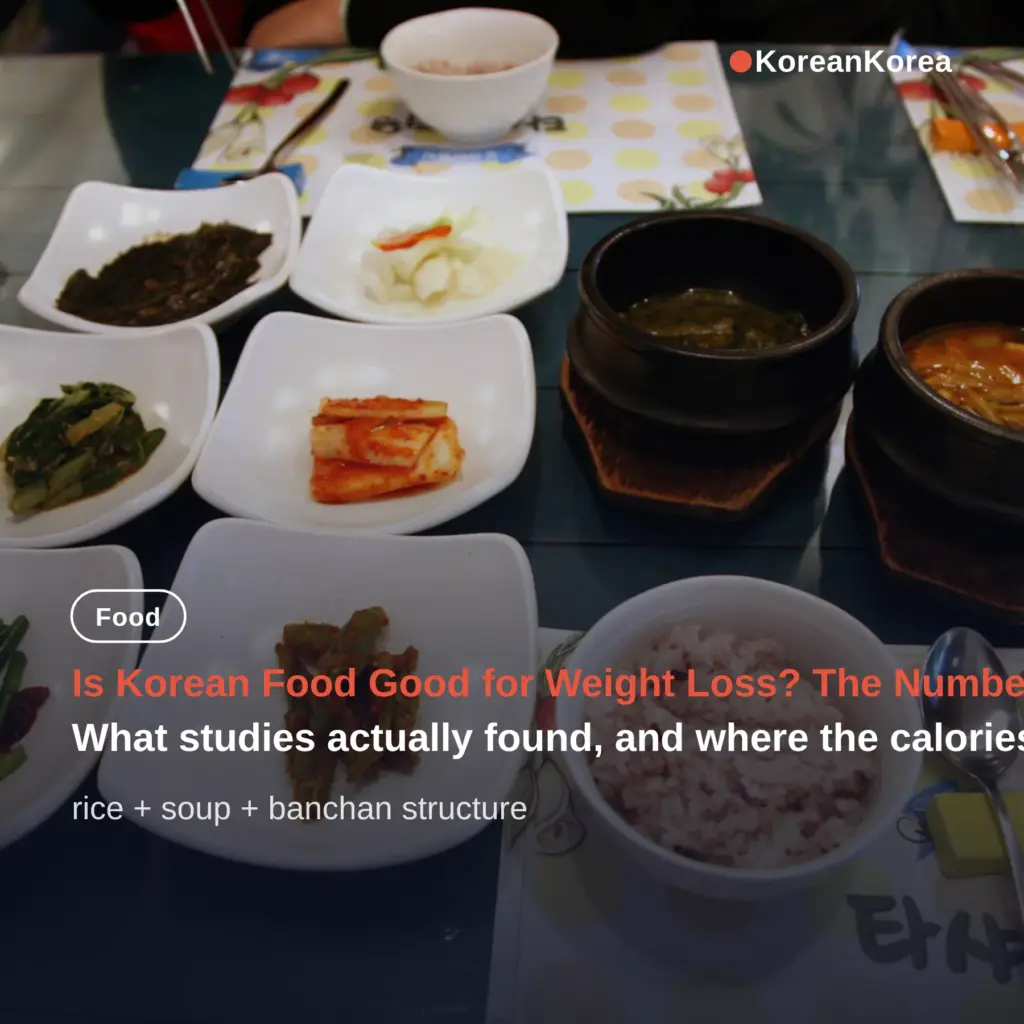
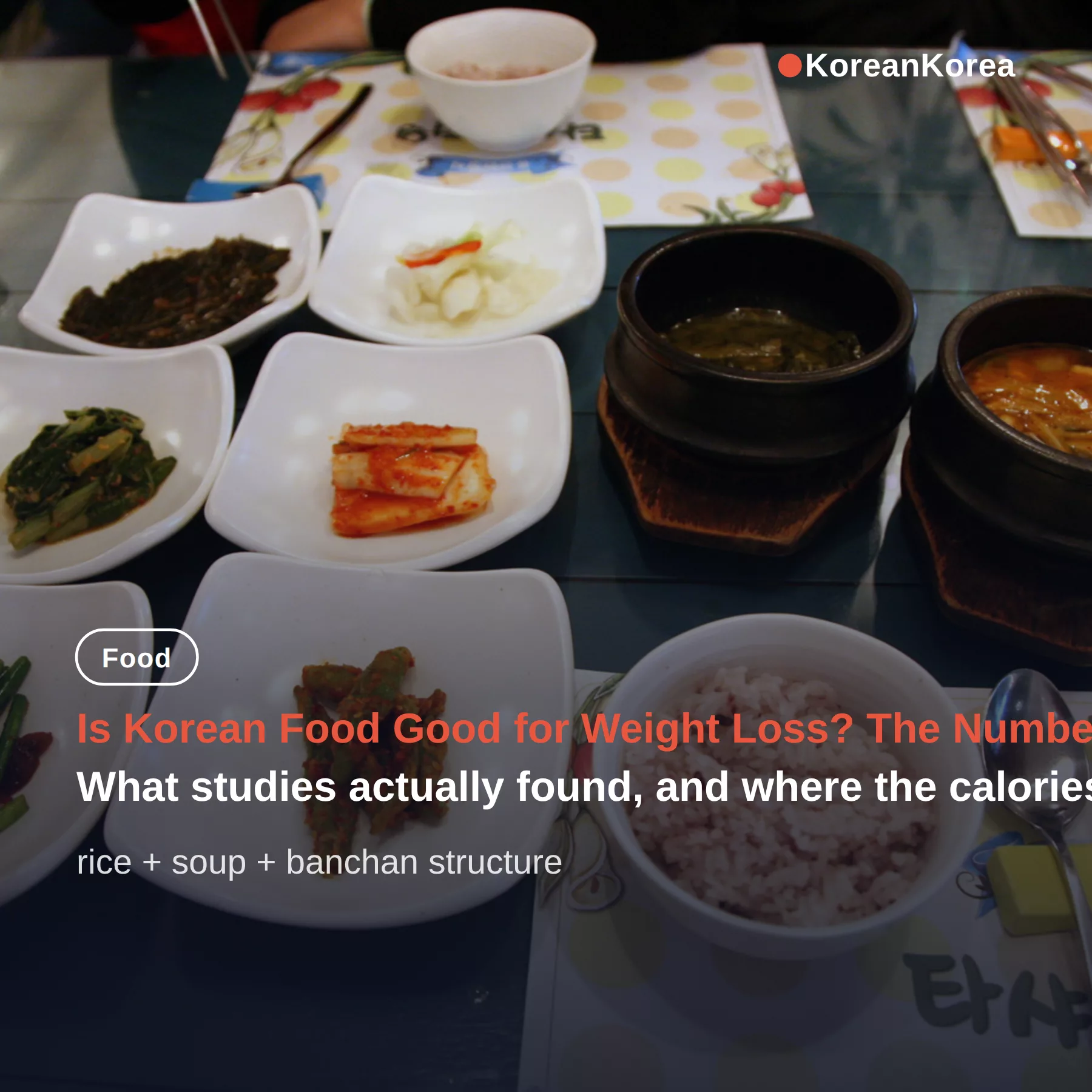
Cover photo: Korean cuisine-Baekban-Rice, banchan and jjigae-01 by by Junho Jung at Flickr from South Korea — CC BY-SA 3.0
#koreanfood #koreandiet #weightloss #koreanfoodcalories #mealtiming #kimchi #tteok
📅Upcoming Dates — 이번 주 14 · D-4 Final two episodes drop on Disney+/Hulu전체 보기 →