Meat products, fresh produce, military camouflage and undeclared cash over US$10,000 are not allowed into South Korea, and meat alone can cost a fine of up to ₩10,000,000.
Every one of these rules is checked at customs on arrival, so a snack in your carry-on can become the most expensive part of your trip.
This post gives the full rules table first, then the food bans, the duty-free limits, the items that need a permit, and the rules that apply after you have already entered.
Key facts — As of 2026-10-01
- Under Korea’s Livestock Epidemics Prevention and Control Act, bringing in meat products like beef jerky or sausage is prohibited, with fines up to 10 million KRW.
- The duty-free allowance per adult traveler is 1 bottle of alcohol (max 1L), 200 cigarettes (or 50 cigars / 250g tobacco), and US$600 of general goods — e-cigarettes have no tobacco allowance.
- Cash or negotiable instruments over US$10,000 must be declared when entering and leaving South Korea; smoking indoors carries a 100,000 KRW fine.
Things Not Allowed in South Korea: the Quick Answer
| Meat products (beef jerky, sausage, ham) | No — prohibited outright, fines up to ₩10,000,000 |
|---|---|
| Fresh fruit, vegetables, seeds, live plants | Only with quarantine clearance — usually seized, penalty if undeclared |
| Military camouflage clothing or materials | No — prohibited outright |
| Weapons (knives, Tasers, stun guns, pepper spray) | Only with permission — undeclared ones are seized |
| Cash or equivalents over US$10,000 | Yes, but must be declared on entry and exit |
| Alcohol | 1 bottle (max 1L) duty-free per adult |
| General goods | US$600 duty-free per person — over that, tax on the full value |
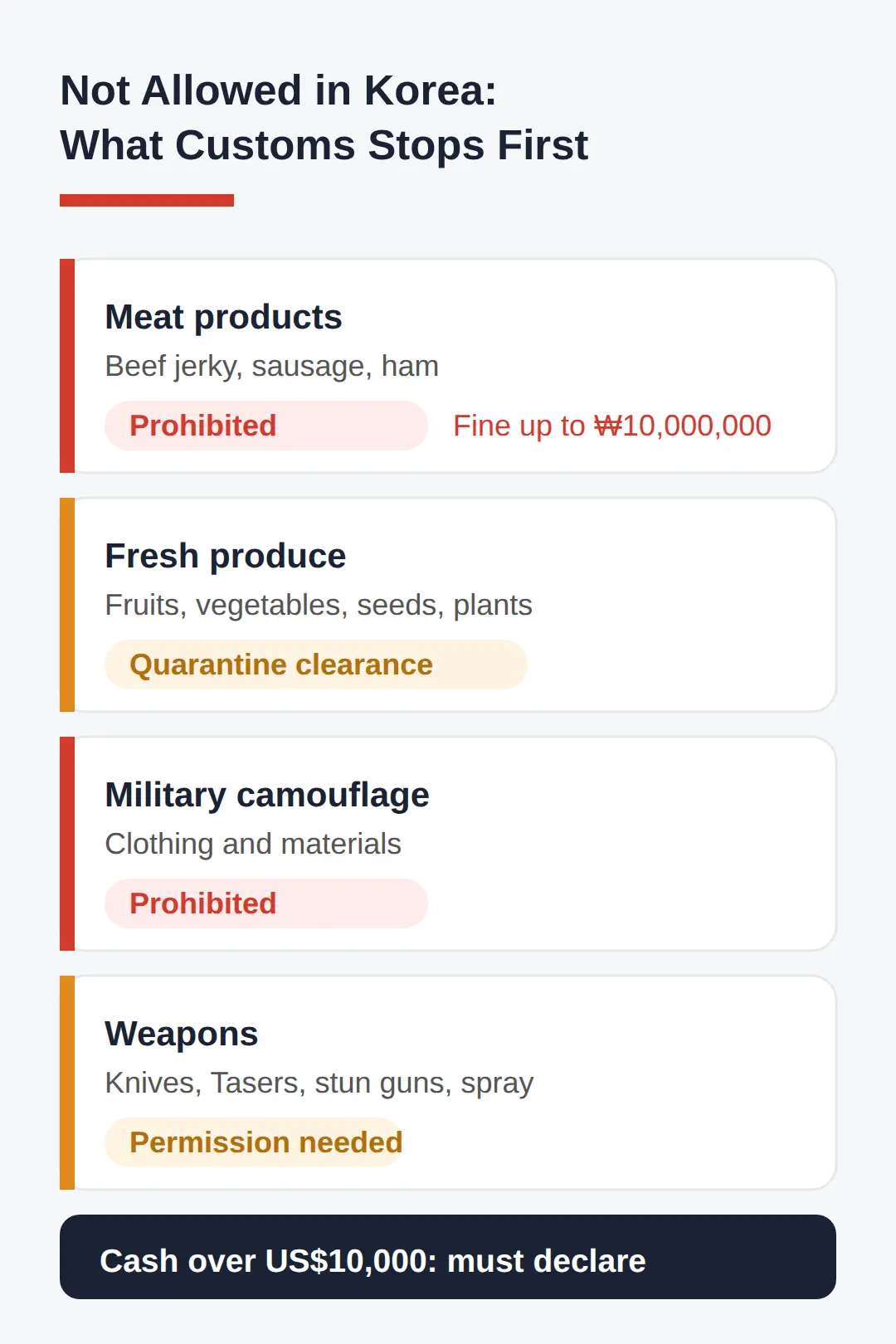
Meat products, fresh produce, military camouflage and undeclared cash over US$10,000 are the four things customs stops first.
| Item | Status |
|---|---|
| Meat and meat products (beef jerky, sausage, ham) | Prohibited outright — fine up to ₩10,000,000 |
| Fresh fruits, vegetables, seeds, live plants | Quarantine clearance required; undeclared items are seized and penalized |
| Military camouflage clothing/materials | Prohibited from entry |
| Weapons (knives, Tasers, stun guns, pepper spray) | Permission required; undeclared weapons are seized |
| Cash or negotiable instruments over US$10,000 | Must be declared on entry and exit |
Meat is the expensive one: bringing beef jerky, sausage or ham into Korea is prohibited outright, and the fine runs up to ₩10,000,000.
The other items are not banned in every case — produce can pass with quarantine clearance, weapons can pass with permission, and cash can pass with a declaration.
The safe pattern is simple: if an item is on this list, either leave it out of the bag or declare it at the counter.
Declaring costs nothing.
Not declaring is what costs the fine.
Food You Can’t Bring Into South Korea
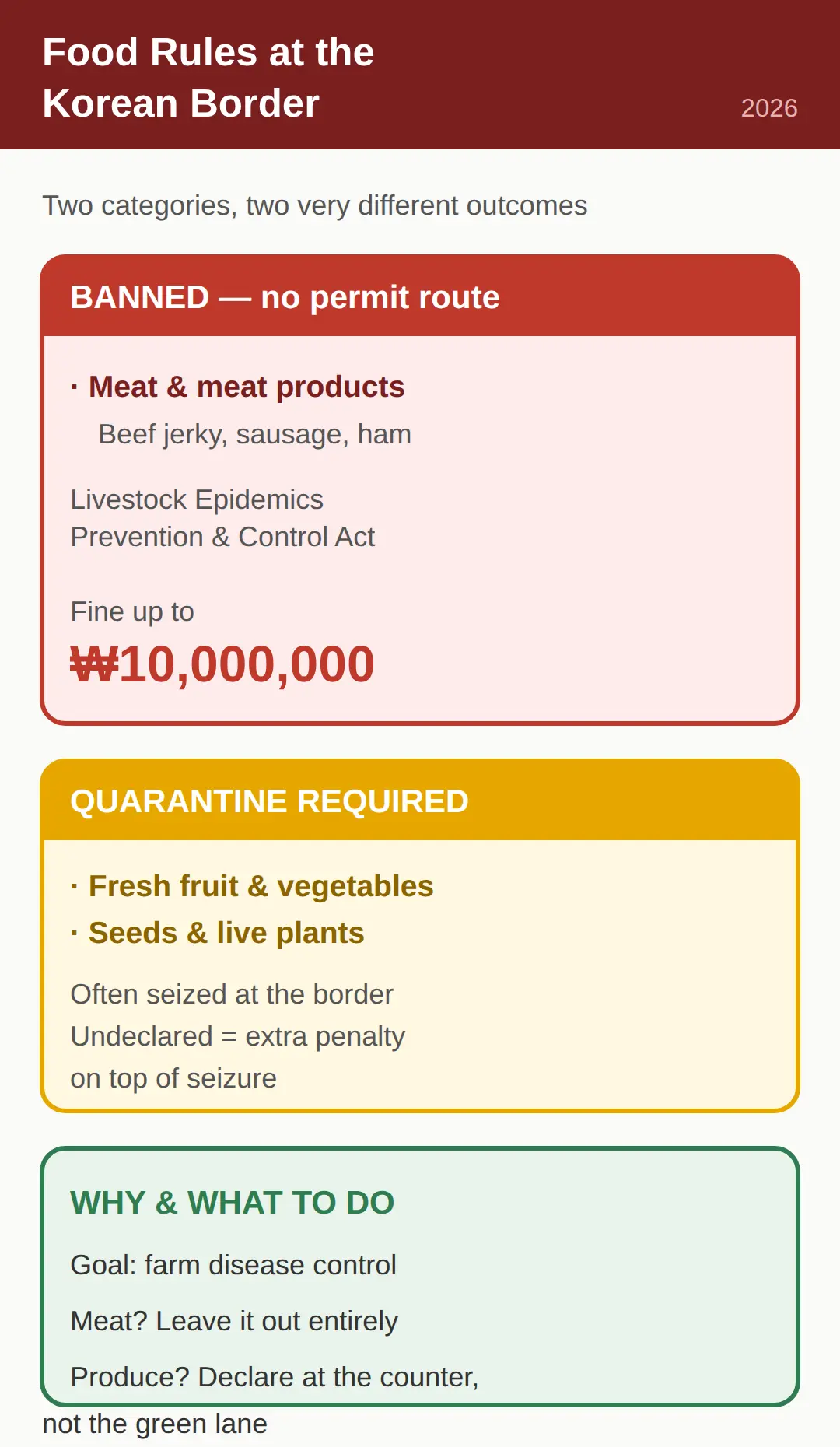
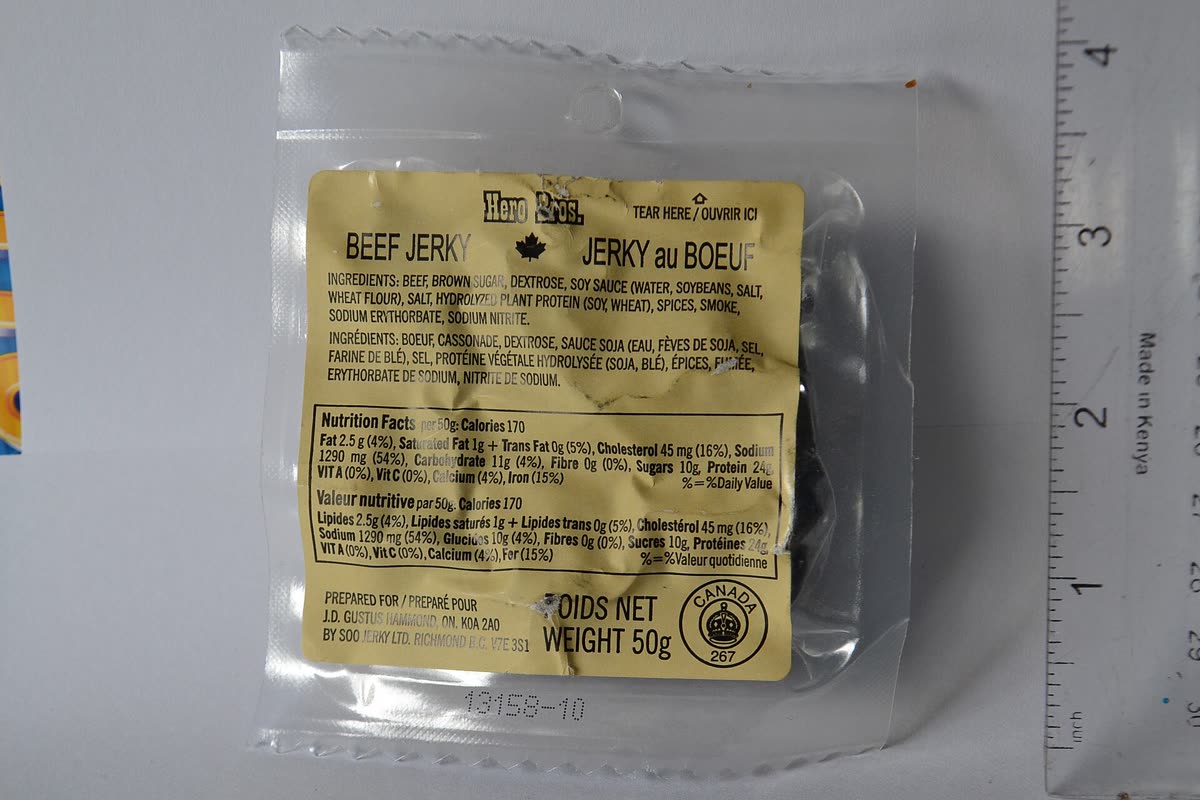
Meat and meat products are prohibited outright under the Livestock Epidemics Prevention and Control Act — beef jerky, sausage and ham are all in that category, and the fine reaches ₩10,000,000.
Fresh fruit, vegetables, seeds and live plants are a different case: they need quarantine clearance, and in practice they are commonly seized at the border.
An undeclared plant item triggers a penalty on top of the seizure, so the outcome is worse than the loss of the item itself.
The reason behind both rules is farm disease control, not taste — Korea quarantines anything that could carry livestock or crop disease.
If the food you want to bring is meat in any form, leave it out of the luggage entirely, because there is no permit route for it.
For produce, declare it at the counter rather than hoping it passes through the green lane.
Duty-Free Limits: Alcohol, Cigarettes and How Much You Can Bring In
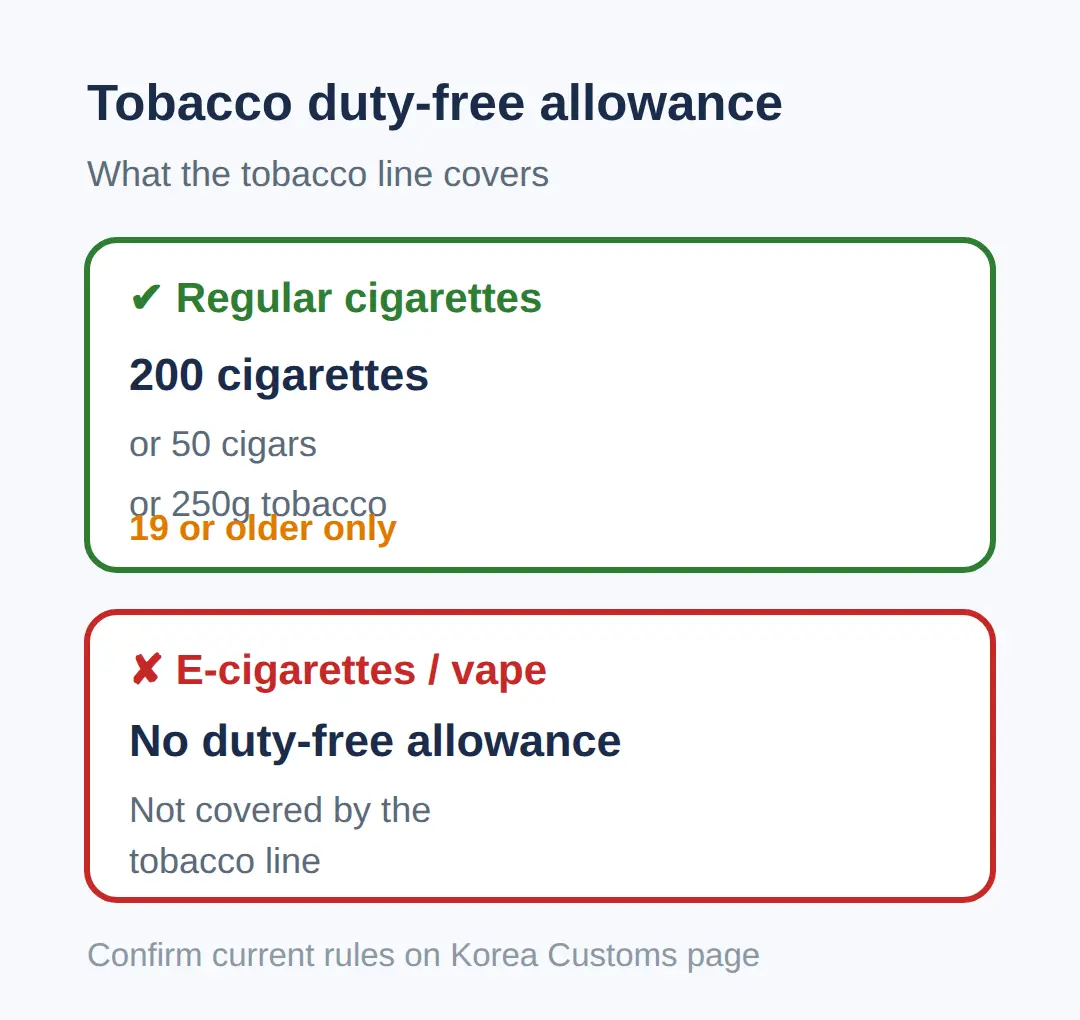
The duty-free allowance per adult traveler is 1 bottle of alcohol (max 1L), 200 cigarettes (or 50 cigars / 250g tobacco), and US$600 of general goods — e-cigarettes have no tobacco allowance.
Travelers must be 19 or older to use the alcohol and tobacco allowances.
The US$600 goods limit excludes liquor, tobacco and perfume, and exceeding it means tax on the full value, not just the excess.
Cash or negotiable instruments over US$10,000 must be declared when entering and leaving South Korea.
figures below are the standard allowances, but amounts change, so confirm the current numbers on the Korea Customs Service page before you fly.
| Item | Duty-free allowance | Condition |
|---|---|---|
| Alcohol | 1 bottle (max 1L) | Adults only |
| Regular cigarettes | 200 (or 50 cigars / 250g tobacco) | 19 or older |
| E-cigarettes / vape | No duty-free allowance | Not covered by the tobacco line |
| General goods | US$600 per person | Excluding liquor, tobacco, perfume; over the limit means tax on the full value |
| Cash or equivalents | Over US$10,000 must be declared | On entry and again on exit |
Medicine, weapons, camouflage and artifacts: which need a permit and which are banned outright
Four categories sit between banned and free: they can enter Korea only under a condition, and the condition differs for each one.
Restricted items follow different rules from banned ones — a restricted item is legal once you declare it or get permission, while a banned item is seized and fined either way.
- Medicine with pseudoephedrine or codeine: bring only a personal quantity, typically under about 90 days’ supply, and carry the prescription or a doctor’s letter.
- Some psychotropic substances: possession is a crime regardless of amount, so check the ingredient list before packing any cold or sleep medicine.
- Weapons — knives, Tasers, stun guns, pepper spray: permission is required to bring them in, and undeclared weapons are seized.
- Military camouflage clothing or materials: prohibited from entry outright, so leave camo gear at home even if it is civilian sportswear.
- Antiques, Buddhist statues and old books: taking cultural heritage items out of Korea requires a permit from the Cultural Heritage Administration, and export of designated items is illegal.
For medicine, the deciding factor is the ingredient list — if it contains pseudoephedrine or codeine, pack the prescription with it.
For everything else on this list, the deciding factor is whether you can name the permit or declaration you would show; if you cannot, the item stays home.
Rules That Catch You After Entry: Overstays and Indoor Smoking
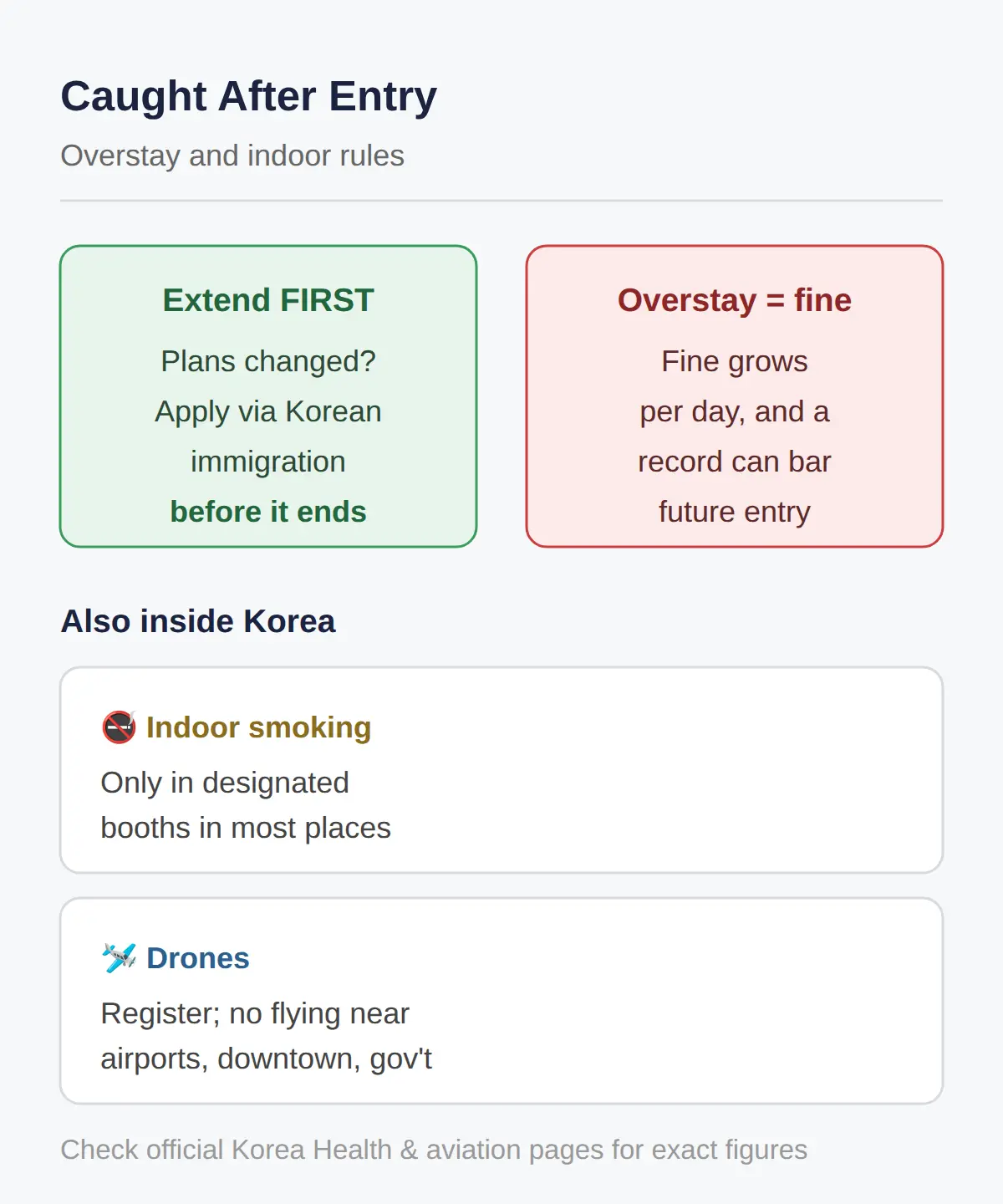
The customs check is not the only place a tourist gets caught — overstaying a visa accrues fines per day and can mean an entry ban on future visits.
An overstay is not a small thing: the fine grows every day you remain past your permitted stay, and the record can block a later trip.
If your plans change mid-trip, extend your stay through Korean immigration before the permitted period ends rather than after it expires.
Two other rules apply once you are inside Korea: smoking is limited to designated booths in most indoor places, and drones have registration and no-fly rules near airports, city centers and government sites.
For the exact current fine amounts and drone thresholds, check the official Korea Health and aviation pages before your trip, because published figures have not been confirmed here.
Read This Before Your Fall Trip to Korea
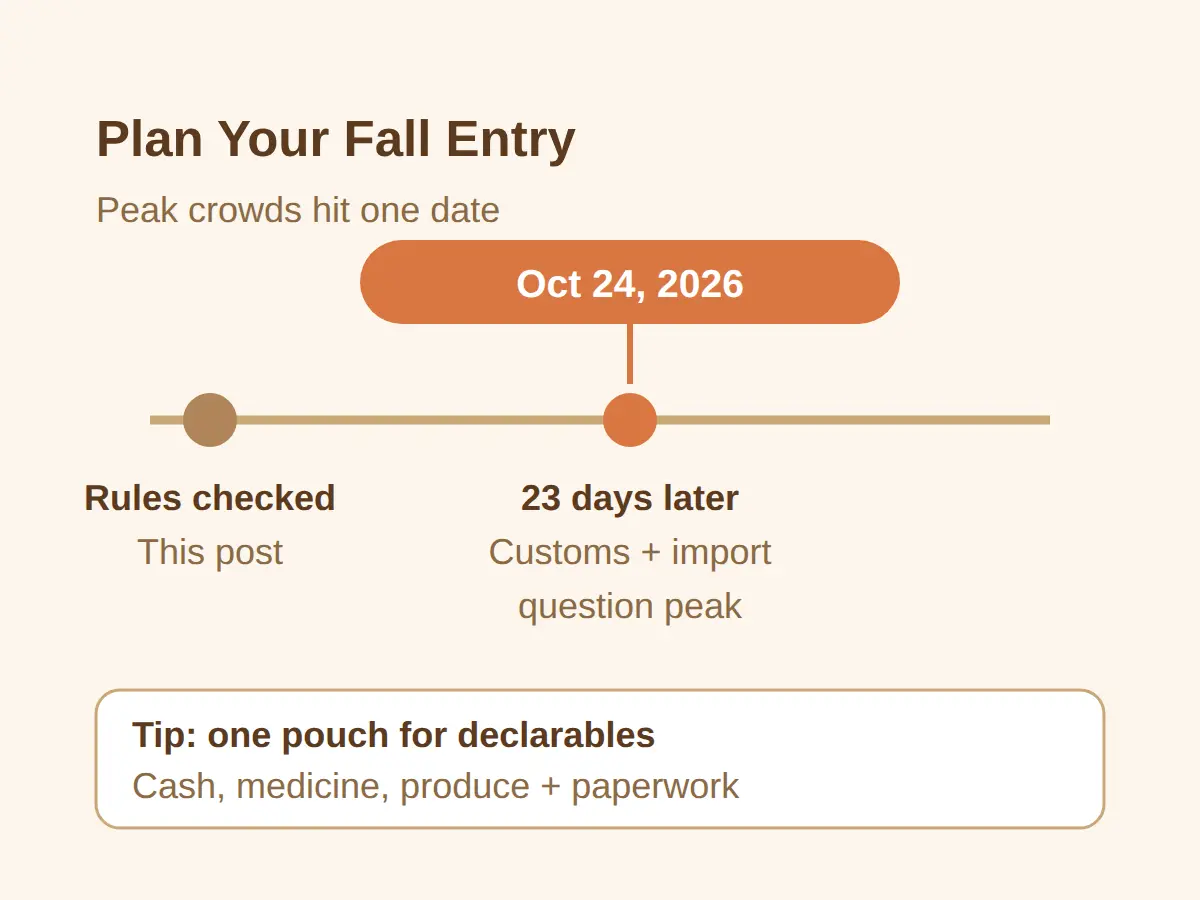
Autumn foliage season brings the year’s peak entry volume, with the spike expected around October 24, 2026 — 23 days after this post’s numbers were checked.
That window is when customs lines and import-rule questions both peak, so it is worth checking each item against the rules before you fly.
Entry procedure context: inbound travelers currently deal with K-ETA exemption and the e-Arrival Card process, though whether the e-Arrival Card has replaced the paper arrival card in 2026 should be verified on the official page.
Etiquette questions — tipping, chopstick rules, subway manners — are covered separately in the etiquette guide, which pairs with this one.
If it were my bag, I’d keep everything declarable (cash, medicine, produce) in one pouch with its paperwork, because that turns the counter declaration into a single go instead of a scramble at the desk.
Before your trip, put anything declarable — cash, medicine, produce — in one pouch with its paperwork so the declaration at the counter takes one go.
Related posts
📎 📅 Upcoming Dates — Release & Event Calendar
Sources
- K-ETA exemption / e-Arrival Card entry procedure current (touristsinsider.com)
- not found (breezekorea.com)
- Tourist scam hotspot list (Myeongdong, Itaewon, Hongdae, Jag (atlas-guide.com)
Key Takeaways
- Leave meat products out of your luggage entirely — there is no permit route, and the fine runs up to ₩10,000,000.
- Declare fresh produce instead of hoping it passes — undeclared plant items are seized and penalized.
- Stay within 1L of alcohol, 200 cigarettes and US$600 of goods per person to keep everything duty-free.
- Carry a prescription with any pseudoephedrine or codeine medicine, and keep it under about 90 days’ supply.
- Declare cash over US$10,000 on entry and exit — declaring is free, and skipping it is not.
FAQ
Q. What is not allowed in South Korea for tourists?
Meat products, fresh produce without quarantine clearance, military camouflage, weapons without permission, and undeclared cash over US$10,000.
Q. Is it illegal to bring meat into South Korea?
Yes — beef jerky, sausage and ham are prohibited outright, and the fine can reach ₩10,000,000.
Q. How much cash can I bring into Korea without declaring?
Up to US$10,000. Anything above that must be declared when you enter and again when you leave.
Q. Are vapes allowed in South Korea?
Vape devices are sold in Korea, but they have no duty-free tobacco allowance at customs, so no vape quantity is covered by the standard cigarette limit.
Q. Do tourists need a permit for drones in Korea?
Drones above 250g fall under registration rules, and flying near airports, city centers and government sites is restricted — confirm the current threshold on Korea’s official aviation page before you pack one.
Autumn foliage peak entry volume is expected October 24, 2026 — bookmark this table before your flight.
Cover photo: Canadian Customs, Ambassador Bridge, Windsor, Ontario (21772591935) by Ken Lund from Reno, Nevada, USA — CC BY-SA 2.0
#SouthKoreatravel #customsrules #duty-freeallowance #prohibiteditems #Koreatripplanning
📅Upcoming Schedule — this week 1 · D-6 Godsoi lineup removed from menus after 2026-11-09See all →Last updated 2026-10-28. Editorial policy