Bibimbap means mixed rice — bibim is mixed, bap is cooked rice — and everything goes into one bowl before the first bite.
Contents
- Bibimbap means mixed rice — and that is the whole point
- bibimbap recipe ingredients for 4 servings
- Prepare each vegetable separately — or use the 6-item shortcut
- Assembly, and the dolsot bowl that crackles
- Variants and honest substitutions
- Wrapping up
Bibimbap means mixed rice — and that is the whole point
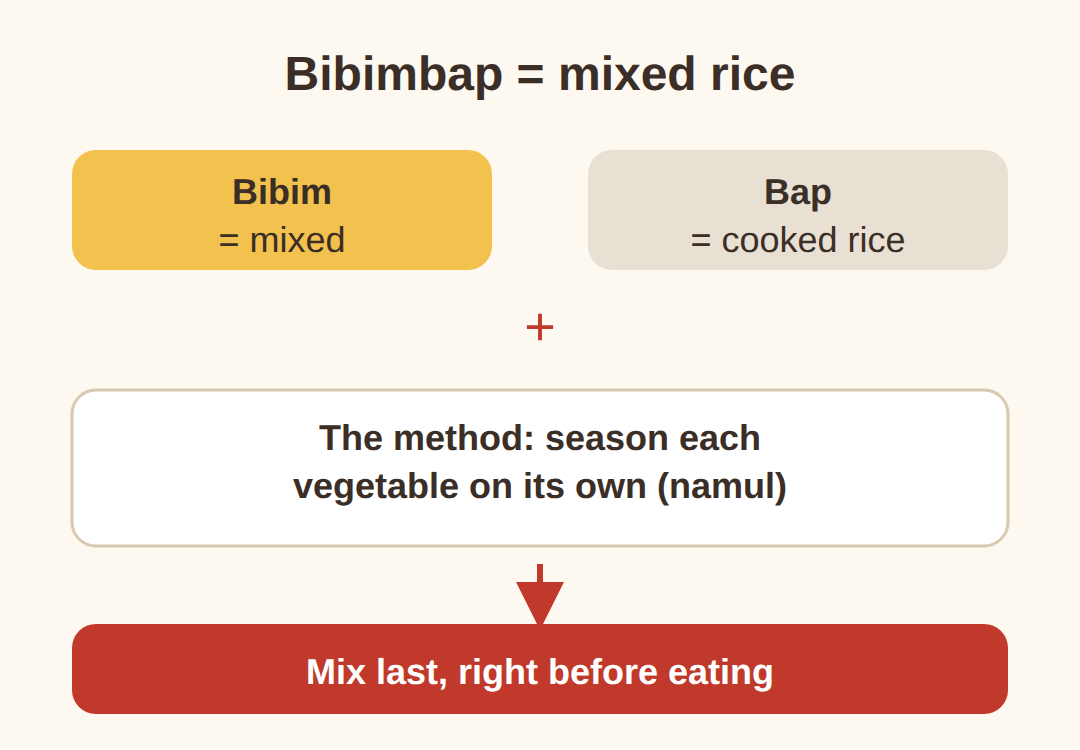
Bibim means mixed and bap means cooked rice, so the name tells you exactly what happens at the table: everything is stirred together before eating.
That mixing is the last step, not the method.
The method is the opposite of throwing everything into one pan.
Each vegetable is cooked and seasoned on its own, as namul, so every topping keeps its own texture and flavor.
The point of that extra work is balance — colors, textures and seasonings offset each other in the bowl instead of turning into one soft gray mass.
In Korea today the most common home version is even simpler: leftover side dishes, a spoonful of gochujang and a drizzle of sesame oil over rice.
There is no single official bibimbap recipe, and toppings are swapped freely with whatever is in the fridge — that flexibility is the fun of it.
One thing does stay fixed: the rice should be hot when the bowl is built, while the vegetables can be room temperature or warm.
| 4 | Short-grain rice, soybean sprouts, spinach, carrot, beef, egg, gochujang, sesame oil |
|---|---|
| Cooked rice per serving | A little more than 1 cup (1.25 cups; 5 cups total) |
| Soybean sprouts per serving | 3 oz (12 oz for 4) |
| Gochujang per bowl | 1 tablespoon, plus more at the table |
| Quick version | About 10 min prep and 40 min cooking for 1 serving |
| Dolsot crispy rice | A few drops of sesame oil in a hot stone bowl, until the rice crackles |
bibimbap recipe ingredients for 4 servings
The classic list below serves 4, each bowl getting a little more than 1 cup of cooked short-grain rice — 5 cups in total.
Meat is half a pound of lean beef, classically seasoned raw beef (yukhoe), with one egg per bowl.
If raw egg or raw beef is not your thing, fry the egg sunny side up and lightly pan-fry the beef instead.
The full vegetable set runs long, and the two dried items at the end are the ones that take planning.
Prepare each vegetable separately — or use the 6-item shortcut
Season each topping separately because it lets you control doneness and salt level for every ingredient; that is what keeps a cucumber crisp while spinach turns silky.
Cut everything thin or julienned so the finished bowl is easy to mix.
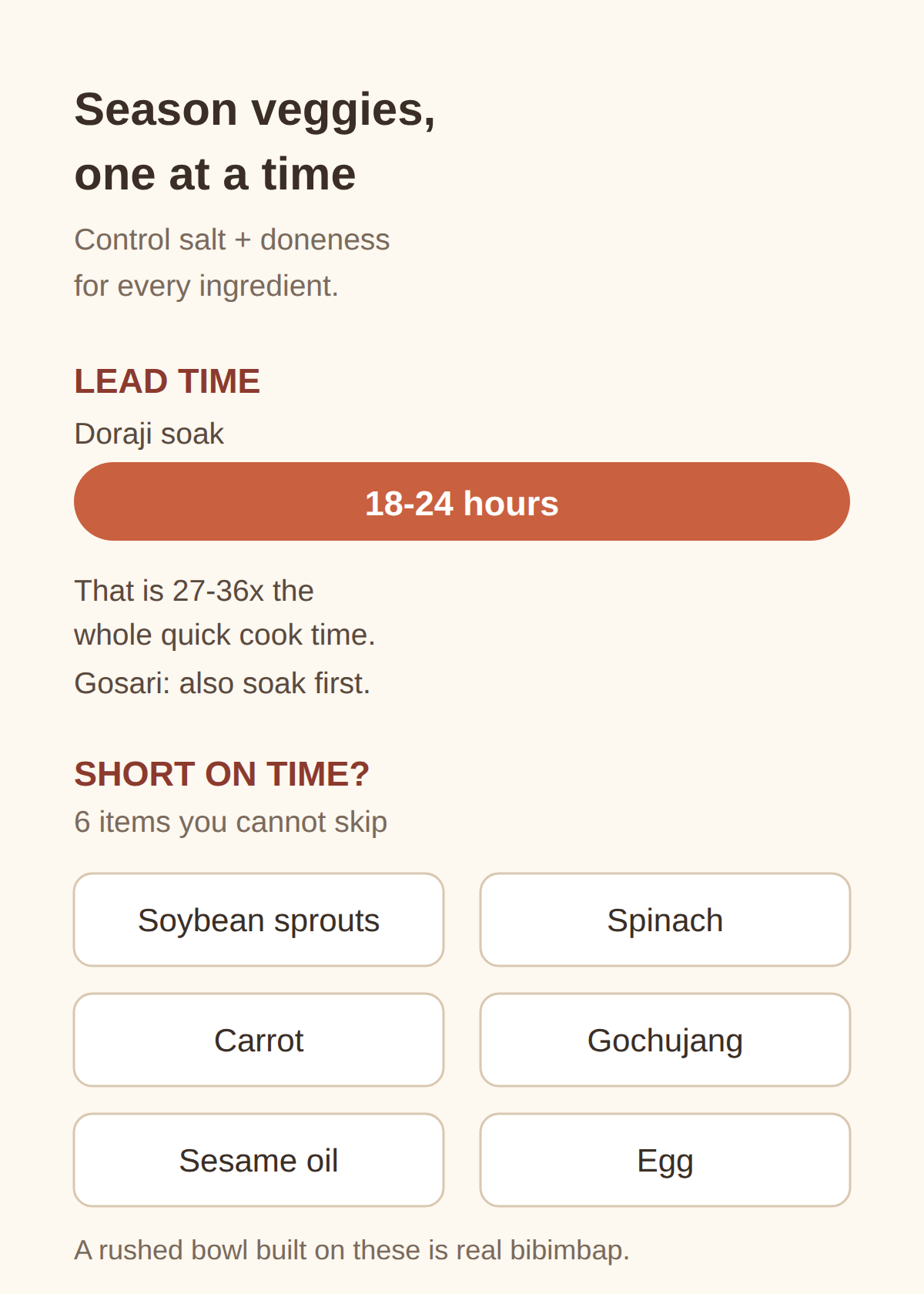
Two dried vegetables come with a lead time: dried bellflower root (doraji) soaks in cold water for 18 to 24 hours, which is 27 to 36 times the entire cooking time of the quick version below.
Dried fernbrake (gosari) needs a soak before use as well.
For the seasonings, keep salt, vegetable oil, toasted sesame oil, sesame seeds, garlic, soy sauce, honey and gochujang on hand.
Short on time?
Soybean sprouts, spinach, carrot (or red bell pepper), gochujang, toasted sesame oil and an egg are the six unskippable items — a rushed bowl built on those is a legitimate bibimbap, not a lesser one.
Assembly, and the dolsot bowl that crackles
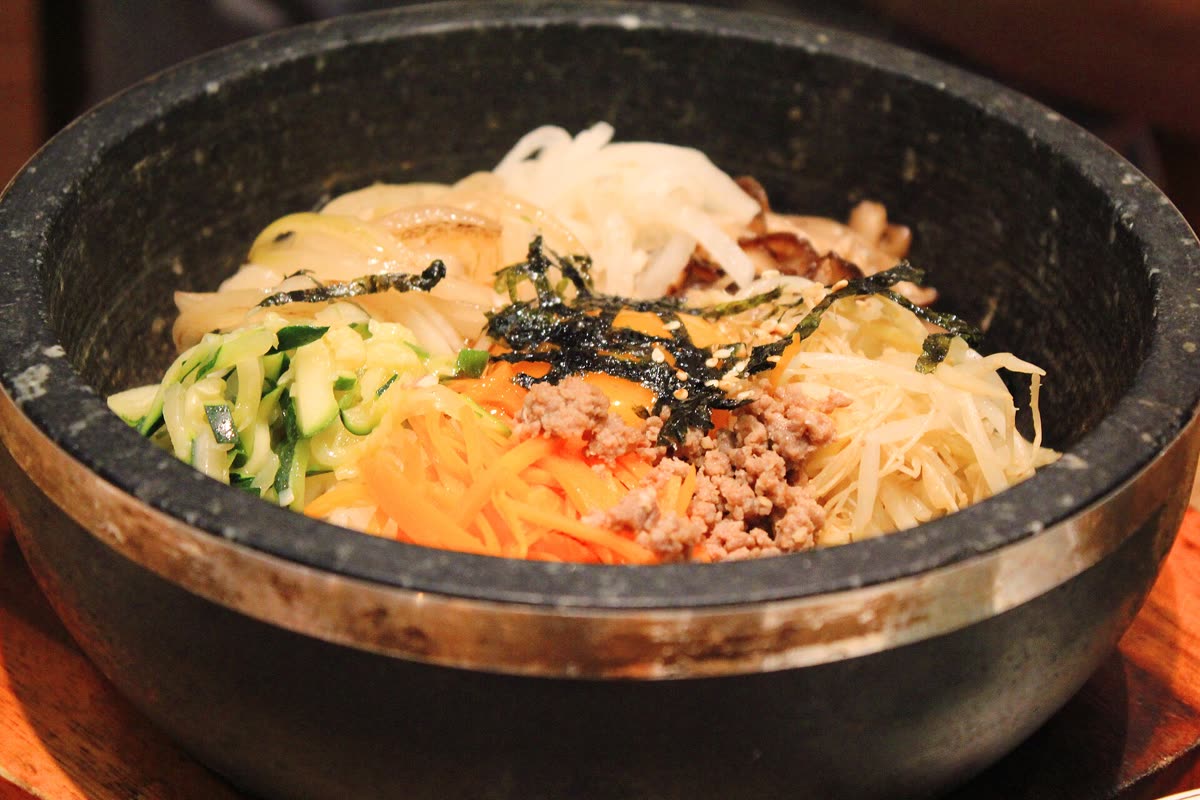
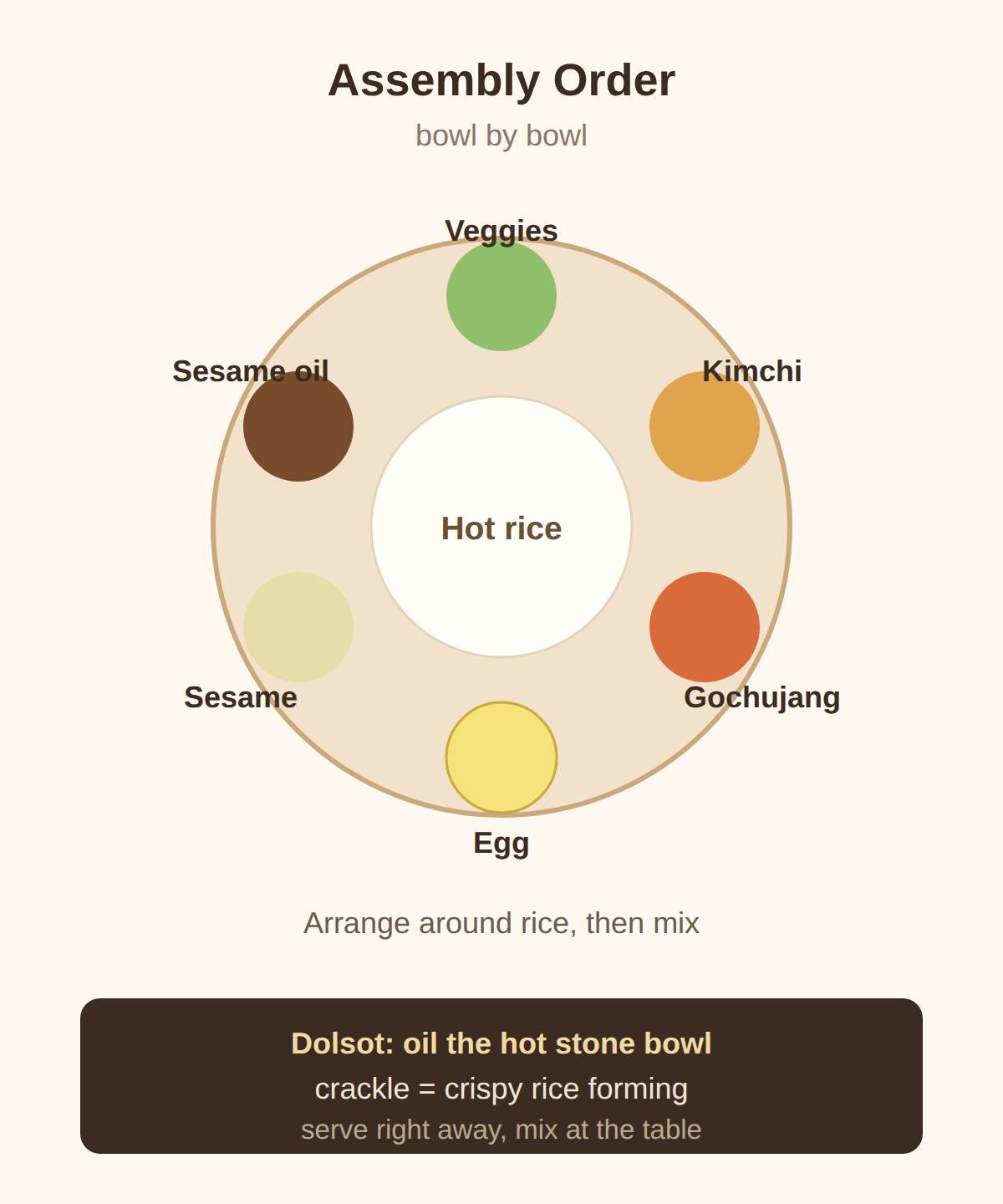
Mound the hot rice first, then arrange the toppings around it in a circle, wet radish kimchi in its own juice if you are using it.
Finish each bowl with the egg, 1 tablespoon of gochujang, a sprinkle of sesame seeds and a drizzle of sesame oil, and mix everything together right before eating.
Put a small bowl of extra gochujang on the table — how much goes in is a personal call.
For dolsot-bibimbap, add a few drops of toasted sesame oil to a heated stone or earthenware bowl before the rice goes in.
Set it over medium-high heat and listen: a ticking, crackling sound means the crispy rice layer is forming at the bottom.
Bibimbap is served immediately, often with kimchi and a small bowl of soybean sprout soup topped with chopped green onion.
Variants and honest substitutions
The most lavish version is Jeonju bibimbap, with about 30 toppings including bracken, bellflower root and yukhoe — roughly seven and a half times the toppings of the basic bowl, and rarely made today because of the labor.
Jinju is the other famous regional name, and Seoul restaurants mostly serve raw and sautéed vegetables in place of the old ritual-derived garnishes.
If gochujang is not on hand, yak gochujang (gochujang mixed with sautéed ground beef), plain soy sauce or a thick soybean paste all work.
The quick vegetable version — sprouts, spinach, carrot and gochujang-seasoned ground beef — runs about 10 minutes of prep and 40 minutes of cooking for 1 serving.
Every component can be made ahead, and radish kimchi keeps 2 to 3 days in advance, which is exactly why the leftover-banchan version is the everyday bowl in Korean homes.
Wrapping up
Start with the six unskippable items on your first try, then add one vegetable at a time as your prep routine settles.
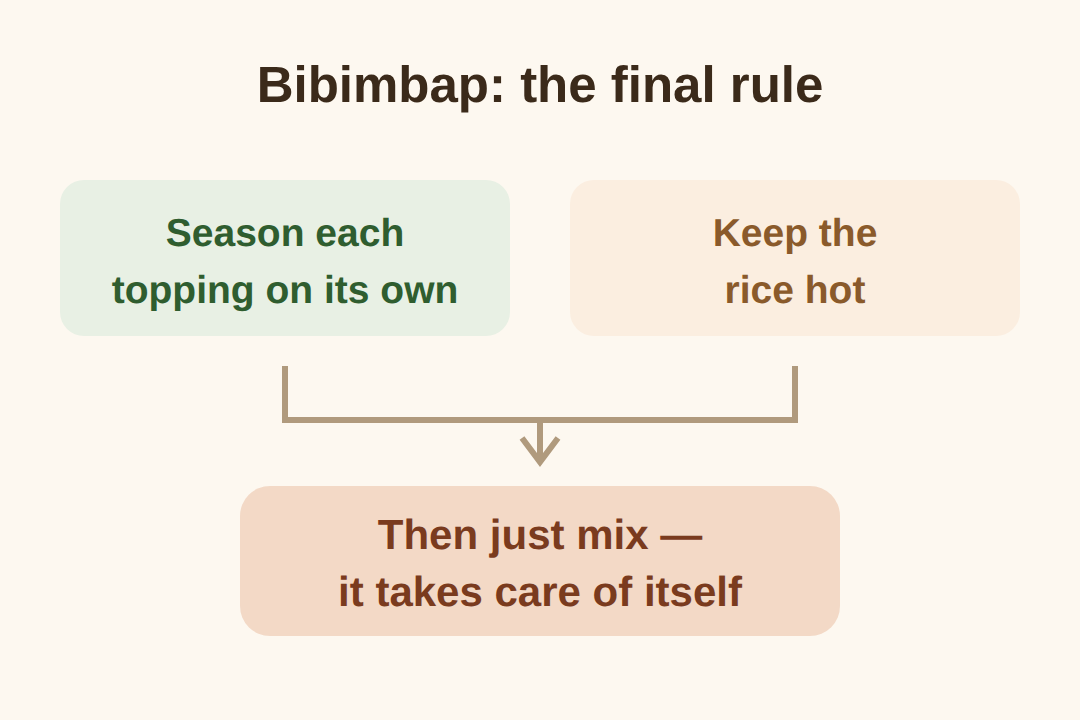
Season each topping on its own, keep the rice hot, and the mixing takes care of itself.
Related posts
📎 Samgyetang Recipe: Fight Summer Heat With a Boiling Soup, Not Ice
📎 Galbijjim Recipe for Chuseok: Braised Short Ribs That Slump Off the Bone — A Galbijjim Recipe for First-Timers
Sources
- ko.wikipedia.org
- 10 min prep / 40 min cook quick version with stir-fried goch (semie.cooking)
- Beef marinade: soy sauce, sugar, minced garlic (dailyinspo.co.kr)
Tips before you start
- Cook and season each vegetable in its own pan; a shared pan blends the flavors you are trying to keep apart.
- Mound the hot rice first, then arrange the toppings in a circular pattern so every spoonful gets a bit of each.
- Put a few drops of toasted sesame oil in the stone bowl before adding rice — wait for the ticking, crackling sound.
- Pass extra gochujang at the table, and serve with kimchi and a small bowl of soybean sprout soup on the side.
- All components can be made 2-3 days ahead, so the final assembly takes minutes.
FAQ
Q. Can I skip gosari and doraji?
Yes. There is no fixed topping list — omit or substitute them with other side dishes or kimchi, and keep the six unskippable items: soybean sprouts, spinach, carrot, gochujang, sesame oil and an egg.
Q. How do I get crispy rice without a stone bowl?
The crackling layer comes from sesame oil in a very hot bowl, as in dolsot-bibimbap. A verified stovetop substitute for the stone bowl did not come up in the sources this recipe is based on, so the exact result may differ with other cookware.
Q. Raw egg yolk or fried egg?
Both work. The classic topping is a raw yolk; if you prefer your eggs and beef cooked, use a sunny-side-up egg and lightly pan-fry the beef.
Season every vegetable separately, then mix — the last step is the only easy one.
#bibimbaprecipe #bibimbap #Koreanmixedrice #gochujang #dolsotbibimbap #namul #Koreanhomecooking
📅Upcoming Dates — 이번 주 4 · D-day Changdeokgung Moonlight Tour start (Sept 10–Oct 17, 30,000 K전체 보기 →