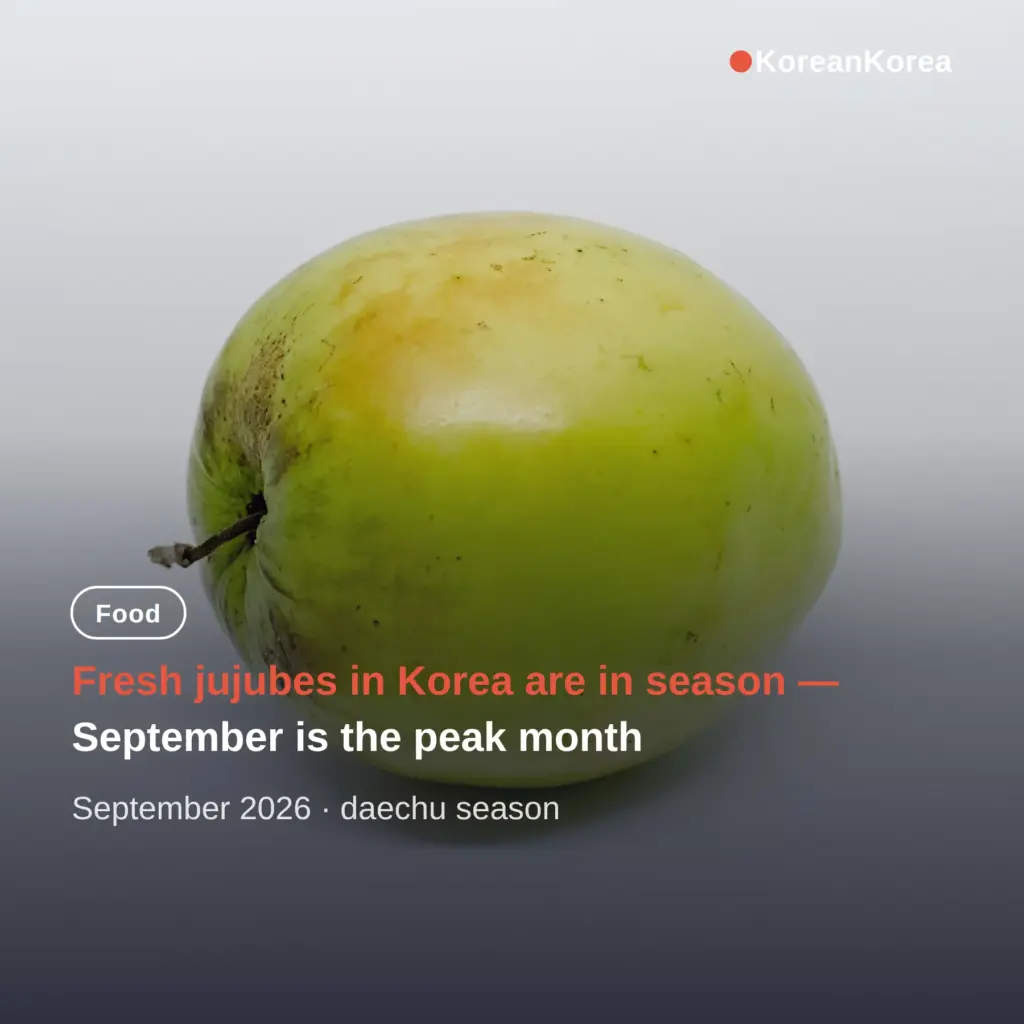
Fresh jujubes, called daechu in Korean, are in season in Korea right now.
The season runs from late August through October and peaks around Chuseok in late September.
If you only know jujubes as the dried red dates sold abroad, the fresh fruit is a different food.
This post covers the taste, the nutrition, where to buy it, and three simple ways to eat it.
Contents
- Fresh jujubes Korea: what they are, and how they differ from the dried version abroad
- Taste and texture — closer to an apple than a date
- Nutrition — why the fresh fruit, not the dried one, carries vitamin C
- When the season runs and where to buy fresh daechu
- How to eat them — raw, in tea, in samgyetang
- How to pick and store them
Fresh jujubes Korea: what they are, and how they differ from the dried version abroad
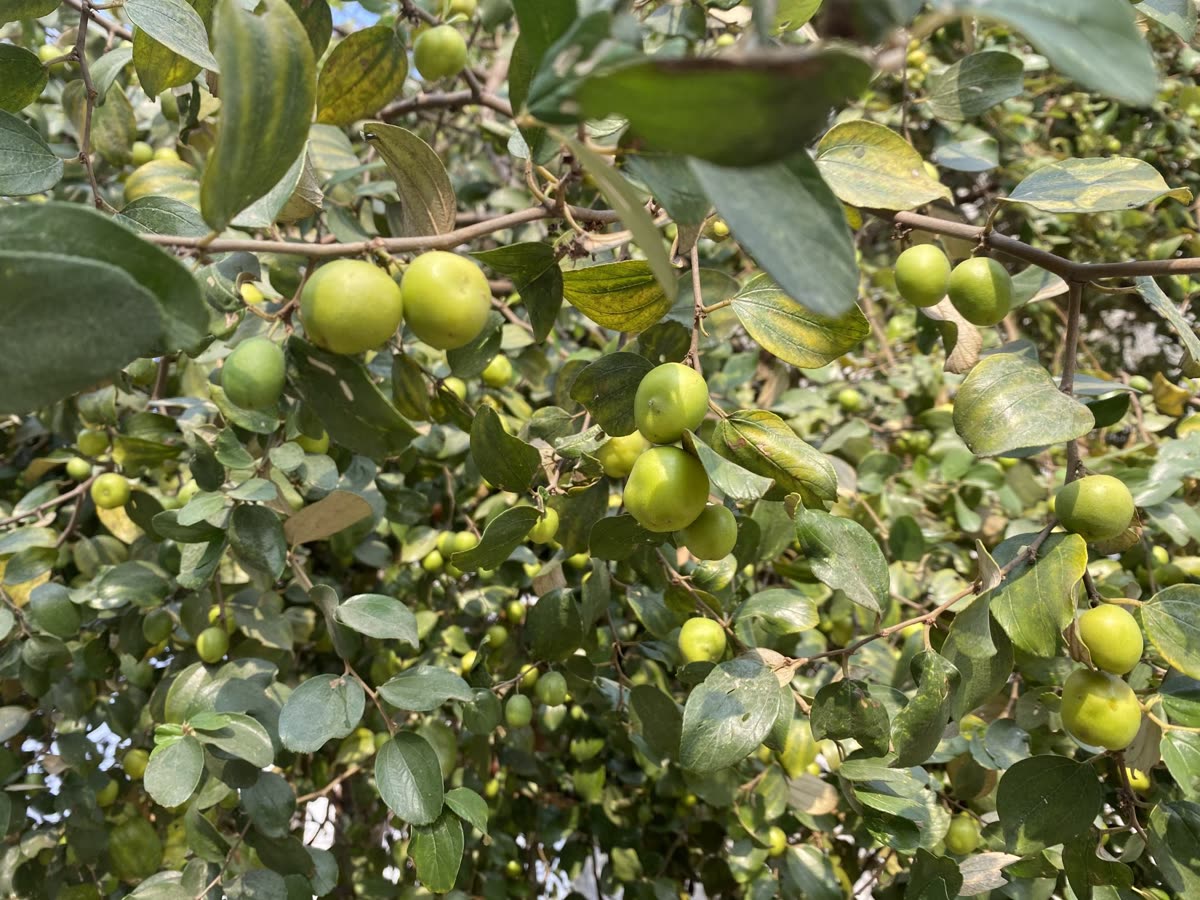
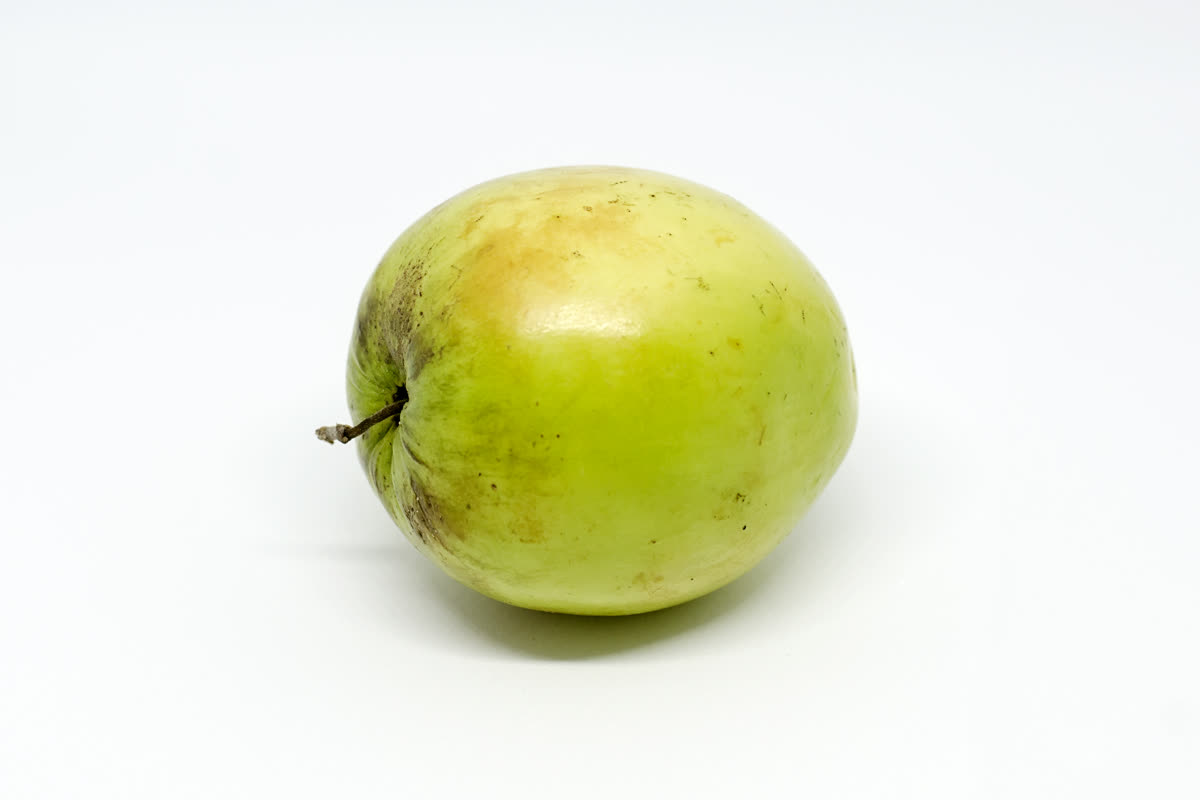
Fresh jujubes are the fresh form of Ziziphus jujuba, a fruit that looks like a small apple.
They run about 2–4 cm across, with yellowish-green skin that turns reddish-brown as they ripen.
Inside is crisp white flesh and a single hard pit in the middle.
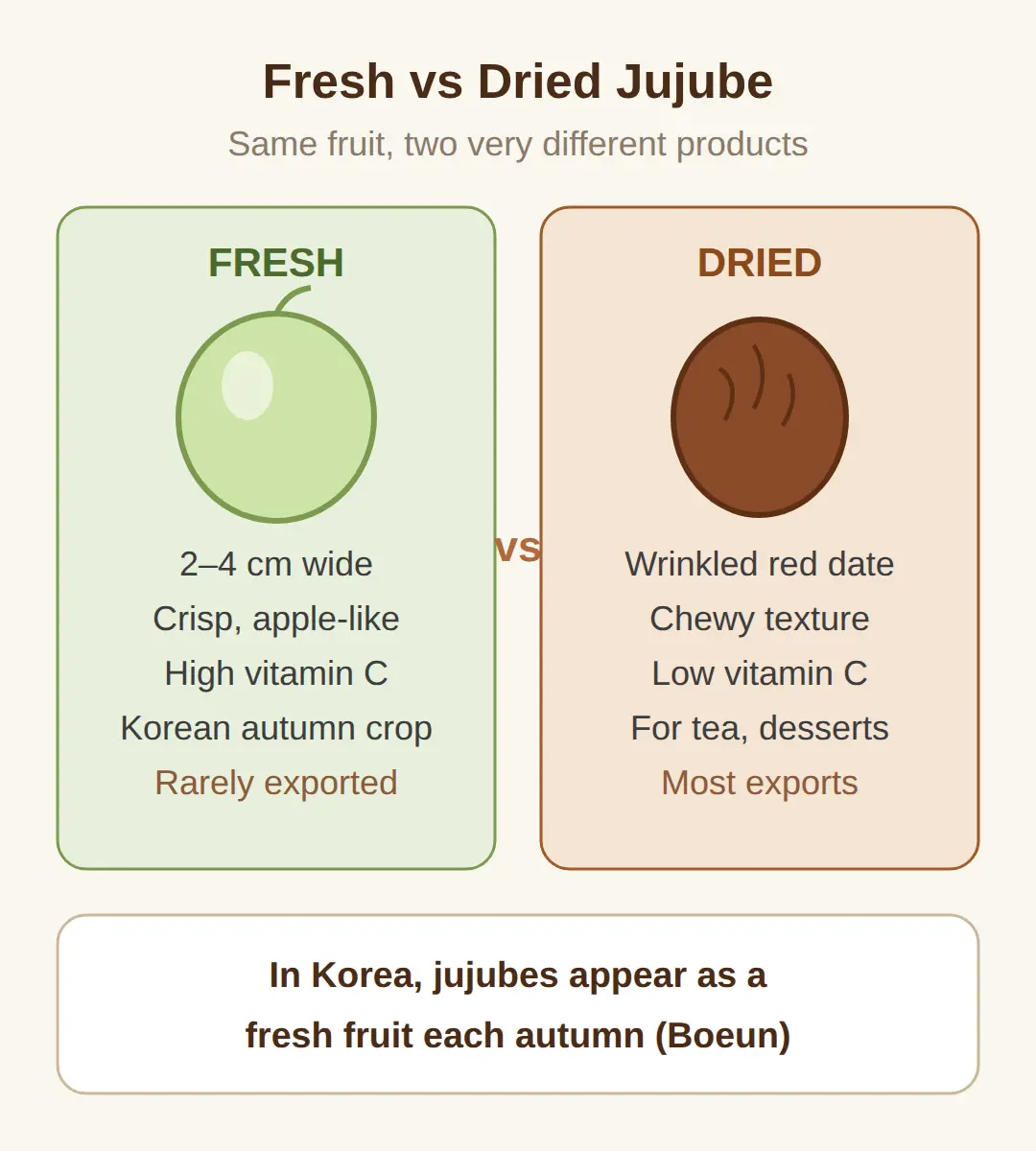
Almost every jujube sold overseas is the dried form — the wrinkled red dates used in Chinese desserts and tea.
Drying changes the fruit completely.
The crisp apple-like texture is the main thing lost, and most of the vitamin C goes with it.
The fresh version is also rarely exported.
Jujubes bruise easily and have a short shelf life, so fresh daechu stay a domestic seasonal item in Korea and Asia.
You may see the fruit labeled "fresh Chinese date" in some overseas Asian markets, though that is not a given.
Koreans have grown the tree for centuries, and the main growing region today is Boeun County in North Chungcheong Province.
Korea is a minor producer compared with China, but the domestic autumn crop is what fills the market stalls now.
So the fruit you know as a dried pantry item shows up in Korea each fall as a fresh fruit.
That distinction is the single most useful thing to know before you shop.
| Season | Late August – October, peak around Chuseok (late September) |
|---|---|
| Size and look | 2–4 cm, yellow-green to half-red, like a small apple |
| Taste | Mildly sweet, crisp, with a faint honey note |
| Main pit | One hard pit in the center, like a cherry |
| Where to buy | Supermarkets, traditional markets, online grocers — in season only |
| Fridge life | About 1–2 weeks, unwashed, in a breathable bag |
Taste and texture — closer to an apple than a date
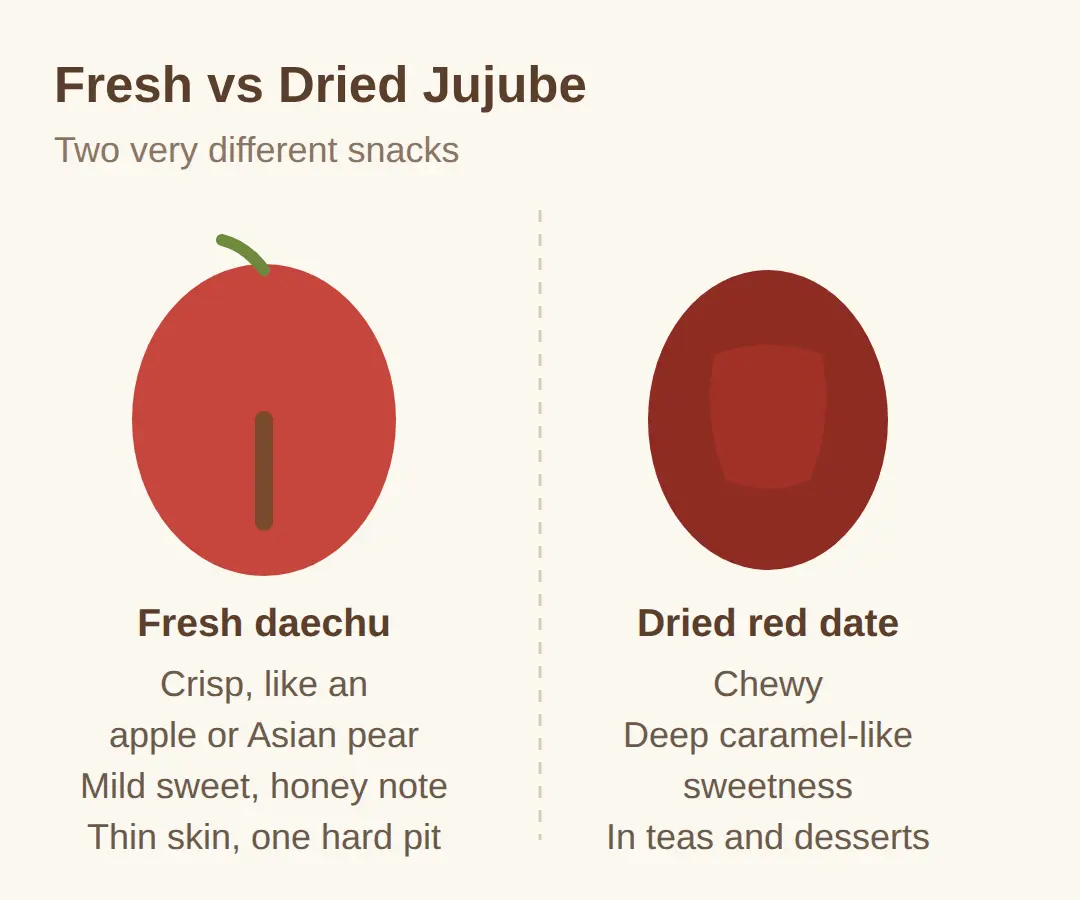
A fresh daechu tastes mildly sweet with a faint honey note.
The texture is the surprise: it is crisp like an apple or an Asian pear, not chewy.
This is nothing like the dried red date, which is chewy with a deeper caramel-like sweetness.
If you have eaten dried jujubes in tea or desserts before, expect the fresh fruit to read as a completely different snack.
The skin is thin and stays on when eaten.
Each fruit holds one hard pit, so the eating move is the same as a cherry — bite around the center.
Half-red fruit, which have turned from green toward red as they ripened, tend to be the sweeter ones.
Nutrition — why the fresh fruit, not the dried one, carries vitamin C
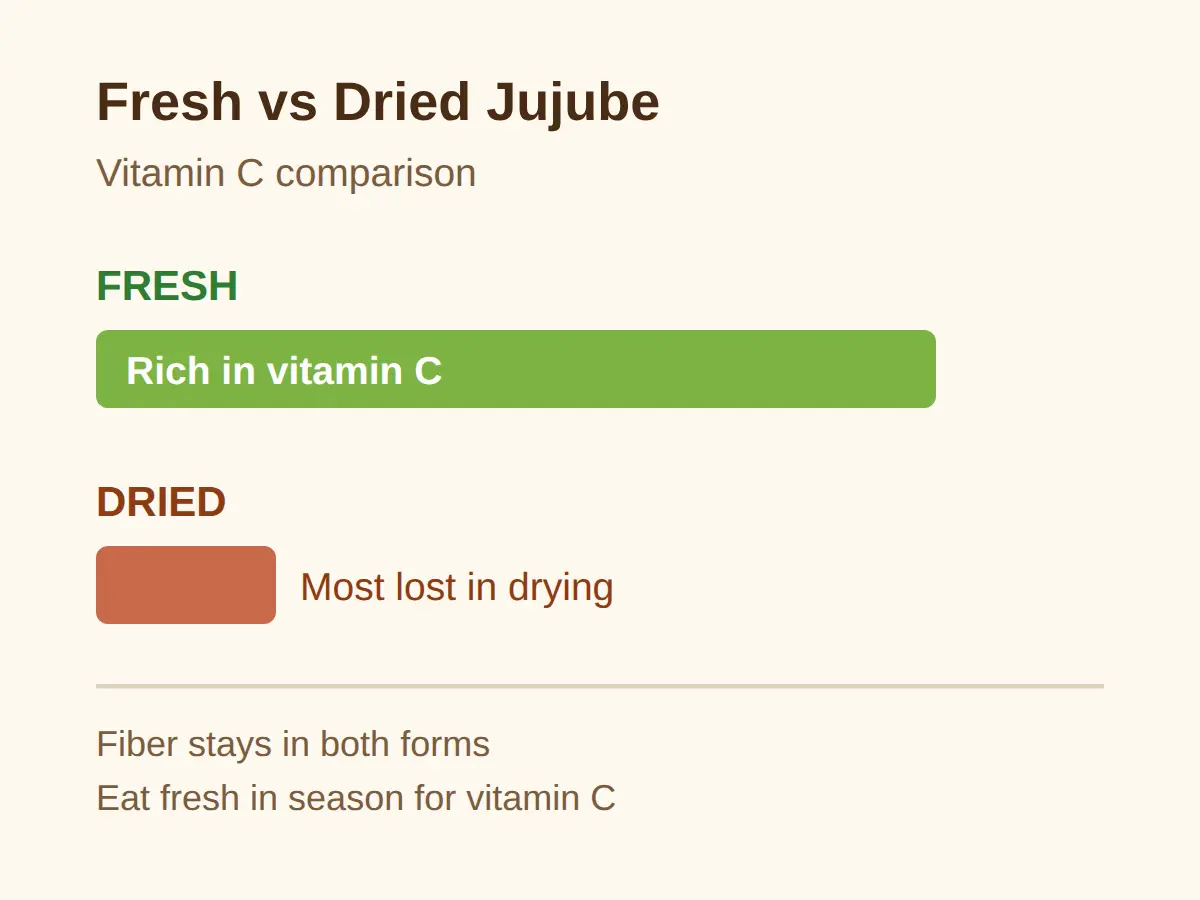
Fresh jujubes stand out for vitamin C and dietary fiber.
The vitamin C matters because drying destroys most of it.
That is why the dried red dates in your pantry are not a meaningful vitamin C source, while the fresh fruit is.
It also means the fresh and dried versions differ nutritionally, not just in taste.
So the seasonal window is the only time this fruit delivers that benefit.
Once the season ends, the fresh form disappears from shelves and the dried form takes over.
No recent source on specific cautions for eating fresh jujubes was available, so this post makes no health claims beyond those two nutrients.
When the season runs and where to buy fresh daechu
The season runs roughly two months, from late August through October.
September is the peak supply window at markets, and it lines up with Chuseok in late September.
Chuseok is when fresh daechu traditionally appear on ancestral ritual tables and in seasonal dishes.
During the window, fresh daechu show up at Korean supermarkets, traditional markets, and online grocers such as Coupang.
Outside the window, stores stock only the dried form.
So timing decides whether you can buy this fruit at all.
The main growing region is Boeun County in North Chungcheong Province, which produces a large share of Korea’s daechu.
No reliable per-kilogram retail price was available, so expect seasonal pricing to vary by store.
How to eat them — raw, in tea, in samgyetang
Raw is the simplest way.
Wash the fruit and eat it like a small apple, skin on, working around the pit in the center.
Koreans also slice fresh daechu into salads or serve it as a snack with honey.
The second way is jujube tea.
Simmer sliced jujubes in water, using either fresh or dried fruit.
Fresh jujube tea comes out lighter and fruitier than the deep, dark dried version.
The third place you may already have met daechu is samgyetang, Korea’s ginseng chicken soup.
Whole jujubes are a standard stuffing ingredient, and the soup is traditionally eaten at Chuseok and on the hottest summer days.
Beyond these three, fresh daechu also goes into rice cakes and jujube wine.
👉 Ottogi’s ‘Han River ramyeon’ bagged noodle: October launch, and how the real Han River ritual works
How to pick and store them
Pick fruit that is firm and heavy for its size.
Smooth, taut skin is a good sign, and a yellow-green color shifting toward half-red means the fruit is sweeter.
Skip anything wrinkled or bruised.
For storage, do not wash the fruit before refrigerating.
Moisture speeds spoilage, so keep them unwashed in a breathable bag in the fridge and rinse right before eating.
They keep this way for about one to two weeks.
For longer storage, freeze washed fruit in an airtight bag.
The texture softens after thawing, so frozen daechu works better in tea or blended drinks than for raw eating.
Drying them at home is another option that stretches the fruit past the season.
Related posts
📎 Chaltteok Ice Black Sesame Injeolmi restock — 500,000 units in 5 days, how to get one
📎 pizza rice cake Korea: the pizza seolgi trend hitting 98 on Google Trends
📎 📅 다가오는 일정 — 발매·개봉·발표 캘린더
Sources
- Not verified in this run — no 2026 festival date confirmed (koreatimes.co.kr)
- No reliable recent per-kg retail price found (coupang.com)
- 2026 festival dates not found in this run (contents.premium.naver.com)
What to do with this window
- Buy fresh daechu between late August and late October; after that, stores stock only the dried form.
- Choose firm, heavy fruit with taut skin turning half-red for the sweetest bite.
- Eat the skin — just wash first and bite around the single pit.
- Freeze washed fruit in an airtight bag if you want them past the two-week fridge life.
FAQ
Q. Is a fresh jujube the same as a dried red date?
Same plant, different fruit. Fresh jujubes are crisp and apple-like with a mild honey sweetness. Drying removes most of the vitamin C and all of the crispness, leaving the chewy red date familiar from overseas stores.
Q. Do you peel a fresh jujube?
No. The thin skin is edible. Wash the fruit and eat it like a small apple, biting around the hard pit in the center.
Q. What is jujube called in English?
Jujube is also sold as "Chinese date" or "red date," and the fresh form sometimes appears as "fresh Chinese date." In Korean, the word is daechu.
Q. Can I find fresh jujubes outside Korea?
Fresh jujubes are rarely exported because they bruise easily and have a short shelf life. Availability overseas was not confirmed for this season, so the reliable way to try one is in Korea during the season.
If you are in Korea before the end of October, fresh daechu is an easy seasonal thing to try — a supermarket fruit bowl, a lighter jujube tea, or the jujubes already sitting in your samgyetang.
Cover photo: Indian jujube (fruit) by Augustus Binu : flickr — CC BY-SA 3.0
#freshjujubesKorea #daechu #Koreanfruitseason #jujubetea #samgyetang #reddatesvsfreshjujube #Chuseokfood #Koreanmarketguide #howtoeatjujube
📅Upcoming Dates — 이번 주 16 · D-day 'The Scandal' global Netflix release전체 보기 →