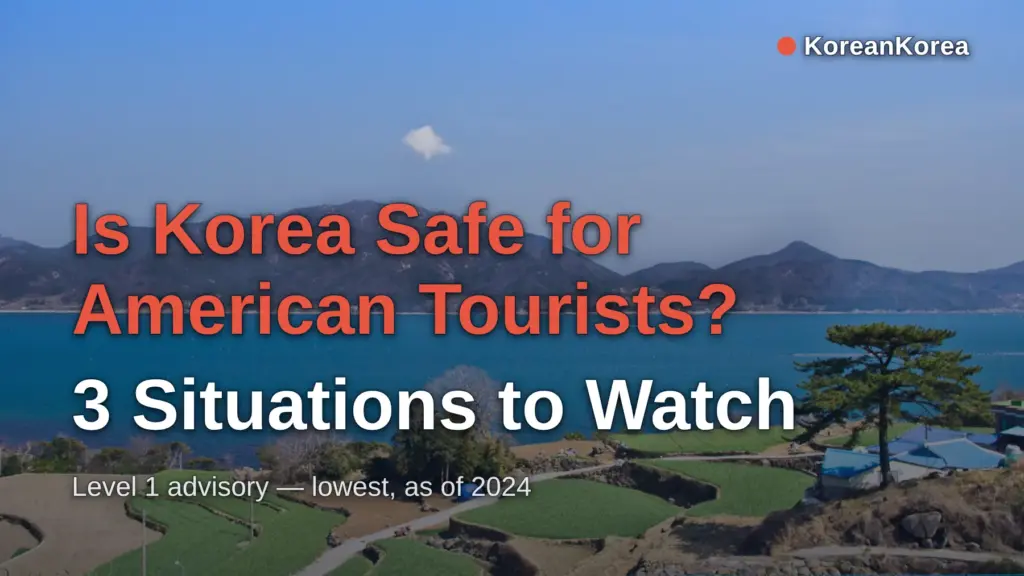
Yes — Korea is broadly safe for American tourists, with violent crime against visitors rare.
What actually trips Americans up is narrower: late-night bar districts, January cold near -6°C (21°F), and an emergency-number system that is not 911.
This post answers the yes-or-no first, then walks through each of the three situations with the numbers and the exact steps to take.
Key facts — As of 2026-11-15
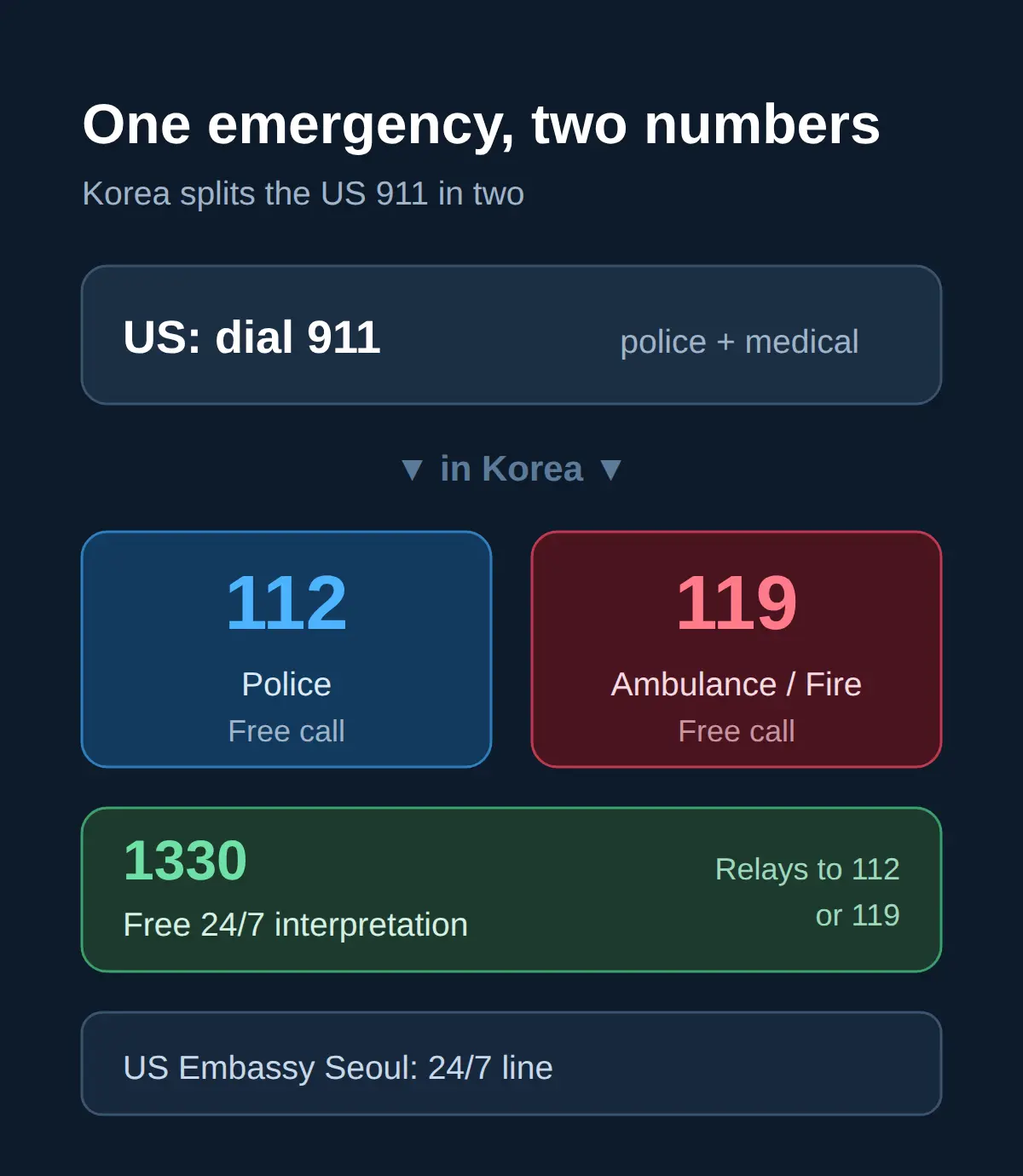
- Korea splits the US 911 into two numbers — 112 for police and 119 for medical and fire — with 1330 as a free 24/7 line that interprets between you and the operator.
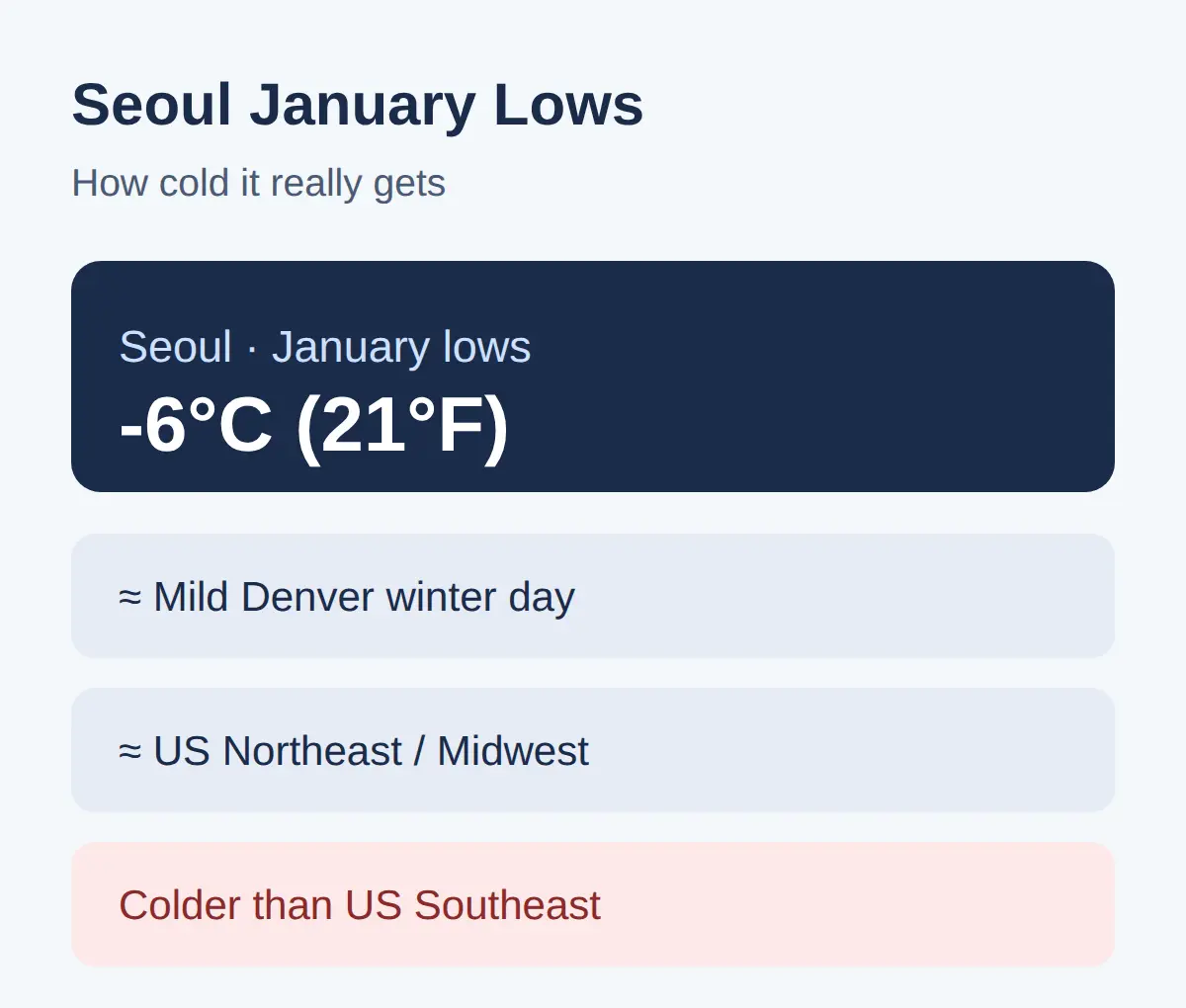
- Seoul’s January lows hit around -6C (about 21F) — comparable to a mild Denver day — so most Americans handle the cold; the real gap is wind chill on walking-heavy itineraries and dry indoor heating.
Is Korea Safe for American Tourists Right Now?
| Standard 1–2 week trip, paperwork question | Enter visa-free (90 days allowed); verify the K-ETA rule and file the e-Arrival Card online before you fly |
|---|---|
| Out late in Itaewon, Hongdae or Gangnam | Walking is generally low-risk; avoid drunk crowds and unlicensed cabs — hail through Kakao T |
| Visiting Seoul December–February | Dress in layers, not one heavy coat; watch icy sidewalks |
| Emergency during the trip | Dial 112 for police, 119 for medical and fire, 1330 for English interpretation |
| Hospital visit question | Assume US insurance does not cover it; carry travel medical insurance |
Yes — the US State Department rates South Korea at Level 1, the lowest of four travel advisory levels, meaning "exercise normal precautions."
The US Centers for Disease Control’s travel page likewise describes violent crime against visitors as rare, with typical precautions those of any large city.
Level 1 is the safest tier on the four-level scale, the same tier as most of Western Europe.
Petty crime such as pickpocketing exists mainly in crowded nightlife and transit areas — Itaewon, Hongdae, Gangnam — but sits far below the level of most large US cities.
So the honest answer is not "perfectly safe" but "safe with three specific situations to manage," and the rest of this post handles each one.
When someone asks if Korea is safe, the first thing I look at is what they will actually run into on the ground — the late-night bar districts, the January cold, and which number to dial — not the advisory level itself.
One check belongs in your booking routine: the current advisory level can change, so confirm it on travel.state.gov before you book.
Nightlife Districts: What to Watch After Dark
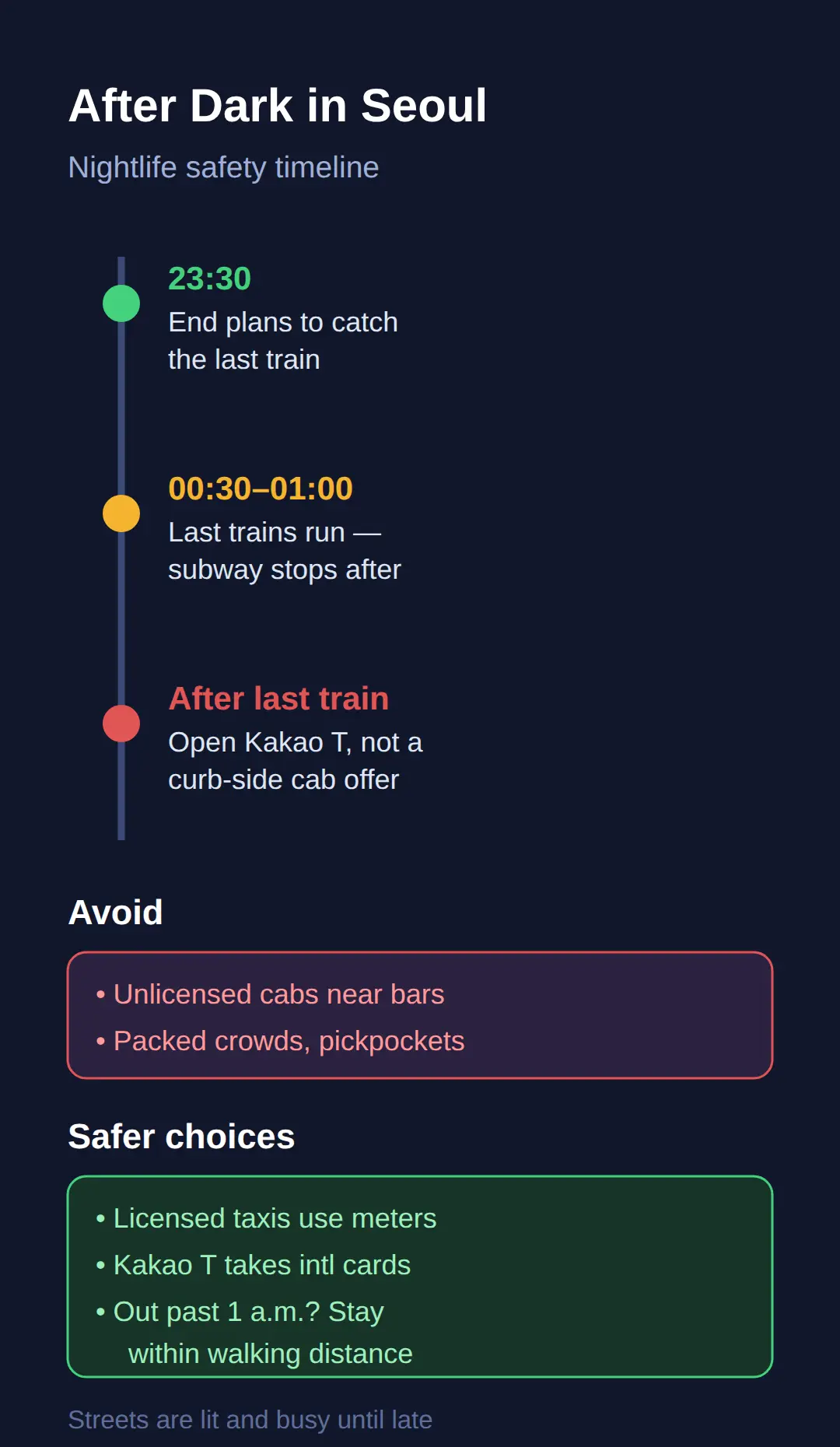
Walking alone at night in central Seoul is generally low-risk — streets are lit and busy until late.
The realistic risk near bar districts is drunk crowds on weekends, pickpockets in packed areas, and street harassment, not targeted crime.
Licensed taxis use meters and are considered safe; the thing to avoid is unlicensed cabs that overcharge near nightlife areas.
Kakao T is the standard taxi-hailing app, it accepts international cards, and metered fares remove any haggling at night.
The subway stops running around midnight — last trains fall roughly between 00:30 and 01:00 — so end night plans by about 23:30 to catch a train, or budget for a taxi.
If your night ends after the last train, open Kakao T rather than accepting a curb-side offer; if you are staying out past 1 a.m. regularly, pick accommodation within walking distance of the district.
Dial 112 for Police and 119 for Medical, Not 911
Korea splits the US 911 into two numbers — 112 for police and 119 for medical and fire — with 1330 as a free 24/7 line that interprets between you and the operator.
Calls to all three are free from any phone, and 1330 can relay directly to 112 or 119 in an emergency.
- Dial 112 for police.
- Dial 119 for an ambulance or fire.
- Dial 1330 if you need English interpretation, day or night.
- For US-citizen emergencies, contact the US Embassy in Seoul (Sejong-ro, Jongno-gu), which runs a 24/7 after-hours line.
Enroll in STEP (the Smart Traveler Enrollment Program) at travel.state.gov before you fly — it pushes safety updates to you and makes embassy contact easier.
On a local SIM or eSIM, emergency alerts about weather and disasters also arrive on your phone in English.
Winter in Seoul: How Cold It Gets and the Real Risk
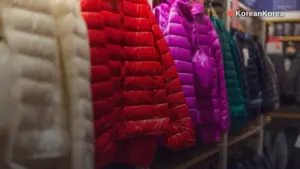
Seoul’s January lows hit around -6°C (about 21°F) — comparable to a mild Denver day — so most Americans handle the cold; the real gap is wind chill on walking-heavy itineraries and dry indoor heating.
That puts Seoul winter roughly in line with the US Northeast and Midwest, and colder than a typical US Southeast winter.
Indoor spaces — subway cars, cafes, hotels — are heavily heated, so the practical cold risk is outdoor waiting and walking.
The common advice for January visits is layered clothing rather than one heavy coat, because you move between overheated interiors and cold streets all day.
Winter’s main hazard is icy sidewalks, not crime; Korea’s other natural risks sit elsewhere on the calendar, with typhoons in summer and yellow dust in spring.
If you travel in late January or February, also check the Lunar New Year dates — some restaurants and shops close for 3 or more days, though hospitals and transit stay open.
Does US Health Insurance Work in Korea?
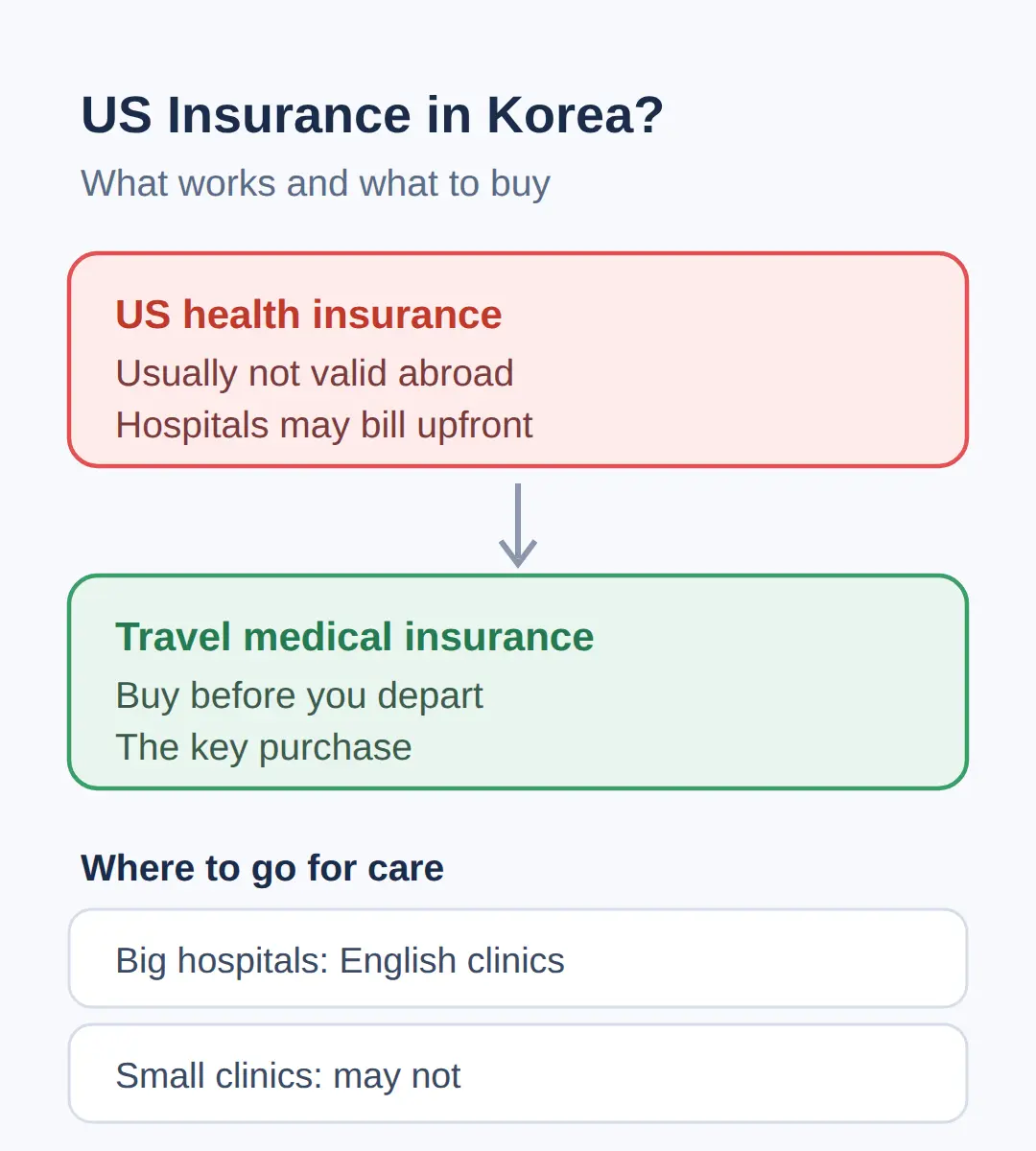
Assume it does not — US health insurance generally does not cover medical care abroad, and hospital visits in Korea can require payment upfront.
Travel medical insurance is the recommended protection, and it is the one purchase on this list you make before departure.
The good news on the care side: major hospitals in Seoul operate international clinics with English-speaking staff.
Smaller neighborhood clinics may not, so for anything beyond a simple visit, head to one of the big hospitals’ international clinics.
Current hospital charge amounts could not be confirmed from a primary price list, so budget broadly rather than expecting a quoted figure here.
If you have a chronic condition or plan mountain or winter activities, check that your travel policy covers those before you buy it.
Entry Rules and Laws That Differ From the US
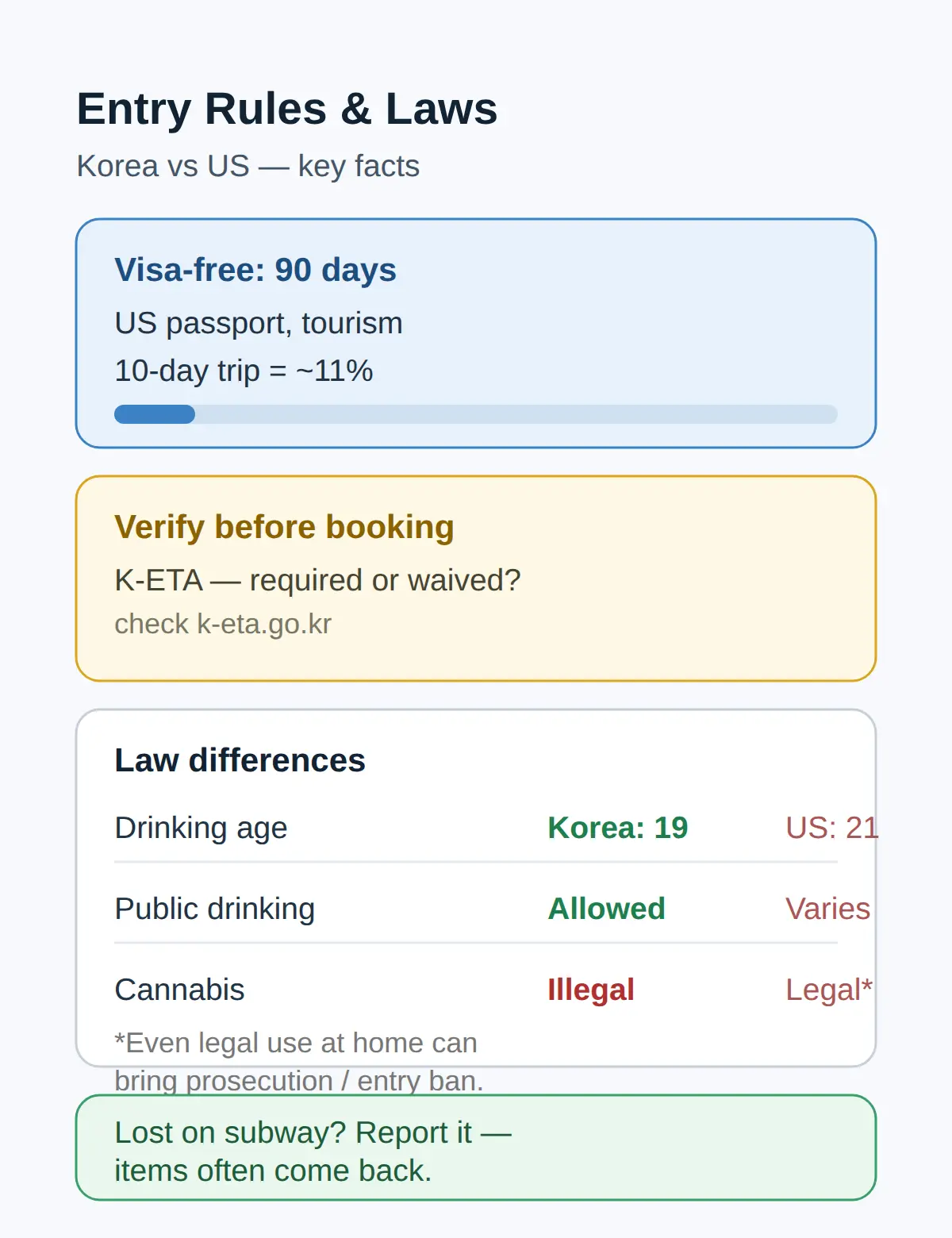
US passport holders can enter Korea visa-free for up to 90 days for tourism, so a standard 1–2 week trip uses under a quarter of the allowed stay with no visa paperwork.
A 10-day trip works out to about 11% of the 90-day window (10 ÷ 90).
Two entry items need a check rather than an assumption: whether K-ETA (Korea’s electronic travel authorization) is currently required or waived for US citizens — the rule has changed several times, so verify at k-eta.go.kr before booking — and the e-Arrival Card, a digital entry form you can submit online before arrival, though paper cards are still accepted.
On the law side, three differences matter: the drinking age is 19 (not 21), drinking in public places like parks is not banned, and cannabis is illegal in Korea even if you used it legally at home — prosecution and entry bans are possible.
Lost property on the subway and buses is centralized and commonly recovered, which surprises many US visitors — many visitors are surprised at how often lost items come back, so report rather than writing items off.
Related posts
📎 📅 Upcoming Dates — Release & Event Calendar
Sources
- Overall safety answer (wwwnc.cdc.gov)
- Police emergency number (112.go.kr)
- 112 police, 119 fire/ambulance, 1330 tourist interpretation (english.visitkorea.or.kr)
Before You Fly: A 3-Item Checklist
- 112 goes to police and 119 to medical/fire — 1330 adds English interpretation on the line.
- The last Seoul subway trains run roughly 00:30–01:00; after that it is Kakao T taxis or night buses.
- US health insurance usually does not work abroad, and Korean hospitals may ask for payment upfront.
- The State Department rates Korea Level 1, but re-check the advisory and the K-ETA rule when you book.
FAQ
Q. What emergency number do I call instead of 911 in Korea?
Dial 112 for police and 119 for medical and fire; 1330 is a free 24/7 line that interprets in English and can relay to either number.
Q. Do US citizens need a visa or K-ETA for Korea in 2026?
US passport holders enter visa-free for up to 90 days, but whether K-ETA is currently required or waived changes periodically — check k-eta.go.kr before booking.
Q. Is it safe to walk at night in Seoul nightlife districts?
Generally yes — streets are lit and busy late; the cautions are drunk crowds, pickpockets in packed areas, and unlicensed cabs, so use the Kakao T app for rides.
Q. Does US health insurance work in Korea?
Assume no — US insurance generally does not cover care abroad and hospitals may require upfront payment, so carry travel medical insurance and use international clinics at major Seoul hospitals.
Save 112, 119, and 1330 in your phone now — you will not remember them at 2 a.m. in Itaewon.
Cover photo: Terraces And Cloud (33881029) by Robbie Vize — CC BY 3.0
#koreasafety #iskoreasafeforamericantourists #koreaemergencynumbers112119 #travelinsurancekorea #koreawintertravel #k-etausa
📅Upcoming Schedule — D-10 MAMA 2026 ceremony (exact date/venue not yet confirmed in thSee all →Last updated 2026-11-16. Editorial policy