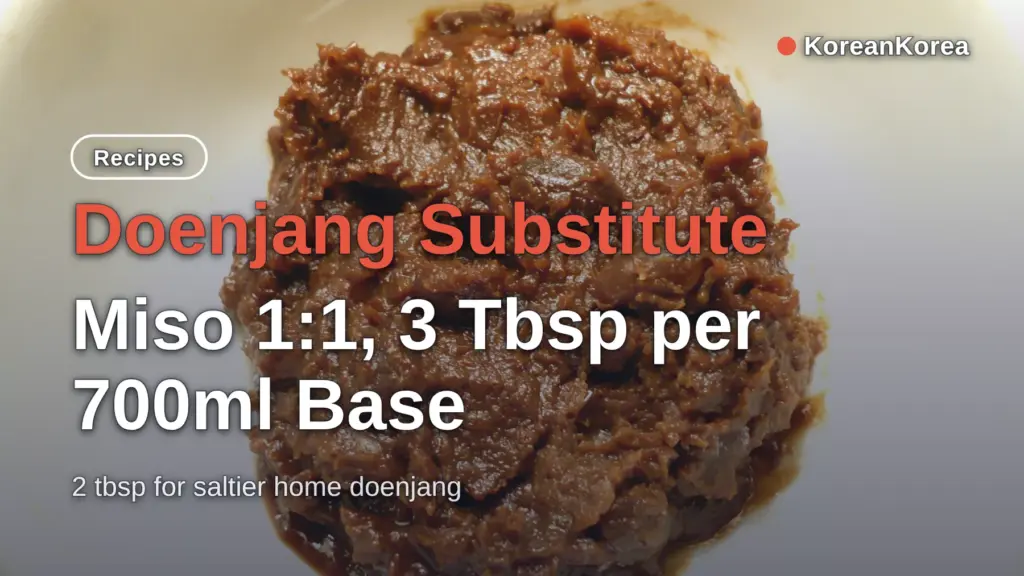
Miso works 1:1 for doenjang in doenjang jjigae, as long as gochugaru or a splash of fish sauce goes in to replace the missing fermented funk.
That matters when the closest Korean store is an hour away and dinner is tonight — the jjigae still reads Korean through the broth, not the paste.
This post answers the swap questions one by one: the paste, cheonggukjang, rice-wash water, aehobak, the broth base, and the ratios that hold abroad.
Doenjang Substitute: Can Miso Stand In for Jjigae?
| Doenjang (any kind) | Miso, 1:1 for doenjang | Miso alone comes out sweeter and rounder; gochugaru or fish sauce brings the funk back |
|---|---|
| Doenjang (want the deep funk) | Cheonggukjang blended 50:50 with miso | Closest stand-in for real doenjang; stocked at Korean grocery stores abroad, though availability varies by city |
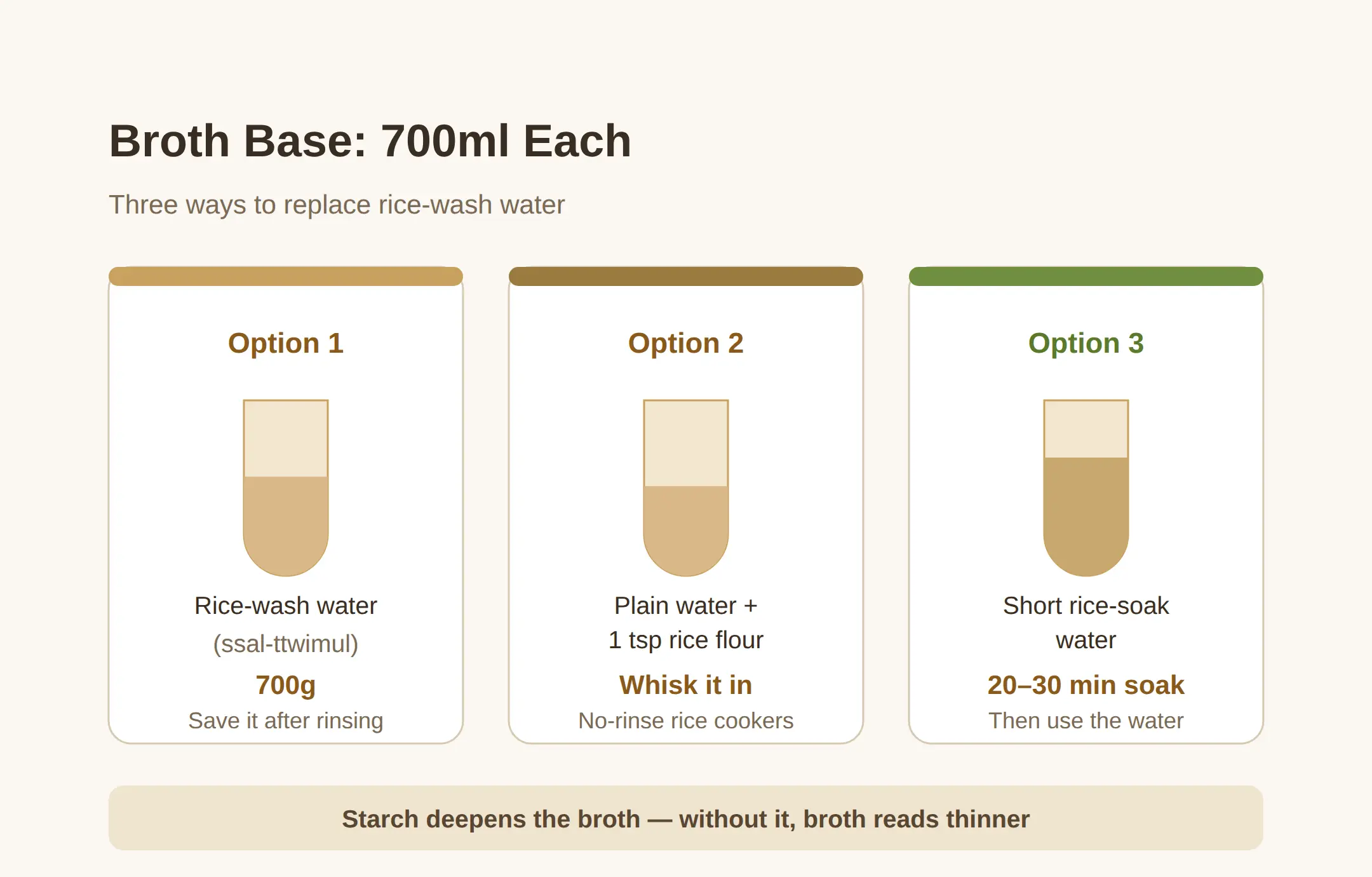
| Rice-wash water (ssal-ttwimul, 700g) | Plain water plus 1 tsp rice flour, or a short rice-soak water | Plays the same deepening role as the 700g in the Koreanet standard recipe |
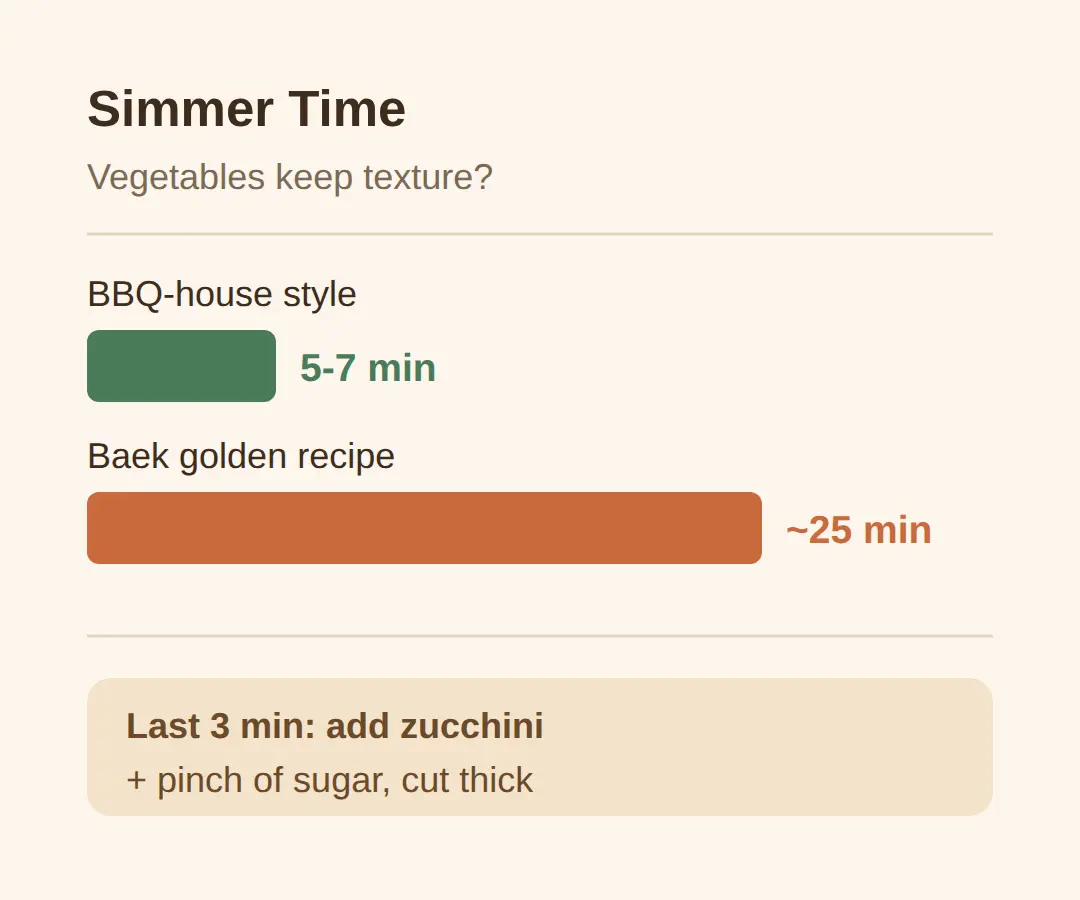
| Aehobak (Korean zucchini) | Regular zucchini, added in the last 3 minutes with a pinch of sugar | Regular zucchini is less sweet and collapses faster; aehobak is denser and sweeter |
| Raw anchovies + dashima | Half an onion simmered with the anchovy step, or 1–1.5 tbsp ssamjang stirred into plain-water broth | The broth carries the Korean identity when the paste is weak |
| Daepa (large green onion) | White parts of 2–3 scallions plus a thin slice of onion | A common swap listed on overseas-cook recipes |
Yes — miso replaces doenjang 1:1 in jjigae, and gochugaru or a splash of fish sauce goes in to make up for the missing funk.
Per Maangchi-style substitution guidance, miso can stand in for doenjang 1:1 in a pinch, but expect a sweeter, rounder taste (accessed September 29, 2026).
No dated source gives an exact miso-to-doenjang number per 700ml, so treat 1:1 as a starting point and taste the broth before adding more.
The reason the swap still works is that the jjigae reads Korean through the broth, not the paste.
When no soybean paste of any kind is available, the fix is to build the broth base first — anchovy and dashima, or shiitake and kombu — and season it with miso plus gochugaru plus fish sauce.
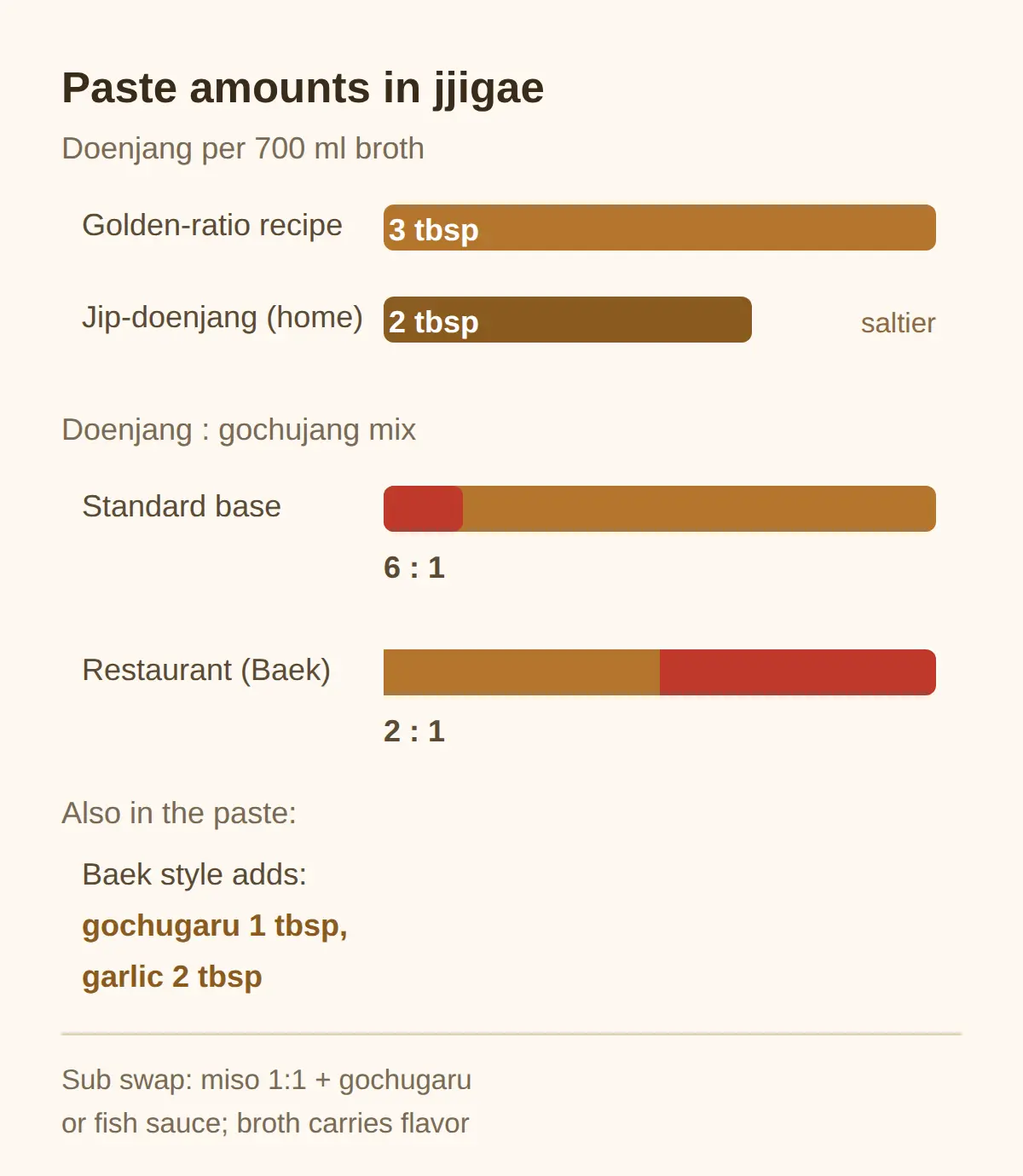
Per the Ministry of Culture Koreanet standard recipe, the base is 700g ssal-ttwimul (rice-wash water) with 3 tbsp doenjang per 700ml broth (accessed September 29, 2026).
If the pantry has miso but no doenjang anywhere, use the 1:1 swap and lean on the broth for the Korean identity.
If even miso is missing, the same broth-first build with miso, gochugaru, and fish sauce is the fallback — the paste is weak, so the broth has to carry the dish.
When checking any substitute, the first thing worth looking at is how the broth base gets built without Korean ingredients.
Cheonggukjang: the Closest Stand-in for Doenjang Funk
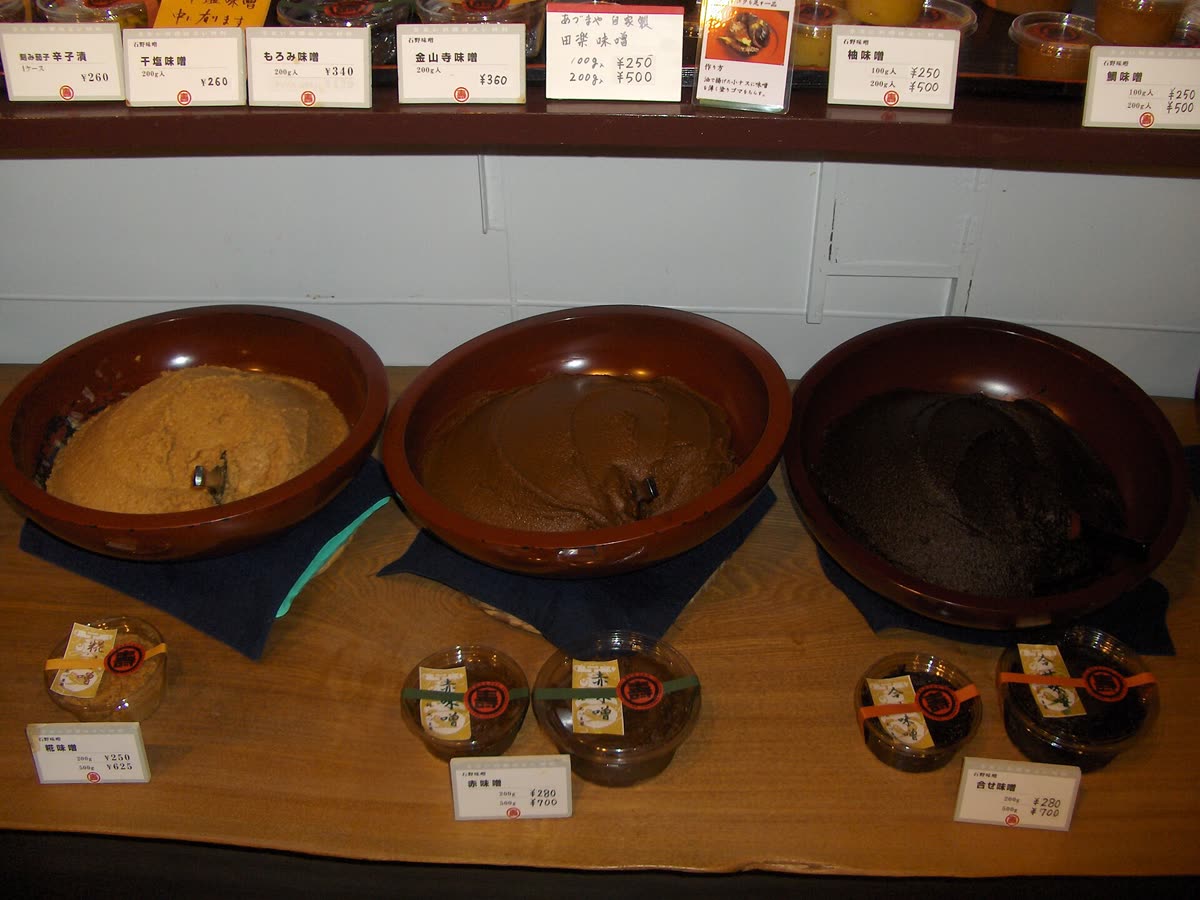
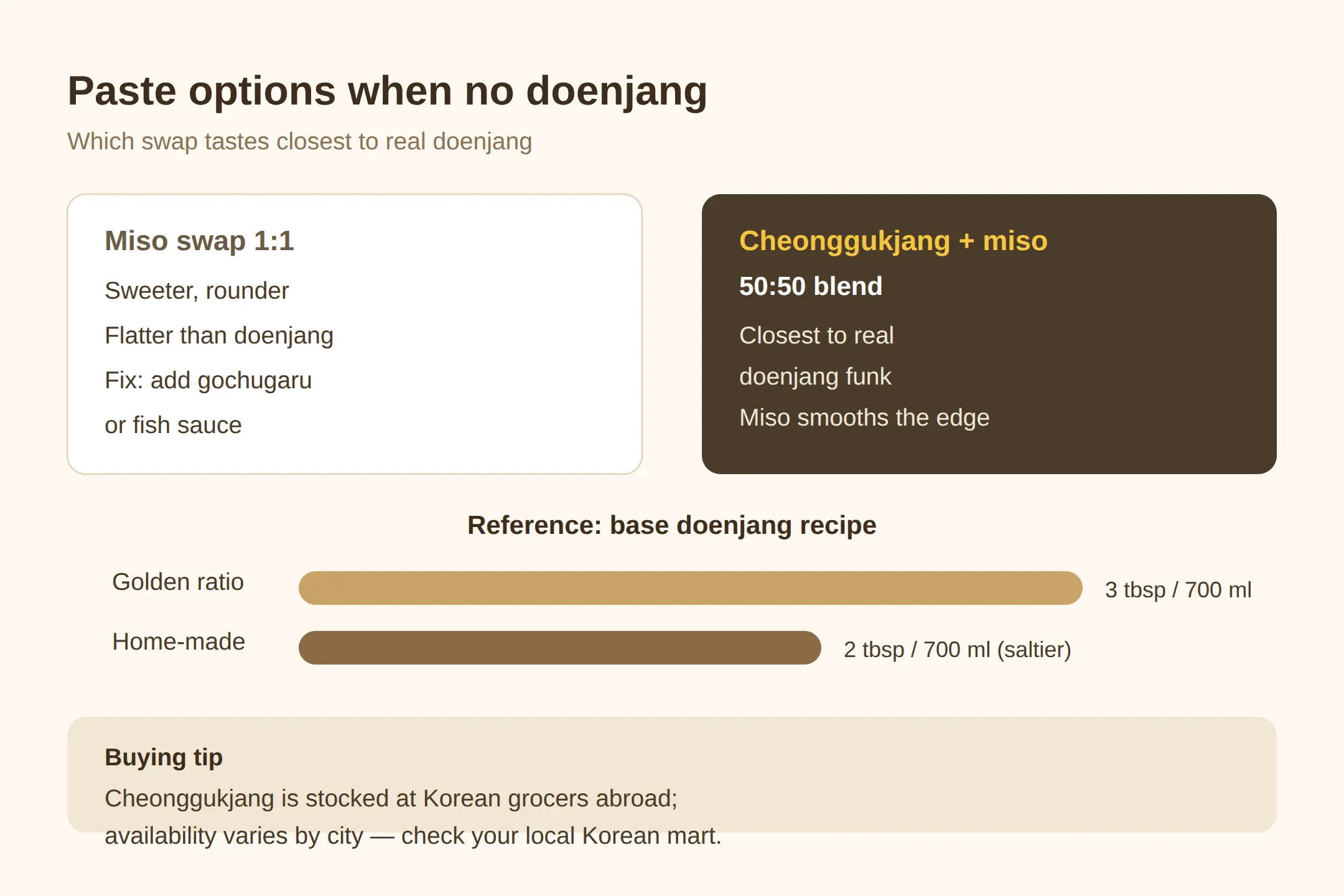
Cheonggukjang blended 50:50 with miso is the closest stand-in for deep doenjang funk.
Cheonggukjang is rapid-fermented strong bean paste, and it is widely stocked in Korean grocery stores abroad — though availability varies by country and city, so check the local Korean mart before planning a recipe around it.
If only one tub of cheonggukjang is on the shelf, the 50:50 blend with miso keeps the sweetness in check while the funk comes through.
The blend works because cheonggukjang supplies the sharp fermented smell that miso lacks, and miso smooths out cheonggukjang’s edge.
A 1:1 miso swap alone lands sweeter and flatter; the blend lands closer to market doenjang.
Doenjang itself is fermented soybean paste used as a seasoning, per the Ministry of Culture Koreanet entry (accessed September 29, 2026).
Readers who want the deepest funk should hunt for cheonggukjang first, and readers who want a one-supermarket trip should settle for miso plus gochugaru.
What Replaces Rice-Wash Water in Doenjang Jjigae?
Plain water plus 1 tsp rice flour, or the water from a short rice soak, replaces the 700g of ssal-ttwimul.
The Koreanet standard recipe uses 700g of ssal-ttwimul (rice-wash water) as the broth base, which is roughly the same 700ml volume the golden-ratio recipe calls for.
Cooks who rinse rice anyway can just save that water; cooks who use a rice cooker with no rinse can whisk in 1 tsp rice flour instead.
Rice-wash water is not decoration — the starch and rice solids deepen the broth the same way a stock would.
Water plus rice flour plays that same deepening role, and a short rice-soak water does it even better.
Without it, the broth reads thinner, which matters more when miso has already rounded off the paste’s depth.
If rice gets cooked in a rice cooker with no rinse, the 1 tsp rice flour route is the one that fits; if rice gets rinsed by hand, saving the wash water costs nothing.
Is Regular Zucchini Okay Instead of Aehobak?
Yes — regular zucchini replaces aehobak, but it goes into the pot in the last 3 minutes of simmering with a pinch of sugar.
Aehobak (Korean zucchini) is denser and sweeter than regular zucchini, and regular zucchini added at the same time as aehobak will collapse.
The pinch of sugar restores the sweetness that regular zucchini is missing.
The timing rule comes straight from the texture gap: aehobak holds its shape through a long simmer, while regular zucchini softens fast.
A 5-minute medium-heat window for zucchini and tofu is the standard add order, so regular zucchini fits inside the last 3 minutes of it.
For the green onion, Korean daepa can be swapped with the white parts of 2–3 regular scallions plus a thin slice of onion — a swap overseas-cook recipes commonly list.
If the store carries only regular zucchini, cut it thicker and hold it back to the end.
If aehobak is actually available, use it and add it on the normal schedule.
How to Fix the Rest of the Jjigae When Ingredients Don’t Match
The fix list is short: build the broth with what you have, pick the firm tofu, and add protein at the end.
When raw anchovies and dashima are unavailable, the Baek Jong-won version’s trick applies — simmer half an onion with the anchovy step for 5 minutes to remove fishiness and sweeten the broth when dashima-type stock is unavailable (accessed September 29, 2026).
Stirring 1–1.5 tbsp ssamjang together with the doenjang also deepens savoriness without any long broth-brewing.
The rest follows the same order rules as in Korea:
- Dissolve the doenjang (or miso) through a sieve into boiling broth.
- Add potato and onion first, 5 minutes on high heat.
- Add zucchini, tofu, and chili, 5 minutes on medium heat.
- Add garlic and scallion last, about 3 minutes.
Firm pan-fry tofu (buchim-yong dubu) holds its shape in the broth; silken tofu breaks down, so choose by which texture the pot needs.
Brisket (chadol) or seafood goes in 2 minutes before the end so it does not turn tough — per the restaurant-style recipe, the short 5–7 minute simmer keeps vegetables crisp (accessed September 29, 2026).
If tofu comes only in silken form abroad, cut it larger and treat it as a finishing ingredient rather than a simmering one.
Steps at a glance
-
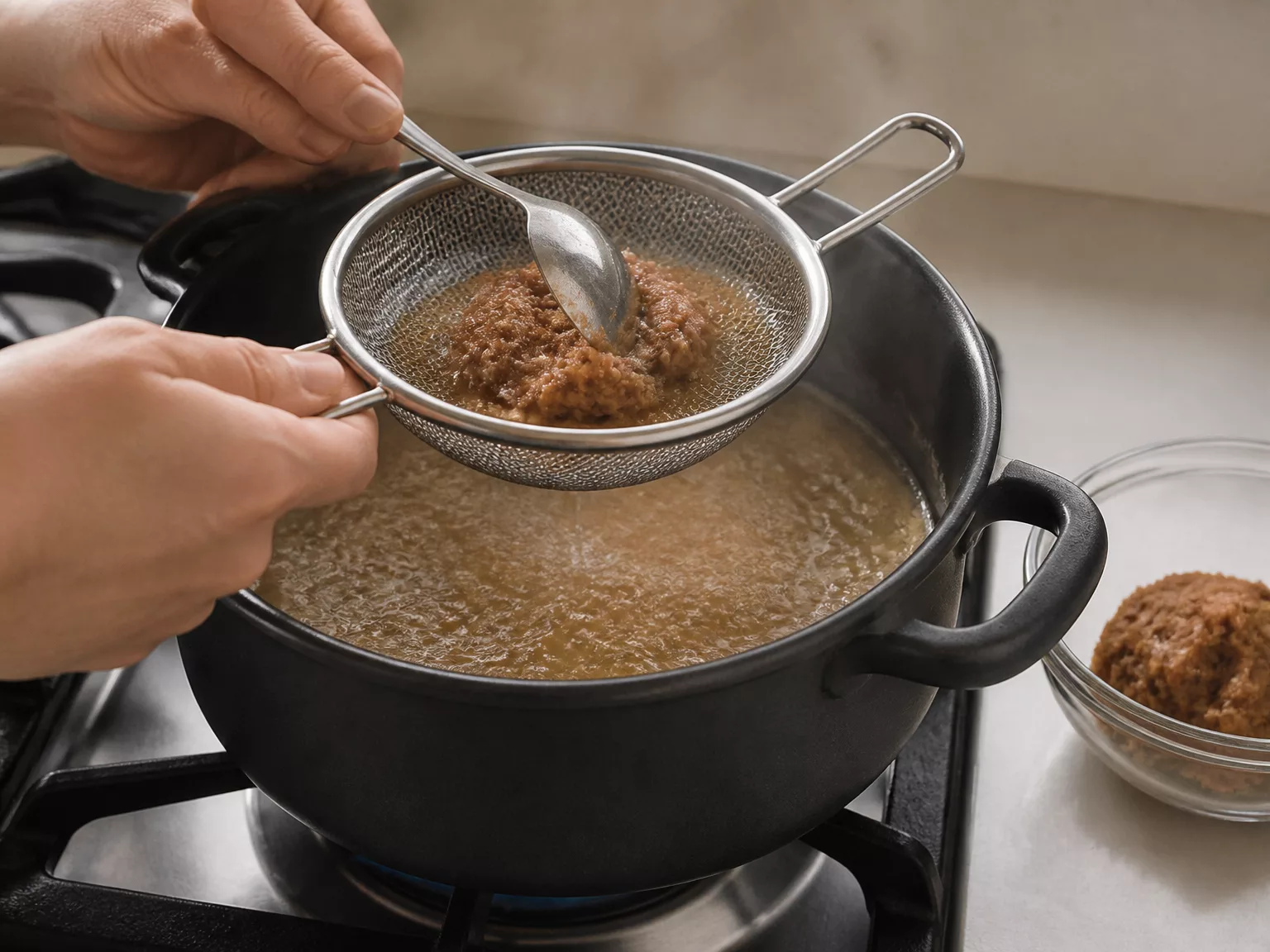 AI-generated photo
What it should look like — AI-generated image of this step, made from the recipe text — not a photo of our kitchen. 1Dissolve the doenjang (or miso) through a sieve into boiling broth. -
2Add potato and onion first, 5 minutes on high heat.⏱ 5 minutes🔥 high heat
-
3Add zucchini, tofu, and chili, 5 minutes on medium heat.⏱ 5 minutes🔥 medium heat
-
4Add garlic and scallion last, about 3 minutes.⏱ ~3 minutes
Which Doenjang Ratios Still Hold Abroad?
The 3 tbsp per 700ml standard holds, but home-made doenjang cuts to 2 tbsp, and the Baek version uses a different measure entirely.
The comparison below lines up the three numbers side by side, and the derived math gives 3 tbsp per 700ml as about 4.3 tbsp per 1L.
| Paste measure | Ratio | Notes |
|---|---|---|
| Market doenjang, golden-ratio recipe | 3 tbsp per 700ml broth | With 0.5 tbsp gochujang and 1 tbsp gochugaru |
| Home-made (jip-doenjang) | 2 tbsp per 700ml | Saltier than market doenjang |
| Baek Jong-won version | 60g doenjang per 750ml water | About 25 minutes total; a different number, not the 3-tbsp standard |
The two simmer styles differ by 18–20 minutes, so the choice is texture: 5–7 minutes for crisp vegetables like a BBQ-house pot, 25 minutes for a soft, mellow home pot.
If doenjang is unavailable altogether, the miso 1:1 swap with the same base arithmetic is the way in — the ratios above still set the frame.
If I had no doenjang at all, I would build the anchovy-dashima broth (or dashida in plain water) first and lean on ssamjang plus thin-sliced radish for depth, because a substitute paste alone tastes flat no matter how carefully I measure it.
What I check first is the salt level of the paste in front of me — a salty jip-doenjang or dark miso starts at 2 tbsp per 700ml, and I taste before adding more.
Related posts
📎 📅 Upcoming Dates — Release & Event Calendar
Sources
- 3 tbsp doenjang, 0.5 tbsp gochujang, 1 tbsp gochugaru per 70 (cookpick.kr)
- rice flour or rice-soak water workaround (korean-culture.org)
- Baek style doenjang:gochujang 2:1; 5–7 min simmer (cookpick.kr)
What to Check Before You Cook the Substitute Version
- Miso replaces doenjang 1:1 — add gochugaru or a splash of fish sauce, and treat 1:1 as a starting point, not a sourced exact number.
- Cheonggukjang blended 50:50 with miso is the closest stand-in for real doenjang funk.
- No rice-wash water? Water plus 1 tsp rice flour, or a short rice-soak water, plays the same deepening role as the 700g in the standard recipe.
- Regular zucchini softens faster than aehobak, so add it in the last few minutes and expect less sweetness — a pinch of sugar helps.
- Build the broth first (anchovy, or half an onion simmered 5 minutes); the jjigae reads Korean through the broth, not the paste.
- Home-made jip-doenjang is saltier than market doenjang — start at 2 tbsp per 700ml and taste before adding more.
FAQ
Q. Can I use miso paste instead of doenjang in jjigae?
Yes, at 1:1. Miso comes out sweeter and rounder, so add gochugaru or a splash of fish sauce to bring back the fermented funk.
Q. What can I substitute for doenjang and other jjigae ingredients outside Korea?
Miso 1:1 for the paste, cheonggukjang blended 50:50 with miso for deep funk, water plus 1 tsp rice flour for rice-wash water, regular zucchini in the last 3 minutes for aehobak, and scallion whites plus a thin onion slice for daepa.
Q. What replaces rice-wash water in doenjang jjigae?
Plain water plus 1 tsp rice flour, or the water from a short rice soak, replaces the 700g of ssal-ttwimul in the Koreanet standard recipe.
Q. Is regular zucchini okay instead of aehobak?
Yes, with two changes: add it in the last 3 minutes of simmering so it does not collapse, and add a pinch of sugar for the missing sweetness.
Q. How much doenjang goes into jjigae per 700ml?
The golden-ratio standard is 3 tbsp per 700ml with market doenjang; home-made doenjang is saltier, so 2 tbsp per 700ml. The Baek Jong-won version uses 60g per 750ml water instead.
The blog’s own doenjang ratio post covers the full 3-tbsp-per-700ml base recipe step by step; this post is the swap layer on top of it.
Cover photo: Doenjangwithbeans by Badagnani — CC BY 3.0
#doenjangsubstitute #misovsdoenjang #ricewashwatersubstitute #aehobaksubstitute #koreanfoodathomerecipes #doenjangjjigae
📅Upcoming Schedule — this week 23 · D-day Autumn season = post-summer brightening demand window (UV drSee all →