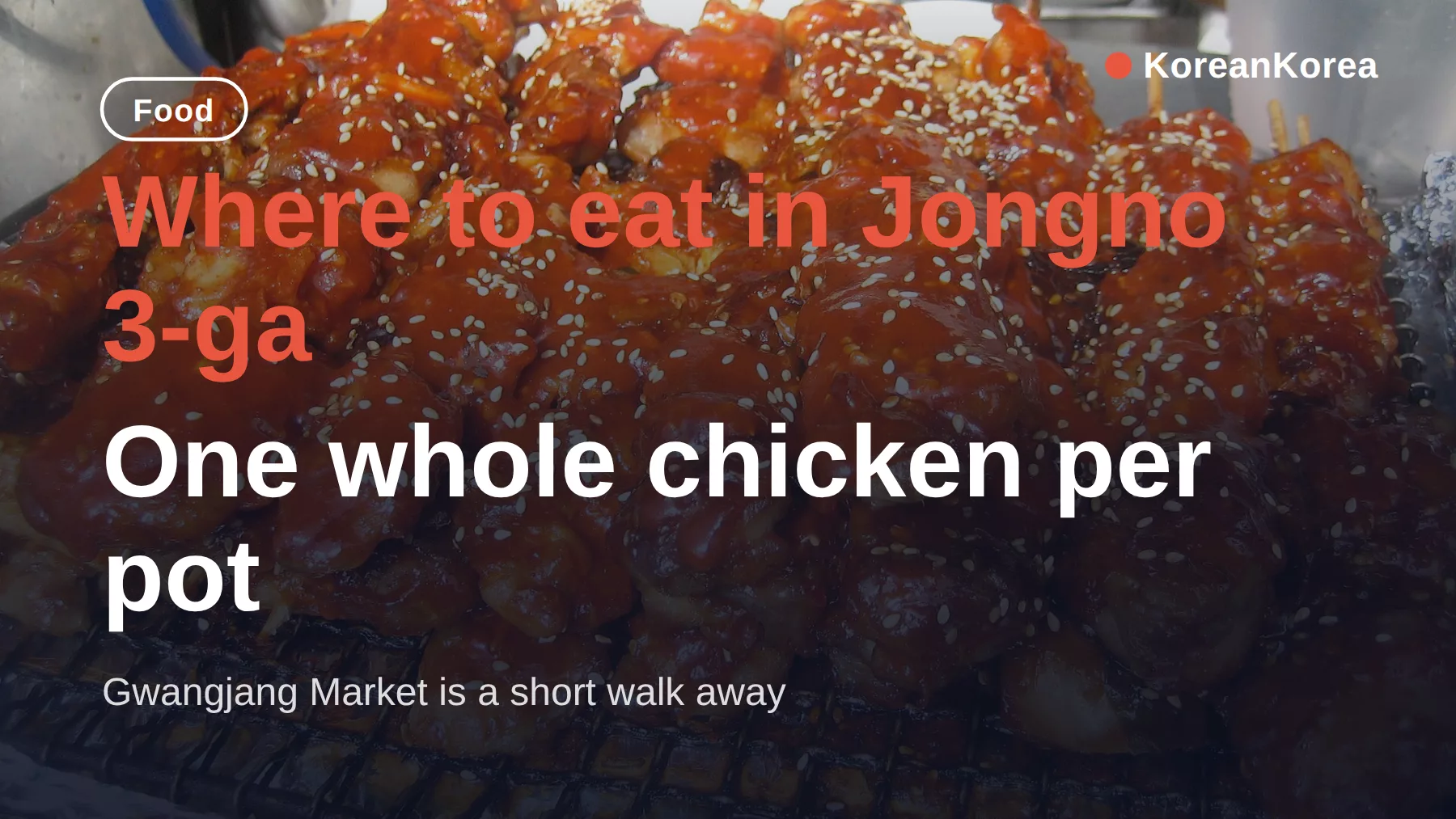
Time Out named Seoul’s Jongno 3-ga the coolest neighbourhood in the world on September 19, 2026.
For a visitor, that translates into one practical question: where to actually eat there.
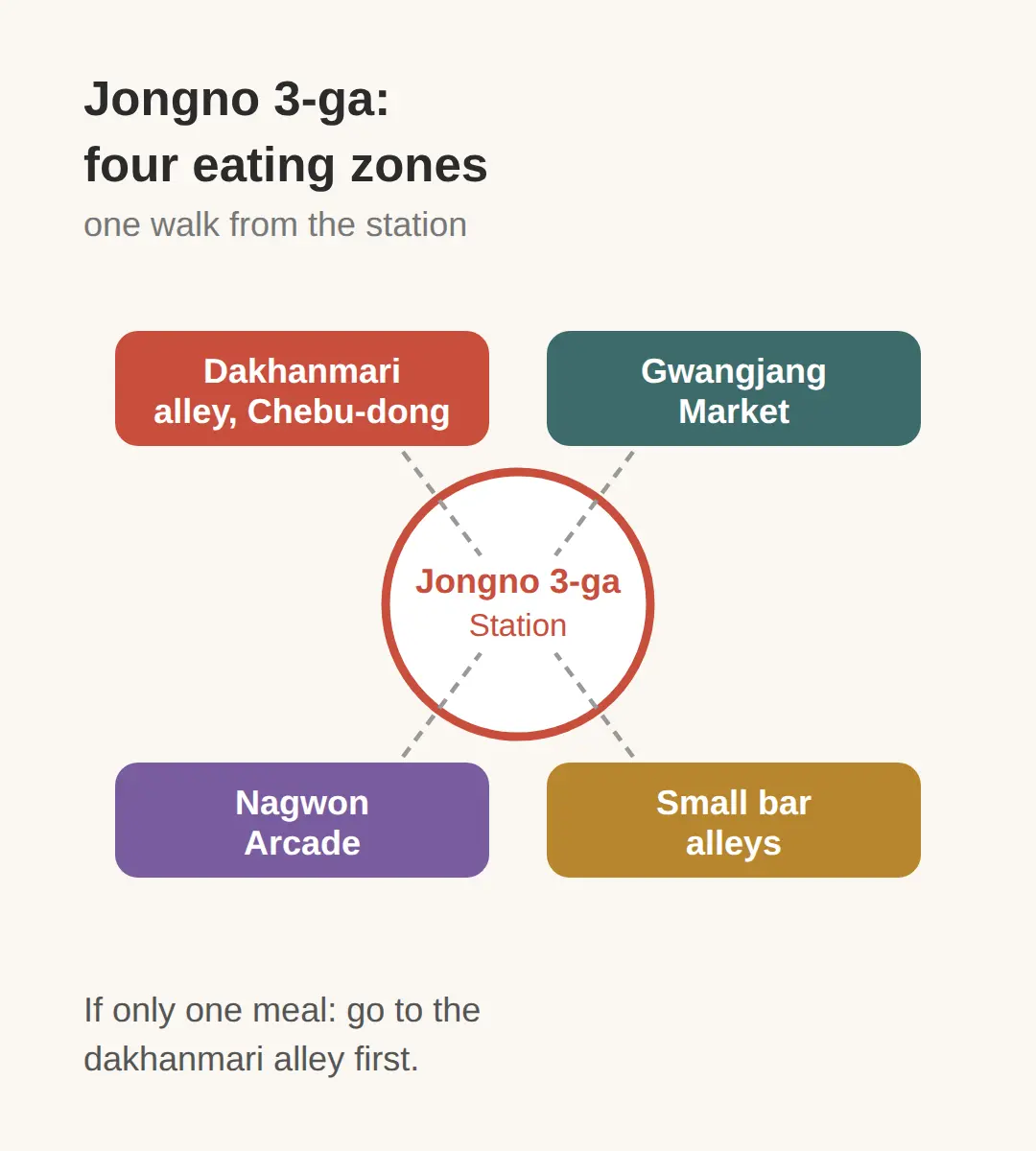
This post covers the four eating zones around the station — dakhanmari alley, Gwangjang Market, Nagwon Arcade and the evening bar alleys — and a route that links them on foot.
Contents
- Jongno 3-ga food: the four eating zones within one walk
- Dakhanmari alley: one chicken, one pot
- Gwangjang Market: three dishes to order and the 11:30-13:30 crunch to dodge
- Nagwon dakgangjeong and quick daytime bites
- One-day walking route around Jongno 3-ga
Jongno 3-ga food: the four eating zones within one walk
Four eating zones sit within walking distance of Jongno 3-ga Station: the Chebu-dong dakhanmari alley, Gwangjang Market, the Nagwon Arcade and the neighborhood’s small bar alleys.
Time Out’s September 19, 2026 write-up credits the area’s mix of traditional food alleys and small independent bars, so those two food formats are exactly what the list is pointing at.
Jongno 3-ga itself is central Seoul between historic Jongno and Cheonggyecheon, with the old alley districts of Chebu-dong and Nakwon-dong around the station.
When a ‘coolest neighbourhood’ list comes out, the first thing to check is whether it names actual places, because the useful answer is where to eat, not the ranking.
Time Out’s reasoning about food alleys and bars is confirmed, but the specific spots it highlighted were not, so the four zones here come from the area’s own established eating map.
If one meal is all the schedule allows, the Chebu-dong dakhanmari alley is the neighborhood’s defining stop.
| Chebu-dong dakhanmari alley | Whole-chicken pot houses, one bird per pot, a short walk from Exit 5 |
|---|---|
| Gwangjang Market | Traditional market: bindaetteok, mayak gimbap, yukhoe |
| Nagwon Arcade | Dakgangjeong (sweet fried chicken) sold by weight, take-home stop |
| Chebu-dong bar alleys | Small bars and pojangmacha-style night spots, including yatap buildings |
Dakhanmari alley: one chicken, one pot
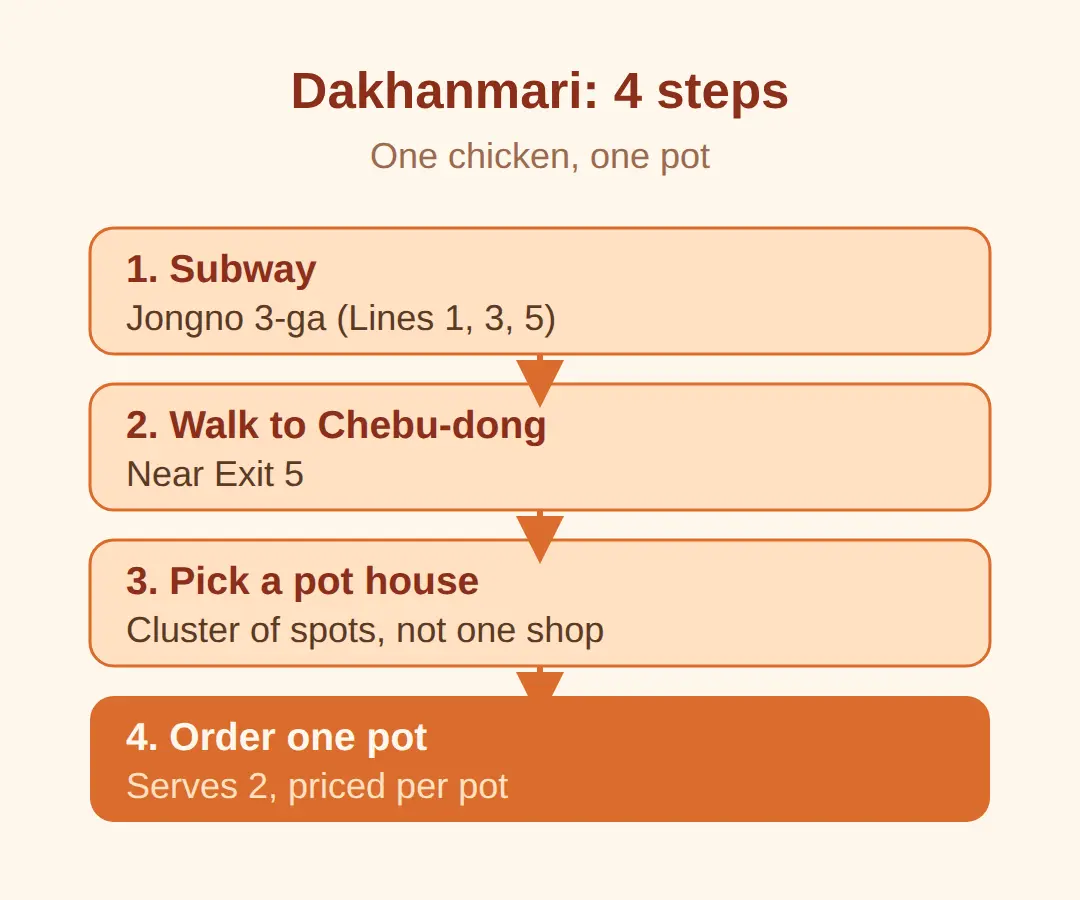
The dakhanmari alley sits in Chebu-dong, a short walk from Exit 5 of Jongno 3-ga Station, where decades-old houses sell one whole chicken per pot.
Dakhanmari means a whole chicken boiled in a simple pot, and one bird serves two people.
- Take the subway to Jongno 3-ga Station on Lines 1, 3 or 5.
- Walk toward Chebu-dong near Exit 5.
- Pick any of the clustered chicken-pot houses — the alley is a group of specialized spots, not a single restaurant.
- Order one pot for two people and share it.
Pricing is per pot, and no current per-pot figure has been verified recently, so check the menu board at the door before sitting down.
If traveling alone, a market stall with single portions is the easier format; if there are two of you, one pot is the neighborhood’s signature meal.
Gwangjang Market: three dishes to order and the 11:30-13:30 crunch to dodge
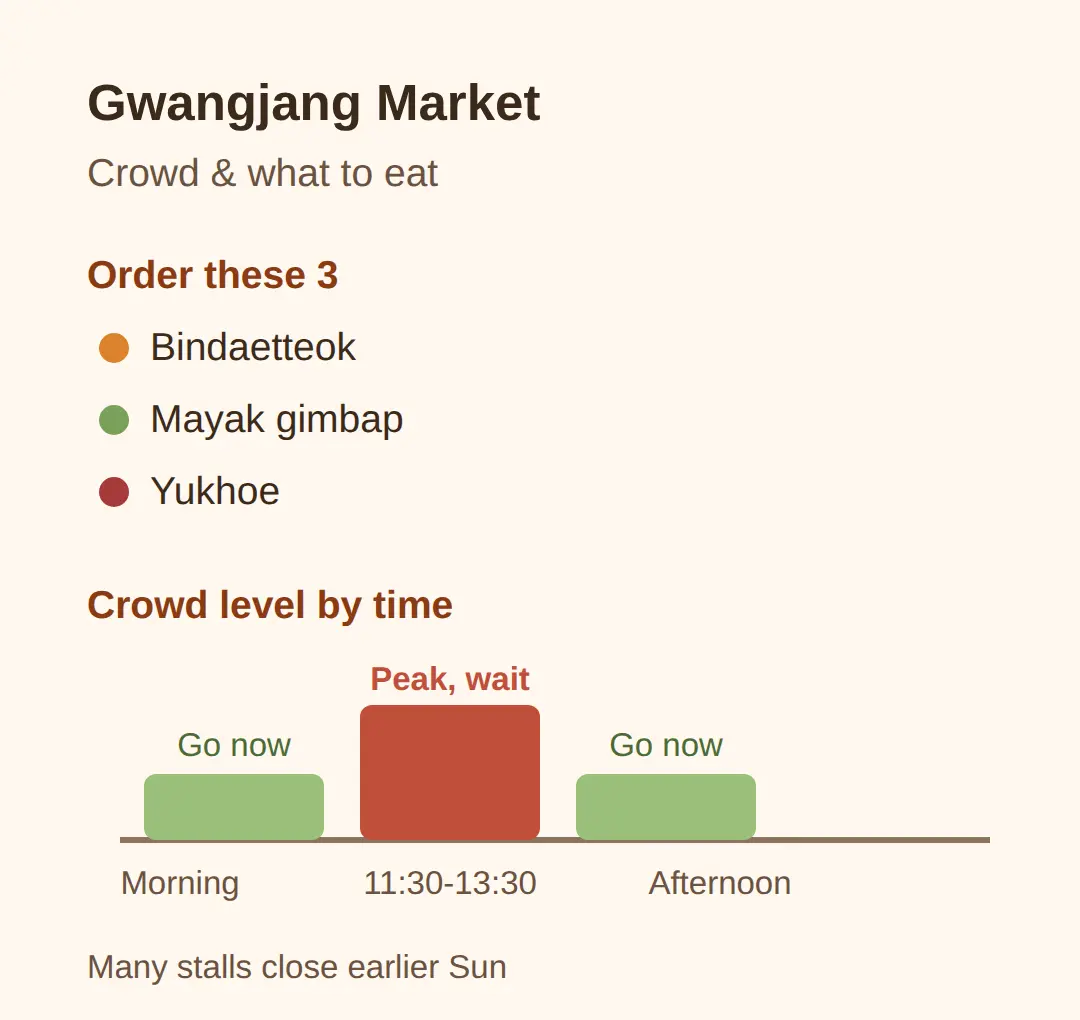
Gwangjang Market, a short walk from Jongno 3-ga Station, is the traditional-market stop, and the three dishes to look for are bindaetteok (mung-bean pancake), mayak gimbap and yukhoe (beef tartare).
Within the market, Sunhui-ne Bindaetteok and Wonjo Halmae Bindaetteok are the two most-referenced bindaetteok stalls in visitor reviews.
The food stalls are busiest at lunch, roughly 11:30 to 13:30, and individual stall hours vary, with many closing earlier on Sundays.
Many major Gwangjang spots now offer picture or English menus aimed at foreign visitors.
Aim for mid-morning or mid-afternoon if a crowd makes eating at a shared counter difficult; going right at noon means waiting.
For the bindaetteok choice, either of the two named stalls is a reasonable pick — both names recur in visitor reviews.
Nagwon dakgangjeong and quick daytime bites
The Nagwon Arcade, near Jongno 3-ga on the way to Insadong, is the take-home stop: dakgangjeong, sweet fried chicken, sold by weight.
It is a buy-by-the-gram purchase, so a small bag works as a snack and a larger one travels well; the current per-kilogram price has not been re-verified recently, so expect to weigh and pay at the stall.
For a daytime sit-down meal, Hwangsaengga Kalguksu near Tapgol Park is the long-running noodle house, known for hand-cut noodle soup and mandu.
Street toast shops (ggul toast, or honey toast) are typical quick-bite stops in the same area, and they run on daytime hours.
The daytime stops and the arcade close by early evening, so put them before dinner; the bar alleys belong to the evening.
If the day is short, kalguksu for lunch and a dakgangjeong bag for the road cover both formats.
One-day walking route around Jongno 3-ga
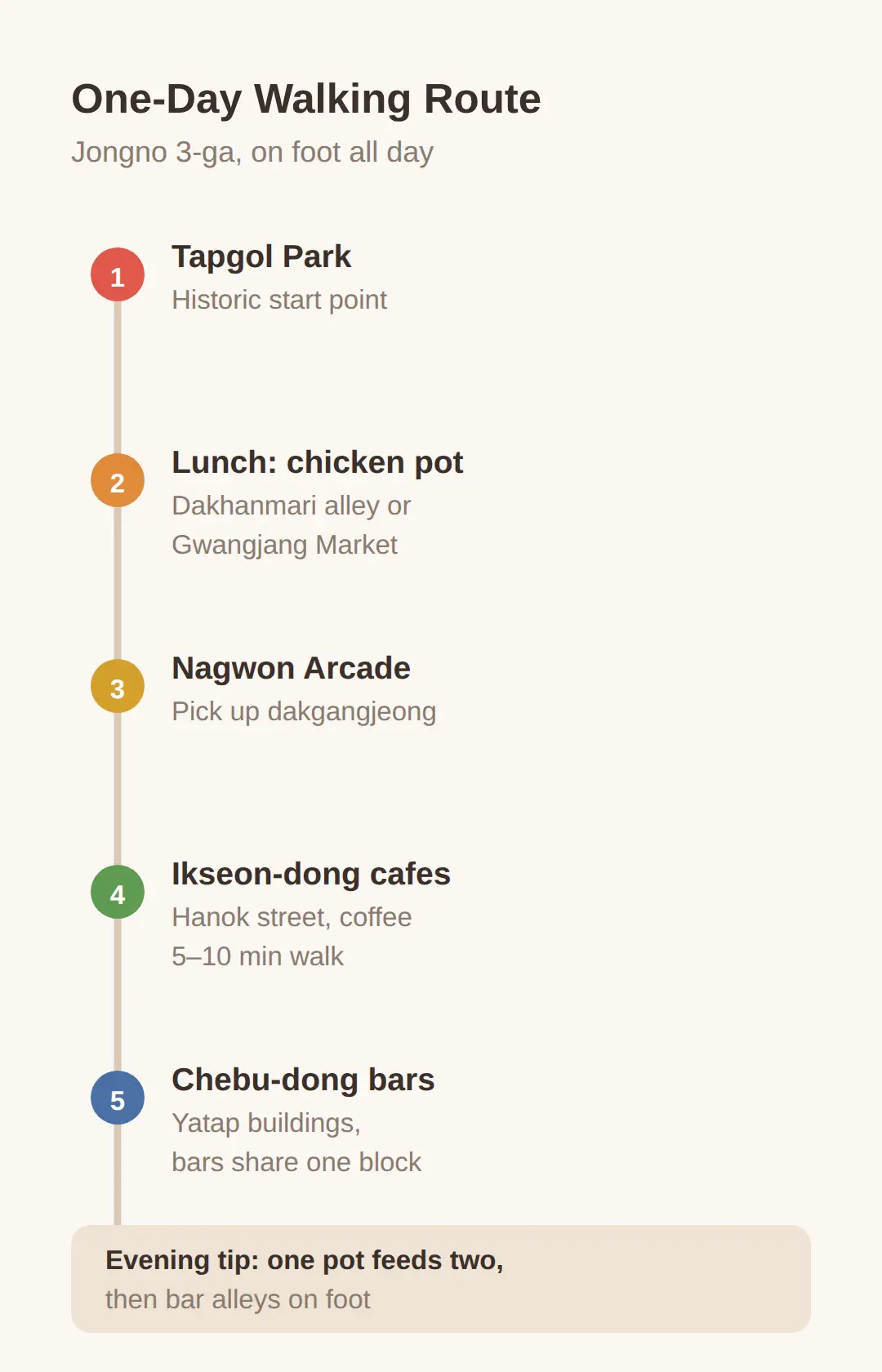
The stops around Jongno 3-ga form one walking route: arrive by subway, then do everything on foot.
- Start at Tapgol Park at Jongno 3-ga, the historic anchor between food stops.
- Have lunch at the dakhanmari alley or Gwangjang Market.
- Pick up dakgangjeong at the Nagwon Arcade on the way toward Insadong.
- Walk 5-10 minutes to the Ikseon-dong hanok café street for coffee and dessert.
- End the evening in the Chebu-dong bar alleys, including the yatap buildings where several small bars share one building.
The neighborhood’s alleys of small bars and pojangmacha-style spots make it an evening district as well, and Insadong sits next door to extend the walk.
A first evening there works best split in two: one chicken pot shared between two, then the bar alleys on foot, because the pot feeds two and the district is built for walking between stops.
If it were my first evening there, I would split it the same way — dakhanmari pot first, then the bar alleys — simply because the pot serves two and the district is built for walking between stops.
The reason I would not stack both into one sitting is that the pot alone is a full meal, and the alley bars only make sense on foot afterward.
Related posts
📎 Seoul — everything we know
📎 📅 다가오는 일정 — 발매·개봉·발표 캘린더
Sources
- No reliable recent info (koreaherald.com)
- No price data within 6-month window in this pass — left empt (google.com)
- Time Out coolest-neighbourhood list incl. Jongno 3-ga (reddit.com)
Jongno 3-ga food in short
- Four eating zones sit within one walk of Jongno 3-ga Station: dakhanmari alley, Gwangjang Market, Nagwon Arcade, and the Chebu-dong bar alleys.
- One dakhanmari pot is one whole chicken and serves two people; pricing is per pot.
- Check the stall boards before ordering, since reported figures are around 5,000-7,000 KRW for bindaetteok and 8,000-10,000 KRW for kalguksu, and may have shifted.
- Take the subway (Lines 1, 3 or 5) — the eating route itself is on foot.
FAQ
Q. Where exactly is the dakhanmari alley within Jongno 3-ga, and do multiple shops share it?
It is concentrated in Chebu-dong, a short walk from Exit 5 of Jongno 3-ga Station, and it is a cluster of decades-old whole-chicken-pot houses rather than one restaurant.
Q. Did the Time Out list itself name any specific restaurants in Jongno 3-ga?
The confirmed reason in Time Out’s write-up is the area’s mix of traditional food alleys and small independent bars; the exact spots it highlighted were not verified, so plan around the alleys themselves.
Q. Which single dish best represents Jongno 3-ga?
Dakhanmari — one whole chicken per pot, shared by two people — from the Chebu-dong alley is the neighborhood’s defining dish.
Q. Are Gwangjang Market stalls cash-only?
Most major stalls are reported to accept cards, and picture or English menus are common at the main spots; a few small pojangmacha-style bars prefer cash, so carrying some cash covers every case.
Q. Any must-eat places near Jongno 3-ga station?
The dakhanmari alley in Chebu-dong, Gwangjang Market’s bindaetteok and yukhoe stalls, Nagwon Arcade dakgangjeong, and Hwangsaengga Kalguksu near Tapgol Park — all within one walking route.
Time Out’s list went up on September 19, 2026; stall prices, individual opening hours and parking around Jongno 3-ga were not re-verified in this pass, so confirm figures at the stall or check the original Time Out piece before planning around them.
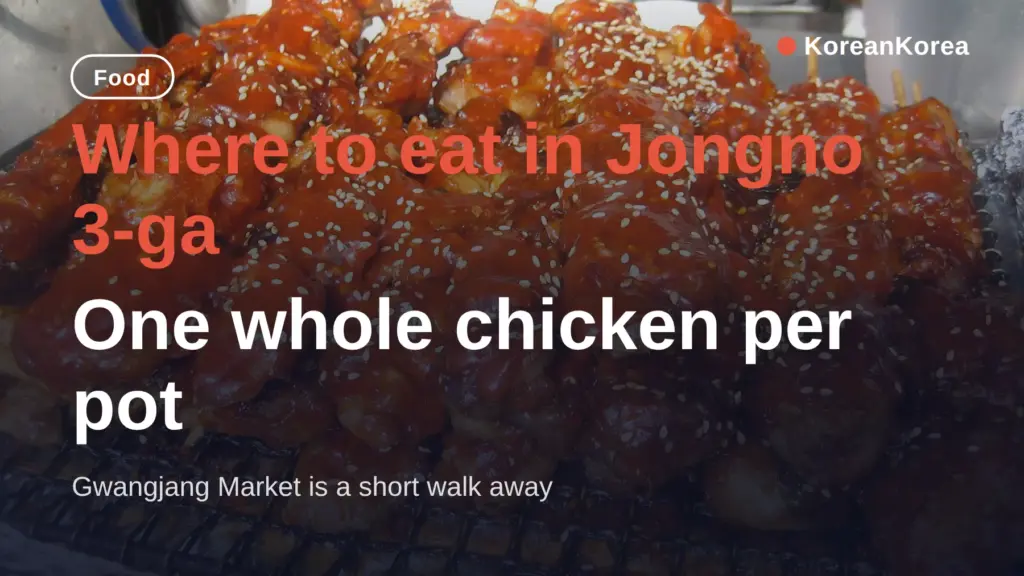
Cover photo: Korean street food-chicken by john wilbanks — CC BY-SA 2.0
#jongno3-gafood #wheretoeatinseoul #dakhanmari #gwangjangmarket #seoulfoodalleys
📅Upcoming Dates — 이번 주 19 · D-2 Final two episodes drop on Disney+/Hulu전체 보기 →