Yes, conditionally: genuinely fermented kimchi and doenjang carry live cultures (kimchi at 10^7–10^9 CFU/g) and fiber, but the benefit is partly offset by sodium unless a serving stays at 30–40 g.
Contents
- Is Korean food good for gut health? What decides it is fermentation and serving size
- Does kimchi have live probiotics?
- How much kimchi per day for gut health?
- Does doenjang have probiotics — and how does it differ from kimchi?
- Is kimchi bad for you because of sodium?
- Who should not eat kimchi?
Is Korean food good for gut health? What decides it is fermentation and serving size
It can be — the case rests on genuinely fermented foods like kimchi and doenjang, which supply live bacteria and fiber, with sodium as the offsetting condition.
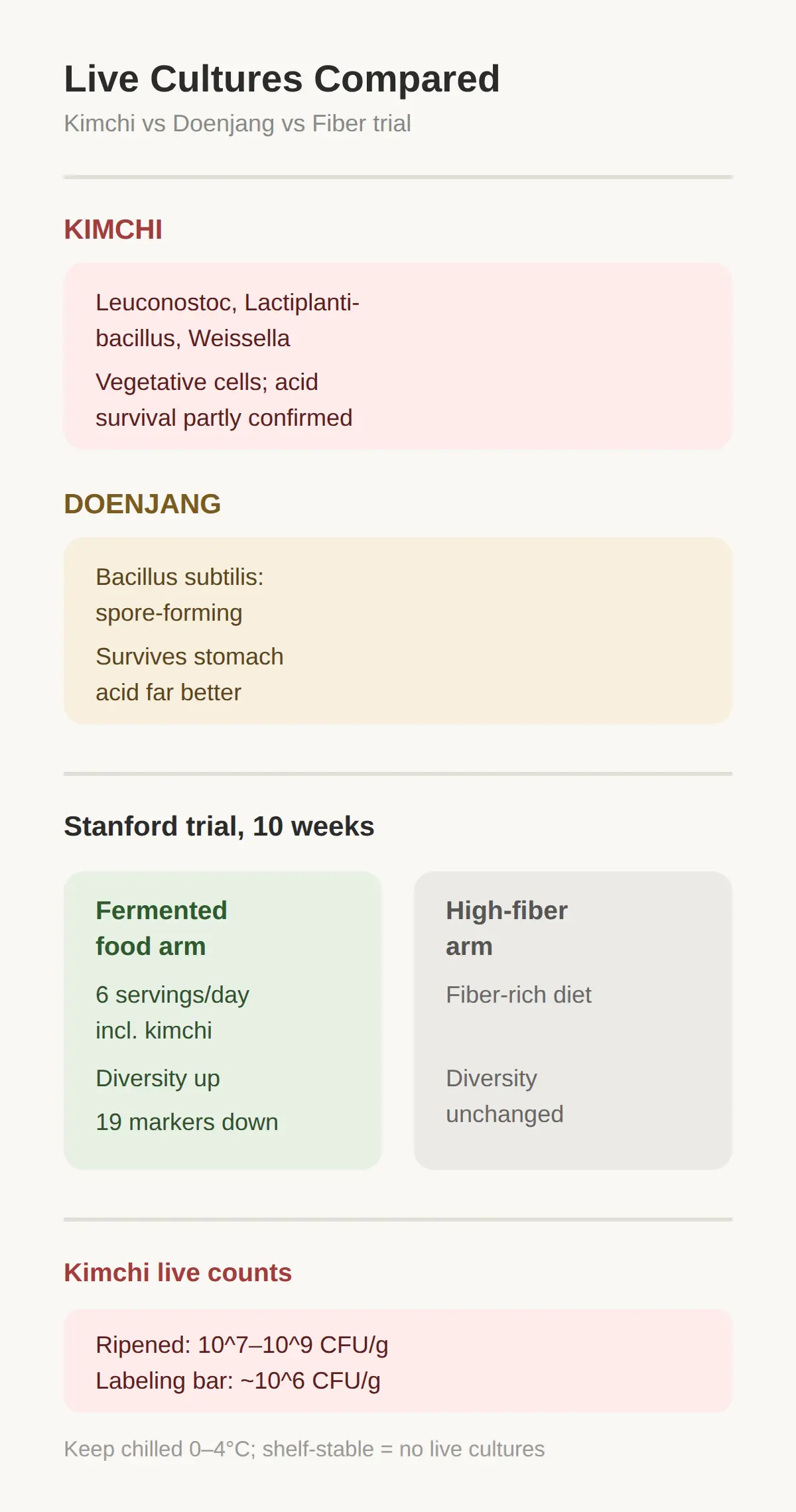
Freshly fermented kimchi typically carries 10^7–10^9 live lactic acid bacteria per gram, and baechu kimchi adds fiber from cabbage, garlic, ginger and green onion that feeds gut microbes.
Regular kimchi intake has been linked in studies to higher gut microbiota diversity and more beneficial bacteria, though most trials are small and short-term.
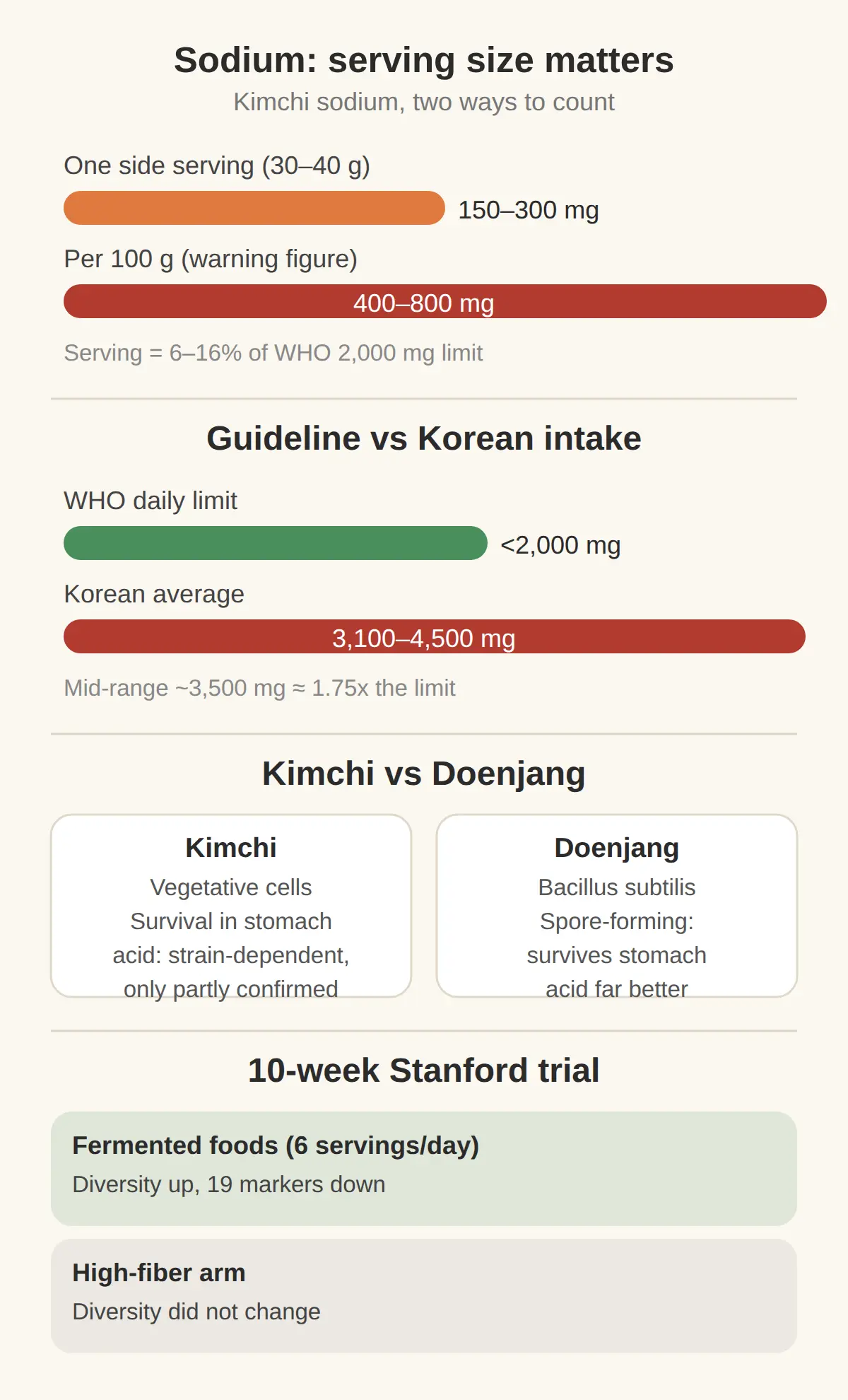
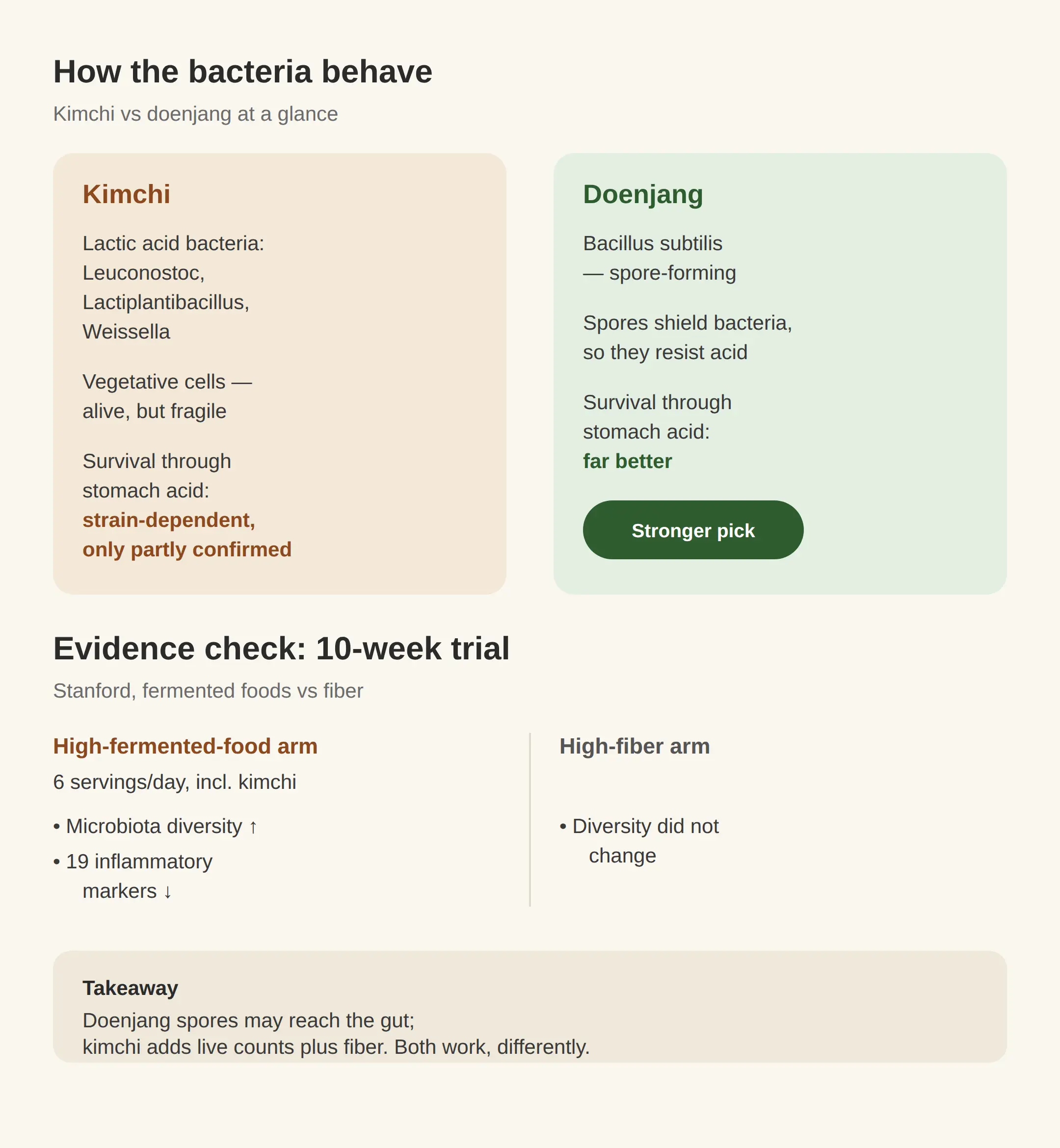
A 10-week diet study had participants eat 6 servings of fermented foods a day, kimchi among them; their gut bacteria diversity increased and 19 inflammatory markers went down, while a high-fiber group’s diversity did not change.
So fermented foods and fiber work through different routes, and both fit a Korean table.
The condition is fermentation and portion: heat-treated kimchi loses the live cultures, and sodium climbs with every extra serving.
If the question is whether Korean food helps your gut, the honest answer is that one small serving of the real thing does, and a large pile of it does the opposite.
| Normal Korean-style meal with a small kimchi side dish | Keep the serving at 30–40 g — 120–320 mg sodium, 6–16% of the WHO 2,000 mg limit, plus live bacteria and fiber |
|---|---|
| Store-bought kimchi labeled heat-treated or vinegar-pickled | Don’t count on live probiotics; the cabbage, garlic and ginger fiber still feeds your gut bacteria |
| Kimchi with every meal, large portions, several times a day | Cut back — very high intake (over 3 servings a day) is the pattern Korean studies link to higher gastric cancer risk |
| Choosing between doenjang and kimchi | Doenjang’s Bacillus survives stomach acid far better; kimchi’s bacteria mostly pass through — both count, for different reasons |
| Active ulcer, reflux flare, sodium-restricted medical diet, or weakened immune system | Limit kimchi, and be careful with raw unpasteurized ferments |
Does kimchi have live probiotics?
Only if it is genuinely fermented and kept refrigerated — kimchi labeled heat-treated or vinegar-pickled contains few or no live bacteria.
Live-bacteria kimchi keeps fermenting in the container, and refrigeration at 0–4°C slows that down, which is why real kimchi is sold cold.
Fermentation runs in stages: early on Leuconostoc leads, and as acidity rises Lactiplantibacillus takes over, with counts peaking at roughly 10^8–10^9 CFU/g at optimal ripening around pH 4.2–4.5.
Ripened kimchi commonly sits at 10^7–10^9 CFU per gram, far above the roughly 10^6 CFU/g level often discussed for probiotic-food labeling.
When buying kimchi abroad, the first thing to check is the label and the shelf: if it says heat-treated or vinegar-pickled, the live-culture story is off the table, and if it sits on a shelf rather than in a chiller, treat it the same way.
Whether kimchi’s bacteria survive stomach acid and settle in the gut long-term is still debated, so the practical habit is eating it regularly rather than expecting one bowl to change anything.
How much kimchi per day for gut health?
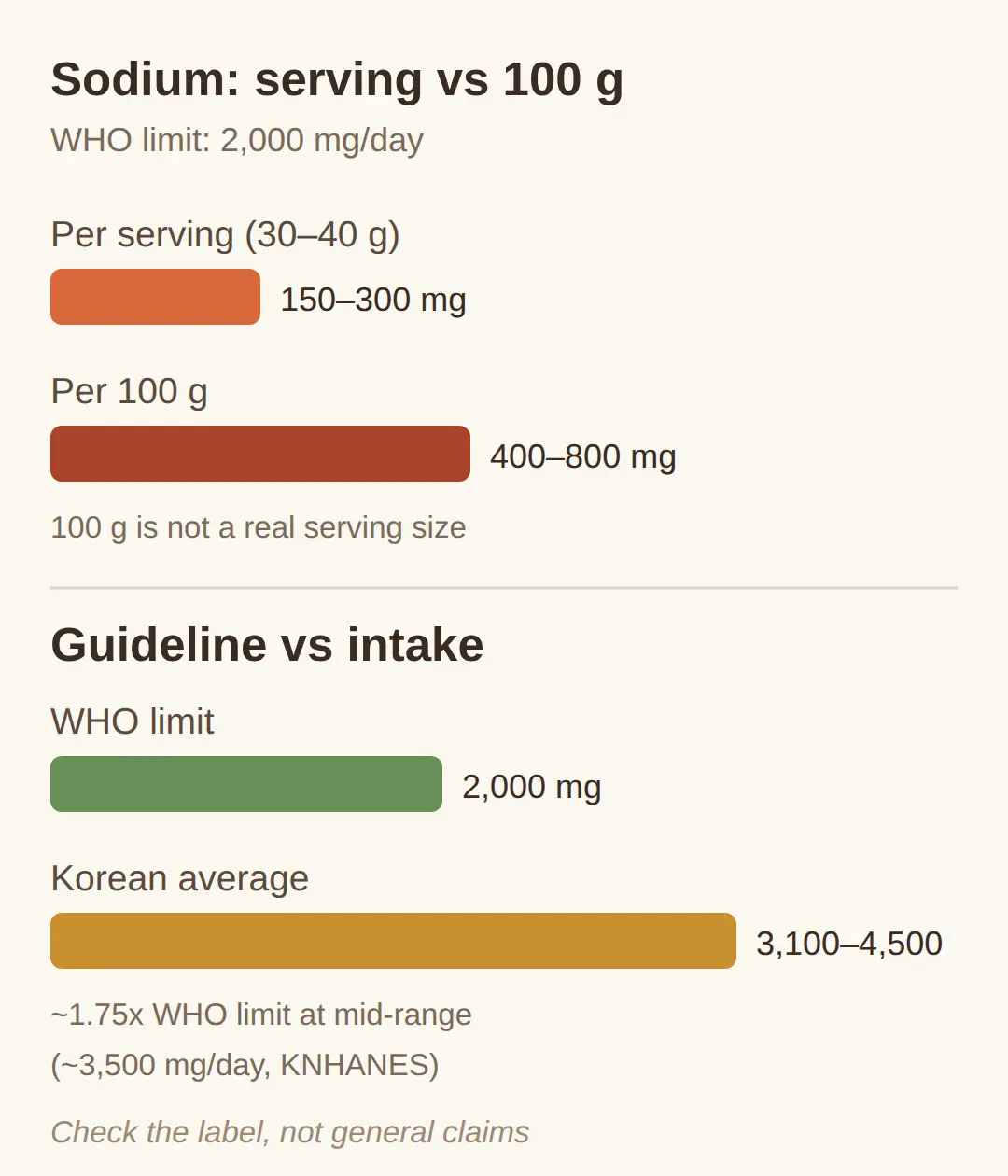
A 30–40 g side serving is the working portion: it supplies roughly 120–320 mg sodium, about 6–16% of the WHO adult daily limit of 2,000 mg.
The sodium figures that look alarming — 400–800 mg per 100 g — describe a portion far larger than what a side dish actually weighs, so a normal serving holds sodium to a small share of the day’s limit.
For scale, national surveys in South Korea put average adult kimchi intake at roughly 60–90 g a day, with older adults eating more and younger adults less, so the realistic benchmark is one to two small servings, not a heaping bowl.
Korean studies tie very high salted-vegetable intake — more than 3 servings a day — to higher gastric cancer risk, while moderate intake shows no consistent link.
If your meals already lean salty, adding a large daily portion of kimchi adds to an existing sodium load rather than fixing anything; one 30–40 g serving with a meal is the pattern that keeps the upside.
For reference, that serving is only about 4.5–6 kcal, so portion control here is about sodium, not calories.
Does doenjang have probiotics — and how does it differ from kimchi?
Yes, doenjang carries Bacillus subtilis, and its spore-forming design survives stomach acid far better than kimchi’s vegetative lactic acid bacteria.
Kimchi’s bacteria — Leuconostoc, Lactiplantibacillus, Weissella — are live vegetative cells, so their survival through digestion is strain-dependent and only partially confirmed.
Doenjang’s Bacillus forms spores, which is one reason fermented soybean pastes keep coming up in gut-health discussions.
Gochujang sits lower on the list: its high salt and sugar environment means less live-culture content, and the evidence for gut benefits is thinner than for kimchi.
If you want the ferment most likely to deliver bacteria that reach the intestine, doenjang in soup or seasoning is the sturdier pick, while kimchi earns its place through live counts plus fiber.
Both count in a routine; they just work differently.
Is kimchi bad for you because of sodium?
Only at large, frequent intakes — one 30–40 g serving is 6–16% of the WHO 2,000 mg daily sodium limit, and the risk pattern in Korean data shows up above 3 servings a day.
Context matters here: reported average sodium intake in South Korea runs roughly 3,100–4,500 mg a day depending on the survey year, well above the WHO limit, and kimchi is eaten with most meals.
High salt intake has been reported to reduce some beneficial gut bacteria and promote inflammatory responses in animal studies, with human evidence still emerging, and human salt-reduction studies show some of those microbiota changes partly reversing after sodium goes down.
The gastric cancer association in Korean cohort studies is attributed mainly to sodium and salt rather than fermentation itself.
The lever is portion size, not avoidance: a 100 g figure from a sodium warning is not what a side serving weighs, so holding to 30–40 g keeps kimchi inside a low-sodium frame.
If your overall diet is already near or over the WHO limit, treat extra kimchi as extra sodium first and a probiotic second.
Who should not eat kimchi?
The groups most often advised to limit kimchi are people with active gastric ulcers, reflux flares, or medically sodium-restricted diets; people with weakened immune systems are also told to approach raw, unpasteurized ferments cautiously.
Chili, garlic and salt can irritate an active ulcer or reflux, which is why Korean clinical guidance summaries most often name these conditions when advising limits on kimchi.
Live ferments carry uncontrolled microbes by nature, so immunocompromised readers are generally listed among those who should be careful with raw kimchi and home ferments.
Korean manufacturers sell reduced-sodium kimchi lines, though exact per-100 g values were not verified on manufacturer pages, so check the label rather than trusting a general claim.
If you fall into one of these groups, the safe move is a smaller portion of milder, cooked Korean dishes and a conversation with your clinician before making raw kimchi a daily habit.
If I were building this into a daily routine, the first thing I would check is the label for genuine fermentation and pasteurization, because that single detail decides whether any probiotic benefit exists at all.
Personally, I would keep one small side serving a day and treat kimchi as a condiment, not a main dish — that is where the fiber and live-culture upside stays ahead of the sodium cost.
Related posts
Sources
- kimchi_fermentation_type (pubmed.ncbi.nlm.nih.gov)
- pasteurized_kimchi (pubmed.ncbi.nlm.nih.gov)
- Dominant LAB genera in kimchi fermentation: Leuconostoc, Lac (journalofethnicfoods.biomedcentral.com)
If you’re building Korean ferments into a routine from abroad
- Check the label for heat-treatment or vinegar pickling before believing any probiotic claim — and check that the product is actually sold refrigerated.
- Aim for one 30–40 g serving of genuinely fermented kimchi with a meal; that holds sodium at 6–16% of the WHO daily limit while delivering live bacteria and fiber.
- Rotate doenjang in for its spore-forming Bacillus, which survives stomach acid far better than kimchi’s bacteria.
- Treat kimchi’s benefit as something that comes from regular small servings — most of its bacteria appear to pass through rather than settle permanently.
- If you eat kimchi several times a day in large portions, that is the intake pattern linked to higher gastric cancer risk in Korean studies — cut back before adding anything else.
FAQ
Q. Is Korean food good for gut health?
Yes, with conditions: genuinely fermented kimchi and doenjang supply live cultures and fiber, but sodium offsets the benefit unless servings stay at 30–40 g.
Q. Does kimchi have live probiotics?
Only genuinely fermented, refrigerated kimchi — typically 10^7–10^9 live lactic acid bacteria per gram. Heat-treated or vinegar-pickled kimchi contains few or none.
Q. How much sodium is in a serving of kimchi?
A 30–40 g side serving supplies roughly 120–320 mg sodium, about 6–16% of the WHO adult daily limit of 2,000 mg.
Q. Does pasteurized kimchi still have probiotics?
No live cultures survive pasteurization or vinegar pickling, but the cabbage, garlic and ginger fiber still feeds your resident gut bacteria.
Q. Is doenjang good for gut bacteria?
Doenjang’s Bacillus subtilis is spore-forming, so it survives stomach acid far better than kimchi’s lactic acid bacteria, whose survival is strain-dependent and only partly confirmed.
The Stanford-style target worth noting: benefits in the fermented-food arm scaled with servings — 6 a day over 10 weeks, about 420 servings total — but that was a supervised study, not a home prescription; one serving with a meal is the realistic daily anchor.
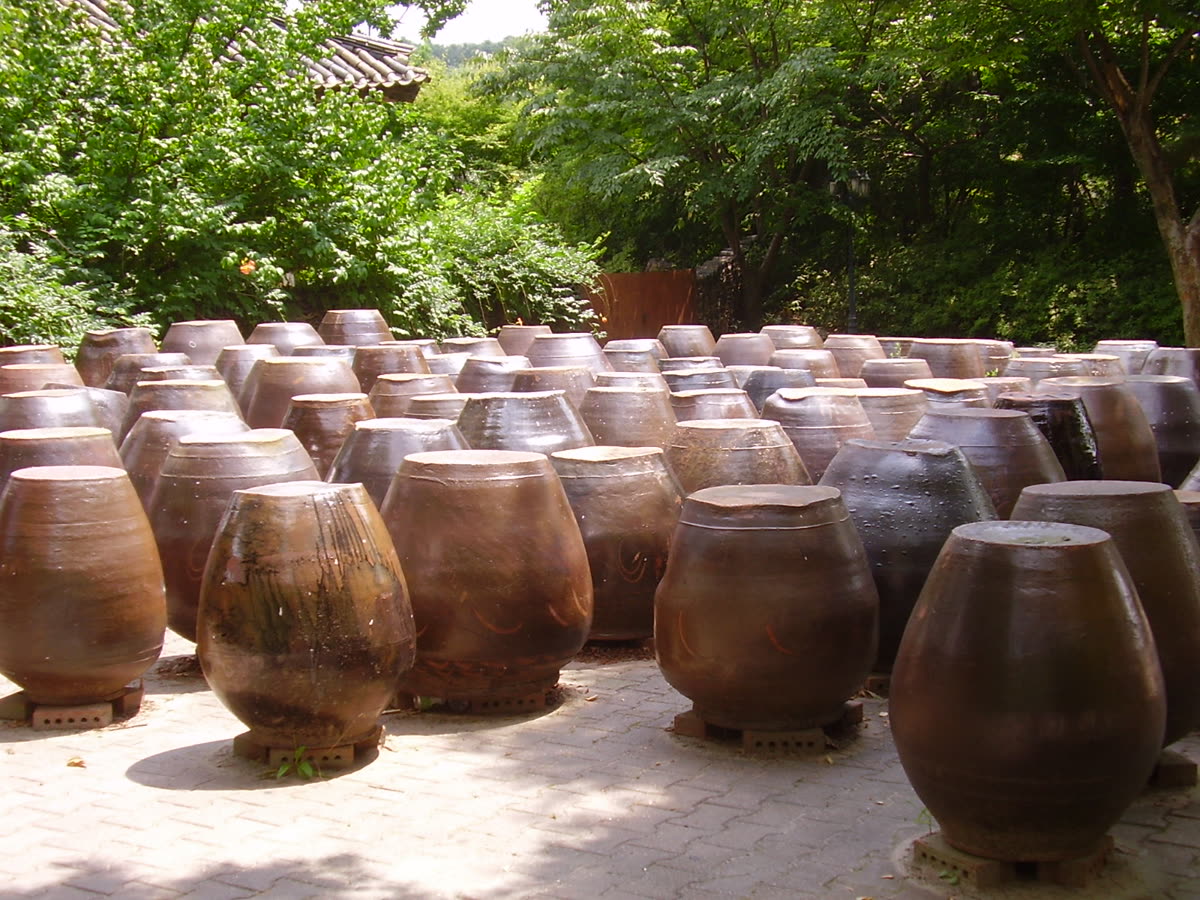
Cover photo: Kimchi jar by OlkhichaAppa — CC BY-SA 3.0
#kimchi #guthealth #probiotics #koreanfood #doenjang #sodium
📅Upcoming Dates — 이번 주 19 · D-2 Final two episodes drop on Disney+/Hulu전체 보기 →