
Sigeumchi namul is the seasoned spinach side dish that shows up on almost every Korean table, and it takes 10-15 minutes from blanching to finished plate.
If you are vegetarian, the deciding ingredient is not spinach — it is whether the seasoning used soy sauce or fish sauce.
This post covers what the dish is called, the amounts for one bunch, the vegan check, the two seasoning styles, and where to buy it in Korea.
What Is the Korean Spinach Side Dish Called?
| Spinach | 1 bunch (250-300g) |
|---|---|
| Minced garlic | 1 tsp |
| Soy sauce (or 0.5 tsp salt) | 1 tbsp |
| Sesame oil | 1 tbsp |
| Toasted sesame seeds | to taste |
The Korean spinach side dish is sigeumchi namul: spinach blanched for 30-60 seconds, squeezed dry by hand, then seasoned with soy sauce, garlic, sesame oil and toasted sesame seeds.
‘Sigeumchi’ means spinach and ‘namul’ means a seasoned vegetable side dish, so the name says exactly what it is.
‘Korean spinach side dish’, ‘sigeumchi namul’ and ‘korean banchan spinach’ all refer to the same dish — the wording just changes.
You will meet it in three places: as one of many banchan (side dishes) at restaurants, as a standard topping on bibimbap including jeonju bibimbap, and as a vegetable filling in gimbap.
It is served at room temperature or chilled, alongside rice and soup, and it does not need reheating.
How Do You Make Sigeumchi Namul at Home?
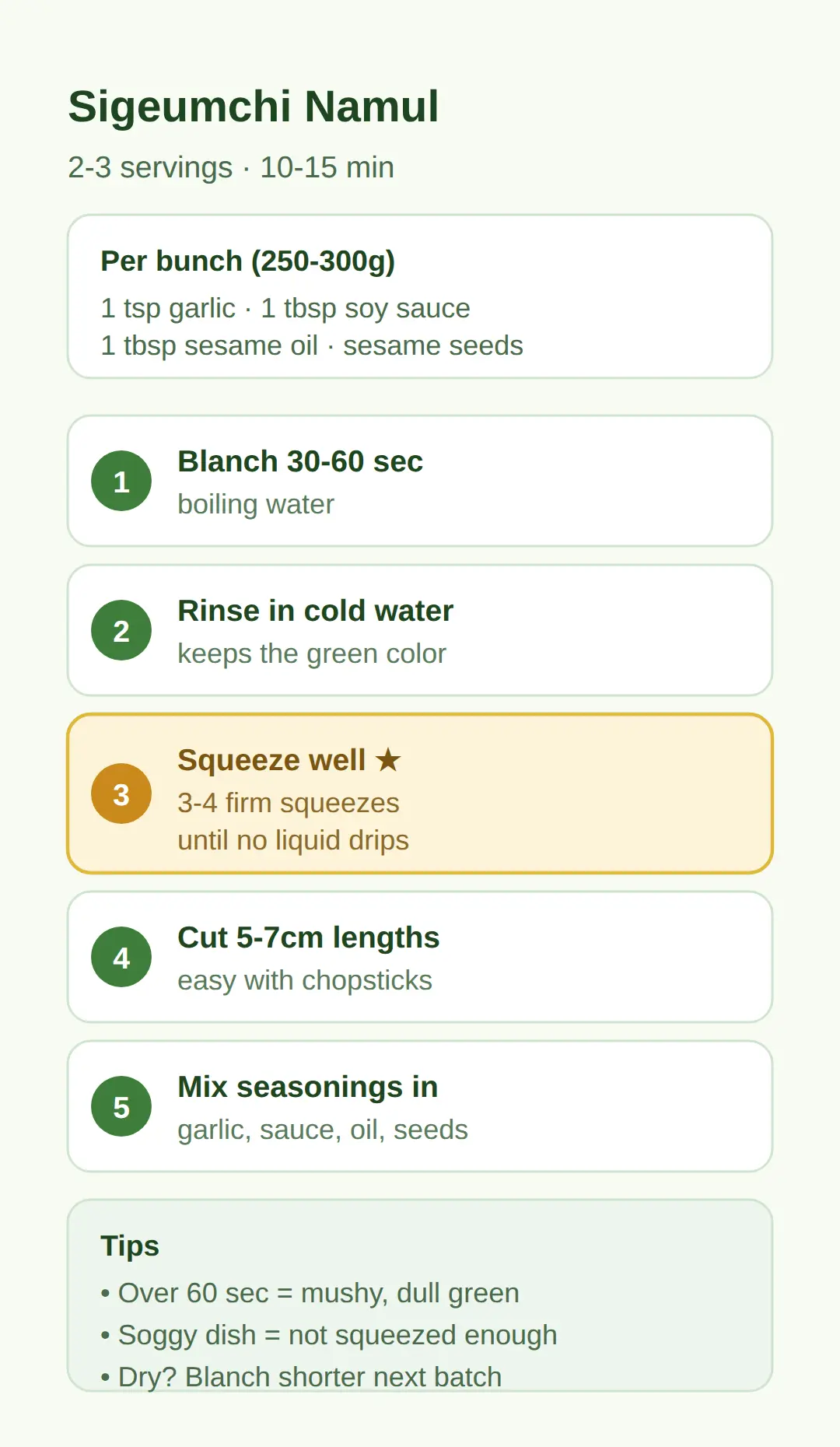
One bunch of spinach (250-300g) makes 2-3 side-dish servings and takes about 10-15 minutes from blanching to finished dish.
The amounts are in the table: 1 tsp minced garlic, 1 tbsp soy sauce, 1 tbsp sesame oil, sesame seeds to taste.
- Blanch the spinach in boiling water for 30-60 seconds.
- Rinse it in cold water right away — this stops the cooking and keeps the green color.
- Squeeze by hand until no liquid drips when you squeeze hard, about 3-4 firm squeezes per handful.
- Cut into 5-7cm lengths so it is easy to pick up with chopsticks.
- Mix in the garlic, soy sauce, sesame oil and sesame seeds.
Squeezing is the step recipes mention most: unsqueezed spinach waters down the seasoning and turns the dish soggy.
The other limit is time in the water — past 60 seconds it goes mushy and loses its color, so I set a timer rather than guess.
If your spinach ends up dry instead, the squeeze was too hard after an already-long blanch — next batch, pull it out earlier.
Is Korean Spinach Banchan Vegan?
Sigeumchi namul is vegan only when it is made with soy sauce and sesame oil — no fish sauce, no salted shrimp (saewoo-jeot), no animal broth.
Some versions use fish sauce or salted shrimp instead of soy sauce, and restaurant side dishes can hide animal-based seasonings that the dish’s appearance does not show.
When I pick up sigeumchi namul, the first thing I check is whether it was seasoned with just soy sauce or with fish sauce or shrimp — that single thing decides whether a vegetarian can eat it.
If you are strictly vegetarian or vegan, ask the staff before eating it at a restaurant.
This is a general rule for banchan in Korea, not just spinach: side dishes are seasoned before they reach the table, so the ingredient list is not visible.
Salt or Soy Sauce? The Two Seasoning Styles
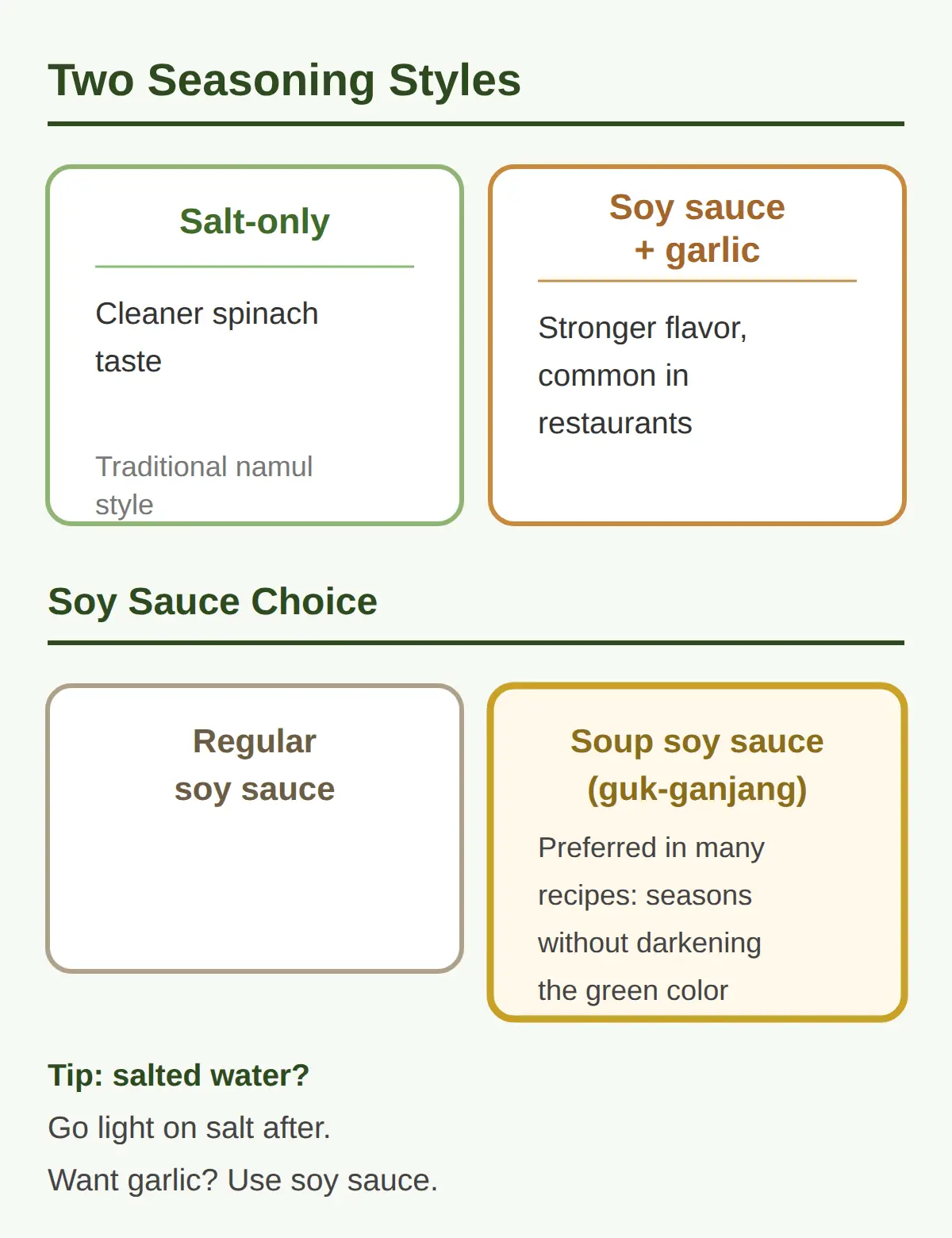
Korean recipes split into two camps: salt-only for a cleaner spinach taste in the traditional namul style, and soy sauce with garlic for a stronger flavor — the version common in restaurants.
A bunch shrinks to about one small side-dish plate, which is why heavy salting adds up fast.
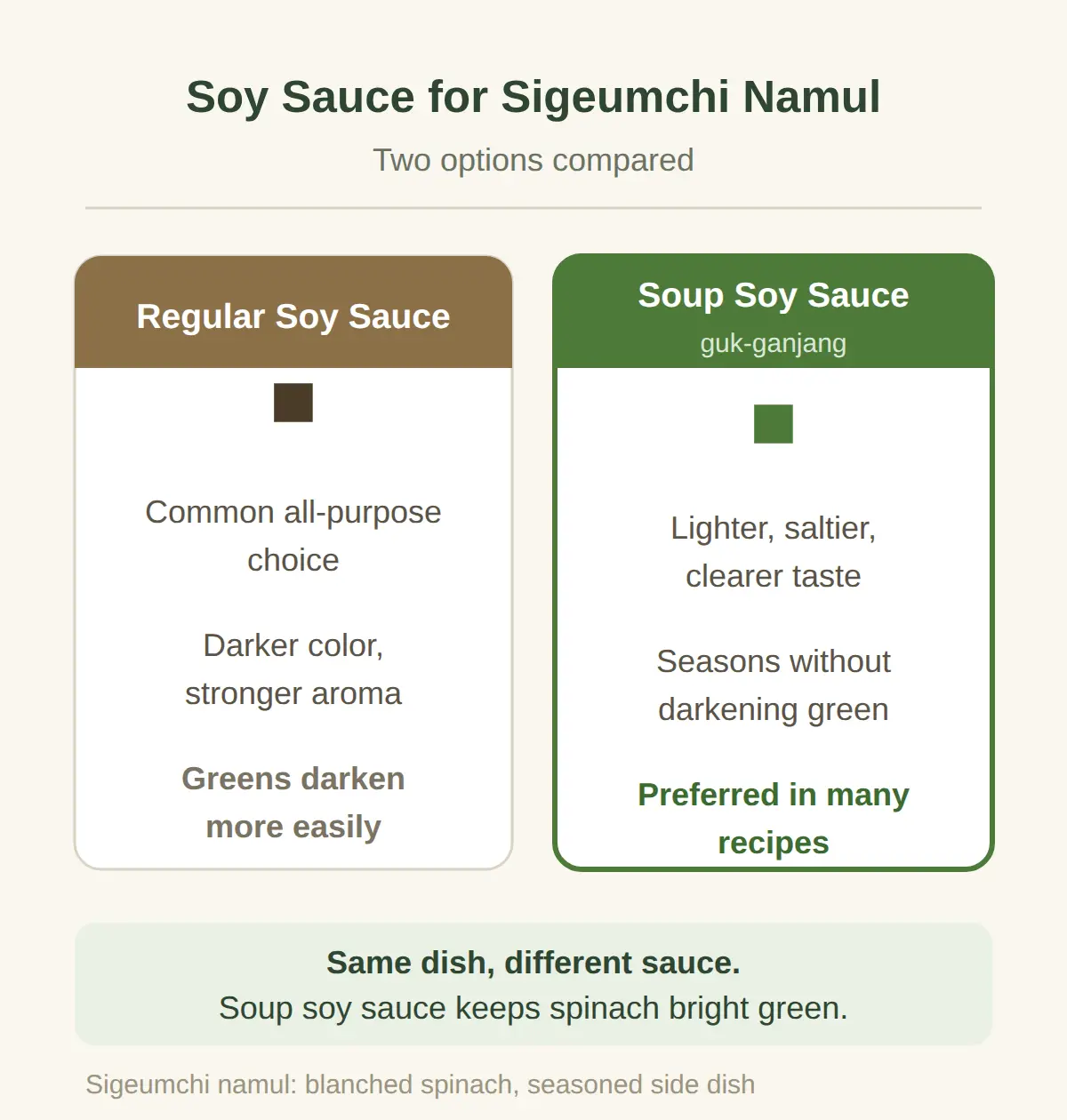
Many recipes prefer soup soy sauce (guk-ganjang) over regular soy sauce because it seasons without darkening the green color — this is the common recipe recommendation rather than a fixed rule.
Pick one direction and stay there: if you salted the blanching water, go light on the seasoning salt afterward, and use the soy sauce route if you want the garlic flavor.
If you are cooking it to top bibimbap, the restaurant-style soy sauce version is the one that matches what you get eating out.
Where to Buy It in Korea and How Long It Keeps
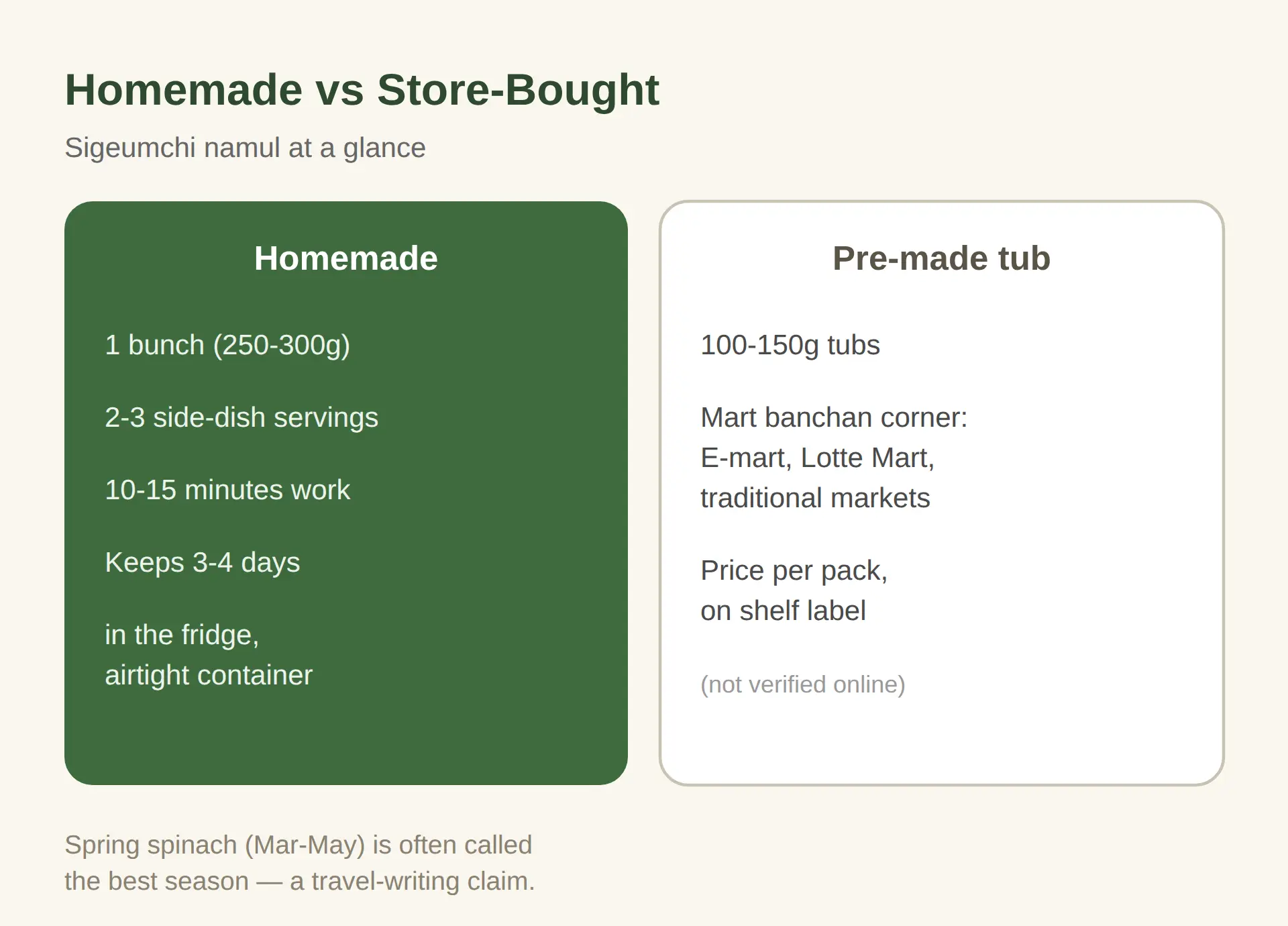
Pre-made sigeumchi namul is sold in small 100-150g tubs at the banchan corner of Korean supermarkets — E-mart, Lotte Mart and traditional markets all carry it.
Prices are set per pack and marked on the shelf label, so check the tub you are holding rather than expecting one standard price.
At home it keeps in an airtight container in the fridge; recipes commonly treat it as a batch-made side dish for the week, so plan on eating it within a few days.
I would make it at home rather than buy the tubs — one bunch gives 2-3 servings for 10-15 minutes of work, and I know exactly what went into it.
Spring spinach (March-May) is often named the best season for this dish, though that claim comes from travel writing rather than a recipe source.
👉 Maangchi’s sigeumchi namul recipe with step-by-step photos
👉 My Korean Kitchen’s seasoned spinach side dish guide with amounts
👉 Wikipedia’s overview of namul, the seasoned vegetable side dish category
👉 What to eat in Korea, including banchan notes for vegetarians
Related posts
📎 📅 Upcoming Dates — Release & Event Calendar
Sources
- Vegan when soy sauce + sesame oil only; restaurant versions (koreatravellab.com)
- Namul category; sigeumchi namul part of samnamul trio (en.wikipedia.org)
- No price data within 6 months (koreatravellab.com)
Before You Head to the Kitchen
- Blanch 30-60 seconds, cold-rinse, squeeze until dry — those three steps decide the texture.
- Vegan only with soy sauce and sesame oil; fish sauce or salted shrimp versions are not.
- One bunch (250-300g) = 2-3 side-dish servings in about 10-15 minutes.
FAQ
Q. What is the Korean spinach side dish called?
Sigeumchi namul (시금치 나물) — ‘sigeumchi’ means spinach and ‘namul’ means a seasoned vegetable side dish. ‘Korean banchan spinach’ is the same dish.
Q. What ingredients go in sigeumchi namul?
Per bunch of spinach (250-300g): 1 tsp minced garlic, 1 tbsp soy sauce (or 0.5 tsp salt), 1 tbsp sesame oil, and toasted sesame seeds to taste.
Q. Is Korean spinach banchan vegan?
Only if it was seasoned with soy sauce and sesame oil. Some versions use fish sauce or salted shrimp, and restaurant side dishes can hide animal seasonings — ask the staff.
Q. How do you make sigeumchi namul at home?
Blanch spinach 30-60 seconds, rinse in cold water, squeeze dry by hand, cut into 5-7cm lengths, then mix in the seasoning. Total time is about 10-15 minutes.
Q. How long does sigeumchi namul keep in the fridge?
Keep it in an airtight container in the refrigerator and eat it within a few days — it is commonly made in batches for the week.
One more thing to try at home: since spring spinach is often cited as the best season for sigeumchi namul, a spring trip could be a good time to compare the restaurant version with the one you make at home.
Cover photo: Free spinach side dish image — CC0 1.0
#koreanbanchan #sigeumchinamul #koreanspinachsidedish #koreansidedishes #vegankoreanfood #koreanrecipes
📅Upcoming Schedule — this week 23 · D-1 Autumn season = post-summer brightening demand window (UV drSee all →